Statuentorso eines Togatus
1. Hälfte 2. Jh. n. Chr.
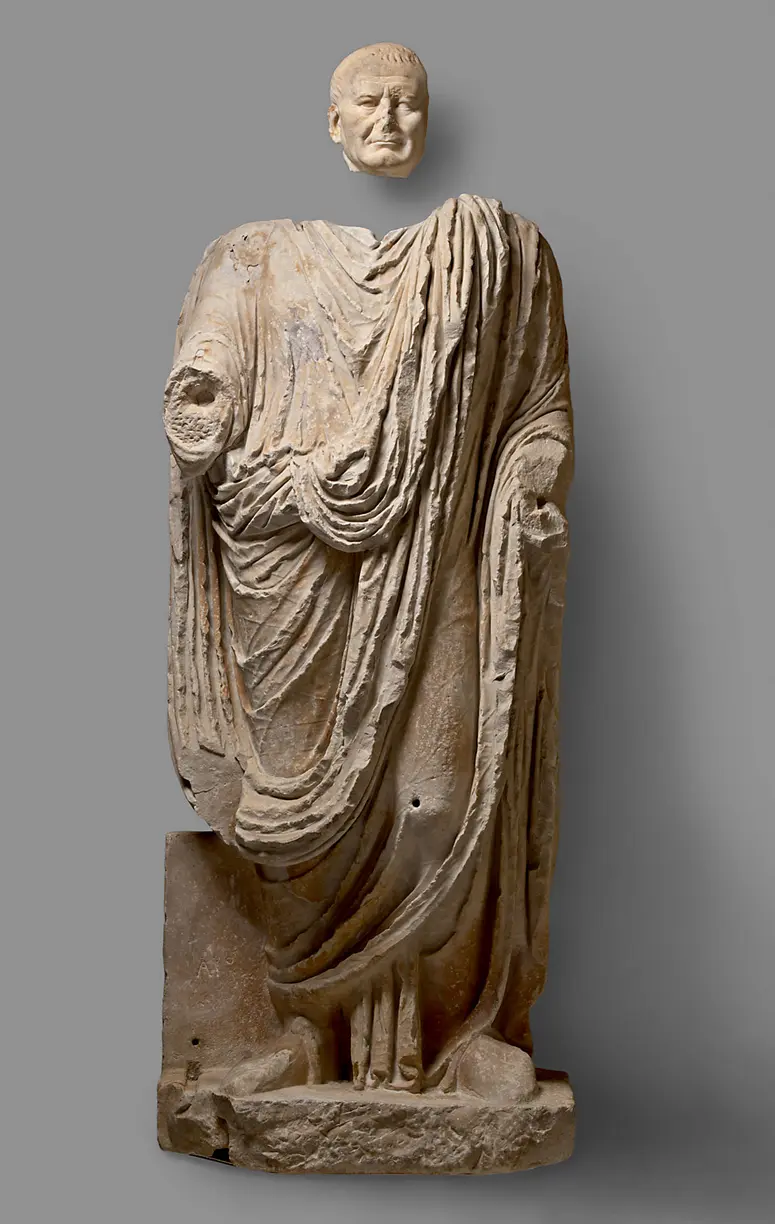
This well-preserved torso of an honorary statue depicts a man wearing a toga, the attire of a free Roman citizen. Today, his separately worked and later inserted portrait head and left hand are missing. Note the pile of stylized scrolls beside his right leg. The statue was originally mounted on a base with an inscription that contained details of the man being honoured. The way he wears his toga – a large semi-circular cloth draped over left shoulder and body – helps us to date the statue: here, the umbo, a kind of pouching, was pulled out from the bulge (balteus) near the wearer’s waist, while his right hand is clutching the long, heavier over-fold of his toga (sinus) slung over his left arm.
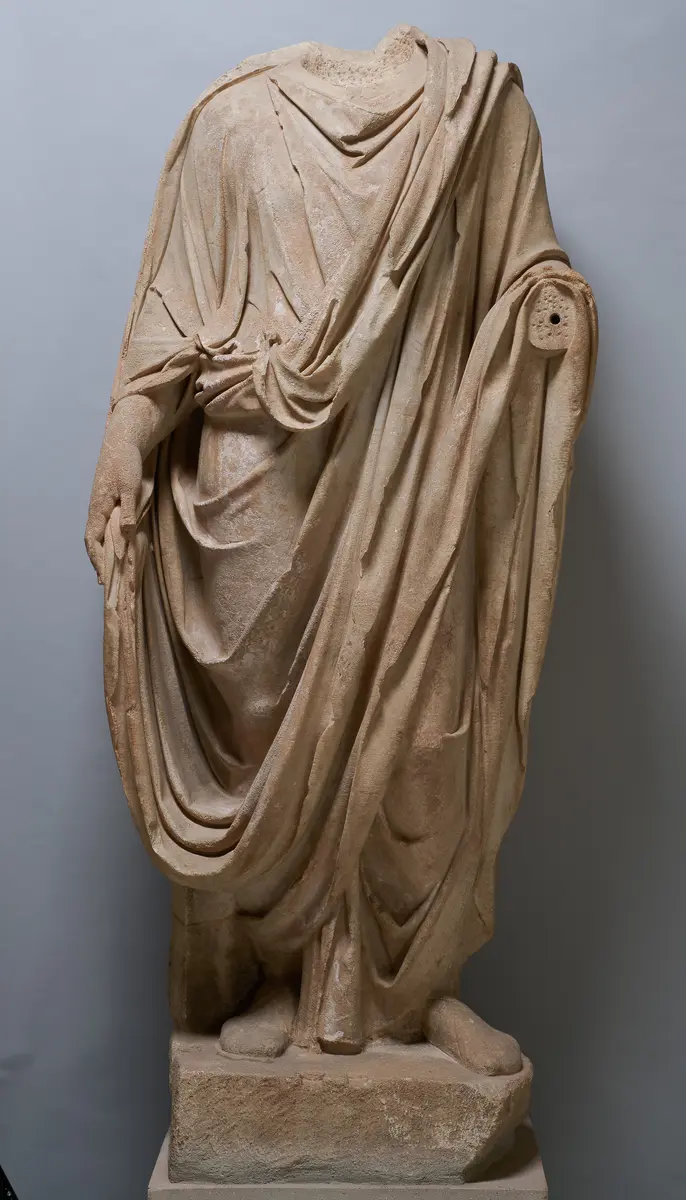
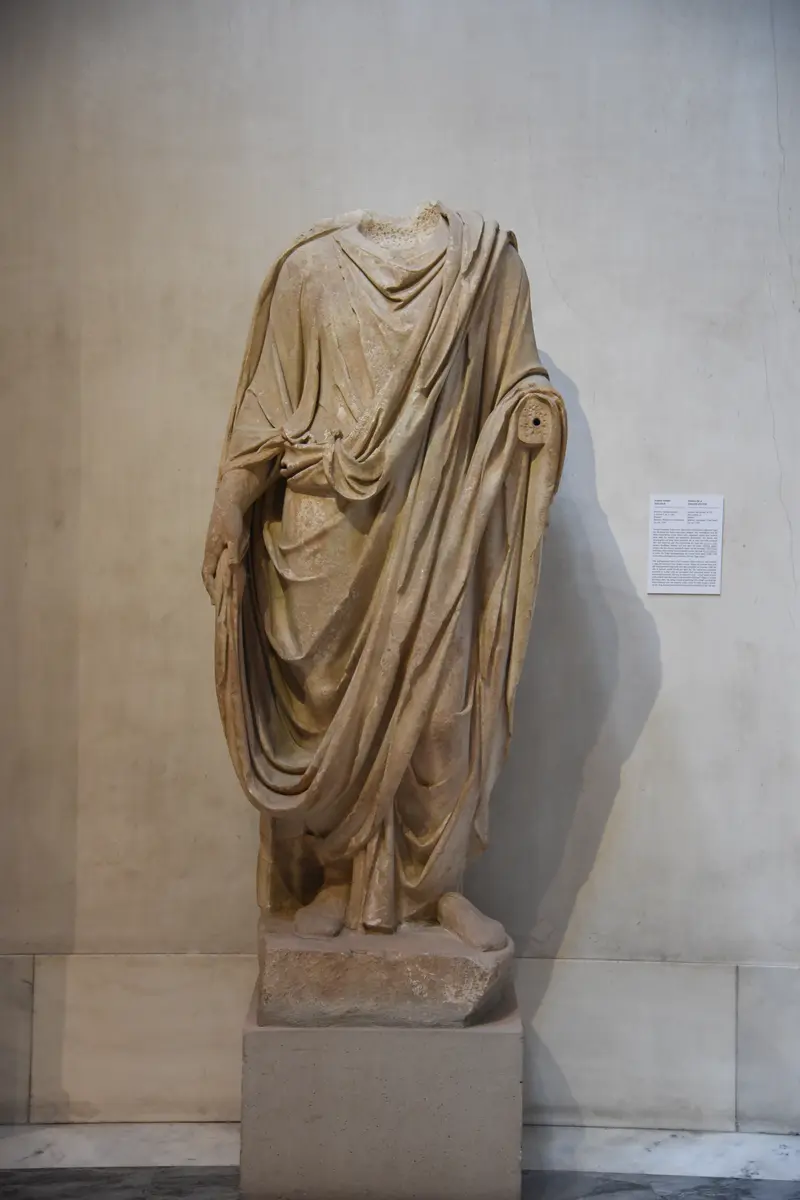
This well-preserved torso of an honorary statue depicts a man wearing a toga, the attire of a free Roman citizen. Today, his separately worked and later inserted portrait head and left hand are missing. Note the pile of stylized scrolls beside his right leg. The statue was originally mounted on a base with an inscription that contained details of the man being honoured. The way he wears his toga – a large semi-circular cloth draped over left shoulder and body – helps us to date the statue: here, the umbo, a kind of pouching, was pulled out from the bulge (balteus) near the wearer’s waist, while his right hand is clutching the long, heavier over-fold of his toga (sinus) slung over his left arm.
Time:
1. Hälfte 2. Jh. n. Chr.
Object Name
Statue
Culture
Römisch
Location of discovery:
Ephesos Theater Westfront nahe Brunnenhaus (Selçuk, Kleinasien, Türkei)
Material/technology:
Marmor
Dimensions:
L/H 178 cm
Copyright
Kunsthistorisches Museum, Antikensammlung
Invs.
Antikensammlung, I 916
Provenance
Sultan, Abdul, Hamid, II.; Österreichische Ausgrabungen in Ephesos; Geschenk an Kaiser Franz Joseph; 1914 nachträglich inventarisiert
Browse more
Similar items you might be interested in
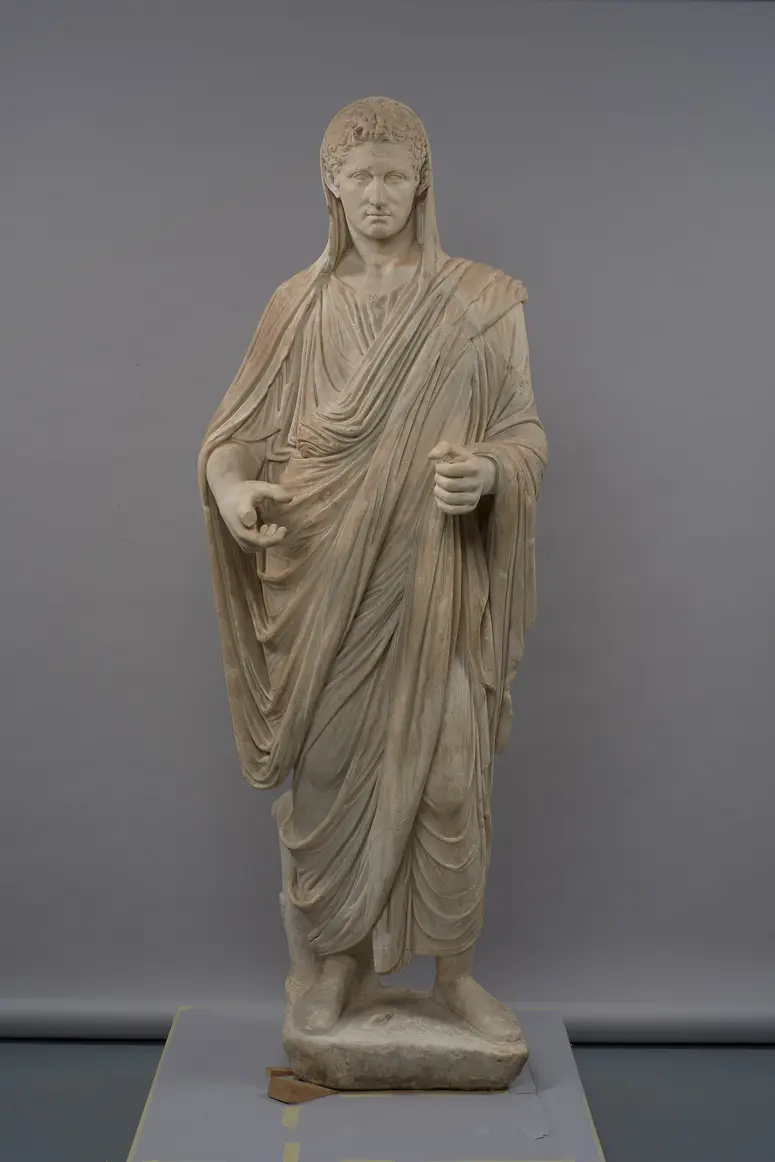
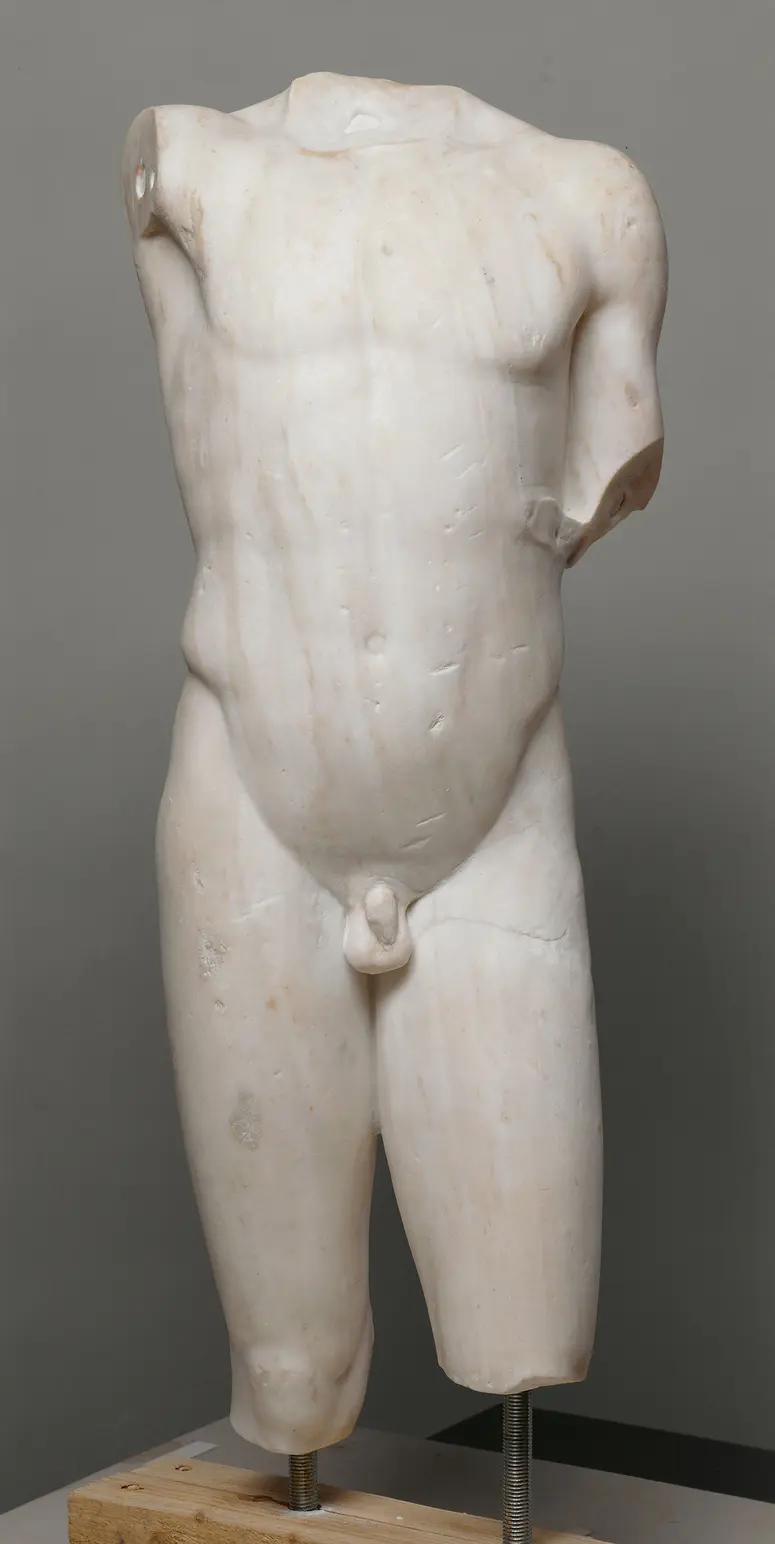
Statue: Torso eines Jünglings Römisch, Frühe Kaiserzeit 1. Jh. n. Chr., nach griechischem Original um 460 v. Chr
Herkules, Herkules-Torso, Fragment, Statue 2. Hälfte 16. Jahrhundert (?)
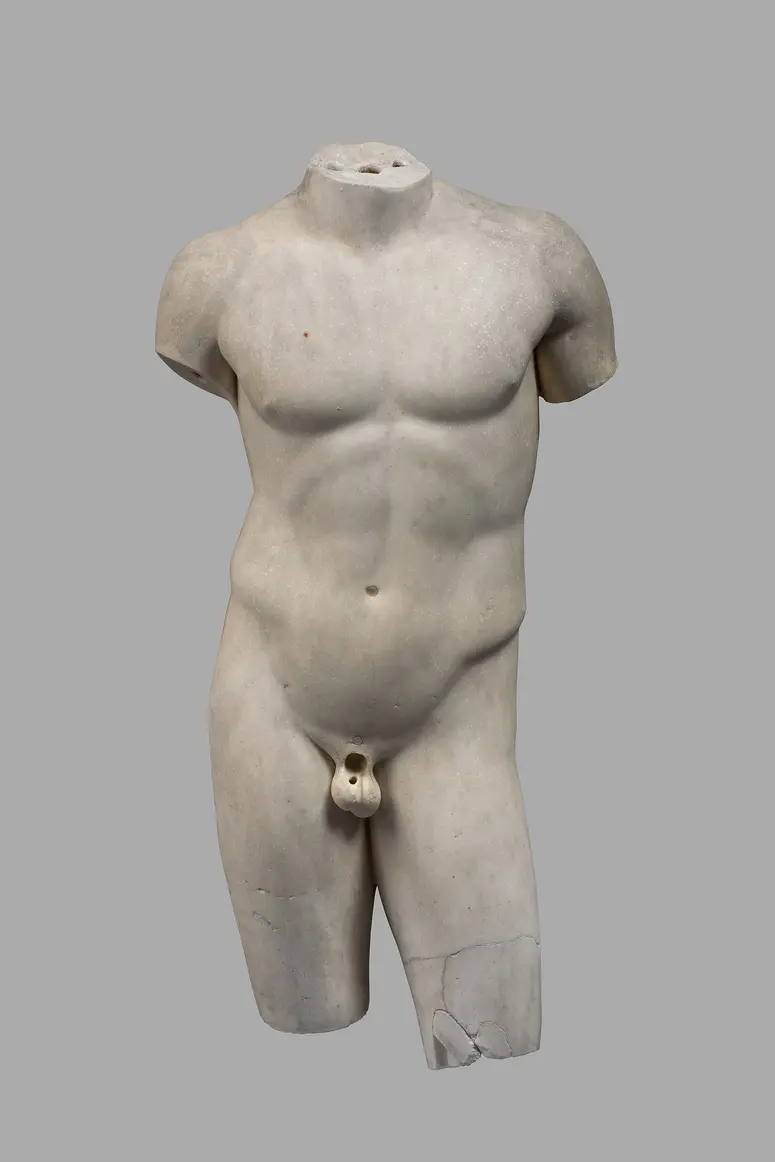
Statue: Statuentorso eines nackten Jünglings Römisch, Kaiserzeit 1.Jh. n. Chr., nach griechischem Vorbild des 5. Jh. v. Chr.

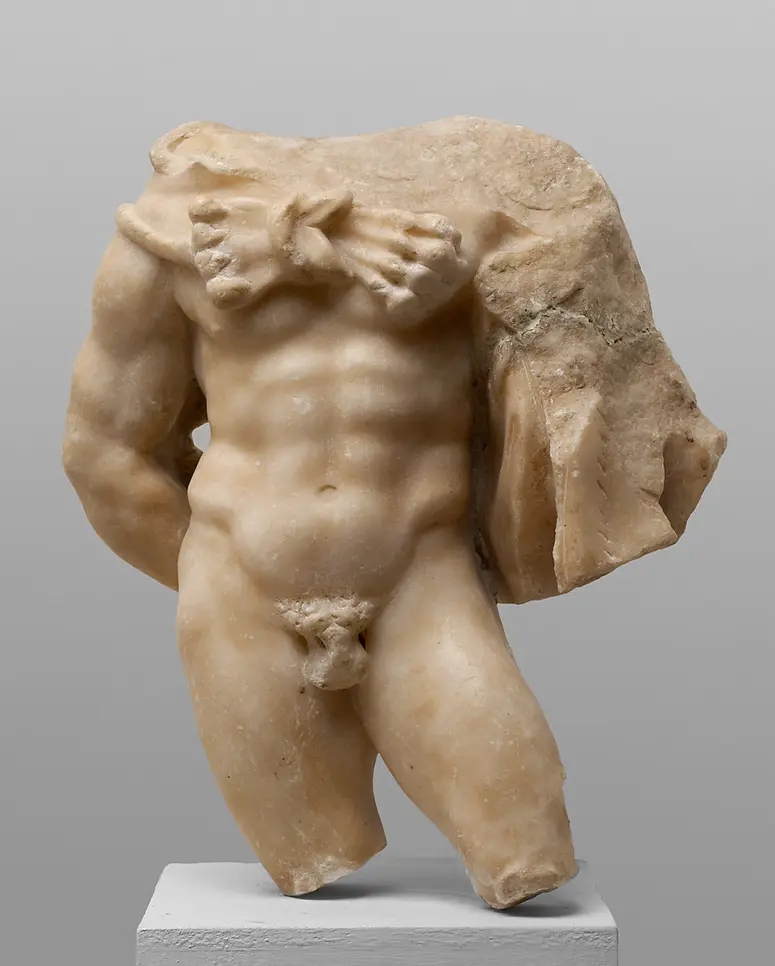
Statuettentorso: Dionysos Römisch, Kaiserzeit 1. - 2. Jh. n. Chr., nach griechischem Original des 4. Jh. v. Chr.
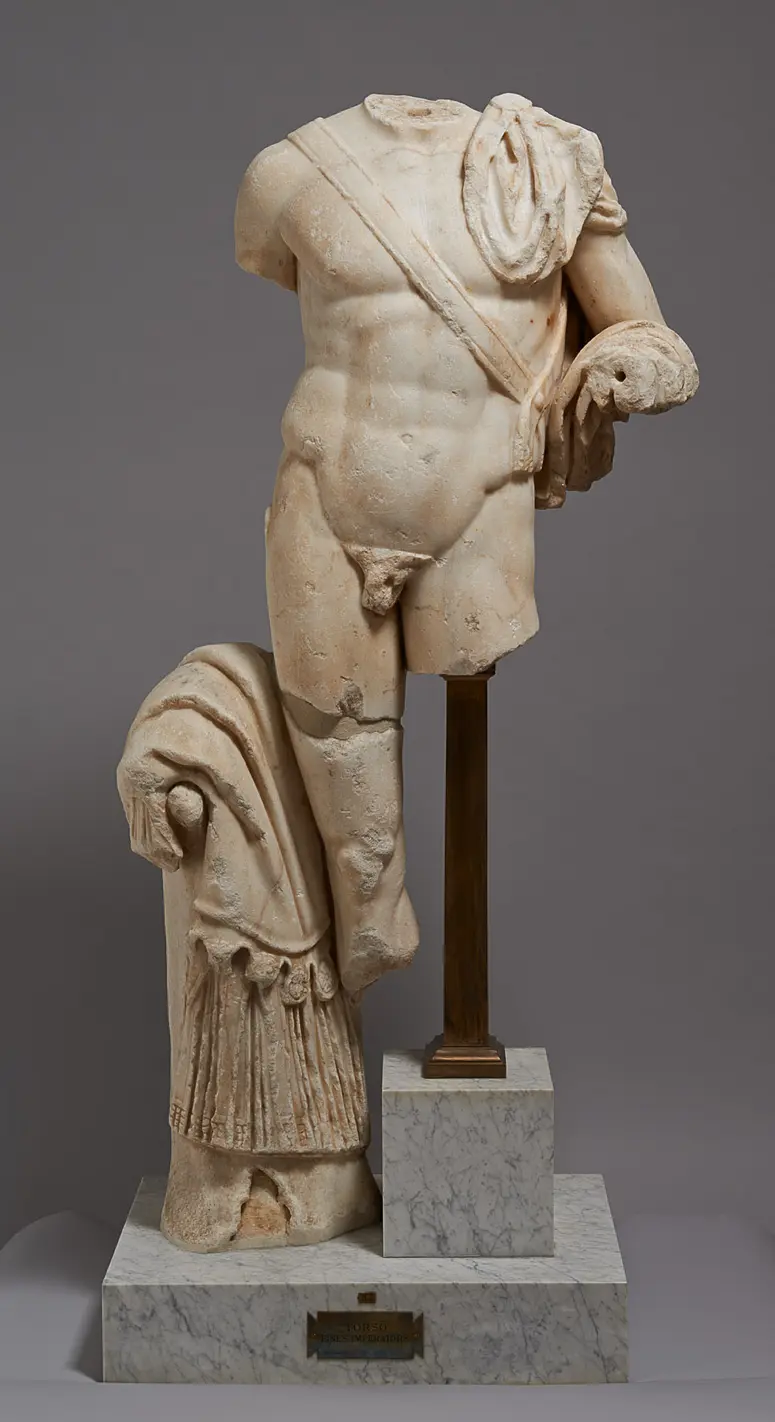
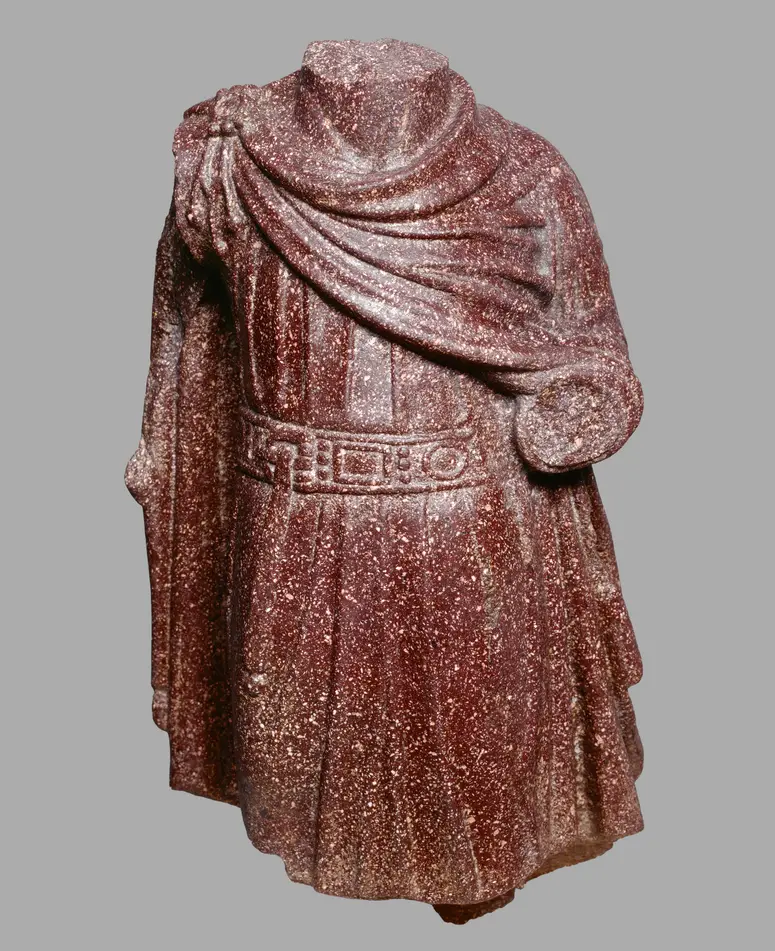
Porträtstatue: Torso einer Porträtstatue: Feldherr Römisch, Mittlere Kaiserzeit 1. Hälfte 2. Jh. n. Chr.
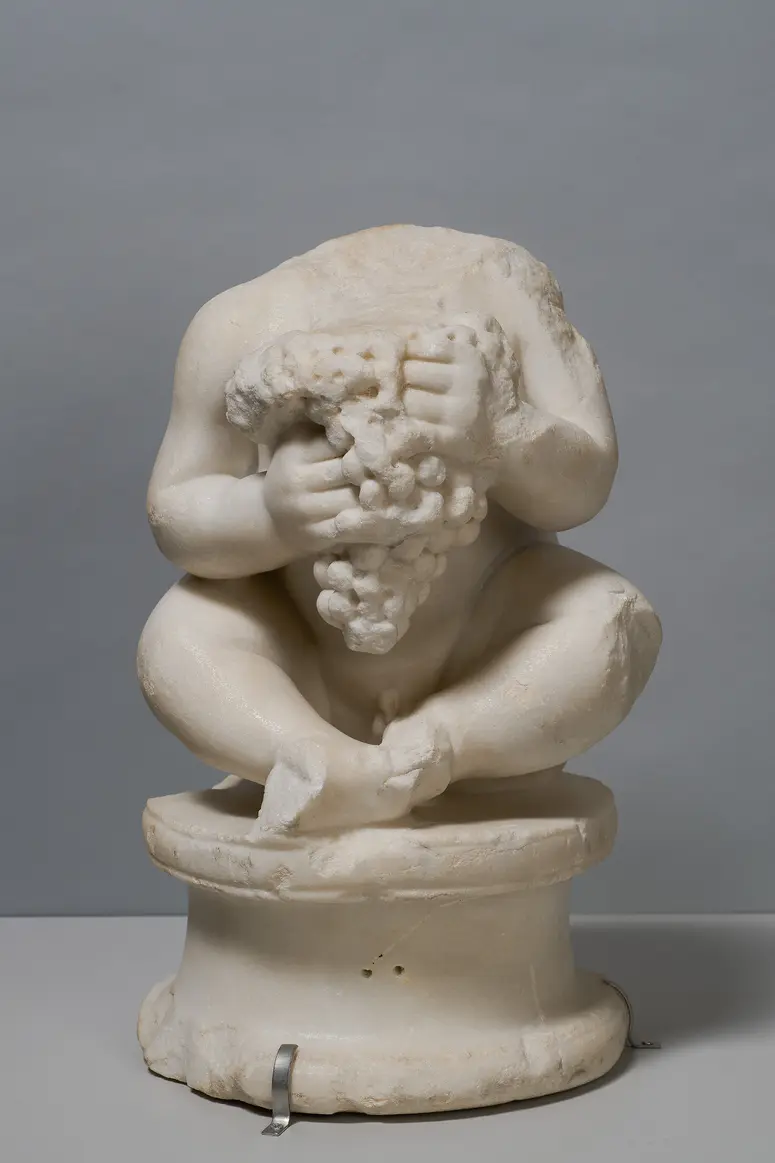
Statuettentorso: Knabe mit Traube Römisch, Mittlere Kaiserzeit 2. Jh. n. Chr.
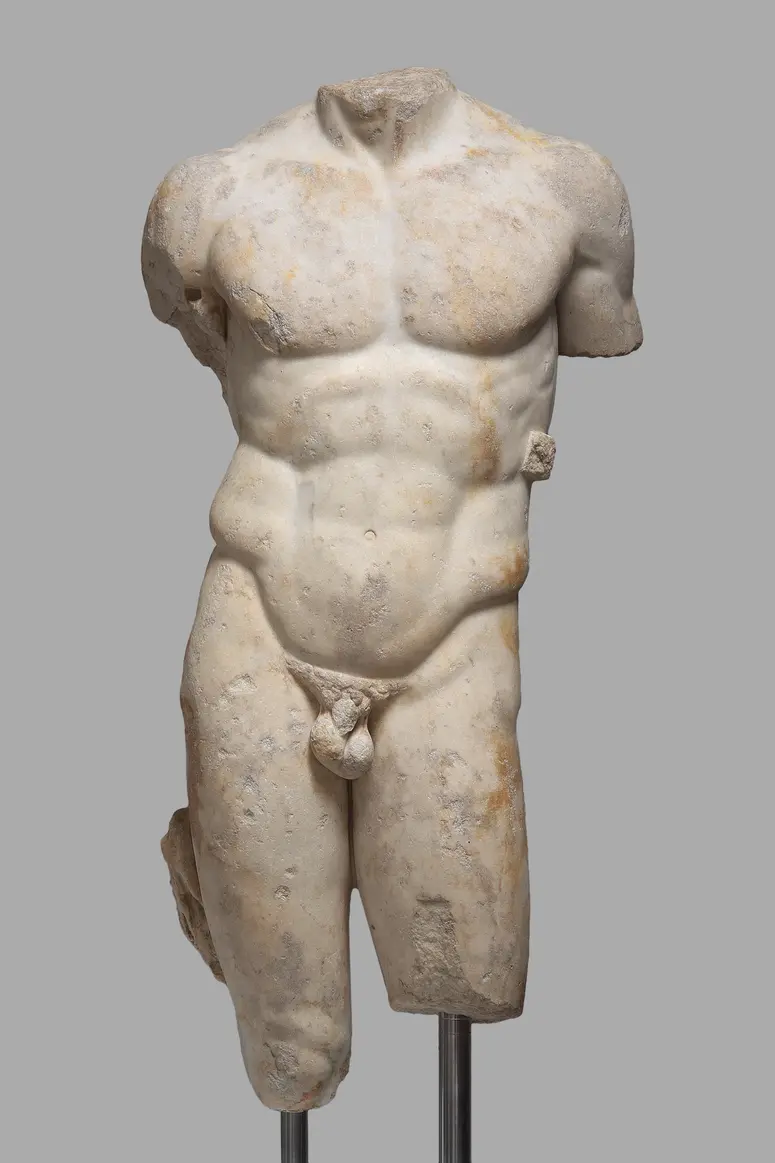
Statue: Torso des Speerträgers (Doryphoros) Römisch, Mittlere Kaiserzeit 2. Jh. n. Chr., nach griechischem Original des Polyklet um 440 v. Chr.
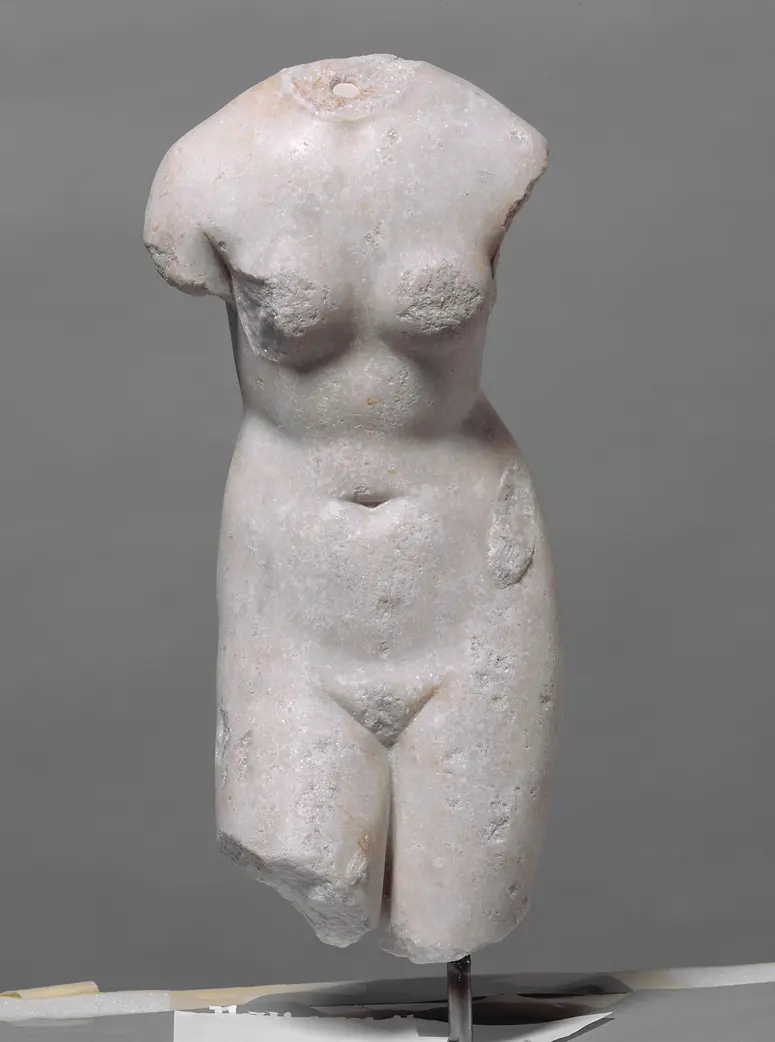
Statuette: Torso: Nackte Aphrodite (Typus Medici) Römisch, Kaiserzeit 1. - 2. Jh. n. Chr., nach griechischem Original um 300 v. Chr.
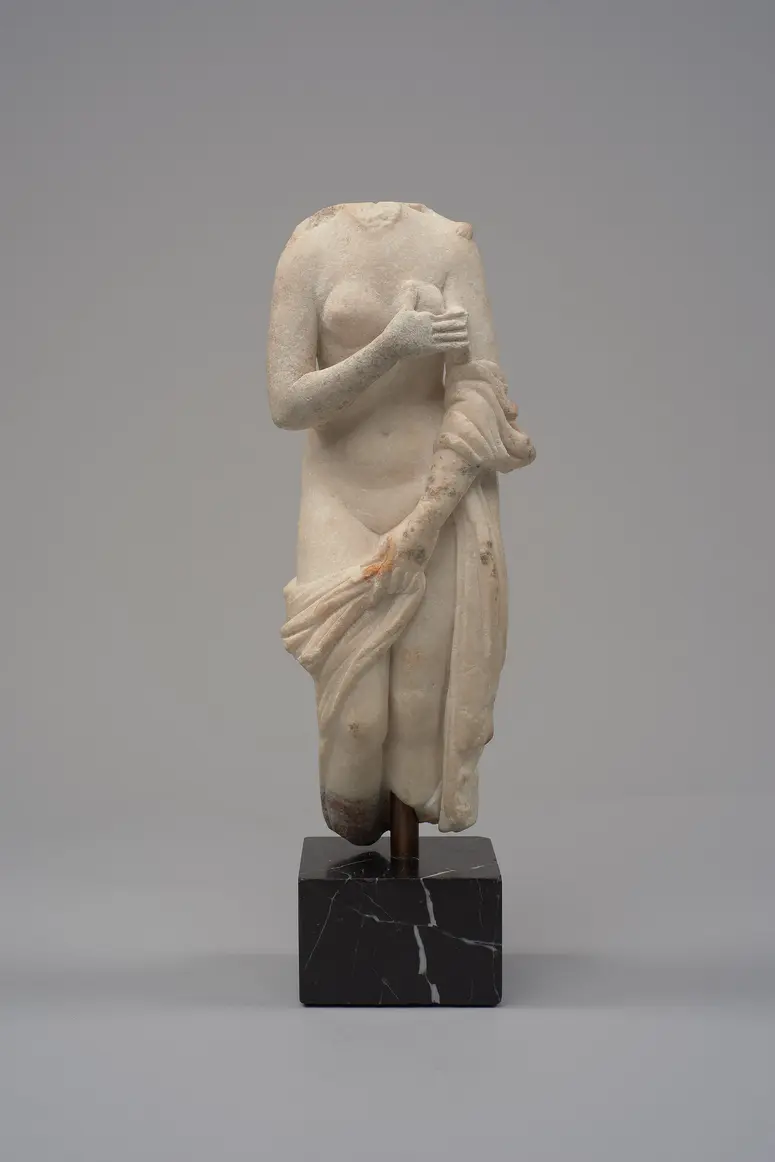
Statuette: Statuettentorso: Aphrodite mit Eros Römisch, Kaiserzeit 1. - 3. Jahrhundert, nach hellenistischem Vorbild des 2./1. Jhs.v.Chr.
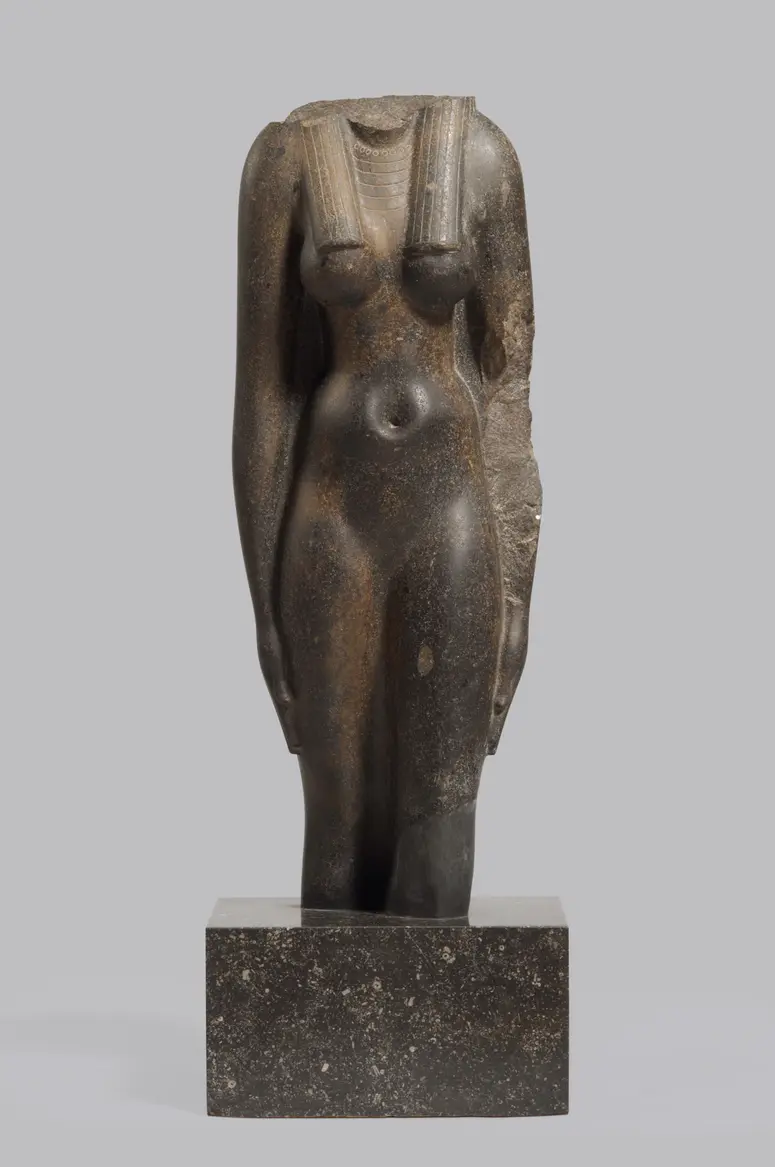
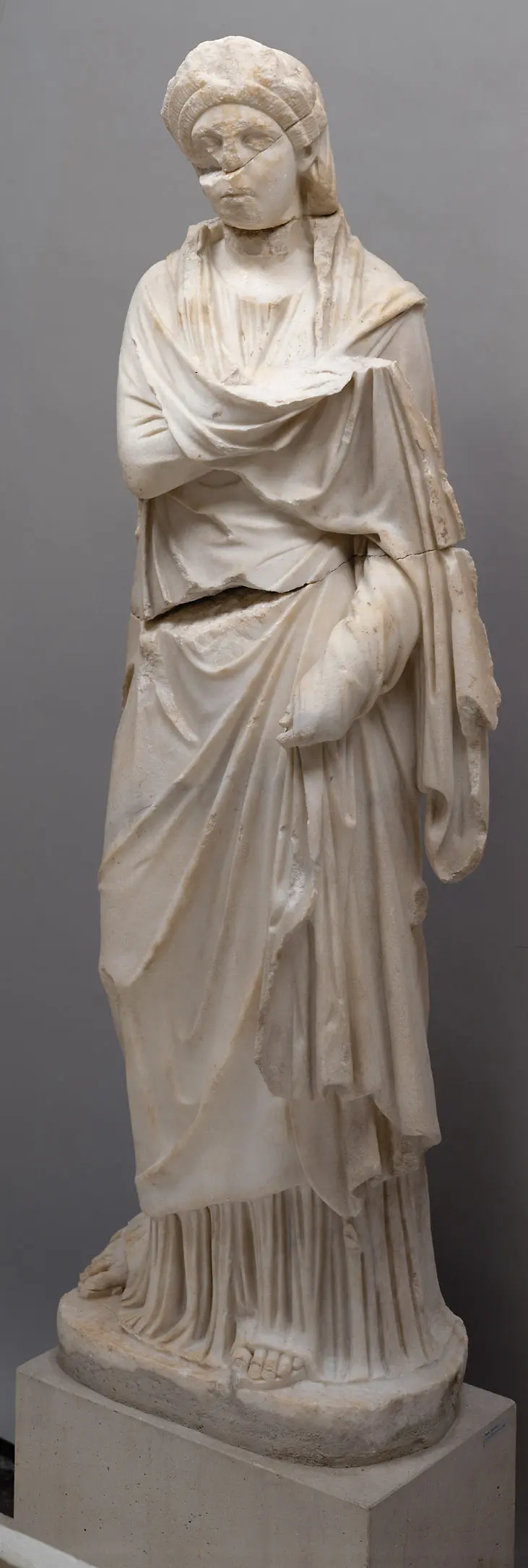
Porträtstatue: Antia Julia Pollia (?) Römisch, Mittlere Kaiserzeit 105 - 108 n. Chr.
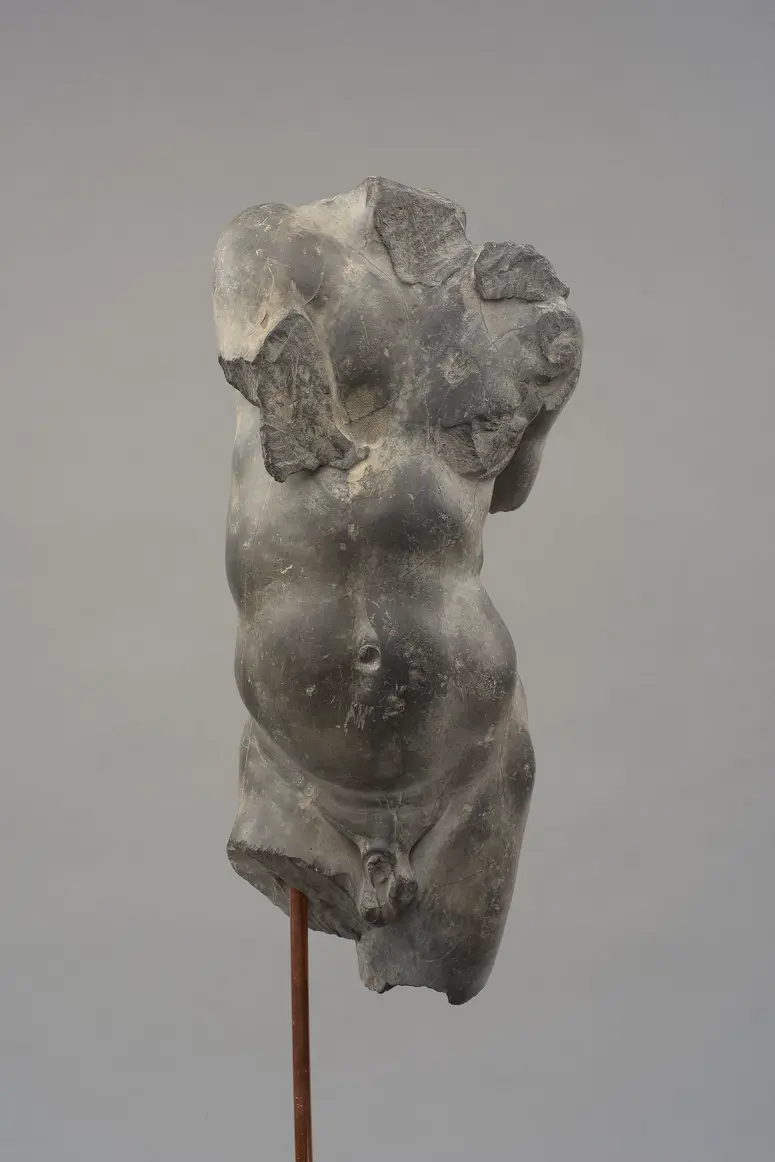
Statuette: Statuettentorso eines Nubiers (Schwarzafrikaners) Griechisch, Hellenistisch frühes 2. Jh. v. Chr.
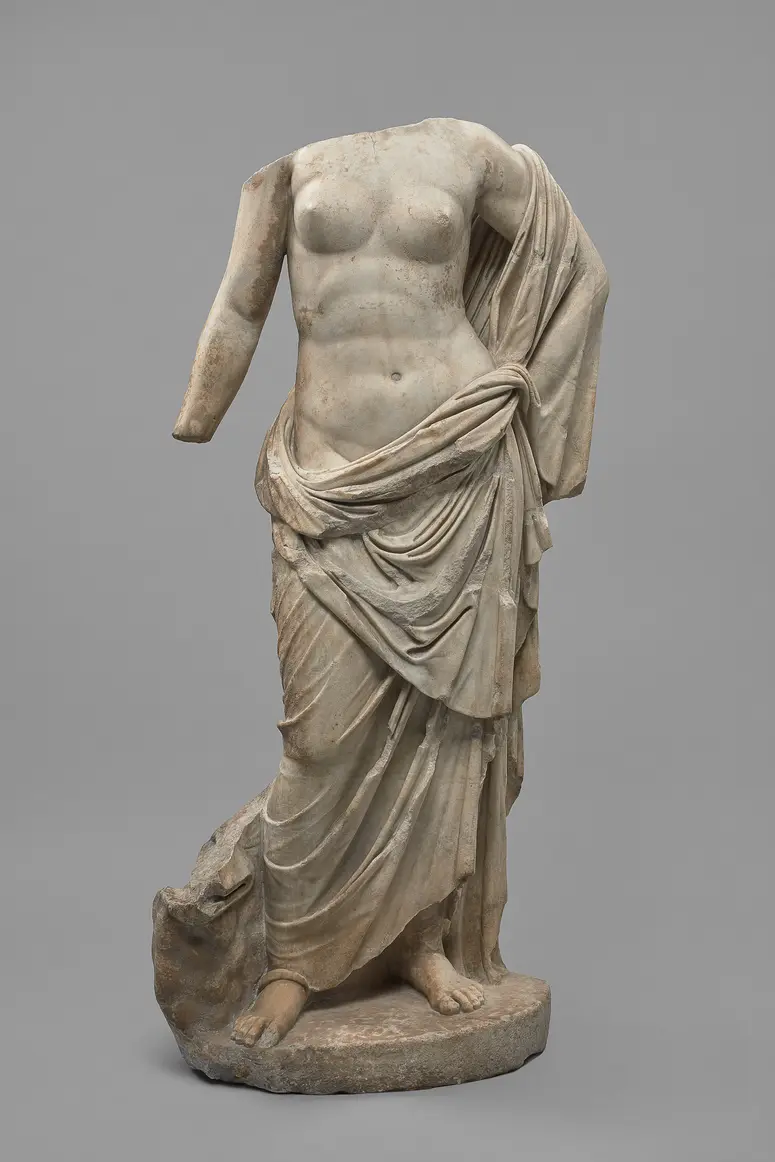
Statue: Statuentorso einer Göttin (sog. Aphrodite) Römisch, Frühe Kaiserzeit 1. Jh. n. Chr.

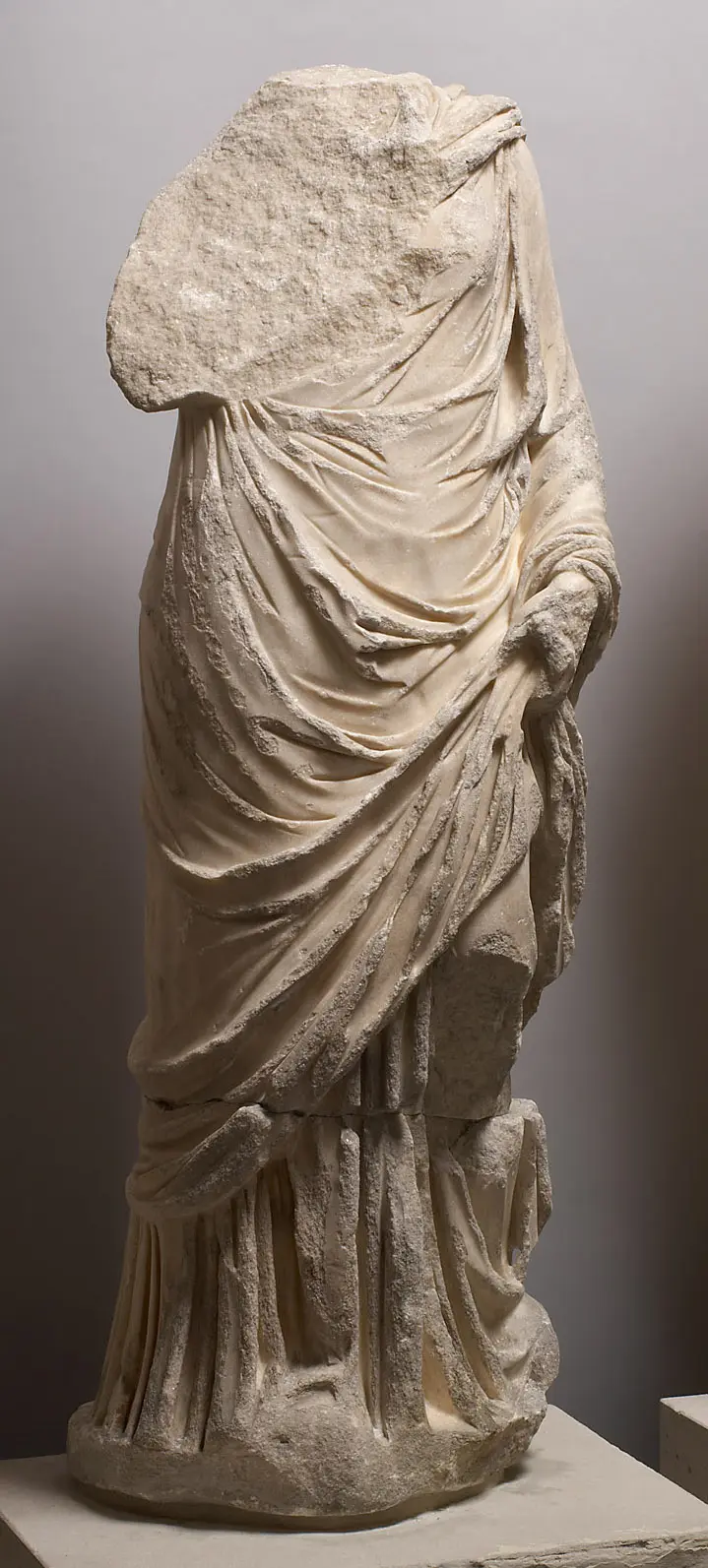
Statue: Ennoia Philippou Römisch, Mittlere Kaiserzeit 2. Jh. n. Chr., nach hellenistischem Original
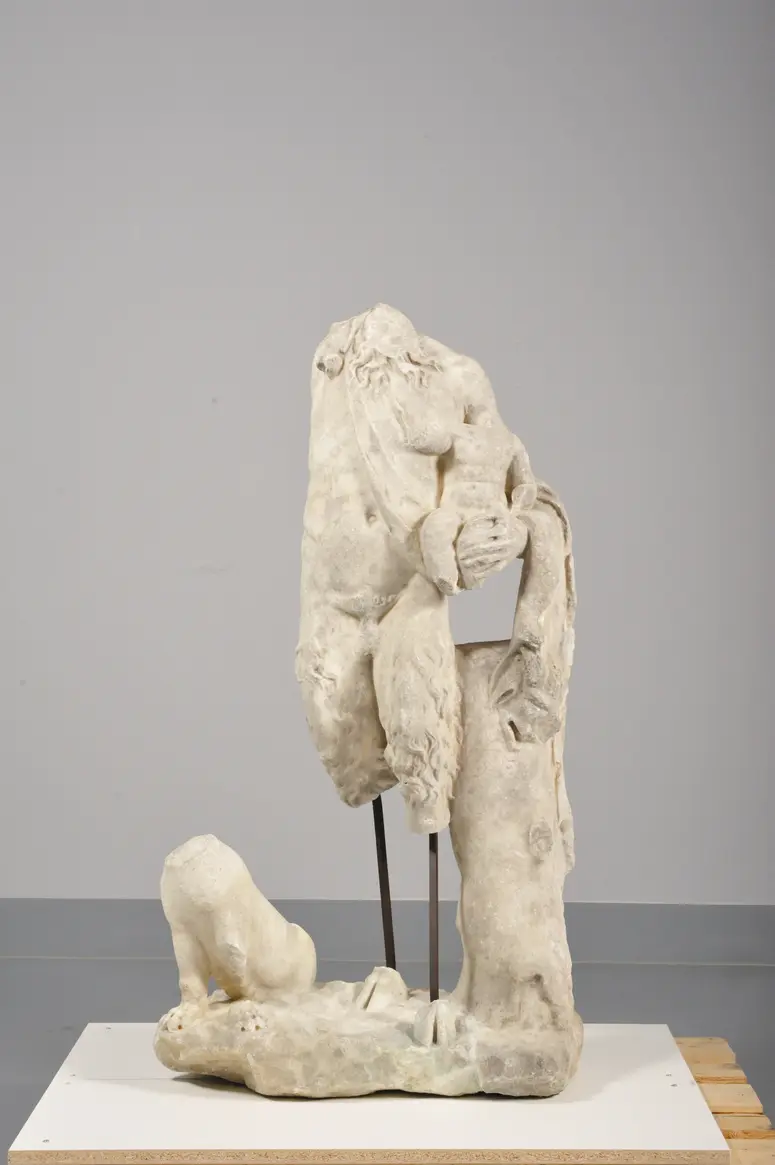
Statuentorso: Pan mit Dionysoskind Römisch, Mittlere Kaiserzeit 2. Jh. n. Chr.