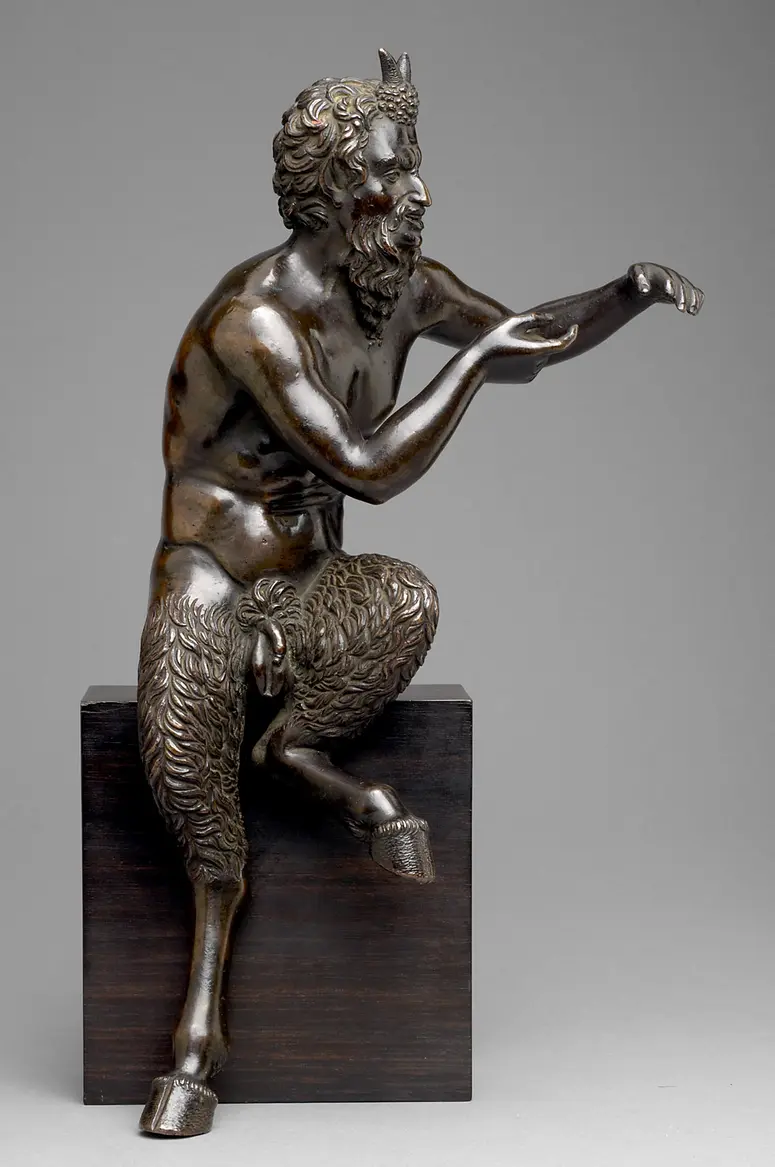
Pan mit Dionysoskind
2. Jh. n. Chr.
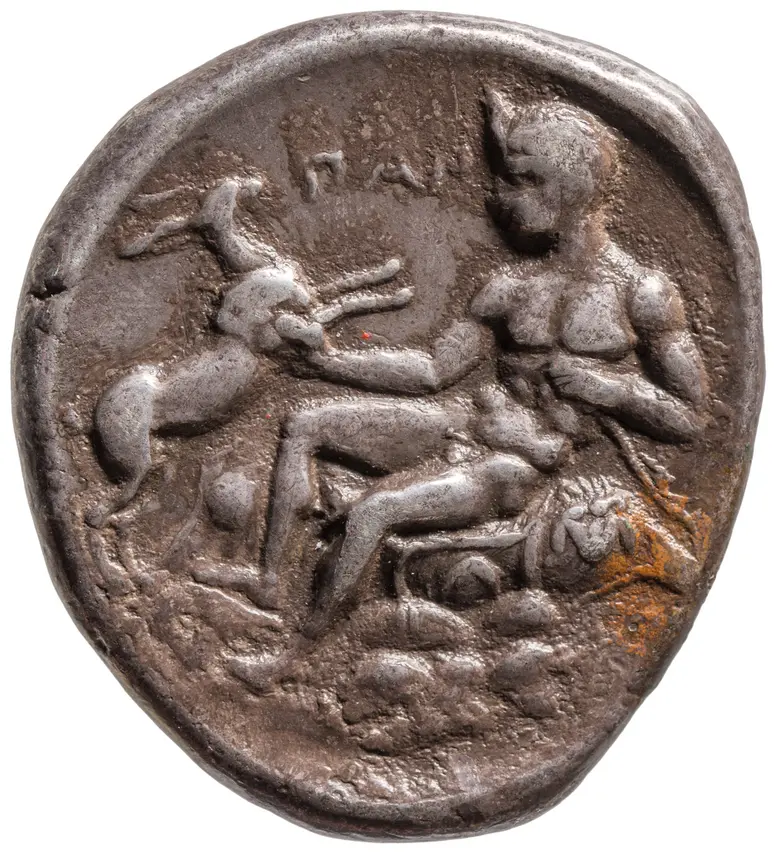
Identified by his goat’s legs and tail, Pan, the god of the wild, shepherds and flocks, wears the nebris (skin of a deer) and carries the infant Dionysus on his arm, who had been left in his care. The fragments of hooves on the plinth allow us to reconstruct his pose. Pan is handing the child a grape – a motif known from imperial coins minted at Zakynthos (Greece). The panther, a traditional companion of the deity, sits on his right; the tree functioned as a support.
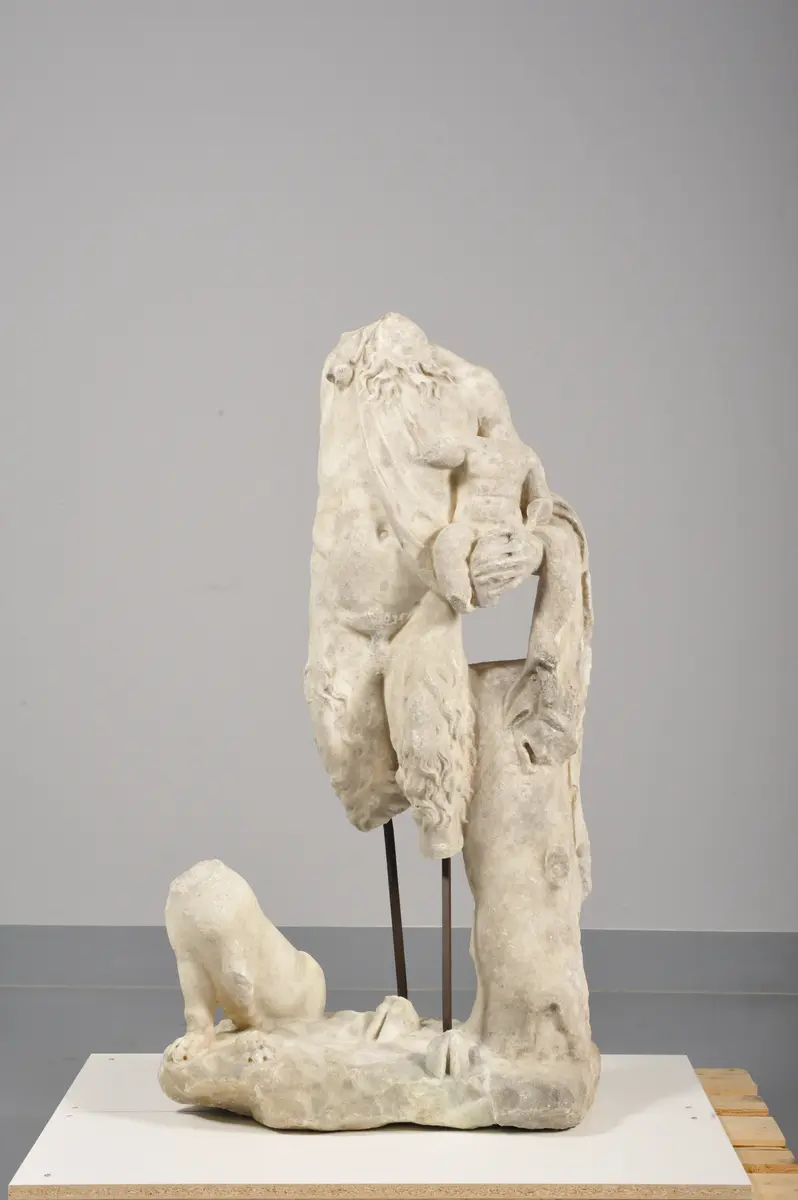
Identified by his goat’s legs and tail, Pan, the god of the wild, shepherds and flocks, wears the nebris (skin of a deer) and carries the infant Dionysus on his arm, who had been left in his care. The fragments of hooves on the plinth allow us to reconstruct his pose. Pan is handing the child a grape – a motif known from imperial coins minted at Zakynthos (Greece). The panther, a traditional companion of the deity, sits on his right; the tree functioned as a support.
Time:
2. Jh. n. Chr.
Object Name
Statuentorso
Culture
Römisch
Location of discovery:
Ephesos (Selçuk, Kleinasien, Türkei)
Material/technology:
Marmor
Dimensions:
132 cm × 75 cm × 36 cm
Copyright
Kunsthistorisches Museum, Antikensammlung
Invs.
Antikensammlung, I 844
Provenance
Sultan, Abdul, Hamid, II.; Österreichische Ausgrabungen in Ephesos; Geschenk an Kaiser Franz Joseph; 1911 nachträglich inventarisiert
Browse more
Similar items you might be interested in
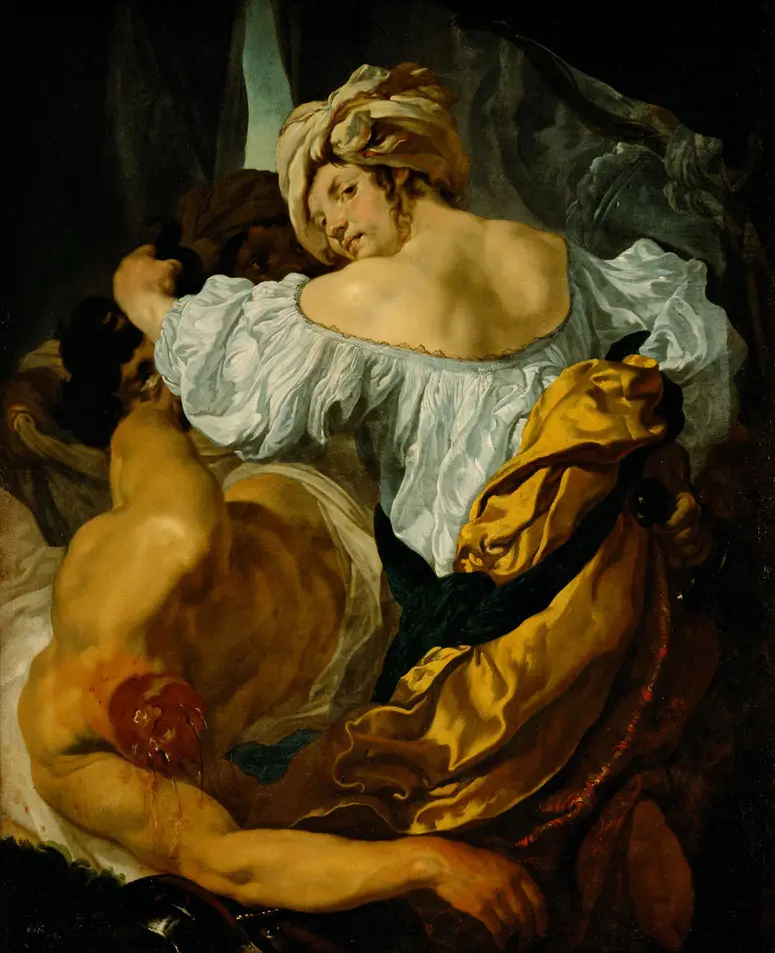
Judith mit dem Haupt des Holofernes J. Löwy, K. und K. Hof-Photograph, Kunst- und Verlagsanstalt (Wien) 1888 bis 1891
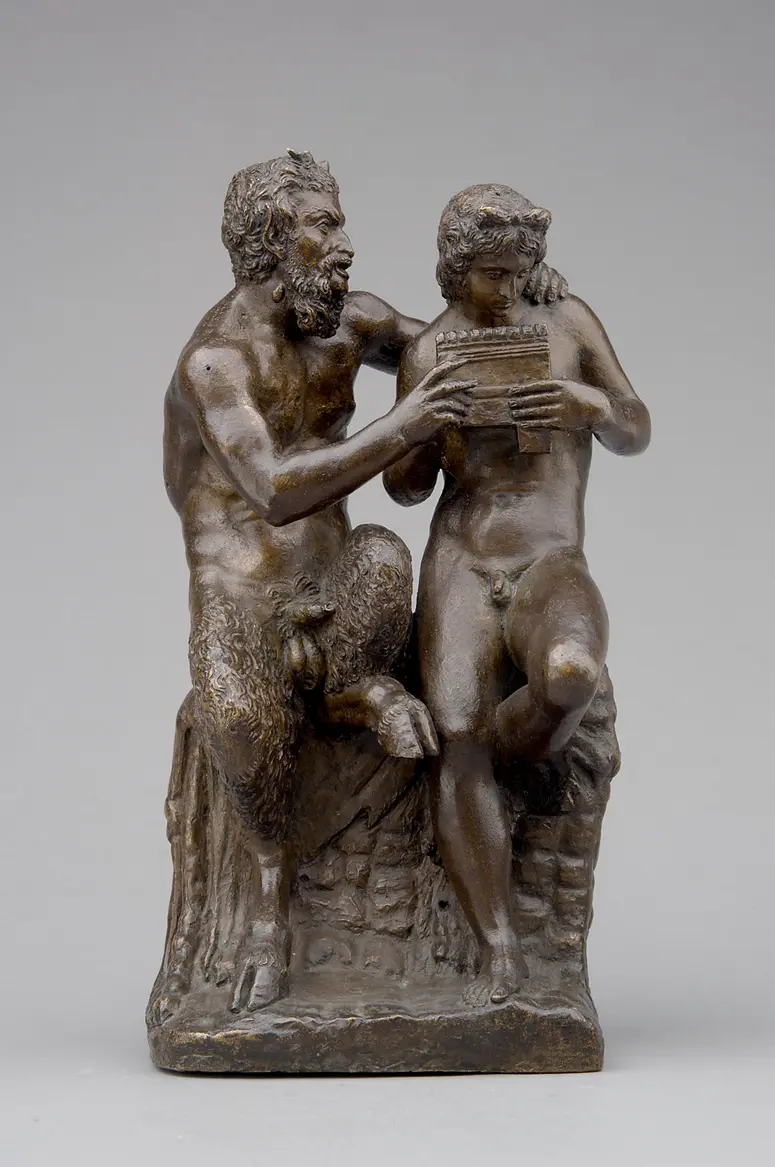
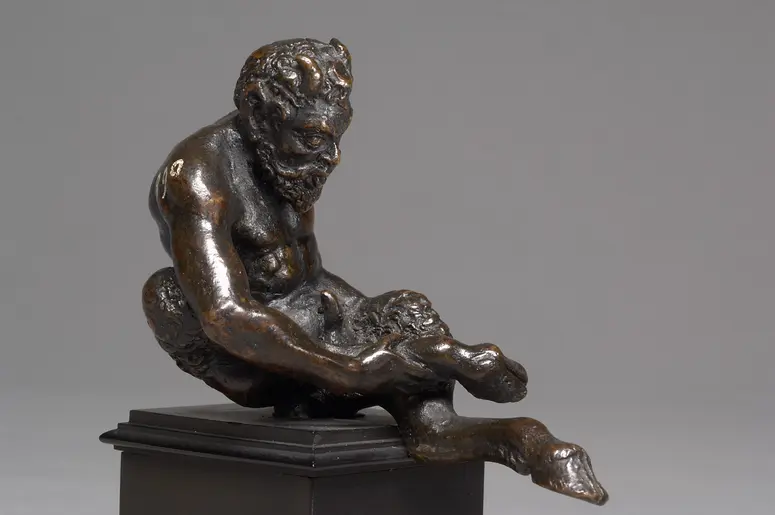
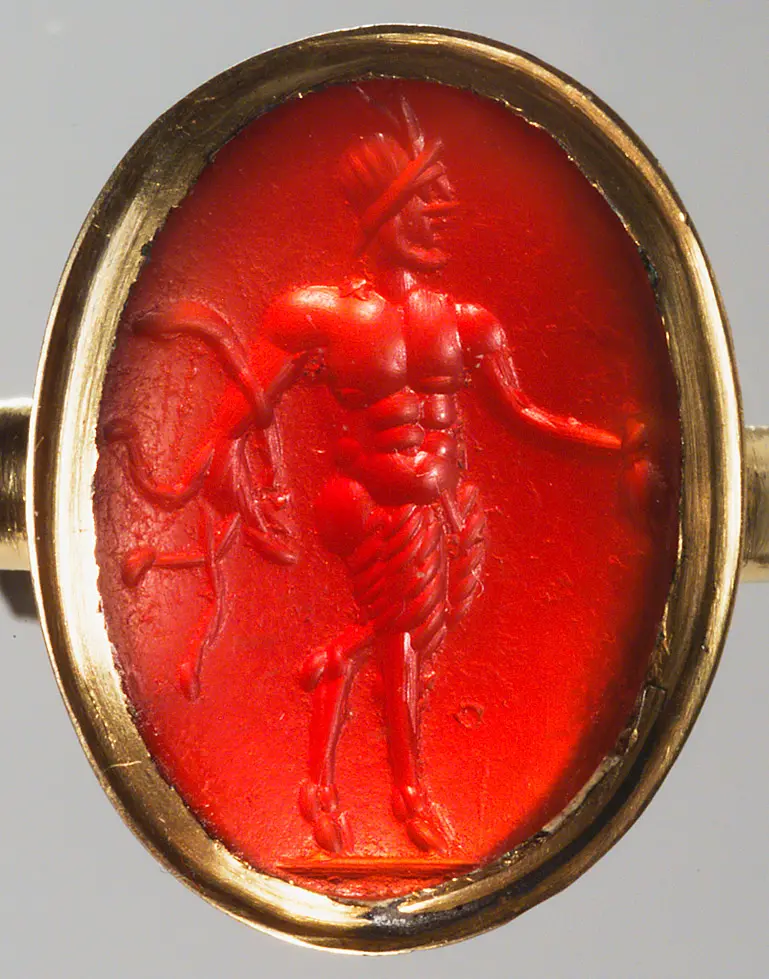
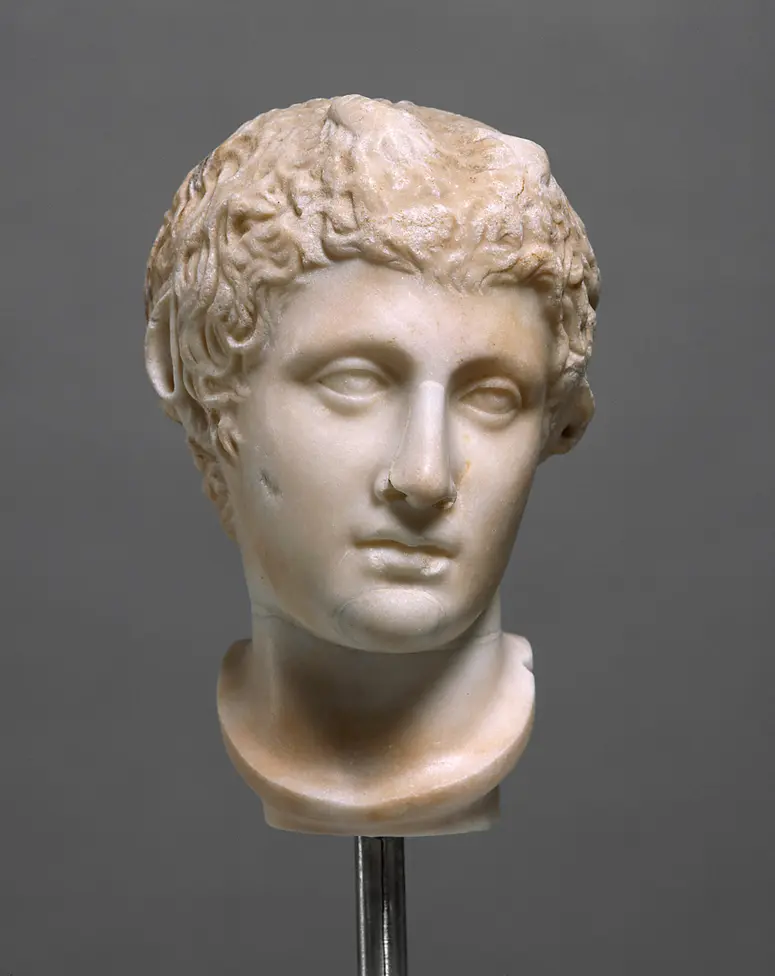
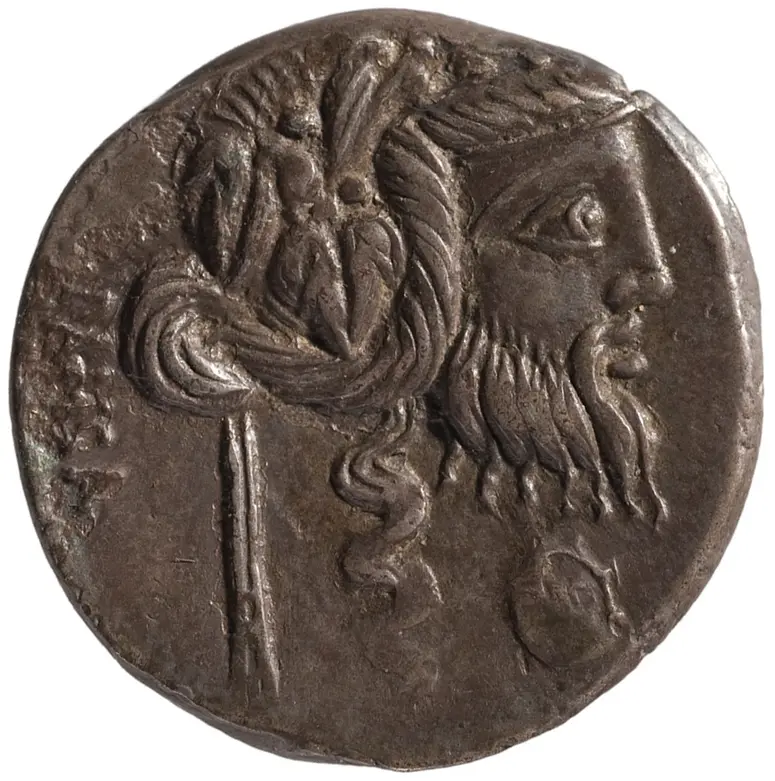
Kopf: Pan Römisch, Kaiserzeit 1. - 2. Jh. n. Chr., nach griechischem Original um 420 v. Chr.

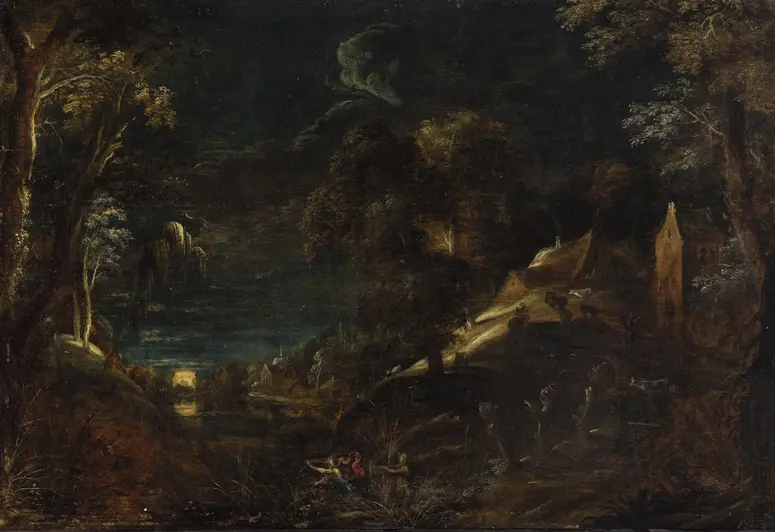
Mondscheinlandschaft mit Pan und Syrinx Kerstiaen de Keuninck d. Ä. spätes 16. oder frühes 17. Jahrhundert

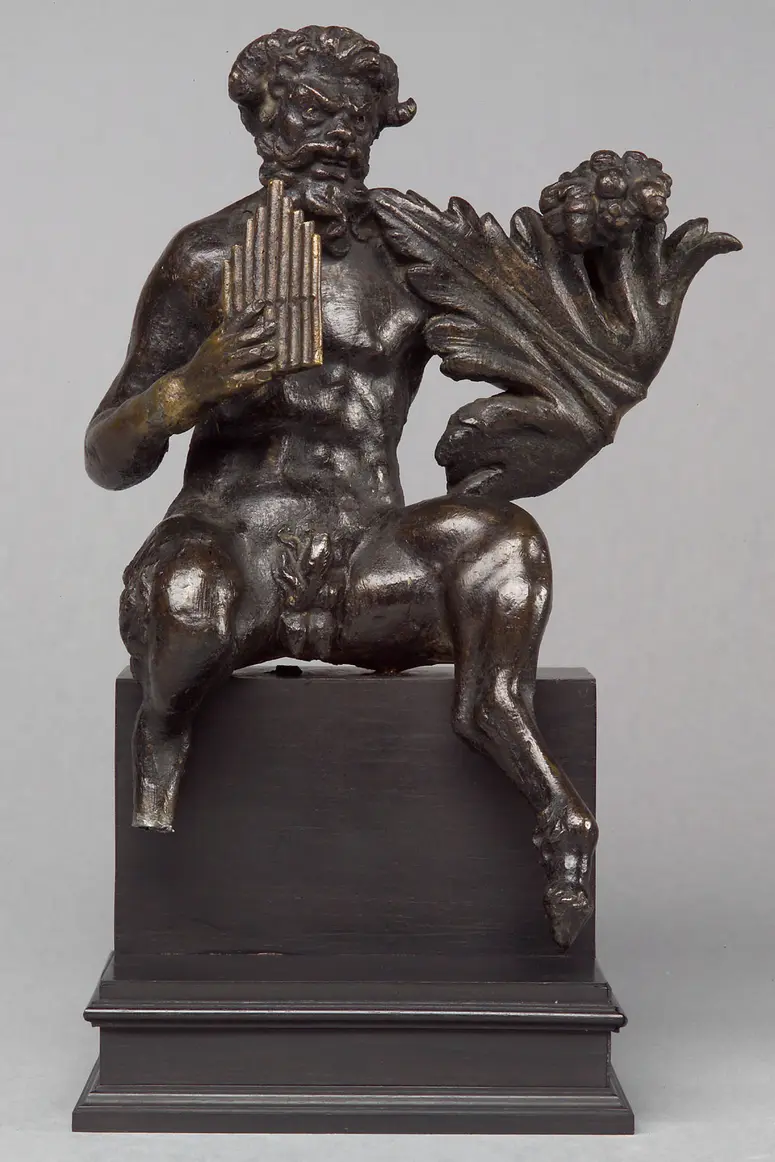
Statuette, Pan, Bronze, Kleinbronze 2. Hälfte 16. Jahrhundert