Ennoia Philippou
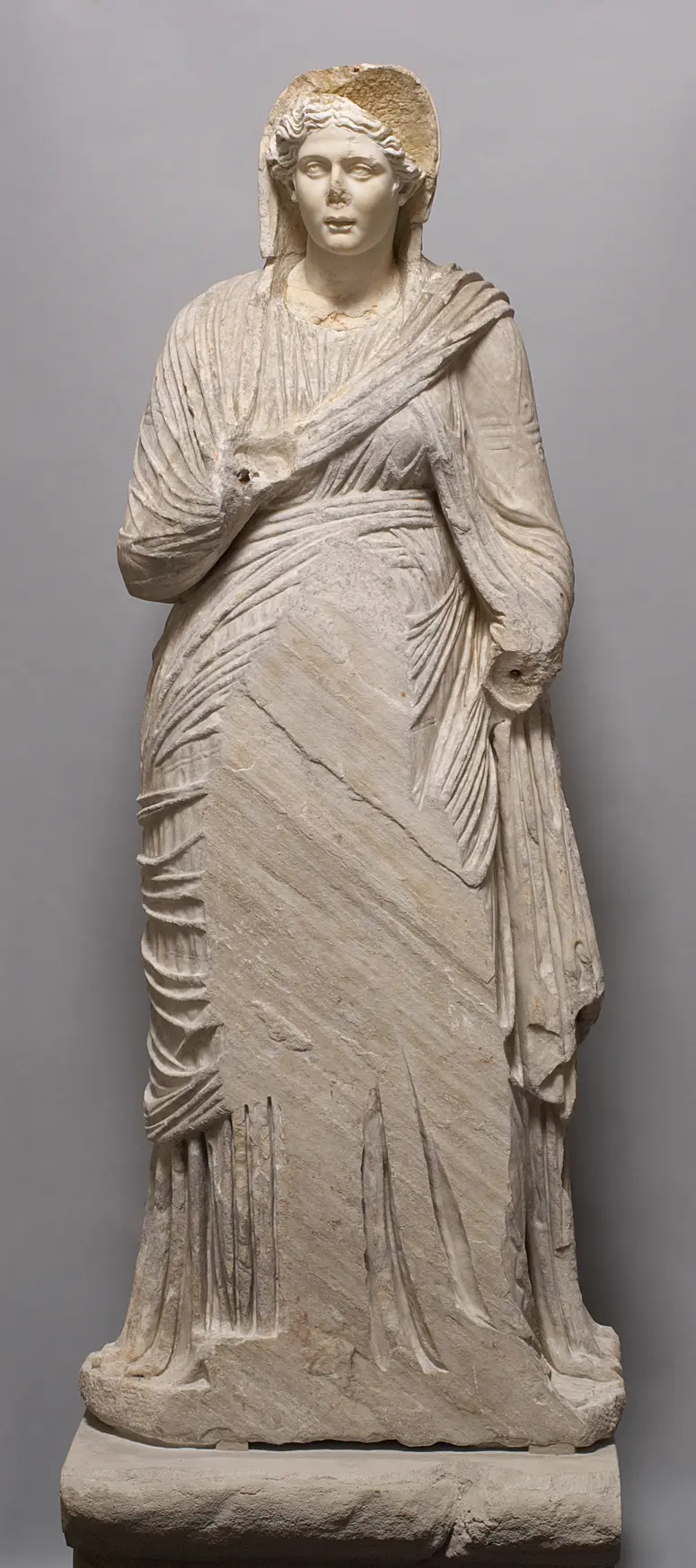
2. Jh. n. Chr., nach hellenistischem Original
The torso of a female statue of a type popular for the goddess Ceres was repurposed for a personification of the inspiration of an otherwise anonymous Philippus. We can reconstruct the attribute in her raised right hand: she once held an ear of corn or a torch. The inscription on the plinth is the only one of the four statues not incised but painted. It honours someone in charge of administering the donation to restore the façade of the library and who had the ennoia (the inspiration, similar to the Greek logos) to undertake it.
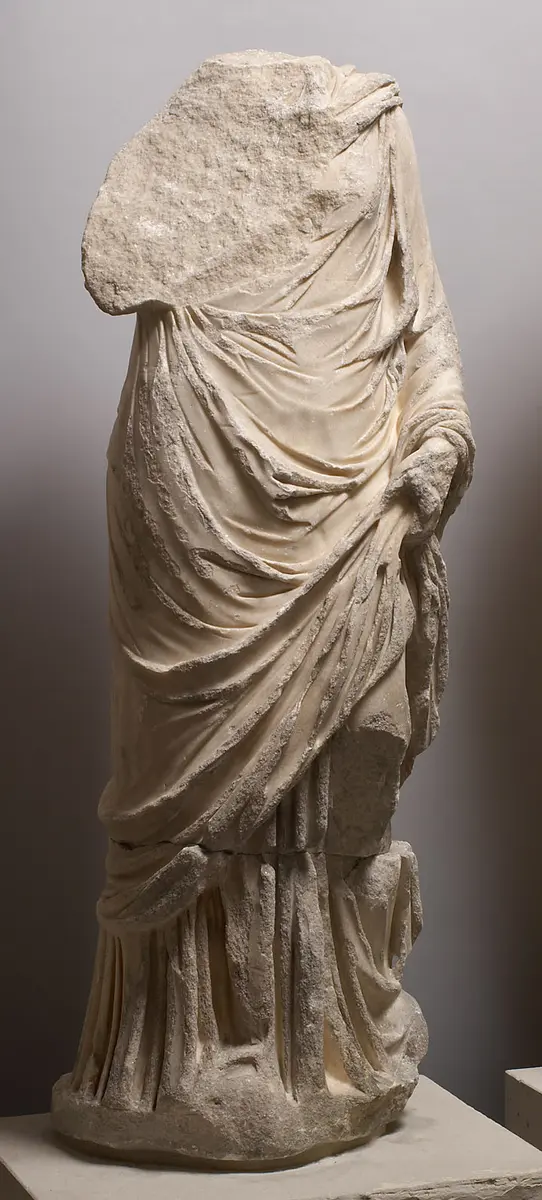
The torso of a female statue of a type popular for the goddess Ceres was repurposed for a personification of the inspiration of an otherwise anonymous Philippus. We can reconstruct the attribute in her raised right hand: she once held an ear of corn or a torch. The inscription on the plinth is the only one of the four statues not incised but painted. It honours someone in charge of administering the donation to restore the façade of the library and who had the ennoia (the inspiration, similar to the Greek logos) to undertake it.
Time:
2. Jh. n. Chr., nach hellenistischem Original
Object Name
Statue
Culture
Römisch
Location of discovery:
Ephesos Celsusbibliothek Umgebung (Selçuk, Kleinasien, Türkei)
Material/technology:
Marmor
Dimensions:
L/H 167 cm
Copyright
Kunsthistorisches Museum, Antikensammlung
Invs.
Antikensammlung, I 928
Provenance
Sultan, Abdul, Hamid, II.; Österreichische Ausgrabungen in Ephesos; Geschenk an Kaiser Franz Joseph; 1914 nachträglich inventarisiert
Browse more
Similar items you might be interested in

Fragment einer Kreuzigungsgruppe Matthias Steinl um 1685/87
Miniatur, Gebetbuch der Philippine Welser, Gebetbuch kurz nach 1557 oder nach 1567
Statue: Arete Kelsou Hellenistisch-römisch, Mittlere Kaiserzeit Torso hellenistisch, Kopf 2. Jh. n. Chr.

Relief: Stierkopf-Girlandenfries Römisch, Mittlere Kaiserzeit Mitte 2. Jh. n. Chr.
Relief: Stierkopf-Girlandenfries Römisch, Mittlere Kaiserzeit Mitte 2. Jh. n. Chr.
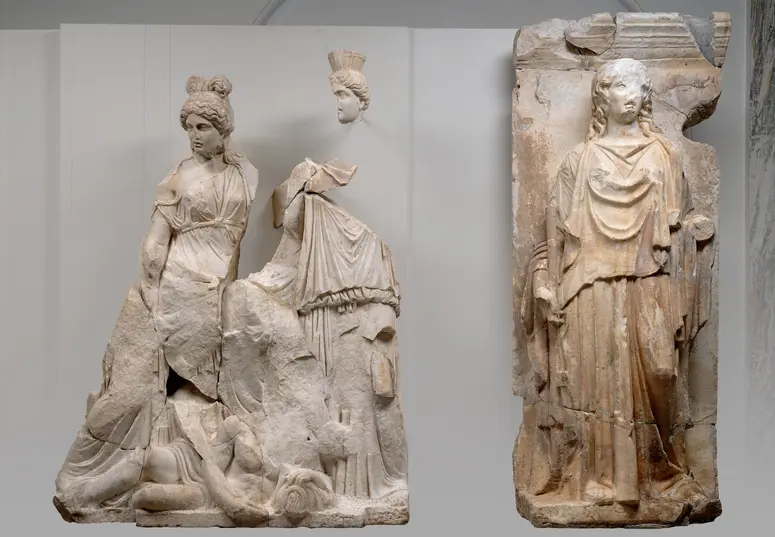
Relief: Götterversammlung: Demeter Römisch, Mittlere Kaiserzeit Mitte des 2. Jhs. n. Chr.

Statuettentorso: Dionysos Römisch, Kaiserzeit 1. - 2. Jh. n. Chr., nach griechischem Original des 4. Jh. v. Chr.
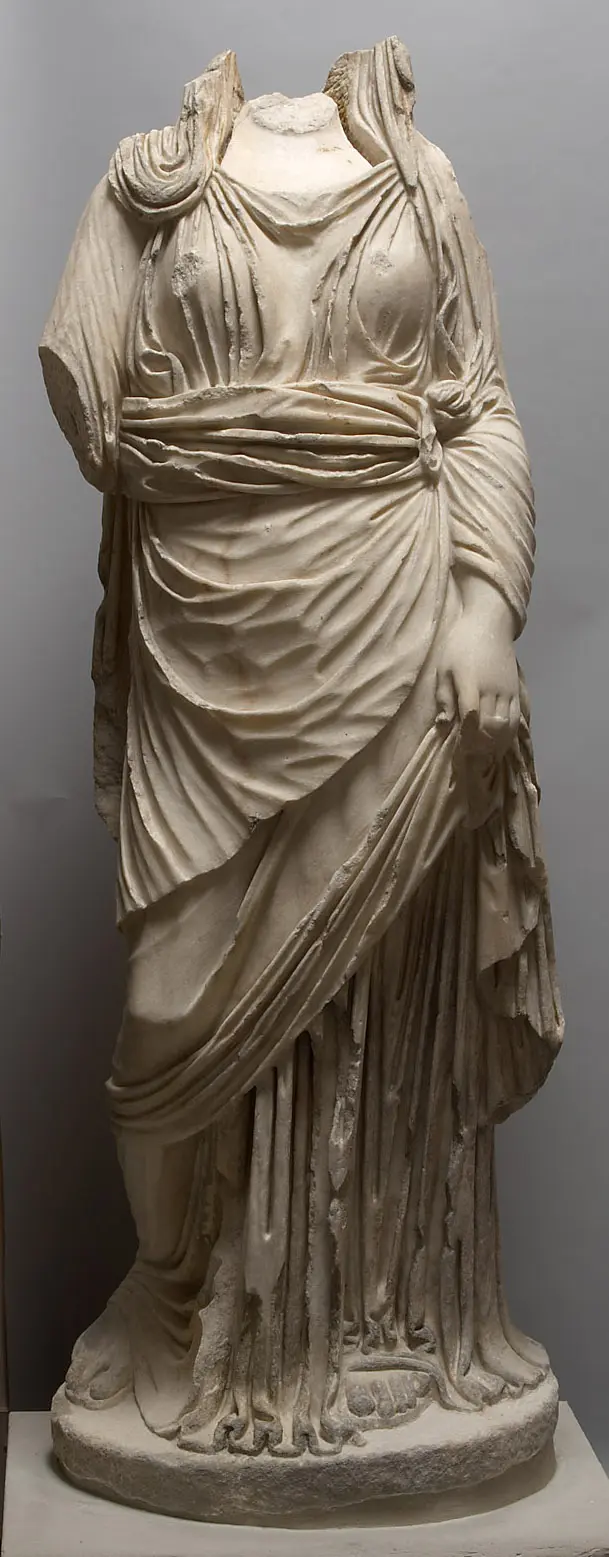
Statue: Episteme Kelsou Römisch, Mittlere Kaiserzeit 2. Jh. n. Chr.
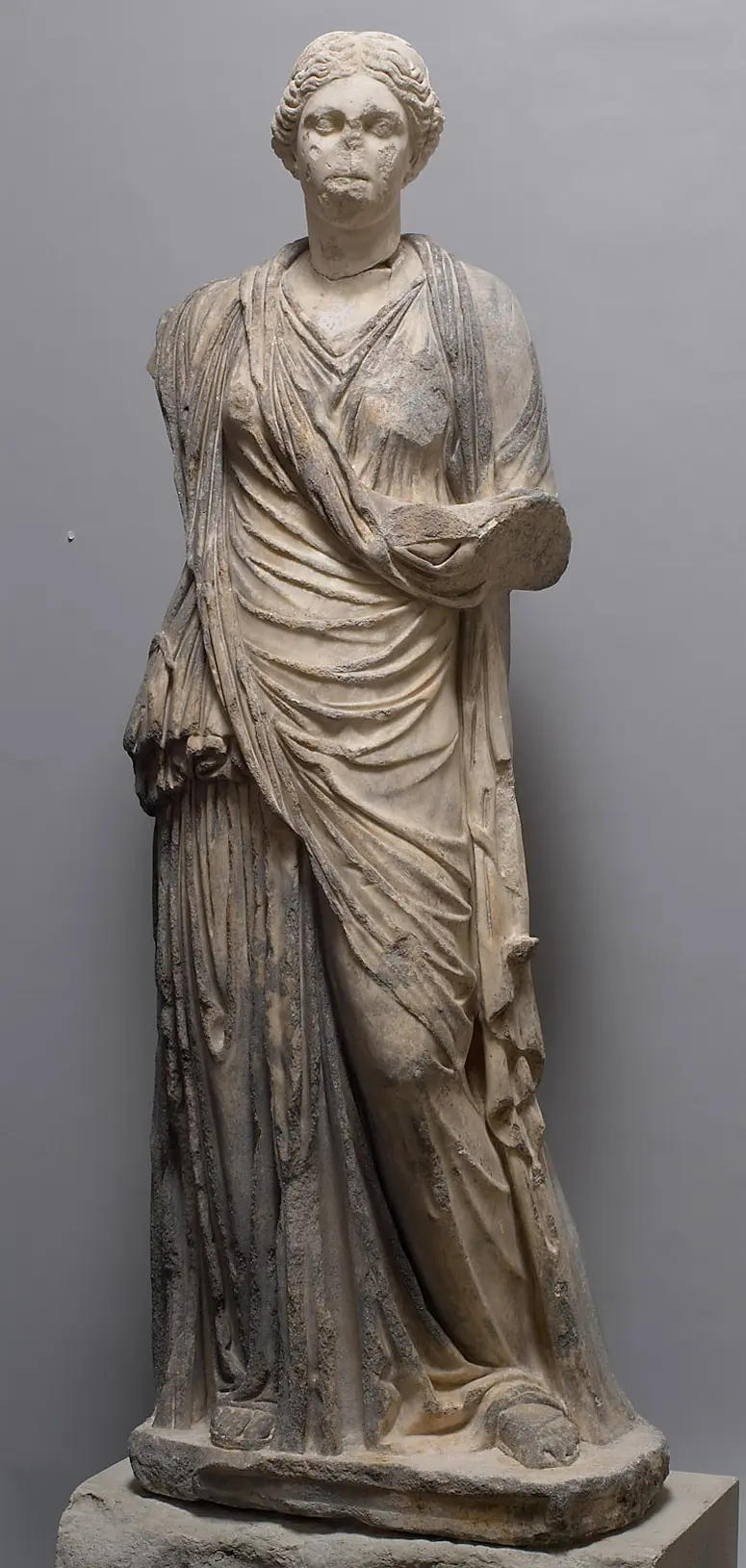
Statue: Sophia Kelsou Römisch, Mittlere Kaiserzeit 2. Jh. n. Chr., nach hellenistischem Original
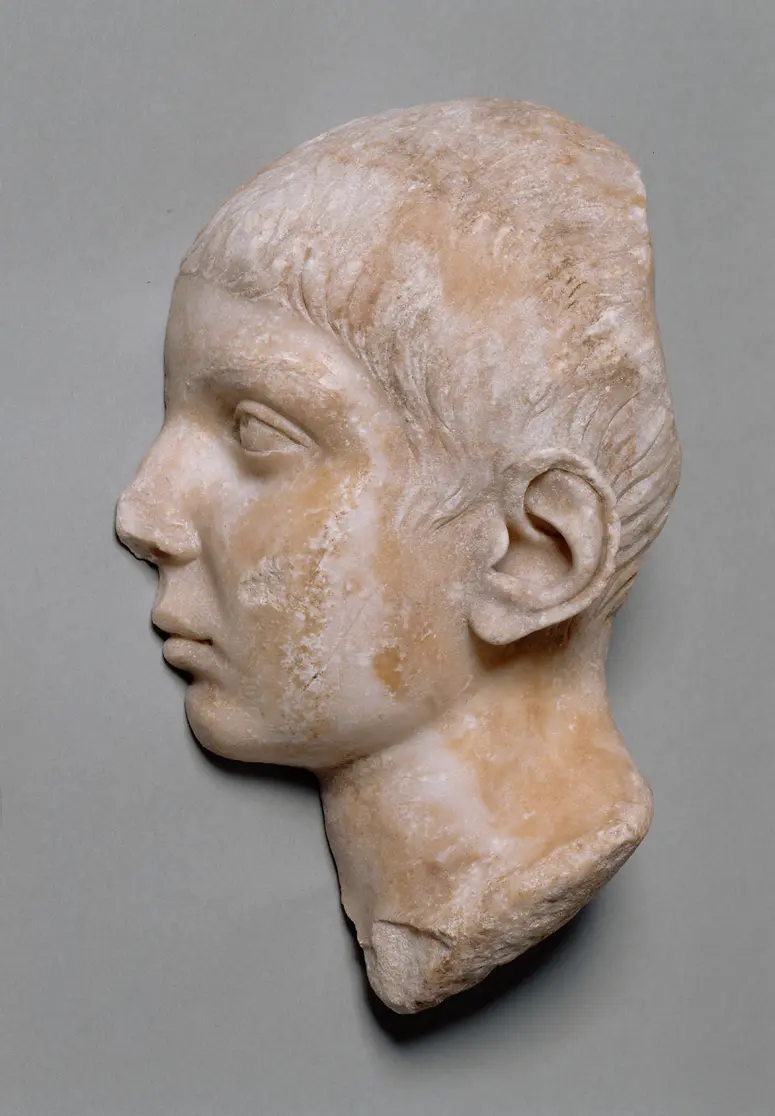
Relief: Porträtkopf eines Knaben Römisch, Späte Kaiserzeit Mitte 3. Jh. n. Chr.
Porträtkopf: Porträt eines kahlköpfigen Mannes Römisch, Spätantik 1. Hälfte 6. Jh. n. Chr.
Relief: Schlachtenszene, Schwertkämpfer Römisch, Mittlere Kaiserzeit Mitte 2. Jh. n. Chr.