Antia Julia Pollia (?)
105 - 108 n. Chr.
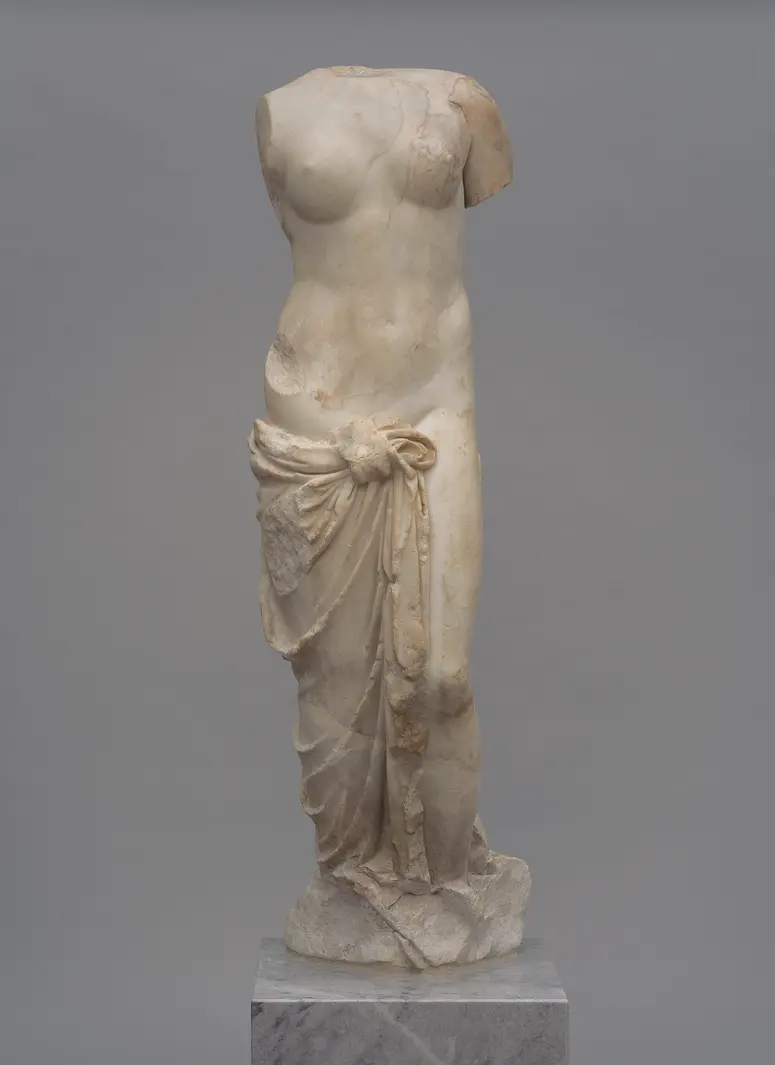
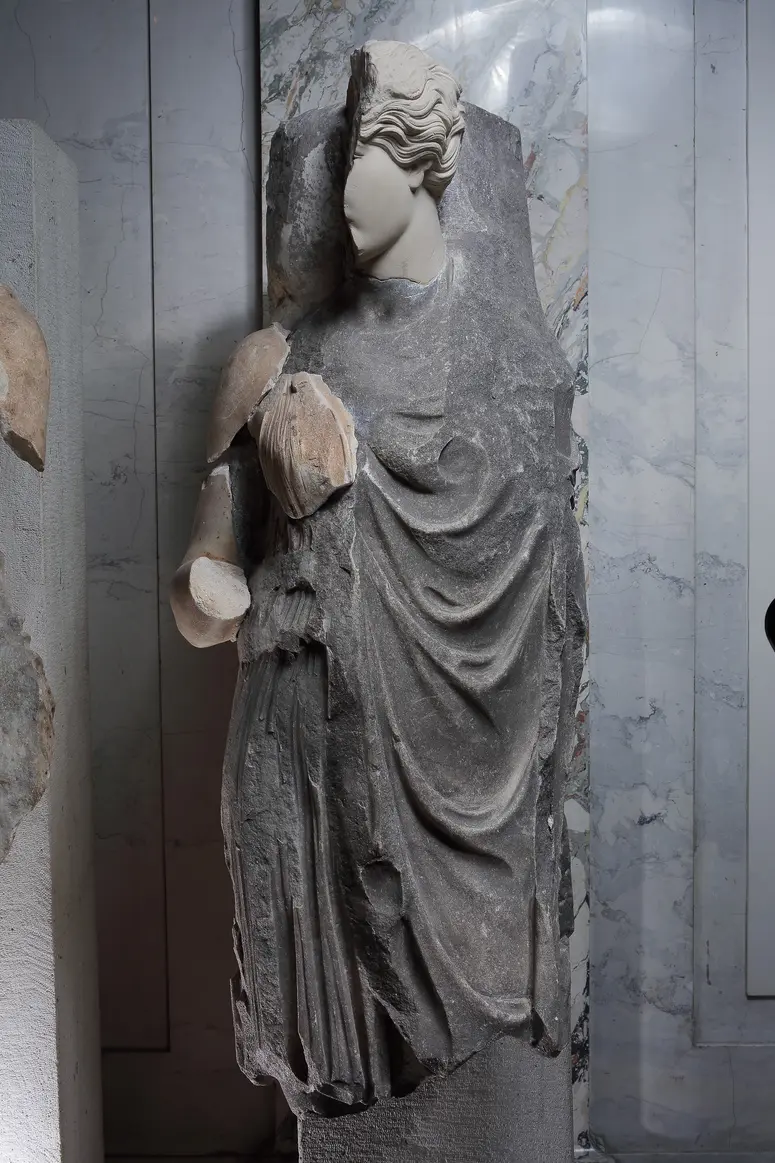
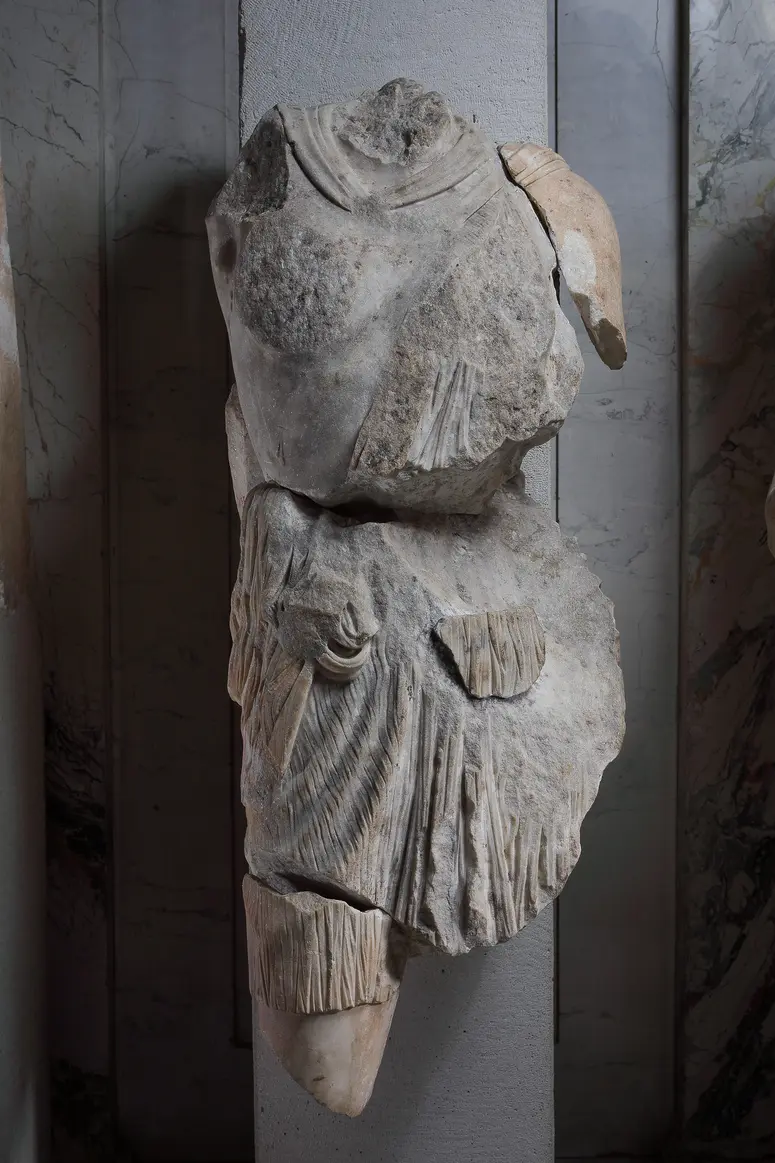
Worked from a single block of marble, the sitter can be identified with the help of an inscription found nearby: in the early second century A.D. Antia Iulia Polla, a citizen of Ephesus, was honoured with a statue depicting her in a virtuous pose, her cloak tightly wrapped around her body, that perfectly corresponds to the type known as “Small Herculaneum Woman”. With her (now lost) right hand she is about to pull the cloak enveloping her body – which she has gathered up with her left hand – over her left shoulder. Arranged like three tiaras over her forehead, her rigid hairstyle is modelled on the styles fashionable at the court of Trajan. Another version of this type is the Torso of a female Statue (right).
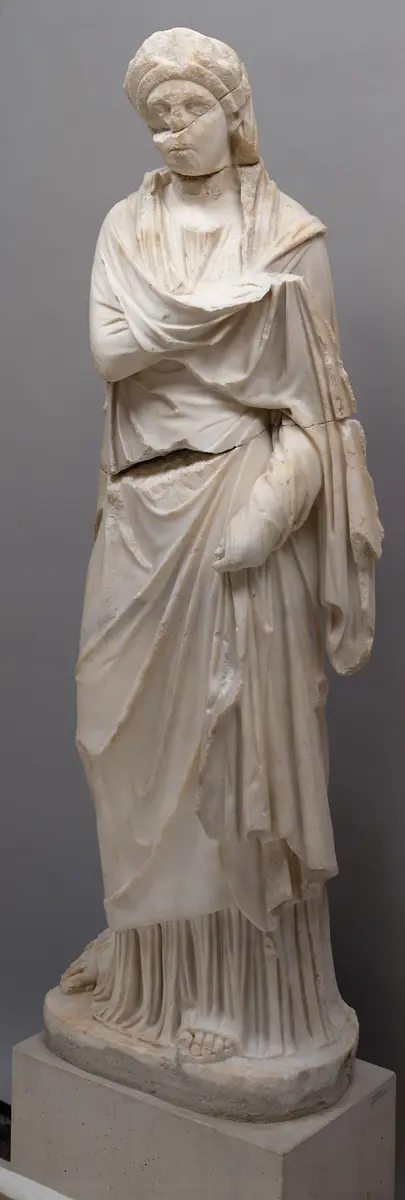
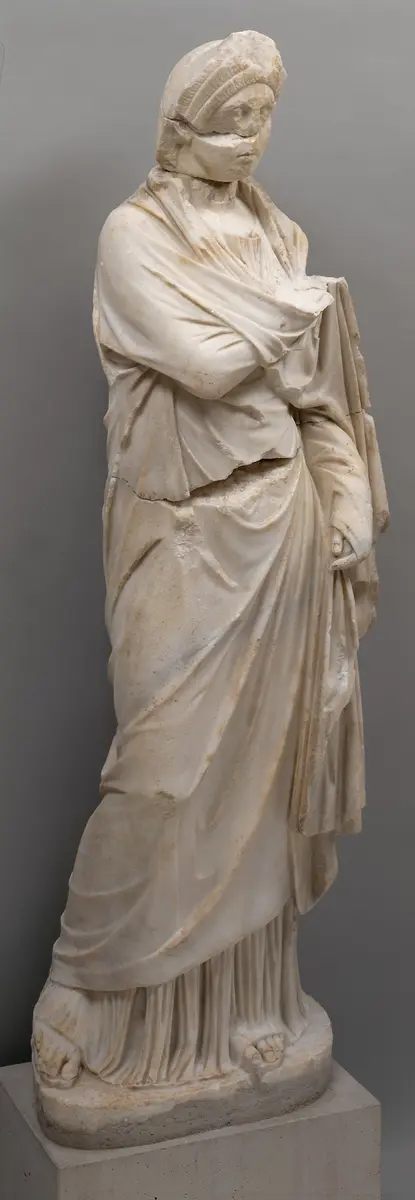
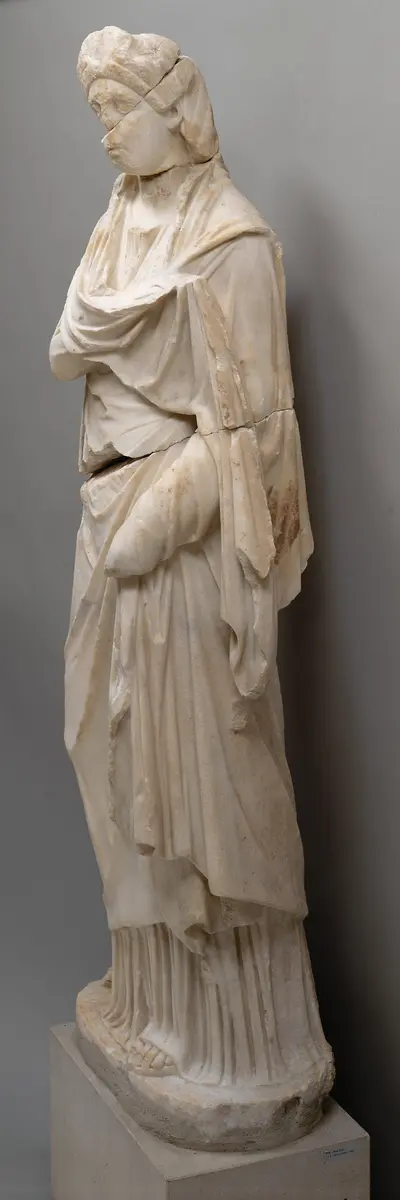
Worked from a single block of marble, the sitter can be identified with the help of an inscription found nearby: in the early second century A.D. Antia Iulia Polla, a citizen of Ephesus, was honoured with a statue depicting her in a virtuous pose, her cloak tightly wrapped around her body, that perfectly corresponds to the type known as “Small Herculaneum Woman”. With her (now lost) right hand she is about to pull the cloak enveloping her body – which she has gathered up with her left hand – over her left shoulder. Arranged like three tiaras over her forehead, her rigid hairstyle is modelled on the styles fashionable at the court of Trajan. Another version of this type is the Torso of a female Statue (right).
Time:
105 - 108 n. Chr.
Object Name
Porträtstatue
Culture
Römisch
Location of discovery:
Ephesos Mazaeus-Mithridatestor (Selçuk, Kleinasien, Türkei)
Material/technology:
Marmor
Dimensions:
L/H 184,5 cm
Copyright
Kunsthistorisches Museum, Antikensammlung
Invs.
Antikensammlung, I 831
Provenance
Sultan, Abdul, Hamid, II.; Österreichische Ausgrabungen in Ephesos; Geschenk an Kaiser Franz Joseph; 1911 nachträglich inventarisiert
Browse more
Similar items you might be interested in
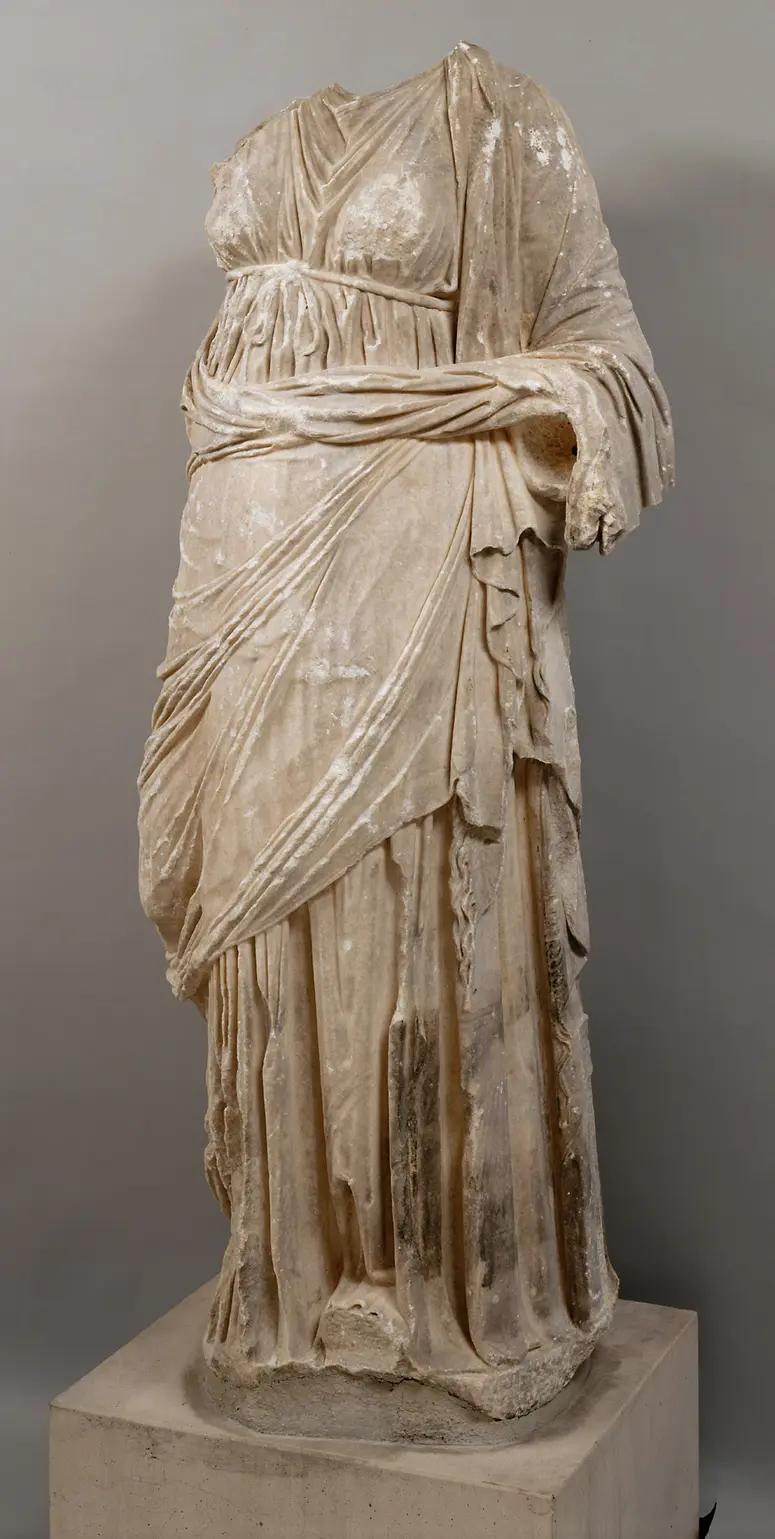
Statue: Torso einer weiblichen Gewandstatue Römisch, Mittlere Kaiserzeit 2. Jh. n. Chr., nach hellenistischem Original
Relief: Götterversammlung: Demeter Römisch, Mittlere Kaiserzeit Mitte des 2. Jhs. n. Chr.
Porträtkopf: Arsinoe III. (?) Griechisch, Hellenistisch 3. Jh. v. Chr.
Relief: Artemis Selene Römisch, Mittlere Kaiserzeit Mitte 2. Jh. n. Chr.
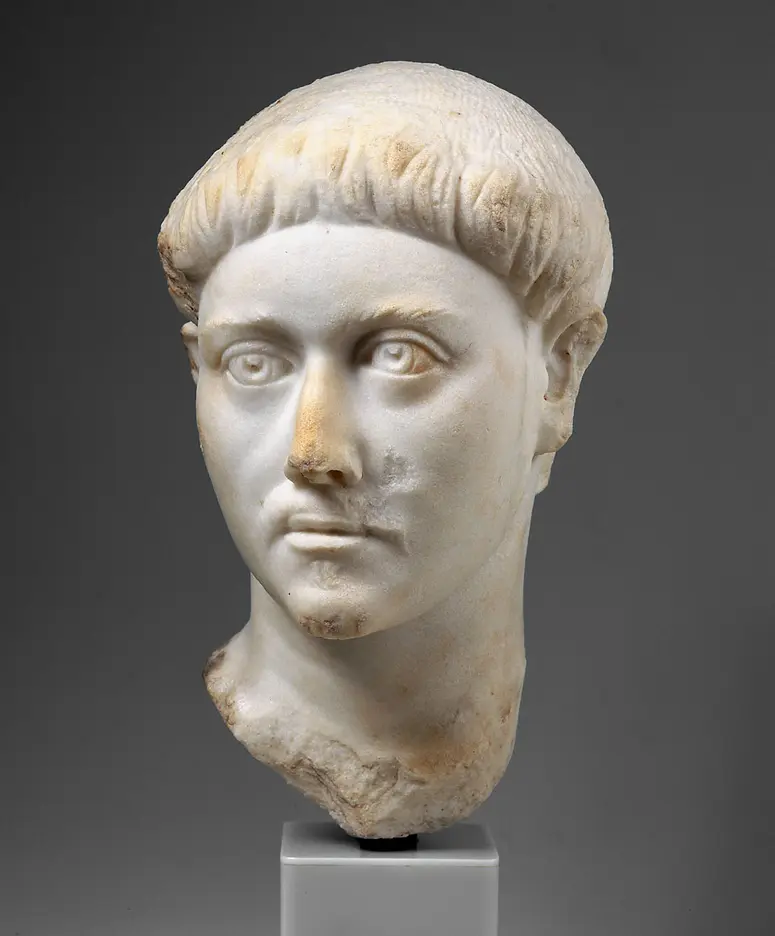
Porträtkopf: Porträtkopf eines jungen Mannes Römisch, Spätantik Anfang 4. Jh. n. Chr.
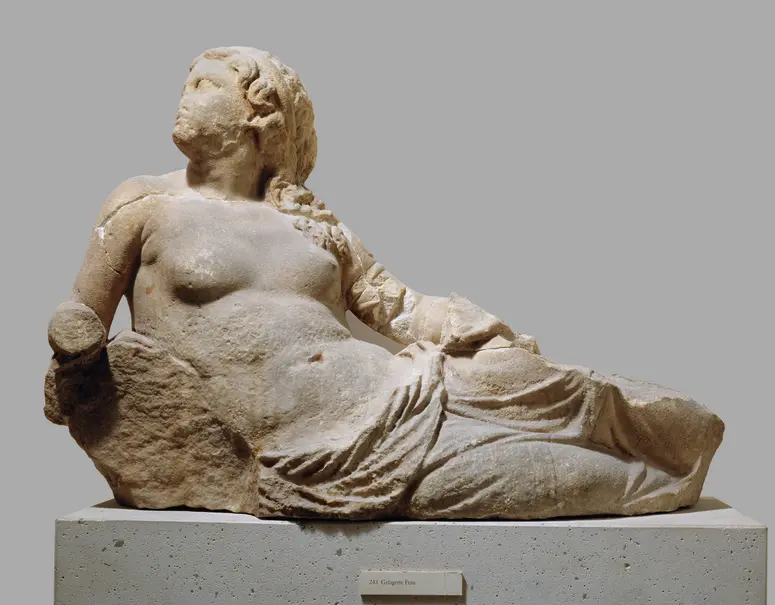
Giebel: Gelagerte Frau Griechisch, Hellenistisch 150 - 125 v. Chr.

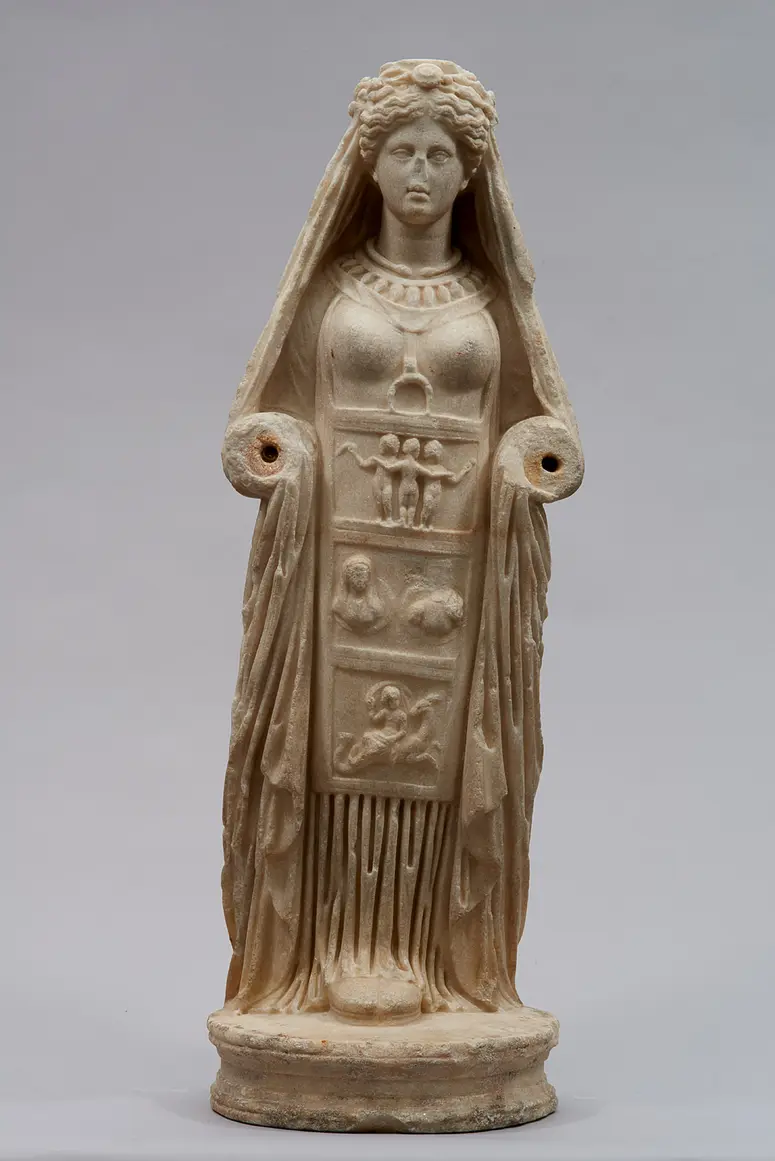
Statuette: Aphrodite von Aphrodisias Römisch, Mittlere Kaiserzeit 2. Jh. n. Chr.
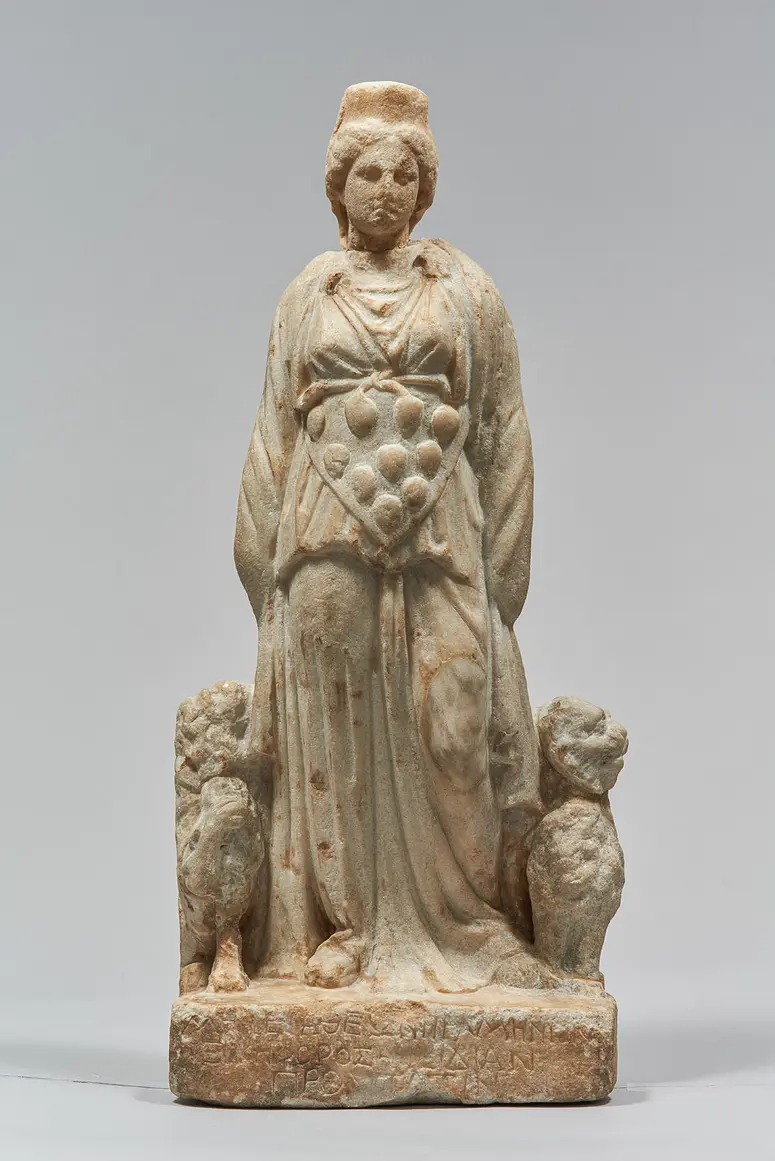
Statuette: Pergamenische Kybele mit Weihung des Neikephoros Griechisch, Hellenistisch (Pergamenisch) 2. Jh. v. Chr.
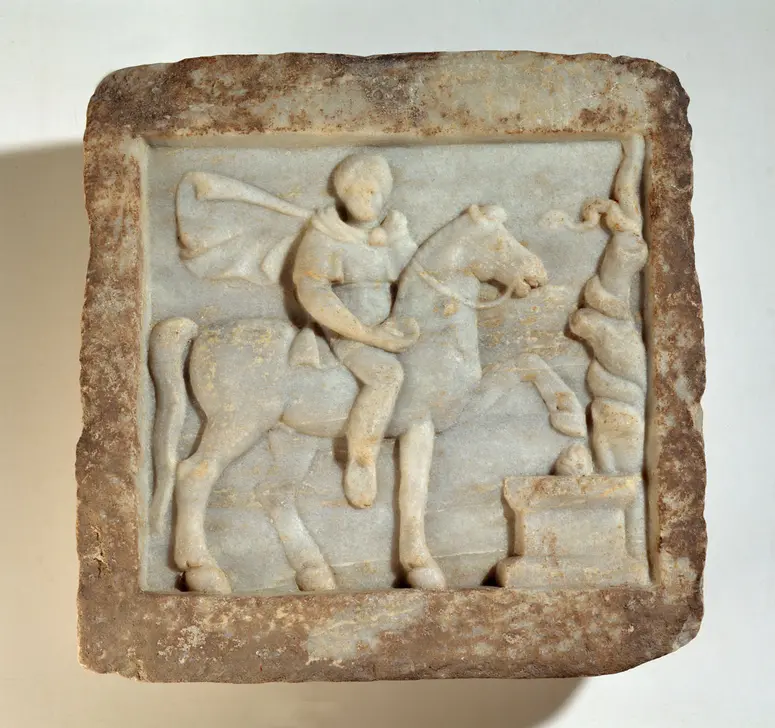
Grabdenkmal: Grabrelief: Reiter Griechisch 1. - 3. Jh. n. Chr.
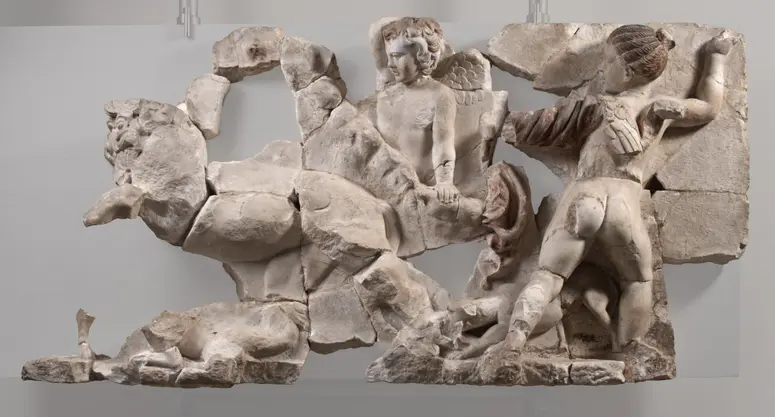
Relief: Erotenfries: Eroten auf Löwenjagd Römisch, Frühe Kaiserzeit 2. Hälfte 1. Jh. n. Chr.
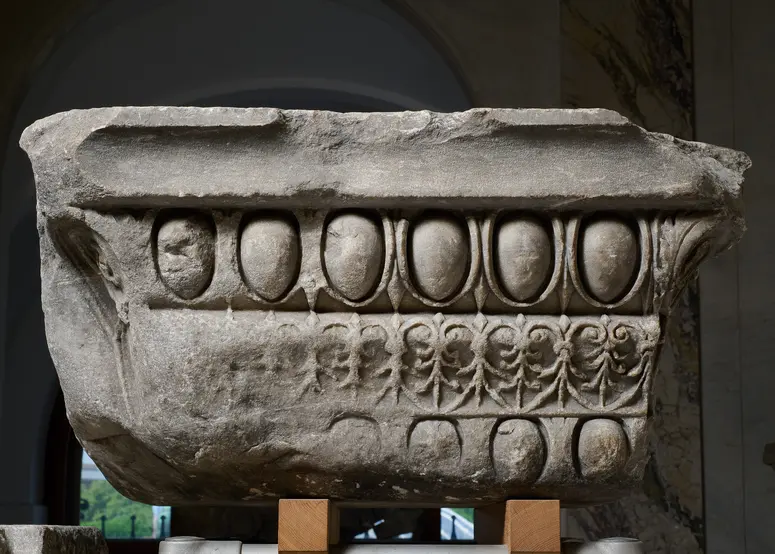
Kapitell: Antenkapitell Römisch, Mittlere Kaiserzeit 1. Hälfte 2. Jh. n. Chr.
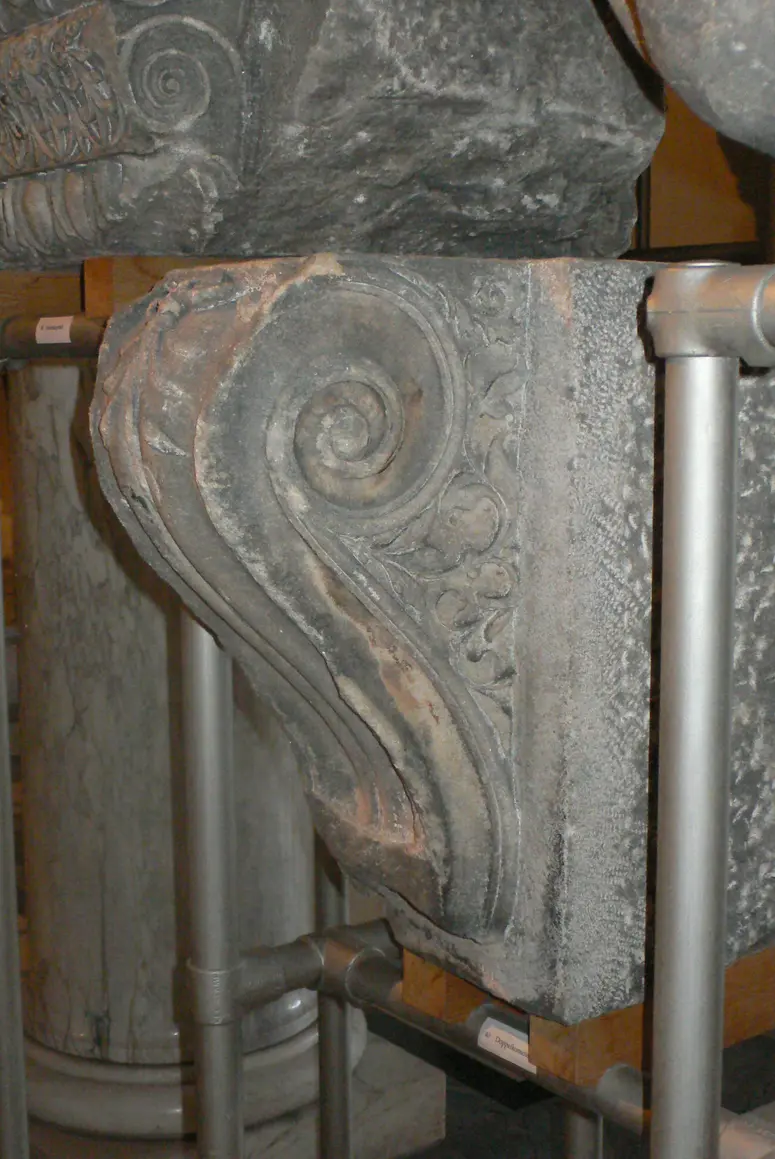
Konsole: Doppelkonsole Römisch, Mittlere Kaiserzeit 1. Hälfte 2. Jh. n. Chr.
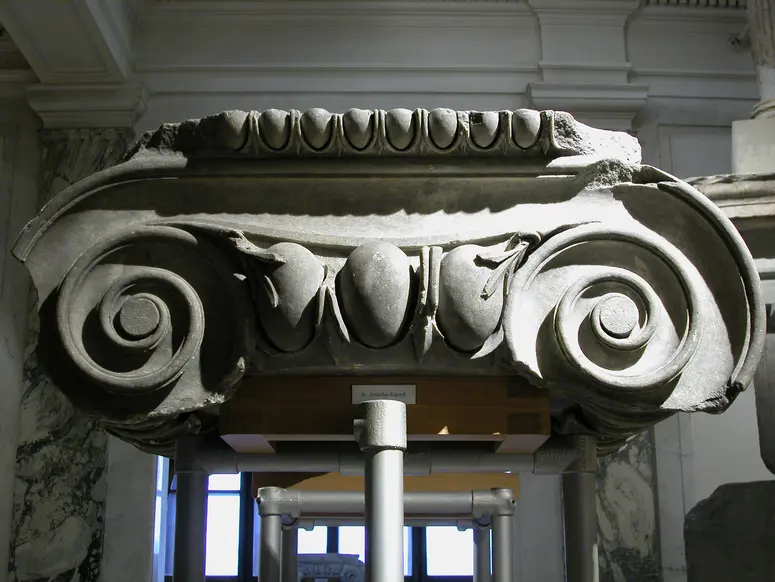
Kapitell: Ionisches Kapitell Römisch, Mittlere Kaiserzeit 1. Hälfte 2. Jh. n. Chr.
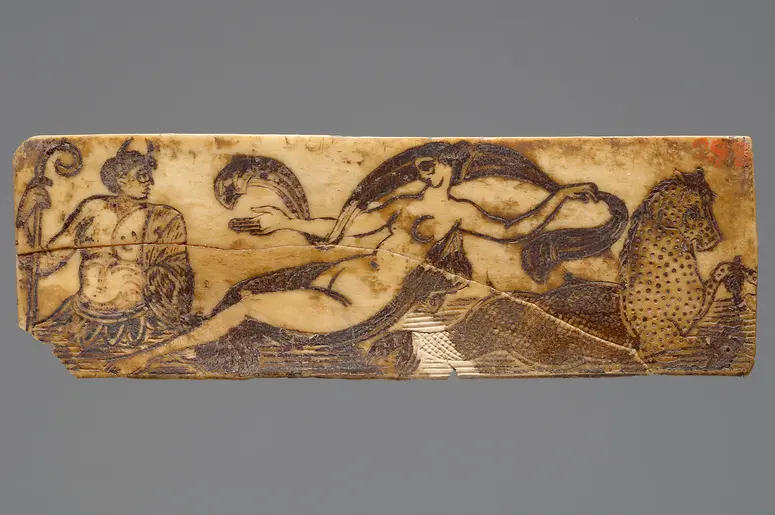
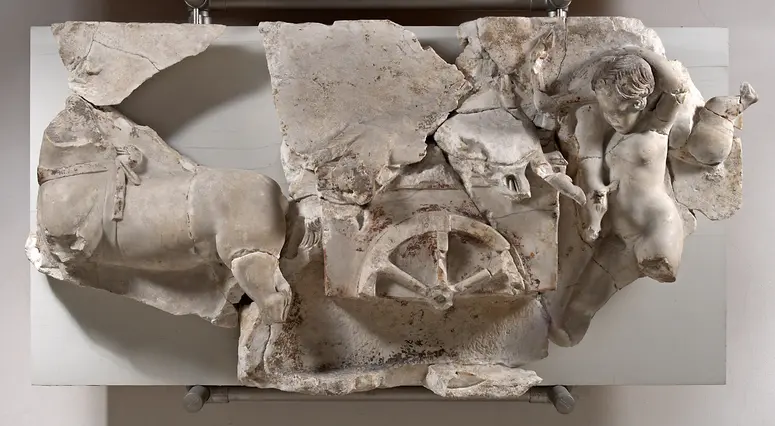
Relief: Erotenfries: Eroten mit Jagdbeute Römisch, Frühe Kaiserzeit 2. Hälfte 1. Jh. n. Chr.
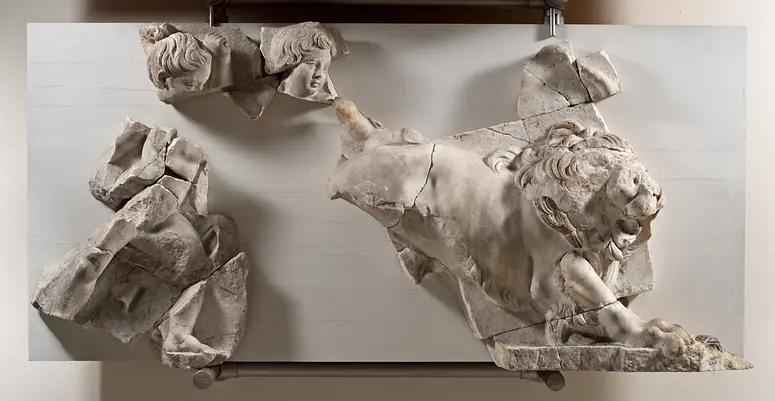
Relief: Erotenfries: Eroten auf Löwenjagd Römisch, Frühe Kaiserzeit 2. Hälfte 1. Jh. n. Chr.
Relief: Hochrelief am Pfeiler: Stehende Amazone Römisch, Mittlere Kaiserzeit 2. Jh. n. Chr., nach griechischem Bronzeoriginal um 440/430 v. Chr.
Relief: Hochrelief am Pfeiler: Verwundete Amazone Römisch, Mittlere Kaiserzeit 2. Jh. n. Chr., nach griechischem Bronzeoriginal um 440/430 v. Chr.