Ionisches Kapitell
1. Hälfte 2. Jh. n. Chr.
During the Empire, visitors arriving in Ephesus by ship entered the city through monumental gateways. One of the metropolis’ main arteries was the Arcadiane, which led from the harbour to the city’s large theatre. The Middle Harbour Gate marking the street’s western end was erected during the reign of Hadrian (middle of the 2nd century). The gateway comprised four canopies, each resting on four Ionic columns; a wall connected the canopies with the three arched gates. On its narrow sides a pillar was placed between the outer column. The quality of the Gate’s architectural décor is outstanding. The Ionic capitals imitate Classicalmodels from the 5th century BC. These stylistic recourses are most obvious in the pillar- and anta capitals: their side planes are decorated with an acanthus leaf below which grow volutes that develop along the edges before curling up to form the side ends of the profiled cornices of the main façade (egg-and-dart, palmettes, egg-and-dart). Its models are archaic and classical anta capitals like those found in the temple of Apollo at Didyma. The following building components from the Middle Harbour Gate are now in Vienna: one of the 16 Ionic capitals, two anta capitals (from above the side gates), one pillar capital from the narrow side, and one door lintel from the central gate. Ionic Capital Roman, early 2nd century A.D. Marble Ephesus, from the Middle Harbour Gate Inv. no. I 1629b In the first half of the second century A.D., architects often looked to Classical forms for inspiration. Although this Ionic capital dates from the time of the Roman Empire, it conforms to the Classical canon. Here, the canalis, the deepened bulge from which grow the volutes, has been widened above the egg-and-dart echinus; in Roman Ionic capitals the egg-and-dart moulding often reaches up to the abacus slab. Note the incised lines on the eyes of the volutes, the circular area in the centre of the scroll, which were added by the workmen who constructed the volute.
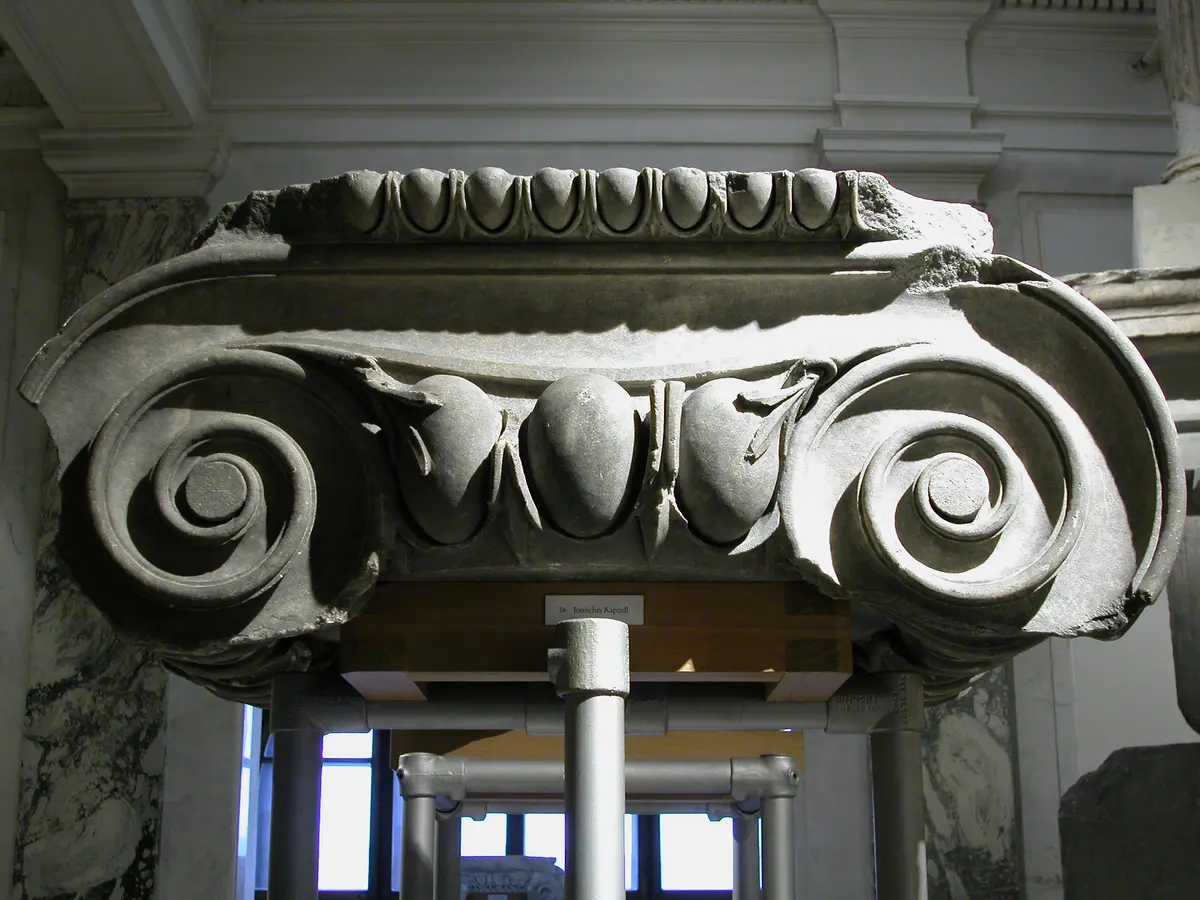
During the Empire, visitors arriving in Ephesus by ship entered the city through monumental gateways. One of the metropolis’ main arteries was the Arcadiane, which led from the harbour to the city’s large theatre. The Middle Harbour Gate marking the street’s western end was erected during the reign of Hadrian (middle of the 2nd century). The gateway comprised four canopies, each resting on four Ionic columns; a wall connected the canopies with the three arched gates. On its narrow sides a pillar was placed between the outer column. The quality of the Gate’s architectural décor is outstanding. The Ionic capitals imitate Classicalmodels from the 5th century BC. These stylistic recourses are most obvious in the pillar- and anta capitals: their side planes are decorated with an acanthus leaf below which grow volutes that develop along the edges before curling up to form the side ends of the profiled cornices of the main façade (egg-and-dart, palmettes, egg-and-dart). Its models are archaic and classical anta capitals like those found in the temple of Apollo at Didyma. The following building components from the Middle Harbour Gate are now in Vienna: one of the 16 Ionic capitals, two anta capitals (from above the side gates), one pillar capital from the narrow side, and one door lintel from the central gate. Ionic Capital Roman, early 2nd century A.D. Marble Ephesus, from the Middle Harbour Gate Inv. no. I 1629b In the first half of the second century A.D., architects often looked to Classical forms for inspiration. Although this Ionic capital dates from the time of the Roman Empire, it conforms to the Classical canon. Here, the canalis, the deepened bulge from which grow the volutes, has been widened above the egg-and-dart echinus; in Roman Ionic capitals the egg-and-dart moulding often reaches up to the abacus slab. Note the incised lines on the eyes of the volutes, the circular area in the centre of the scroll, which were added by the workmen who constructed the volute.
Time:
1. Hälfte 2. Jh. n. Chr.
Object Name
Kapitell
Culture
Römisch
Location of discovery:
Ephesos Mittleres Hafentor (Selçuk, Kleinasien, Türkei)
Material/technology:
Marmor
Dimensions:
T. (Abakus) 65,5 cm: L/H 33 × B 100 cm
Copyright
Kunsthistorisches Museum, Antikensammlung
Invs.
Antikensammlung, I 1629 b
Provenance
Sultan, Abdul, Hamid, II.; Österreichische Ausgrabungen in Ephesos; Geschenk an Kaiser Franz Joseph; 1957 nachträglich inventarisiert
Browse more
Similar items you might be interested in
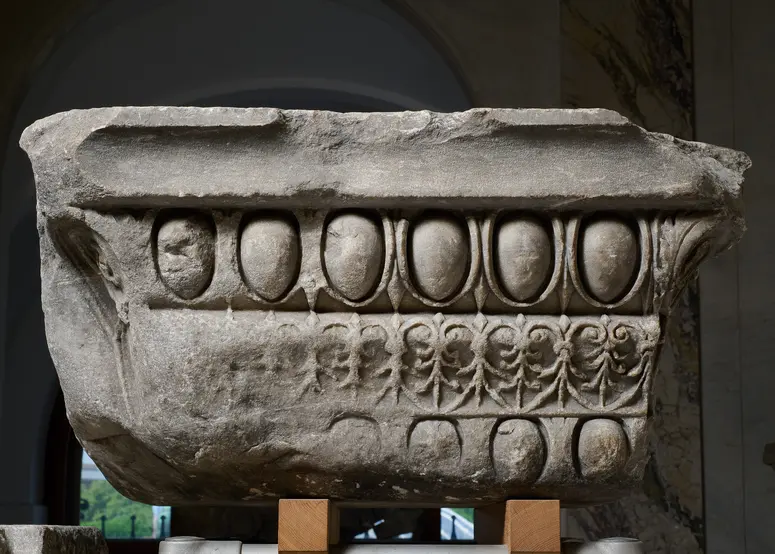
Kapitell: Antenkapitell Römisch, Mittlere Kaiserzeit 1. Hälfte 2. Jh. n. Chr.
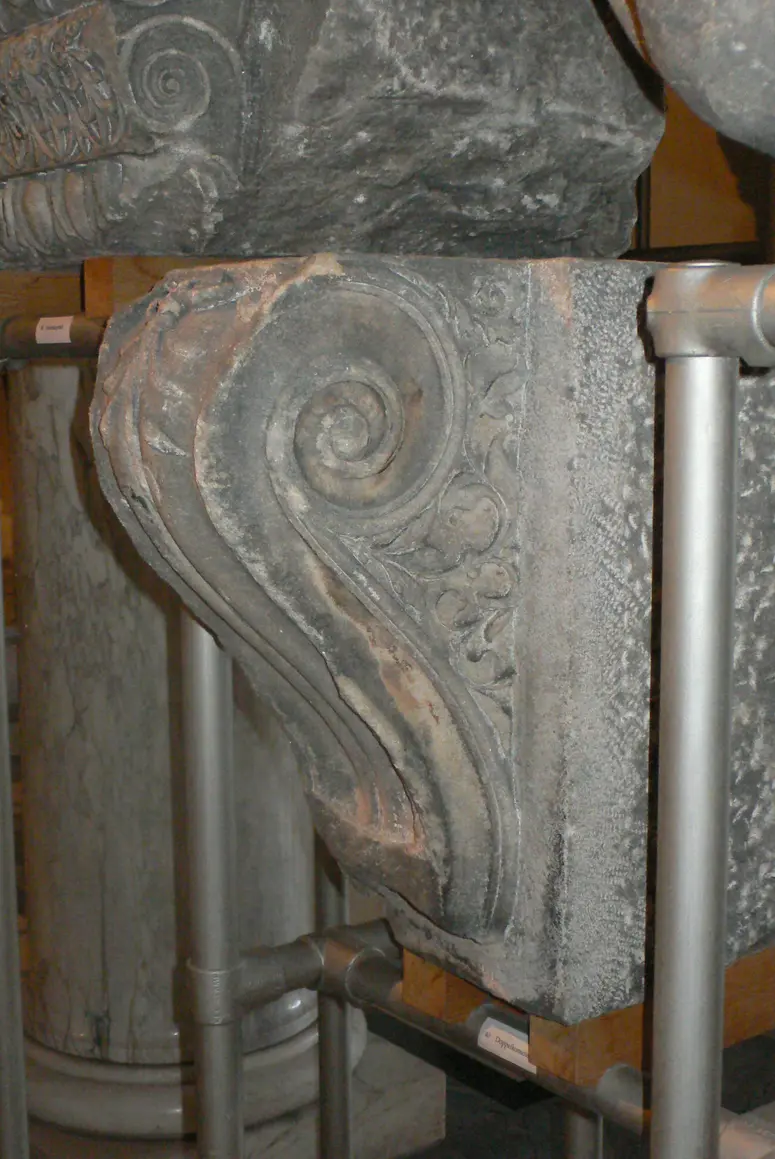
Konsole: Doppelkonsole Römisch, Mittlere Kaiserzeit 1. Hälfte 2. Jh. n. Chr.
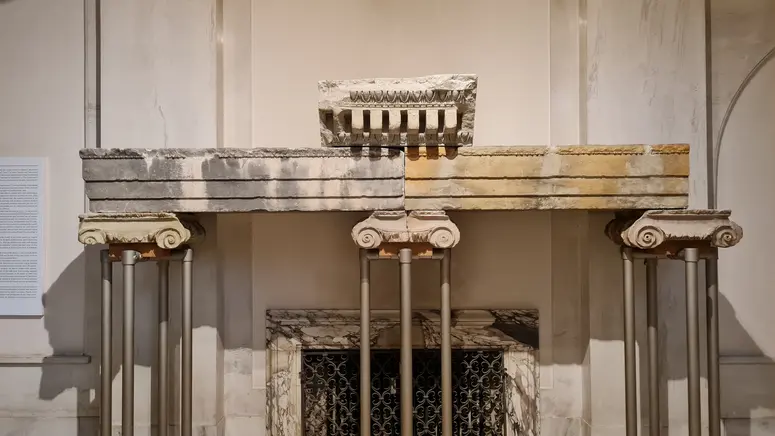
Kapitell: Ionisches Kapitell Griechisch 2. Hälfte 4. Jh. v. Chr.

Kapitell: Fragment eines ionischen Kapitells Griechisch, Hellenistisch 285 - 280 v. Chr.
Zeichnungsinventar, Modell: Modell des Artemisionaltares.Plexiglas, weiß gespritzt Griechisch, Spätklassisch 4. Jh. v. Chr.

Pseudo-Panathenäische Preisamphora mit Athena Griechisch, Attisch, schwarzfigurig um 525 v. Chr.
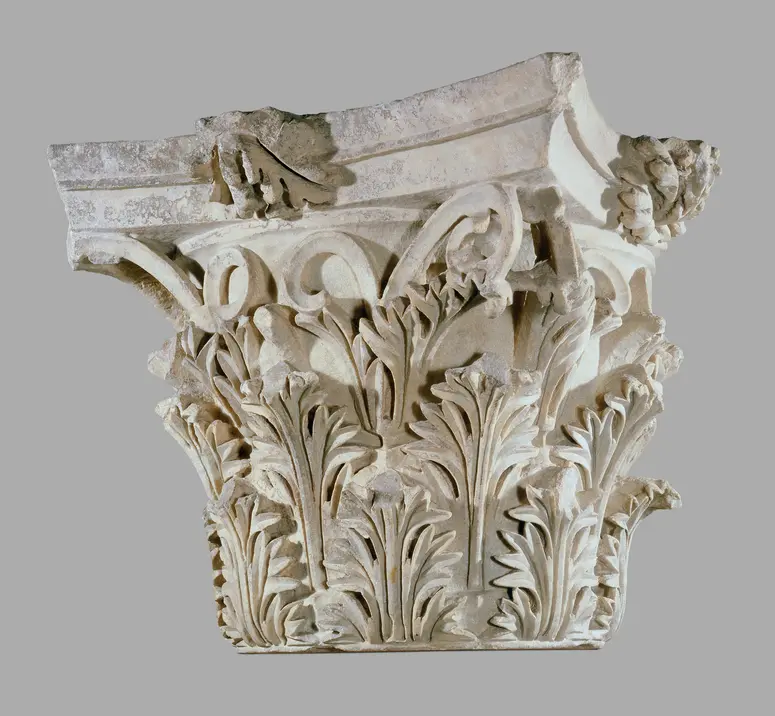
Korinthisches Kapitell Römisch, Mittlere Kaiserzeit Ende 1. Jh. n. Chr.
Aschenurne: Bacchus und Ariadne, Brettspiel Römisch, Mittlere Kaiserzeit 1. - 2. Jh. n. Chr.
Plan: Kunsthistorisches Museum. Bildhauerarbeiten an der Fassade Babenbergerstraße, Burgring Kunsthistorisches Museum Wien, Wien um 1946
Gewicht: 2 Unzen, Kreuz unter Rundbogen Frühbyzantinisch, Spätantike 4. - 7. Jh. n. Chr.
Gewicht: 1 Unze, Kreuz unter Rundbogen Frühbyzantinisch, Spätantike 4. - 7. Jh. n. Chr.
Grabdenkmal: Grabrelief mit Hadespforte und Inschrift Römisch, Späte Kaiserzeit 3. Jh. n. Chr.
Architektur: Oktogon Römisch, Frühe Kaiserzeit 3. Drittel 1. Jh. v. Chr.
Zwei Reliquienmonstranzen Ottavio Miseroni um 1620
Reliquienaltärchen für einen Dorn der Krone Christi, mit Kreuzigungsgruppe Ottavio Miseroni Anfang 17. Jahrhundert
Reliquienostensorium Matthäus Walbaum um 1600/05

Modell: Oktogon (Grab der Arsinoe) Hergestellt 1977 - 1978