Möbel, Schrank, Kasten, Kabinettschrank, Schildpattschrank
um 1660
The cabinet, which is mentioned in the 1663 inventory as »a high cabinet made of tortoises«, is decorated with tortoiseshell intarsia. The insides of the doors are made of rosewood and are adorned with ivory and ebony intarsia. On the left and right sides there are four small, blue and white enamelled drawers and in the centre an inner section is designed to look like a stage-setting. It is mirrored, has a floor which is decorated by a layer of ivory and ebony mosaics and six small columns which bear the ceiling. The cabinet's design corresponds to models from Antwerp, where tortoise-shell has been used as inlay material since the 17th century.
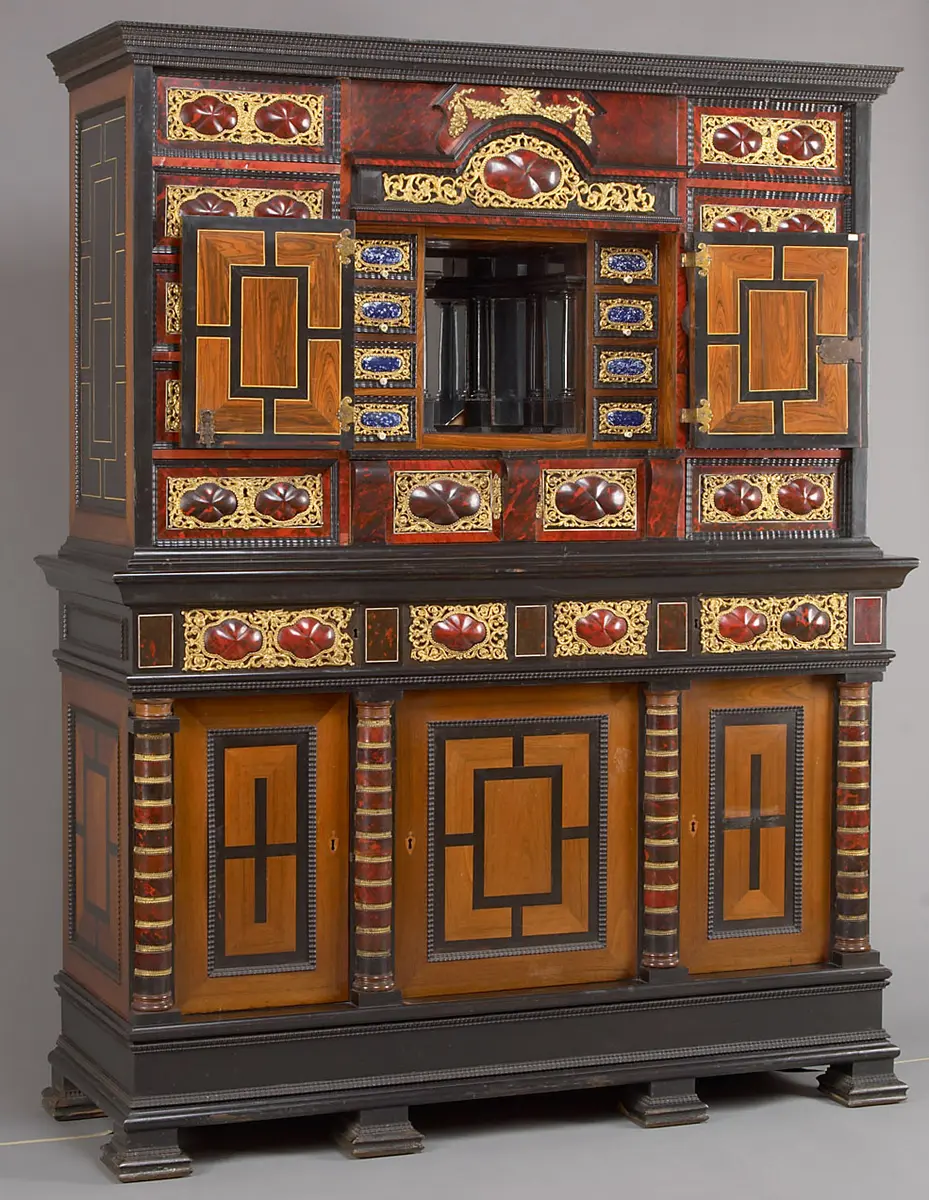
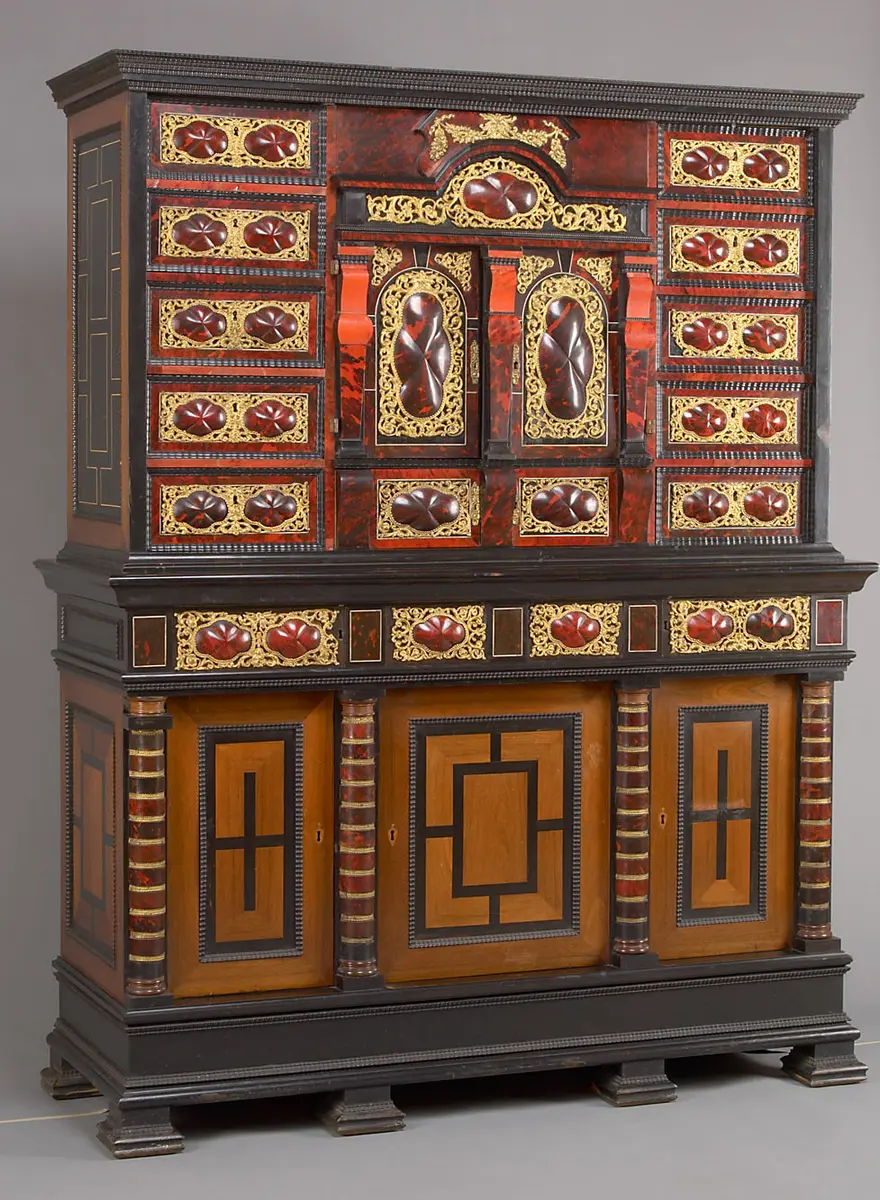
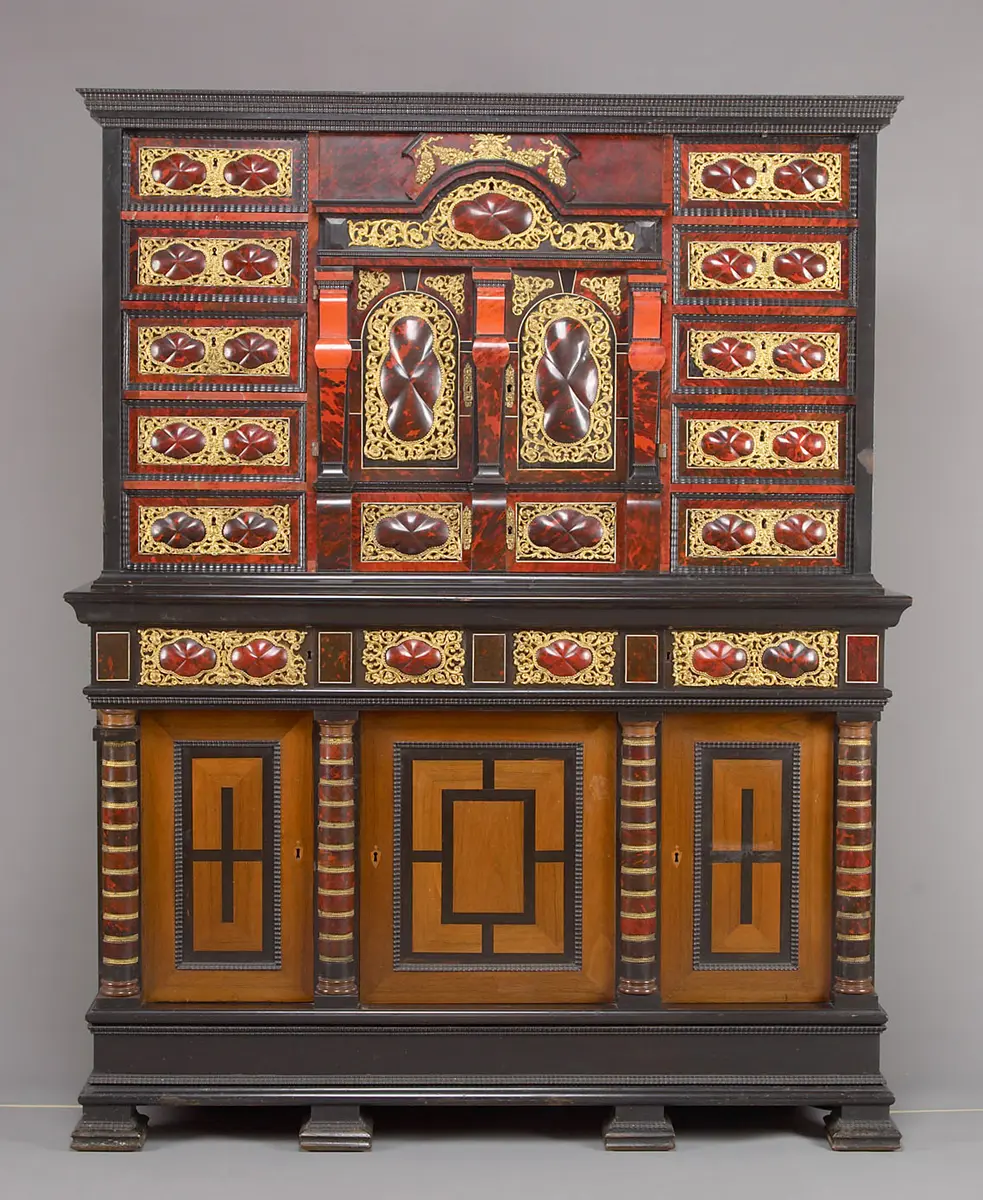
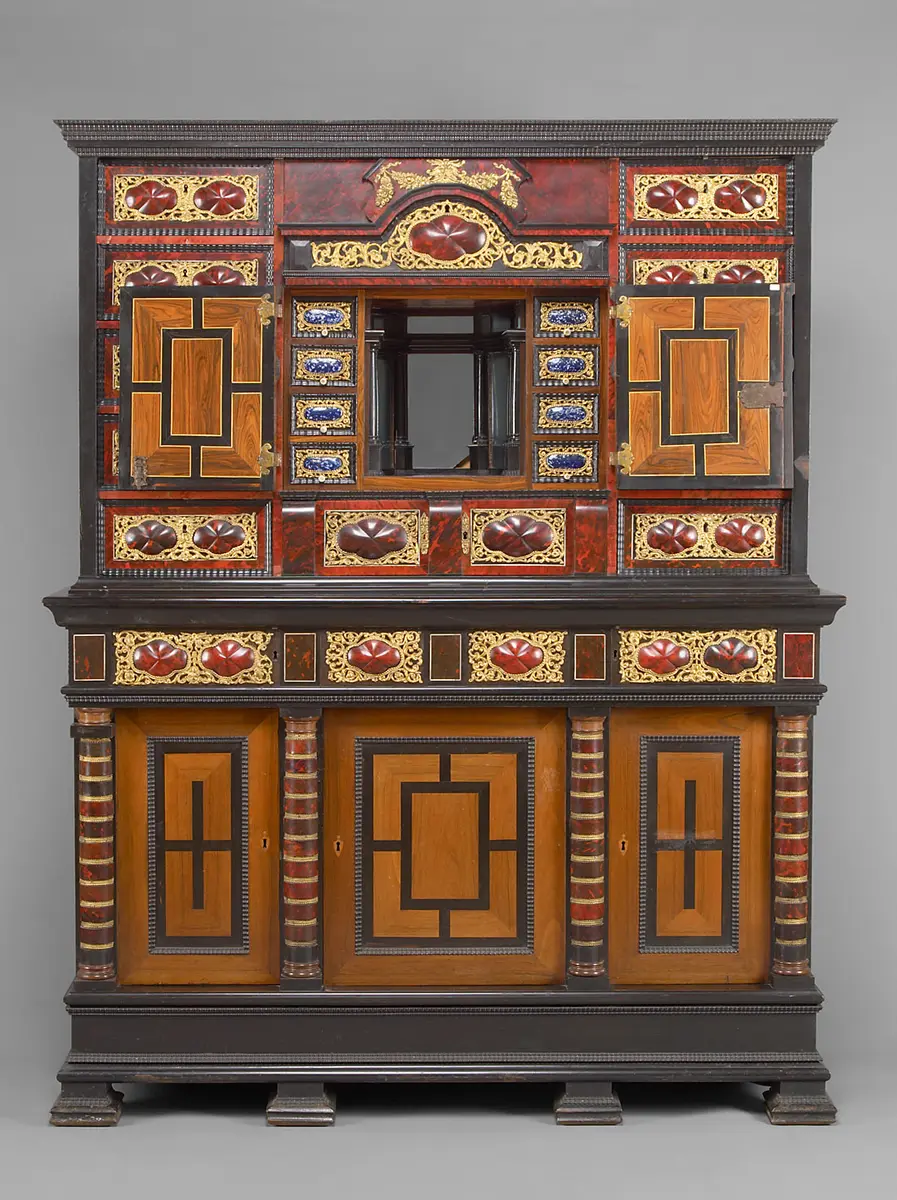
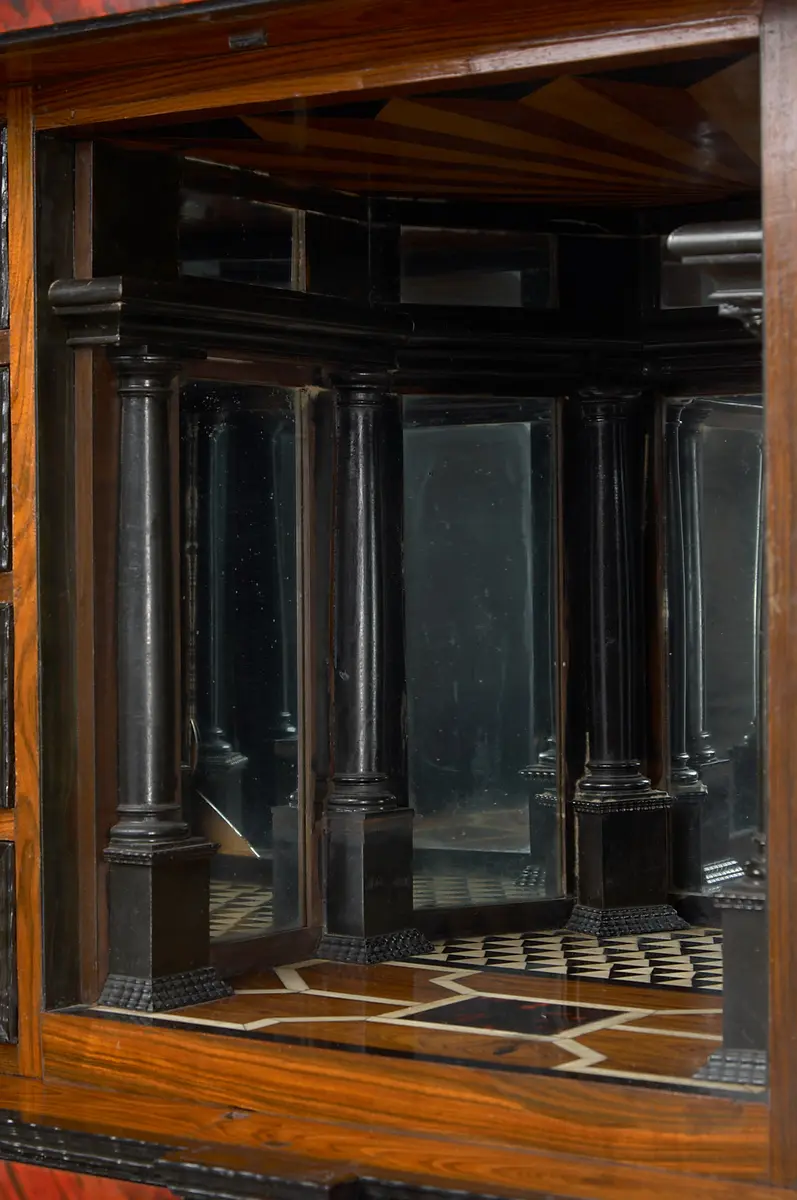
The cabinet, which is mentioned in the 1663 inventory as »a high cabinet made of tortoises«, is decorated with tortoiseshell intarsia. The insides of the doors are made of rosewood and are adorned with ivory and ebony intarsia. On the left and right sides there are four small, blue and white enamelled drawers and in the centre an inner section is designed to look like a stage-setting. It is mirrored, has a floor which is decorated by a layer of ivory and ebony mosaics and six small columns which bear the ceiling. The cabinet's design corresponds to models from Antwerp, where tortoise-shell has been used as inlay material since the 17th century.
Time:
um 1660
Object Name
Kabinettschrank, Schrank, Möbel, Schildpattschrank
Culture
Süddeutsch (Augsburg), n. Antwerpener Tradition
Material/technology:
Ebenholz, Schildpatt, Messing, Email, Glas, Elfenbein, Rosenholz; Schubladen: Eiche
Dimensions:
H. 182 cm × B. 158 cm × T. 51 cm
Copyright
Schloss Ambras Innsbruck
Invs.
Schloss Ambras Innsbruck, PA 58
Provenance
Inventar 1663 (Nachtrag) fol. 102v: "ein hocher casten von schildkhroten und dergleichen seilen geziert", No. 94; Inventar 1788, III. Teil, Der Gangsaal und das obere Schloss, fol. 105v, Nr. 123 (wird in der Bibliothek genannt)
Browse more
Similar items you might be interested in
Möbel, Aufsatzschrank, Kabinettschrank, Schrank 1614
Münzschrank, Kabinettschrank, Möbel Ende 16. Jahrhundert
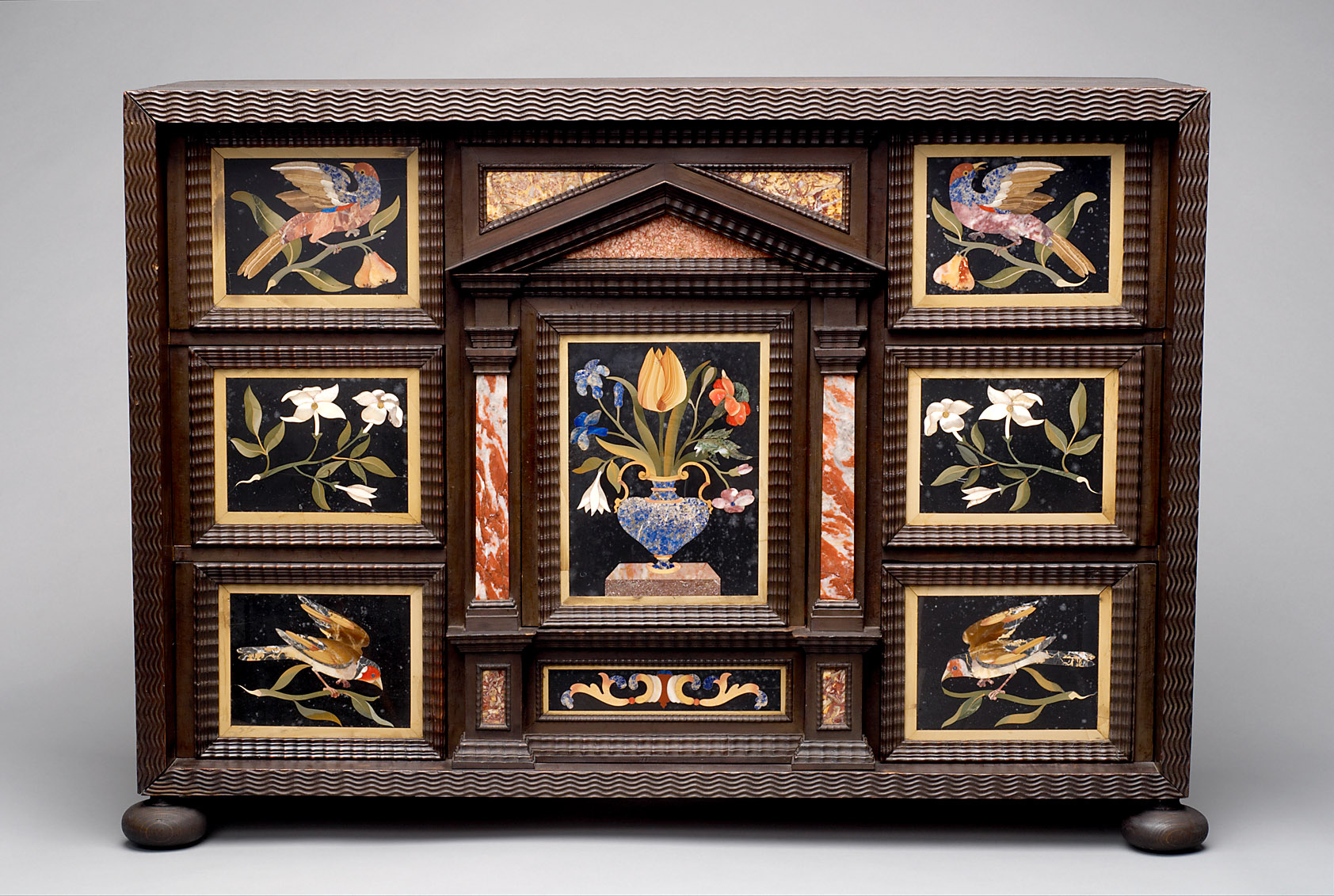
Kabinettschrank mit Pietra dura-Einlagen um 1675 und 19. Jahrhundert (Korpus)
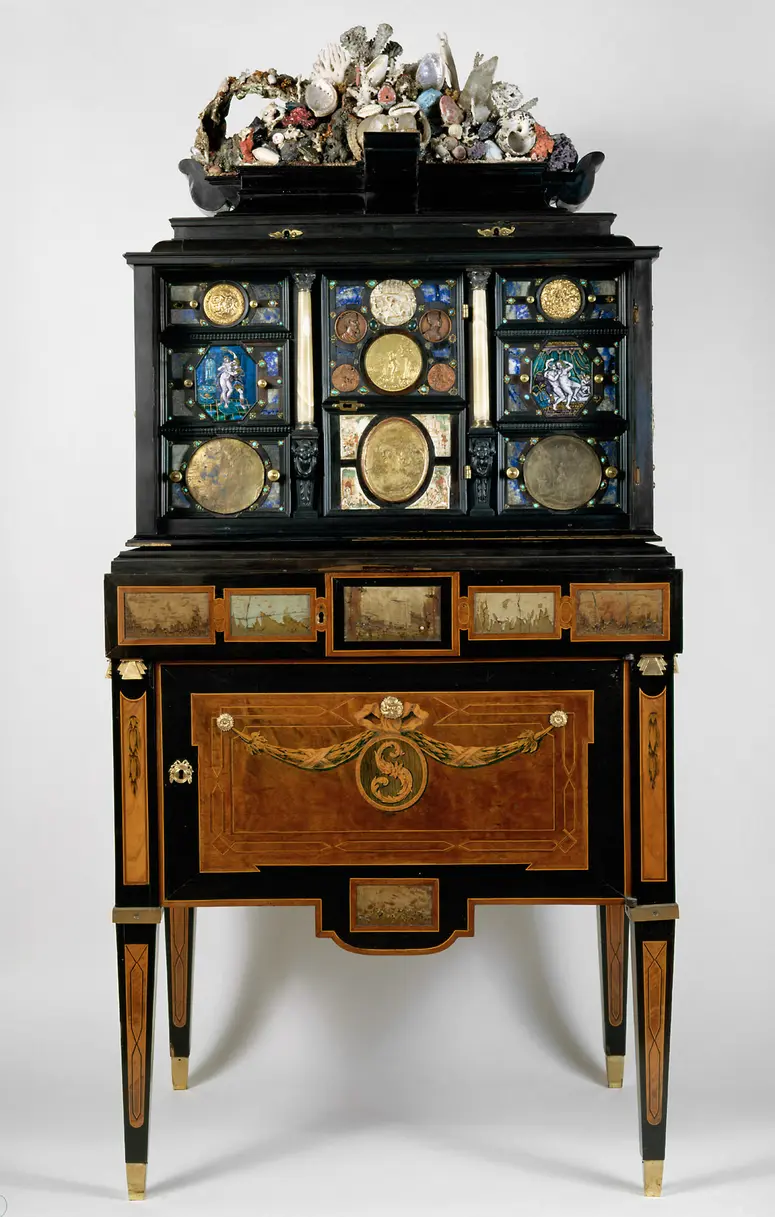
Cabinet, so-called Wrangel Cabinet Ulrich Baumgartner 1631–34 (cabinet); dated 1776 (stand)
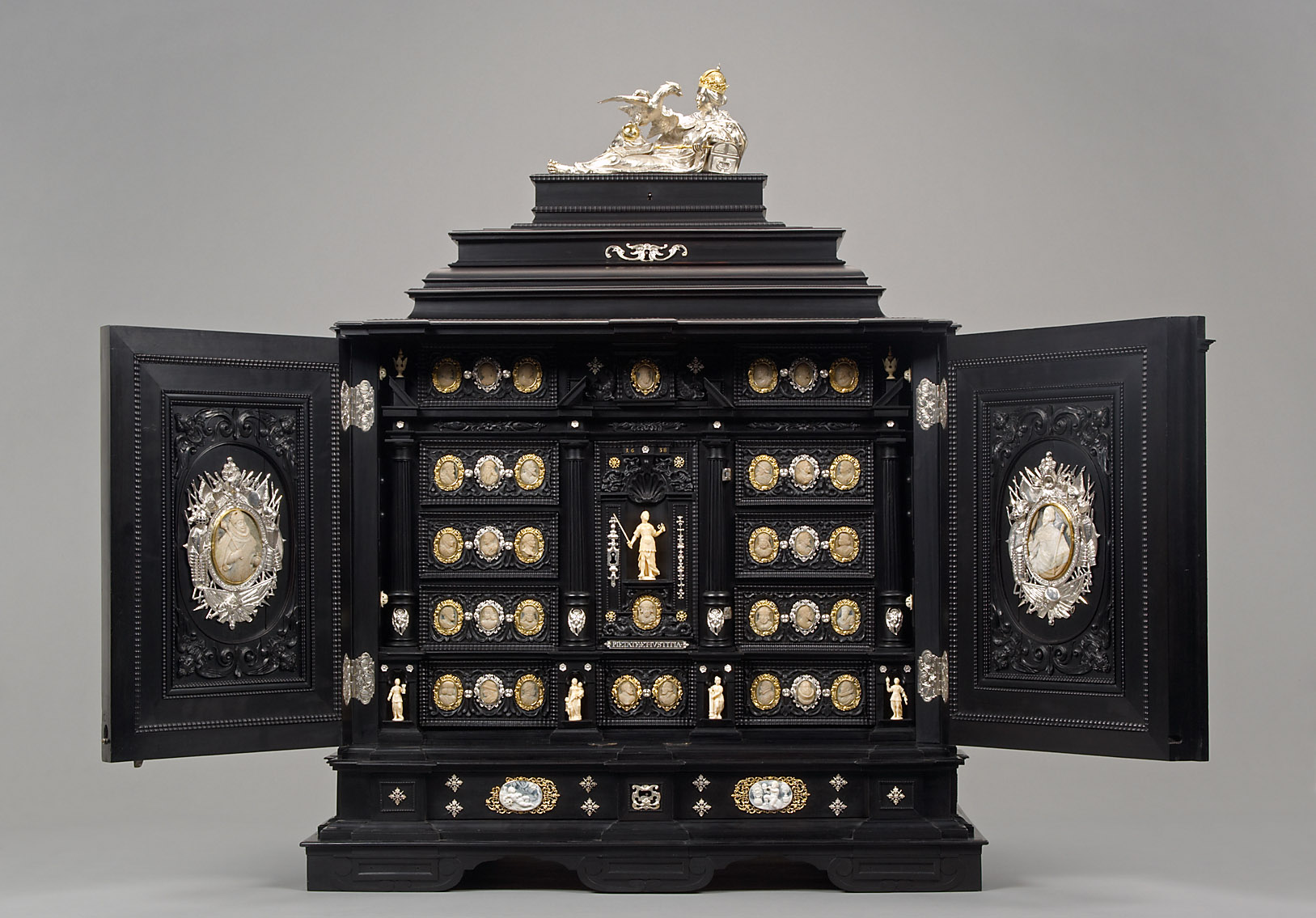
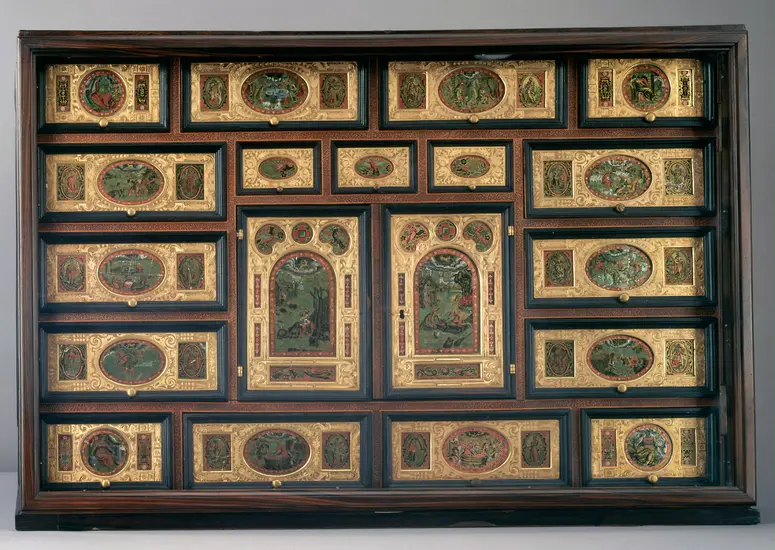
Table Cabinet of Archduke Ferdinand II Ferdinand II. (1564-1595), Erzherzog von Österreich und Landesherr von Tirol ca. 1582
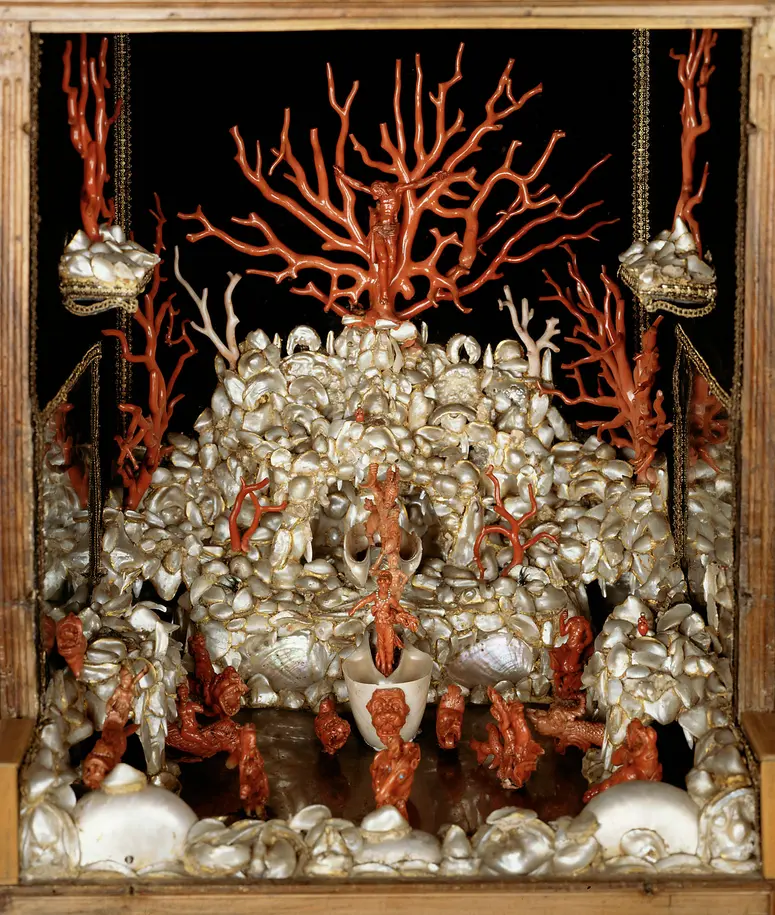
Korallenkabinett, Kabinettschrank mit Korallen 2. Hälfte 16. Jahrhundert
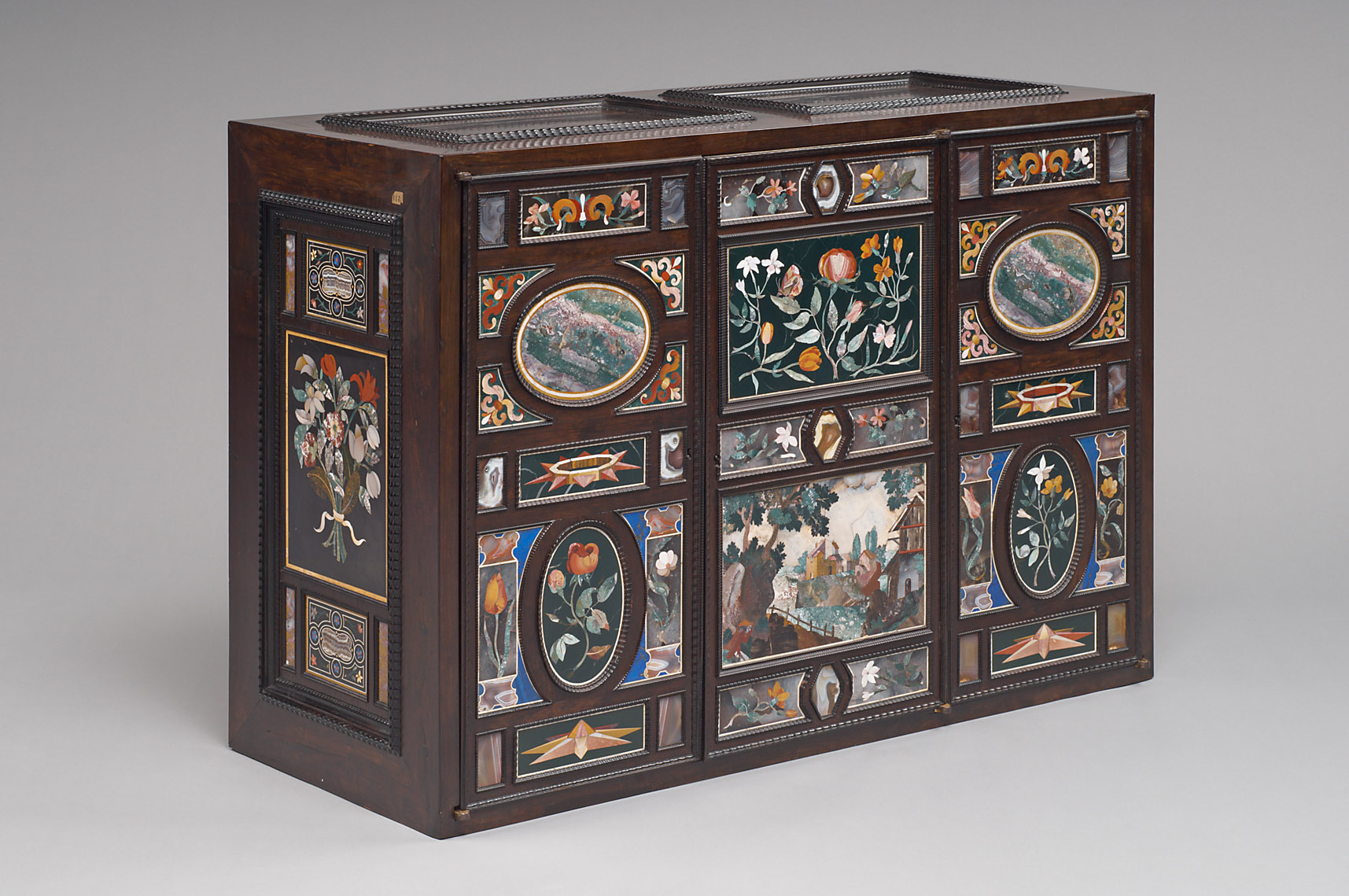
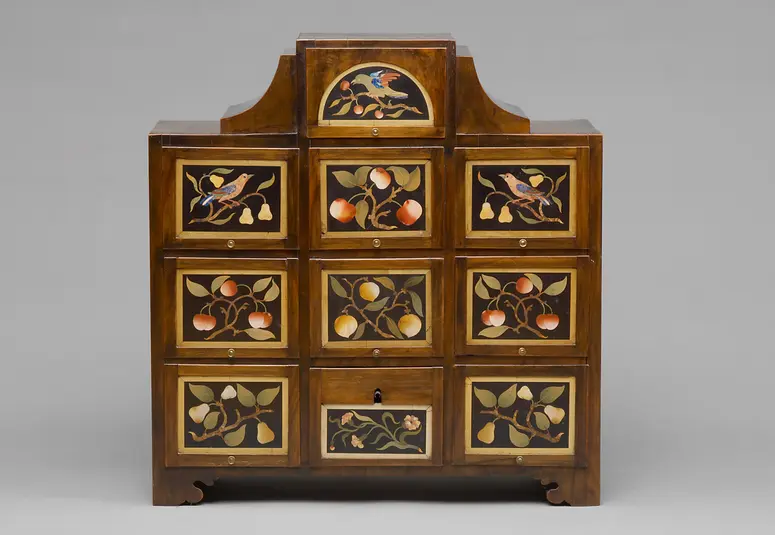
Schmuckkästchen, Kabinettschrank, Pietra-Dura-Kästchen Mitte 17. Jahrhundert
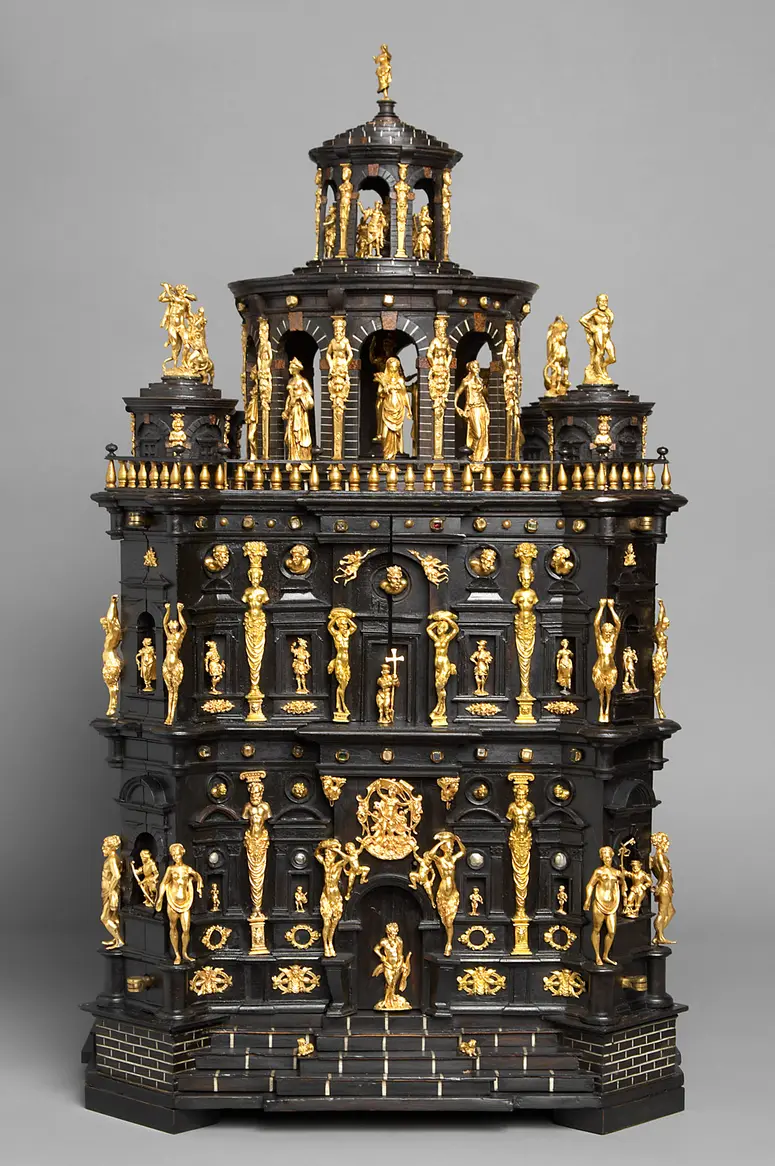
Coin Cabinet of Archduke Ferdinand II Ferdinand II. (1564-1595), Erzherzog von Österreich und Landesherr von Tirol ca. 1580
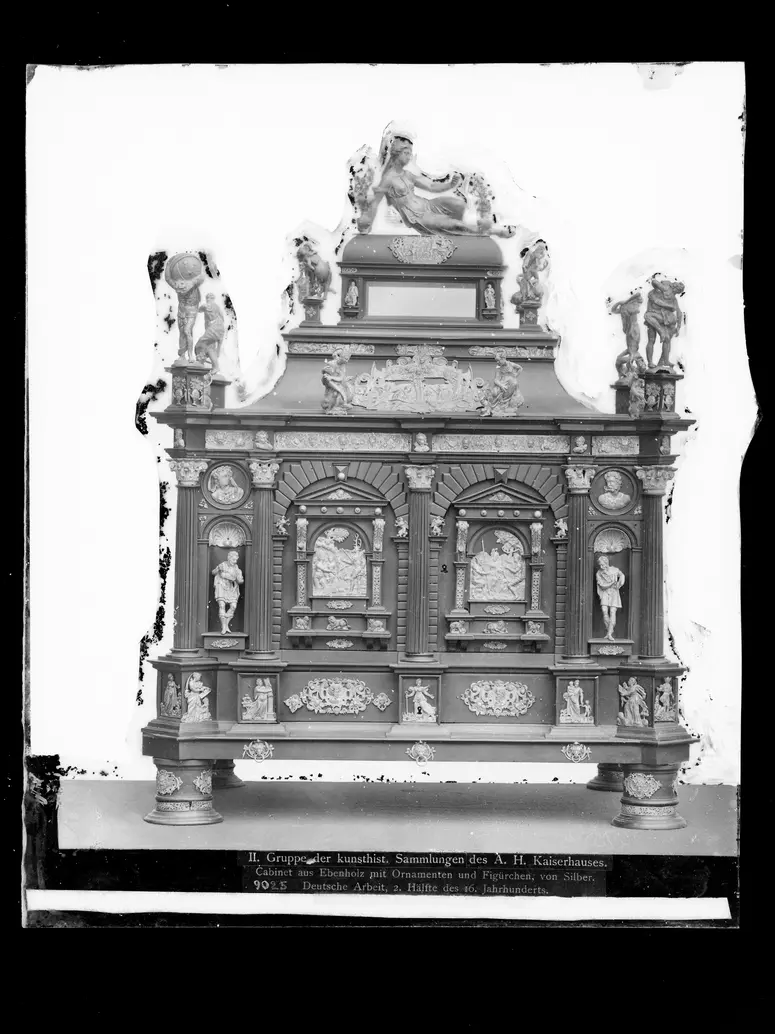
Kabinettschrank aus dem Besitz Erzherzog Ferdinands von Tirol J. Löwy, K. und K. Hof-Photograph, Kunst- und Verlagsanstalt (Wien) 1888 bis 1891
Korallenstamm, Koralle, Kreuzigungsgruppe, Kreuzigung 2. Hälfte 16. Jahrhundert