Verwundeter Partherfeldherr
nach 169 n. Chr.
The Roman Empire reached its greatest expansion in the 2nd century AD, encompassing large parts of Europe, Asia Minor and North Africa. It faced only two serious enemies abroad, against whom it fought a number of wars: the Germanic tribes settled along the Empire’s northern borders marked by the Rhine and the Danube, and in the East the Parthians living across the Euphrates. The battle depicted here shows the Romans triumphing over both these enemies. Arranged from left to right - the traditional direction denoting a victory - Roman legionnaires are shown vanquishing foes sporting different traditional attires. The “Phrygian cap”, a characteristic soft conical cap with the tip pulled forward, identifies its wearers as Parthians; the fact that some of the warriors are nude suggests they are members of a Germanic tribe. In the 160s AD, Lucius Verus led a campaign against the Parthans during which the Emperor spent much time at Ephesus, which served as one of the logistical headquarters in the East; this has led some scholars to identify the structure as a victory monument commemorating this campaign – and this is why it is today known as the “Parthian Monument”.
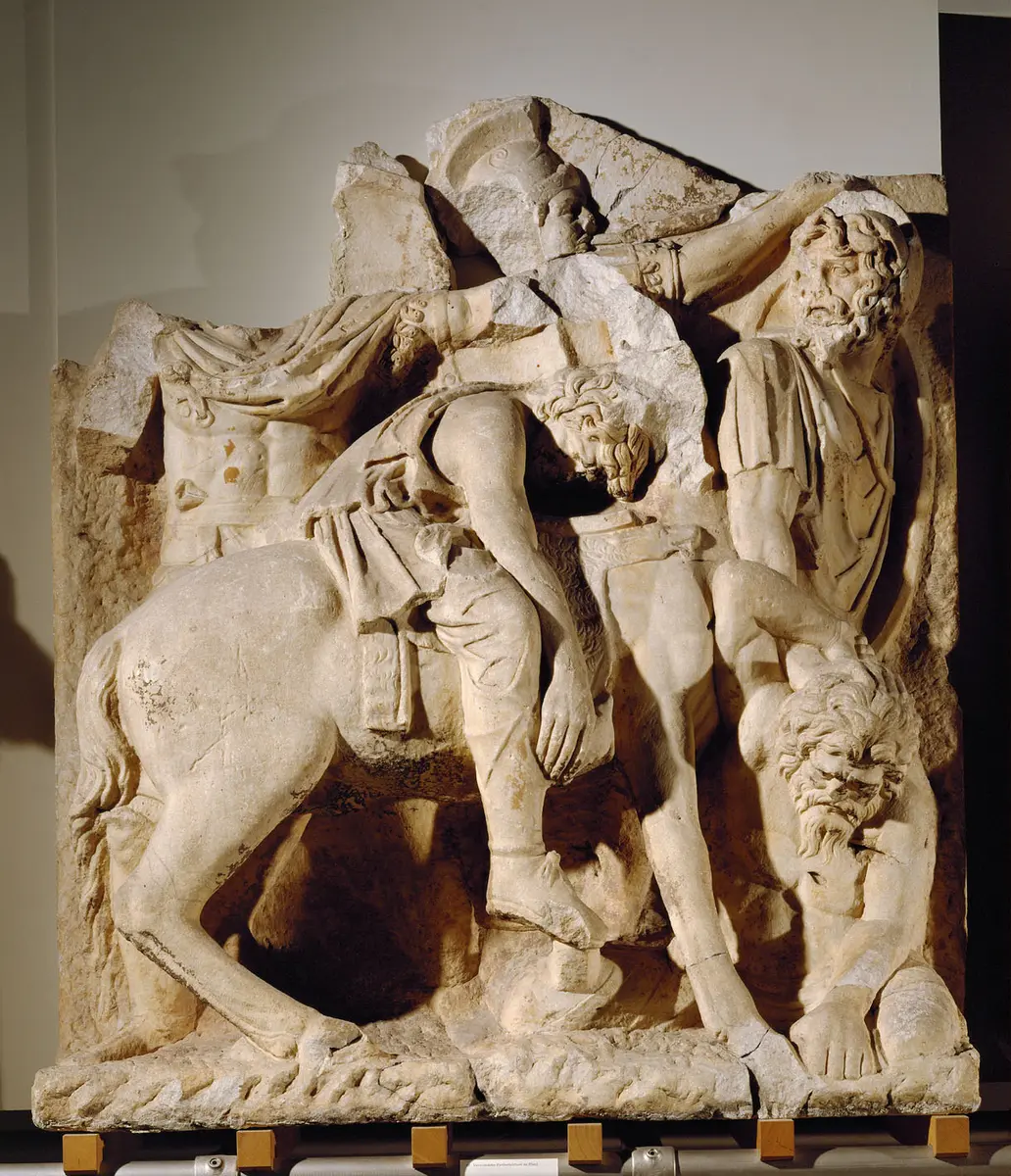

The Roman Empire reached its greatest expansion in the 2nd century AD, encompassing large parts of Europe, Asia Minor and North Africa. It faced only two serious enemies abroad, against whom it fought a number of wars: the Germanic tribes settled along the Empire’s northern borders marked by the Rhine and the Danube, and in the East the Parthians living across the Euphrates. The battle depicted here shows the Romans triumphing over both these enemies. Arranged from left to right - the traditional direction denoting a victory - Roman legionnaires are shown vanquishing foes sporting different traditional attires. The “Phrygian cap”, a characteristic soft conical cap with the tip pulled forward, identifies its wearers as Parthians; the fact that some of the warriors are nude suggests they are members of a Germanic tribe. In the 160s AD, Lucius Verus led a campaign against the Parthans during which the Emperor spent much time at Ephesus, which served as one of the logistical headquarters in the East; this has led some scholars to identify the structure as a victory monument commemorating this campaign – and this is why it is today known as the “Parthian Monument”.
Time:
nach 169 n. Chr.
Object Name
Relief
Culture
Römisch
Location of discovery:
Ephesos Celsusbibliothek Umgebung (Selçuk, Kleinasien, Türkei)
Material/technology:
Marmor
Dimensions:
L/H 186 × B 163 × D/T 47 cm
Copyright
Kunsthistorisches Museum, Antikensammlung
Invs.
Antikensammlung, I 858
Provenance
Sultan, Abdul, Hamid, II.; Österreichische Ausgrabungen in Ephesos; Geschenk an Kaiser Franz Joseph; 1911 nachträglich inventarisiert
Browse more
Similar items you might be interested in
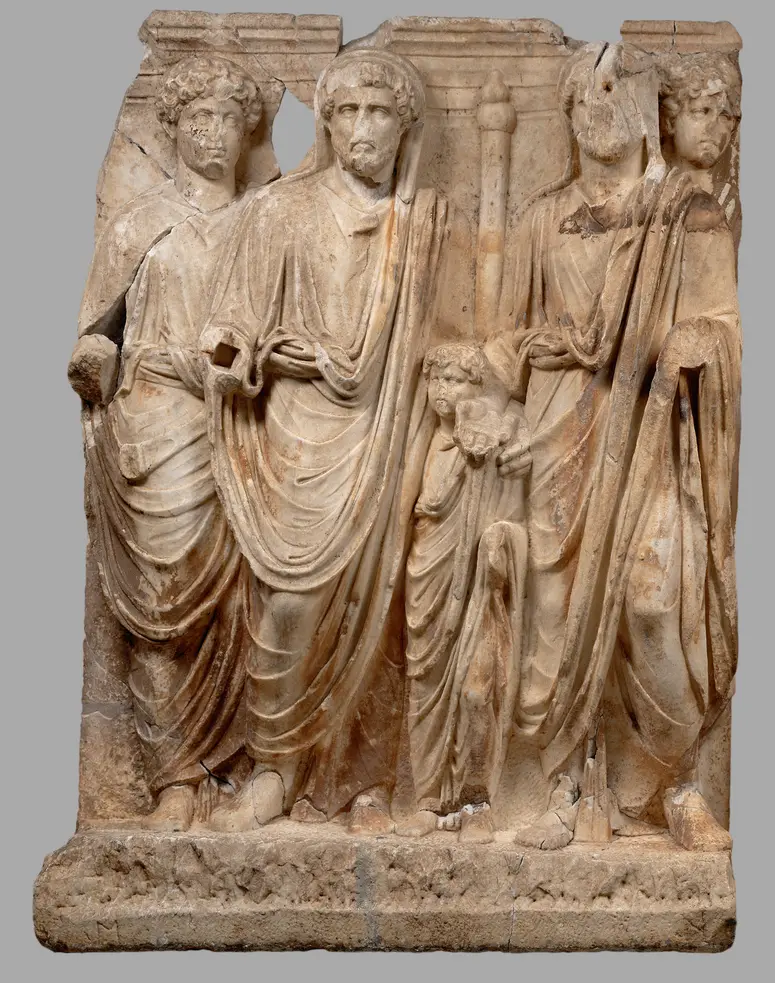
Relief: Adoption der Kaiser Lucius Verus und Marc Aurel Römisch, Mittlere Kaiserzeit Mitte 2. Jh. n. Chr.
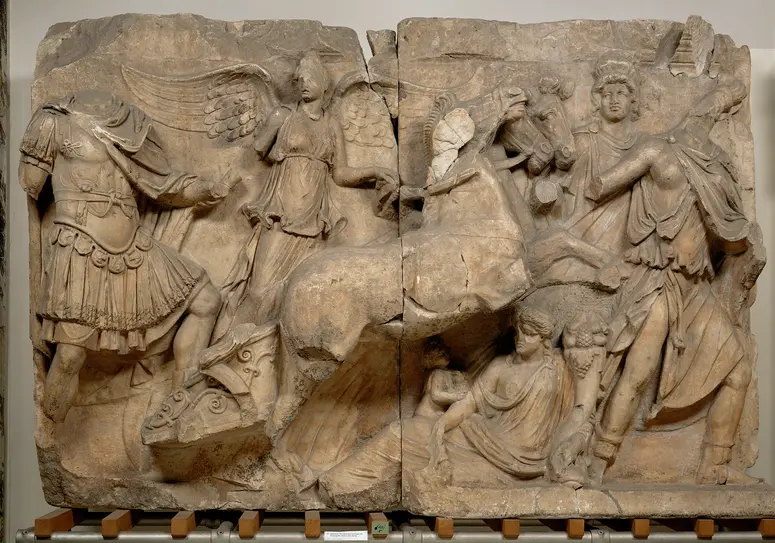
Relief: Triumph des Kaisers Römisch, Mittlere Kaiserzeit Mitte des 2. Jhs. n. Chr.
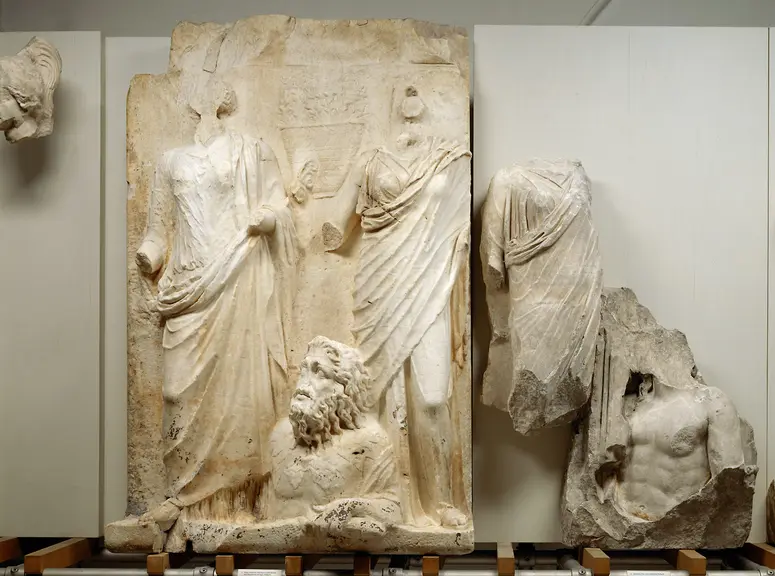
Relief: Städtepersonifikationen Römisch, Mittlere Kaiserzeit Mitte 2. Jh. n. Chr.
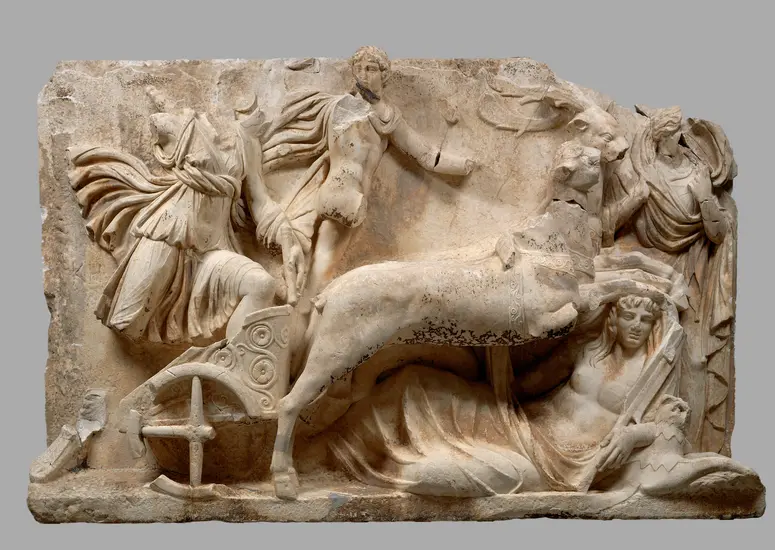
Relief: Artemis Selene Römisch, Mittlere Kaiserzeit Mitte 2. Jh. n. Chr.
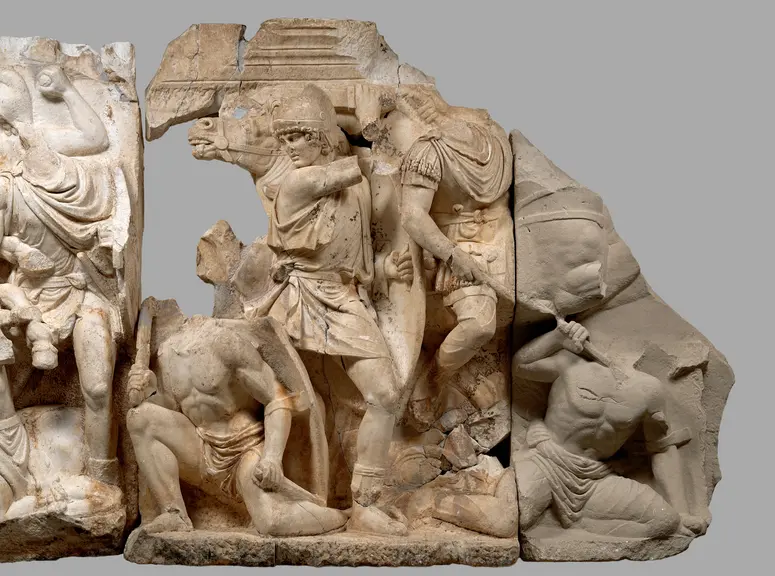
Relief: Schlachtenszene, Schwertkämpfer Römisch, Mittlere Kaiserzeit Mitte 2. Jh. n. Chr.
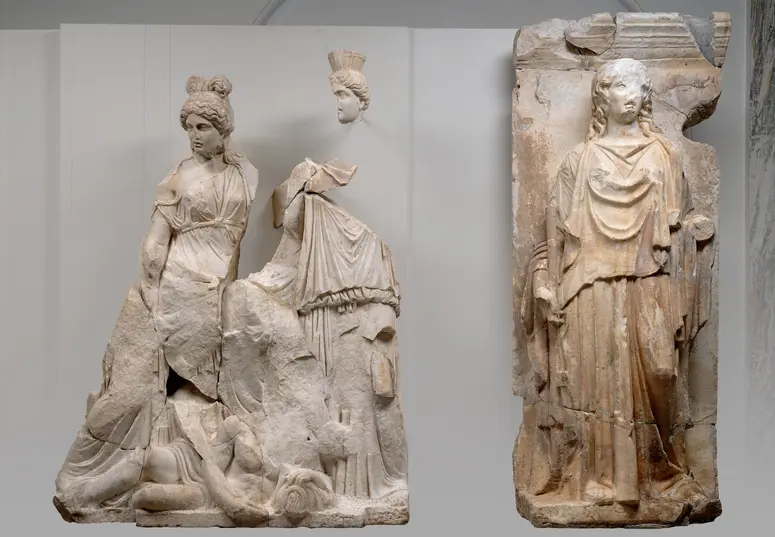
Relief: Götterversammlung: Demeter Römisch, Mittlere Kaiserzeit Mitte des 2. Jhs. n. Chr.

Relief: Stierkopf-Girlandenfries Römisch, Mittlere Kaiserzeit Mitte 2. Jh. n. Chr.
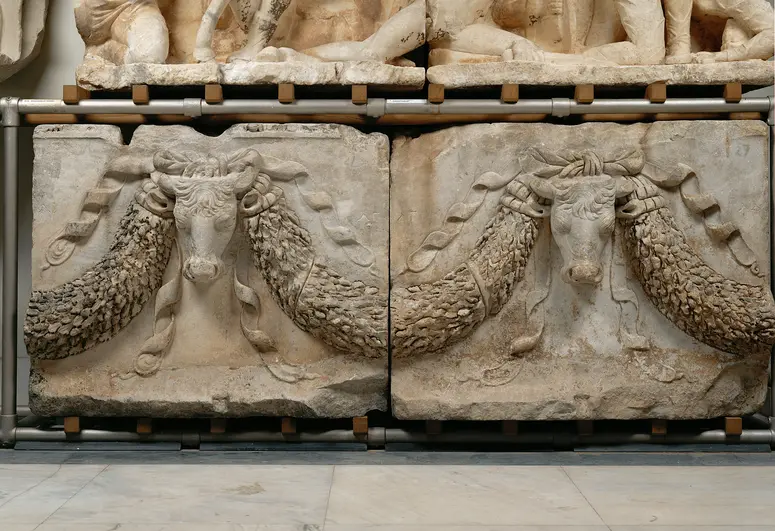
Relief: Stierkopf-Girlandenfries Römisch, Mittlere Kaiserzeit Mitte 2. Jh. n. Chr.
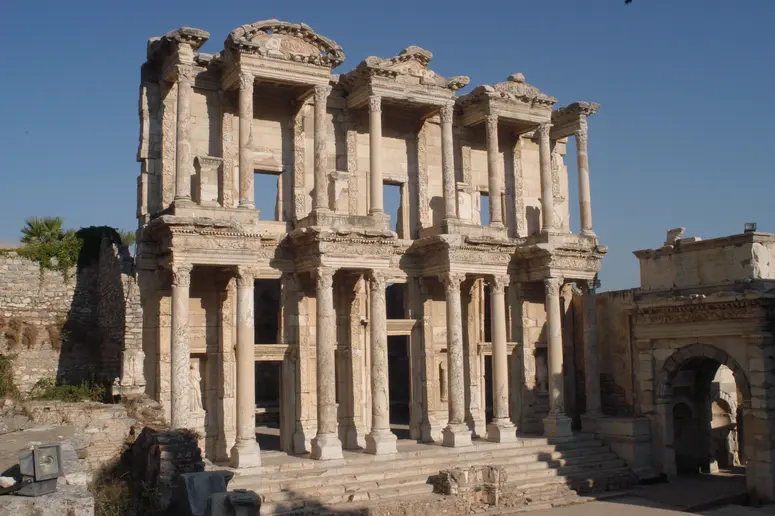
Architektur: Celsusbibliothek Römisch, Mittlere Kaiserzeit 113 - 117 n. Chr.

Inschrift: Hirtenbrief des Erzbischofs Hypatios Frühchristlich, Spätantike 2. Viertel 6. Jh.

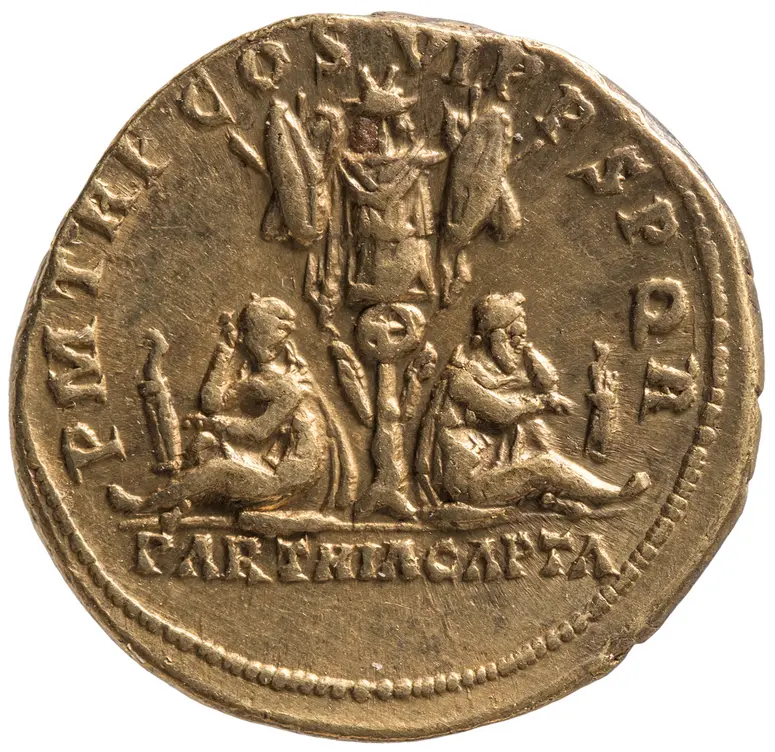
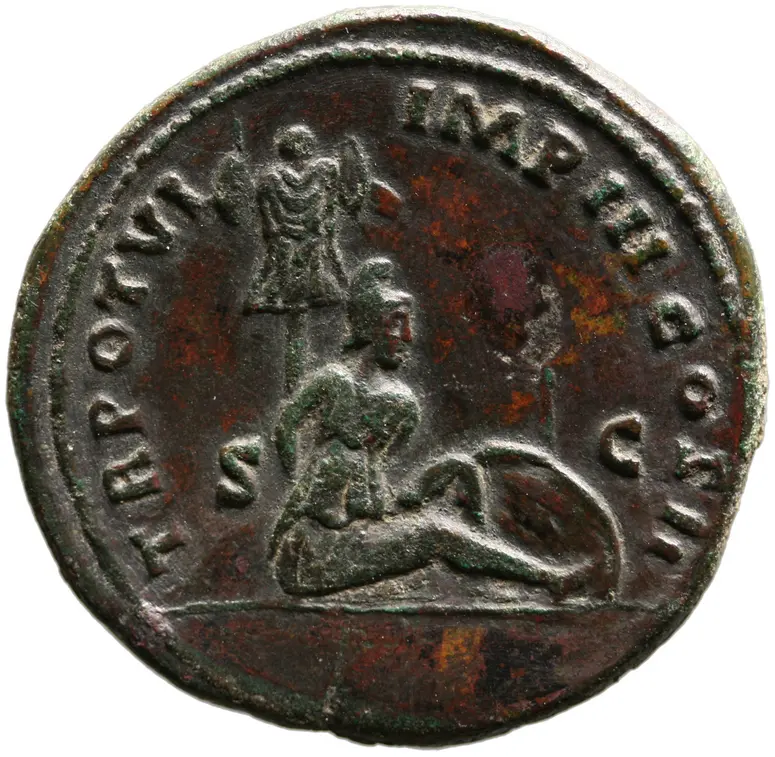

Relief: Reiterschlacht Griechisch, Hellenistisch um 166 v. Chr.
Porträtkopf: Porträtkopf eines bärtigen Mannes Römisch, Spätantik Mitte 5. Jh. n. Chr.
Porträtkopf: Porträtkopf eines jungen Mannes Römisch, Spätantik Anfang 4. Jh. n. Chr.