Statuenbasis des L. C. Phrugianos
um 100 n. Chr.
Although this plinth has no traces that a statue was once mounted on it, there is no doubt that it once bore the effigy of the celebrated athlete from Ephesus, an assumption supported by the fact that the fragments of the bronze statue were found scattered on the ground in front of it. The inscription contains a formulaic date and the names of the donors. The name of the head of the sports facility (gymnasion), Lucius Claudius Frugianus, has survived. ]-ησ[ ]ος επα-[ ἐ]πὶ ἀνθυπ[άτου -ο]ῦ [γ]ραμμα[τεύοντος Τι.] Κλαυδ[ίου γυμ]νασιαρ[χοῦντος] Λ. Κλα[υδίου Φ]ρουγιανοῦ πρωτ[ […] under the Proconsul […] the scribe Ti. Claudius […] the Gymnasiarchos L. Claudius Frugianus […]
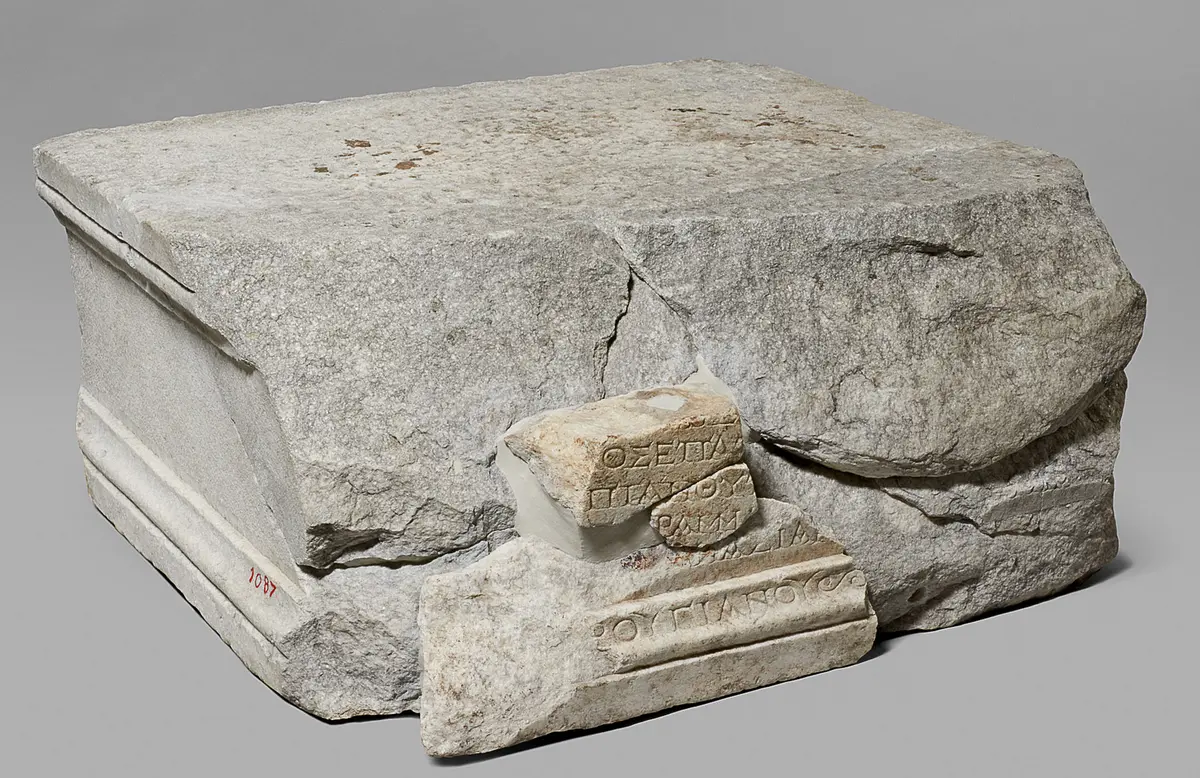
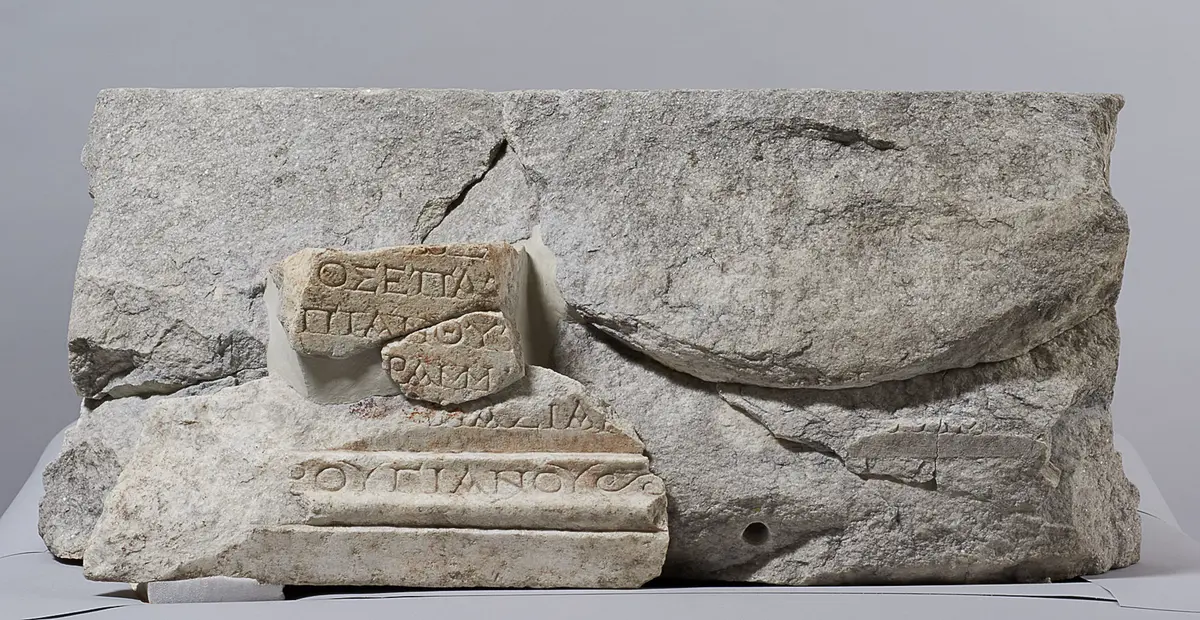
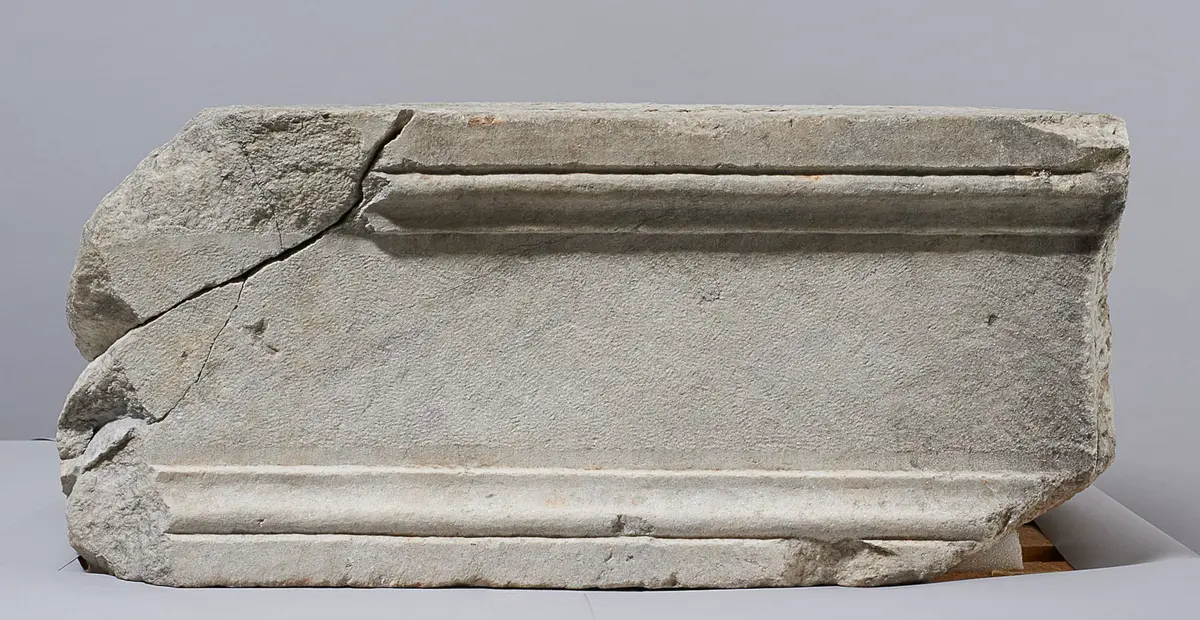
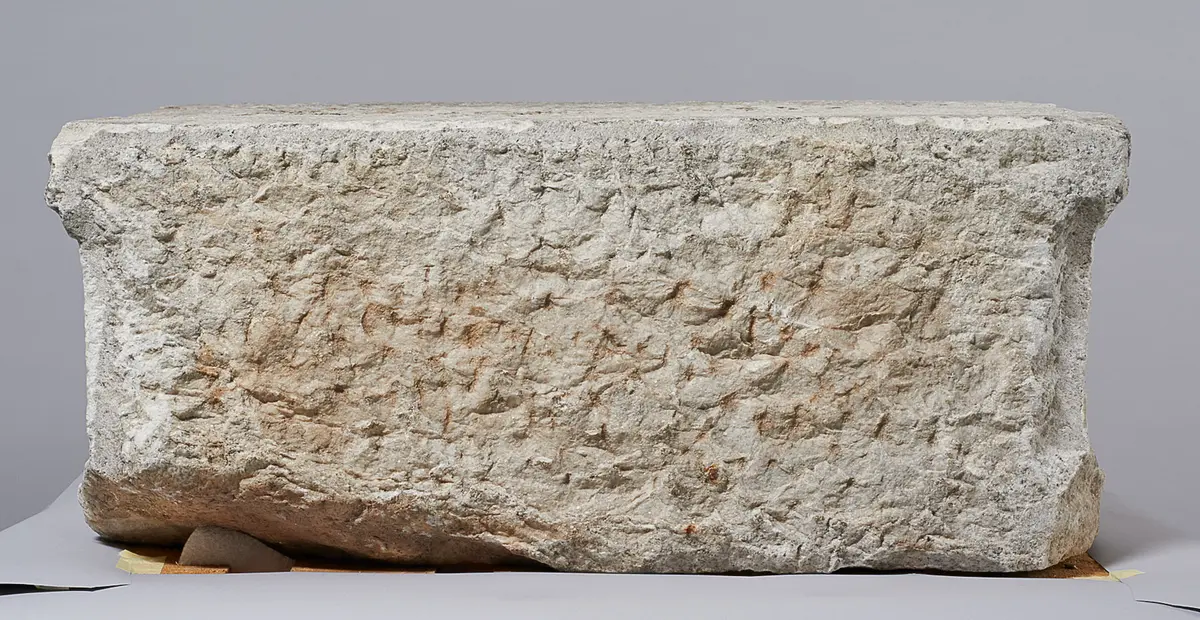
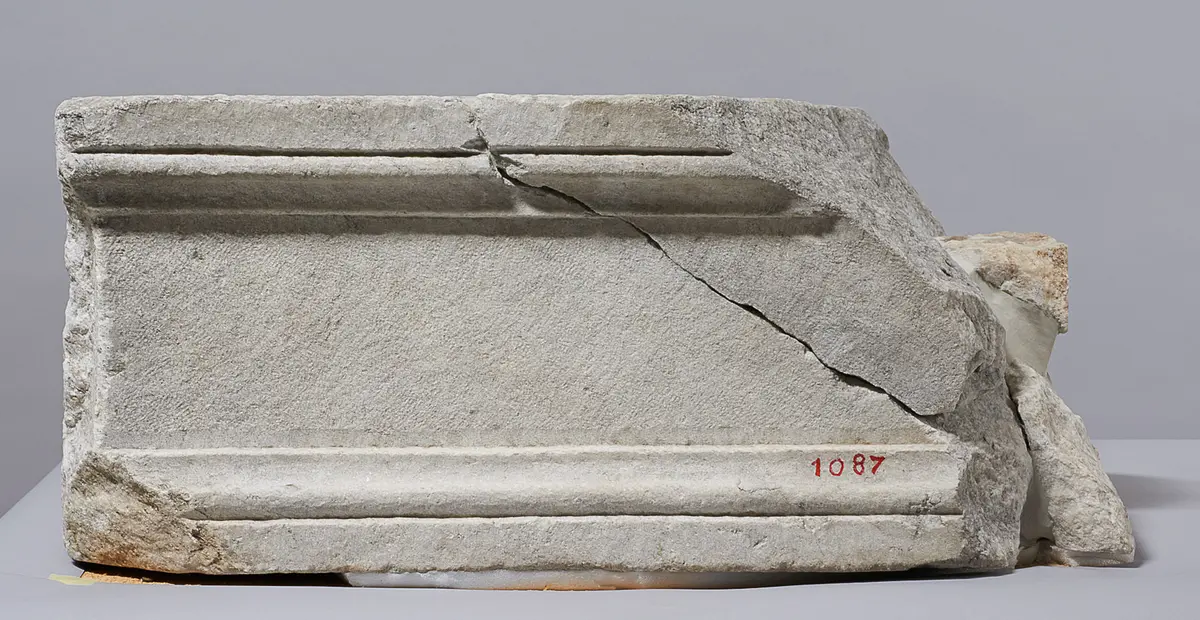
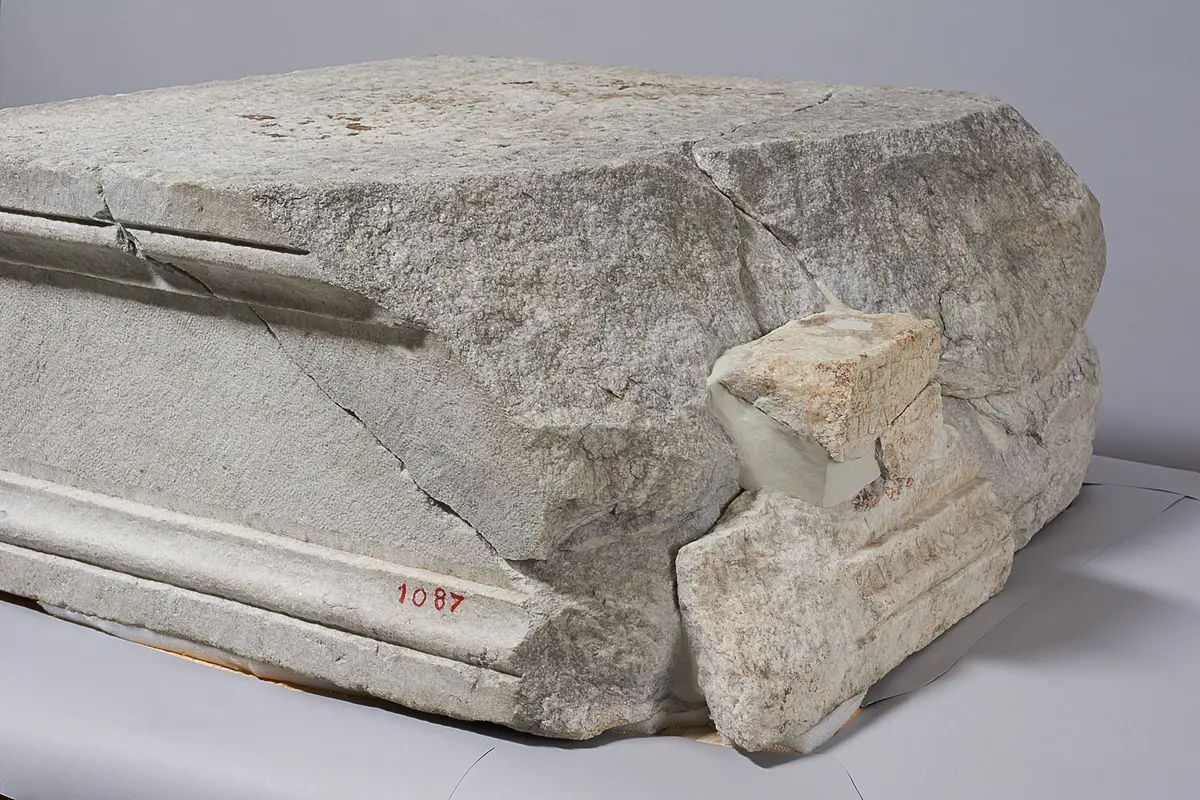
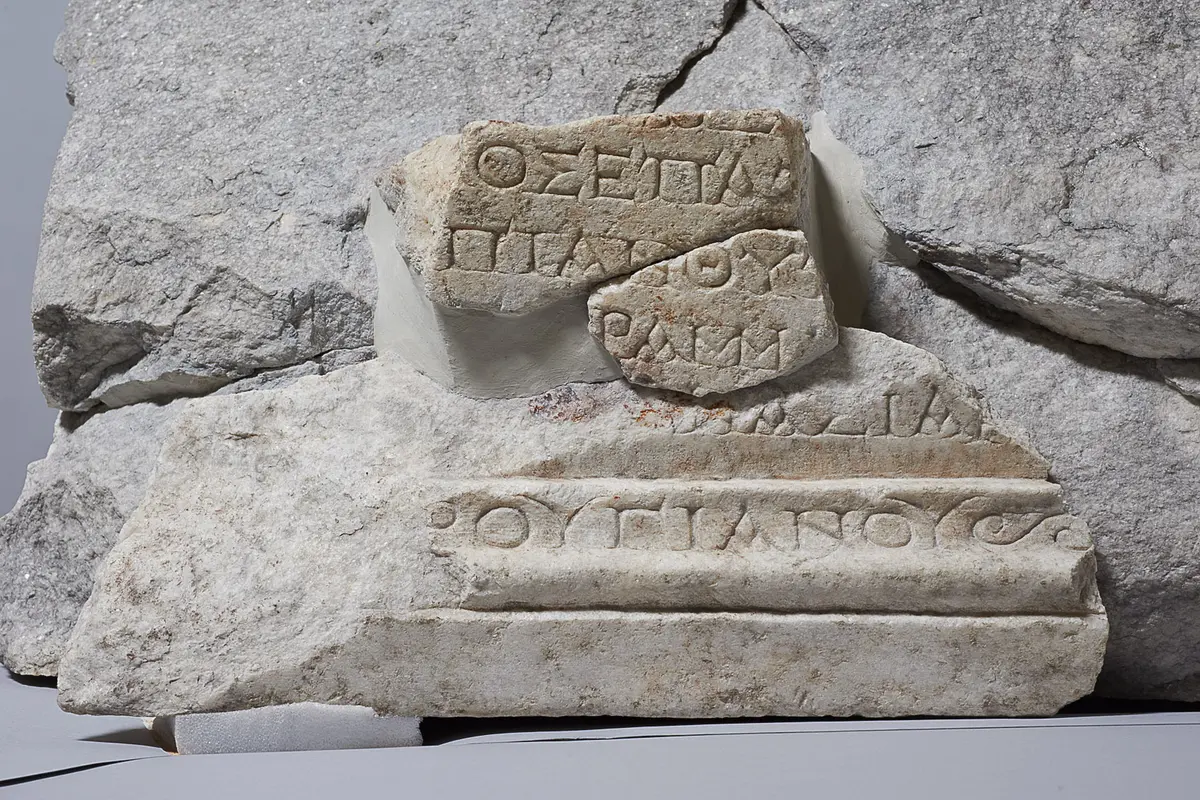
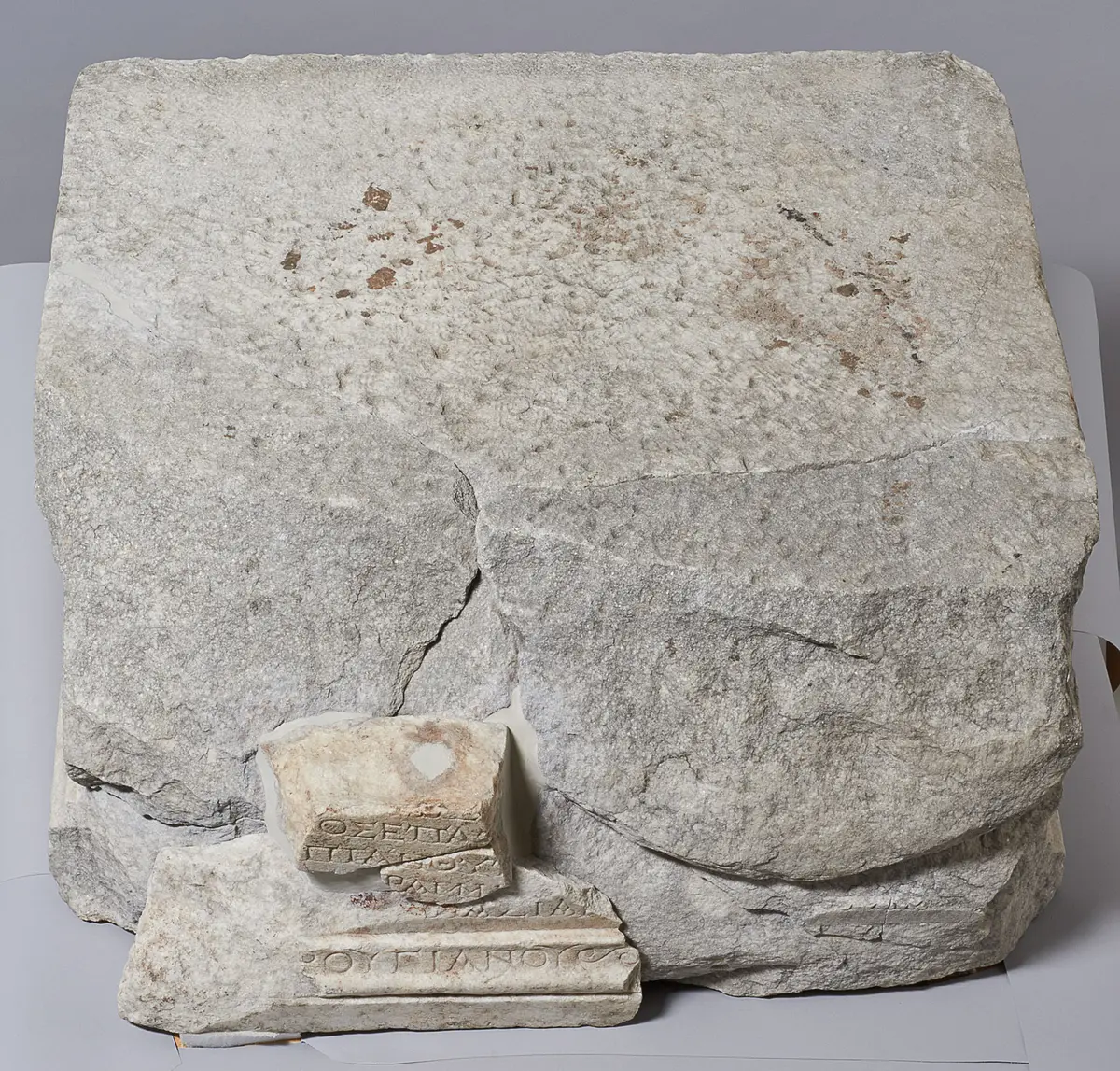
Although this plinth has no traces that a statue was once mounted on it, there is no doubt that it once bore the effigy of the celebrated athlete from Ephesus, an assumption supported by the fact that the fragments of the bronze statue were found scattered on the ground in front of it. The inscription contains a formulaic date and the names of the donors. The name of the head of the sports facility (gymnasion), Lucius Claudius Frugianus, has survived. ]-ησ[ ]ος επα-[ ἐ]πὶ ἀνθυπ[άτου -ο]ῦ [γ]ραμμα[τεύοντος Τι.] Κλαυδ[ίου γυμ]νασιαρ[χοῦντος] Λ. Κλα[υδίου Φ]ρουγιανοῦ πρωτ[ […] under the Proconsul […] the scribe Ti. Claudius […] the Gymnasiarchos L. Claudius Frugianus […]
Time:
um 100 n. Chr.
Object Name
Inschrift
Culture
Römisch
Location of discovery:
Ephesos Hafengymnasium Marmorsaal (Selçuk, Kleinasien, Türkei)
Material/technology:
Marmor
Dimensions:
L/H 30 × B 72 × D/T 72 cm
Copyright
Kunsthistorisches Museum, Antikensammlung
Invs.
Antikensammlung, III 1087
Provenance
Sultan, Abdul, Hamid, II.; Österreichische Ausgrabungen in Ephesos; Geschenk an Kaiser Franz Joseph; 1914 nachträglich inventarisiert
Browse more
Similar items you might be interested in
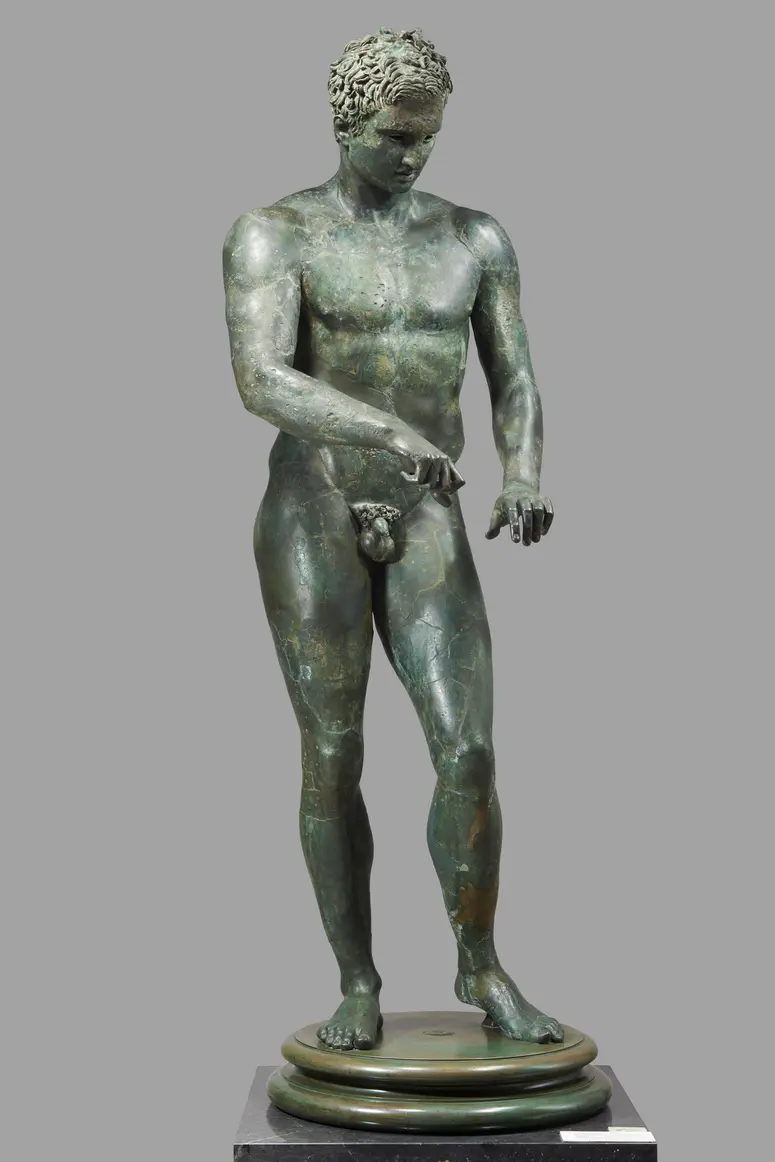
Statue: Athlet Römisch, Frühe Kaiserzeit 1. Jh. n. Chr., nach griech. Original um 330 v. Chr.
Kopf: Kopf eines flötenblasenden Satyrknaben Römisch, Mittlere Kaiserzeit 2. Jh. n. Chr., nach griechischem Vorbild des 4. Jh.v. Chr.
Korinthisches Kapitell Römisch, Mittlere Kaiserzeit Ende 1. Jh. n. Chr.


Kandelaber: Herakles und Kentaur im Kampf Griechisch, Hellenistisch Mitte 1. Jh. v. Chr.
Statuenfragment: Polosfragment Römisch, Kaiserzeit 1. - 3. Jh. n. Chr.

Statuette: Fragmente einer Statuettengruppe: Jünglingsraubende Sphinx Römisch, Mittlere Kaiserzeit 2. Jh. n. Chr., nach griechischem Original des Phidias um 440 v. Chr.
Statue: Knabe mit Fuchsgans Römisch, Mittlere Kaiserzeit 2. Jh. n. Chr., nach Bronzeoriginal aus dem 3. Jh. v. Chr.
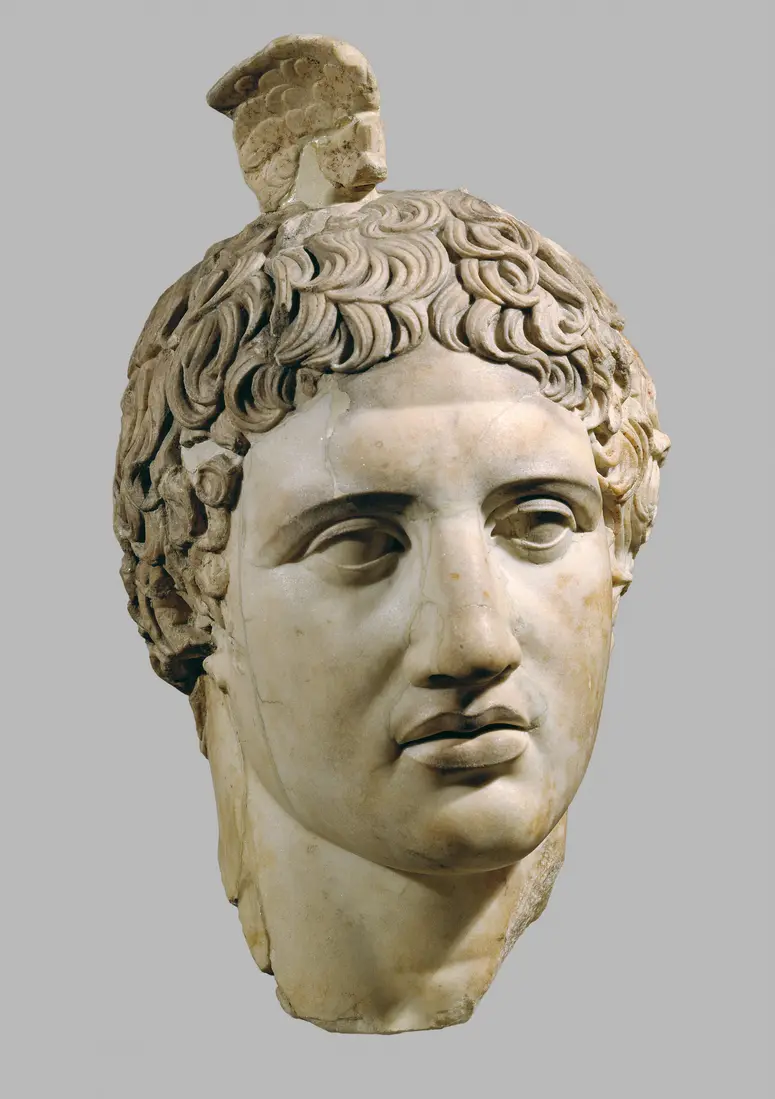
Kopf: Hermes Römisch, Mittlere Kaiserzeit Mitte des 2. Jhs. n. Chr., nach Bronzeoriginal um 430 v. Chr.

Relieffragment: Tanzende Mänade Römisch, Kaiserzeit 1. - 3. Jh. n. Chr.
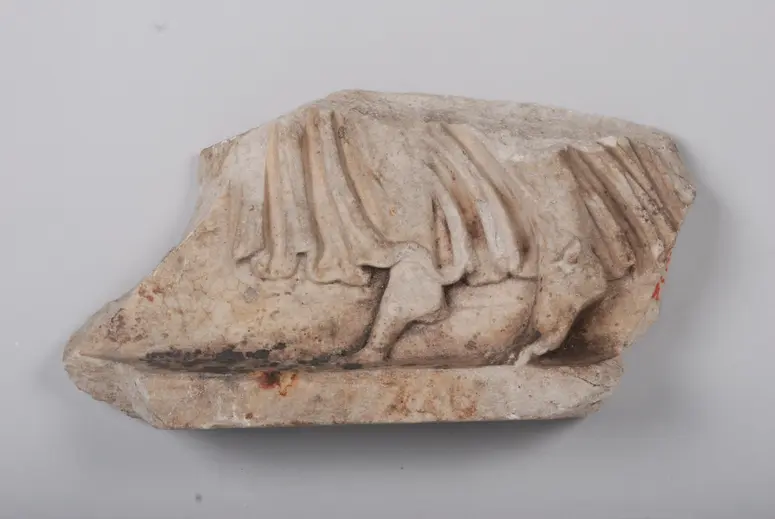
Relieffragment: Füsse einer Mänade Römisch, Kaiserzeit 1. - 3. Jh. n. Chr.
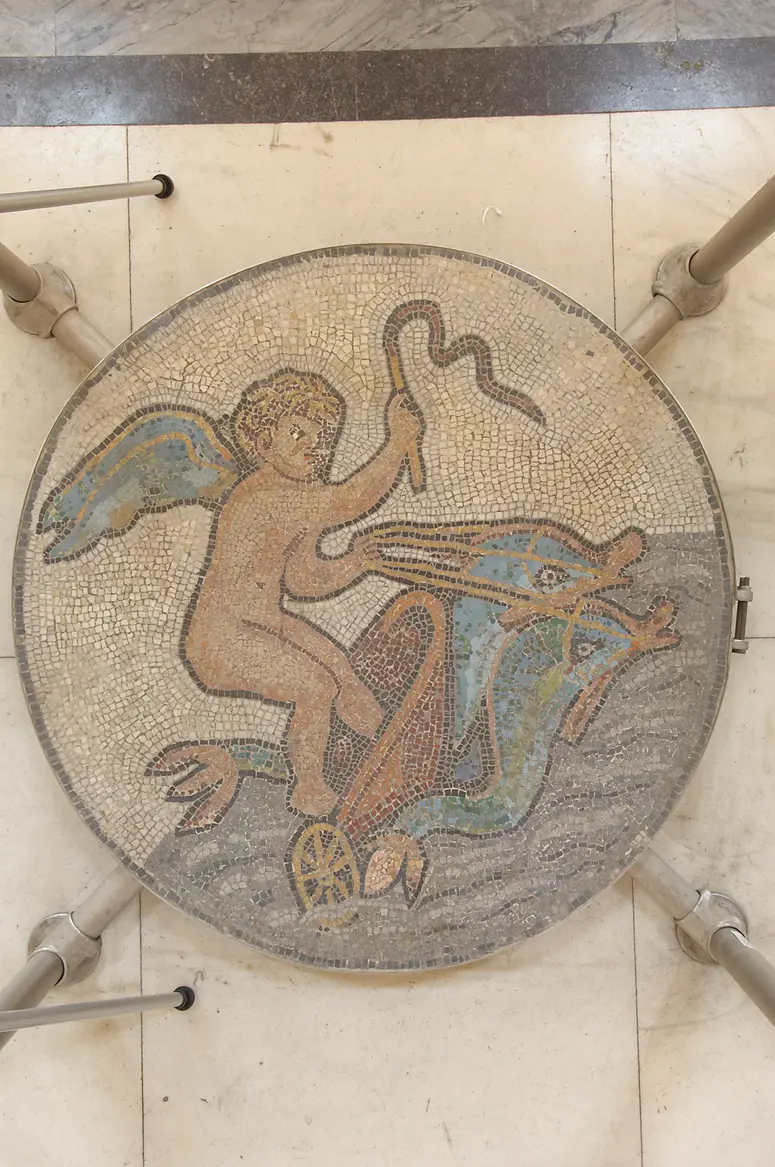
Mosaik: Mosaikfragment: Eros auf Biga Römisch, Spätantik 6. Jh. n. Chr.
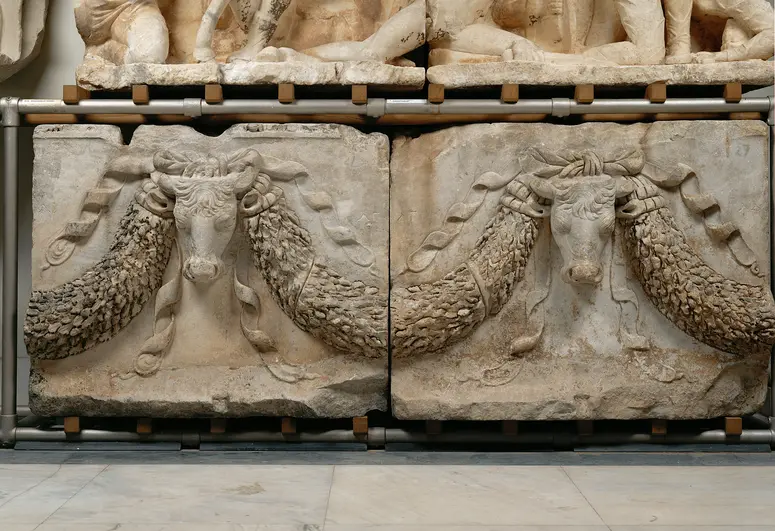
Relief: Stierkopf-Girlandenfries Römisch, Mittlere Kaiserzeit Mitte 2. Jh. n. Chr.
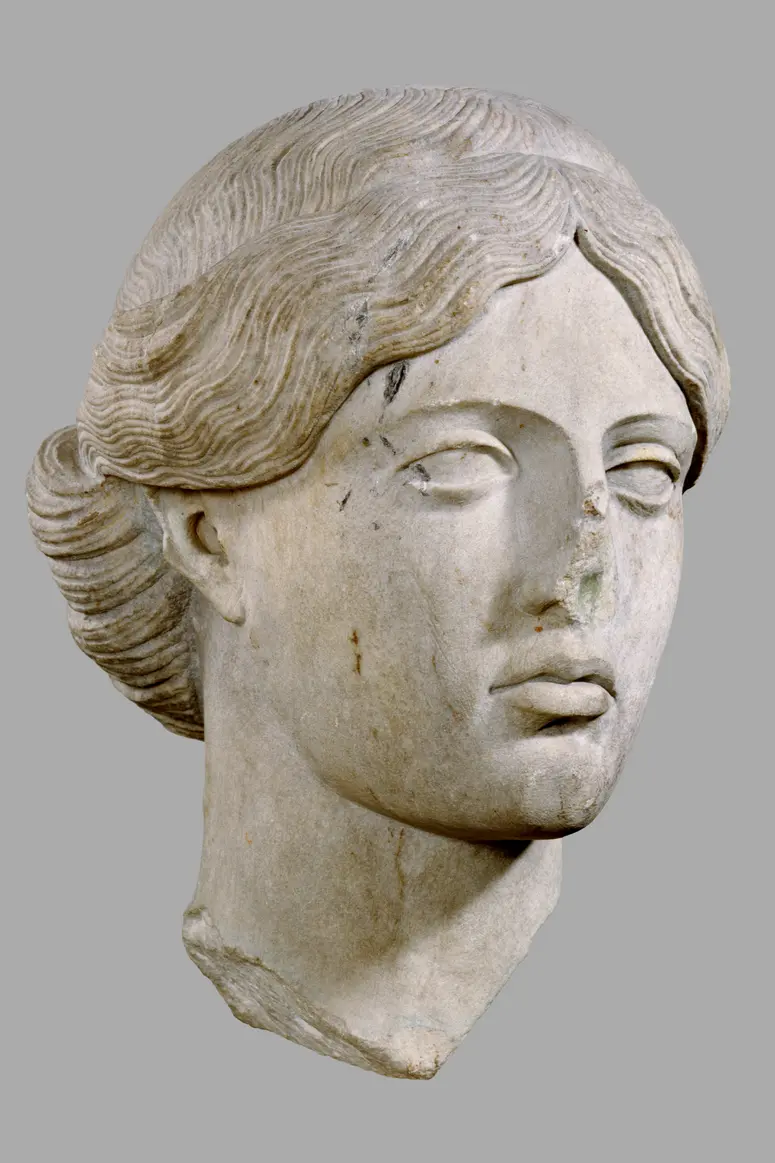
Kopf: Artemis (Typus Candia) Römisch, Frühe Kaiserzeit 1. Jh. n. Chr., nach griechischem Original um 460 v. Chr.

Inschrift: Hirtenbrief des Erzbischofs Hypatios Frühchristlich, Spätantike 2. Viertel 6. Jh.
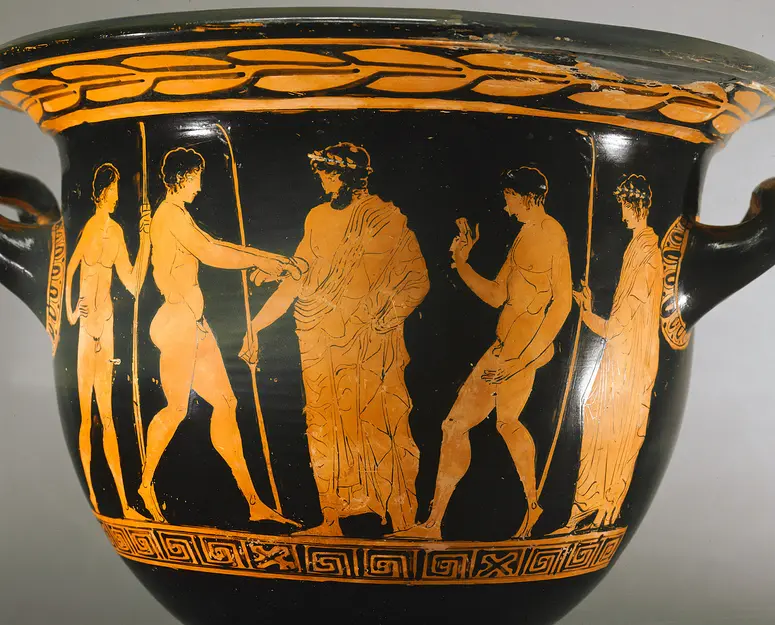
Glockenkrater: Athleten in der Palästra Griechisch, Attisch, rotfigurig Ende 5. Jh. v. Chr.
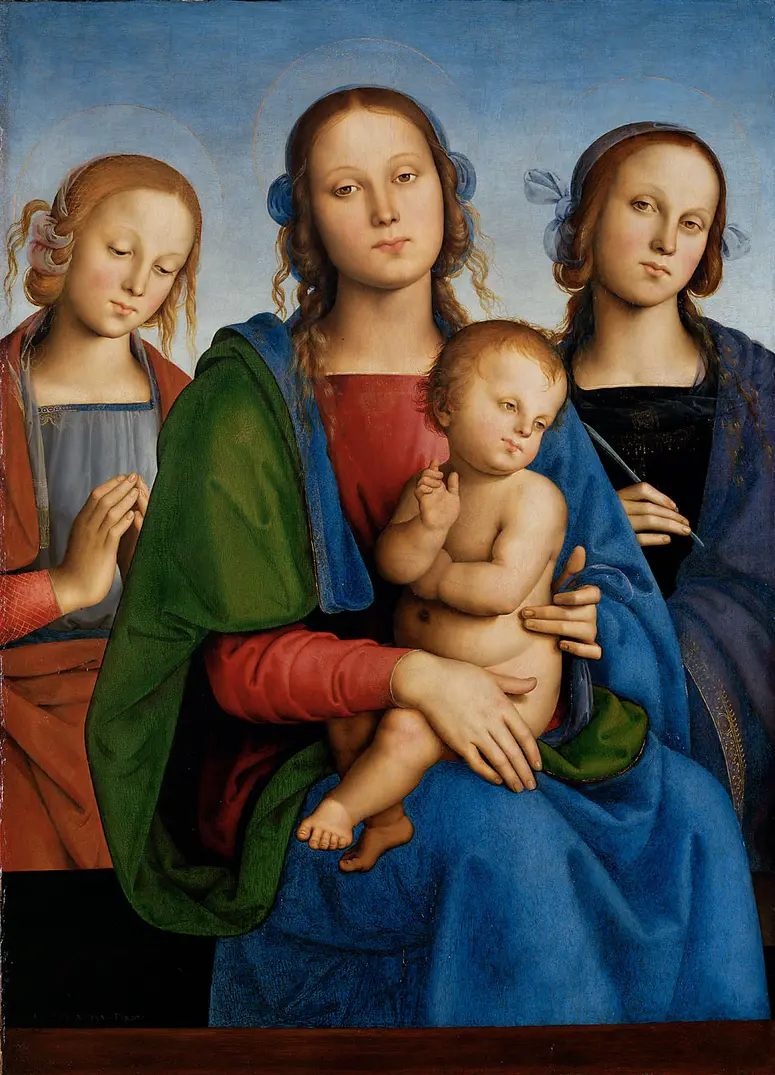
Mary with Child and Saints Rosa (?) and Catharine (?) Pietro Vannucci, gen. Perugino around 1493/1495