Kopf eines flötenblasenden Satyrknaben
2. Jh. n. Chr., nach griechischem Vorbild des 4. Jh.v. Chr.
The head is that of a young satyr, a composite creature with the body of a man and goat legs. The satyr is playing a pipe, pieces of which are discernible on his pursed lips. The surface of this fragmented head is dull and discoloured in some places; the artefact was presumably damaged in the fire that also destroyed the propylaea, the entrance to the Harbour Gymnasium. Together with the satyr’s head archaeologists found fragments of his hands clutching the pipe, and a foot on a plinth. This statue of a pipe-playing satyr was presumably informed by a Greek model that was frequently copied during the Roman Empire.
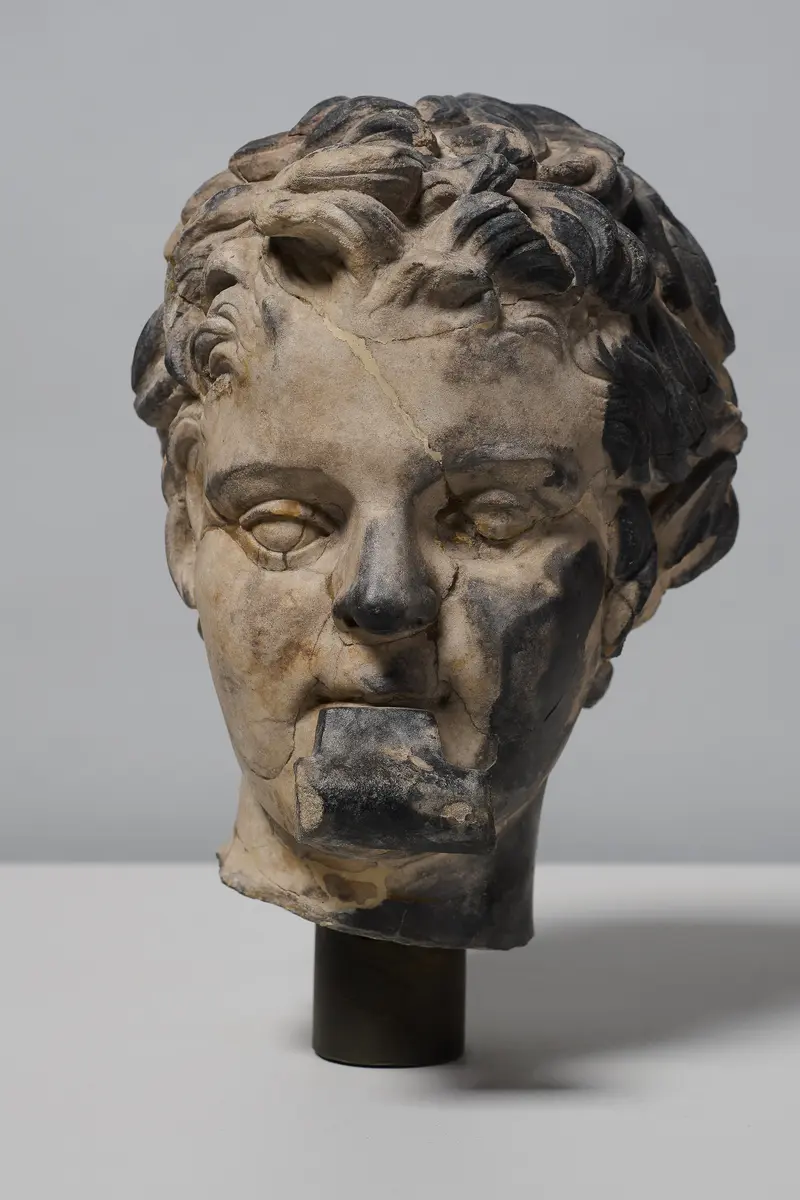
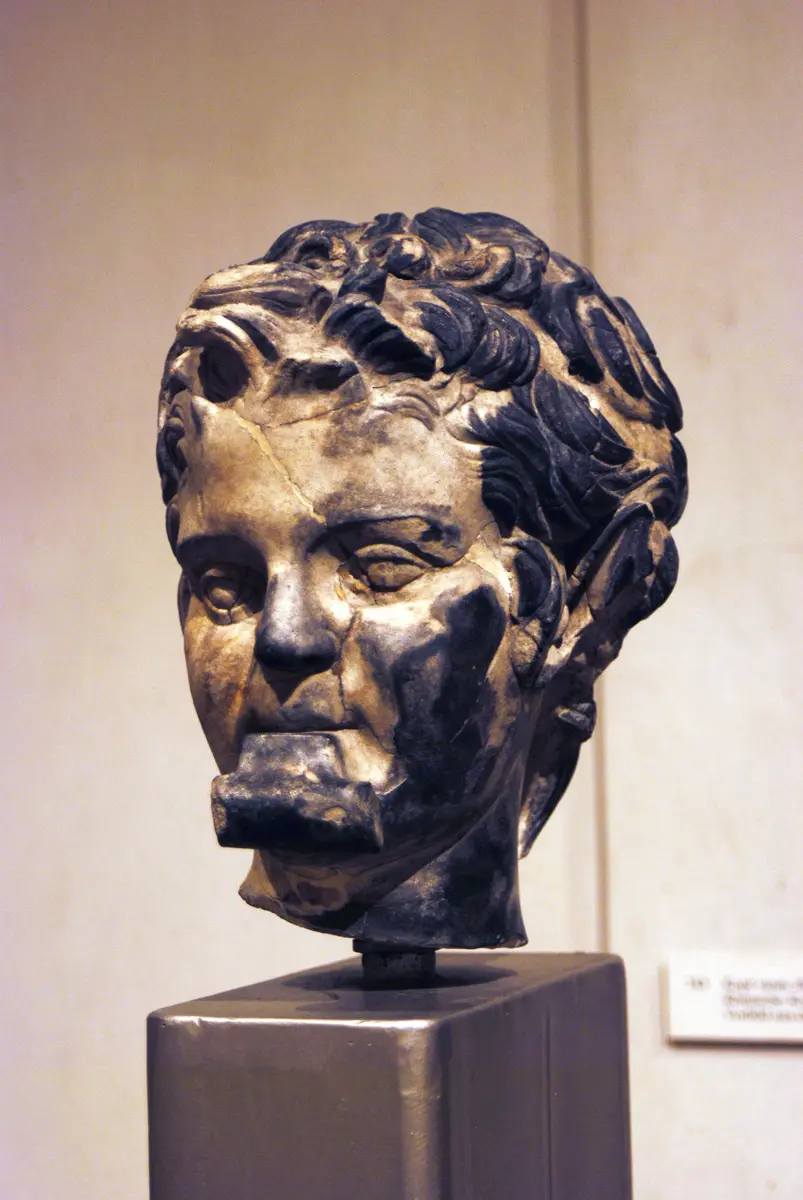
The head is that of a young satyr, a composite creature with the body of a man and goat legs. The satyr is playing a pipe, pieces of which are discernible on his pursed lips. The surface of this fragmented head is dull and discoloured in some places; the artefact was presumably damaged in the fire that also destroyed the propylaea, the entrance to the Harbour Gymnasium. Together with the satyr’s head archaeologists found fragments of his hands clutching the pipe, and a foot on a plinth. This statue of a pipe-playing satyr was presumably informed by a Greek model that was frequently copied during the Roman Empire.
Time:
2. Jh. n. Chr., nach griechischem Vorbild des 4. Jh.v. Chr.
Object Name
Kopf
Culture
Römisch
Location of discovery:
Ephesos Hafengymnasium (Selçuk, Kleinasien, Türkei)
Material/technology:
Marmor
Dimensions:
L/H 24,5 cm
Copyright
Kunsthistorisches Museum, Antikensammlung
Invs.
Antikensammlung, I 838
Provenance
Sultan, Abdul, Hamid, II.; Österreichische Ausgrabungen in Ephesos; Geschenk an Kaiser Franz Joseph; 1911 nachträglich inventarisiert
Browse more
Similar items you might be interested in
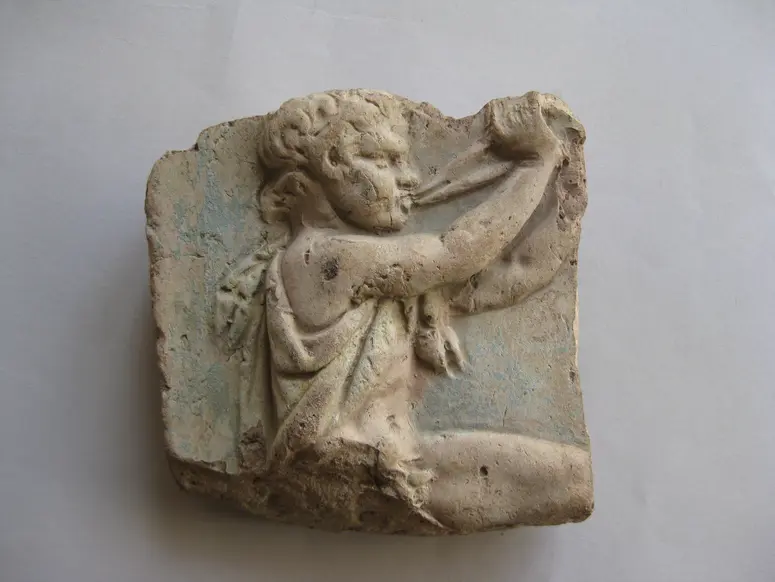
Campanarelief: Fragment einer Kelterungsszene: Doppelflöte blasender Satyrknabe Römisch, Frühe Kaiserzeit 1. Hälfte 1. Jh. n. Chr.
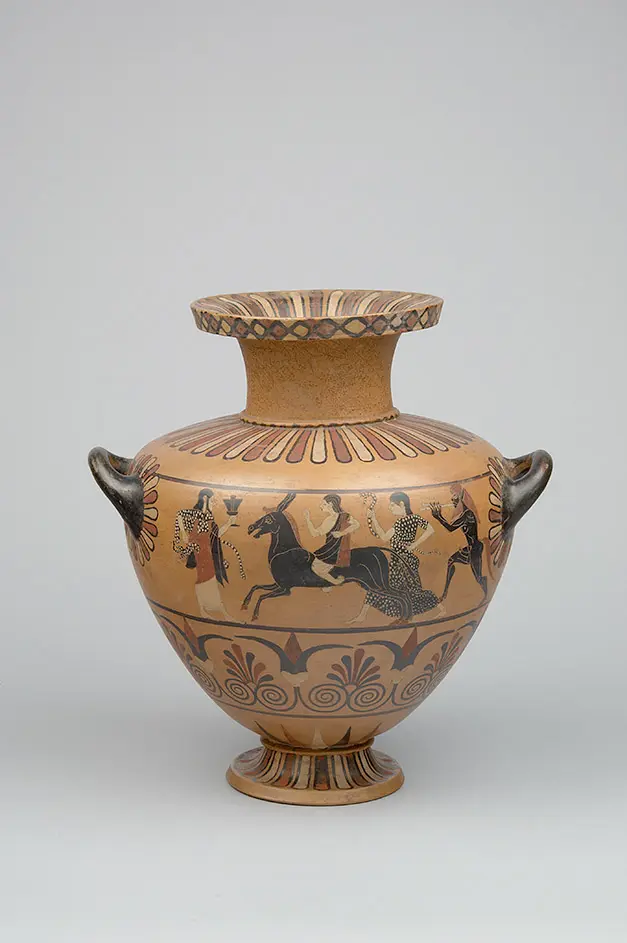
Hydria: Rückführung des Hephaistos in den Olymp Griechisch, Ostgriechisch, Caere um 525 v. Chr.
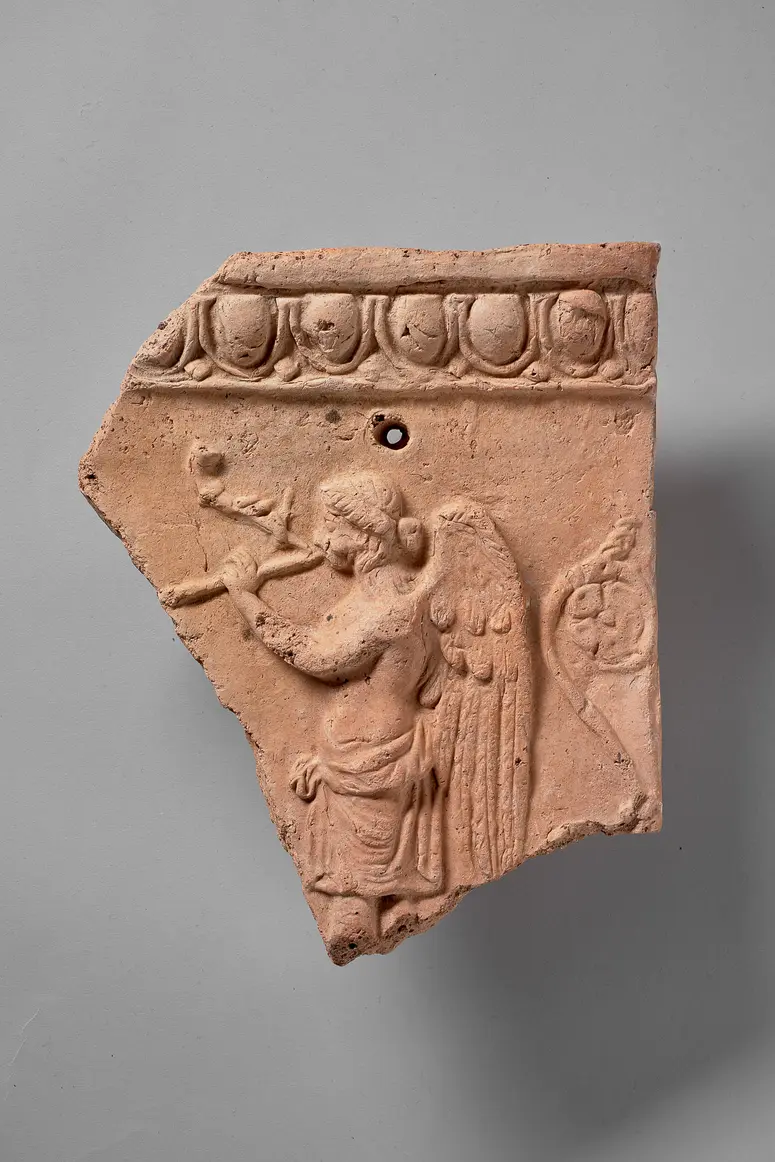
Campanarelief: Rechte obere Ecke einer Verkleidungsplatte mit musizierenden Flügelfrauen in Ranken: Doppelflöte blasende Flügelfrau Römisch, Frühe Kaiserzeit 1. Hälfte 1. Jh. n. Chr.
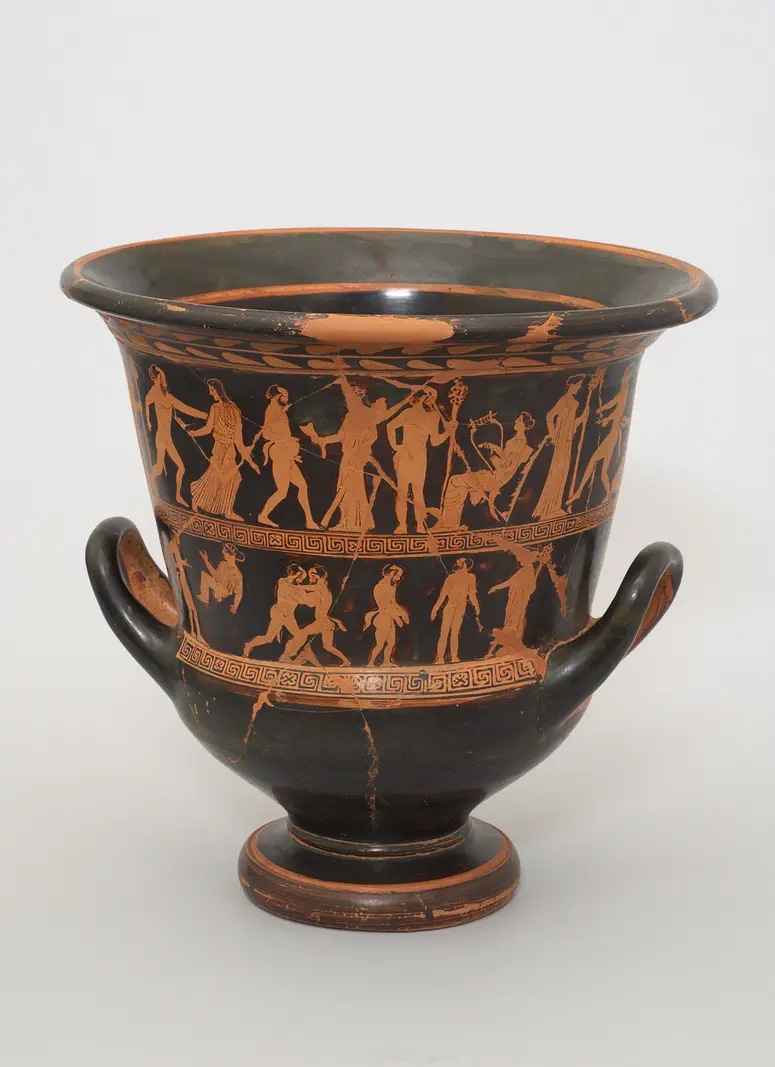
Kelchkrater: Silen, Satyr und Mänade Griechisch, Attisch, rotfigurig 3. Viertel 5. Jh. v. Chr.
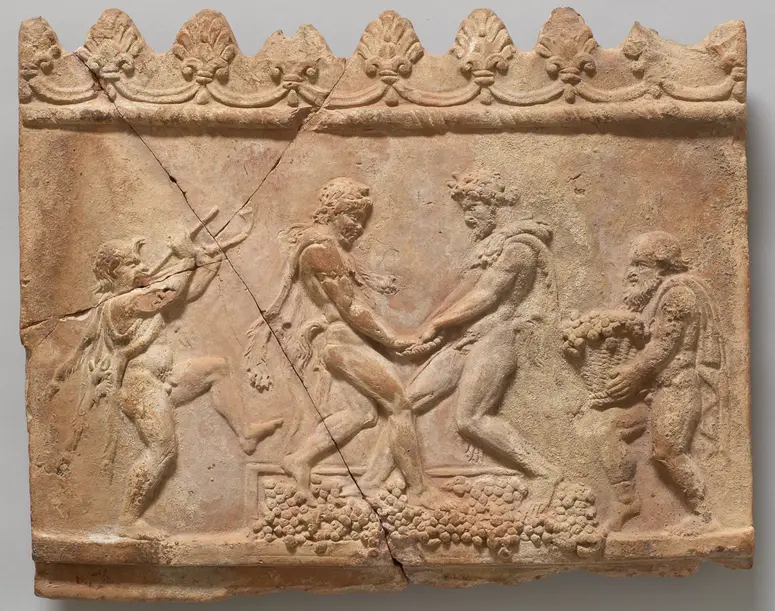
Campanarelief: Aufsatzplatte: Zwei kelternde Satyrn, jugendlicher Satyr mit Doppelflöte, Silen mit Korb Römisch, Frühe Kaiserzeit Anfang 1. Jh. n. Chr.
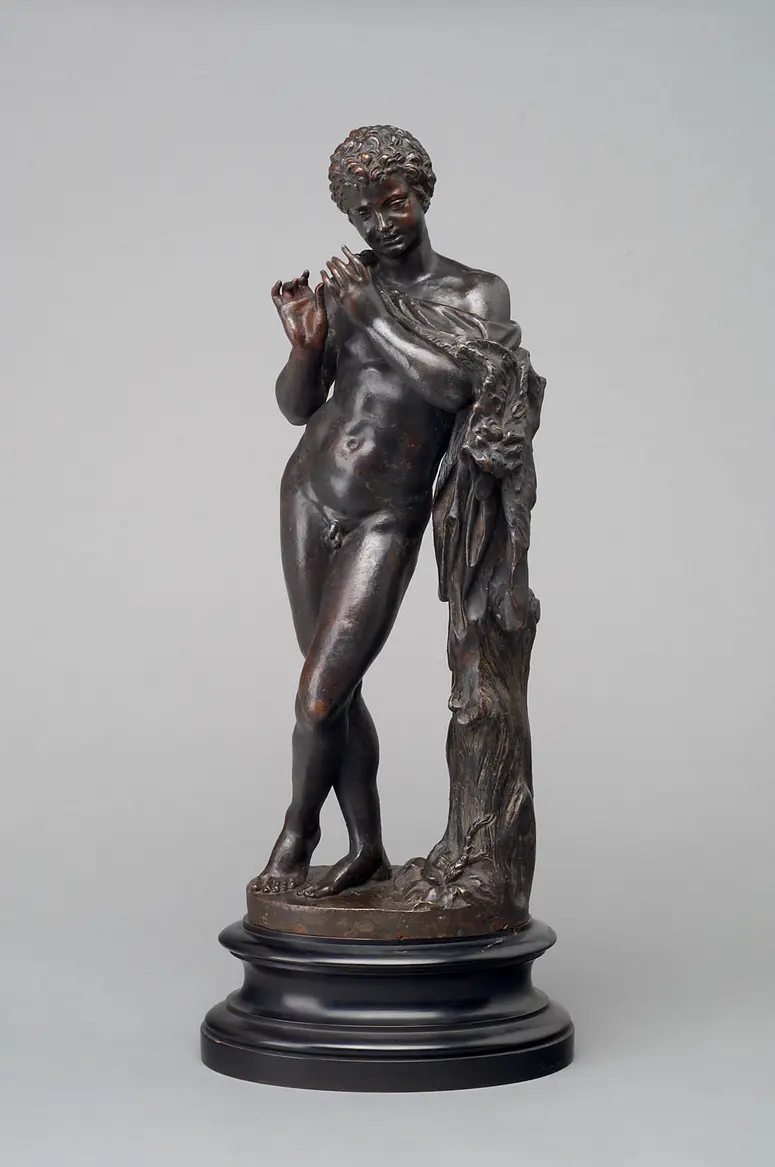
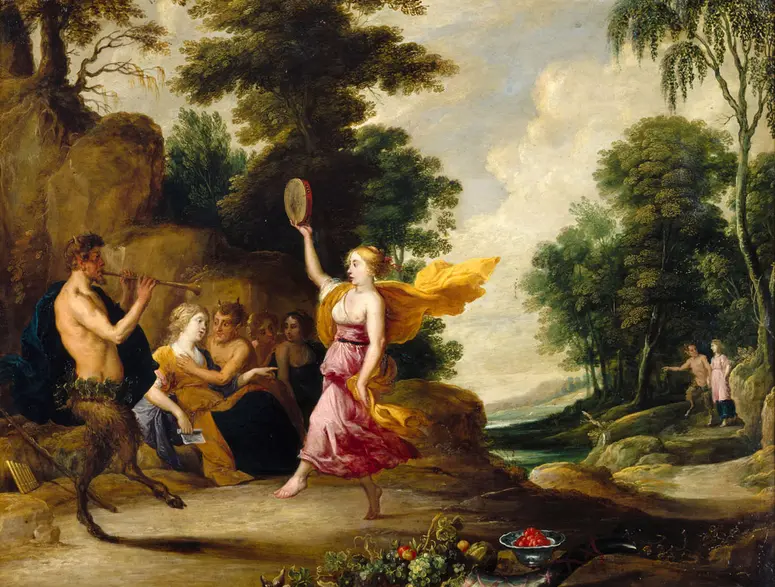

Hydria: Thiasos von sieben Figuren Griechisch, Attisch, rotfigurig Mitte 5. Jh. v. Chr.
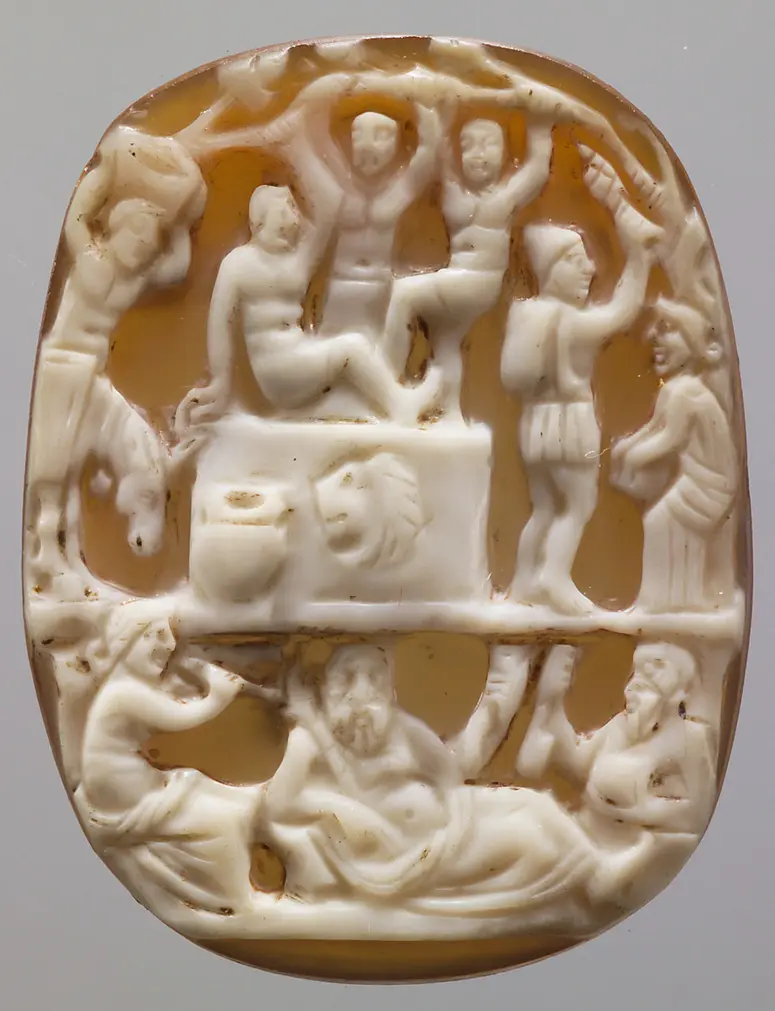
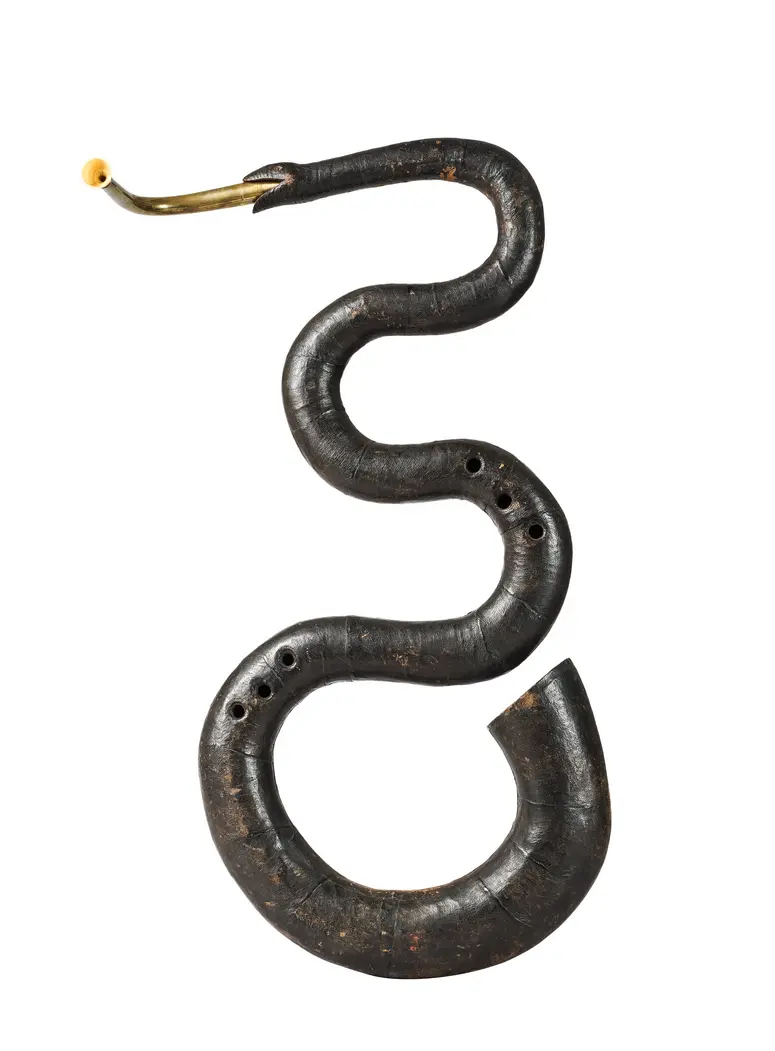
Manufacturer: anonym 16th century
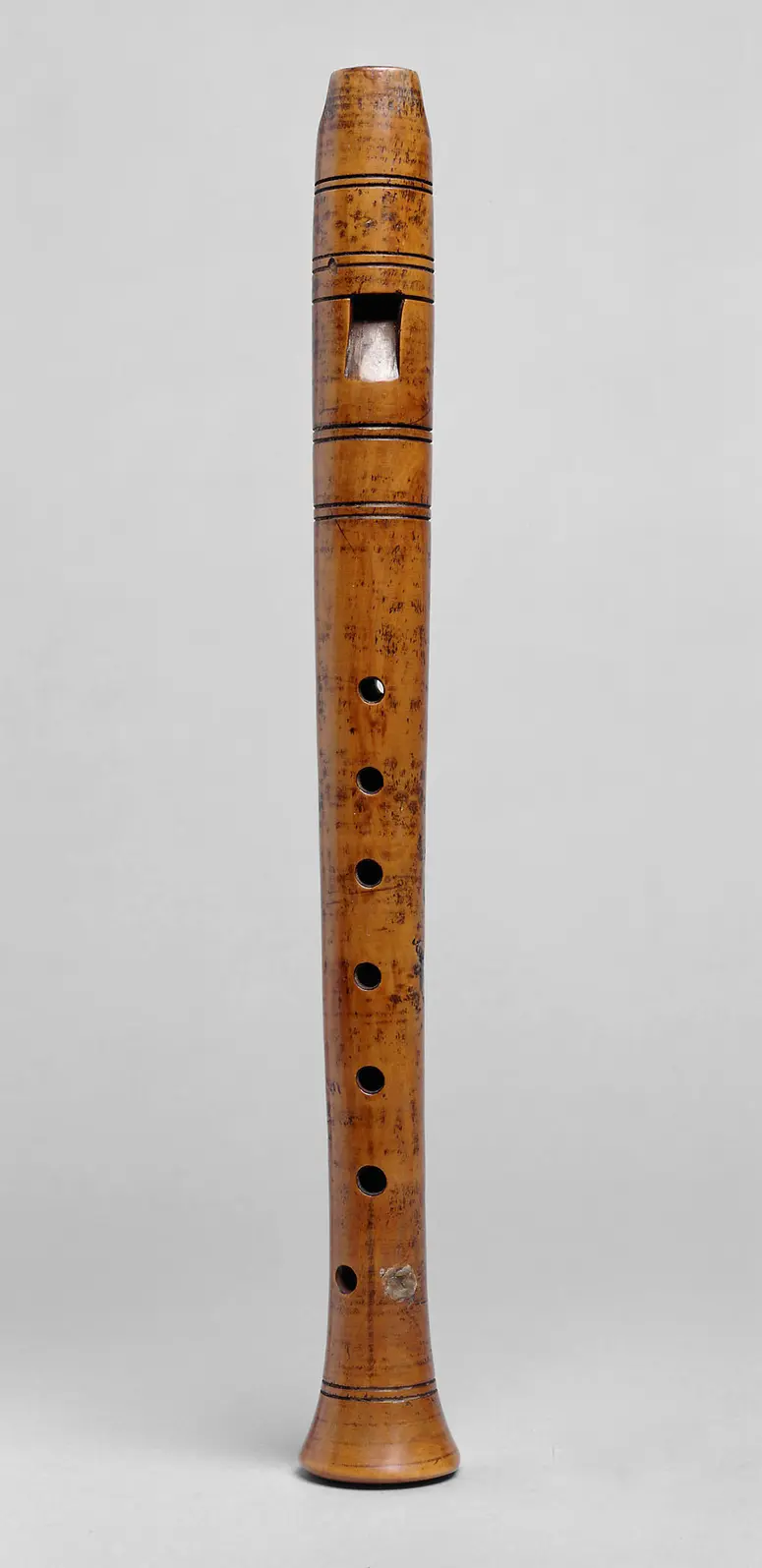
Manufacturer: anonym 16. or 17. century
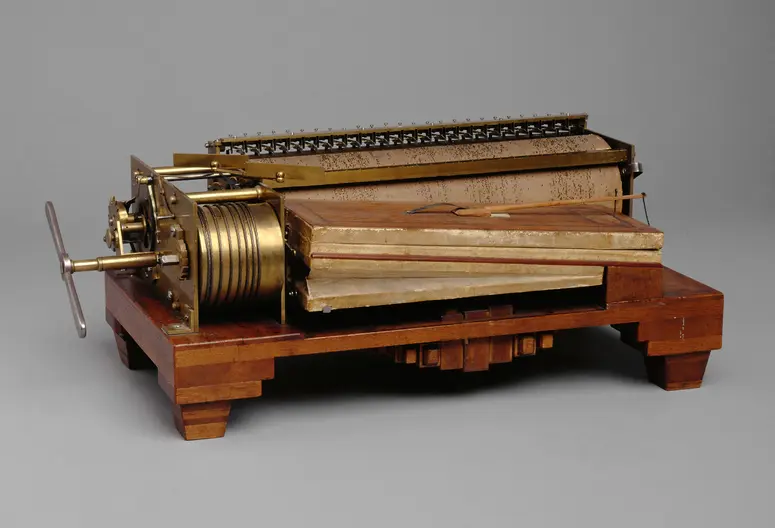
Manufacturer: Primitivus Niemetz 1796 (?), cabinet later
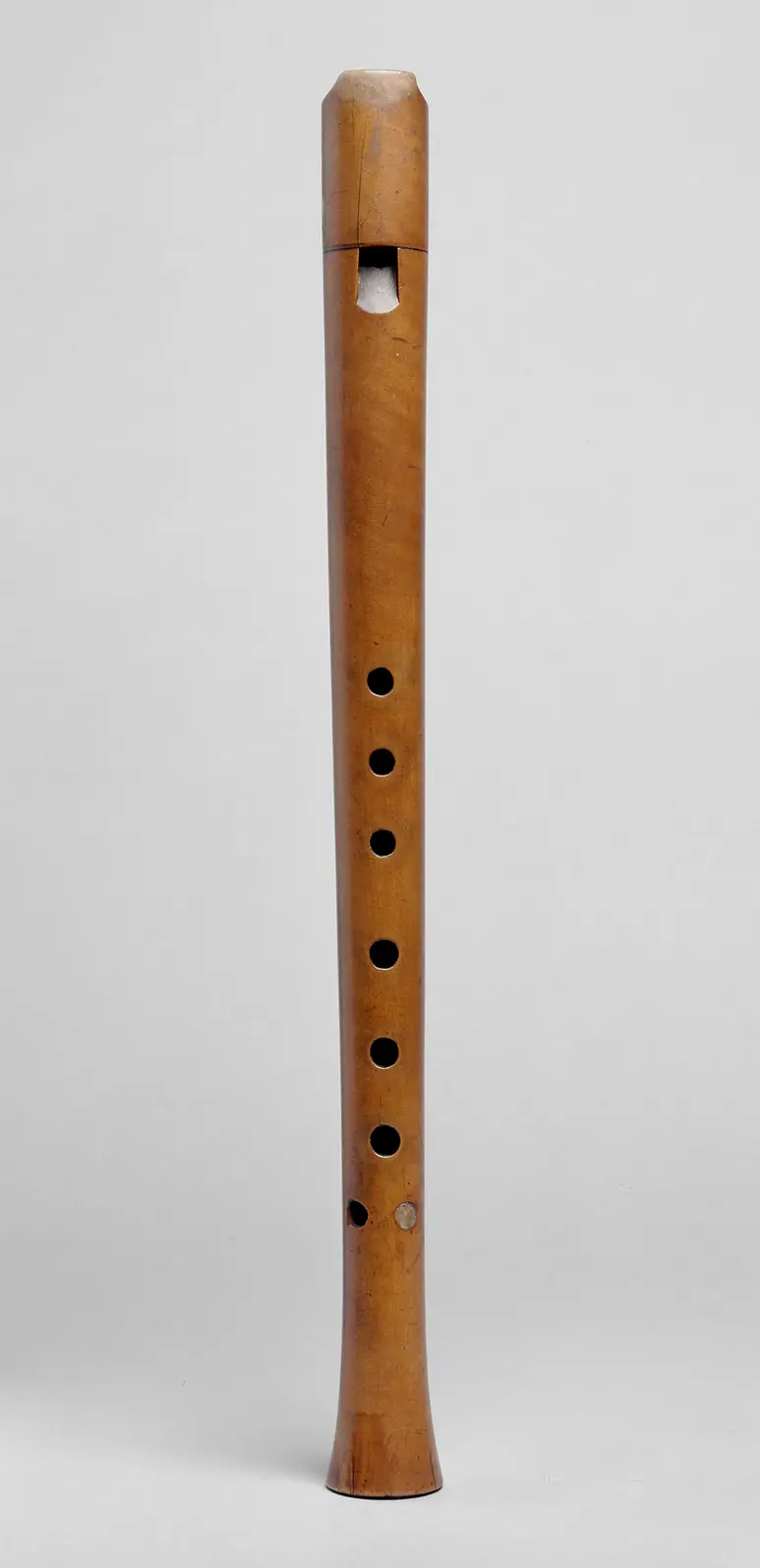
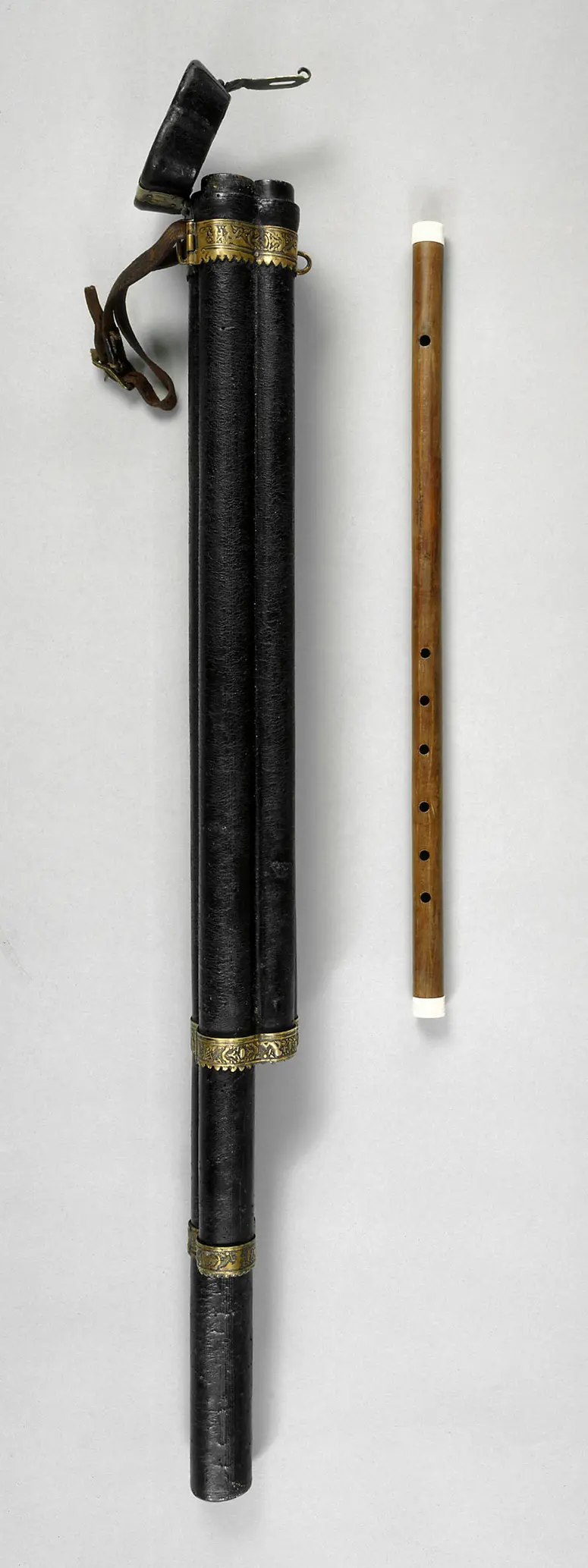
Manufacturer: anonym 17th century (?)
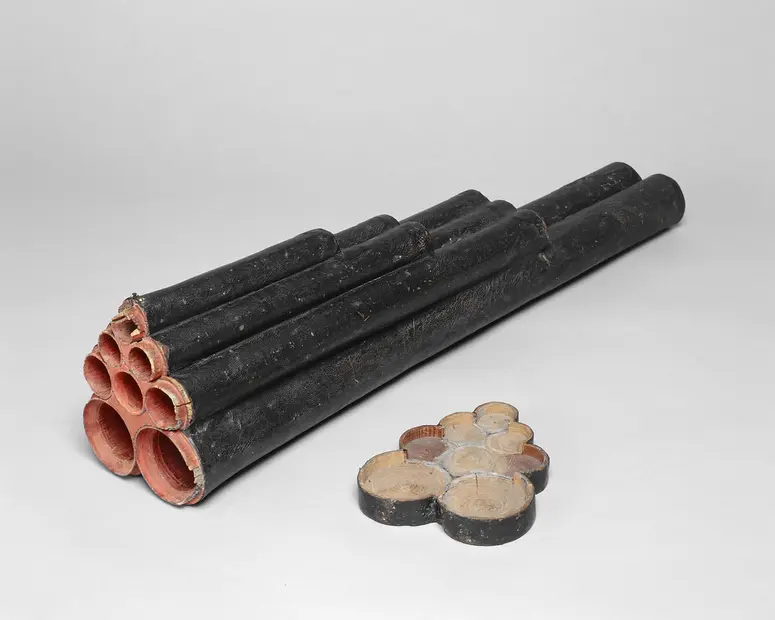
Manufacturer: anonym 16th century
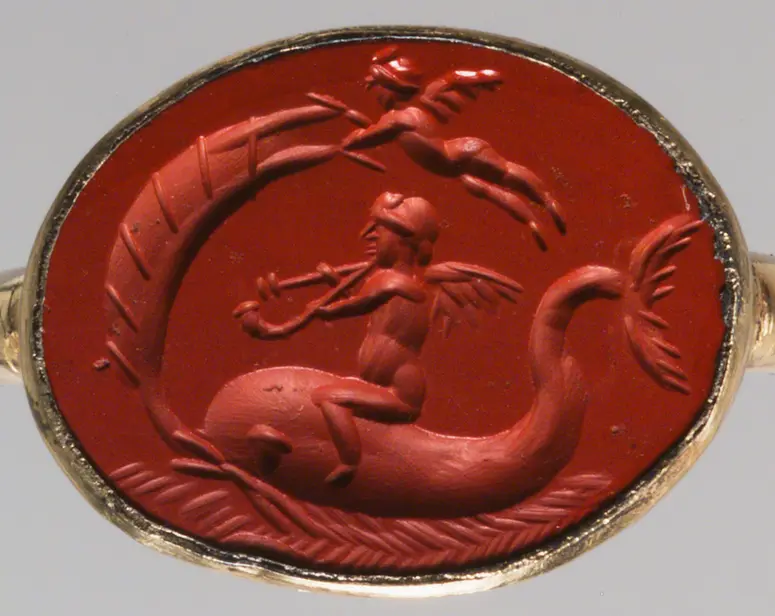
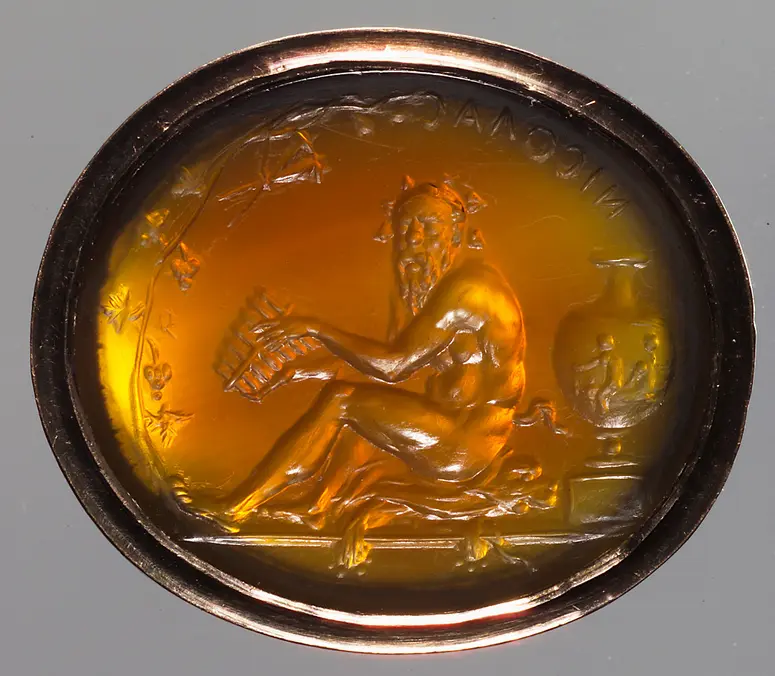
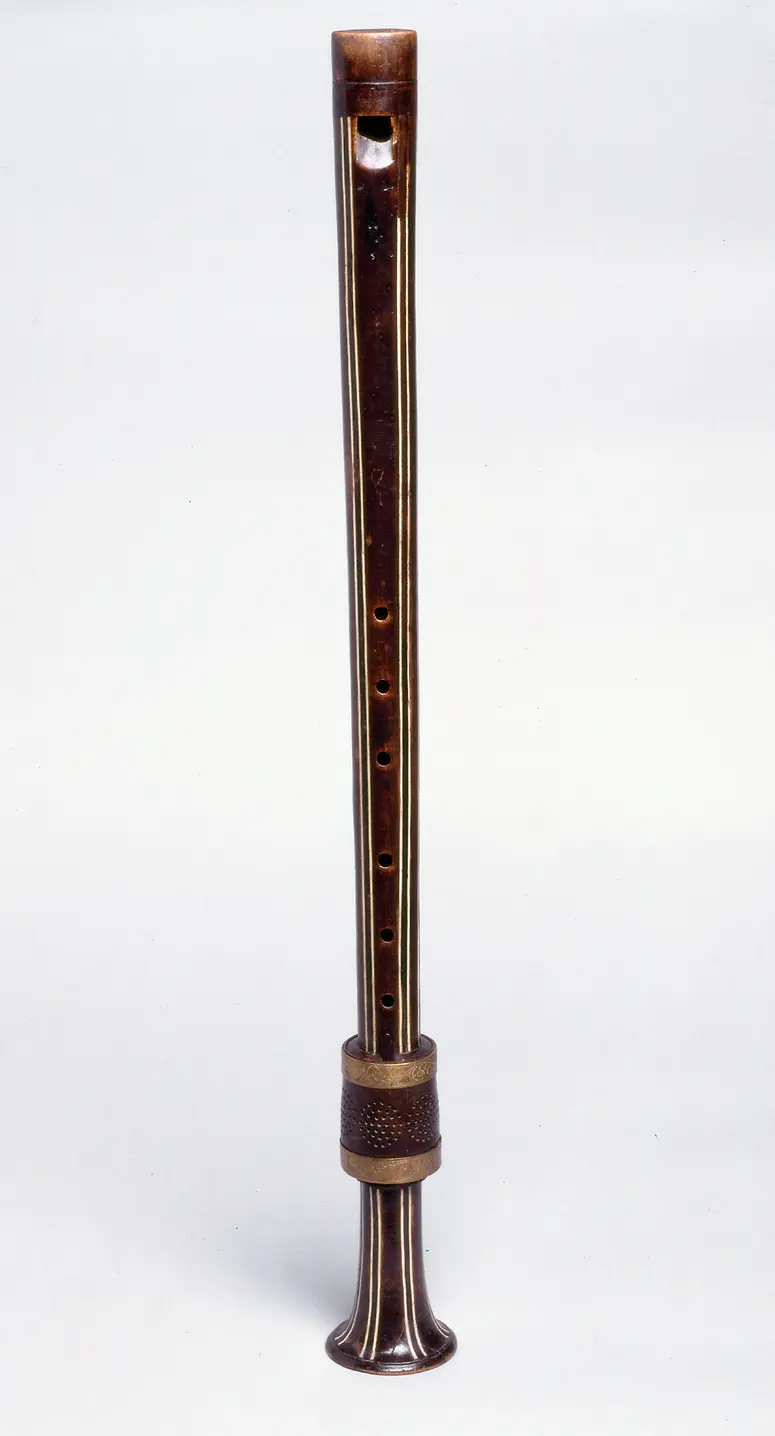
Manufacturer: Rauch von Schratt[enbach] 1503
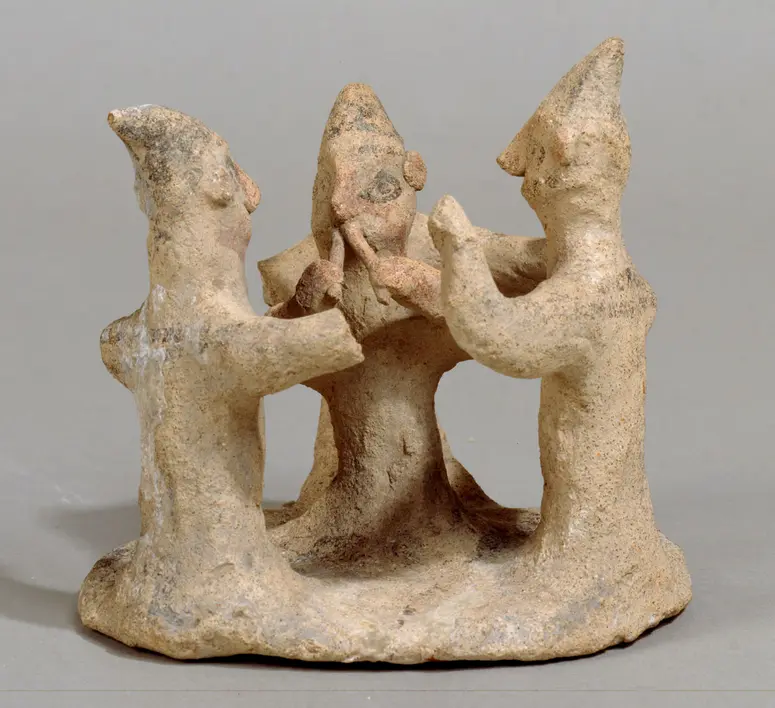
Statuette: Reigentänzer und Flötenspieler Zyprisch, Eisenzeit, archaisch 750 - 600 v. Chr.