Thiasos von sieben Figuren
Mitte 5. Jh. v. Chr.
Das Schulterbild der Hydria zeigt einen dionysischen Reigen von sieben Figuren: In der Mitte ist der Weingott Dionysos zu sehen; er blickt sich im Lauf um und hält einen Kantharos und den Thyrsosstab in seinen Händen. Ihm folgt eine laufende Mänade mit Kanne und Fackel. Dionysos schreitet ein jugendlicher Satyr voran; er bläst den Aulos (Flöte) und hält das Futteral am linken Handgelenk. Diese dreifigurige Mittelgruppe wird von je einer Mänade und einem Silen flankiert, die (bis auf den Silen rechts) Fackeln oder Thyrsosstäbe halten.
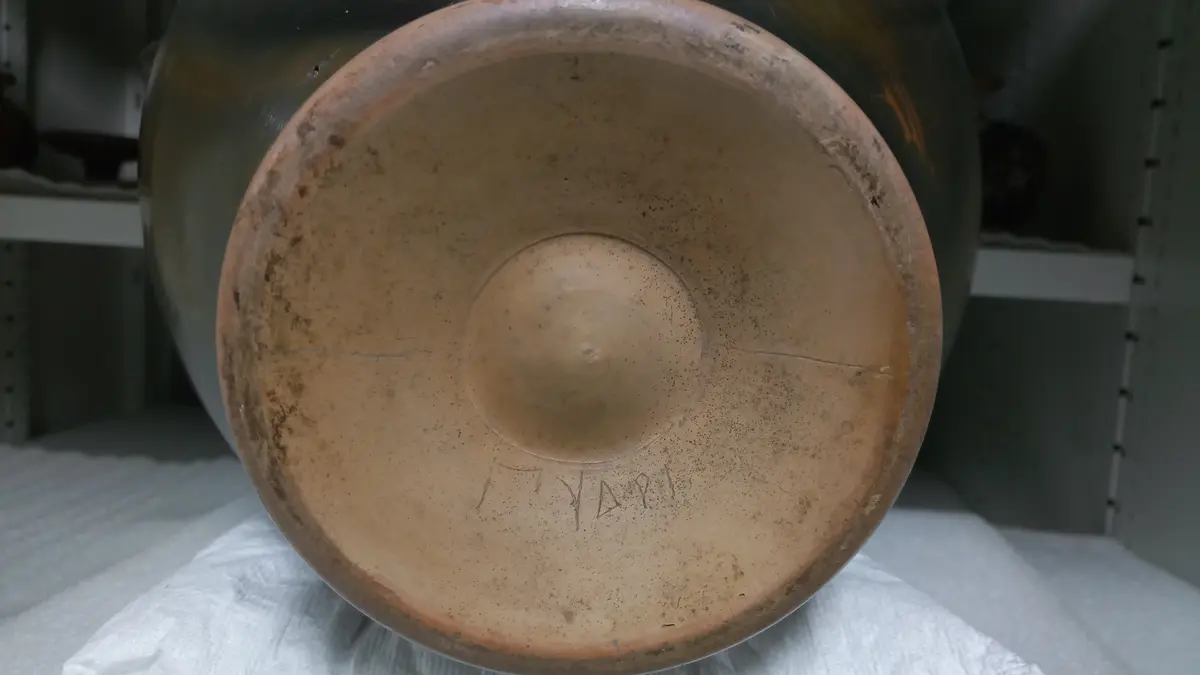
In den Boden ist eine Händlerliste geritzt. Zu lesen ist „5 Hydrien“; es handelt sich vermutlich um eine Kundenbestellung von insgesamt fünf Gefäßen wie unseres.
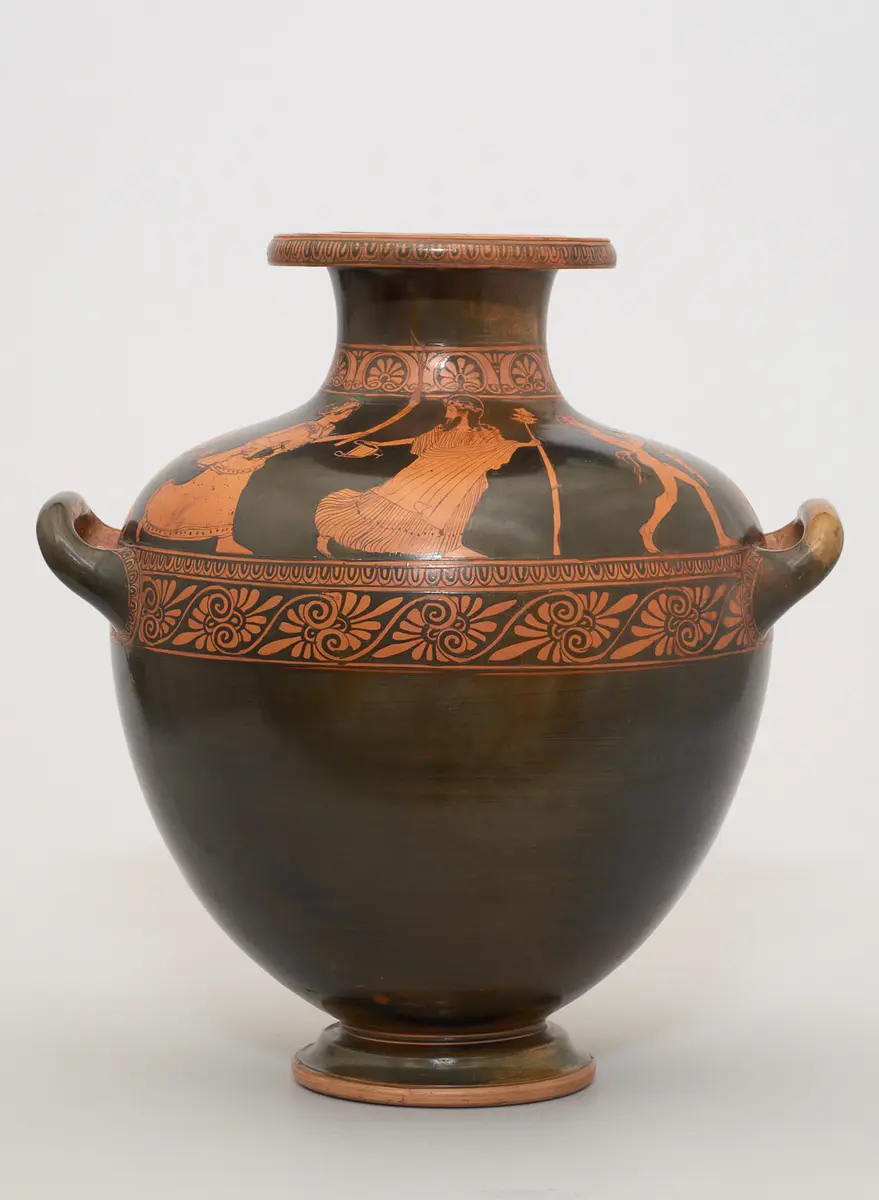
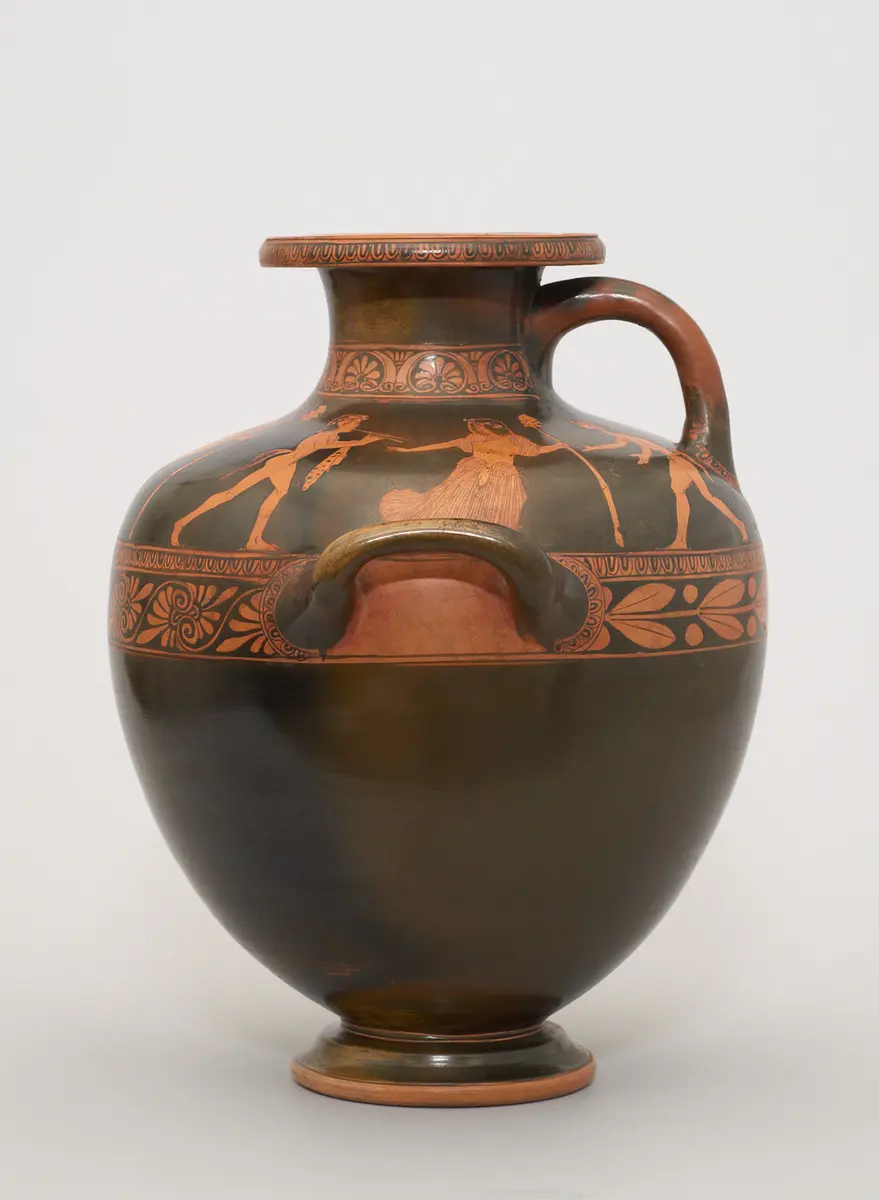
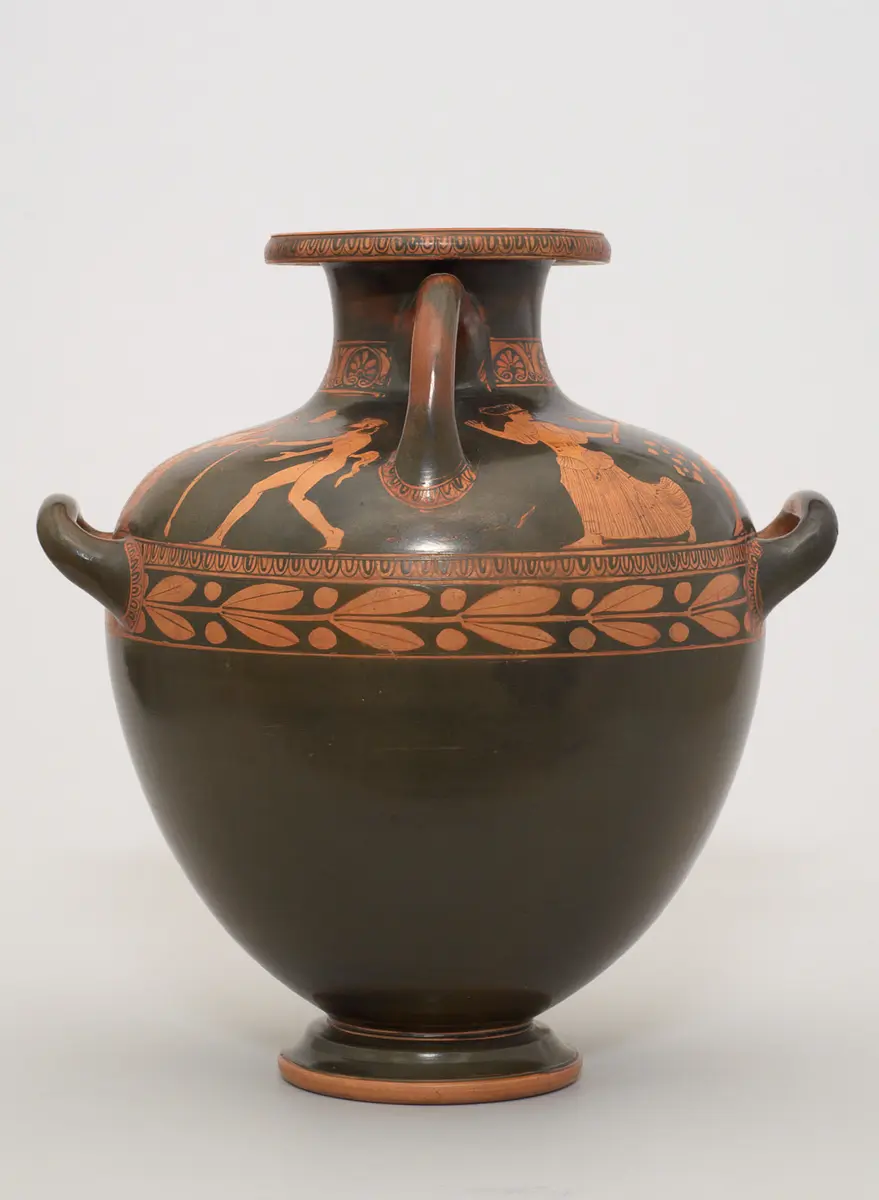
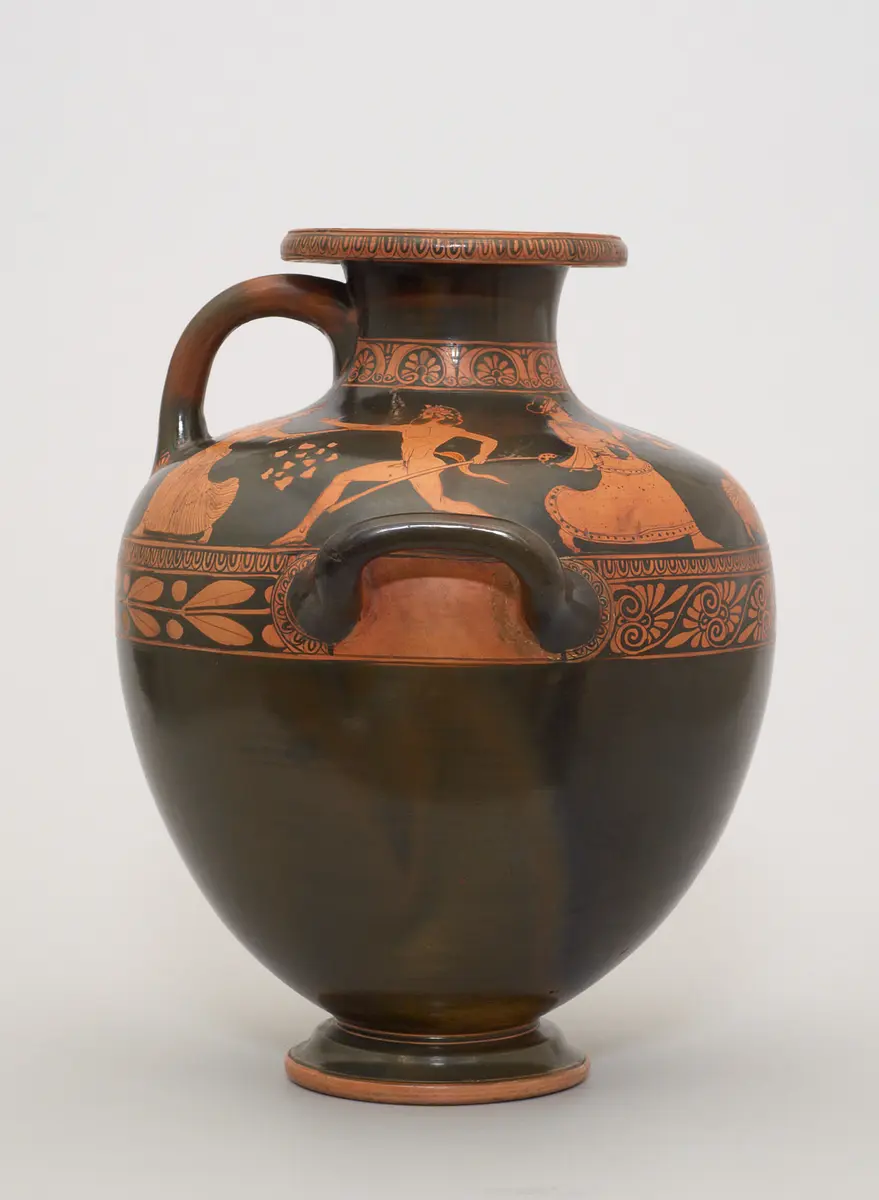
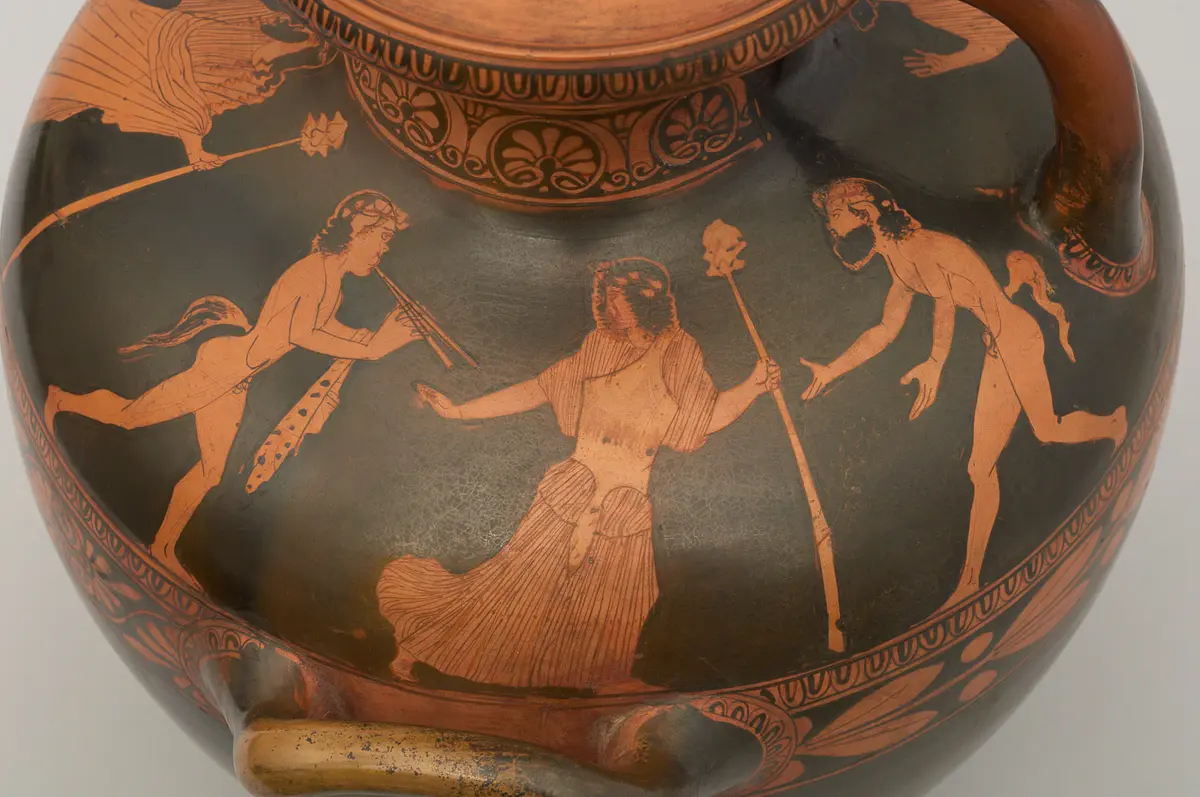
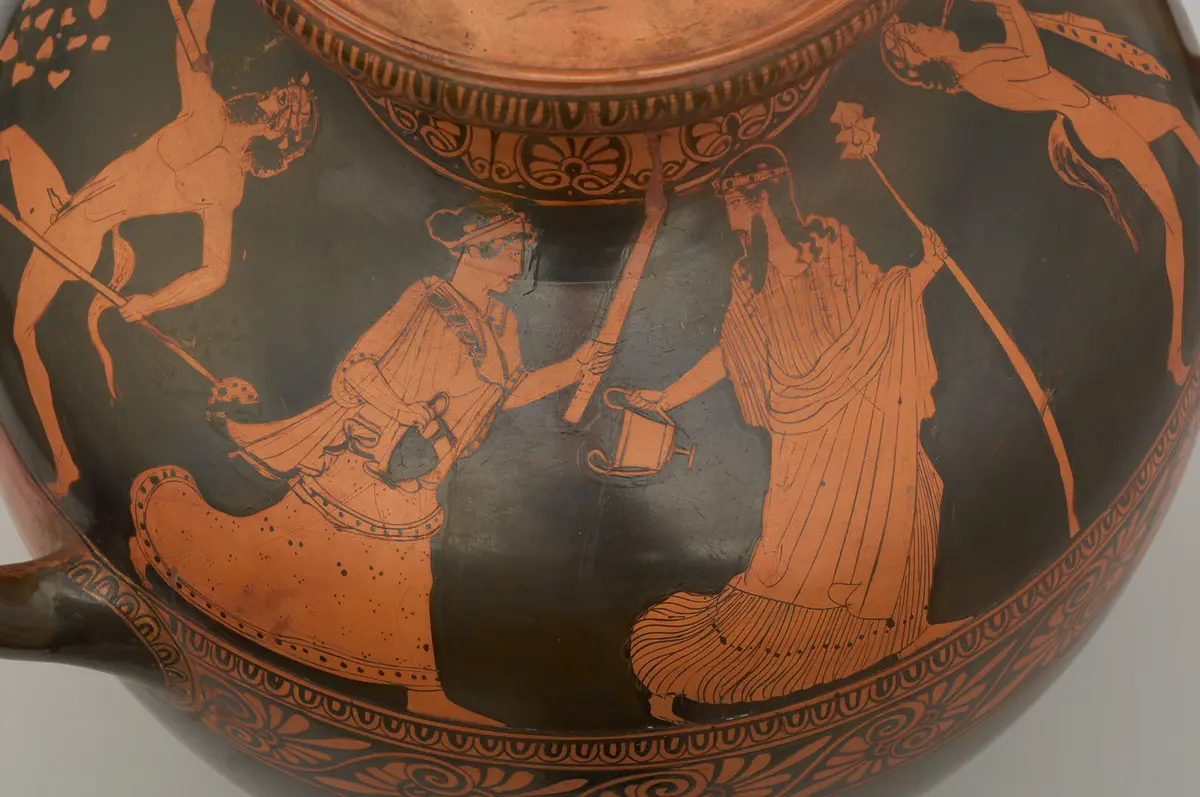
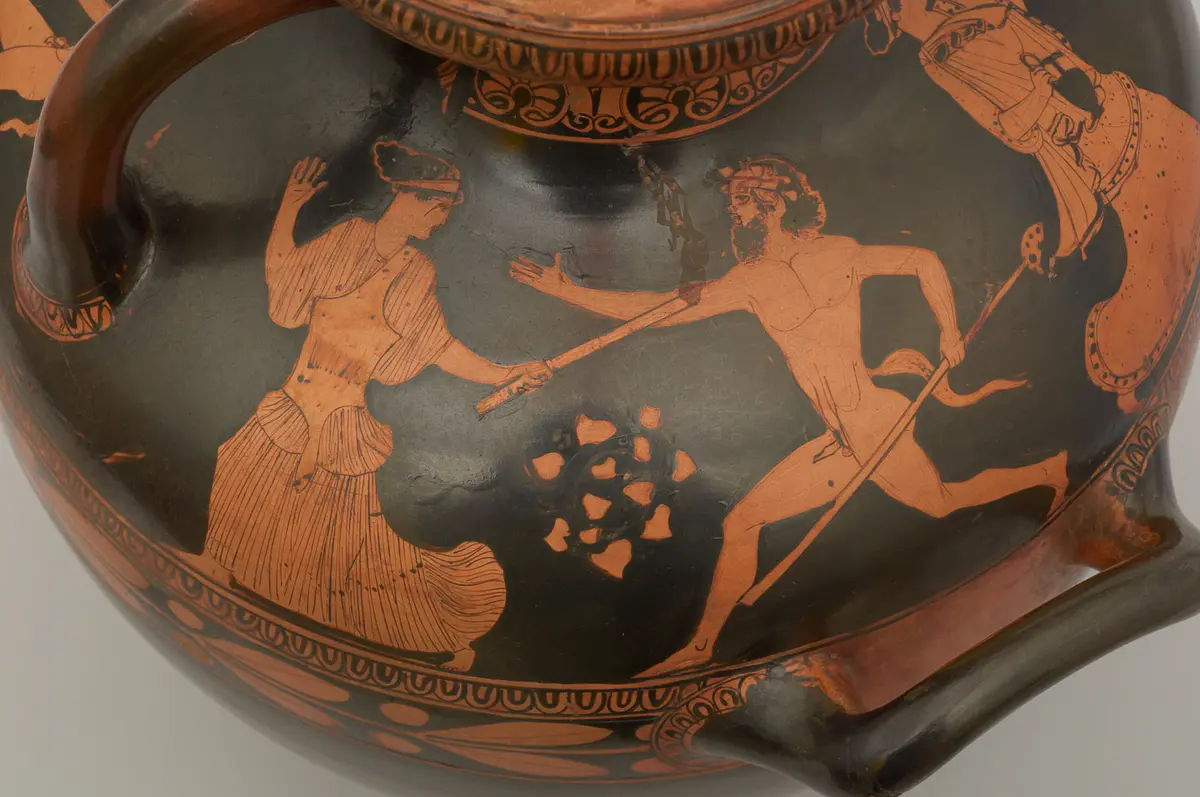
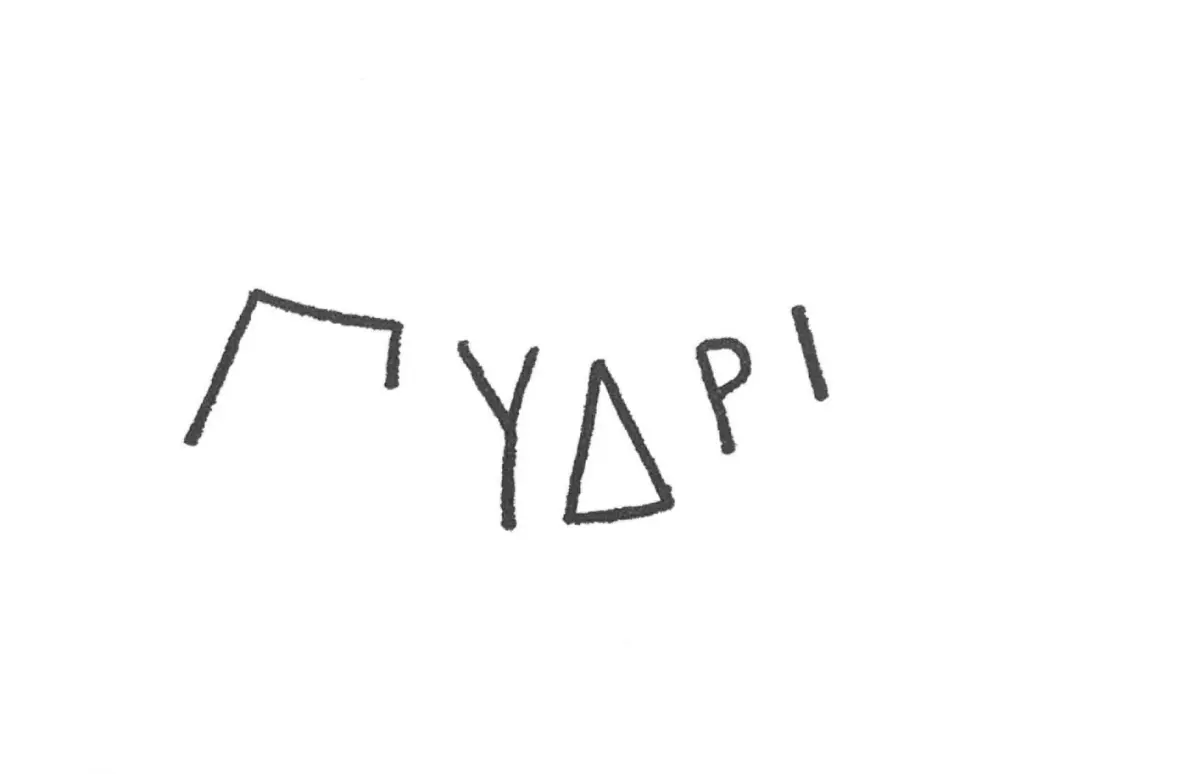
Das Schulterbild der Hydria zeigt einen dionysischen Reigen von sieben Figuren: In der Mitte ist der Weingott Dionysos zu sehen; er blickt sich im Lauf um und hält einen Kantharos und den Thyrsosstab in seinen Händen. Ihm folgt eine laufende Mänade mit Kanne und Fackel. Dionysos schreitet ein jugendlicher Satyr voran; er bläst den Aulos (Flöte) und hält das Futteral am linken Handgelenk. Diese dreifigurige Mittelgruppe wird von je einer Mänade und einem Silen flankiert, die (bis auf den Silen rechts) Fackeln oder Thyrsosstäbe halten.
In den Boden ist eine Händlerliste geritzt. Zu lesen ist „5 Hydrien“; es handelt sich vermutlich um eine Kundenbestellung von insgesamt fünf Gefäßen wie unseres.
Time:
Mitte 5. Jh. v. Chr.
Object Name
Hydria
Culture
Griechisch
Location of discovery:
Unbekannt
Material/technology:
Ton
Dimensions:
35 cm x 27,2 cm, 2.757 g
Inscribed
5 υδρι[αι]
5 hydrí[ai]
Übersetzung:
5 Hydrien (dreihenkelige Wassergefäße)
Copyright
Kunsthistorisches Museum, Antikensammlung
Invs.
Antikensammlung, IV 1152
Provenance
Rainer, Vinzenz M., von; 1804 Kauf
Browse more
Similar items you might be interested in
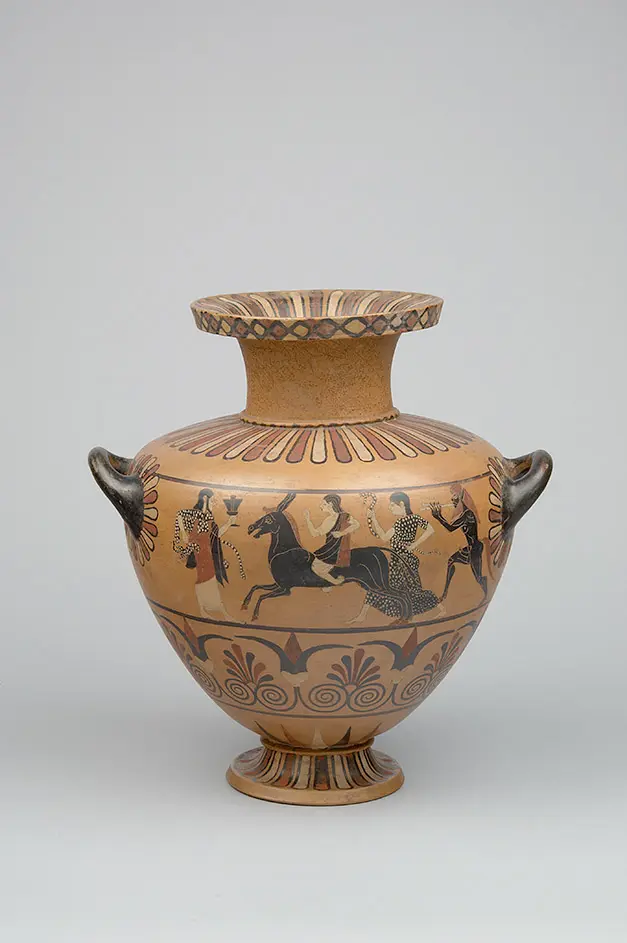
Hydria: Rückführung des Hephaistos in den Olymp Griechisch, Ostgriechisch, Caere um 525 v. Chr.
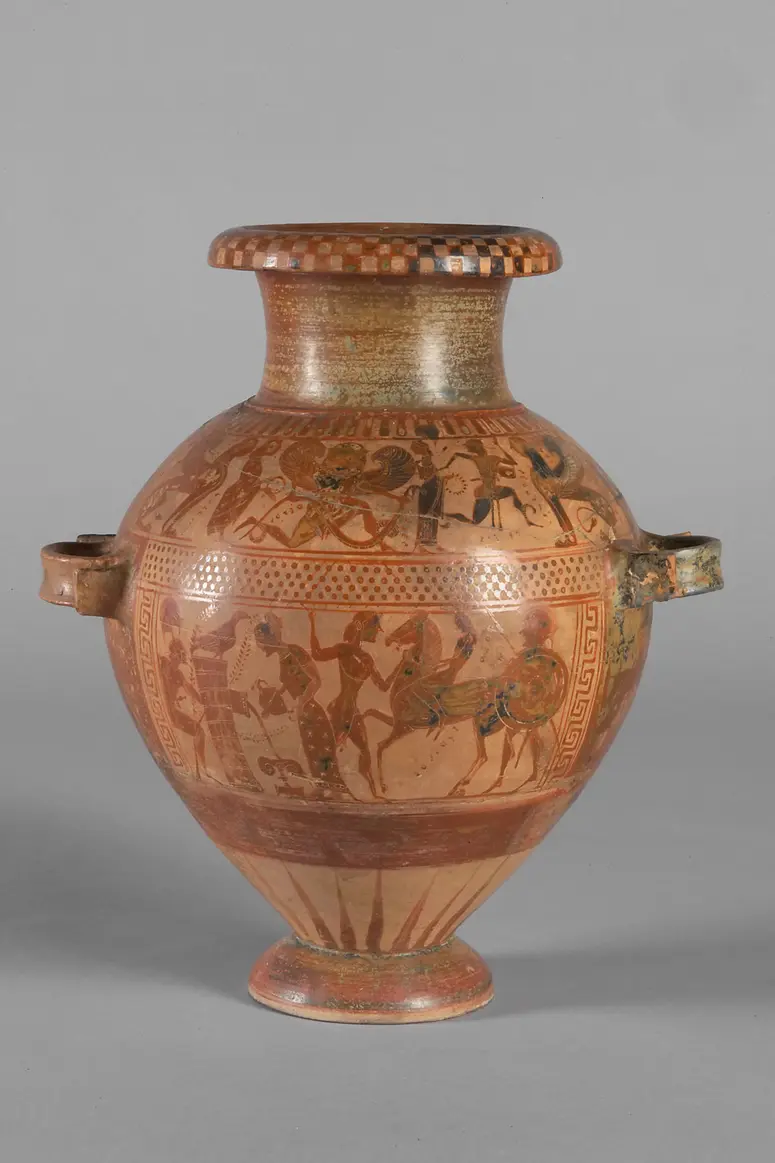
Hydria: Achilleus lauert Troilos auf Griechisch, Attisch, schwarzfigurig um 560 v. Chr.

Glockenkrater: Jugendlicher Dionysos zwischen Silen und Mänaden (A), Drei Manteljünglinge (B) Griechisch, Attisch, rotfigurig Anfang 4. Jh. v. Chr.

Hydria: Henkel einer Hydria Griechisch 5. Jh. v. Chr.
Hydria: Aussendung des Triptolemos Griechisch, Attisch, rotfigurig Mitte 5. Jh. v. Chr.
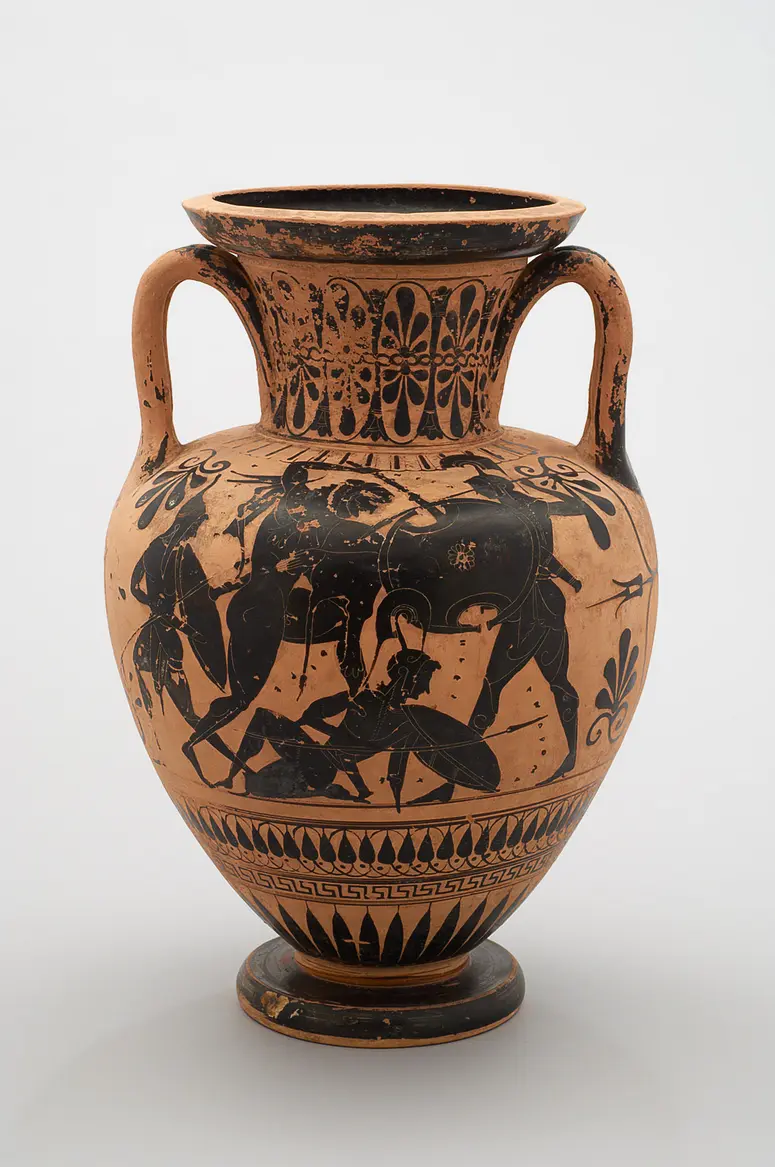
Halsamphora: Herakles und Amazonen (A), Dionysos (B) Griechisch, Attisch, schwarzfigurig um 500 v. Chr.
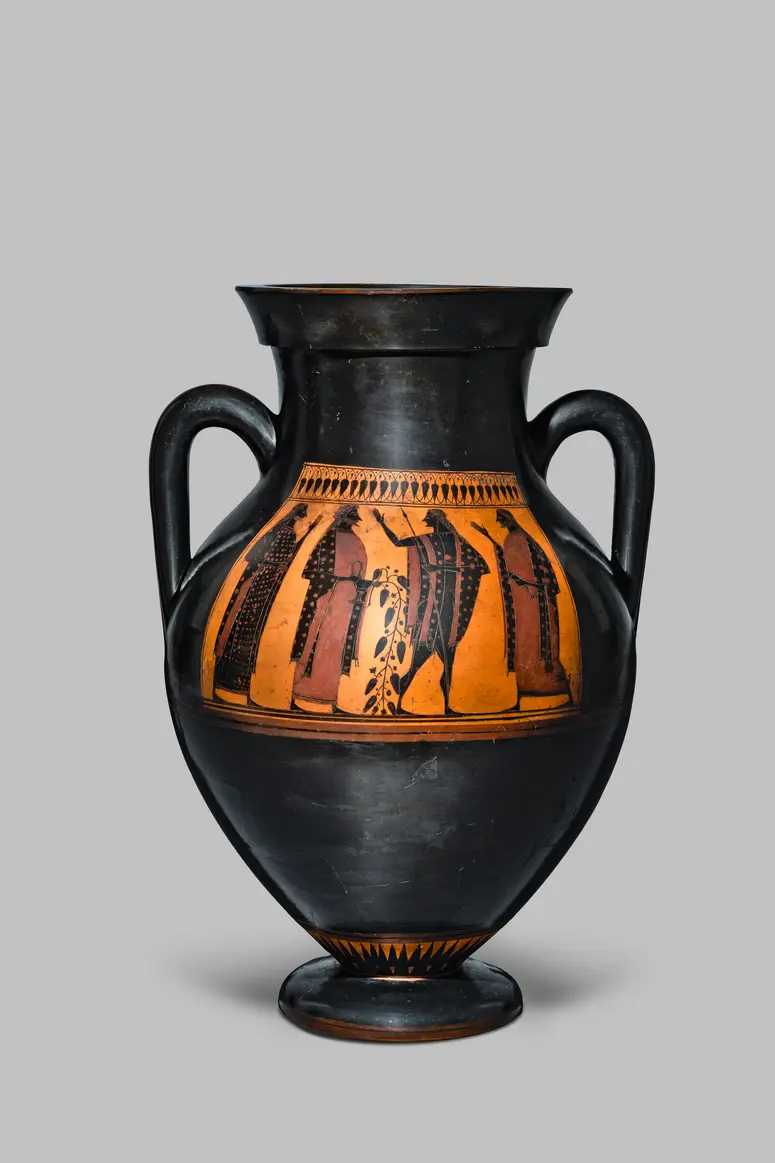
Bauchamphora: Dionysos und Ikarios Griechisch, Attisch, schwarzfigurig um 540 v. Chr.
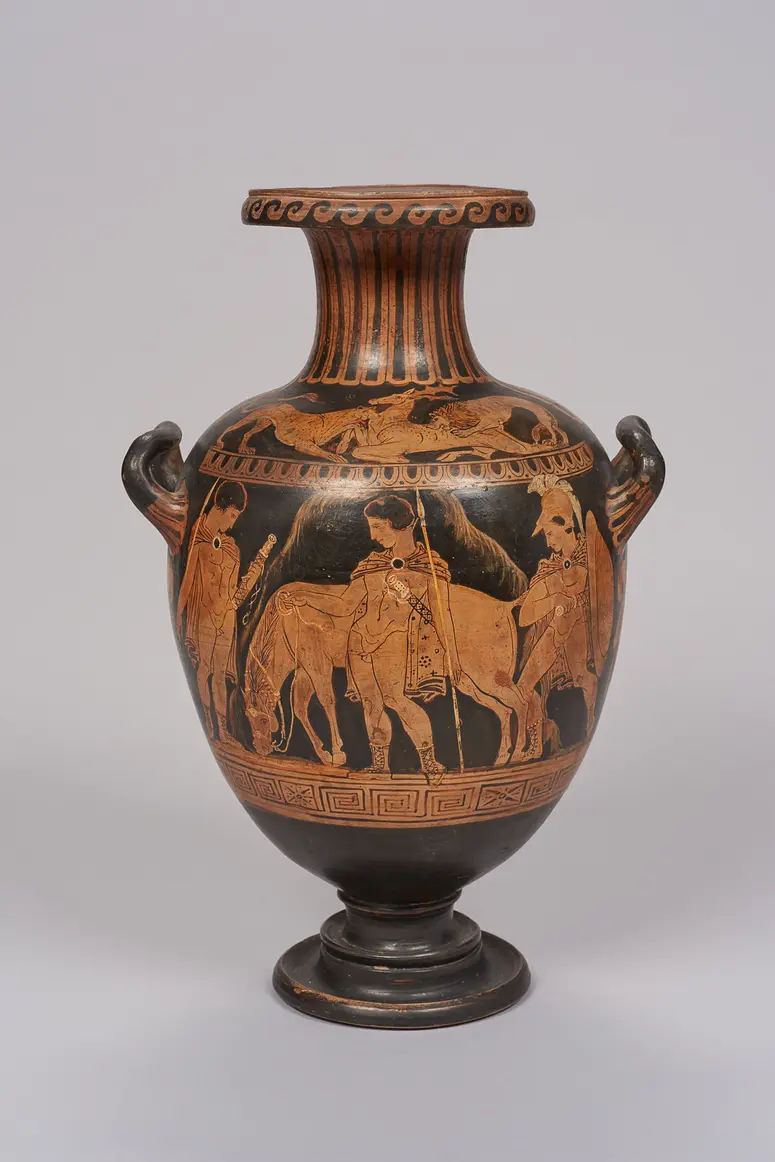
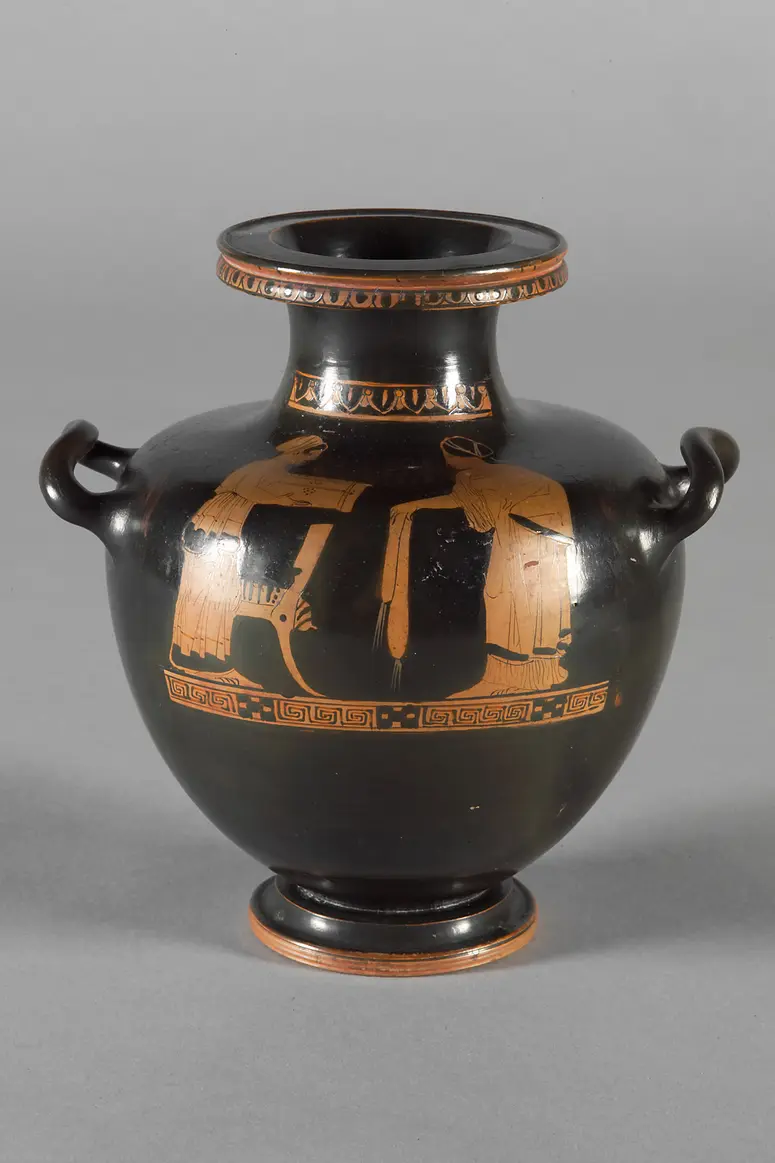
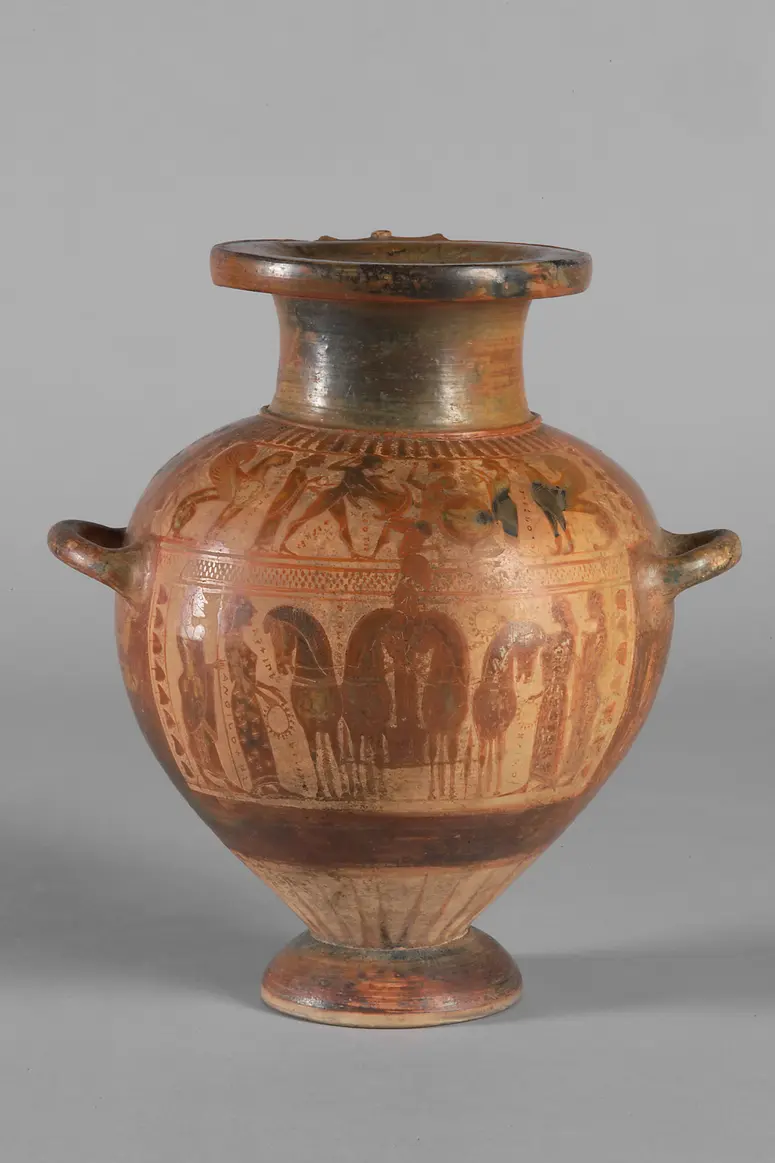
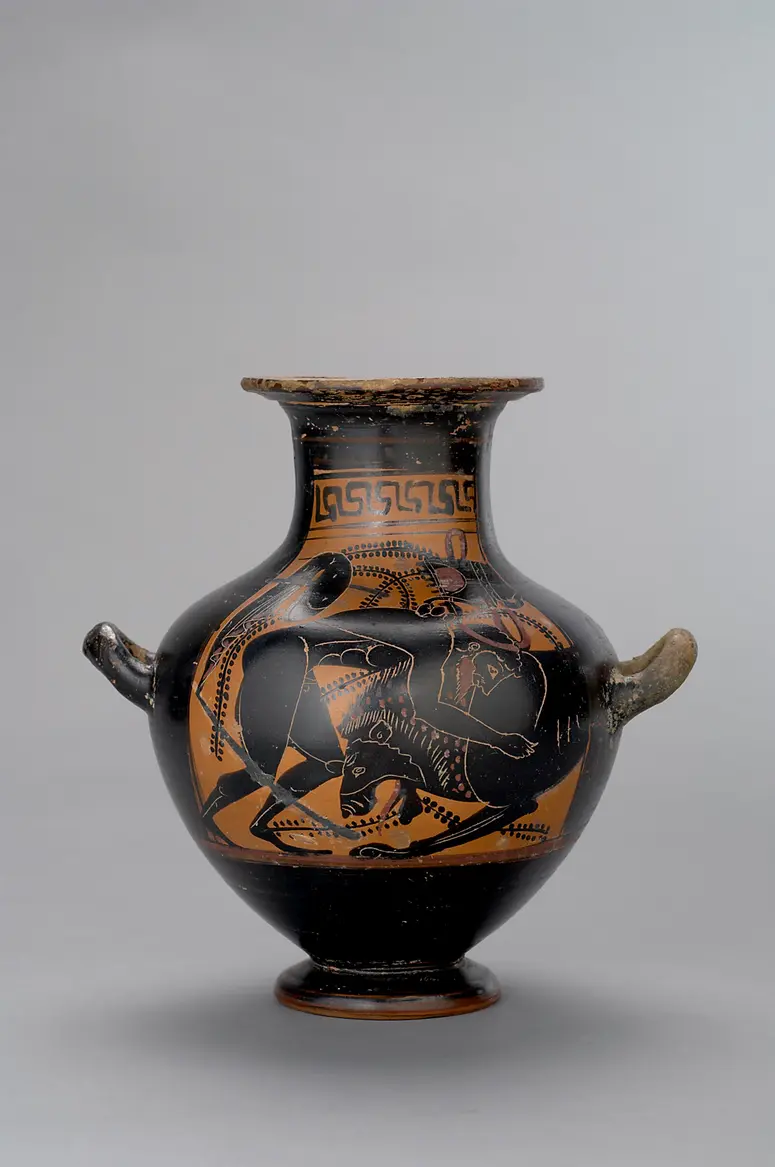
Kalpis: Herakles im Löwenkampf Griechisch, Attisch, schwarzfigurig Anfang 5. Jh. v. Chr.

Hydria: Apollon und Artemis beim Opfer Griechisch, Attisch, rotfigurig 490 - 480 v. Chr.
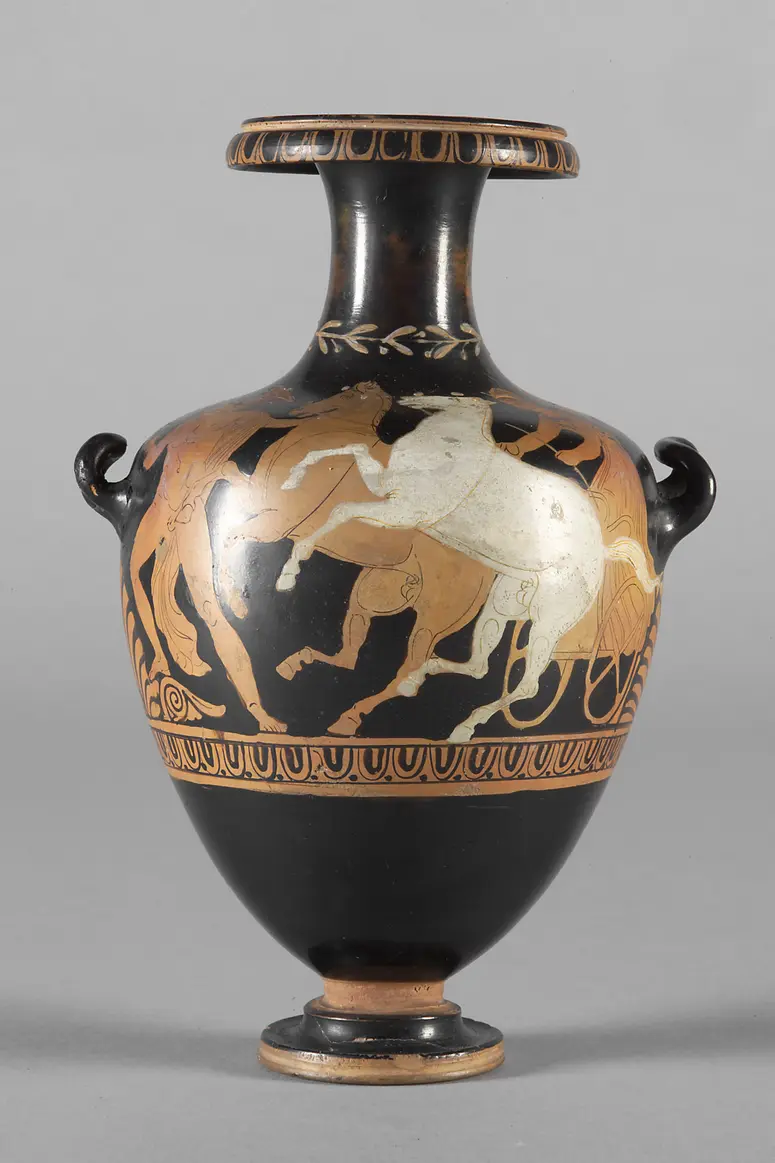
Hydria: Hermes vor einem Zweigespann Griechisch, Attisch, rotfigurig 360 - 350 v. Chr.


Kelchkrater: Dionysos zwischen Himeros, Mänaden und Silenen Griechisch, Attisch, rotfigurig 4. Viertel 5. Jh. v. Chr.

Glockenkrater: Dionysos und sein Gefolge Griechisch, Attisch, rotfigurig um 430 v. Chr.