Scherzgefäß, Schiffchen aus Glas, Glas
nach 1567
On a ribbed base there is a cup which looks like a little ship made of almost clourless glass, which is a Venetian speciality. Probably it was used for the "Ambras Willkomm", a welcome drink, for female guests, which took place in the „Bacchusgrotte“. The capacity of the small glass is approx. 0,25 litre.
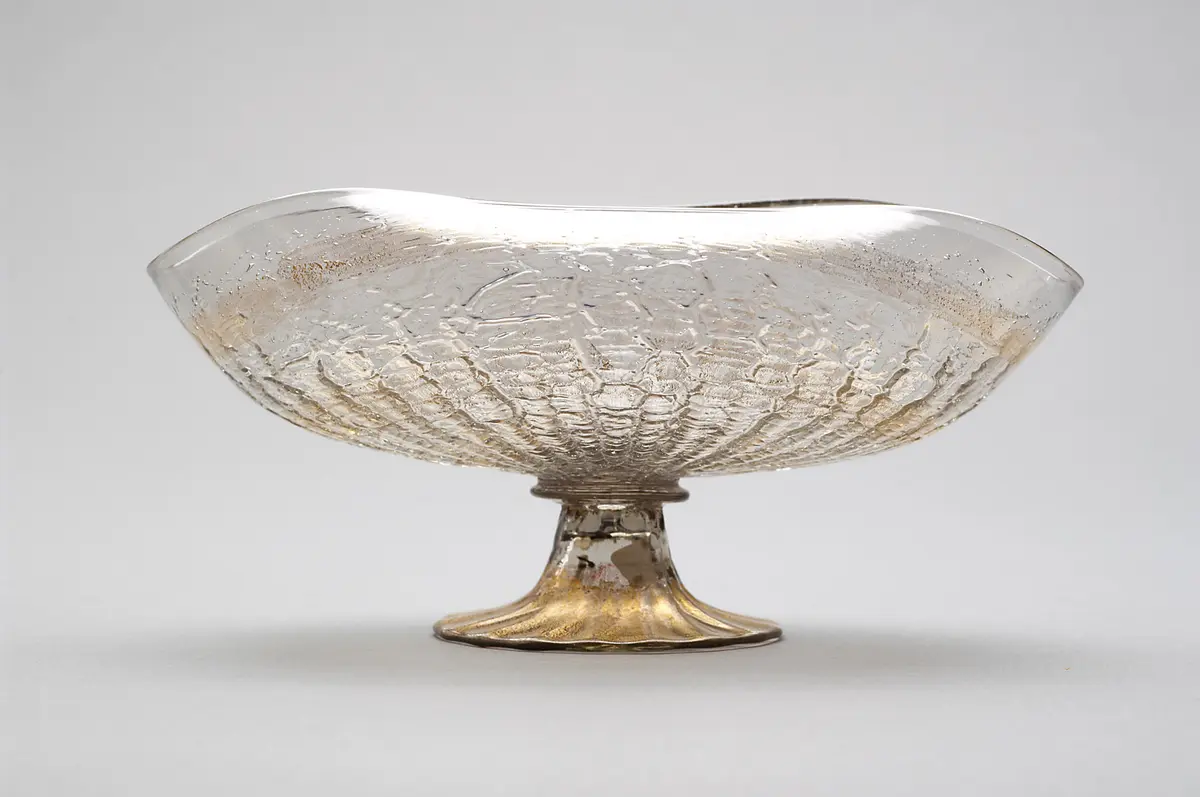
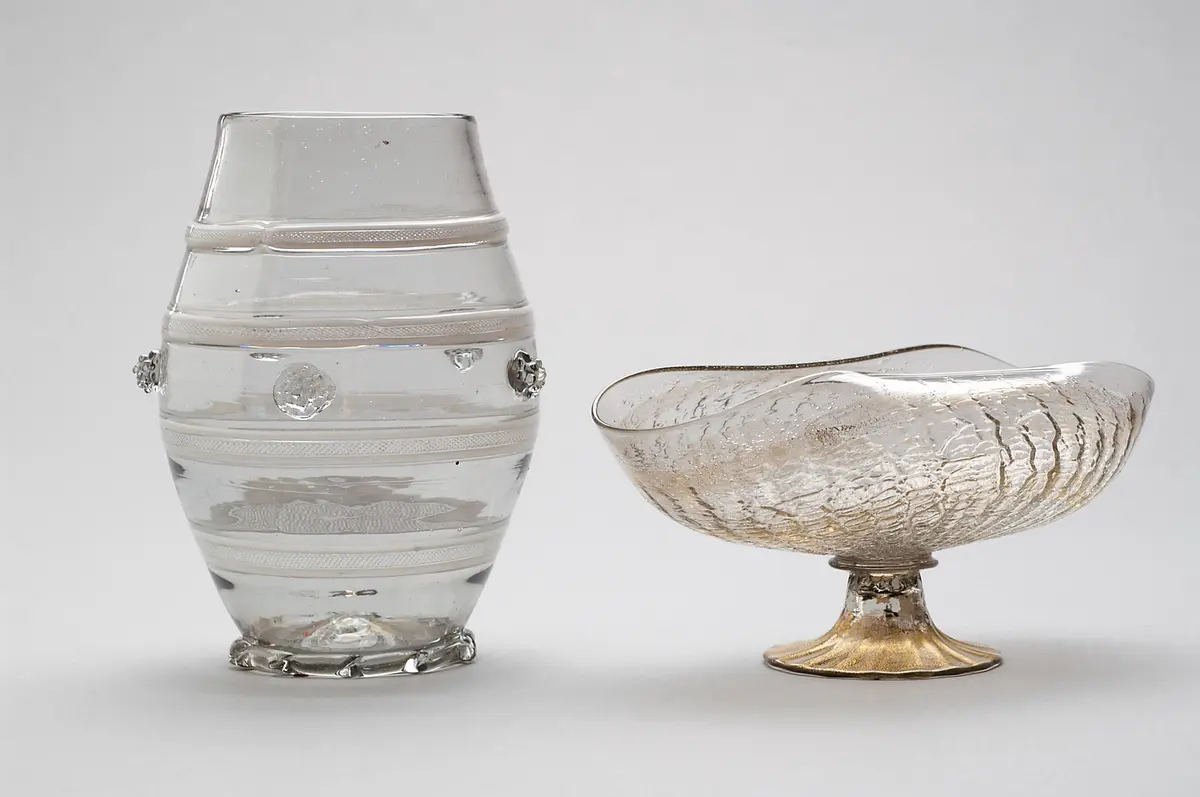
On a ribbed base there is a cup which looks like a little ship made of almost clourless glass, which is a Venetian speciality. Probably it was used for the "Ambras Willkomm", a welcome drink, for female guests, which took place in the „Bacchusgrotte“. The capacity of the small glass is approx. 0,25 litre.
Time:
nach 1567
Object Name
Scherzgefäß, Schiffchen aus Glas, Glas
Culture
Murano (Venedig)
Dimensions:
L. 16,5 cm, H. 7,5 cm
Copyright
Kunsthistorisches Museum, Kunstkammer
Invs.
Kunstkammer, 3273
Browse more
Similar items you might be interested in

Weihrauchschiffchen für Karl von Burgau, Liturgisches Gerät; vasa non sacra; Altargerät Ende 16. Jahrhundert
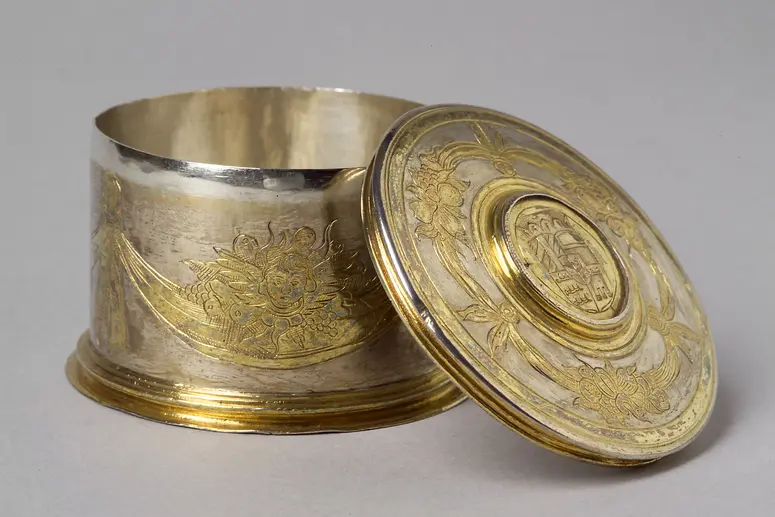
Hostienbüchse, Liturgisches Gerät, Büchse letztes Viertel 16. Jahrhundert
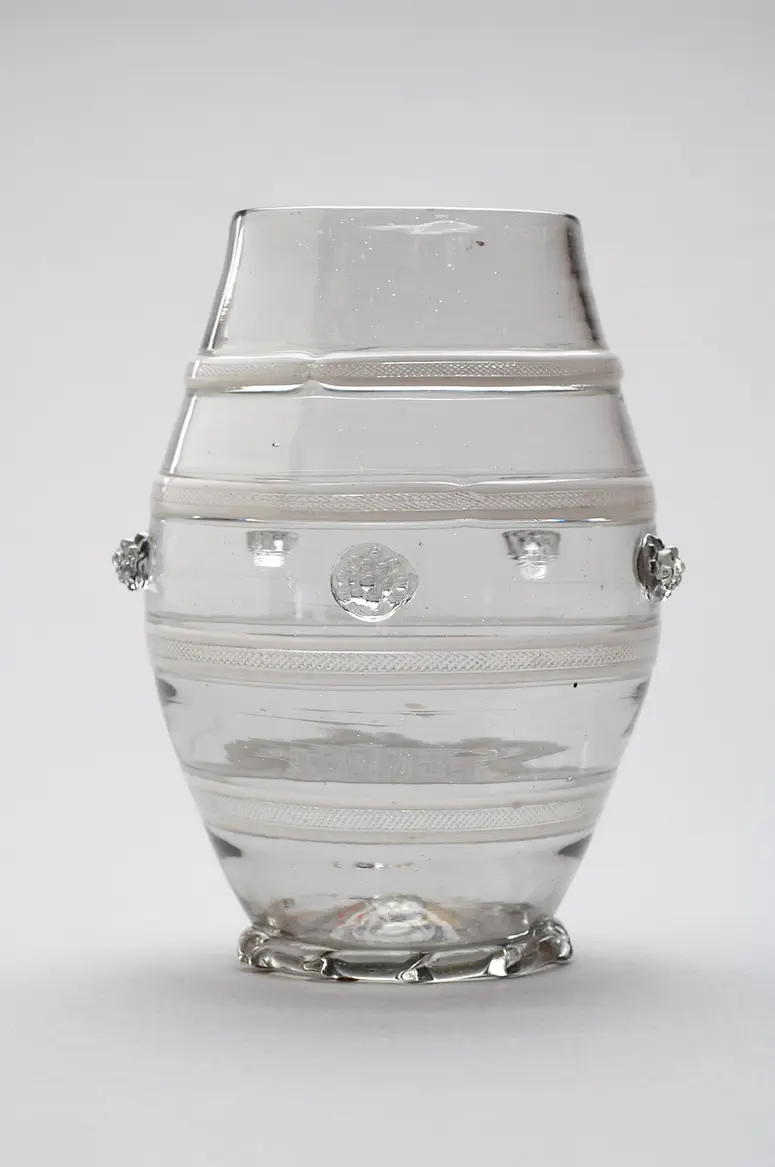
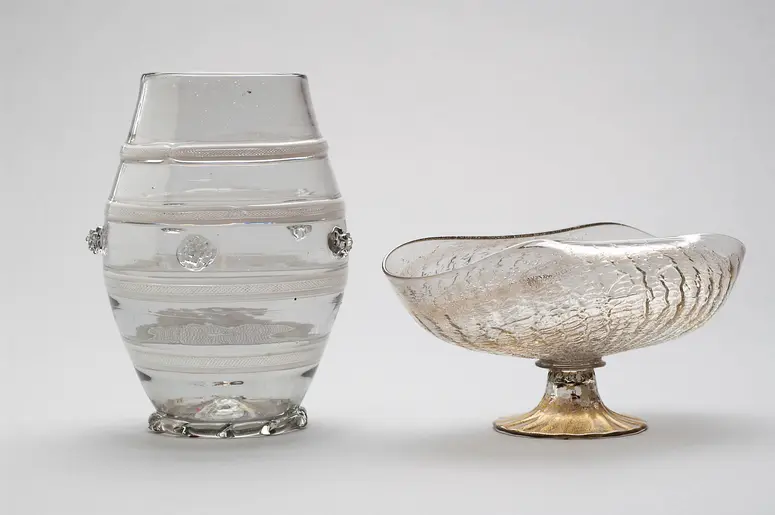
Trinkgefäß in Form eines Fäßchens, Gefäß; Scherzglas, Scherzgefäß, Fässchen, Glas vor 1567
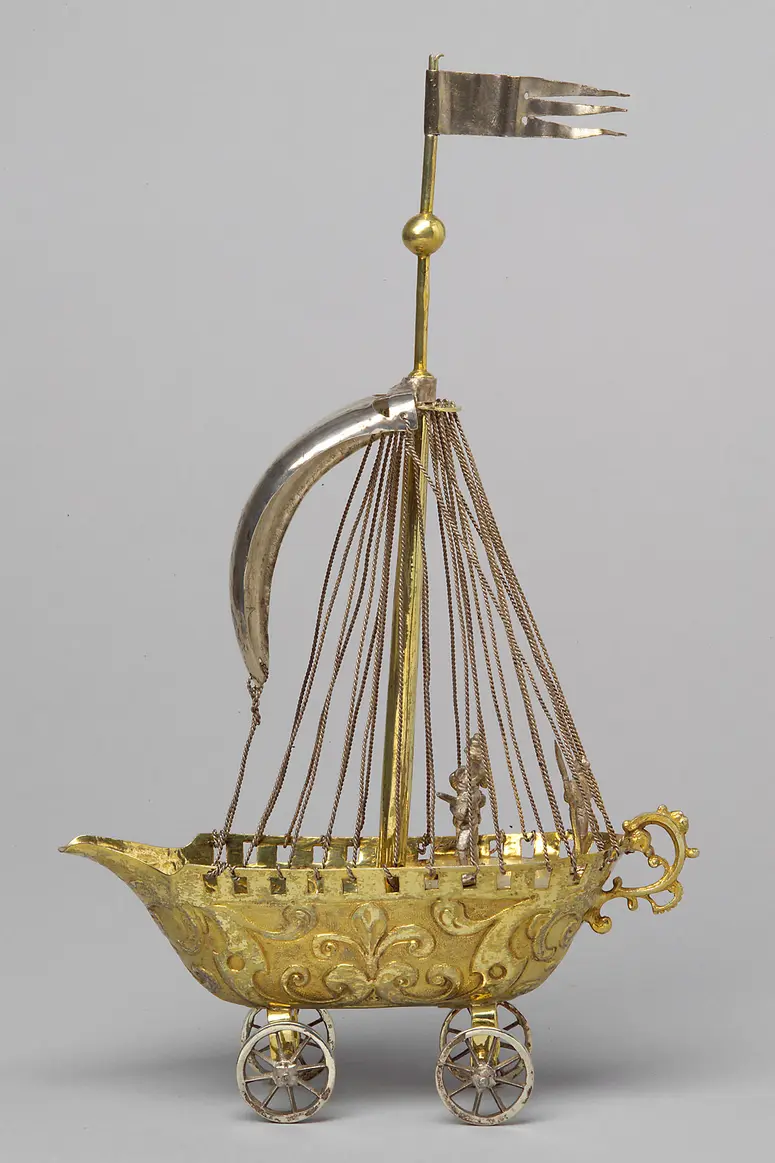
Schiffchenförmiger Tafelaufsatz Abraham Werner 1. Viertel 17. Jahrhundert
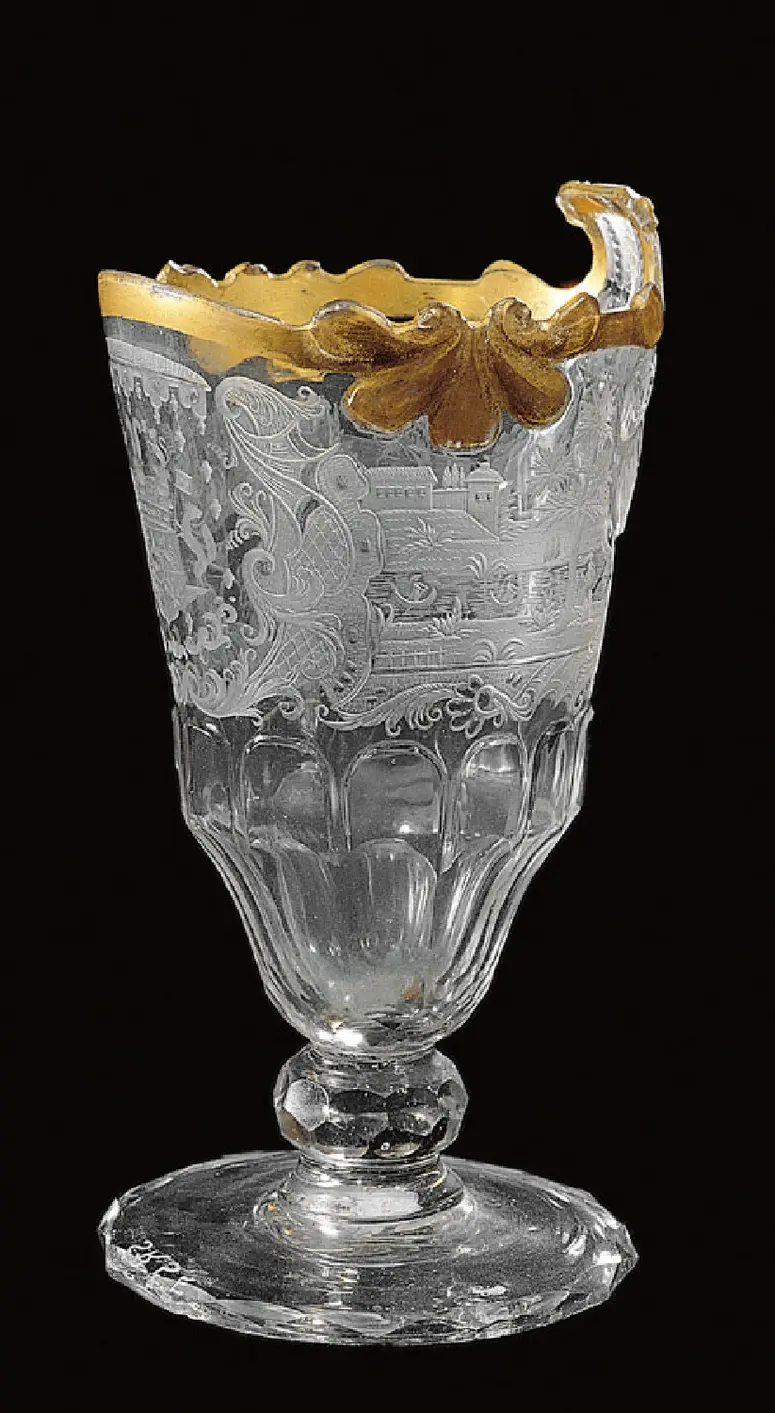
Fußbecher in Schiffchenform mit vergoldeten Palmetten und Wappen der Grafen von Bothmer 1750-1760
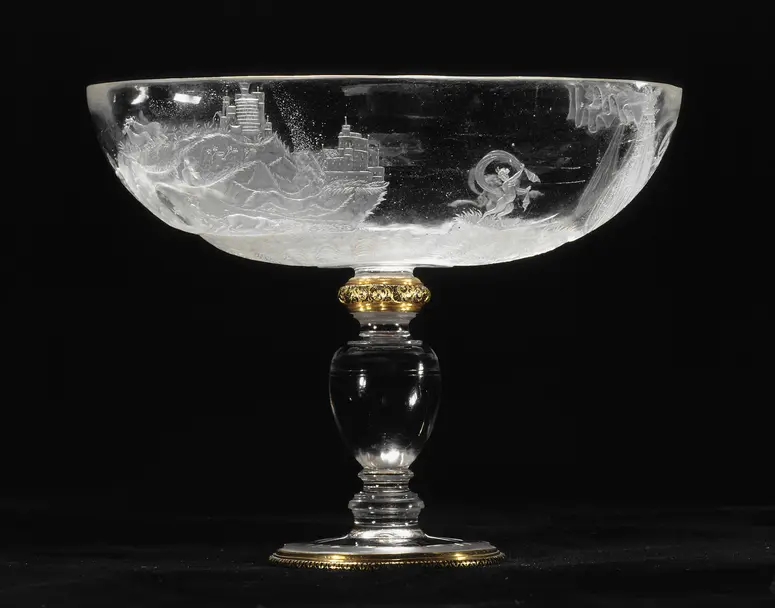
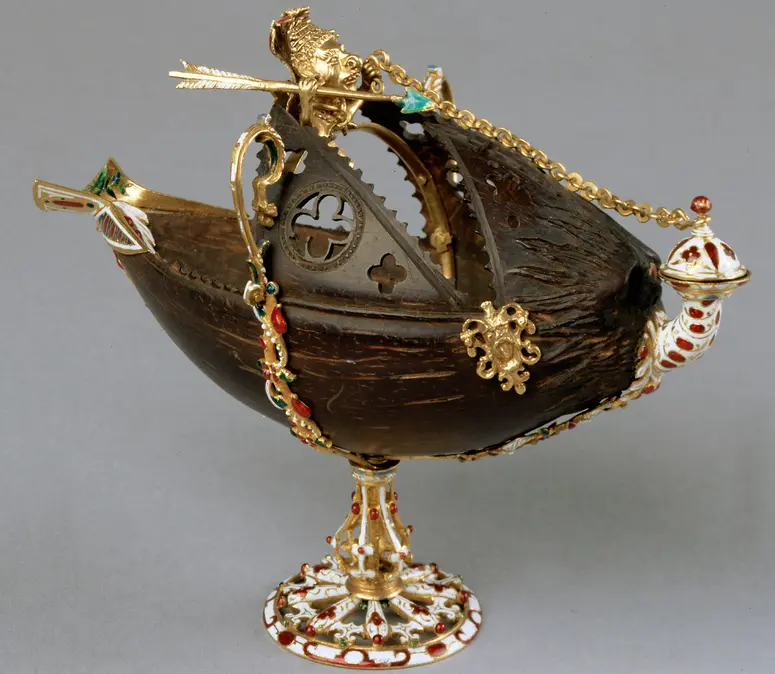
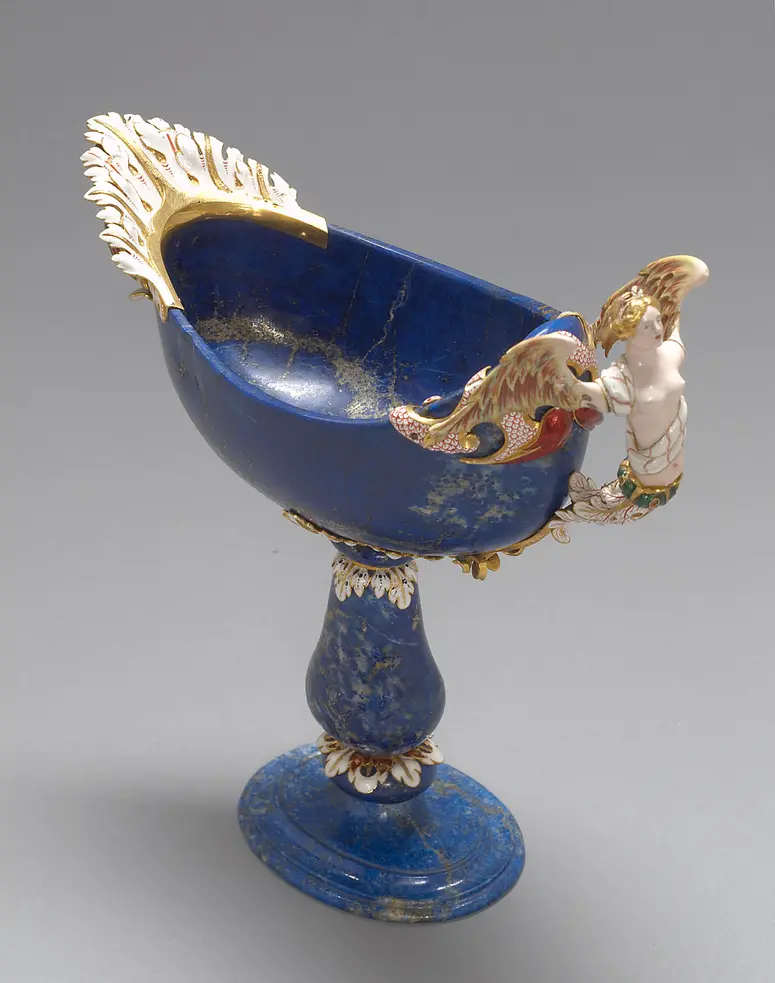
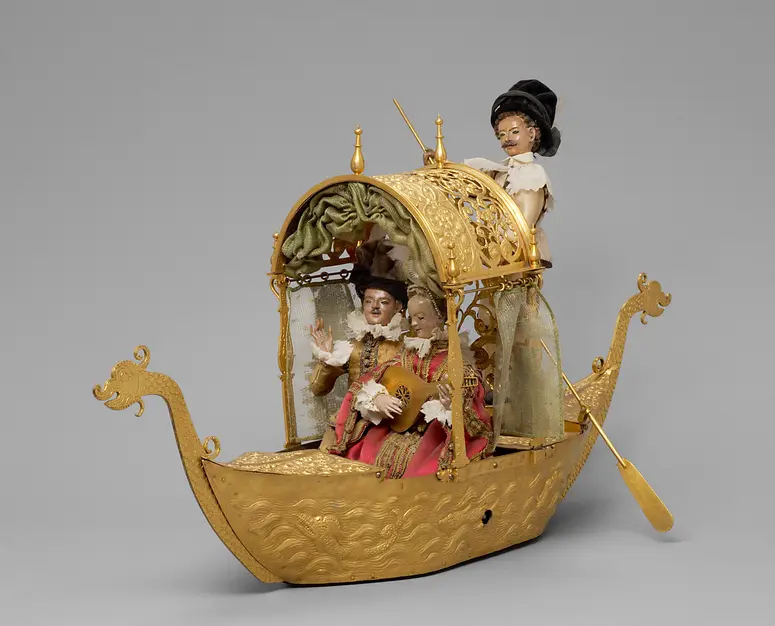
Gondelautomat, Automat, Tafelaufsatz Joachim Fries (auch Friss) um 1600
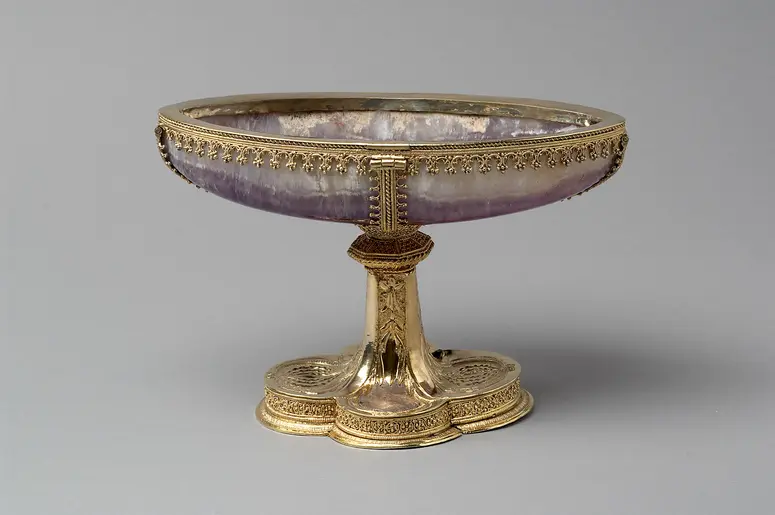
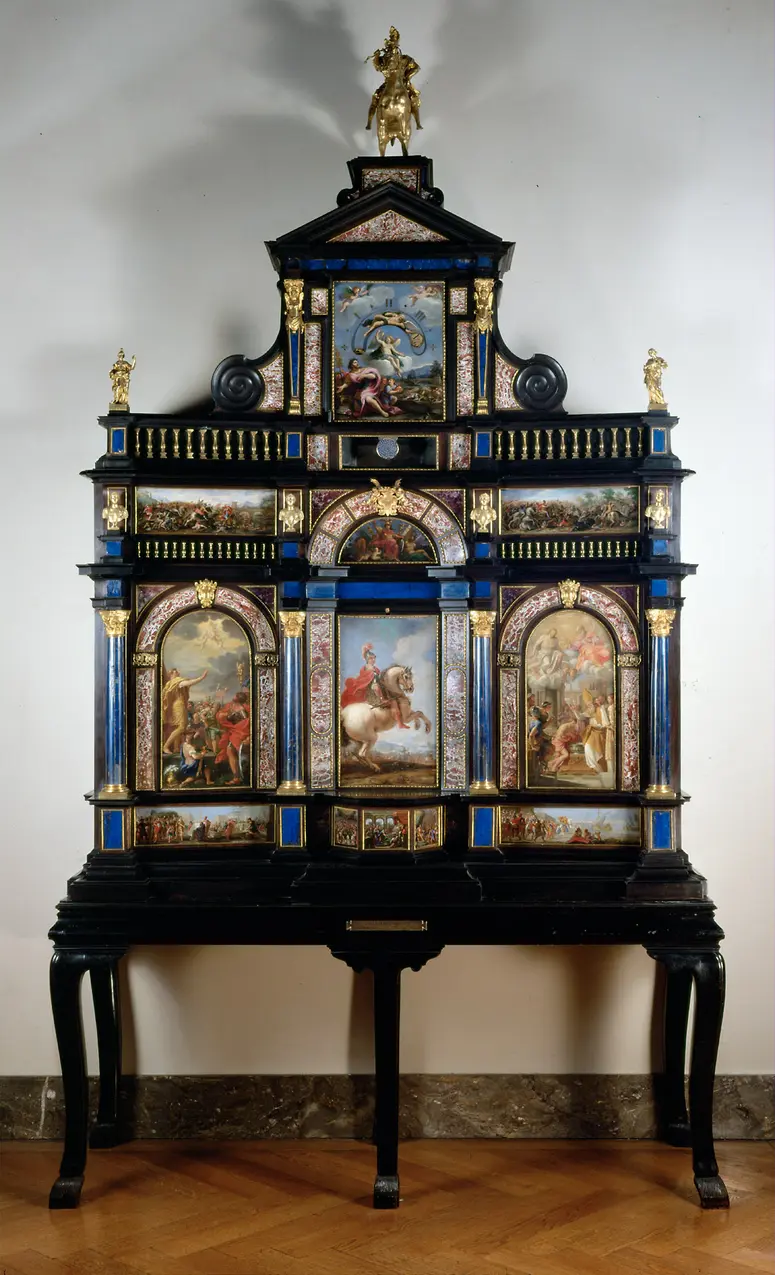


Aufsatz, Filigranarbeit, Schnitzarbeit 2. Hälfte 16. Jahrhundert
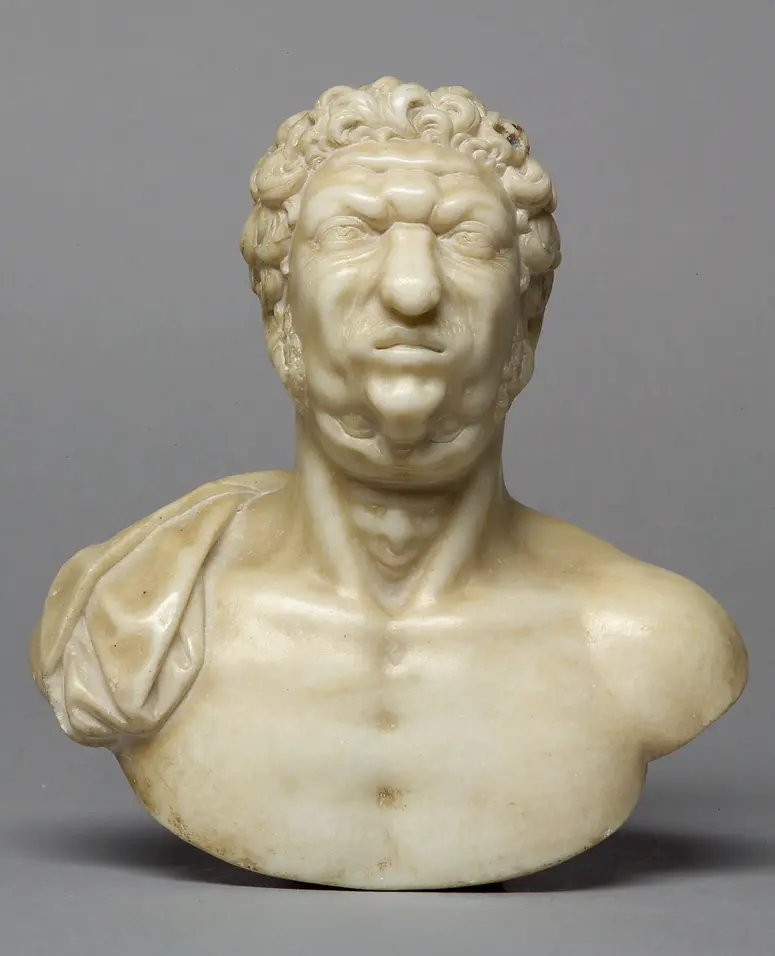
Büste, Faun, Vexierkopf, Vexierbüste Spätes 16. Jahrhundert

Pferd, Bronze, Kleinbronze, Pferd in der Levade 1. Hälfte 16. Jahrhundert
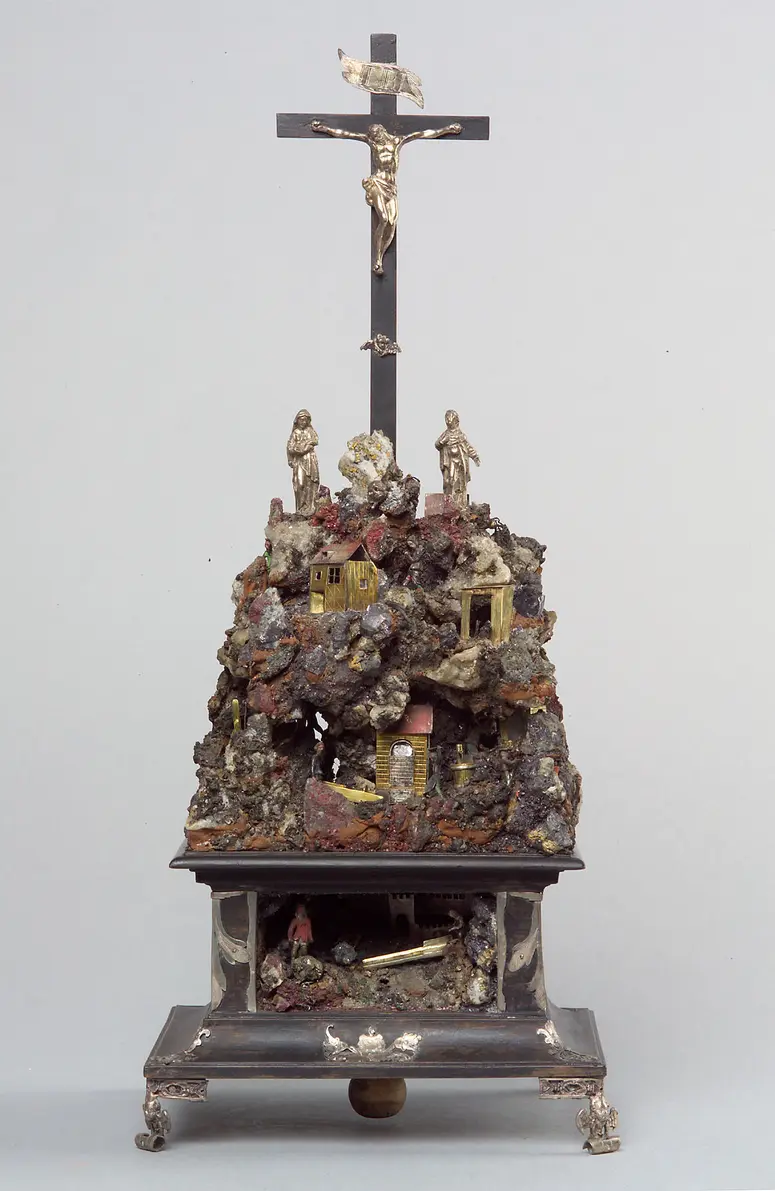
Handstein mit Bergwerk und Kreuzigung 3. Viertel 16. Jahrhundert

Inschrift: Hirtenbrief des Erzbischofs Hypatios Frühchristlich, Spätantike 2. Viertel 6. Jh.

Elisabeth von Görz-Tirol, Statue, Statuette, Terracotta Dominicus Custos um 1600
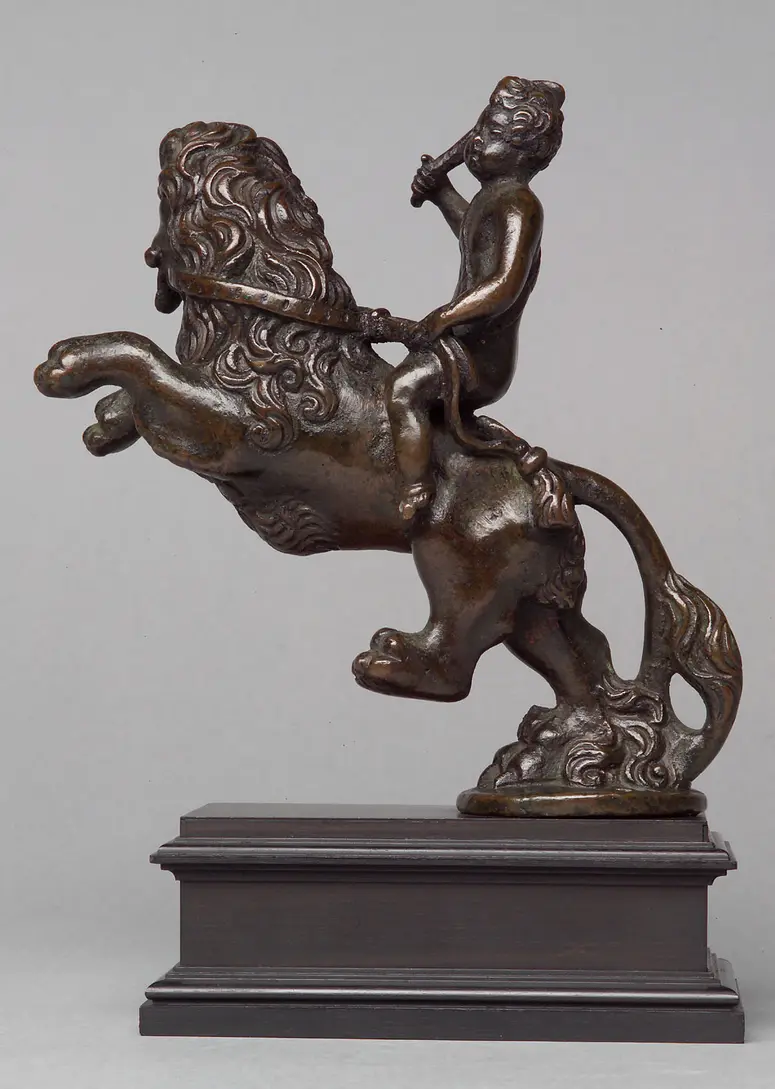
Amor mit Flammenkeule auf einem Löwen reitend, Statuette, Kleinbronze, Amor Nicolo Roccatagliata Ende 16. Jahrhundert