Gott Anubis, schreitend
7.-6. Jh. v. Chr.
Der schakalköpfige Gott Anubis tritt vor allem in seiner Funktion als Totengott auf. Ihm kommt die rituelle Versorgung der Leiche, das Einbalsamieren und Mumifizieren, zu. Beim Totengericht kann er bei der Wägung des Herzens an der Waage tätig sein, eine Szene, die in Totenbuch-Papyri wiederholt dargestellt wird.
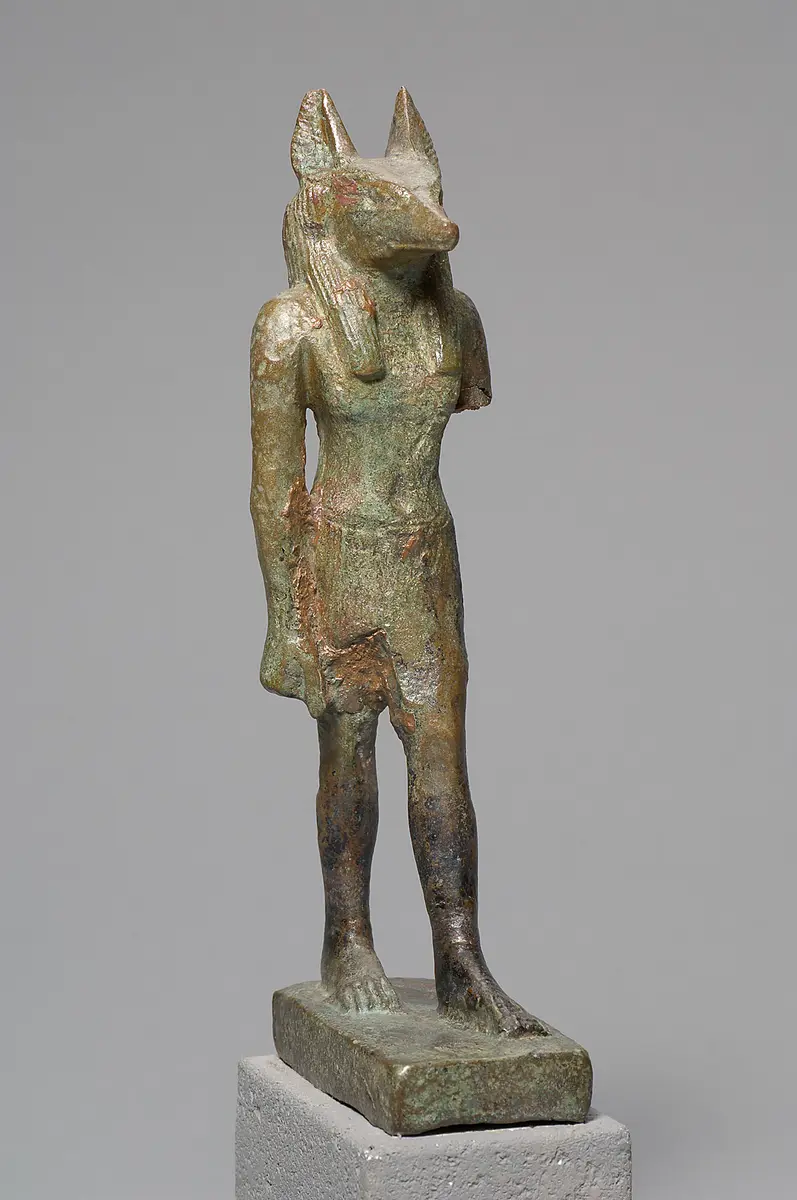
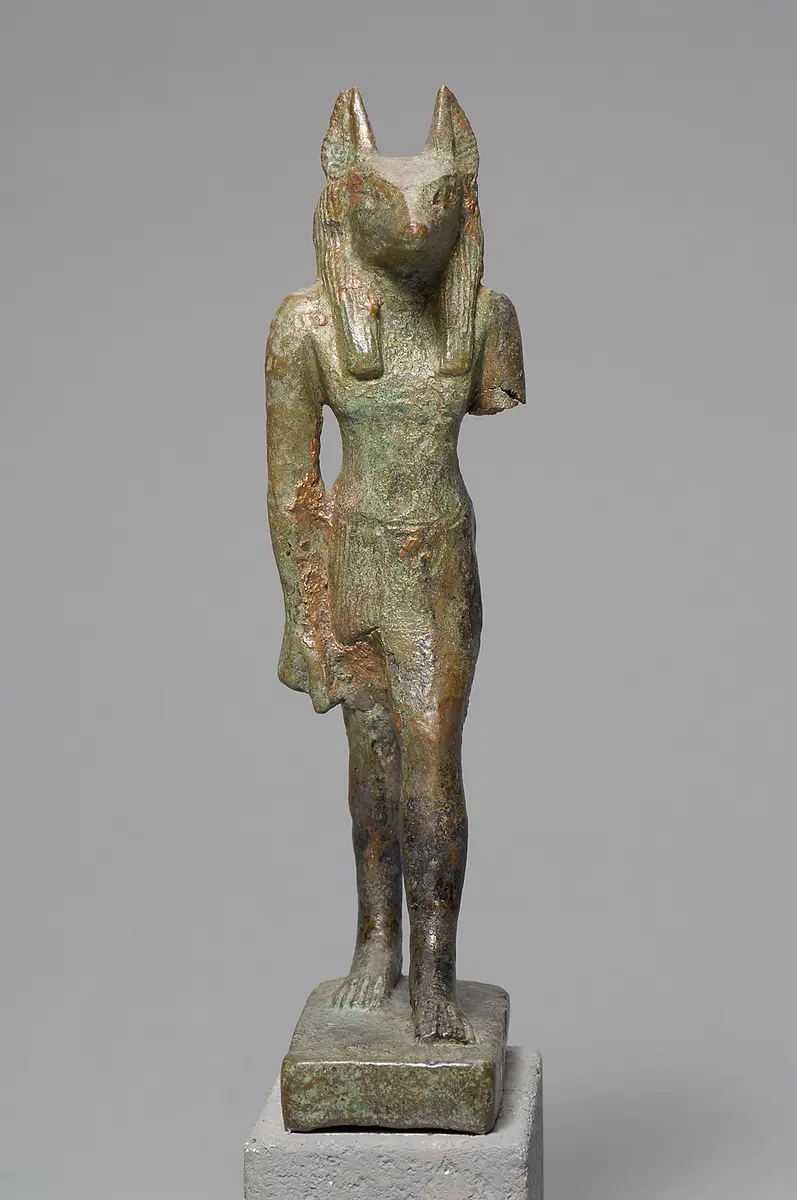
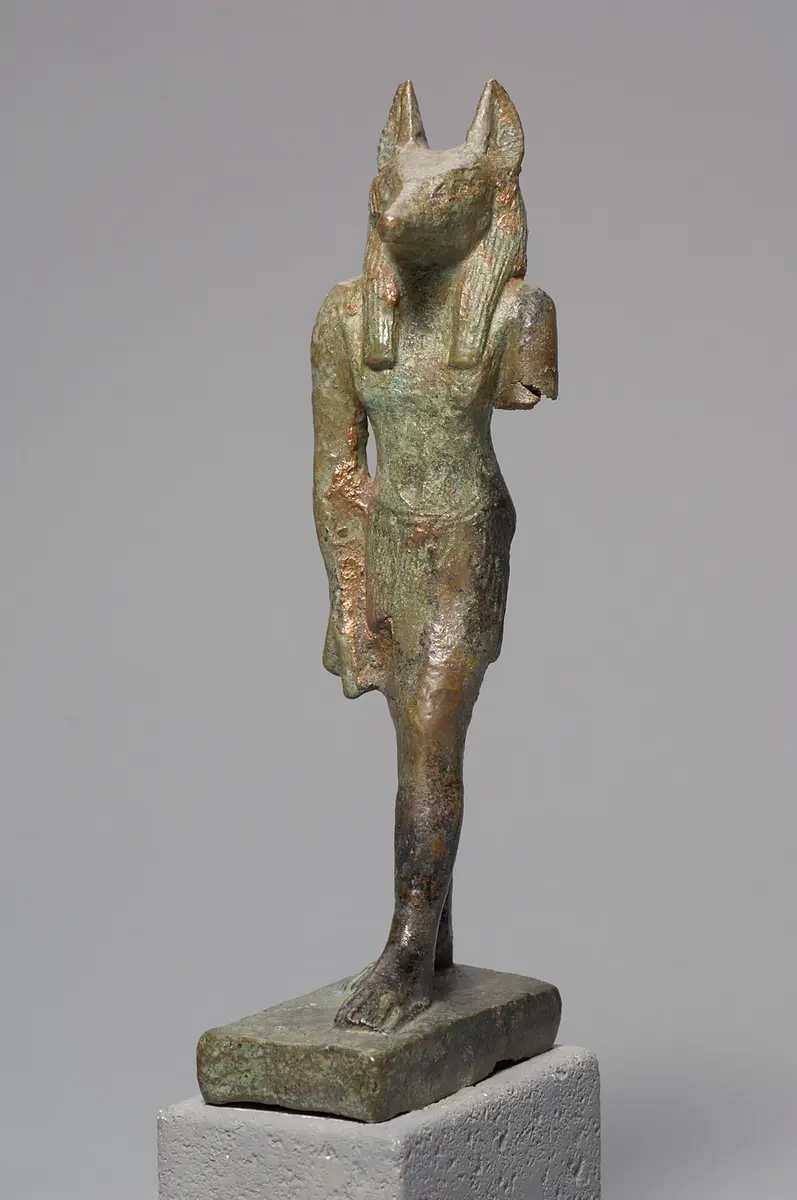
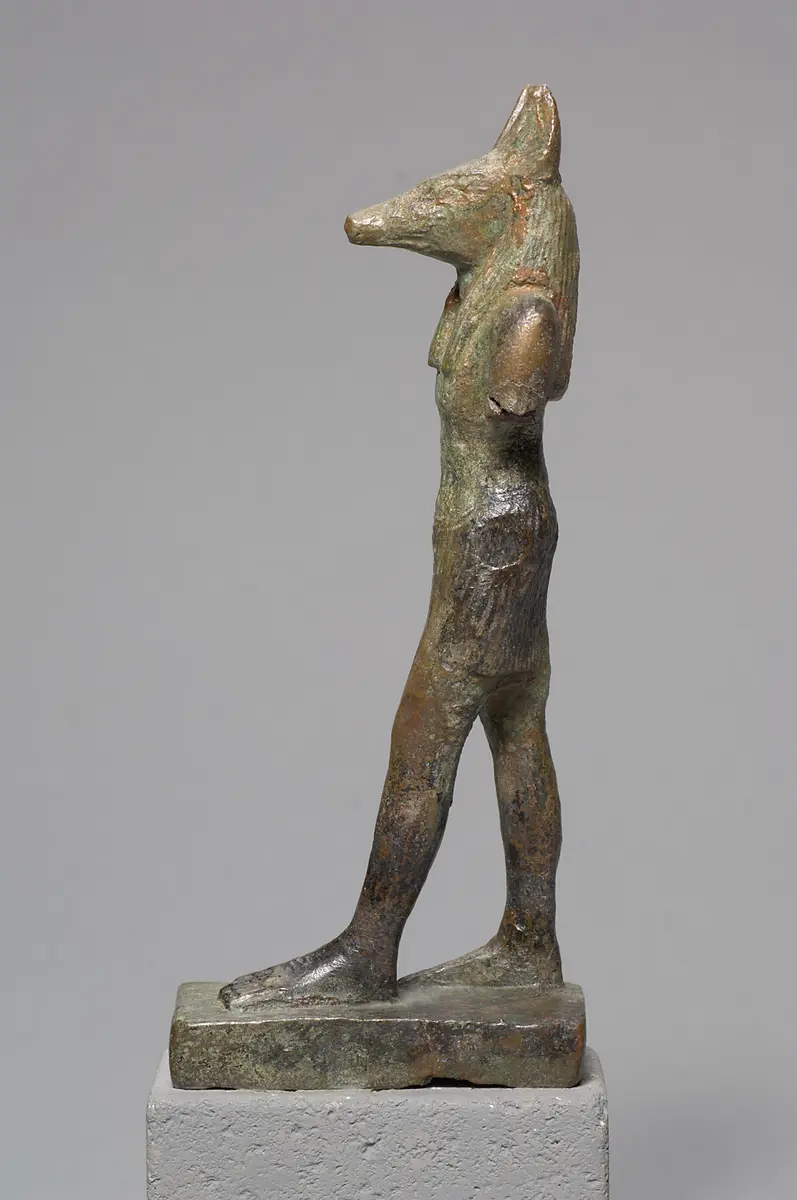
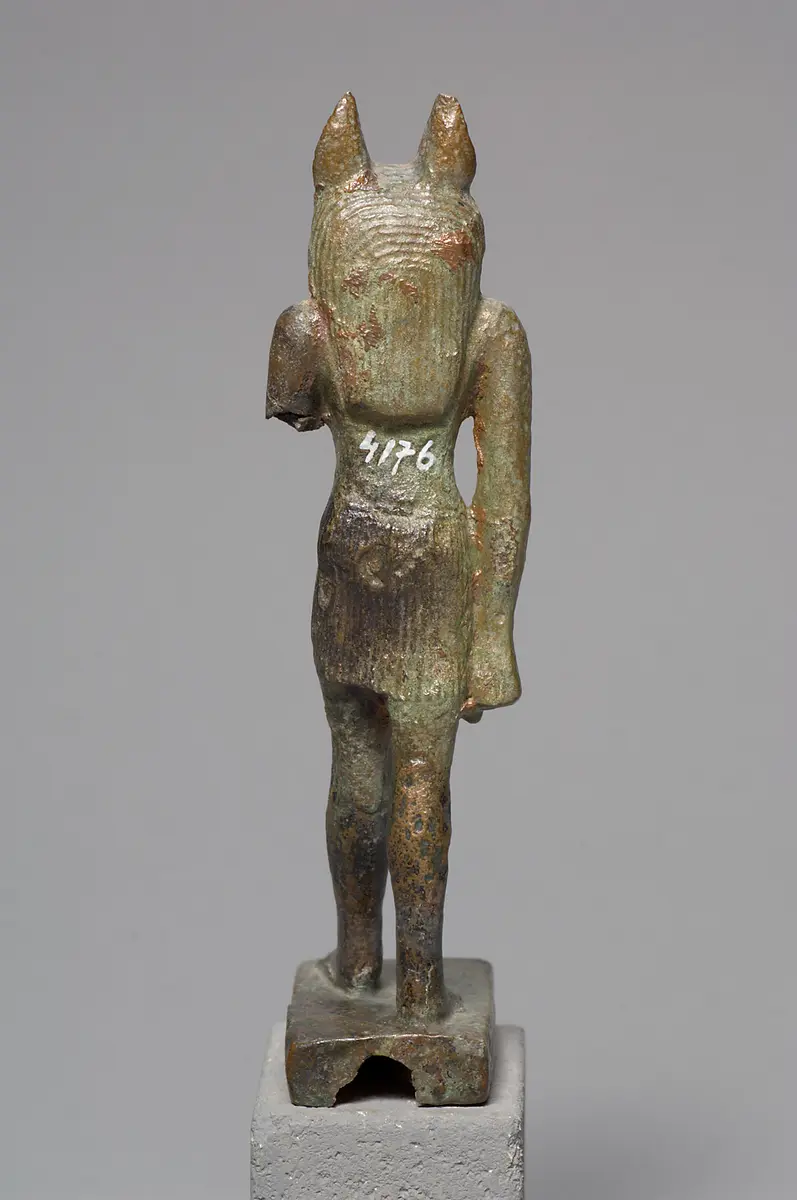
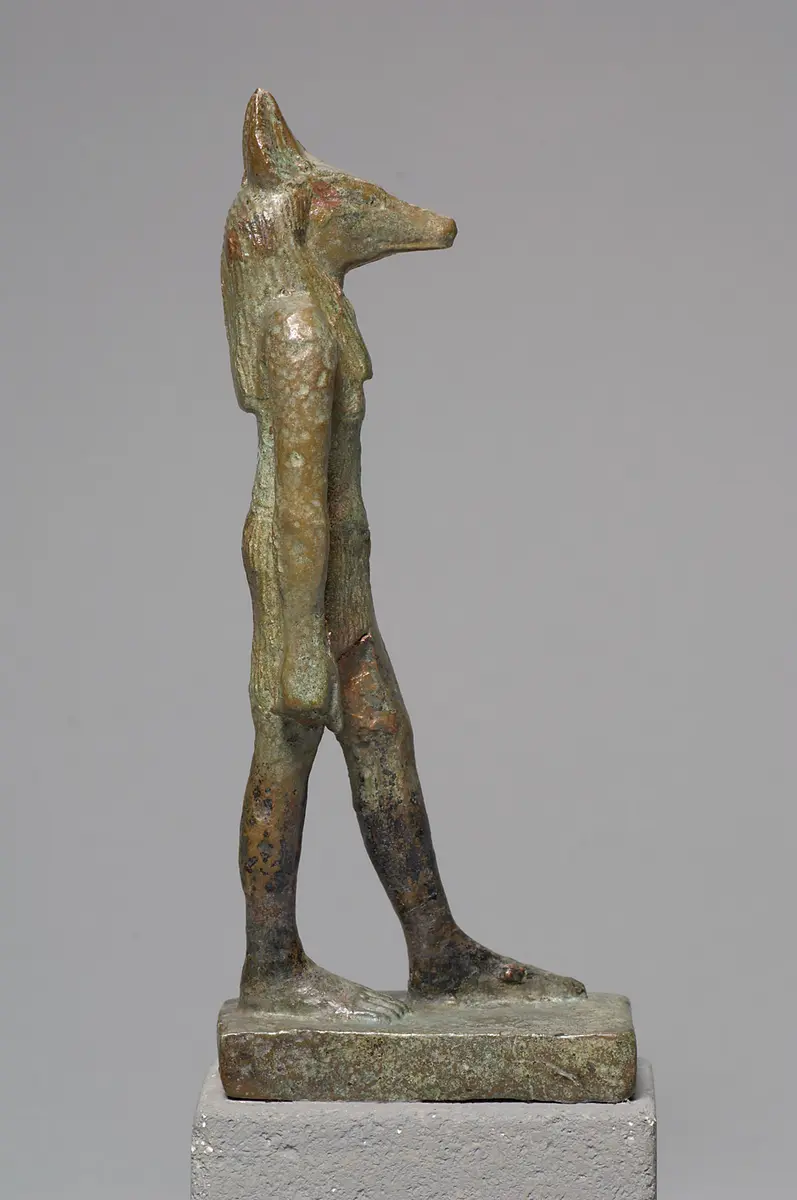
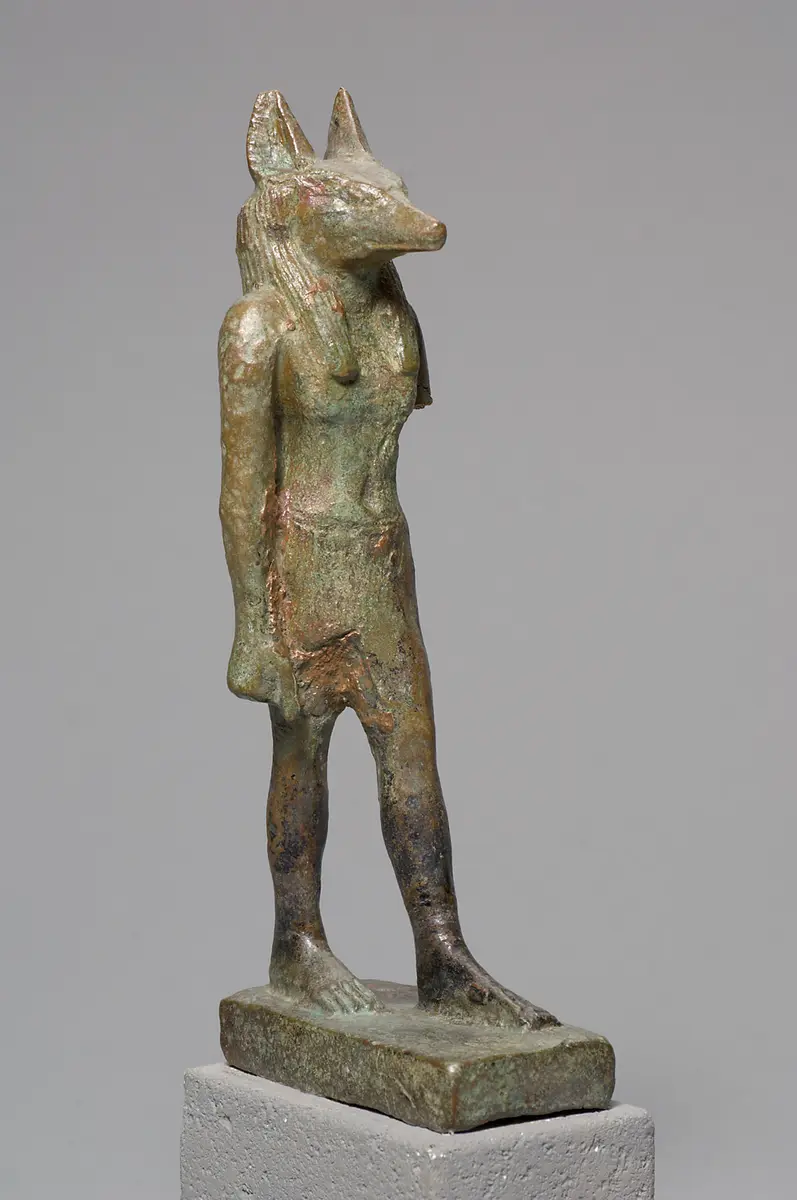
Der schakalköpfige Gott Anubis tritt vor allem in seiner Funktion als Totengott auf. Ihm kommt die rituelle Versorgung der Leiche, das Einbalsamieren und Mumifizieren, zu. Beim Totengericht kann er bei der Wägung des Herzens an der Waage tätig sein, eine Szene, die in Totenbuch-Papyri wiederholt dargestellt wird.
Time:
7.-6. Jh. v. Chr.
Object Name
Statuette
Culture
Ägyptisch
Location of discovery:
Fundort unbekannt
Material/technology:
Bronze
Dimensions:
H 14,9 cm, B 3,9 cm, T 6,2 cm, G 560 g (inkl Sockel)
Copyright
Kunsthistorisches Museum, Ägyptisch - Orientalische Sammlung
Invs.
Ägyptische Sammlung, INV 4176
Provenance
1878 aus der Sammlung Miramar übernommen
Browse more
Similar items you might be interested in
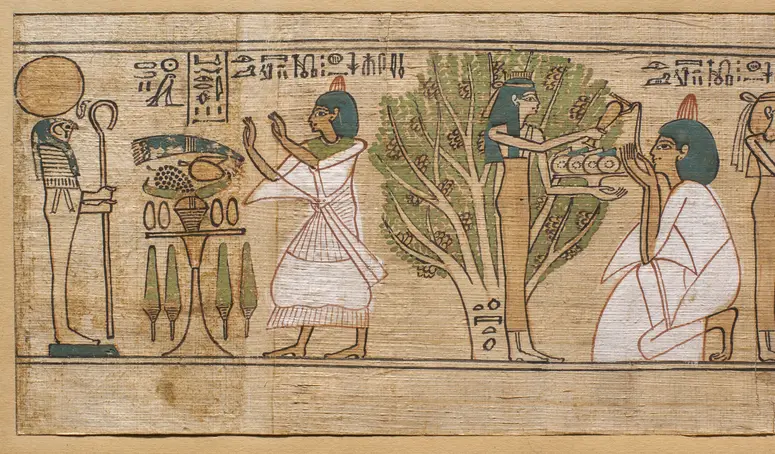
Book of the Dead for Chonsu-mes Theben (vermutlich) 21st Dynasty, ca. 1000 BC
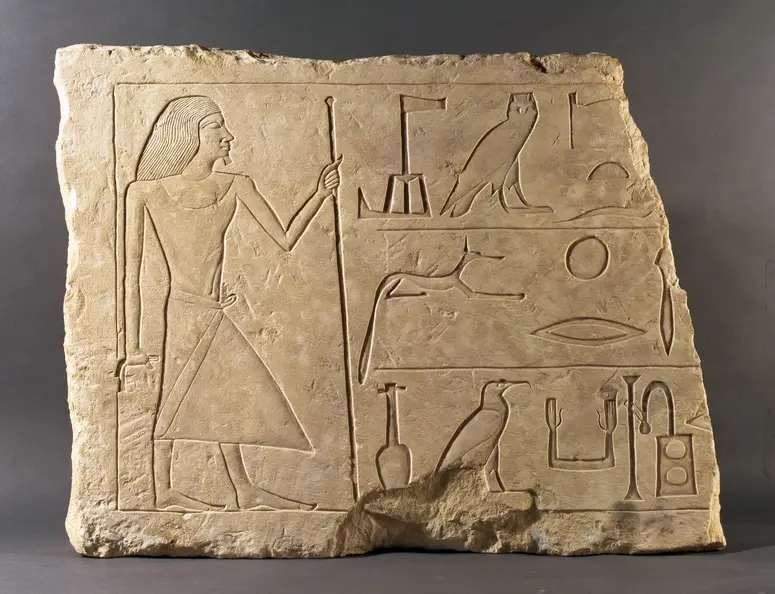
Fragmentierter Architrav des Kai-nefer Giza, Westfriedhof, Mastaba des Kai-nefer Späte 6. Dynastie, um 2200 v. Chr.

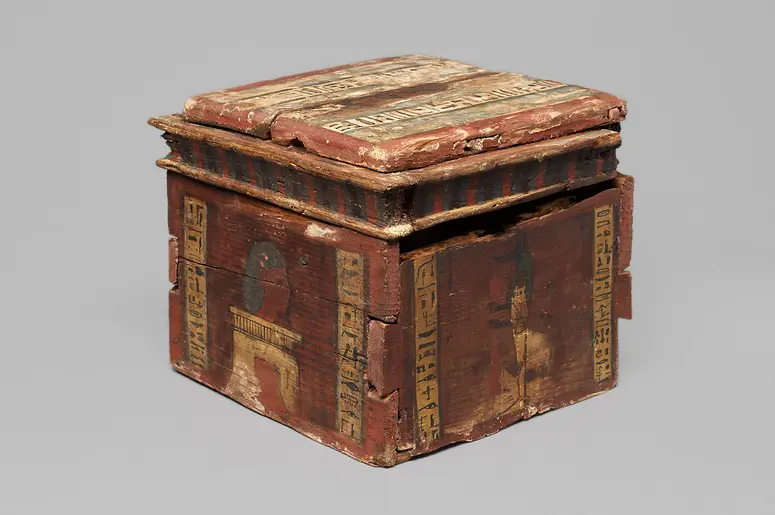
Kleiner Uschebti-Kasten Theben-West, Asasif, L/11, Grab X, Grabkammer 7,1 und Korridor 7,2 30. Dynastie - Ptolemäerzeit, ca. 380-31 v. Chr.
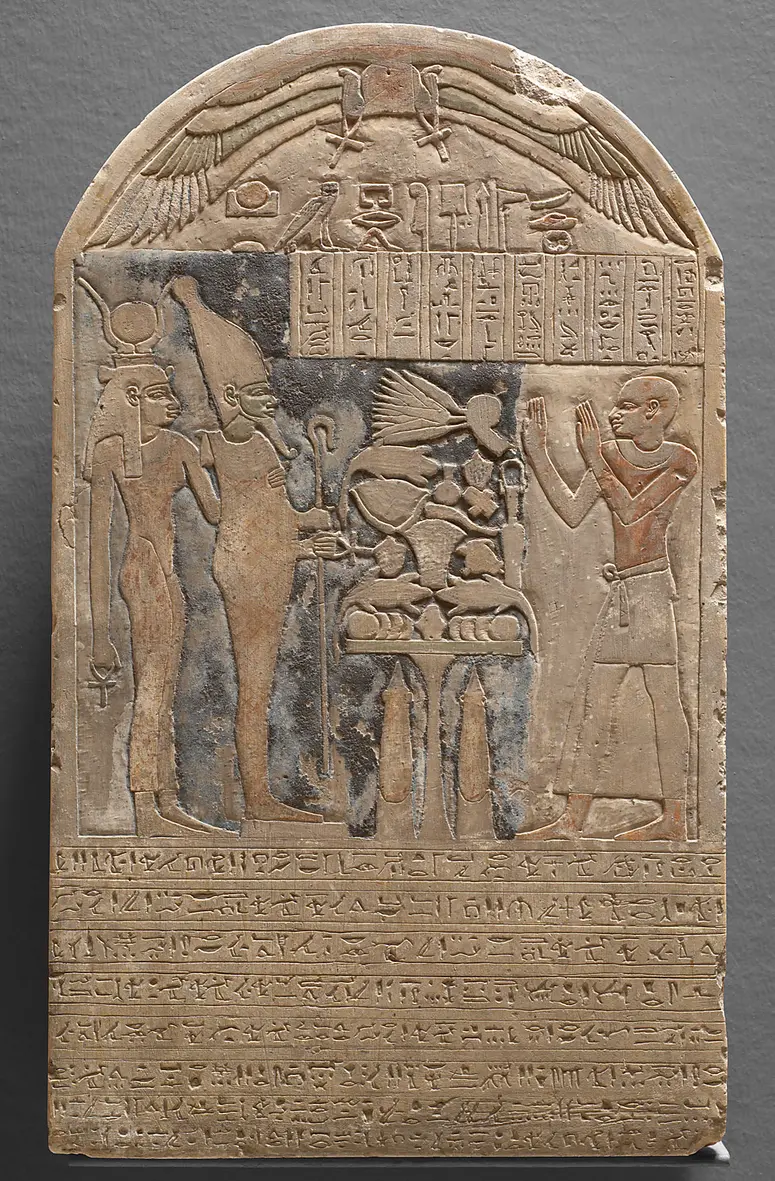
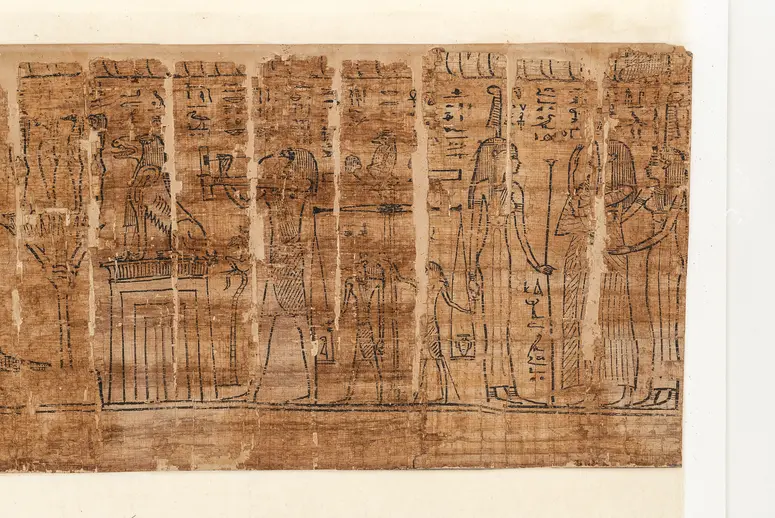
“Papyrus Fontana” – Book of the Dead for Chaa-es-en-aset Fundort unbekannt ca. 3rd century BC
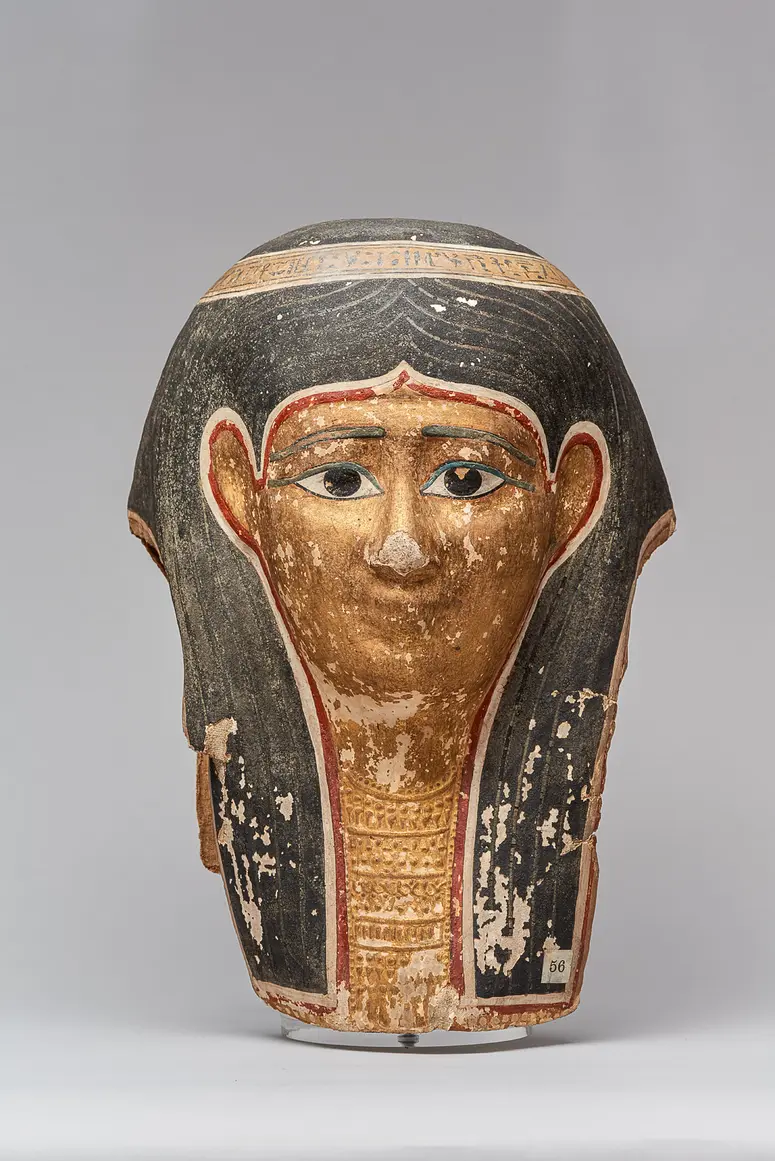
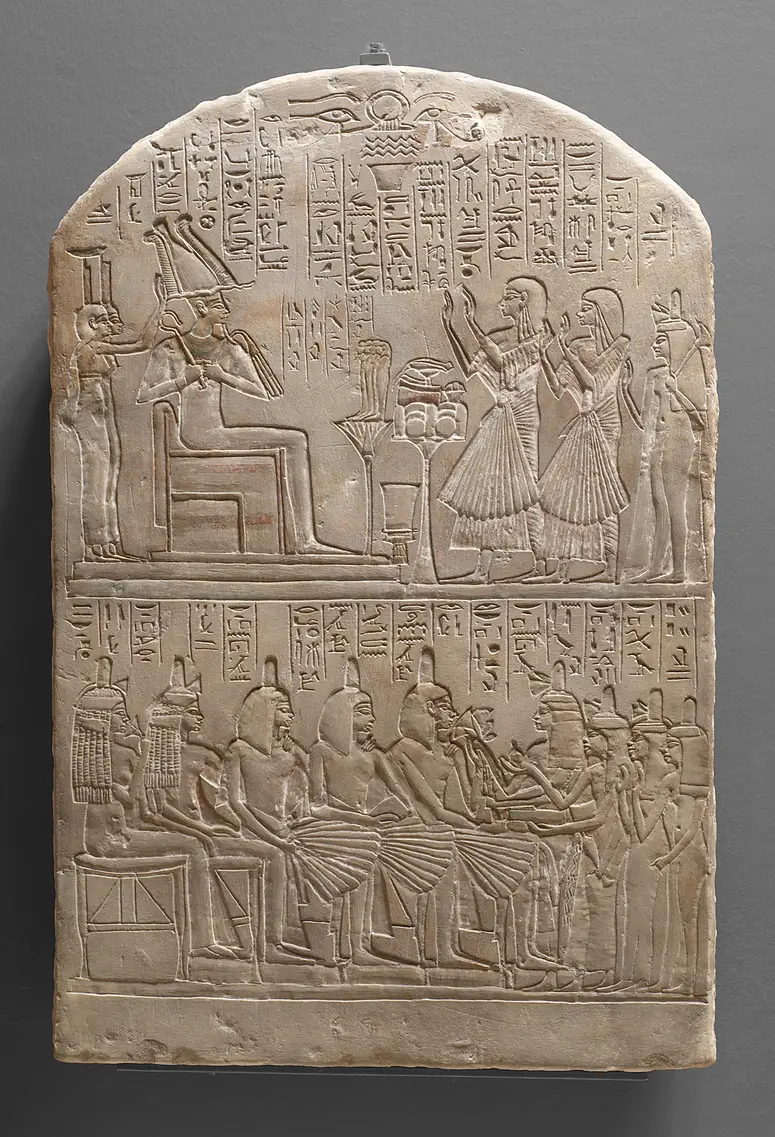
Stele of Pa-nehesi Saqqara (vermutlich) early 19th Dynasty, reign of Sety I, ca. 1314-1304 BC;
Stele of the sealer Seneb Abydos (vermutlich) late 12th/13th Dynasty, ca. 1800-1665 BC
Stele of Senwosret Abydos (vermutlich) beginning of the 13th Dynasty, ca. 1786-1740 BC
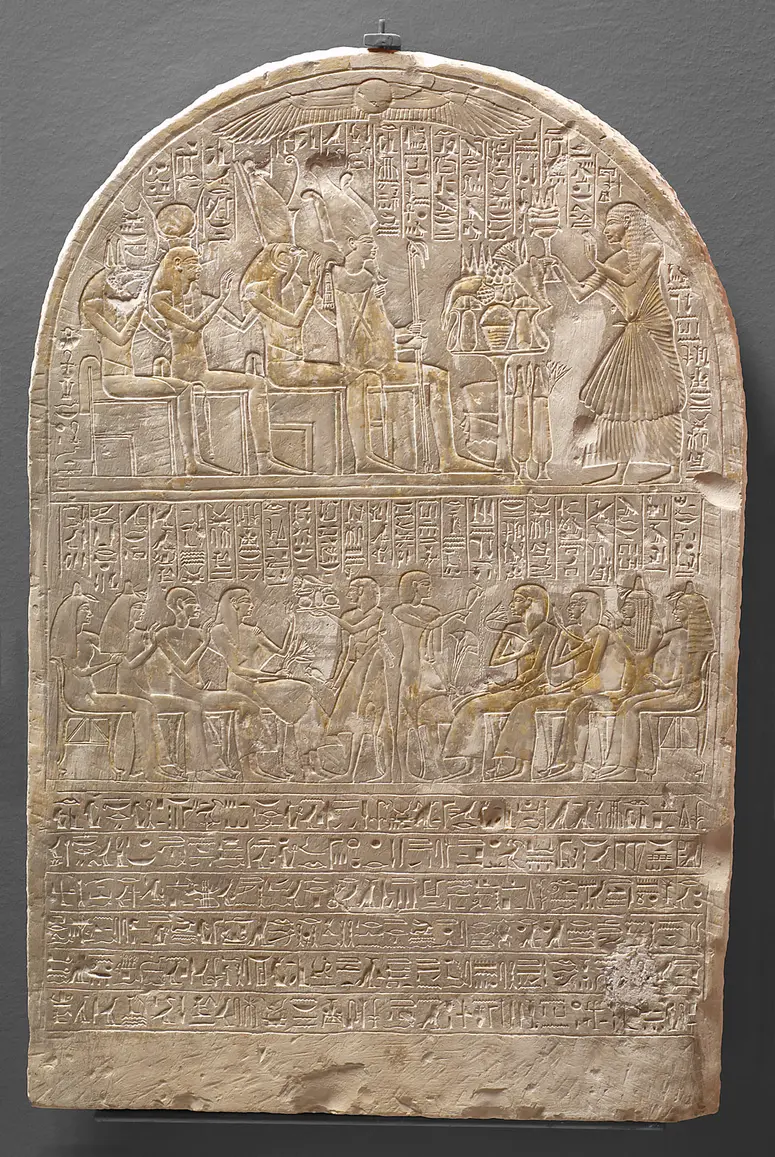
Stele of Wepwawet-mes Saqqara (vermutlich) early 19th Dynasty, reign of Sety I, ca. 1314-1304 BC

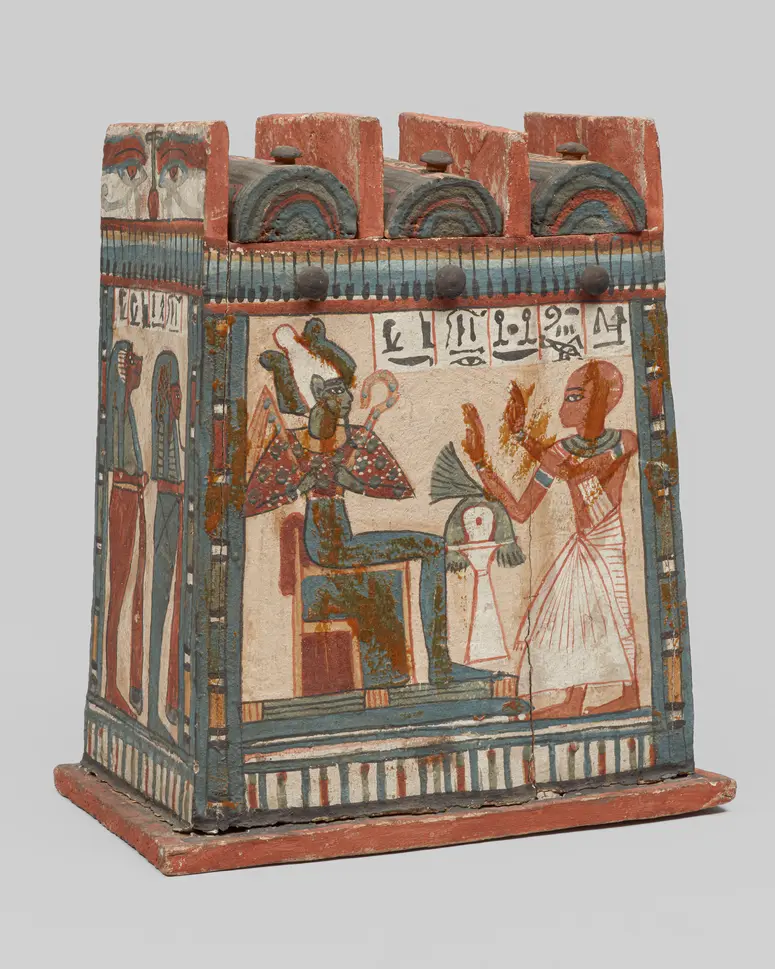
Uschebti-Kasten Theben-West Frühe 20. Dynastie, um 1150 v. Chr.
Chapel of Ka-ni-nisut Giza, Westfriedhof, Mastaba des Ka-ni-nisut early 5th Dynasty, ca. 2500 BC
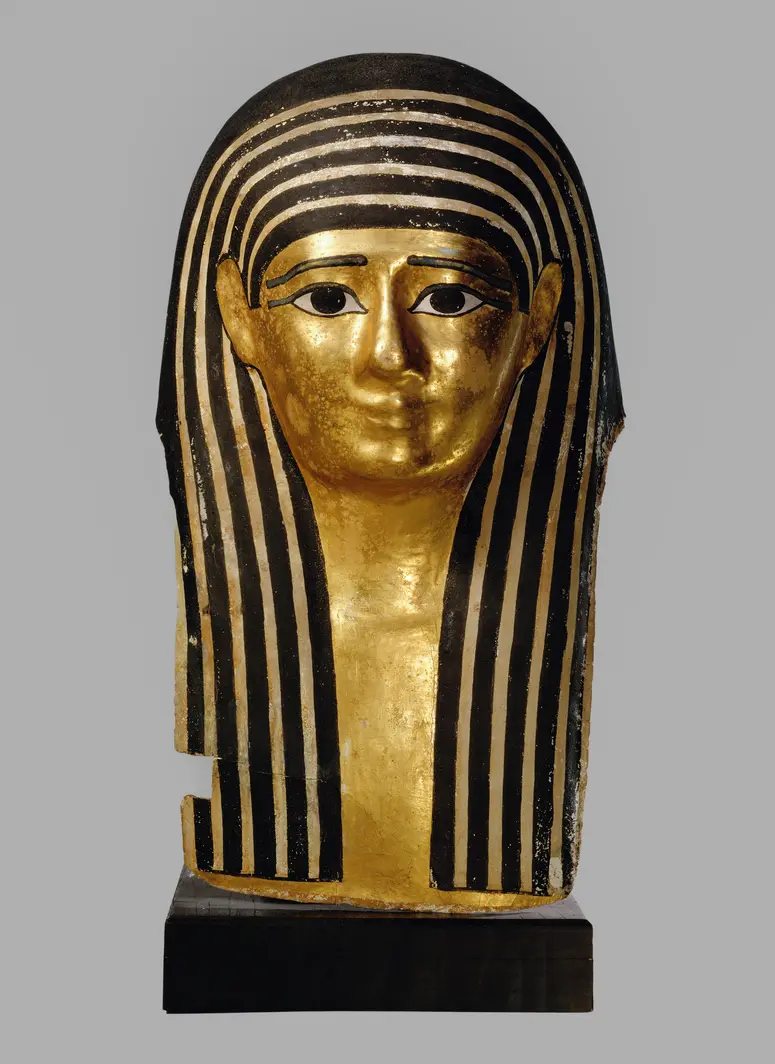
Mumienmaske Fundort unbekannt 3.- 1. Jh. v. Chr.