Khuttar, Dolch, Waffe, Stichwaffe
16. Jahrhundert
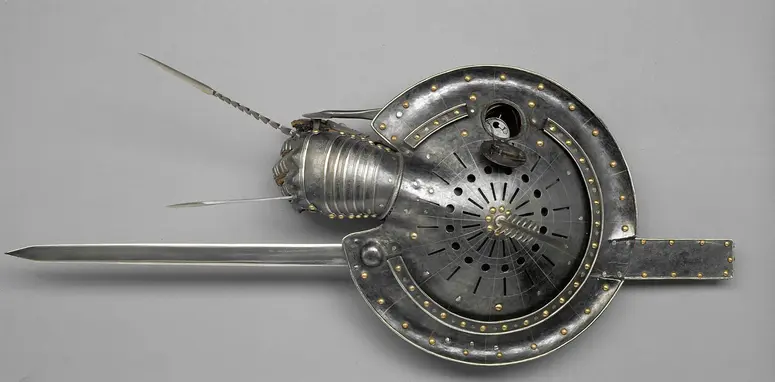
The katar was carried and used in all social classes. As a double-edged dagger, it was a feared stabbing weapon for close combat as it could pierce armour. The two steel struts serve to protect the forearm, while the horizontal crossbars form the actual handle. Handling a katar is not easy and requires a long period of training.In addition to simple designs for soldiers, katars were also produced as art objects with elaborate engravings, gold or silver inlays, gemstones and coloured enamel work.
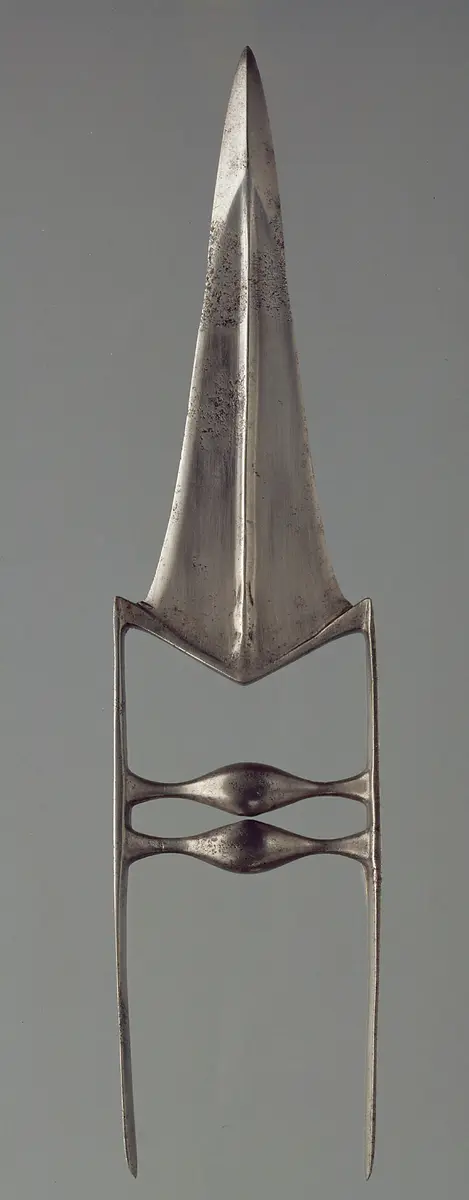
The katar was carried and used in all social classes. As a double-edged dagger, it was a feared stabbing weapon for close combat as it could pierce armour. The two steel struts serve to protect the forearm, while the horizontal crossbars form the actual handle. Handling a katar is not easy and requires a long period of training.In addition to simple designs for soldiers, katars were also produced as art objects with elaborate engravings, gold or silver inlays, gemstones and coloured enamel work.
Time:
16. Jahrhundert
Object Name
Khuttar, Dolch, Waffe, Stichwaffe, indischer Faustdolch
Culture
Indisch
Material/technology:
Eisen
Dimensions:
36 cm
Copyright
Schloss Ambras Innsbruck
Invs.
Schloss Ambras Innsbruck, PA 505
Browse more
Similar items you might be interested in

Khuttar, Katar, Stichwaffe, Dolch, Messer 16. Jahrhundert



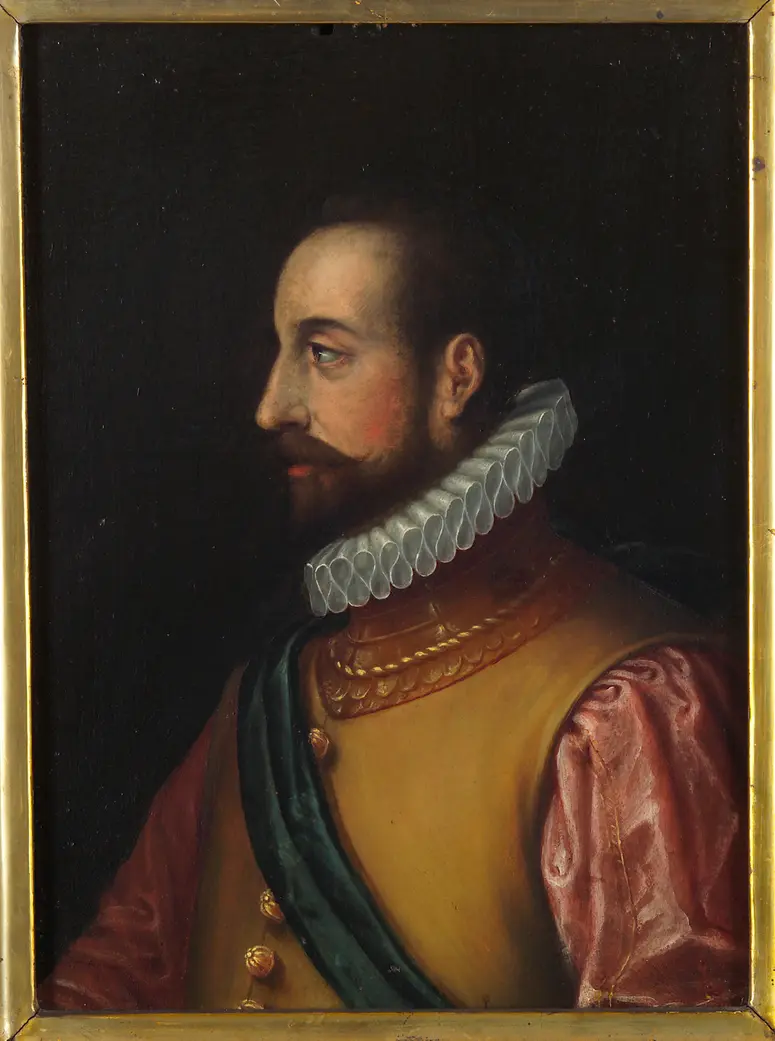
Alexander Farnese (1545-1592), Herzog von Parma Niederländisch 2. Hälfte 16. Jahrhundert
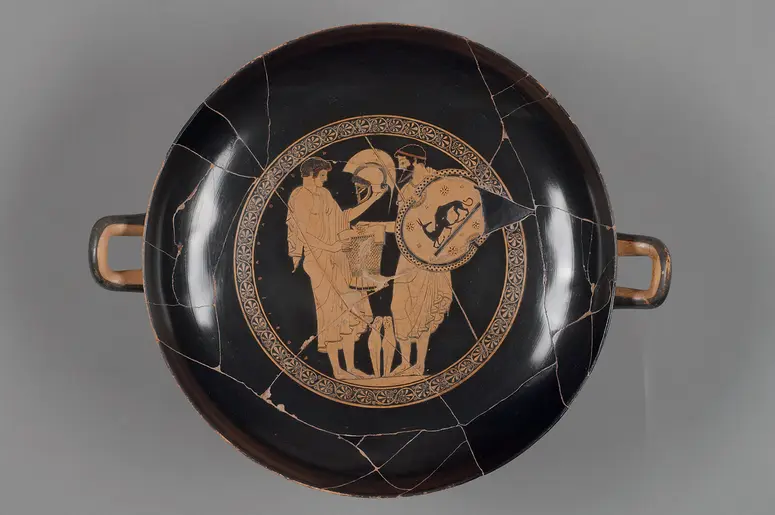
Schale: Streit um die Waffen des Achilleus Griechisch, Attisch, rotfigurig um 490 v. Chr.
Ferdinand II. (1564-1595), Erzherzog von Österreich und Landesherr von Tirol vor 1596

Kästchen, Einlegearbeit, Perlmuttarbeit 1. Drittel 17. Jahrhundert