Hellebarde
16. Jahrhundert
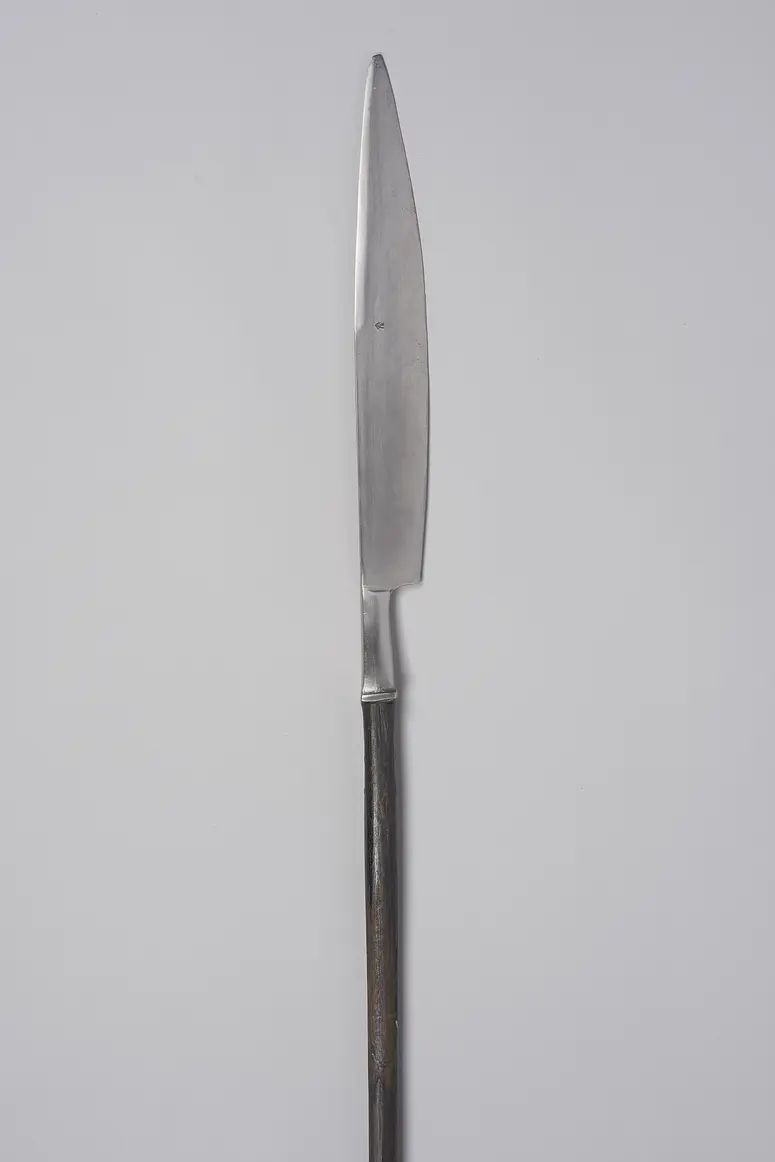
This halberd are hybrid forms of cut and thrust weapons to unseat a rider with the hook or to stop the opponent with the spike, but to strike a blow with the blade.Pole weapons, like this runca, came to prominent use from the fourteenth to the sexteenth century. It is a mixed form of cut and thrust weapon to stop the opponent by the sharp metal point, to drag a horseman off his mount by the short hook as well as to cut by the axe blade. The term »halberd« goes back to the components of the weapon: A battleaxe (Middle High German Barda) was fixed to a pole (Holm). The glaive consists of a long single-edged aquiline knifelike blade on the end of a pole. Its shape was more suitable for the cut than for the thrust. The glaive was mainly used in the fifteenth and sexteenth centuries.During the reign of Emperor Maximilian I was a transition from medieval cavallery to more useful and efficient infantery with a large number of food soldiers (mercentaries). This transition has also an impact on soldiers equipment and war tactic as well and changed the medieval and well-known face of chivalry.
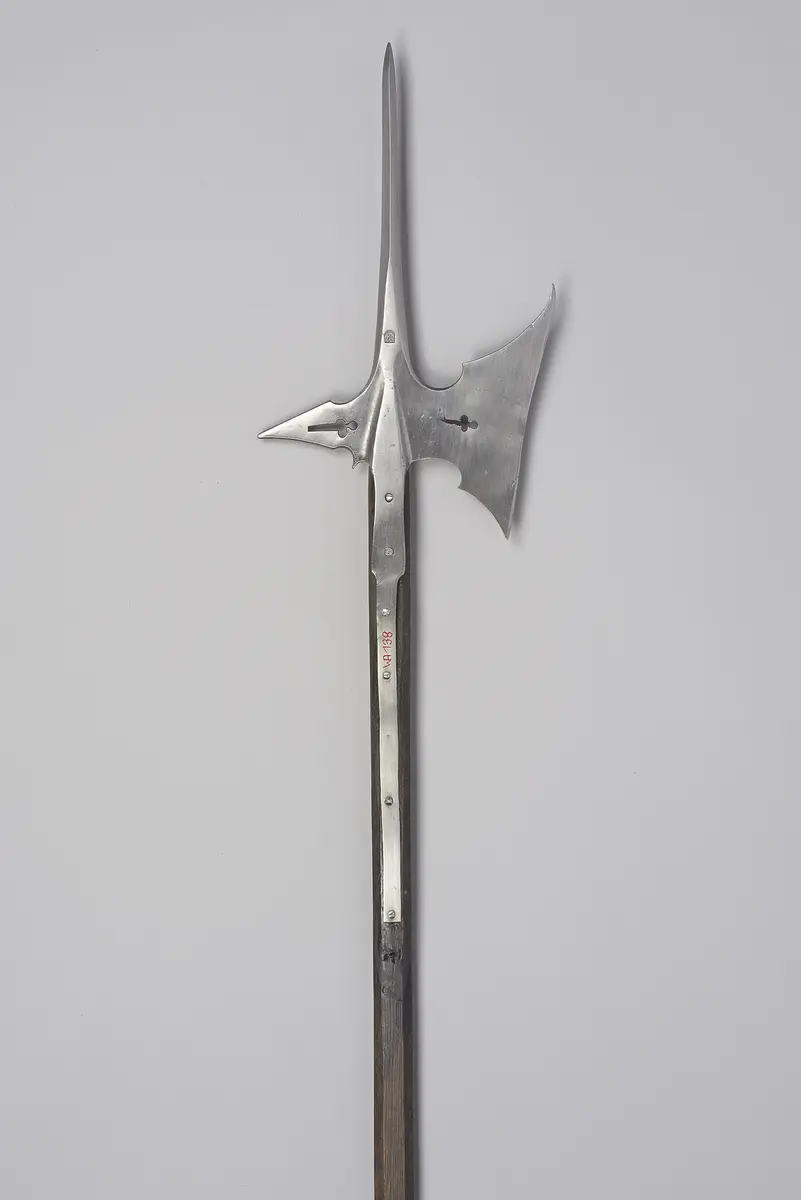
This halberd are hybrid forms of cut and thrust weapons to unseat a rider with the hook or to stop the opponent with the spike, but to strike a blow with the blade.Pole weapons, like this runca, came to prominent use from the fourteenth to the sexteenth century. It is a mixed form of cut and thrust weapon to stop the opponent by the sharp metal point, to drag a horseman off his mount by the short hook as well as to cut by the axe blade. The term »halberd« goes back to the components of the weapon: A battleaxe (Middle High German Barda) was fixed to a pole (Holm). The glaive consists of a long single-edged aquiline knifelike blade on the end of a pole. Its shape was more suitable for the cut than for the thrust. The glaive was mainly used in the fifteenth and sexteenth centuries.During the reign of Emperor Maximilian I was a transition from medieval cavallery to more useful and efficient infantery with a large number of food soldiers (mercentaries). This transition has also an impact on soldiers equipment and war tactic as well and changed the medieval and well-known face of chivalry.
Time:
16. Jahrhundert
Object Name
Hellebarde
Culture
Deutsch
Material/technology:
Eisen ?
Dimensions:
L. 83,5 cm
Klinge: L. 31 cm
Beil: L. 24,5 cm
Stamp / markings
Marke an der Klinge
Copyright
Schloss Ambras Innsbruck
Invs.
Schloss Ambras Innsbruck, WA 138
Browse more
Similar items you might be interested in
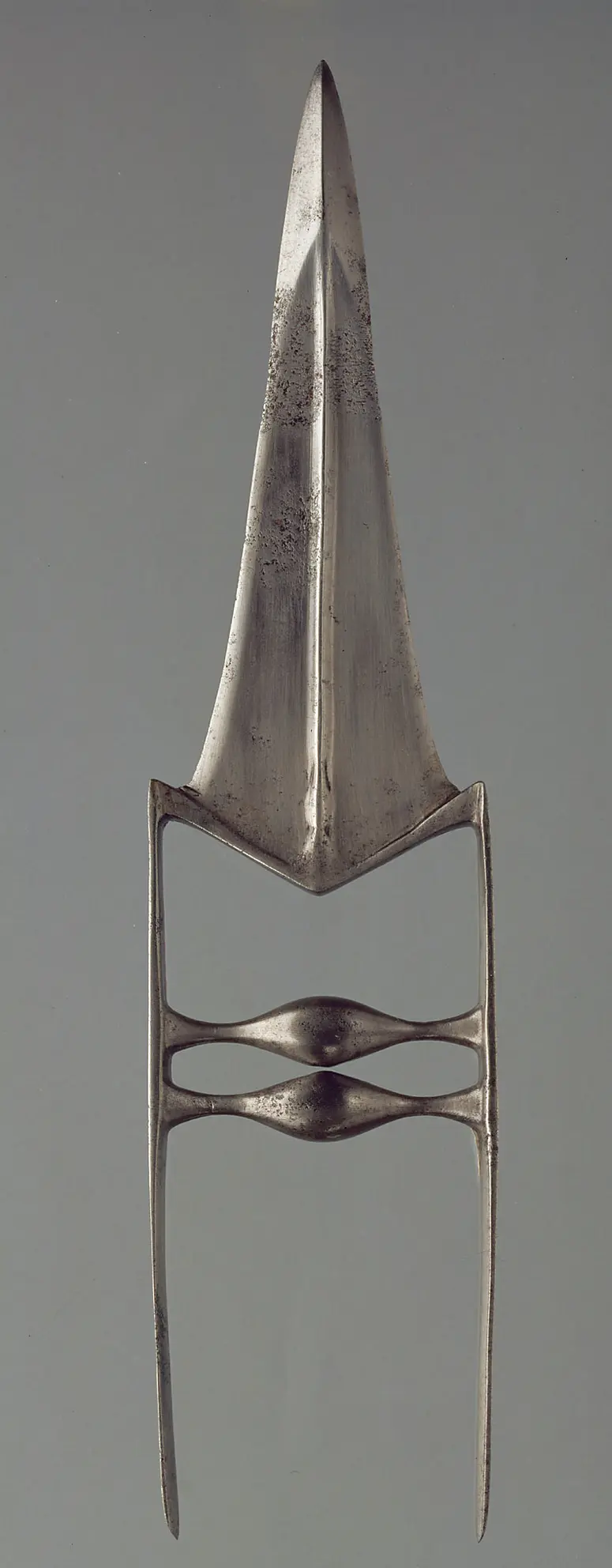

Khuttar, Katar, Stichwaffe, Dolch, Messer 16. Jahrhundert



Alexander Farnese (1545-1592), Herzog von Parma Niederländisch 2. Hälfte 16. Jahrhundert
Schale: Streit um die Waffen des Achilleus Griechisch, Attisch, rotfigurig um 490 v. Chr.
Empress Maria Theresa Matthias Donner 1750

Statuette, Kleinbronze, Bronze, Herkules, Herakles um 1550
Spielbrett, Tric Track, Mühle, Backgammon Johann Kayser um 1550

Spielbrett, Tric Track, Mühle, Backgammon Johann Kayser um 1550