Fußturnierharnisch
um 1600 | Ferdinand II. (1617-1637), ab 1619 Kaiser, ab 1617 König von Böhmen, ab 1618 König von Ungarn
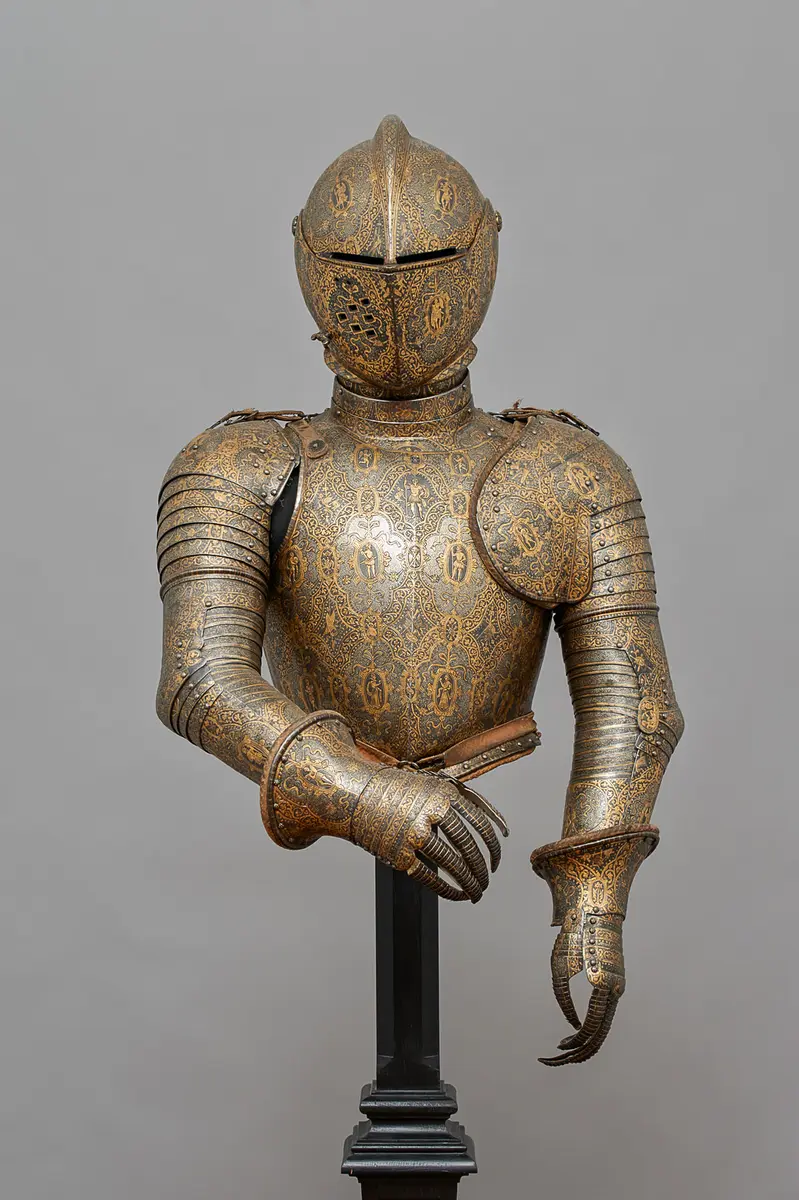
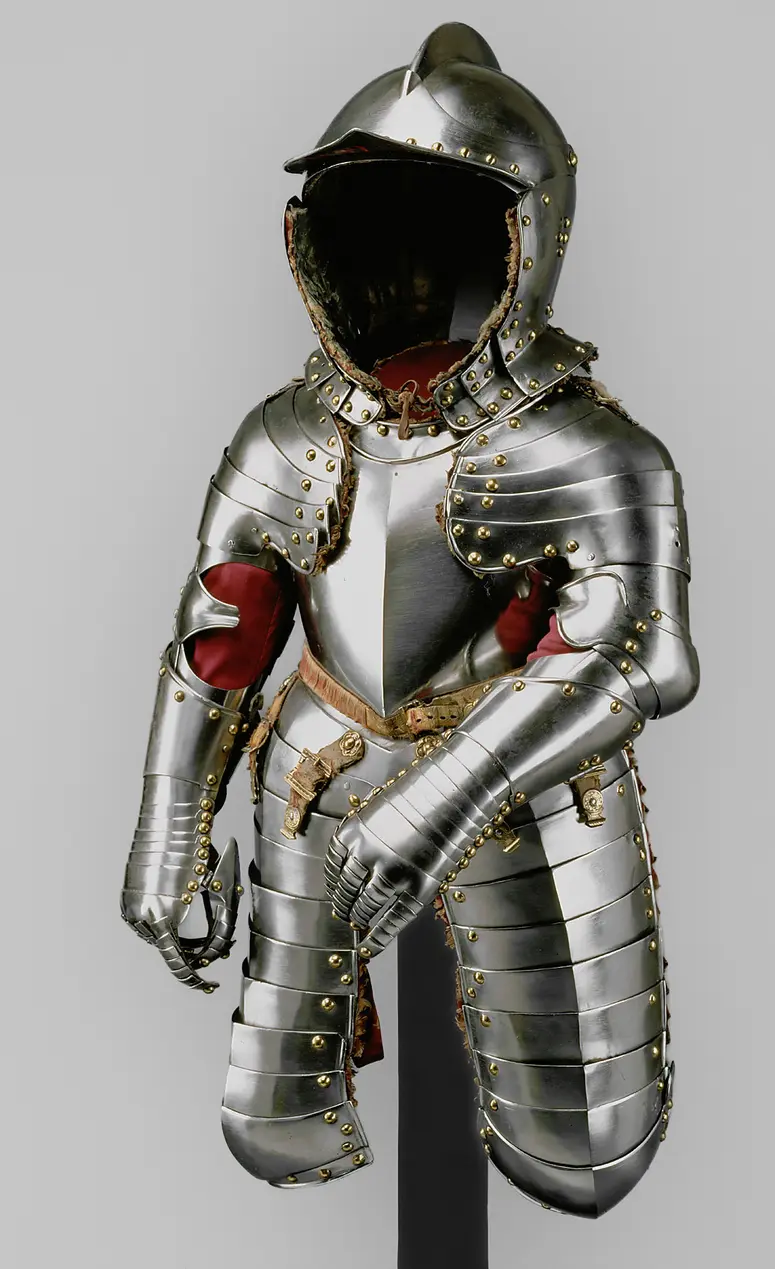
This armour was designed for a type of foot combat that became very popular in the late Renaissance and the early Baroque. Opponents faced each other across a barrier and, armed with swords or pikes, exchanged a predetermined number of blows. This type of tournament could be held both out in the open or indoors. A combatant aimed solely at his opponent’s head (or rather his helmet), trying to splinter a thin lance or land a blow with his sword. This made leg armour obsolete, unlike earlier types of foot combat where the participants had faced each other in a cordoned-off arena (see inv. A 474b).
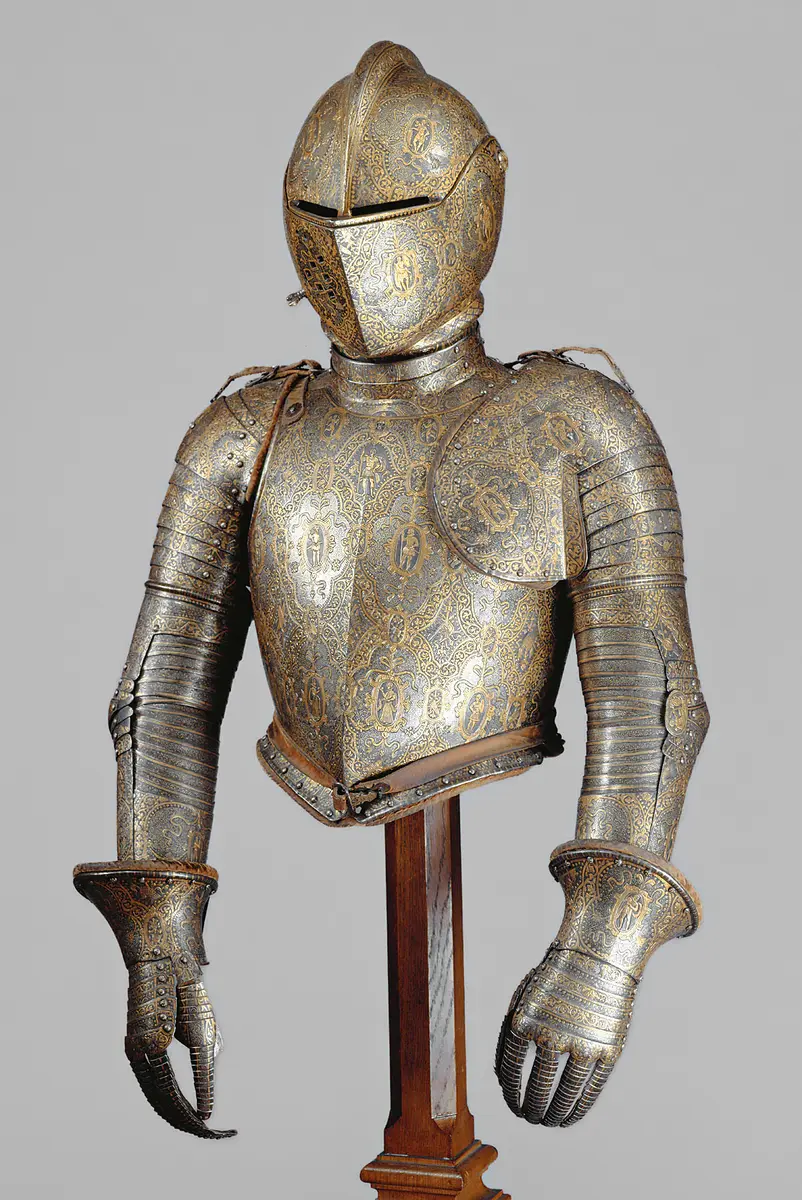
Other parts of the body were given extra protection – here, for example, the crook of the arms, which was technically quite challenging. The bottom edge of the close helmet has a hollow roping to rotate over the gorget-plate and can only be moved along this edge; this ensured that the opponent’s sword could not accidentally slide under the helmet. The visor, too, was reinforced as it received the majority of the blows.
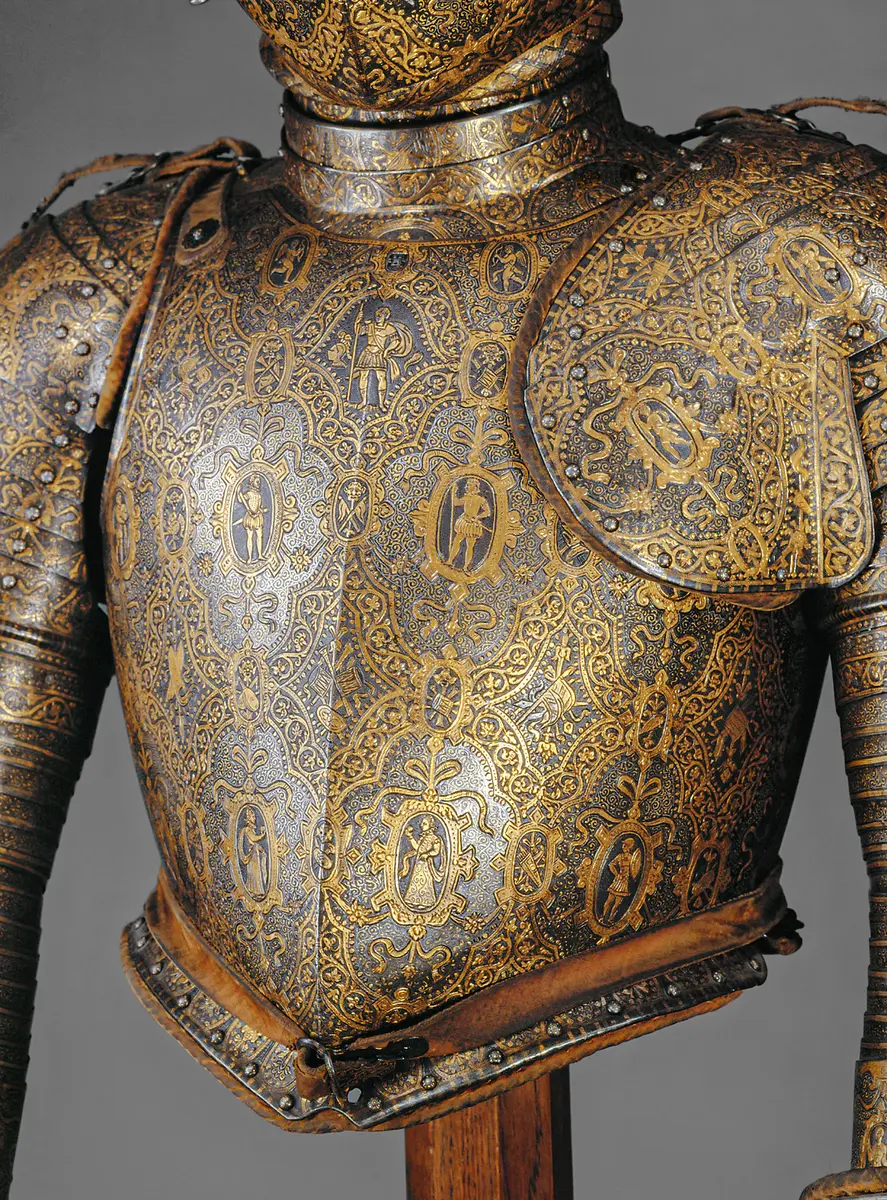
The entire surface of the armour is covered with damascene work in gold and silver; the decoration comprises a net of quatrefoil windows with garlands, trophies, and medallions featuring knights and ladies. It bears the mark of the anonymous Master I.O. on both breastplate and backplate.
The armour was probably made for Archduke (later Emperor) Ferdinand II, perhaps in connection with the festivities marking his marriage to Maria Anna of Bavaria celebrated in April 1600 at Graz.
This armour was designed for a type of foot combat that became very popular in the late Renaissance and the early Baroque. Opponents faced each other across a barrier and, armed with swords or pikes, exchanged a predetermined number of blows. This type of tournament could be held both out in the open or indoors. A combatant aimed solely at his opponent’s head (or rather his helmet), trying to splinter a thin lance or land a blow with his sword. This made leg armour obsolete, unlike earlier types of foot combat where the participants had faced each other in a cordoned-off arena (see inv. A 474b).
Other parts of the body were given extra protection – here, for example, the crook of the arms, which was technically quite challenging. The bottom edge of the close helmet has a hollow roping to rotate over the gorget-plate and can only be moved along this edge; this ensured that the opponent’s sword could not accidentally slide under the helmet. The visor, too, was reinforced as it received the majority of the blows.
The entire surface of the armour is covered with damascene work in gold and silver; the decoration comprises a net of quatrefoil windows with garlands, trophies, and medallions featuring knights and ladies. It bears the mark of the anonymous Master I.O. on both breastplate and backplate.
The armour was probably made for Archduke (later Emperor) Ferdinand II, perhaps in connection with the festivities marking his marriage to Maria Anna of Bavaria celebrated in April 1600 at Graz.
Artist:
Meister I. O. (um 1600 - 1610, tätig in Mailand)
Time:
um 1600
Object Name
Fußturnierharnisch
Culture
Mailand
Material/technology:
Eisen, geschmiedet, getrieben, teils gebläut, teils graviert, teils punziert, teils vergoldet, teils mit Silber und Gold tauschiert. Schrauben, Rosetten, Riemenzungen: Eisen, teils mit Gold tauschiert. Muttern, Nietkappen: Eisen, vergoldet. Leder. Textil (Seidensamt).
Dimensions:
H. 110 cm, B. 65 cm
Gesamtgewicht exkl. Sockel, exkl. Figurine: 17,95 kg
Stamp / markings
oben mittig auf der Brust und Rücken: rechteckige Marke mit Turm, daneben die Initialen I O
Copyright
Kunsthistorisches Museum, Hofjagd- und Rüstkammer
Invs.
Hofjagd- und Rüstkammer, A 1712
Browse more
Similar items you might be interested in
Claude de Vaudrey, Seigneur de L'Aigle et de Chilly c. 1495

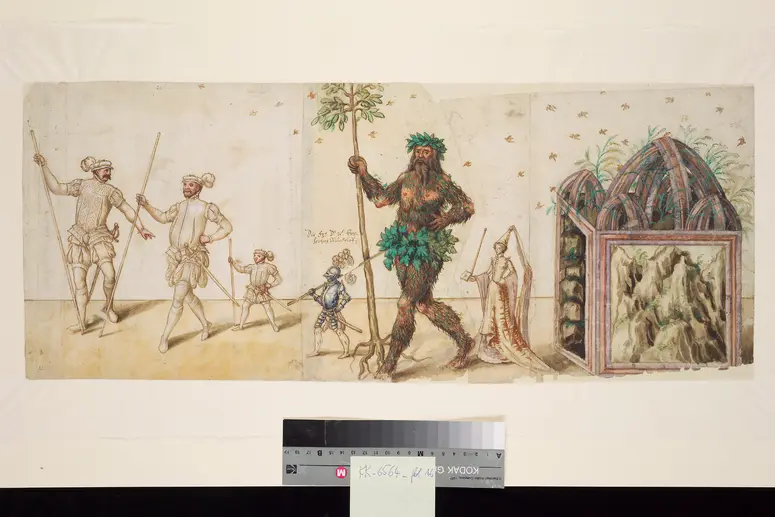
Einzelblatt: Aufzug zum Fußturnier in Wien mit Erzherzog Rudolf II. und dem Hofriesen Bartlmä Bon nach 1560

Ferdinand II. (1564-1595), Erzherzog von Österreich und Landesherr von Tirol um 1580/1582
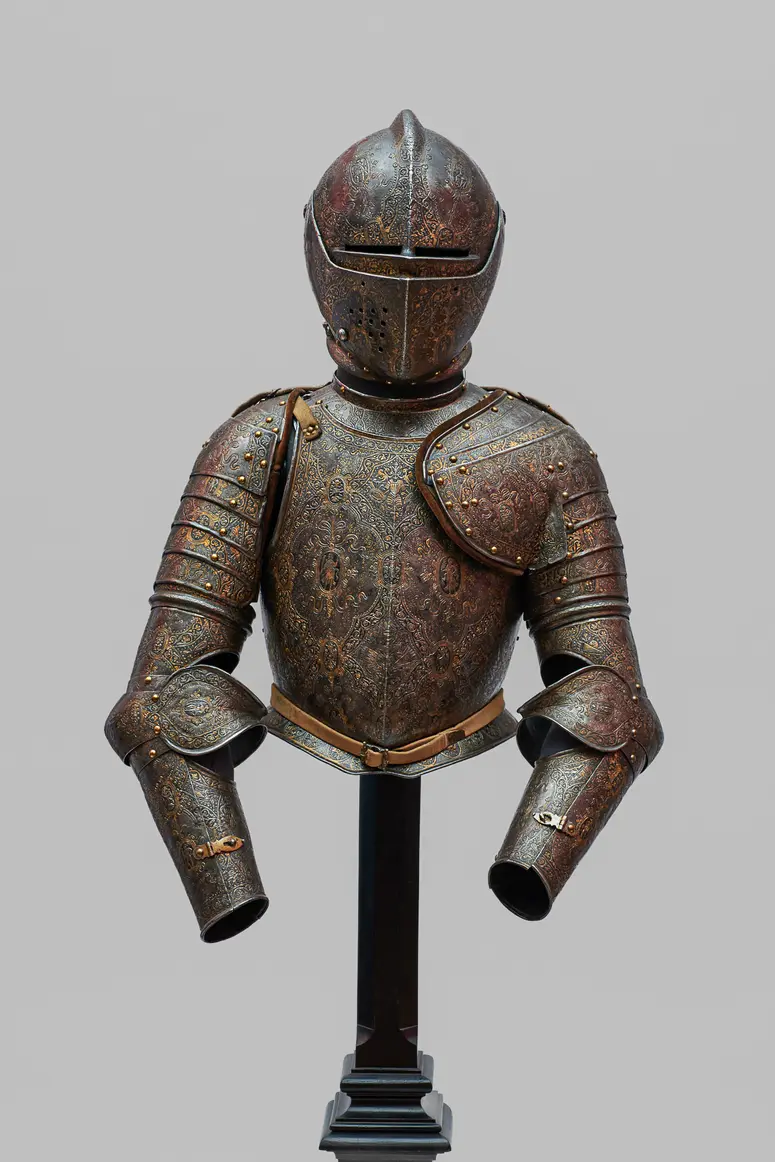
Leopold V. (1619-1632), Erzherzog und Graf von Tirol, Bischof von Passau und Straßburg 1600
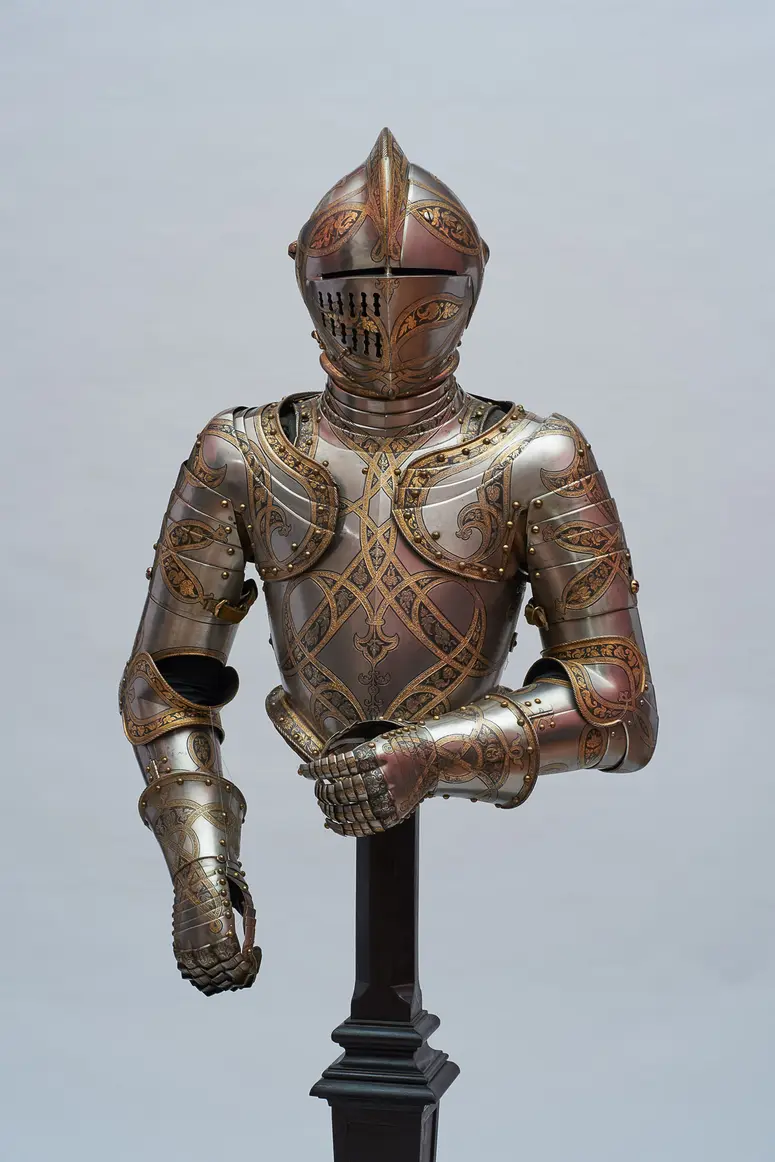
Erzherzog Ernst, Sohn des Maximilian II. von Habsburg Österreich 1571 (?)
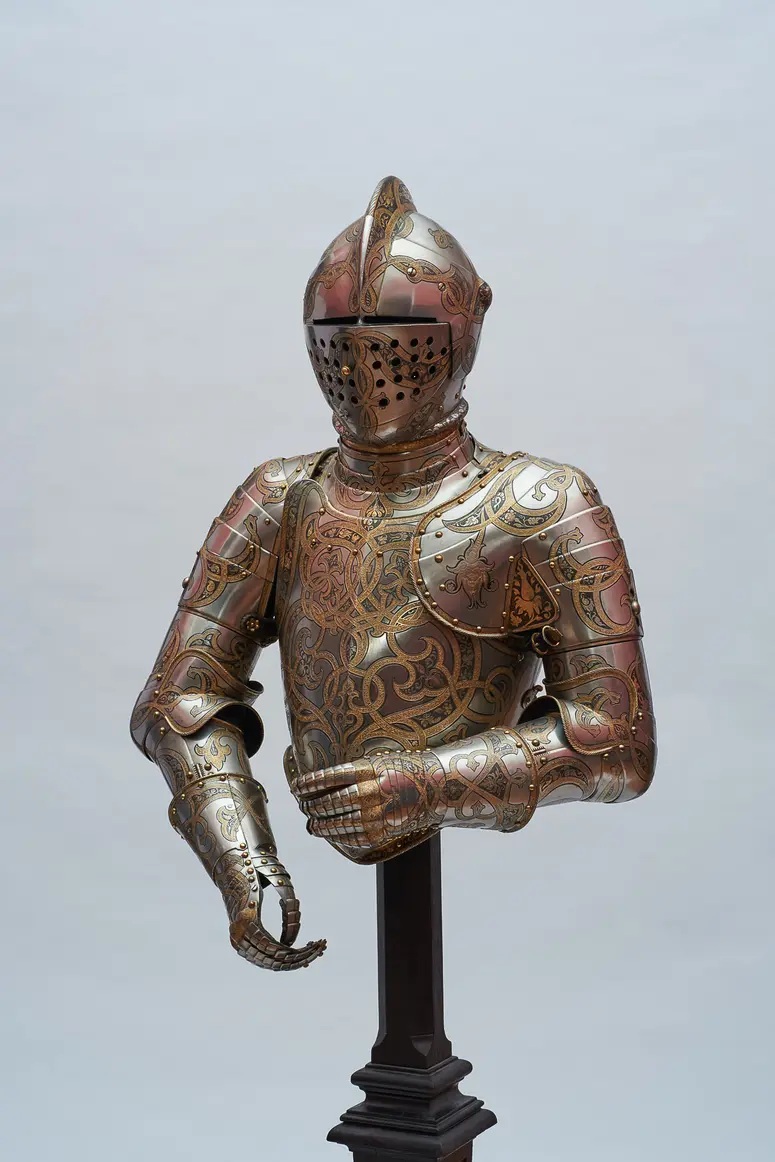
Rudolf II. (1576-1612), Kaiser, römischer König ab 1575, König von Ungarn ab 1572, von Böhmen se 1571 (?)

Ferdinand III. (1637-1657), Kaiser 1648/49
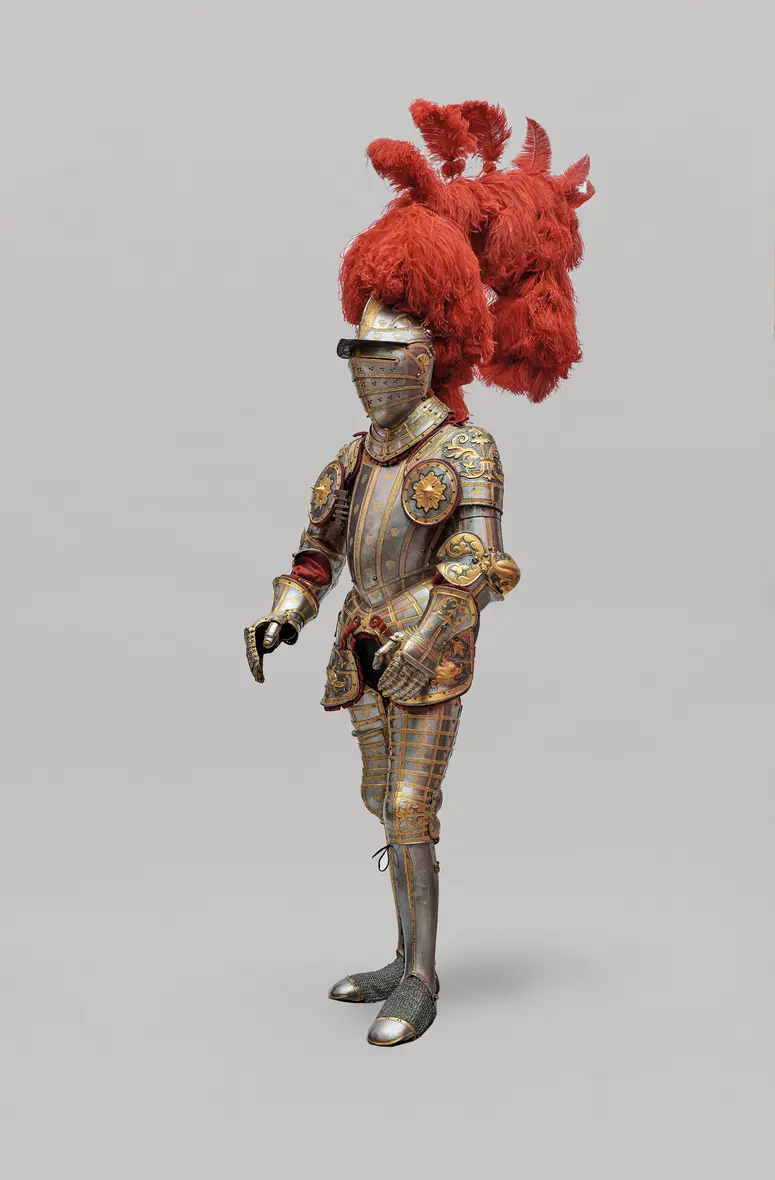
Ferdinand II. (1564-1595), Erzherzog von Österreich und Landesherr von Tirol 1547
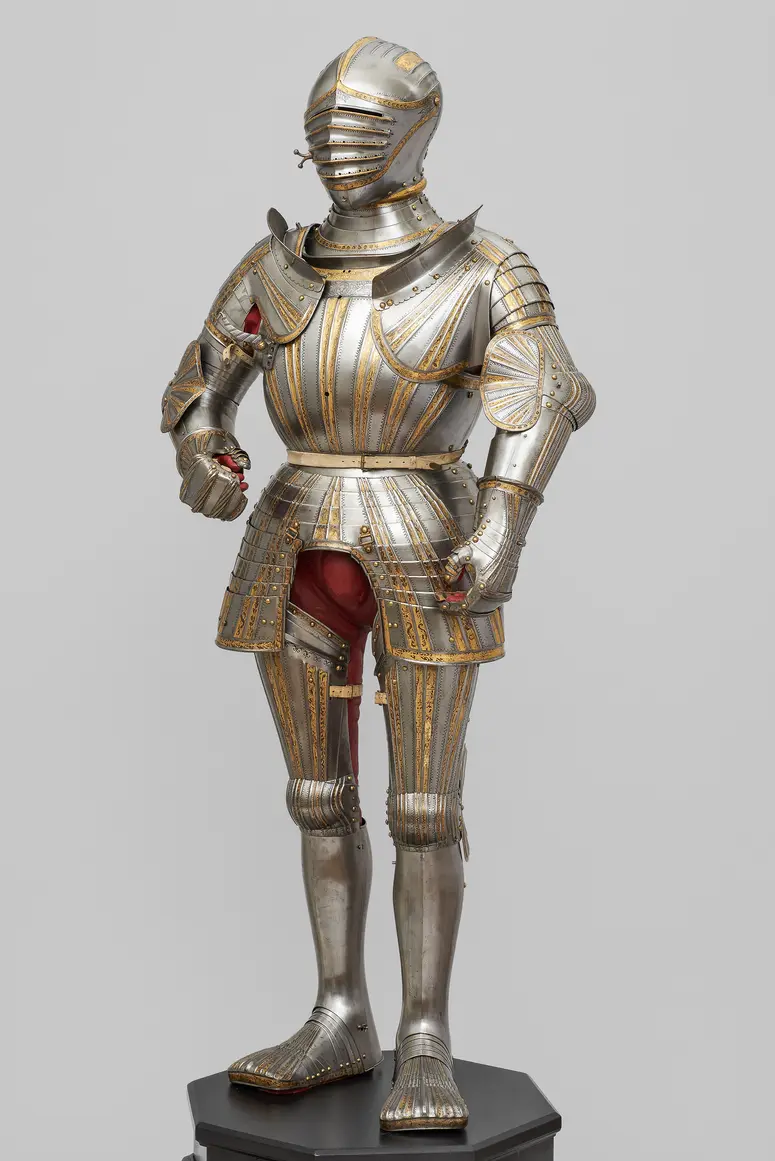
Matthäus Lang von Wellenburg (1519-1540), Erzbischof von Salzburg 1511

Harnisch, Rüstung, Rüstung des Bartlmä Bon, Riesenrüstung, Rüstung Hofriese Knechtsharnisch: um 1560, Knabenrüstungen: um 1575, Gliederpuppe: 1. H. 16. Jh.
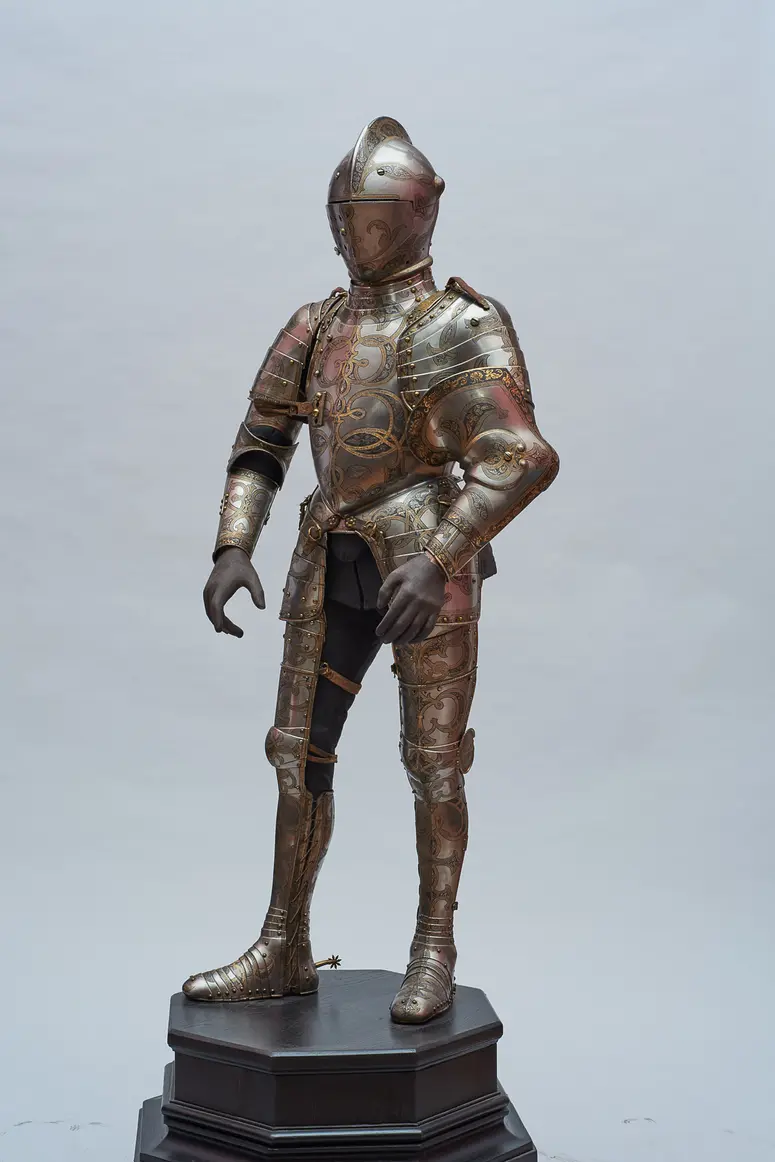
Rudolf II. (1576-1612), Kaiser, römischer König ab 1575, König von Ungarn ab 1572, von Böhmen se 1571 (?)
Maximilian II. (1564-1576), Kaiser datiert 1557

Maximilian II. (1564-1576), Kaiser datiert 1550
Kurfürst Friedrich I. Sohn des Ludwig III. von der Pfalz around 1450. Gauntlets: around 1475/1485.
Maximilian II. (1564-1576), Kaiser 1549/1550

Maximilian III. (1585-1618), Erzherzog von Österreich, Koadjutor und ab 1590 Hochmeister des Deuts um 1575
Sigismund Franz (1662-1665), Erzherzog von Vorderösterreich um 1635-1638