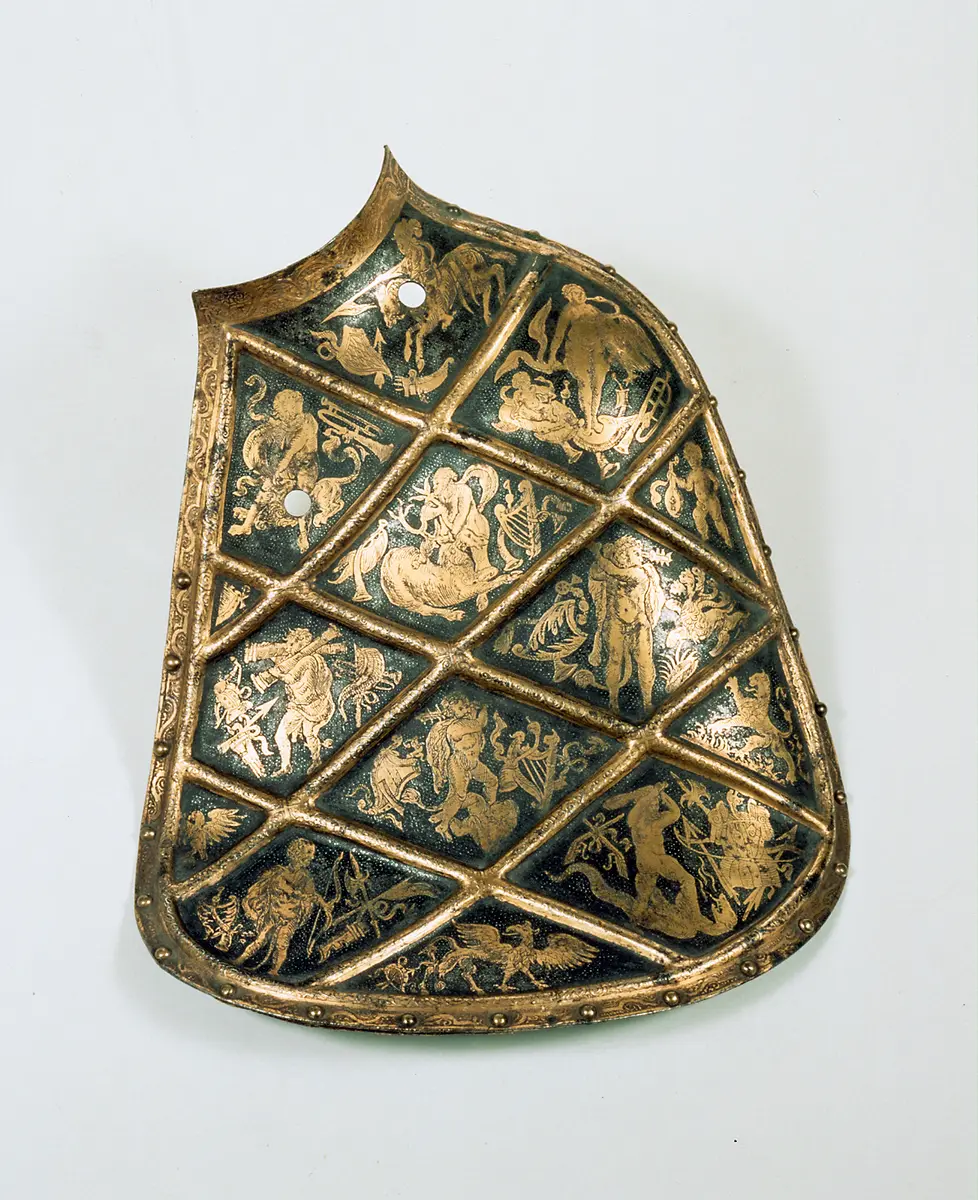
Stechtartsche der Trophäengarnitur (für das Realgestech)
um 1575 | Maximilian III. (1585-1618), Erzherzog von Österreich, Koadjutor und ab 1590 Hochmeister des Deuts
Archduke Maximilian III was the fourth son of Emperor Maximilian II and the younger brother of Emperor Rudolf II, Archduke Ernest, and Emperor Matthias. In 1590, he became Grand Master of the Teutonic Order. Following the death of Stephan Báthory (see inv. A 609), he was elected King of Poland but eventually had to cede the crown to Sigismund III Vasa. In 1602, he succeeded his uncle as Archduke of Further Austria and Tyrol.
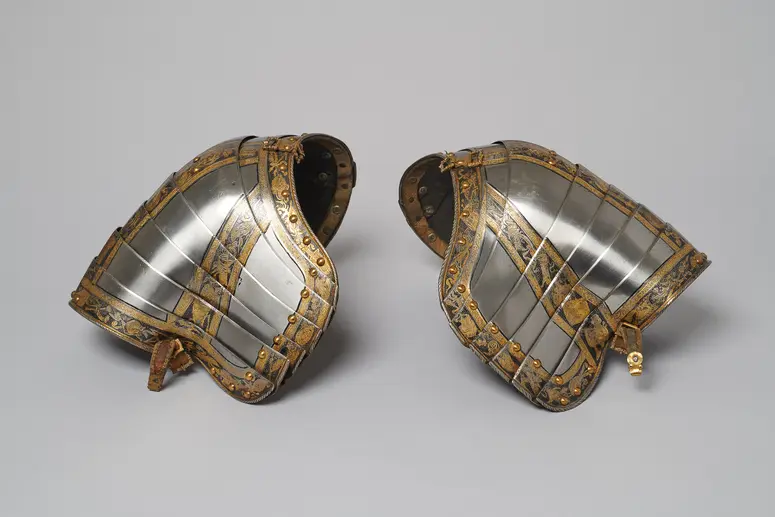
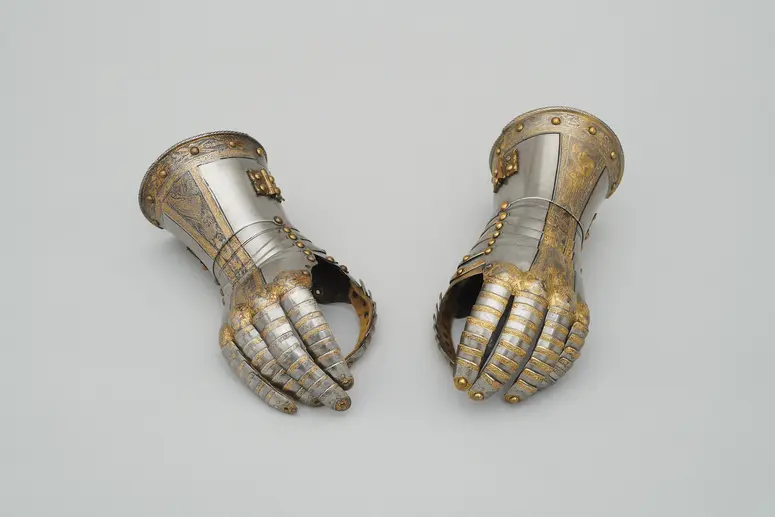
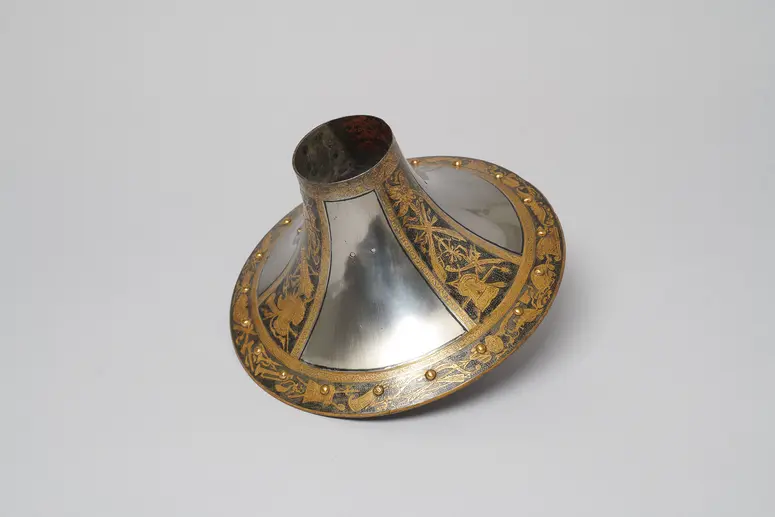
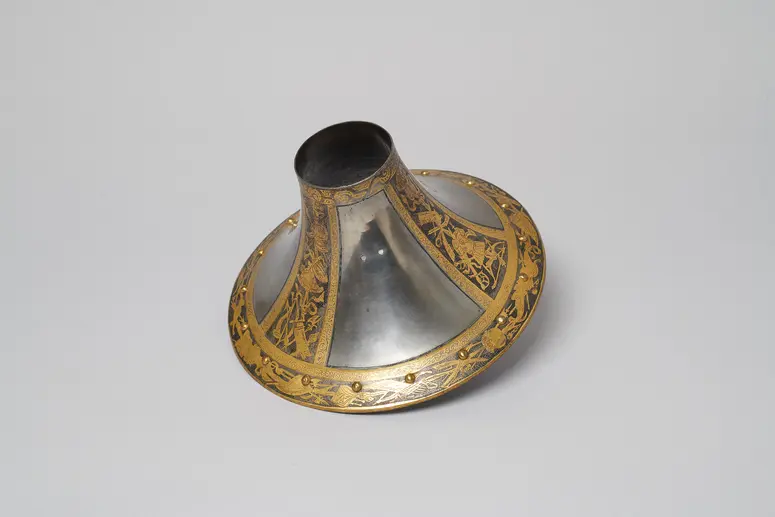
The Trophy Garniture (inv. A 880) was probably produced when the archduke’s father, Emperor Maximilian II, was still alive. It comprises two armours, one for the field and one for jousting, that can be configured with exchange and reinforcing pieces for different types of tournaments. The reinforcements include this trellised targe, an iron shield required for the tilt. This joust saw two mounted knights try to unhorse each other with heavy, blunted lances or to break each other’s lances. The two combatants were separated by a tilt barrier, hence the name. The shield fitted snugly onto the left pauldron and was firmly screwed to breastplate and shoulder; note the holes in the upper part of this highly specialized shield. The raised, forged trellis provided additional traction for the opponent’s lance and prevented the shield from slipping towards the wearer’s neck or his right armpit. At the same time, it enhanced the power of impact.
This targe from the Trophy Garniture is decorated with the Labours of Hercules, among them his battle with the Nemean Lion, killing the Lernaean Hydra, and capturing Cerberus, the three-headed hound that guarded the entrance to Hades.
Archduke Maximilian III was the fourth son of Emperor Maximilian II and the younger brother of Emperor Rudolf II, Archduke Ernest, and Emperor Matthias. In 1590, he became Grand Master of the Teutonic Order. Following the death of Stephan Báthory (see inv. A 609), he was elected King of Poland but eventually had to cede the crown to Sigismund III Vasa. In 1602, he succeeded his uncle as Archduke of Further Austria and Tyrol.
The Trophy Garniture (inv. A 880) was probably produced when the archduke’s father, Emperor Maximilian II, was still alive. It comprises two armours, one for the field and one for jousting, that can be configured with exchange and reinforcing pieces for different types of tournaments. The reinforcements include this trellised targe, an iron shield required for the tilt. This joust saw two mounted knights try to unhorse each other with heavy, blunted lances or to break each other’s lances. The two combatants were separated by a tilt barrier, hence the name. The shield fitted snugly onto the left pauldron and was firmly screwed to breastplate and shoulder; note the holes in the upper part of this highly specialized shield. The raised, forged trellis provided additional traction for the opponent’s lance and prevented the shield from slipping towards the wearer’s neck or his right armpit. At the same time, it enhanced the power of impact.
This targe from the Trophy Garniture is decorated with the Labours of Hercules, among them his battle with the Nemean Lion, killing the Lernaean Hydra, and capturing Cerberus, the three-headed hound that guarded the entrance to Hades.
Artist:
Anton Peffenhauser , (Plattner) zugeschrieben (um 1525 - 1603, tätig in Augsburg) DNB
Time:
um 1575
Object Name
Stechtartsche der Trophäengarnitur (für das Realgestech)
Culture
Augsburg
Material/technology:
Eisen, geschmiedet, teils getrieben, teils geätzt. Ätzdekor: teils feuervergoldet, teils geschwärzt (schwarz geätzt), teils mit schwarzer Ölfarbe gefüllt (modern). Nietkappen: Messing, feuervergoldet. Leder.
Dimensions:
H 44 cm, B 35 cm
Gewicht: 1,55 kg
Copyright
Kunsthistorisches Museum, Hofjagd- und Rüstkammer
Invs.
Hofjagd- und Rüstkammer, B 40
Browse more
Similar items you might be interested in
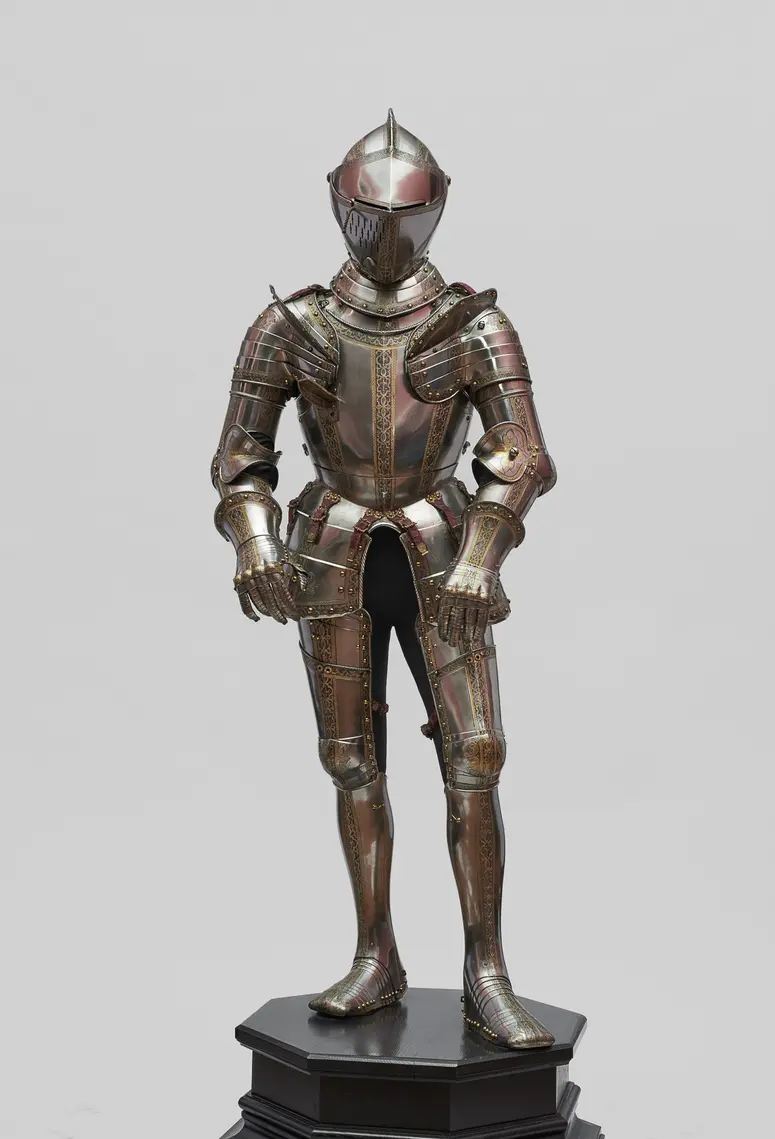
Ganzer blanker Harnisch, Rüstung zum Plankenstechen / Freirennen Anton Peffenhauser um 1570
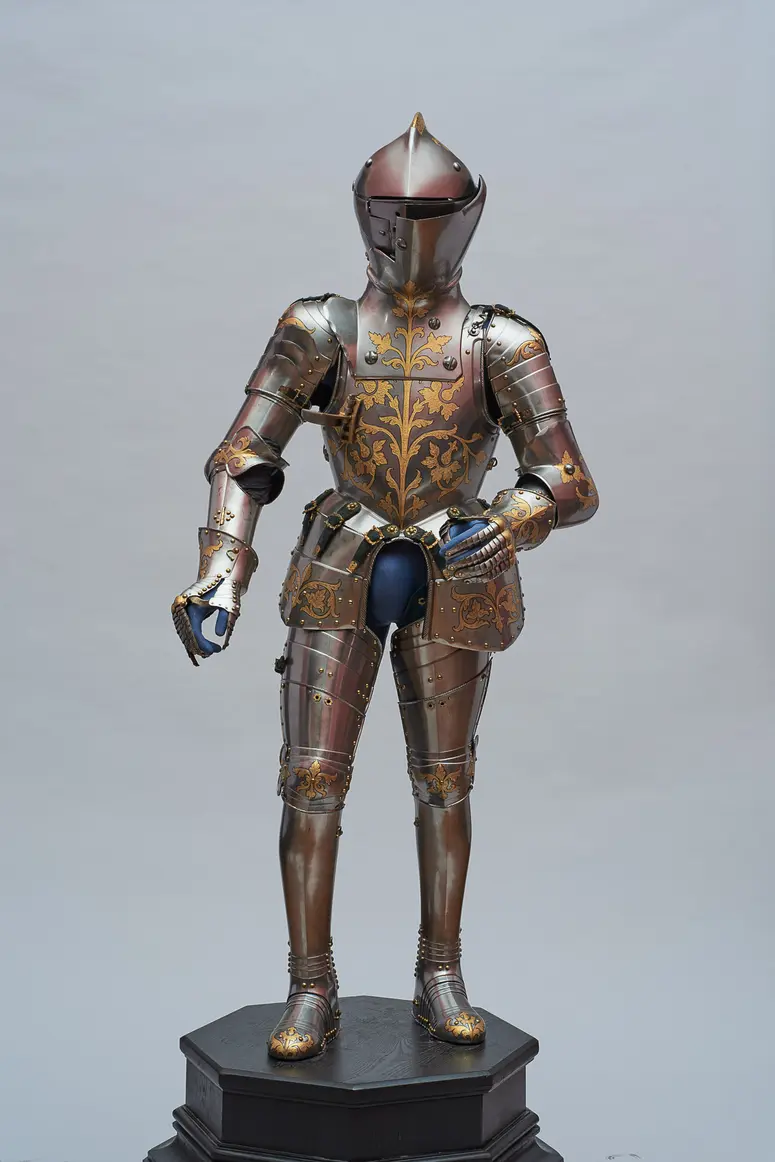
Karl (1564-1590), Erzherzog von Österreich 1563 (?)
Karl (1564-1590), Erzherzog von Österreich 1563 (?)
Karl (1564-1590), Erzherzog von Österreich datiert 1571
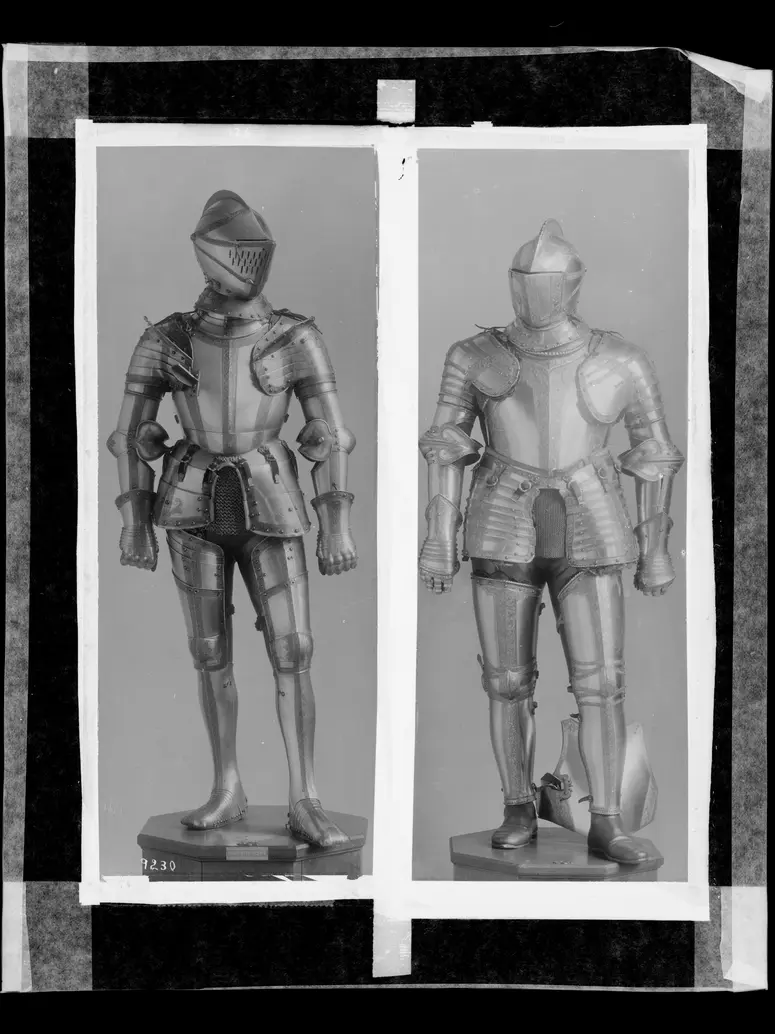
Ganzer Feldharnisch (Lerchengarnitur); Küriss einer Wechselgarnitur J. Löwy, K. und K. Hof-Photograph, Kunst- und Verlagsanstalt (Wien) 1892
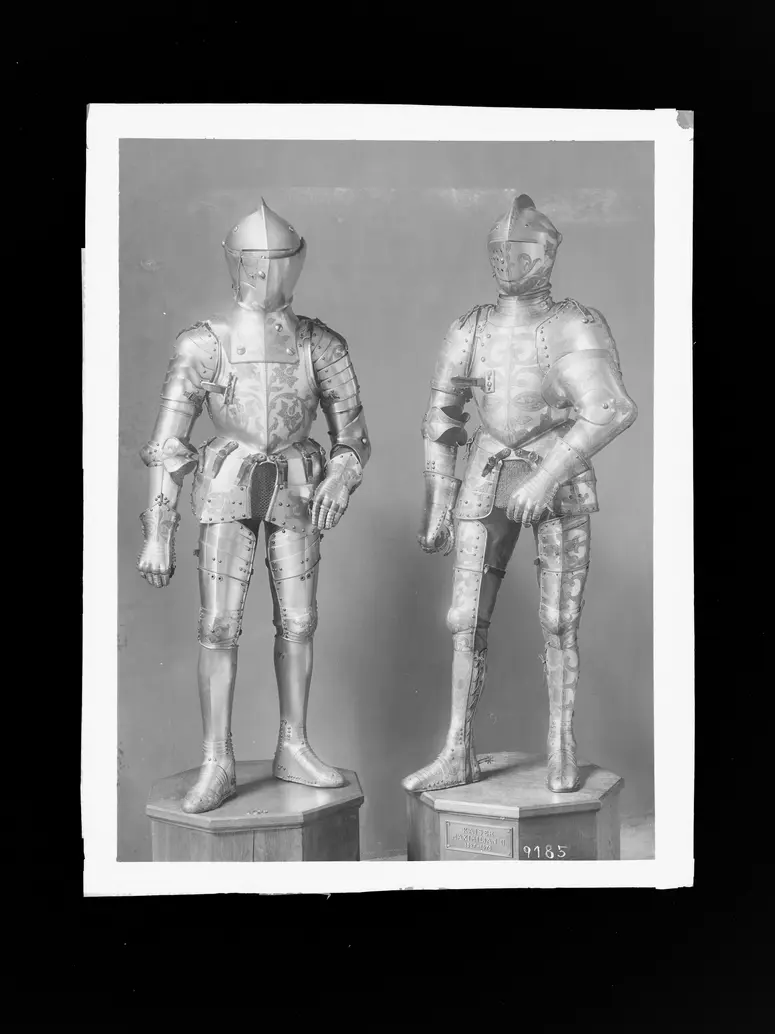
Turnierharnisch; Reiterharnisch (Küriss) der Flechtbandgarnitur zum Freiturnier J. Löwy, K. und K. Hof-Photograph, Kunst- und Verlagsanstalt (Wien) 1892
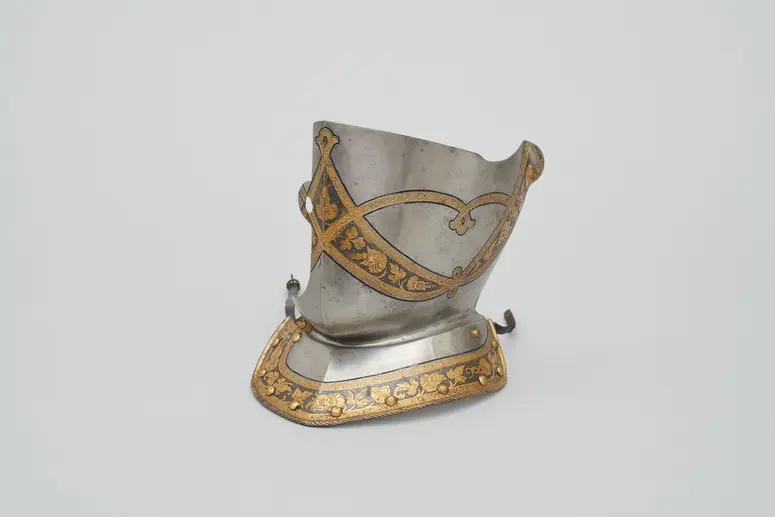
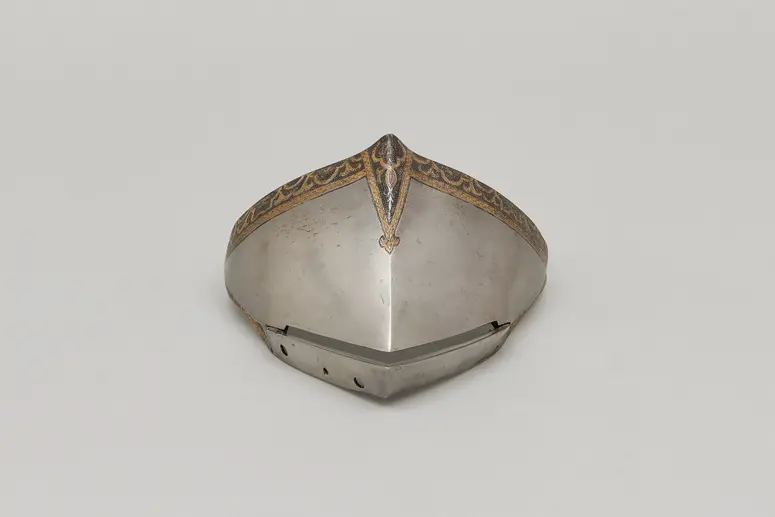
Karl (1564-1590), Erzherzog von Österreich 1563 (?)
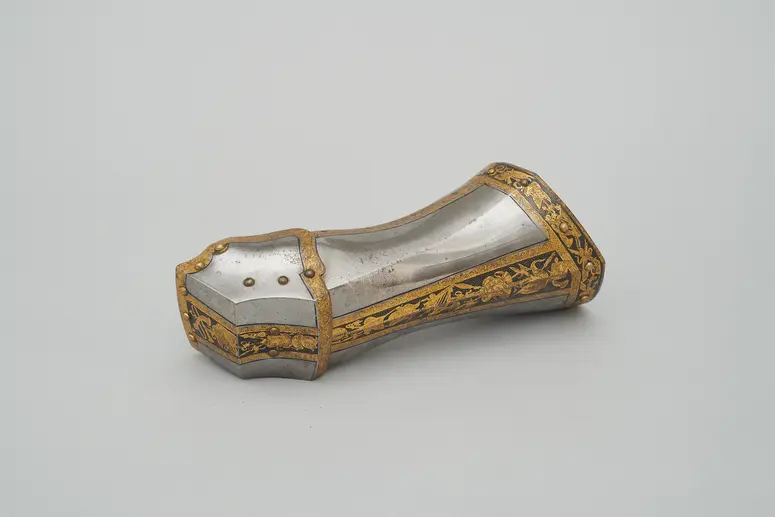
Maximilian III. (1585-1618), Erzherzog von Österreich, Koadjutor und ab 1590 Hochmeister des Deuts 1571 (?)
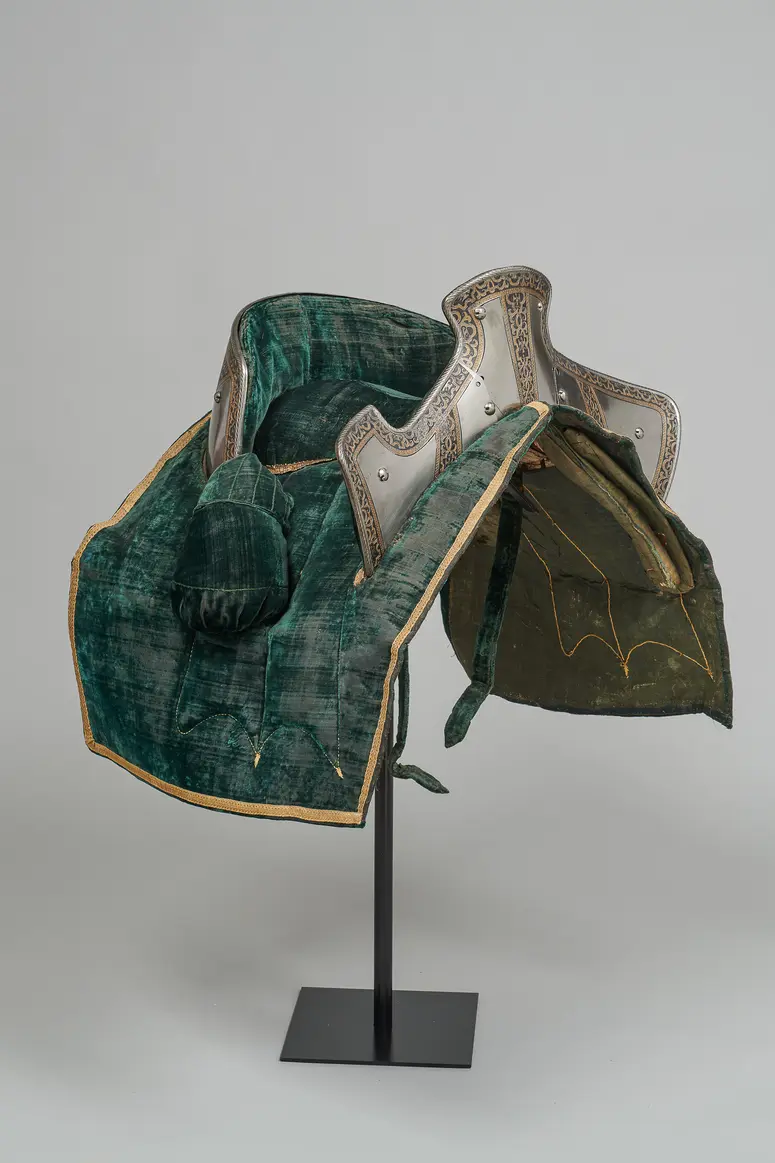
Maximilian III. (1585-1618), Erzherzog von Österreich, Koadjutor und ab 1590 Hochmeister des Deuts um 1575
Maximilian III. (1585-1618), Erzherzog von Österreich, Koadjutor und ab 1590 Hochmeister des Deuts um 1575
Maximilian III. (1585-1618), Erzherzog von Österreich, Koadjutor und ab 1590 Hochmeister des Deuts um 1575
Maximilian III. (1585-1618), Erzherzog von Österreich, Koadjutor und ab 1590 Hochmeister des Deuts um 1575
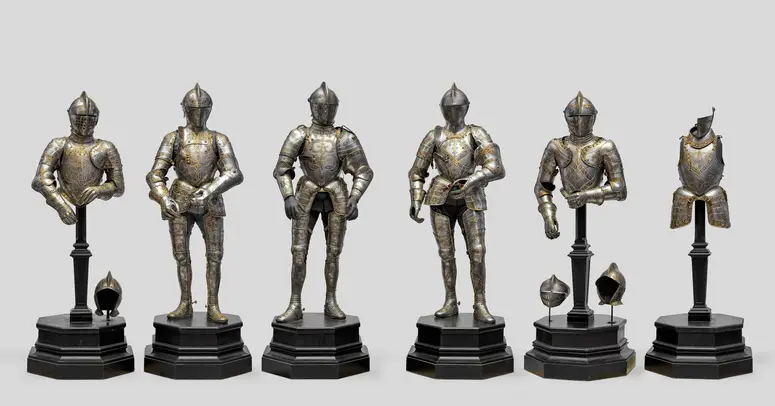
Rudolf II. (1576-1612), Kaiser, römischer König ab 1575, König von Ungarn ab 1572, von Böhmen se 1571 (?)

Maximilian III. (1585-1618), Erzherzog von Österreich, Koadjutor und ab 1590 Hochmeister des Deuts um 1575
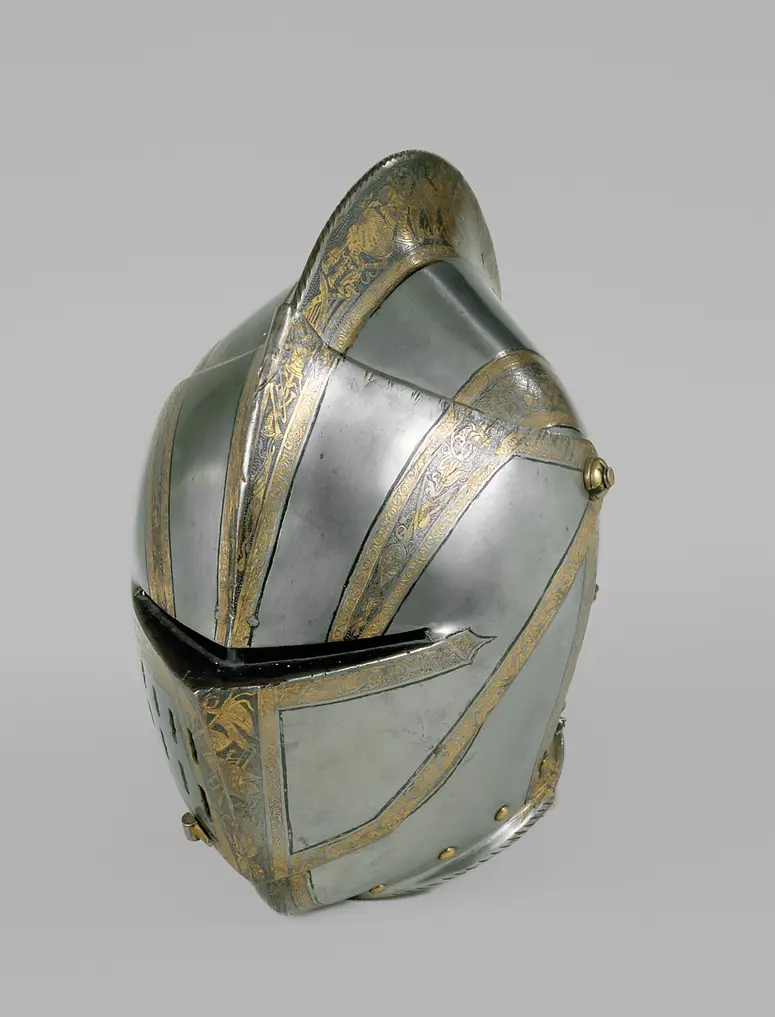
Maximilian III. (1585-1618), Erzherzog von Österreich, Koadjutor und ab 1590 Hochmeister des Deuts um 1575
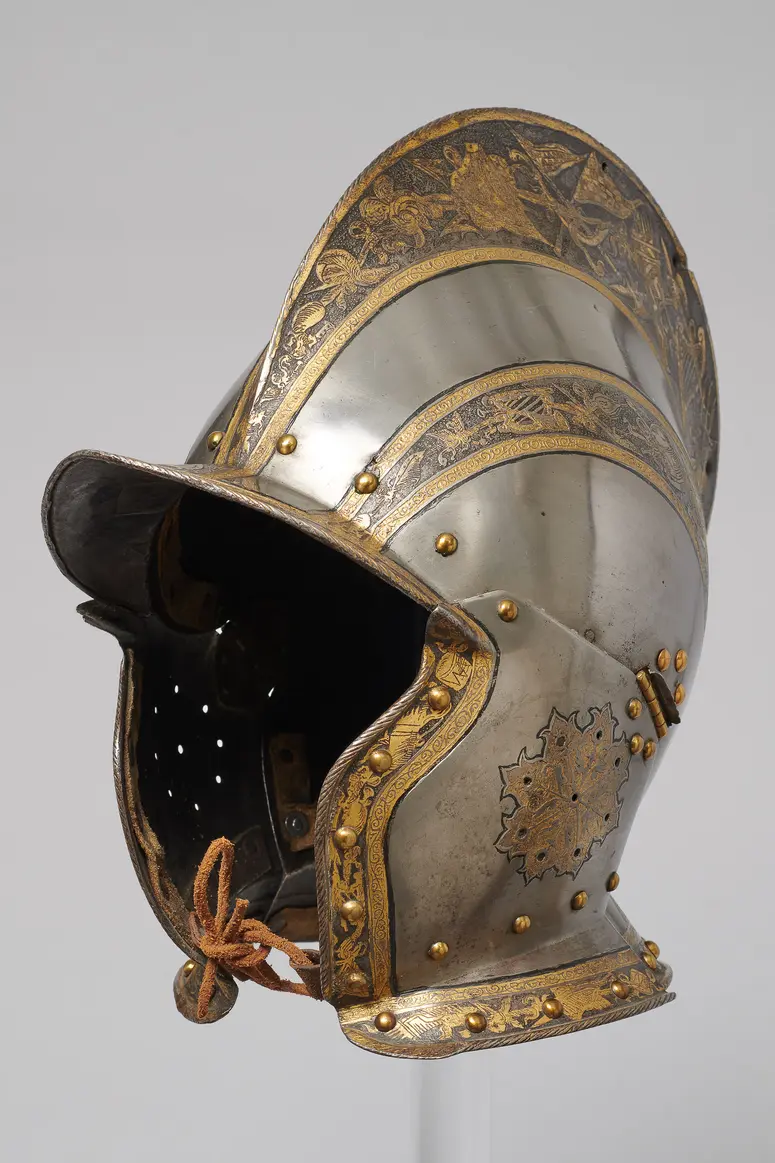
Maximilian III. (1585-1618), Erzherzog von Österreich, Koadjutor und ab 1590 Hochmeister des Deuts um 1575

Maximilian III. (1585-1618), Erzherzog von Österreich, Koadjutor und ab 1590 Hochmeister des Deuts um 1575