Statue group of Wah-ib with his wife Teri and a son
18th Dynasty, reign of Amenhotep III, ca. 1410–1372 BC
With his left hand, Wah-ib embraces his wife. His name and the title “Jeweler of Amun” are inscribed on his long kilt. The finely modeled upper torso shows three folds on his stomach. Teri wears a long wig and an ankle-length dress which emphasizes her waist and slender limbs. The son whose name is not known stands between his parents.
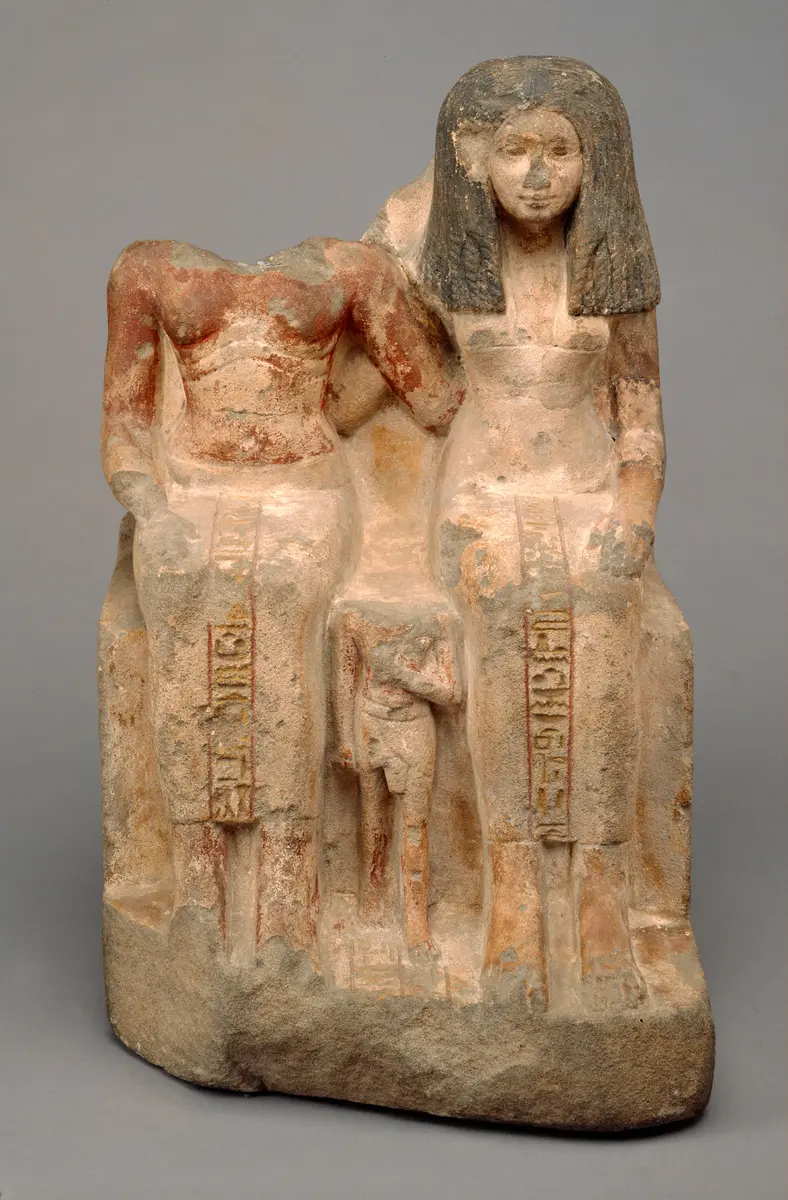
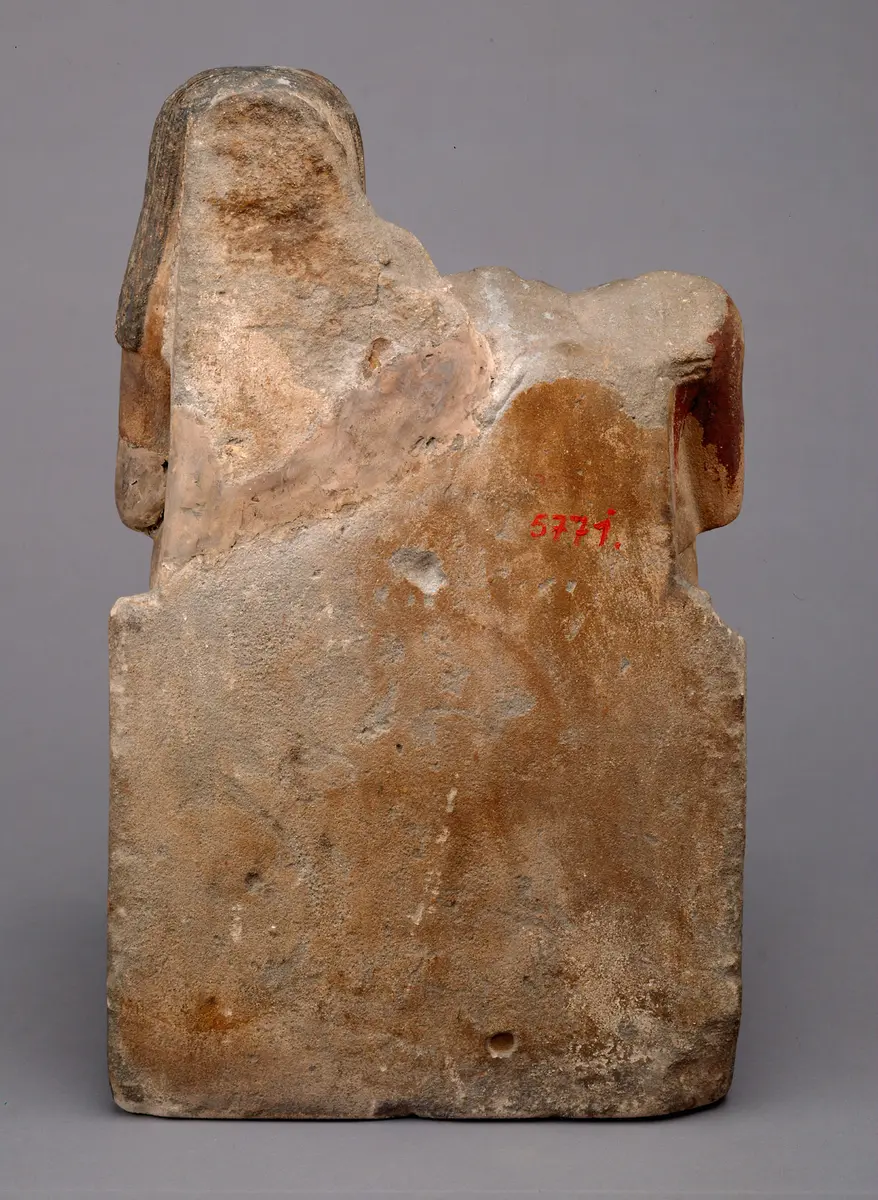
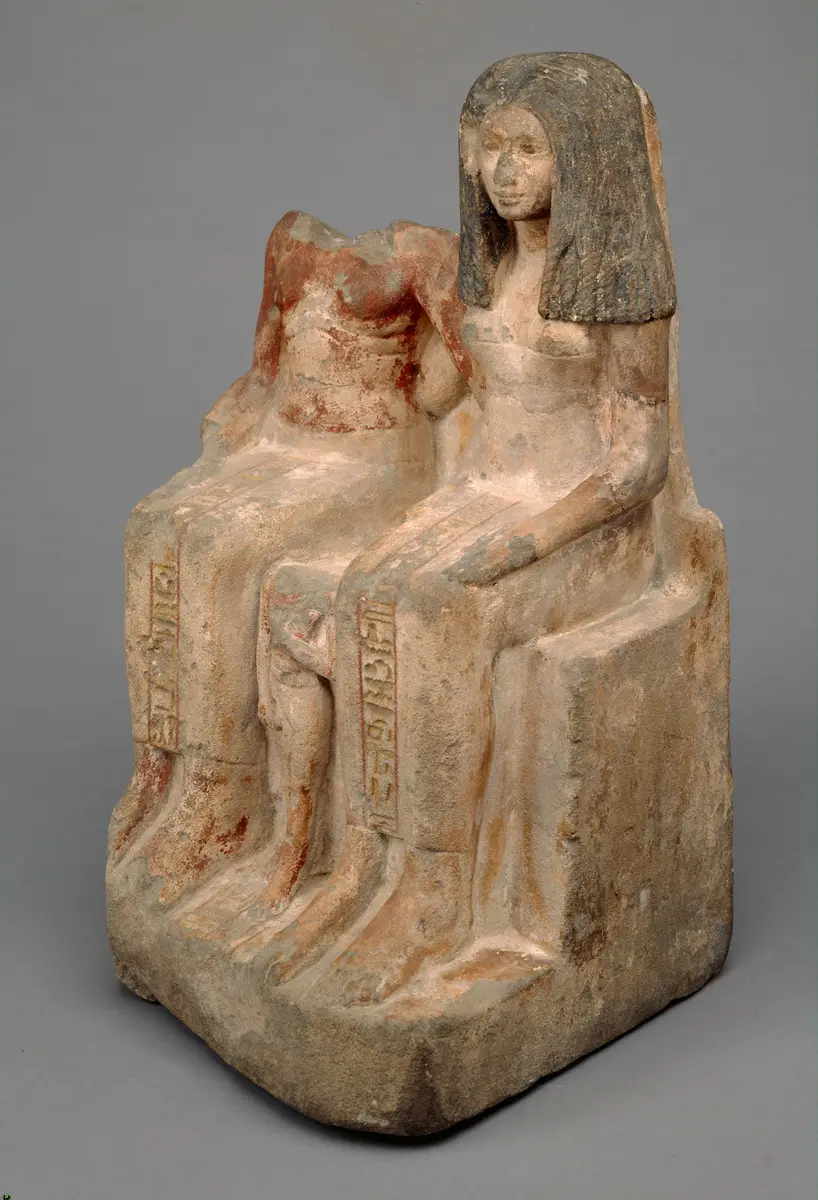
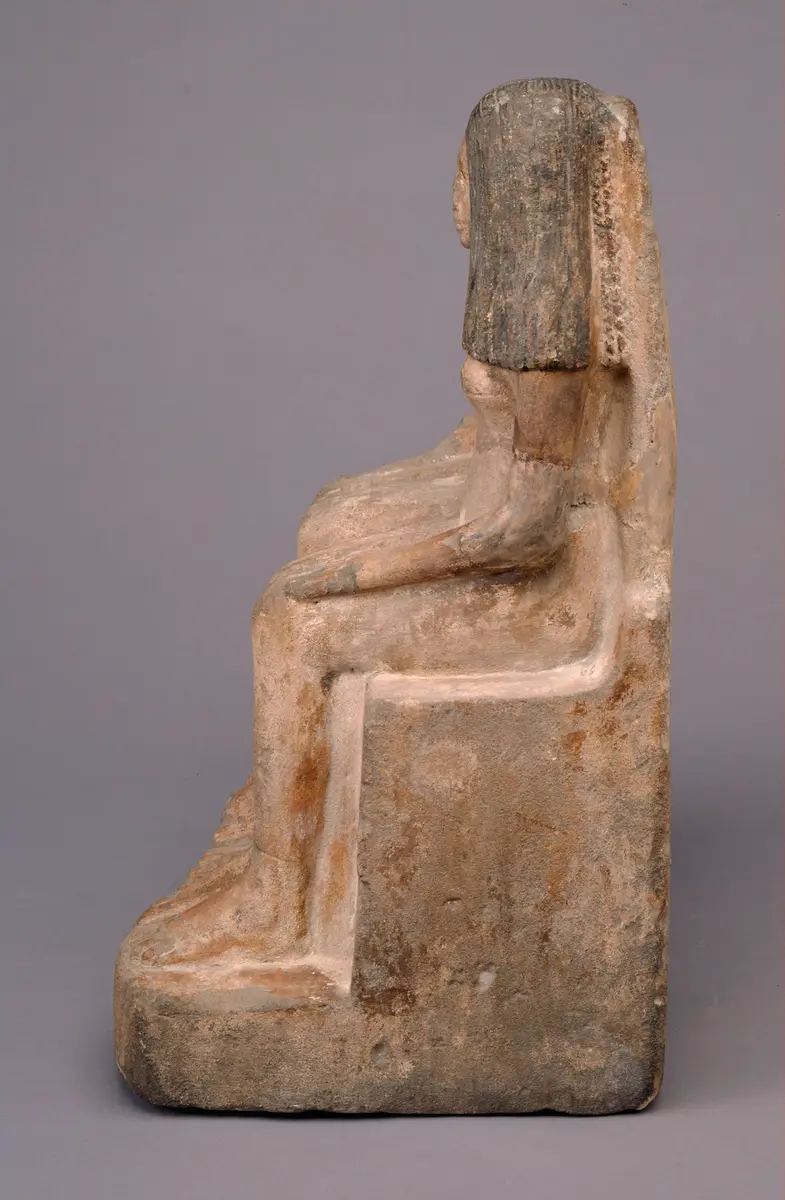
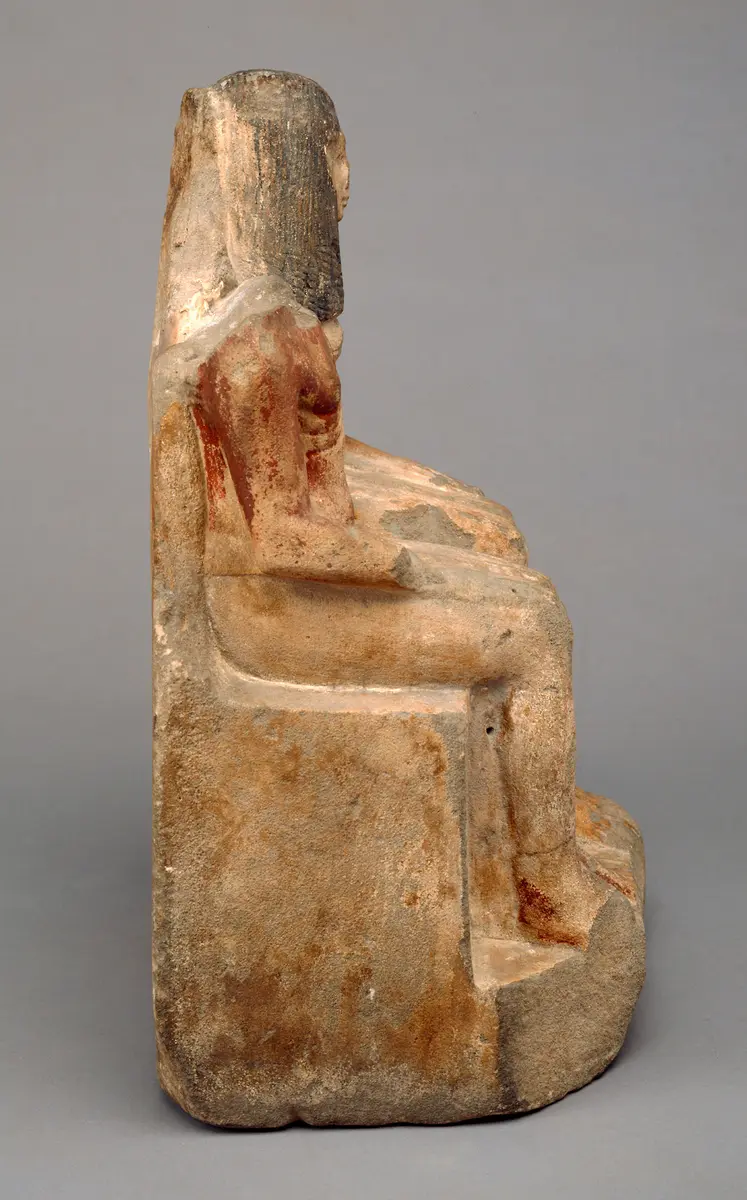
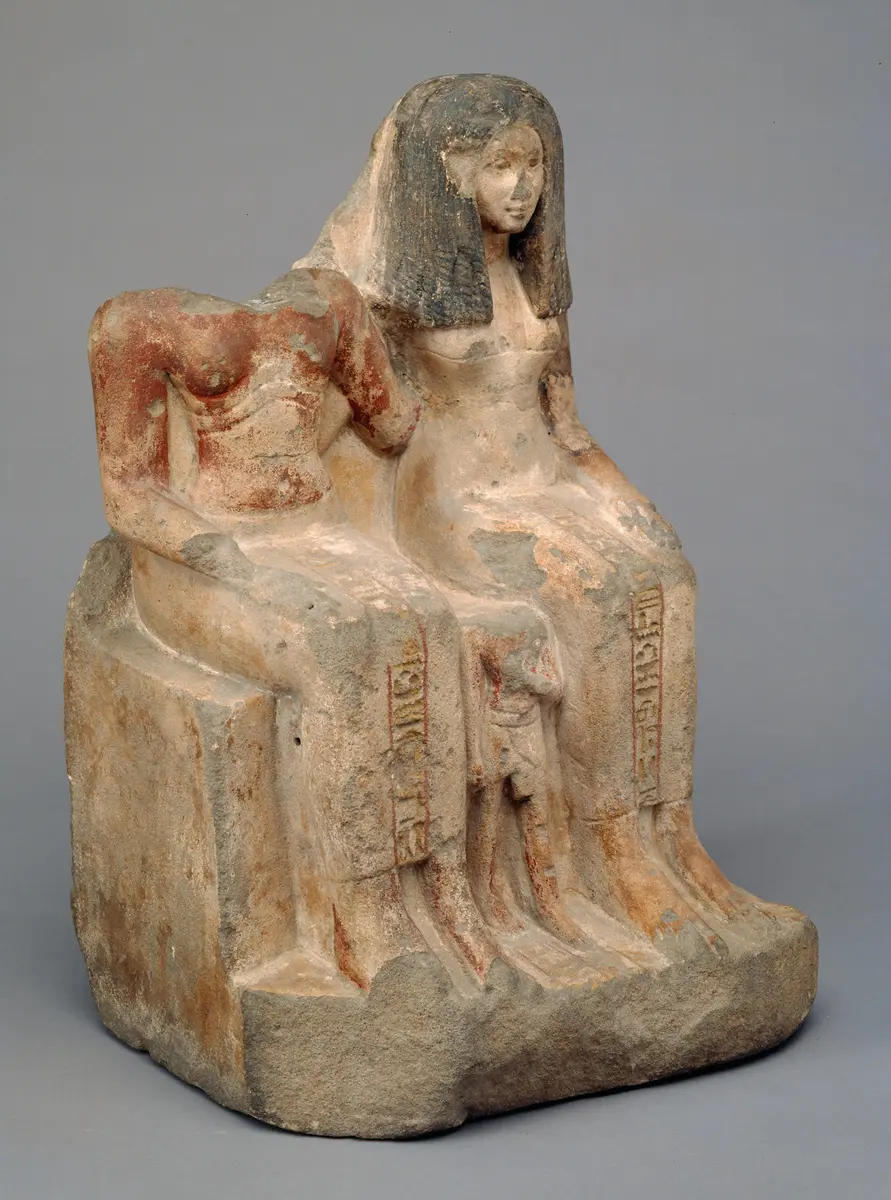
With his left hand, Wah-ib embraces his wife. His name and the title “Jeweler of Amun” are inscribed on his long kilt. The finely modeled upper torso shows three folds on his stomach. Teri wears a long wig and an ankle-length dress which emphasizes her waist and slender limbs. The son whose name is not known stands between his parents.
Time:
18th Dynasty, reign of Amenhotep III, ca. 1410–1372 BC
Object Name
Statue
Culture
Ägyptisch
Location of discovery:
Fundort unbekannt
Material/technology:
Sandstone, painted
Dimensions:
H 53,3 cm, B 32 cm, T 30 cm
Copyright
Kunsthistorisches Museum, Ägyptisch - Orientalische Sammlung
Invs.
Ägyptische Sammlung, INV 9233
Provenance
Acquired before 1836
Browse more
Similar items you might be interested in
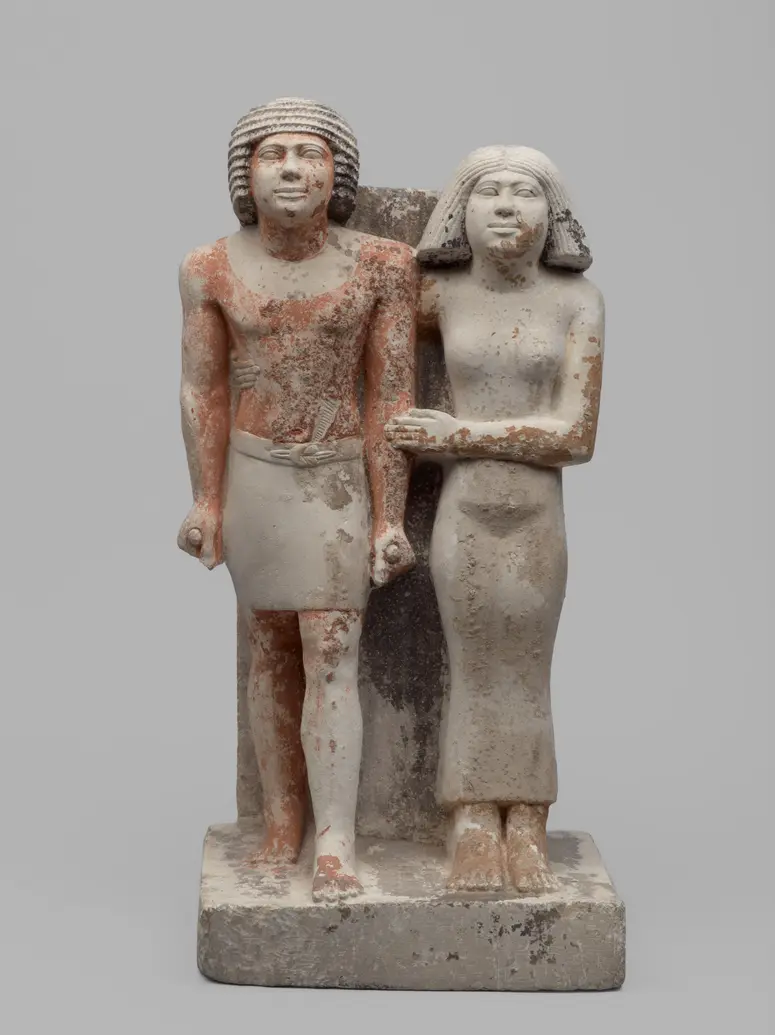
Statue group of Kai-pu-ptah and Ipep Giza, Mastaba des Kai-pu-ptah (G. 4461), Eingang zur Kultkammer late 5th Dynasty, ca. 2400 BC
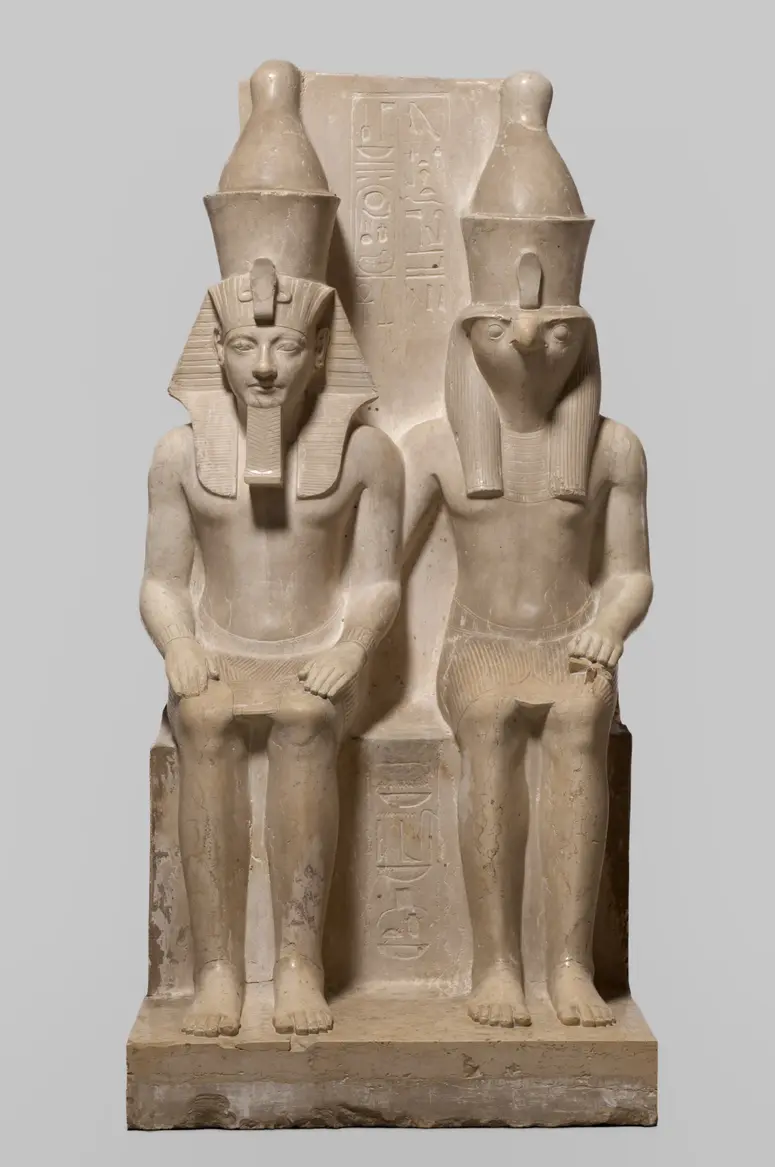
Statue group of the god Horus and King Haremhab Fundort unbekannt 18th Dynasty, reign of Haremhab, 1343–1315 BC
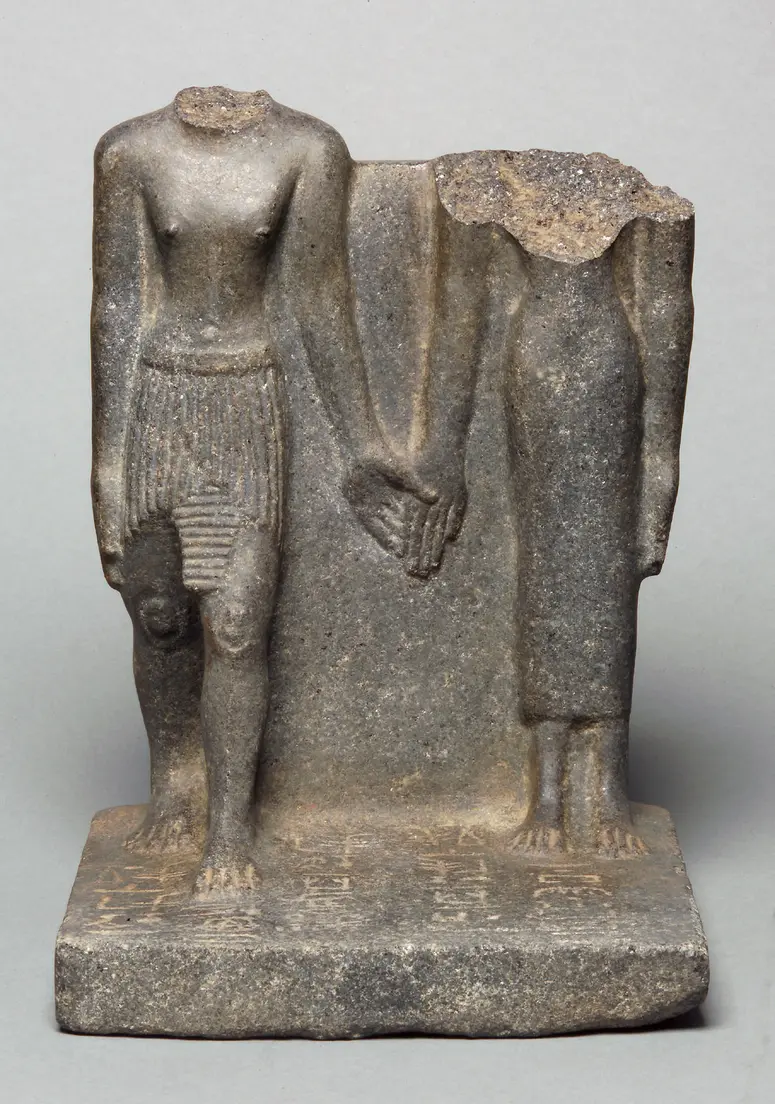
Statuengruppe des Nefer-heb und der Dedet-nebu Elkab (vermutlich) Ca. 1700-1650 v. Chr.
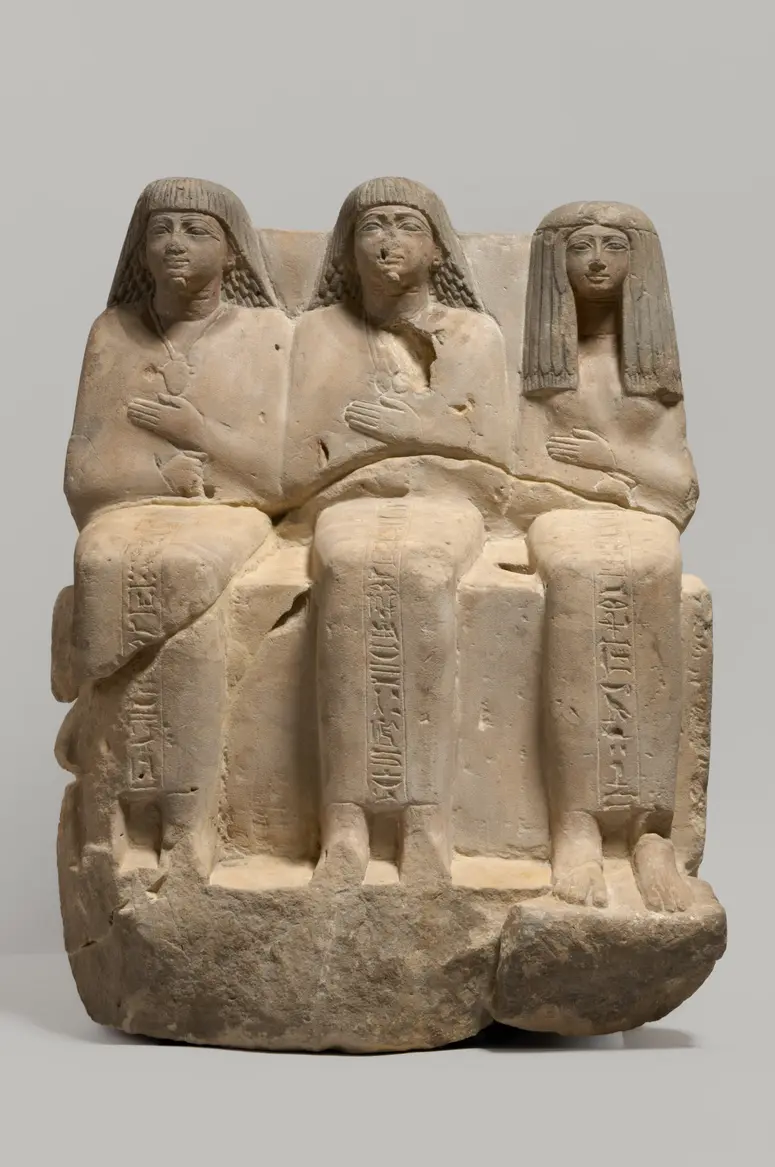
Statue group of Meri-ptah, Sa-aset, and Kafi Theben-West, Scheich Abd el-Qurna, TT 387 (vermutlich) 19th Dynasty, reign of Ramesses II, 1304–1237 BC
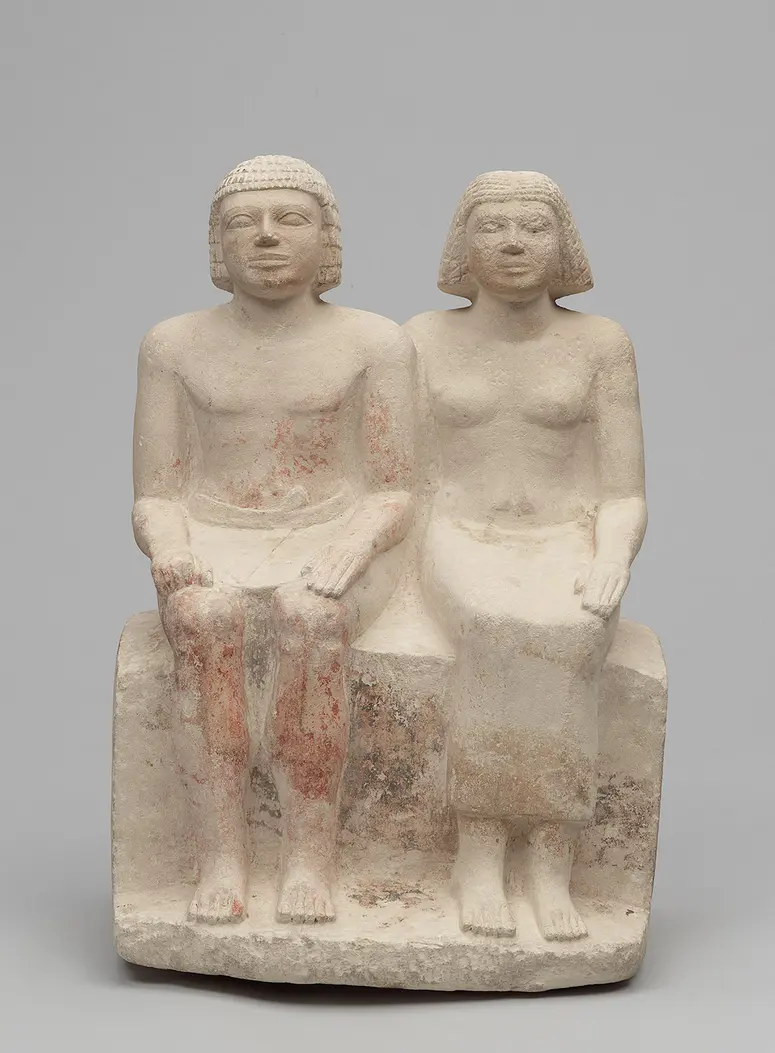
Two persons sitting side by side Giza, Ziegelmastaba S 4419, Korridor late 6th Dynasty to 1st Intermediate Period, ca. 2374-2040 BC;
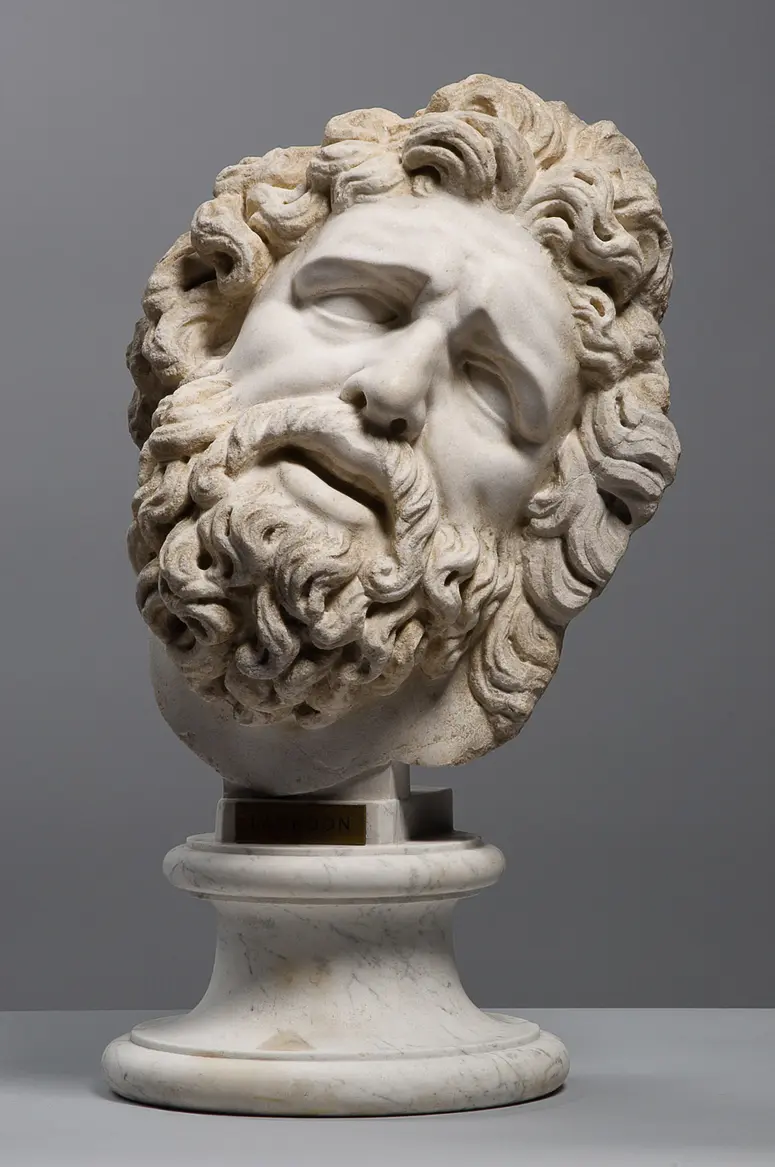
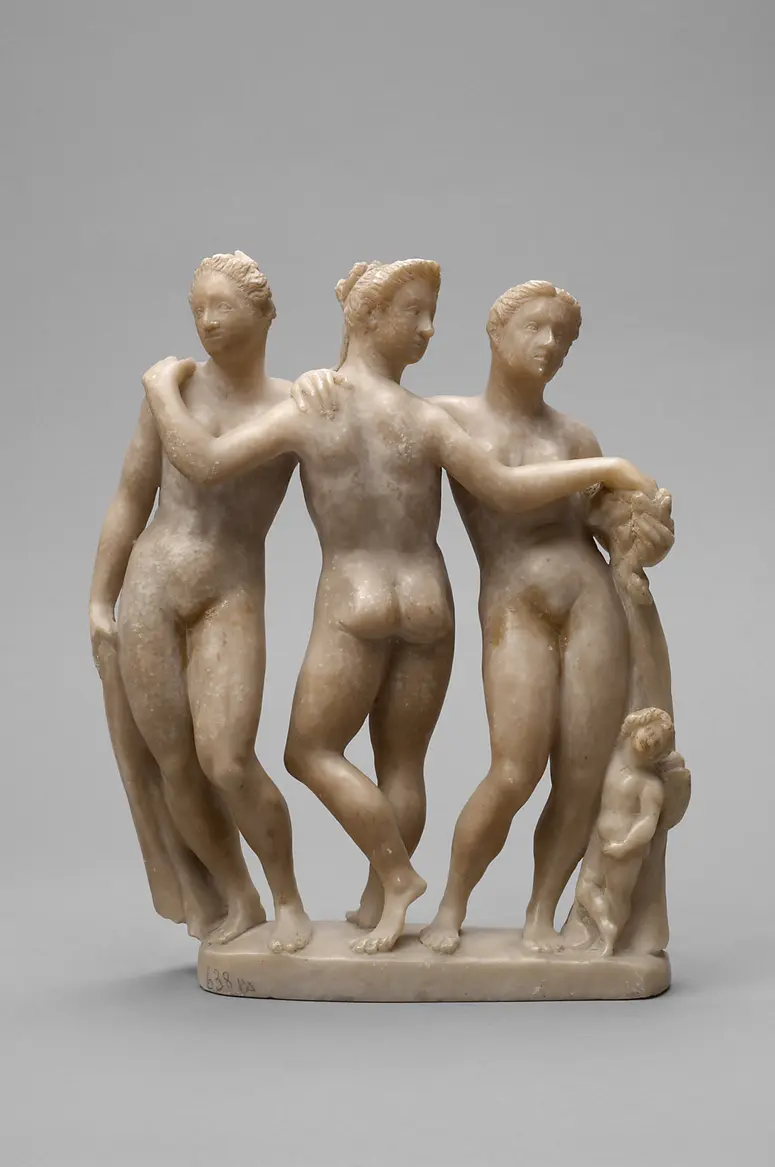
Die drei Grazien (Chariten) und Amor 2. Hälfte 16. Jahrhundert
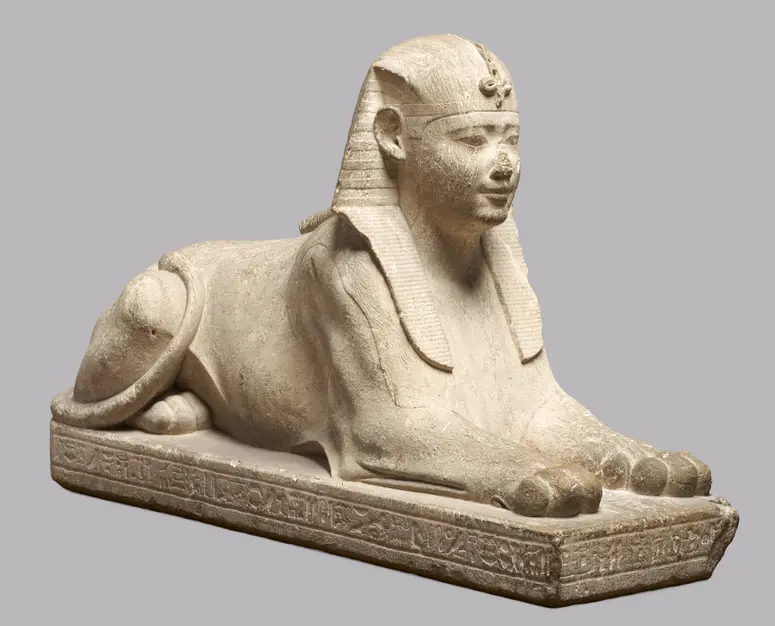

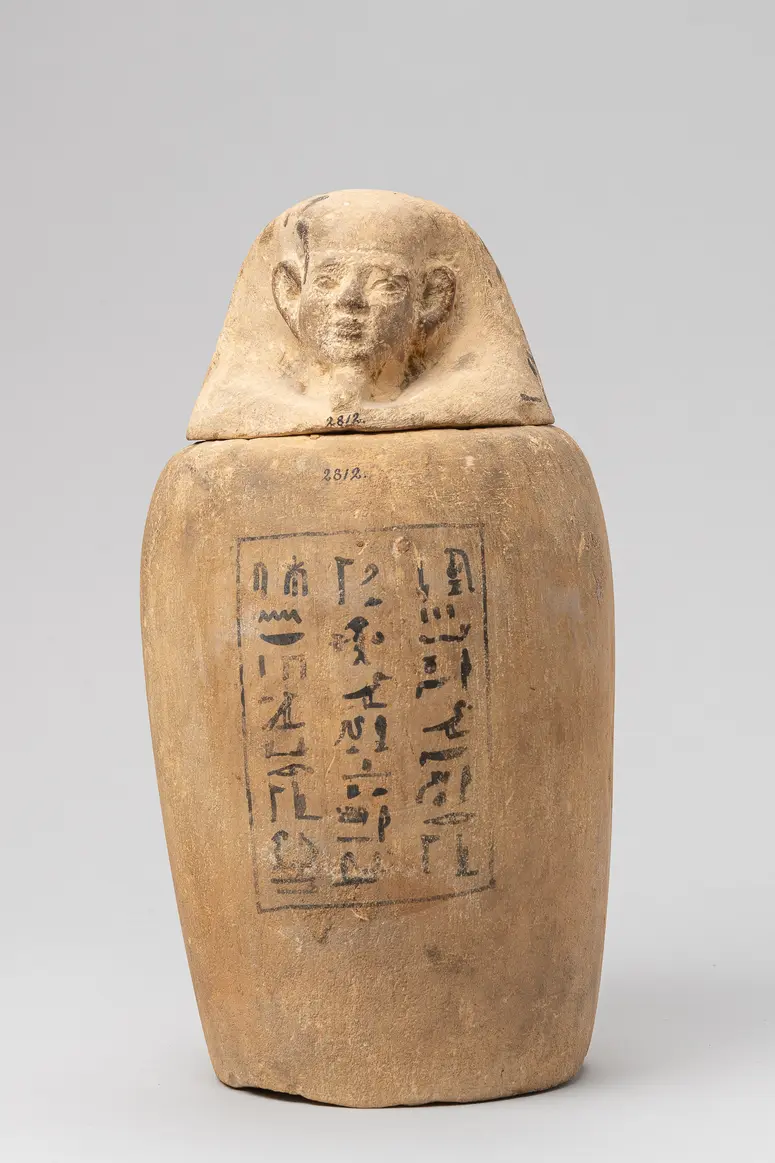
Kanope des Wah-ib-re mit Deckel in Form eines Menschenkopfes Fundort unbekannt Späte 26. Dynastie, ca. 580-525 v. Chr.
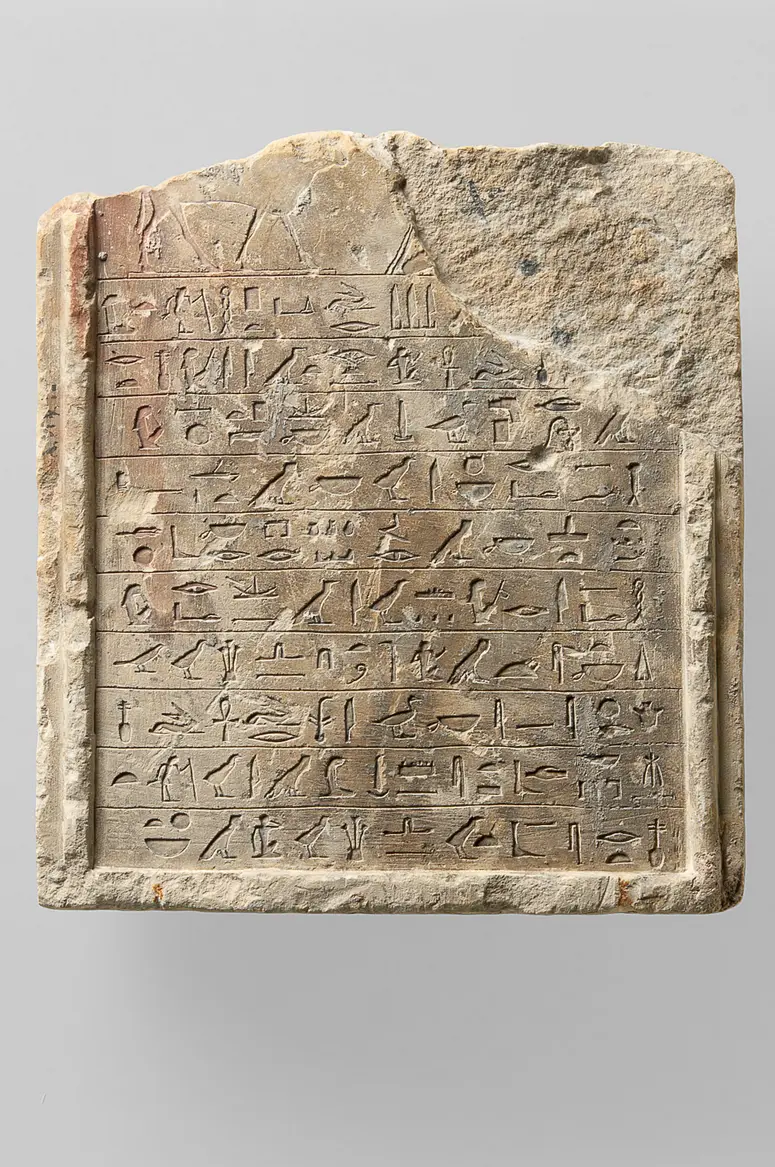

Unterer Teil der Stele des Iah-ir-di-su Achmim (vermutlich) 26. Dynastie, 23. Regierungsjahr des Amasis, ca. 547 v. Chr.
Kopf einer Statue des Ba-ba-ef Giza, Mastaba des Ba-ba-ef (G. 5230), Schutt der Nordwand Frühe 5. Dynastie, um 2500 v. Chr.
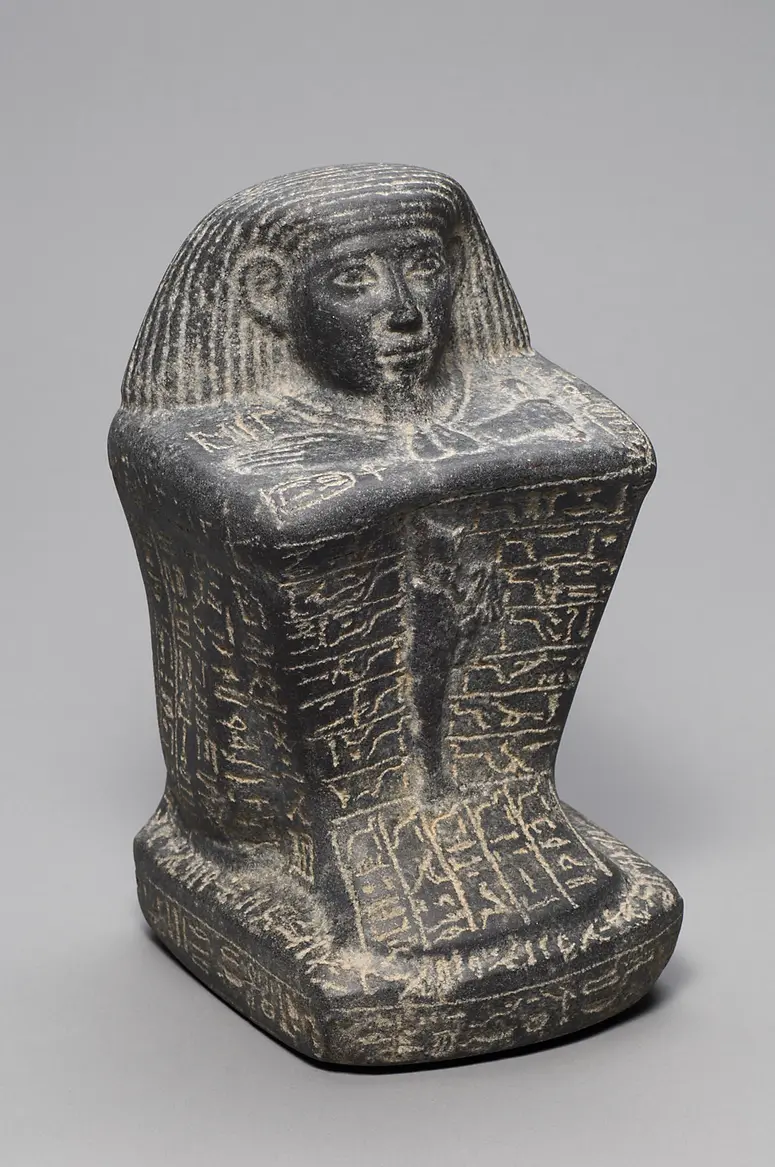
Squatting statue of Anch-takelot Theben (vermutlich) 2nd half of the 25th – early 26th Dynasty, ca. 680–650 BC
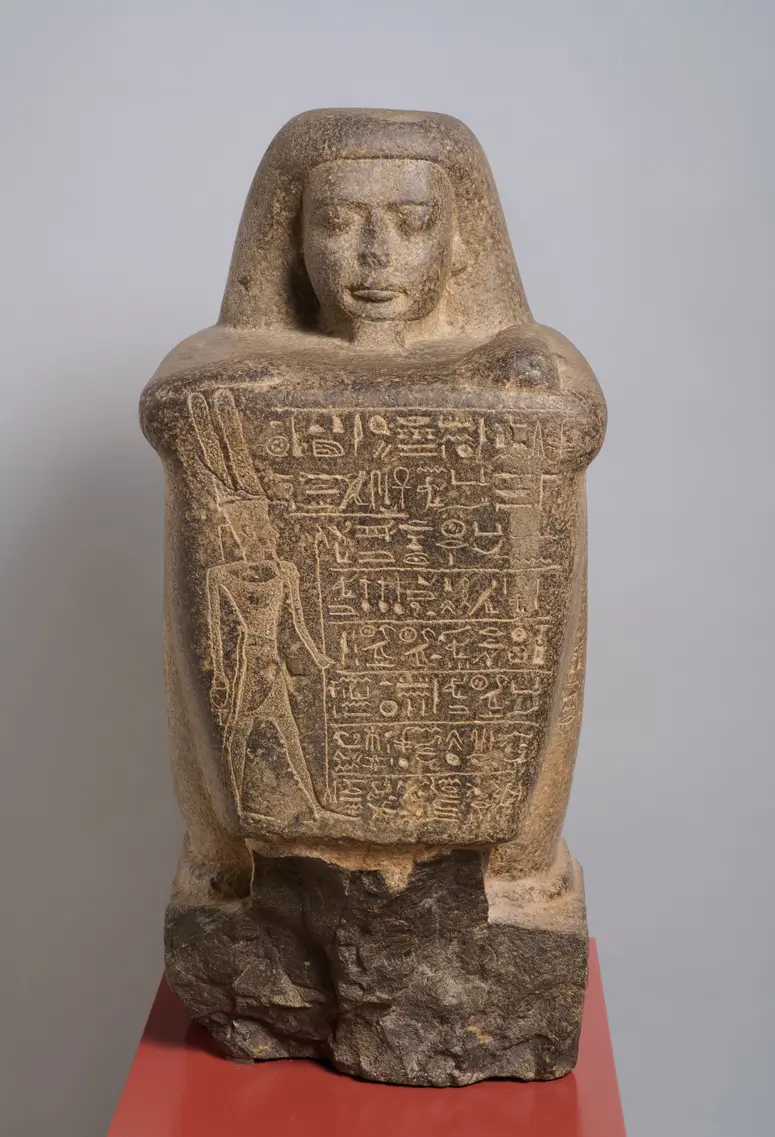
Squatting statue of Nimlot Heliopolis (vermutlich) 22nd Dynasty, reign of Osorkon I, 910–896 BC