Sechsteiliger Spangenhelm
Mitte 5.-Mitte 6. Jahrhundert
So-called Spangenhelme were ubiquitous in late antiquity and the early Middle Ages; archaeologists have unearthed them in, for instance, France, Germany, Italy, and especially the Balkans. All extant Spangenhelme feature similar, often elaborate decoration, which suggests they were used as diplomatic gifts by the courts of both Byzantine emperors and Ostrogoth rulers.
This helmet was found in March 1902 in Vid, near Metković, Croatia, buried three metres deep in sandy ground. The skull is composed of six iron plates covered with sheet silver, held in place by six gilt bronze bands riveted to the plates. The punched design on the bronze bands comprises triangles, birds, suspended crowns, and trees of life, and a cross on the wearer’s forehead. Remnants of the gilt ornamentation of the circlet include the signs of the zodiac framed by circles and squares.
In February 1901, a similar hoard had been discovered at the same location in Vid, about 2 metres away from the site of the Spangenhelm, when a church was pulled down. These objects had been found buried about a metre and a half deep among the rubble of an old city wall. The village of Vid was built on the ruins of the ancient trading town of Narona, which had grown rich thanks to its location on the banks of the Neretva River and its proximity to the Adriatic.
In addition to this helmet, the 1901/02 hoard discovered at Vid comprises the following objects now in the Imperial Armoury: a second Spangenhelm (inv. A 1994), one left cheek guard (inv. A 1995), two banded helmets (invs. A 1998 a, b), three spear tips (invs. A 1999–A 2001), a small piece of mail from a neck guard (inv. A 2002), a fire steel (inv. A 2003), and a Roman bronze fibula from the second century AD (inv. A 2004).
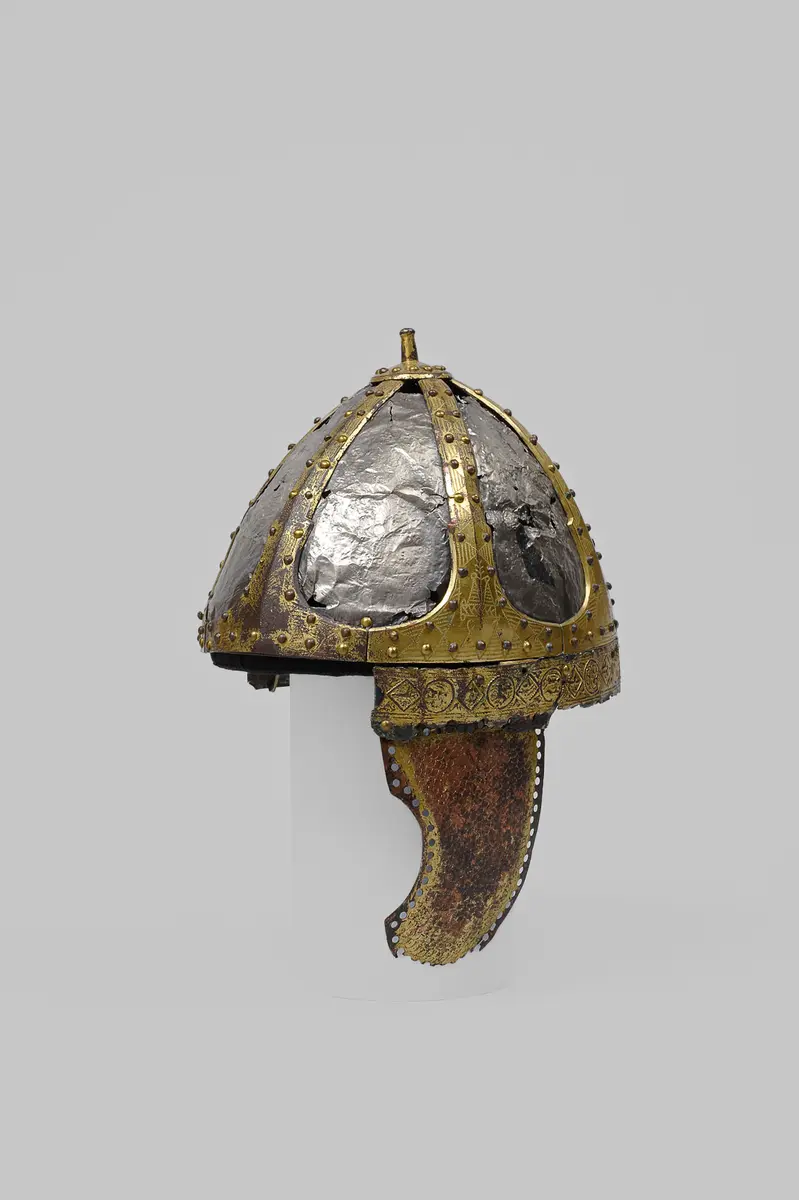
So-called Spangenhelme were ubiquitous in late antiquity and the early Middle Ages; archaeologists have unearthed them in, for instance, France, Germany, Italy, and especially the Balkans. All extant Spangenhelme feature similar, often elaborate decoration, which suggests they were used as diplomatic gifts by the courts of both Byzantine emperors and Ostrogoth rulers.
This helmet was found in March 1902 in Vid, near Metković, Croatia, buried three metres deep in sandy ground. The skull is composed of six iron plates covered with sheet silver, held in place by six gilt bronze bands riveted to the plates. The punched design on the bronze bands comprises triangles, birds, suspended crowns, and trees of life, and a cross on the wearer’s forehead. Remnants of the gilt ornamentation of the circlet include the signs of the zodiac framed by circles and squares.
In February 1901, a similar hoard had been discovered at the same location in Vid, about 2 metres away from the site of the Spangenhelm, when a church was pulled down. These objects had been found buried about a metre and a half deep among the rubble of an old city wall. The village of Vid was built on the ruins of the ancient trading town of Narona, which had grown rich thanks to its location on the banks of the Neretva River and its proximity to the Adriatic.
In addition to this helmet, the 1901/02 hoard discovered at Vid comprises the following objects now in the Imperial Armoury: a second Spangenhelm (inv. A 1994), one left cheek guard (inv. A 1995), two banded helmets (invs. A 1998 a, b), three spear tips (invs. A 1999–A 2001), a small piece of mail from a neck guard (inv. A 2002), a fire steel (inv. A 2003), and a Roman bronze fibula from the second century AD (inv. A 2004).
Time:
Mitte 5.-Mitte 6. Jahrhundert
Object Name
Sechsteiliger Spangenhelm
Culture
Oberitalien (Ravenna?) oder oströmisches Reich (Konstantinopel?)
Material/technology:
Kalotte: Eisen, geschmiedet (nur noch fragmentarisch vorhanden). Silberblechfolien. Spangen: Bronze, gegossen, feuervergoldet, teils punziert.
Zierband: Bronzeblech, feuervergoldet, geprägt.
Dimensions:
L 22,5 cm x H 19,1 cm x B 17 cm
Copyright
Kunsthistorisches Museum, Hofjagd- und Rüstkammer
Invs.
Hofjagd- und Rüstkammer, A 1996
Browse more
Similar items you might be interested in
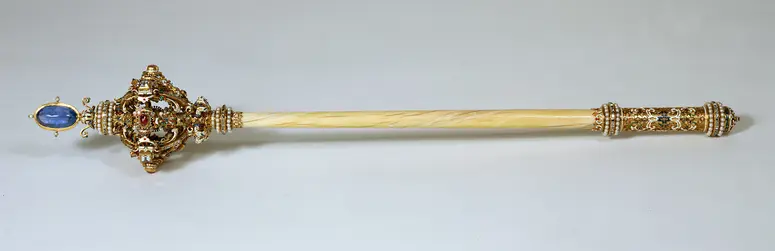

Ferdinand II. (1564-1595), Erzherzog von Österreich und Landesherr von Tirol 1559/60

Mechanisches Bruststück: Mechanical breastplate for the joust of war Maximilian I. (1477-1519), seit 1493 deutscher König, 1508 Kaiser c. 1490
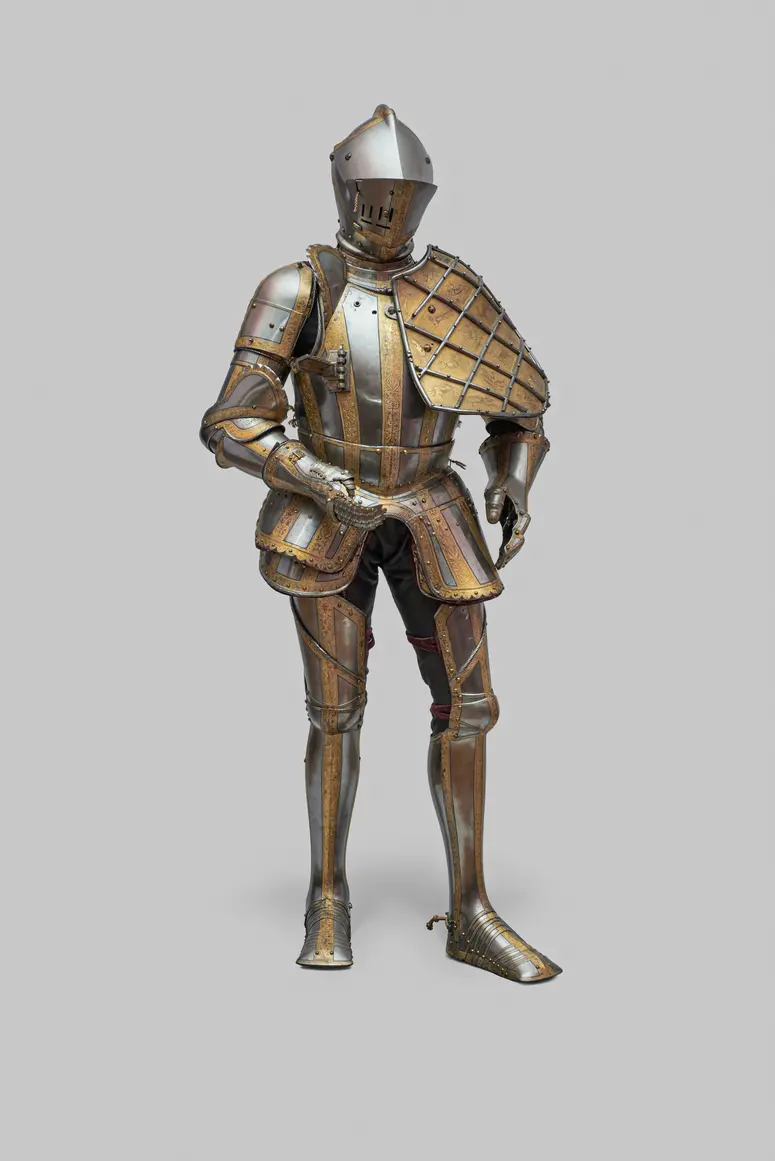
Maximilian II. (1564-1576), Kaiser 1549/1550
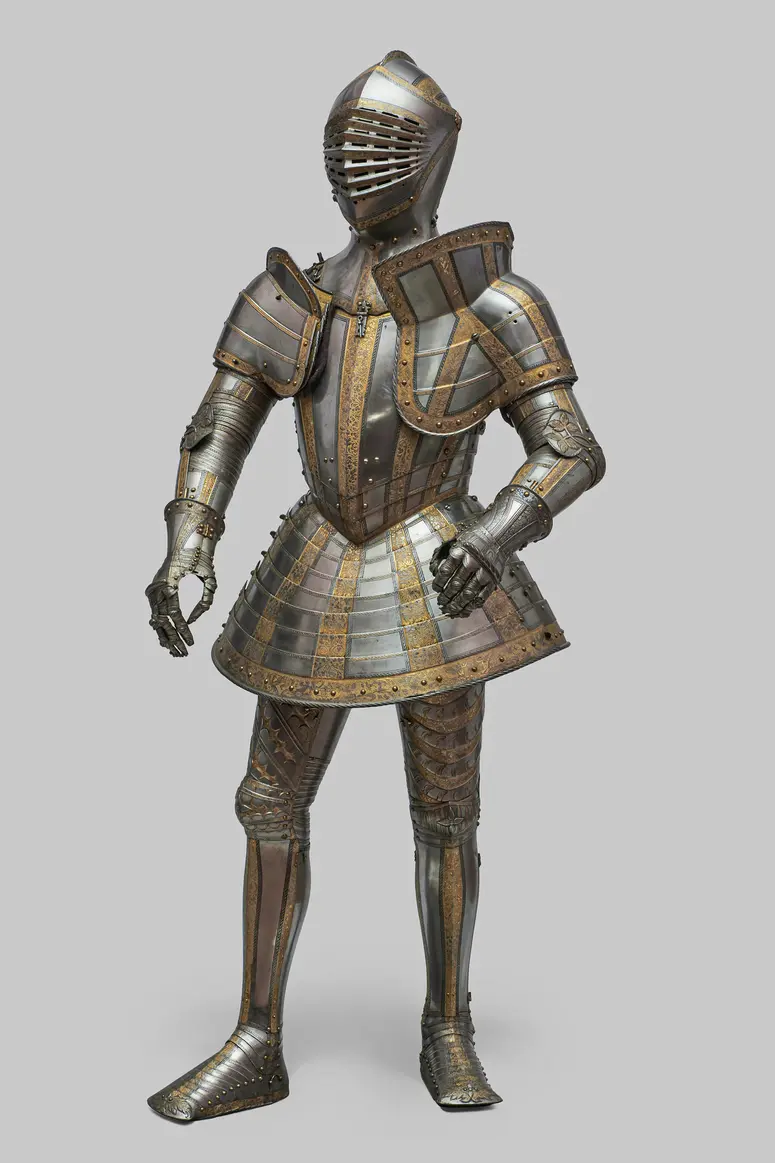
Maximilian II. (1564-1576), Kaiser datiert 1550

Ferdinand II. (1564-1595), Erzherzog von Österreich und Landesherr von Tirol 1556 - 1557


Rudolf II. (1576-1612), Kaiser, römischer König ab 1575, König von Ungarn ab 1572, von Böhmen se um 1602-1610

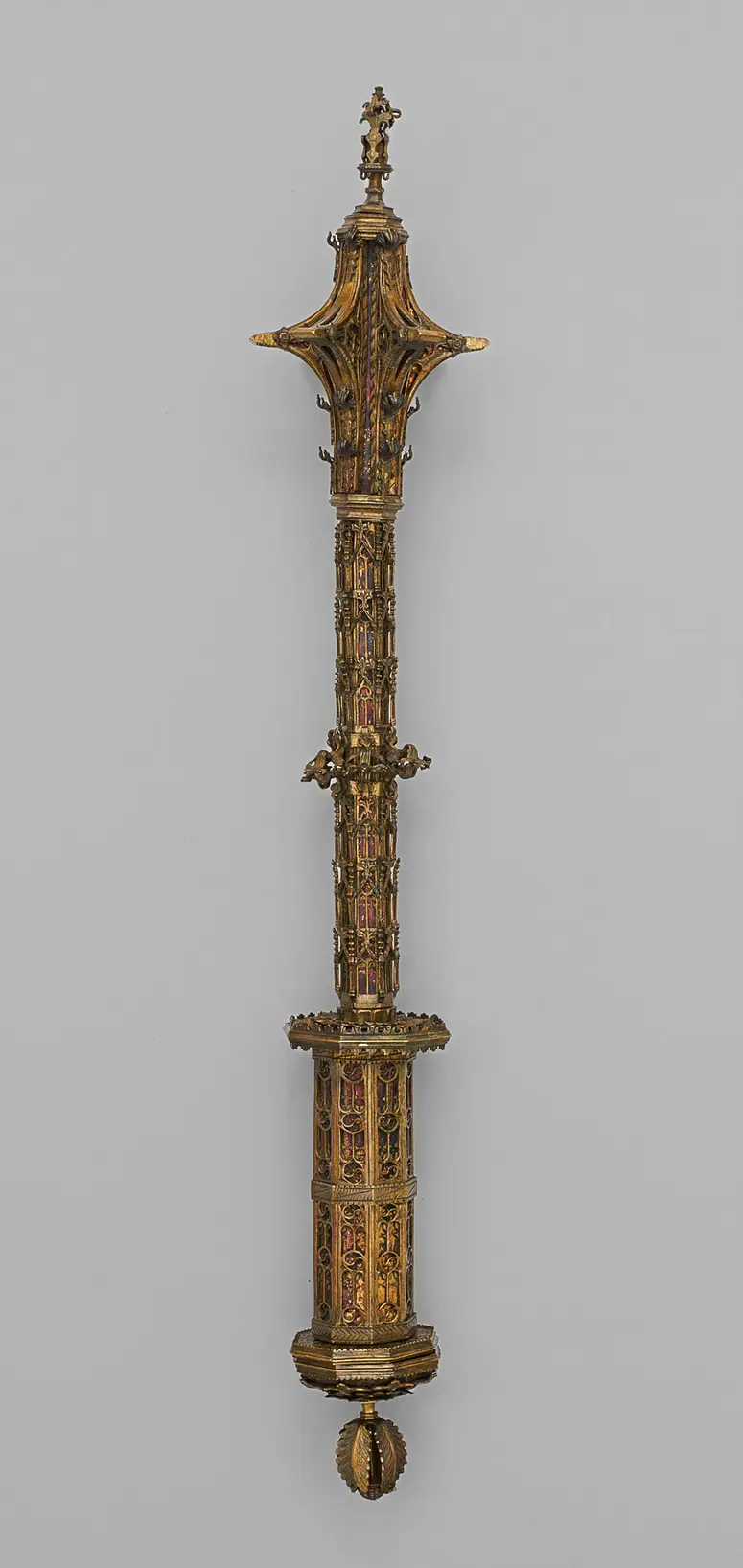
Friedrich III. (1439-1493), Erzherzog von Österreich, als F. V., seit 1440 König, 1452 Kaiser 2. Hälfte 15. Jahrhundert
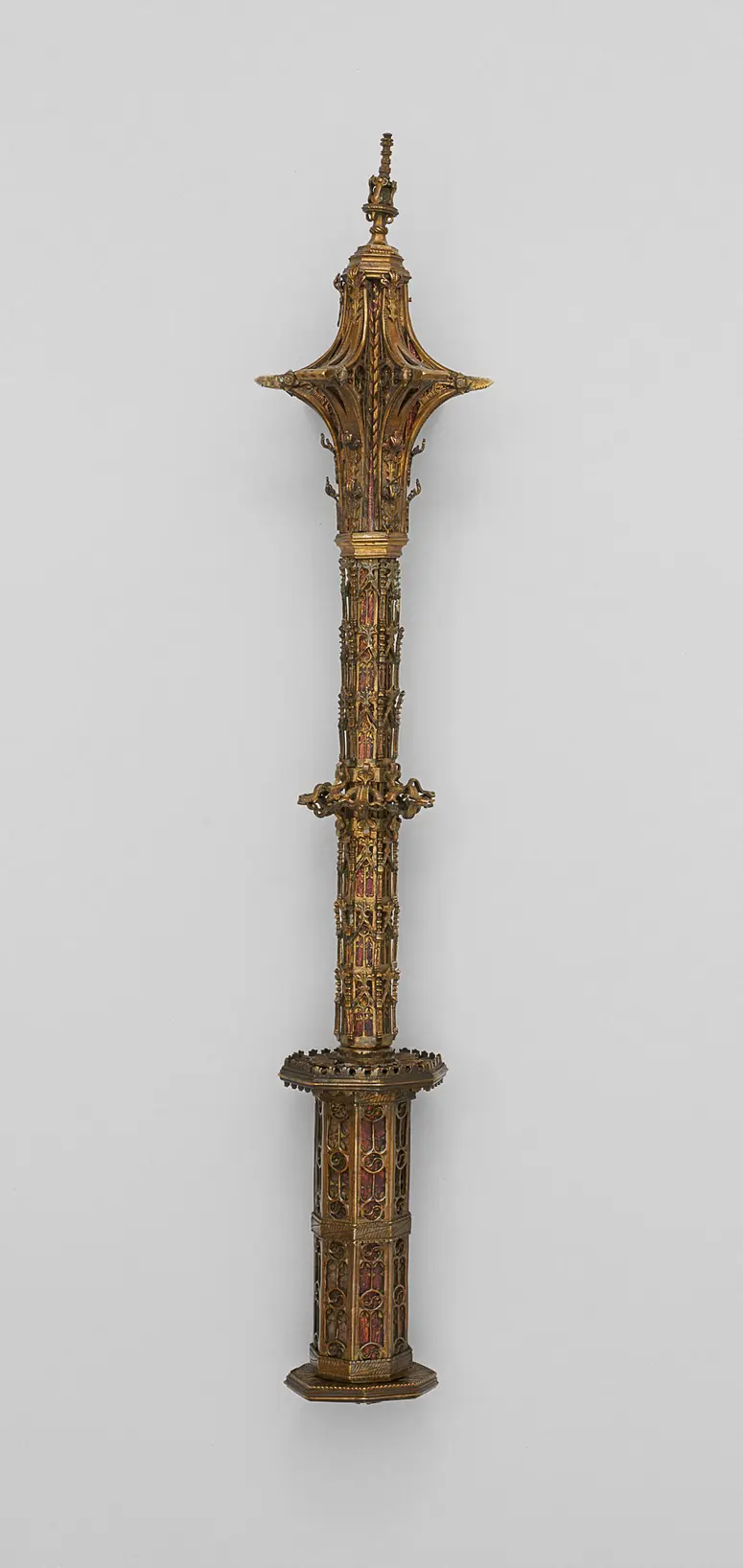
Friedrich III. (1439-1493), Erzherzog von Österreich, als F. V., seit 1440 König, 1452 Kaiser 2. Hälfte 15. Jahrhundert
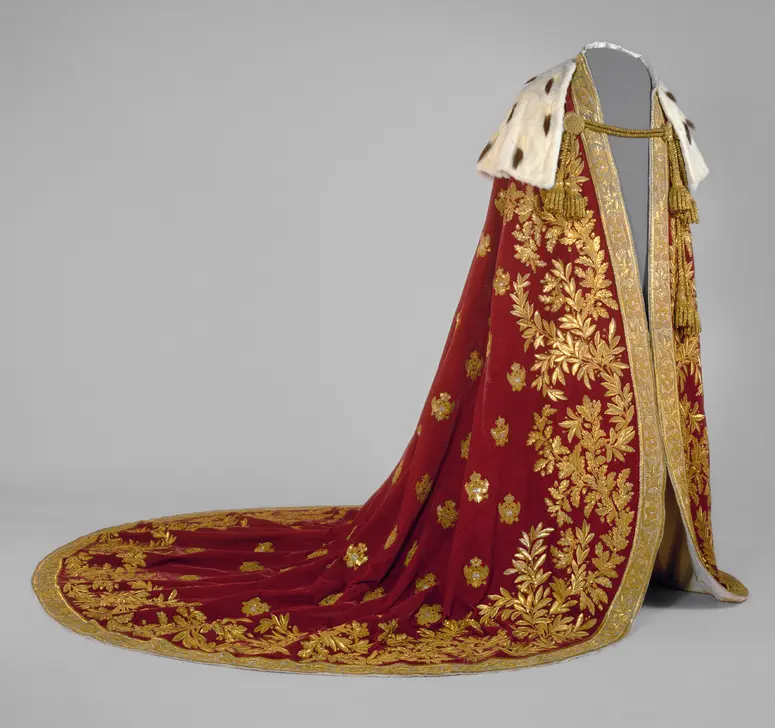
Der Mantel des österreichischen Kaisers Philipp von Stubenrauch 1830
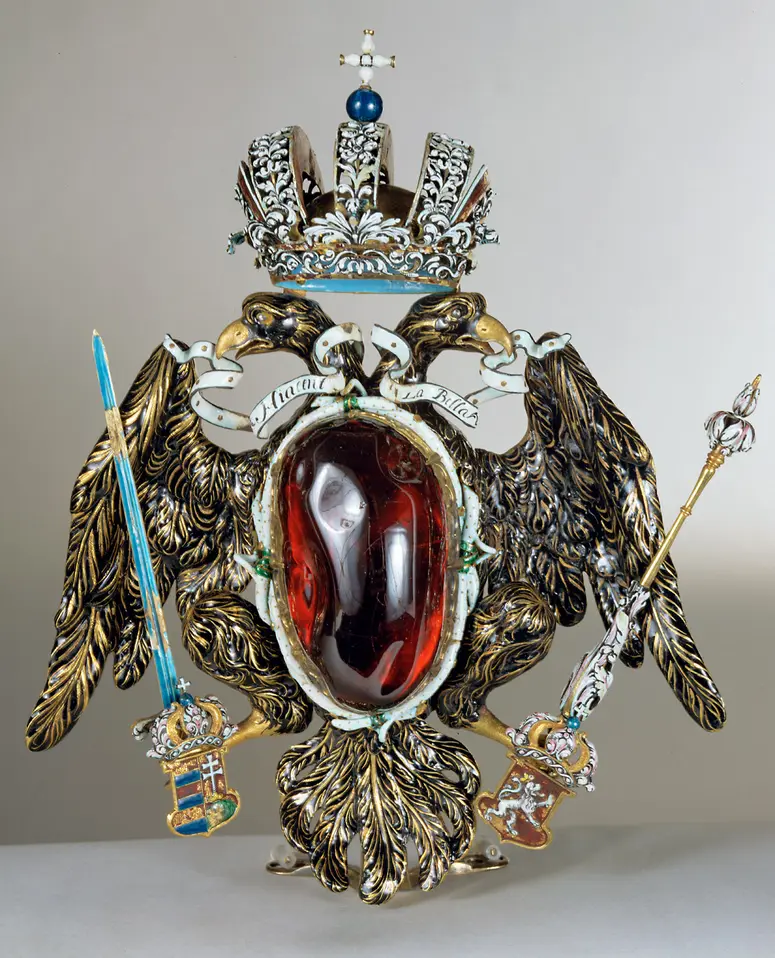
Hyazinth "La Bella" frühes 15. Jahrhundert (Fassung des Steines); 1687
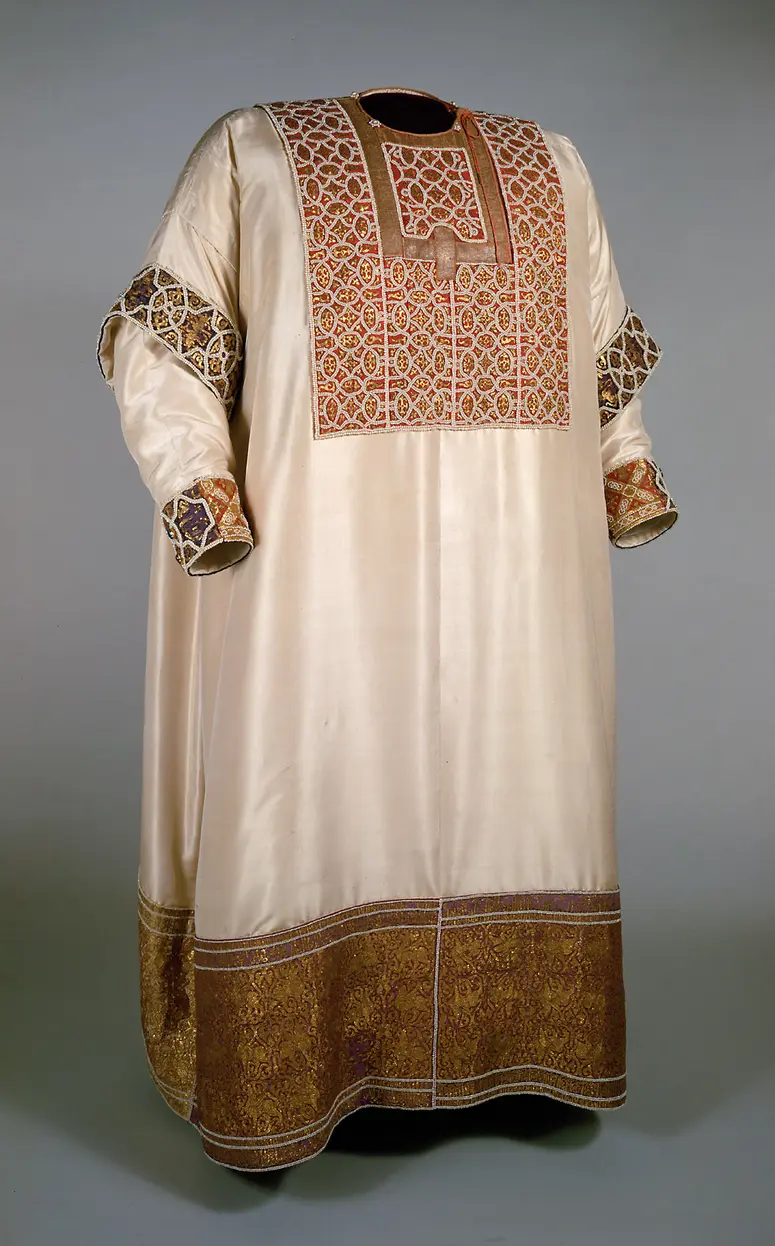
Alba Palermo, Königliche Hofwerkstätten 1181 mit späteren Ergänzungen
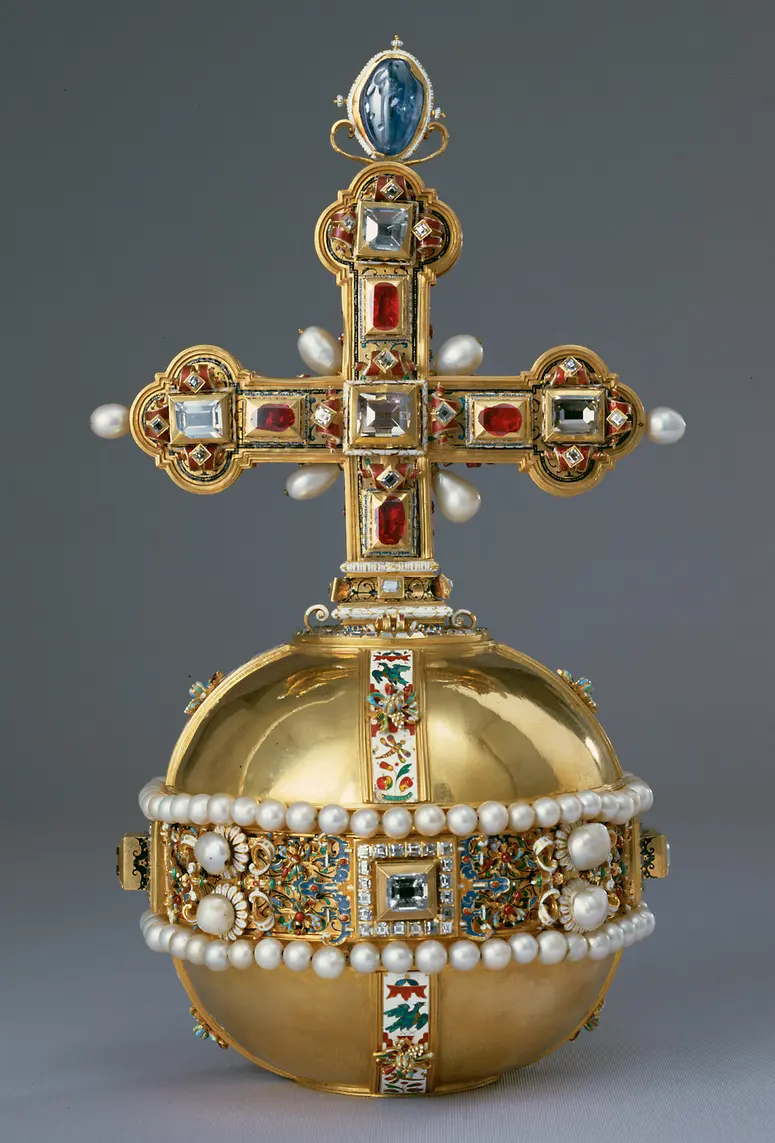
Der Reichsapfel Andreas Osenbruck zwischen 1612 und 1615