Schnurösen
1800 - 1725 v. Chr.
The string-hole flask provides a good example of the wide variety of forms and decorations of white painted ware, the type of pottery is characteristic of the Middle Bronze Age. Because of the numerous string-holes this object is classified as belonging to the subdivision of string-hole style. The oblong string-hole flask has an oval, lens-shaped body with a carinated, slightly convex base. The narrow, cylindrical neck ends in a bent, tubular spout; on the back of the next is an oval opening for pouring in liquids. A small, flattened vertical handle extends from the shoulder to the neckline; numerous string-holes: on the neck, four on the sides and one on the front; three, opposing, on the front and back of the body; four on each of the sides of the body and one on the top of the handle. Rich painted decoration in red-brown to dark-brown: contured edge on the base, the bottom has a cross of two groups with three parallel lines. The body is divided with four symmetrically arranged, vertical fields framed by double lines between them and separated by vertical zigzag bands. In each of the four fields are eight horizontal strips separated by two parallel lines. Lattice-pattern diamond band, simple horizontal wavy line in the lowest strip. On the neck are three strips separated by horizontal lines. At the top and bottom of the neck is a double zigzag line, in the middle latticed triangles; below the uppermost string-holes are circles with a dot in the middle. On the spout two circumambient, horizontal banks with latticed triangles, separated by a simply horizontal line; below the tip of the spout, three horizontal lines. On the top of the handle vertical, double zigzag line, the narrow side of the handle and the tops of the string-holes are outlined.
A. Bernhard-Walcher u.a., Die Sammlung zyprischer Antiken im KHM. Sammlungskataloge des KHM Bd. 2, Wien 1999
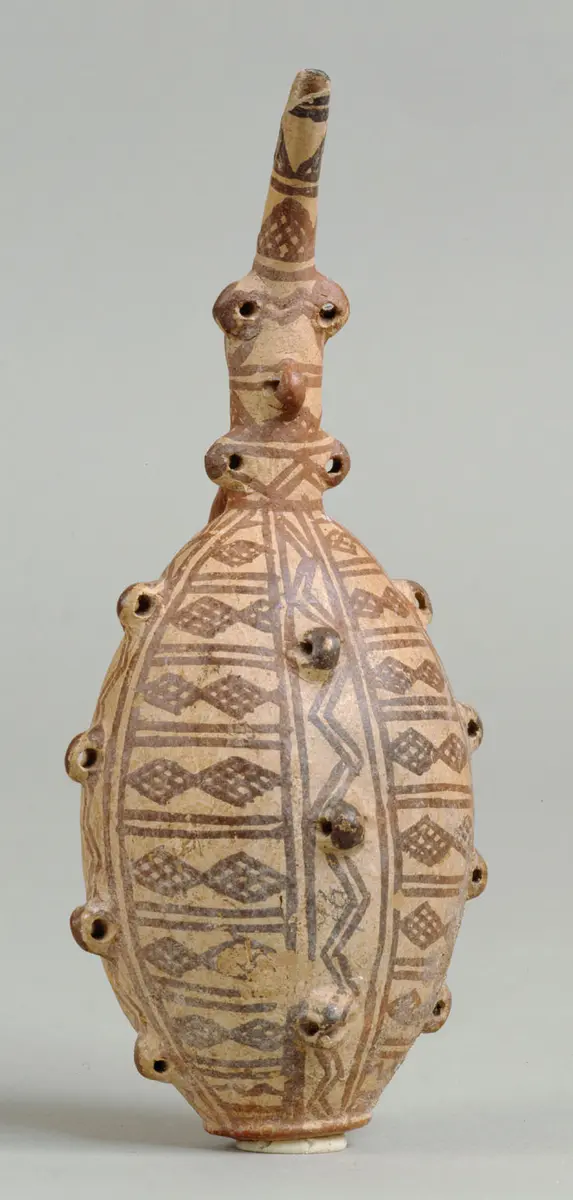
The string-hole flask provides a good example of the wide variety of forms and decorations of white painted ware, the type of pottery is characteristic of the Middle Bronze Age. Because of the numerous string-holes this object is classified as belonging to the subdivision of string-hole style. The oblong string-hole flask has an oval, lens-shaped body with a carinated, slightly convex base. The narrow, cylindrical neck ends in a bent, tubular spout; on the back of the next is an oval opening for pouring in liquids. A small, flattened vertical handle extends from the shoulder to the neckline; numerous string-holes: on the neck, four on the sides and one on the front; three, opposing, on the front and back of the body; four on each of the sides of the body and one on the top of the handle. Rich painted decoration in red-brown to dark-brown: contured edge on the base, the bottom has a cross of two groups with three parallel lines. The body is divided with four symmetrically arranged, vertical fields framed by double lines between them and separated by vertical zigzag bands. In each of the four fields are eight horizontal strips separated by two parallel lines. Lattice-pattern diamond band, simple horizontal wavy line in the lowest strip. On the neck are three strips separated by horizontal lines. At the top and bottom of the neck is a double zigzag line, in the middle latticed triangles; below the uppermost string-holes are circles with a dot in the middle. On the spout two circumambient, horizontal banks with latticed triangles, separated by a simply horizontal line; below the tip of the spout, three horizontal lines. On the top of the handle vertical, double zigzag line, the narrow side of the handle and the tops of the string-holes are outlined.
A. Bernhard-Walcher u.a., Die Sammlung zyprischer Antiken im KHM. Sammlungskataloge des KHM Bd. 2, Wien 1999
Time:
1800 - 1725 v. Chr.
Object Name
Ösenflasche der White Painted Ware
Culture
Zyprisch
Location of discovery:
Zypern
Material/technology:
Ton lederfarben; Überzug gelblich-weiß bis hellgrau, schwach glänzend, fleckig; Bemalung rotbraun bis dunkelbraun. Handgeformt.
Dimensions:
H. 17 cm, B. 6,4 cm, T. 4,8 cm
Copyright
Kunsthistorisches Museum, Antikensammlung
Invs.
Antikensammlung, IV 1734
Provenance
Ludolf, Graf, Emanuel, Wien; 1883 Geschenk
Browse more
Similar items you might be interested in
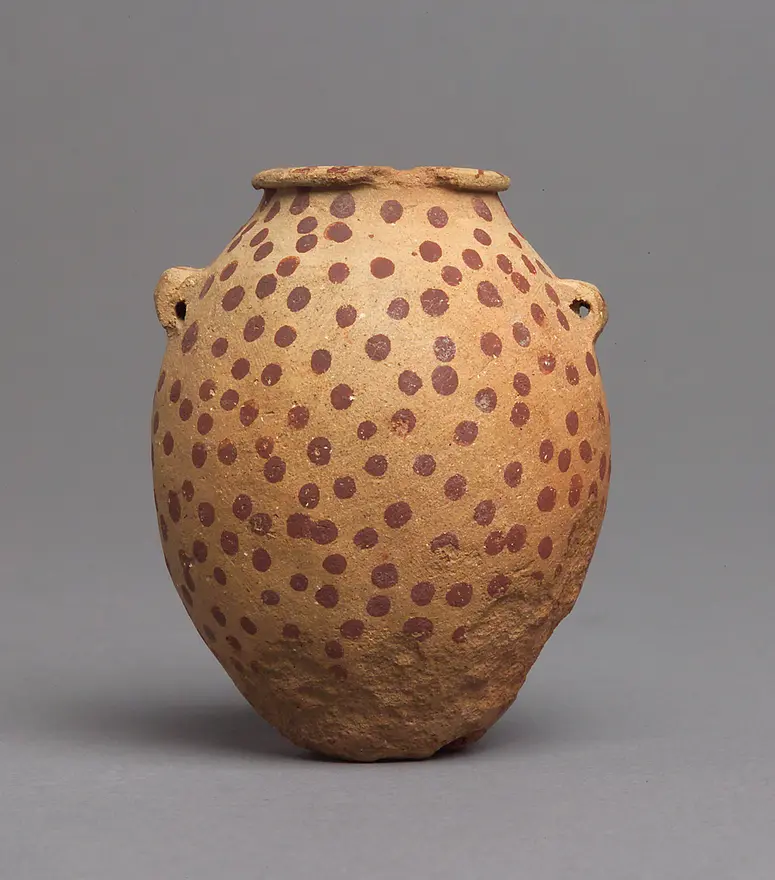
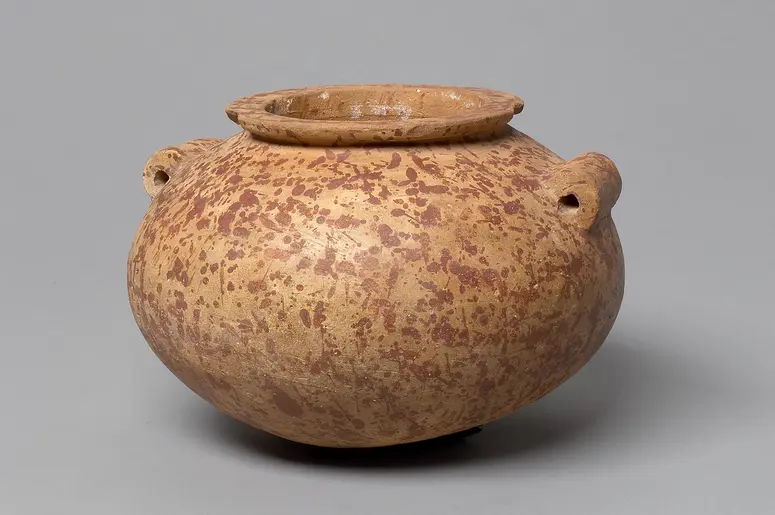
Topf mit Schnurösenhenkeln und Bemalung El-Gebelein 1. - 2. Dynastie, um 2800 v. Chr.
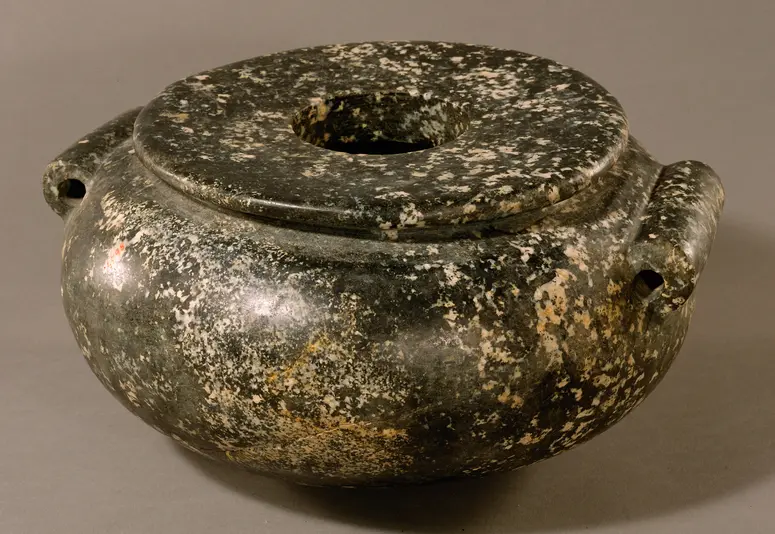
Großer Topf mit Schnurösenhenkeln Saqqara, an der Stufenpyramide 3. Dynastie, ca. 2687-2649 v. Chr.
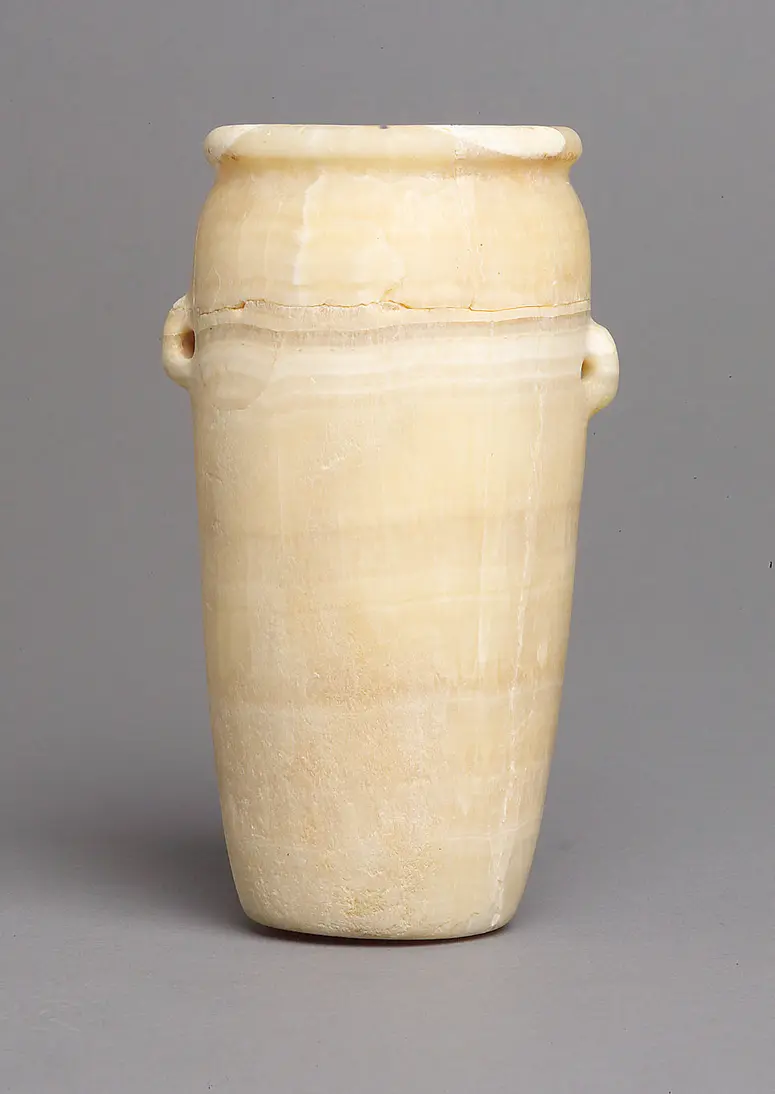
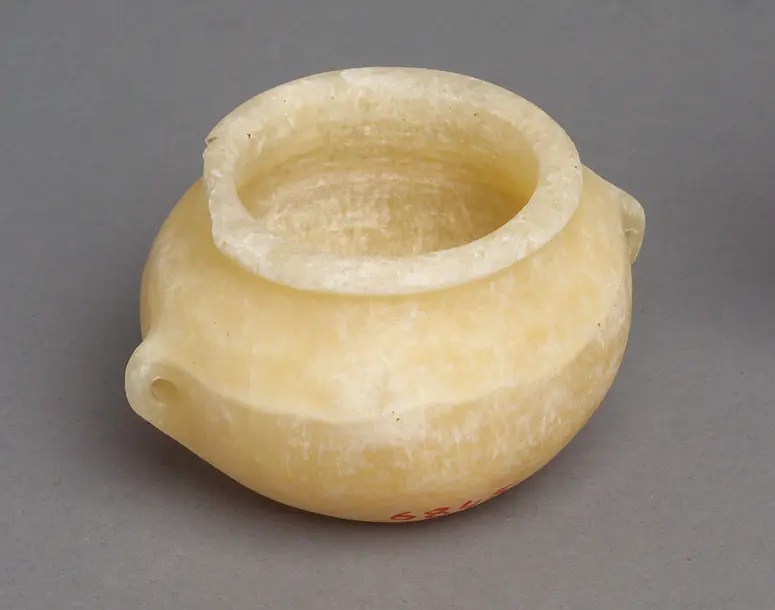
Kleiner Topf mit Schnurösenhenkeln Tura, Grab 17 g 3 Naqada III-B-C, ca. 3150-2890 v. Chr.
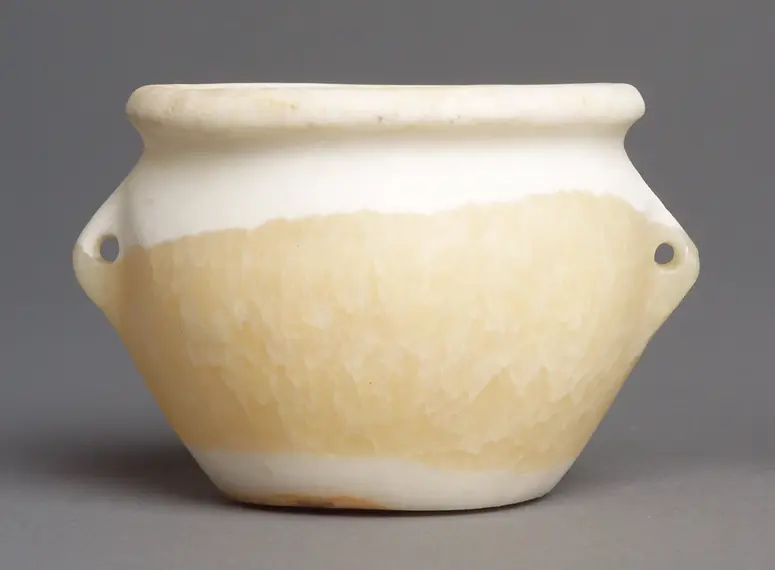
Kleiner Topf mit Schnurösenhenkeln Tura, Süd-Friedhof, Grab 15 i 6 Naqada III-B-C, ca. 3150-2890 v. Chr.

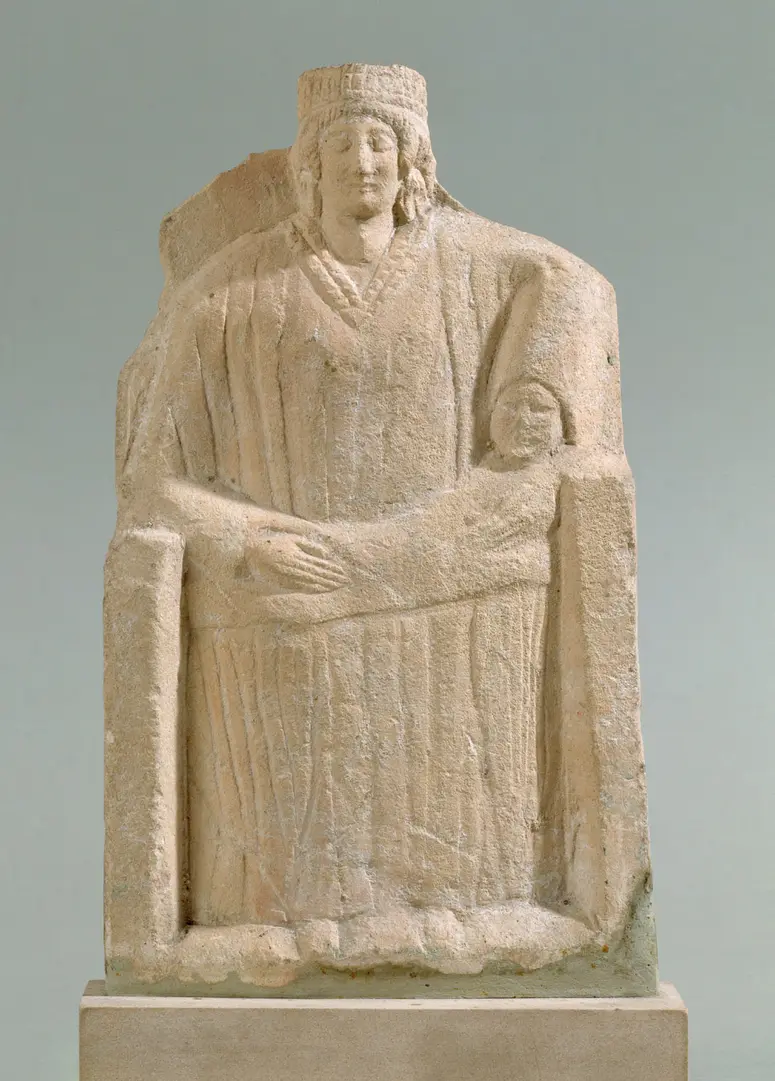
Statuette: Thronende Muttergöttin Zyprisch, Eisenzeit, hellenistisch 4. - 3. Jh. v. Chr.
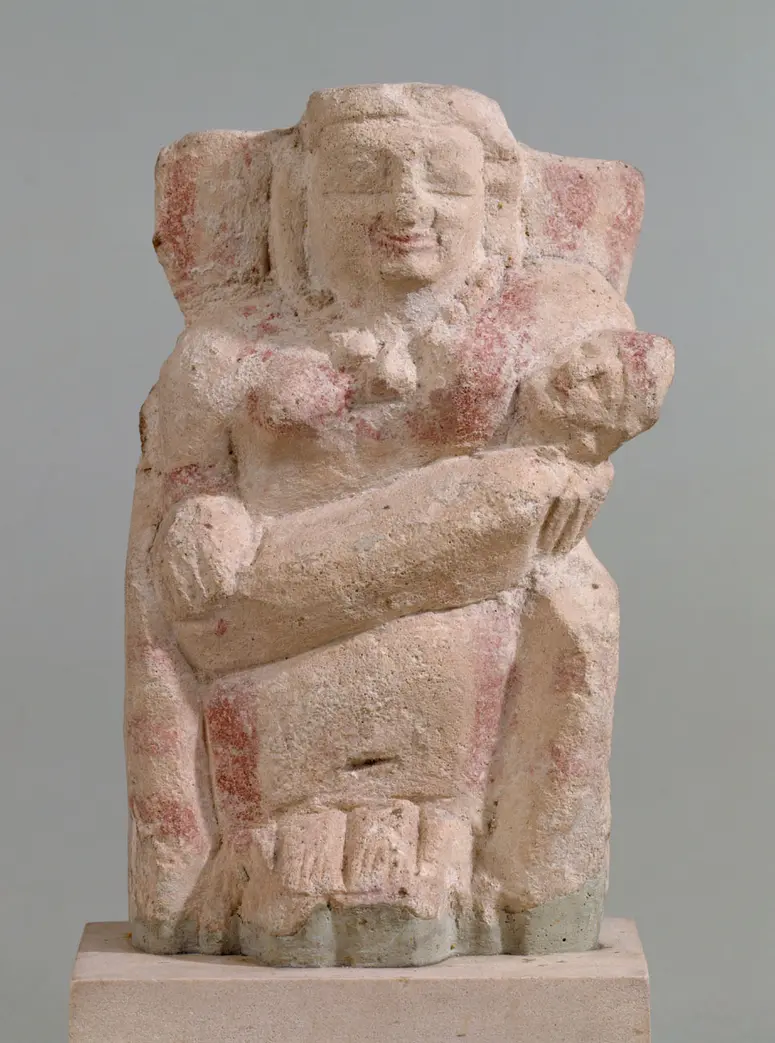
Statuette: Thronende Muttergöttin Zyprisch, Eisenzeit, archaisch 2. Hälfte 6. Jh. v. Chr.
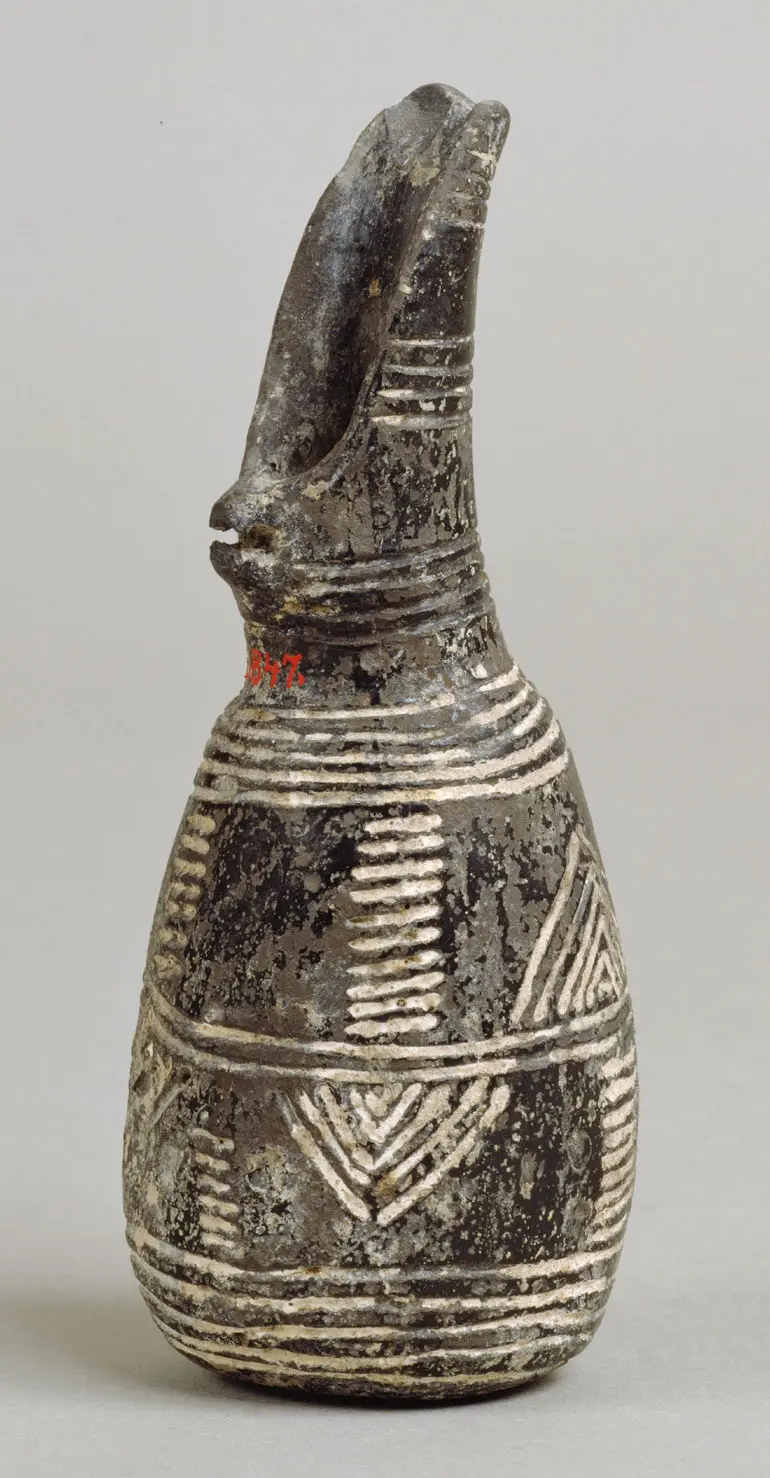
Schnabelkännchen der Black Polished Ware: Ritzdekor Zyprisch, Bronzezeit, Mittelzyprisch 1900 - 1725 v. Chr.
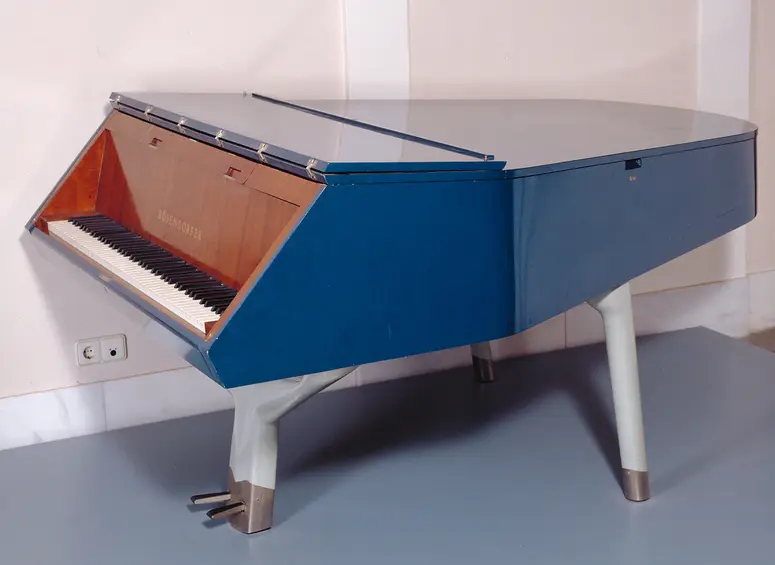
Manufacturer: Fa. Bösendorfer 1958
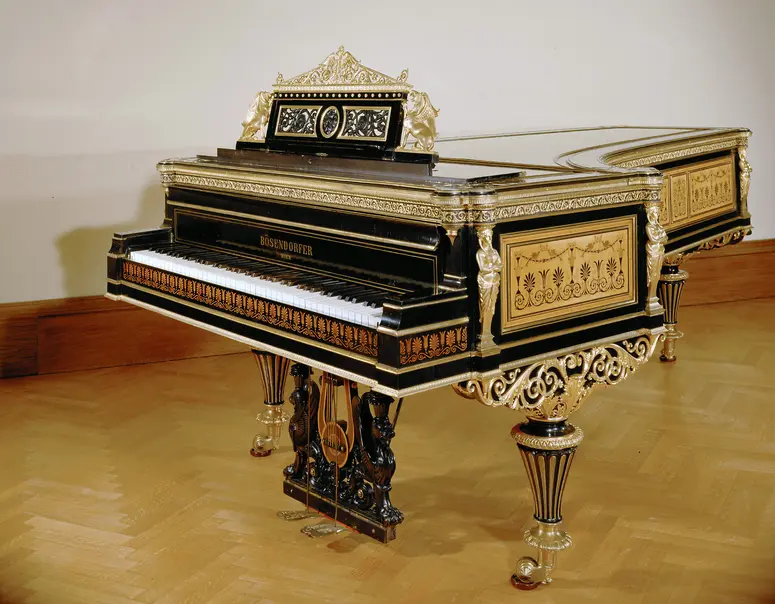
Manufacturer: Fa. Bösendorfer 1867