Der Krönungsmantel
1133/1134 | Palermo, Königliche Hofwerkstätten
The precious mantle embroidered with gold, pearls and cloisonné-enamelled plaques was part of the coronation set of robes used at the coronations of the kings and emperors of the Holy Roman Empire. These precious robes were made by Arab artisans for the Norman kings on Sicily in the 12th and 13th centuries and passed to the German house of Hohenstaufen. This unique coronation mantle of heavy red silk is richly embroidered with gold stitching and tens of thousands of pearls. It is semicircular and was locked with a clasp decorated with precious stones and enamel. The Arabic inscription on the lower hem of the mantle tells us the date of the production at the royal workshop in Palermo in 528 (according to Islamic chronology) corresponding to the Christian year 1133/34. Thus this robe was made for Roger II of Sicily (1095-1154). The oriental motifs are borrowed from Arabic art: two symmetrically addorsed (back-to-back) lions triumph over a camel; between them like a stylised palm tree is the tree of life. The lions symbolise the ruler who defeats his foes. Because of the preciousness of the mantle, the kings and emperors of the Holy Roman Empire, ignoring the "foreign motifs, had used it as a coronation mantle since the 13th century. In the 14th century it was believed that the mantle had belonged to Charlemagne, the canonised emperor and renewer of the Roman Empire, who had supposedly won it from the Moors.
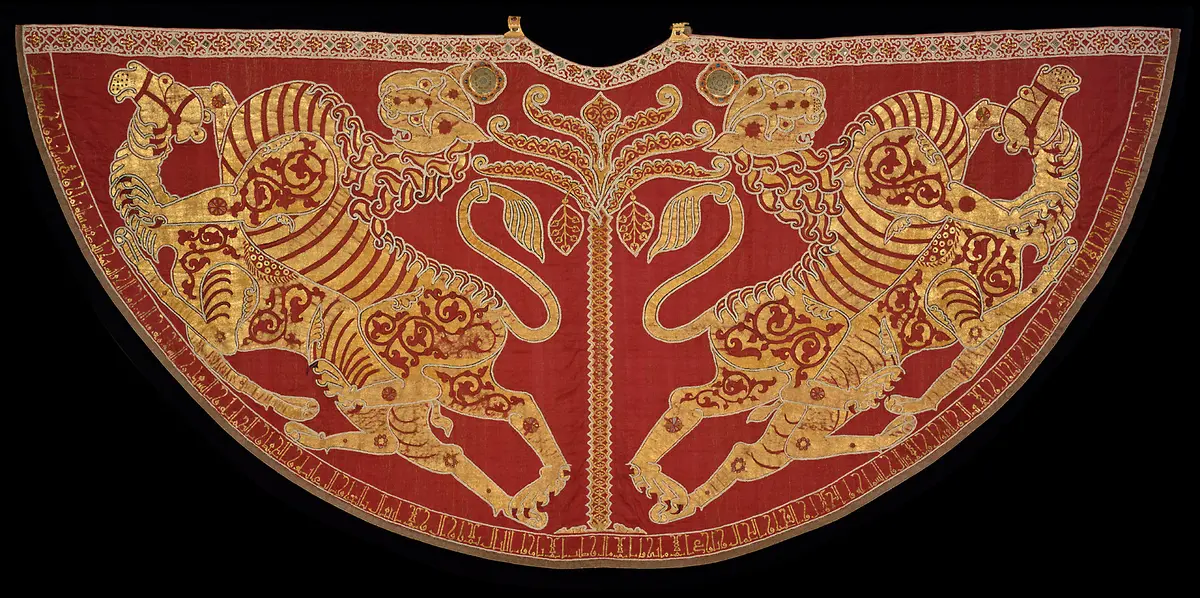
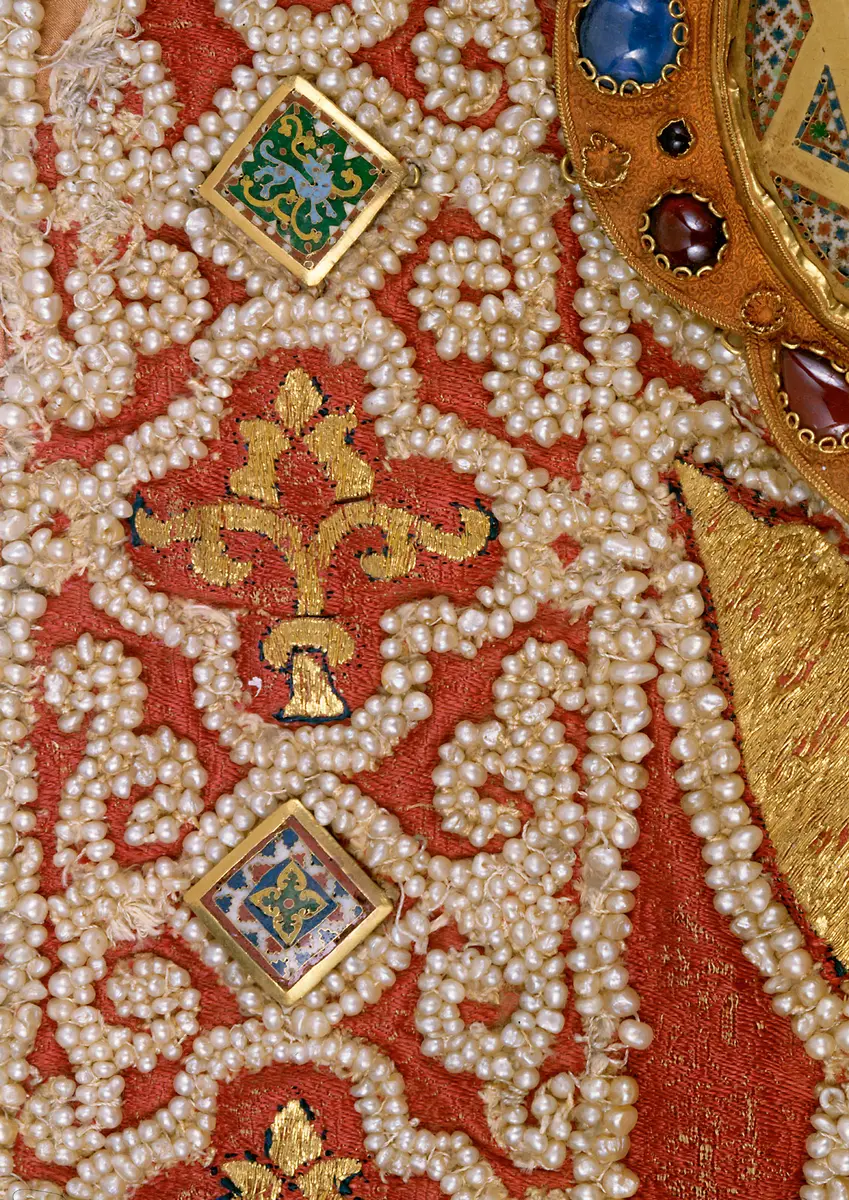
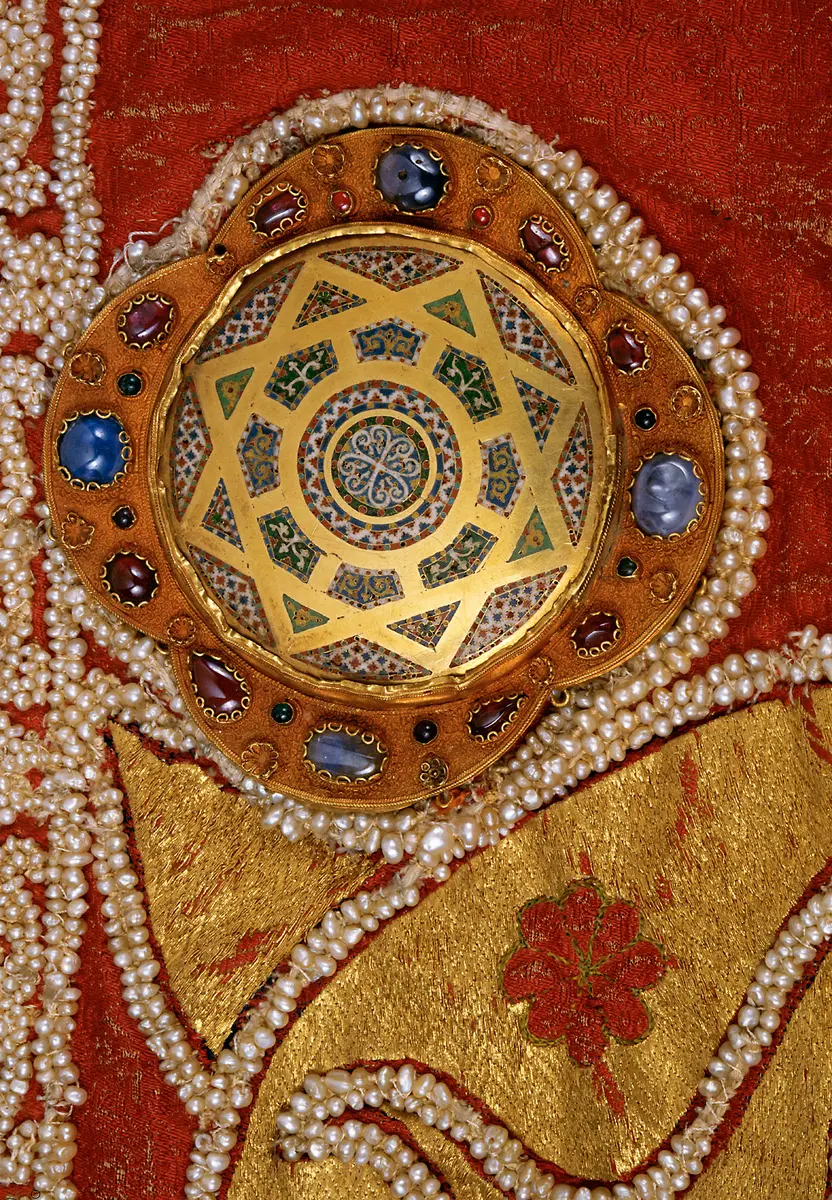
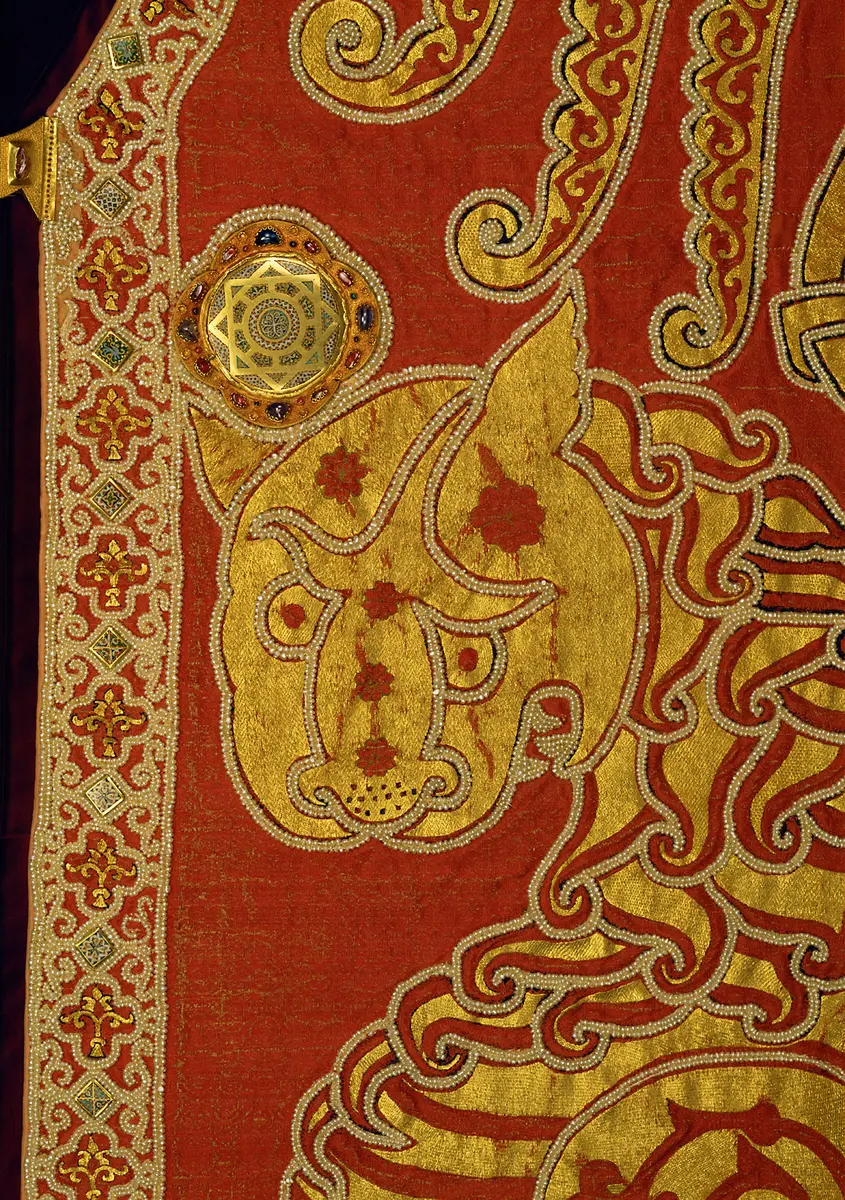
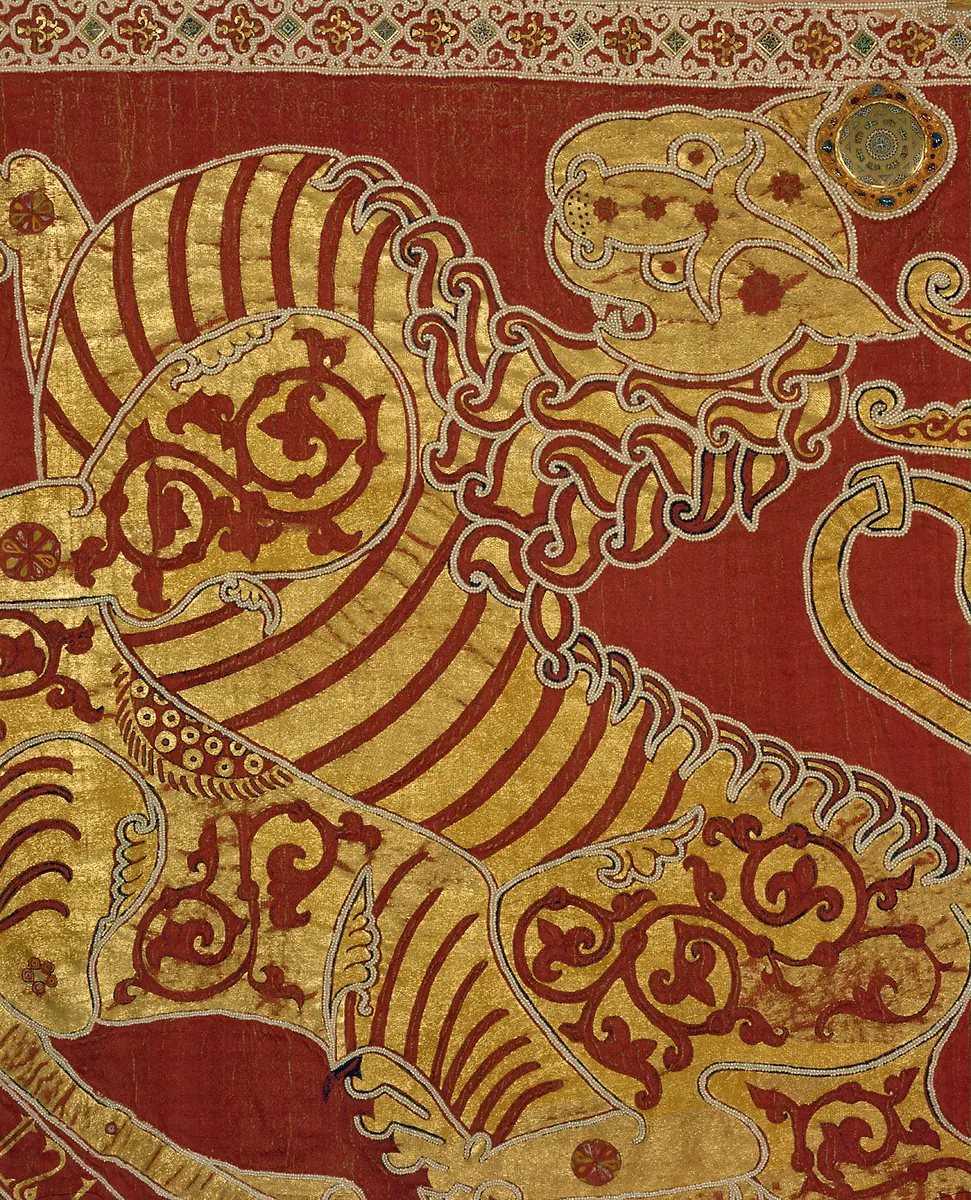
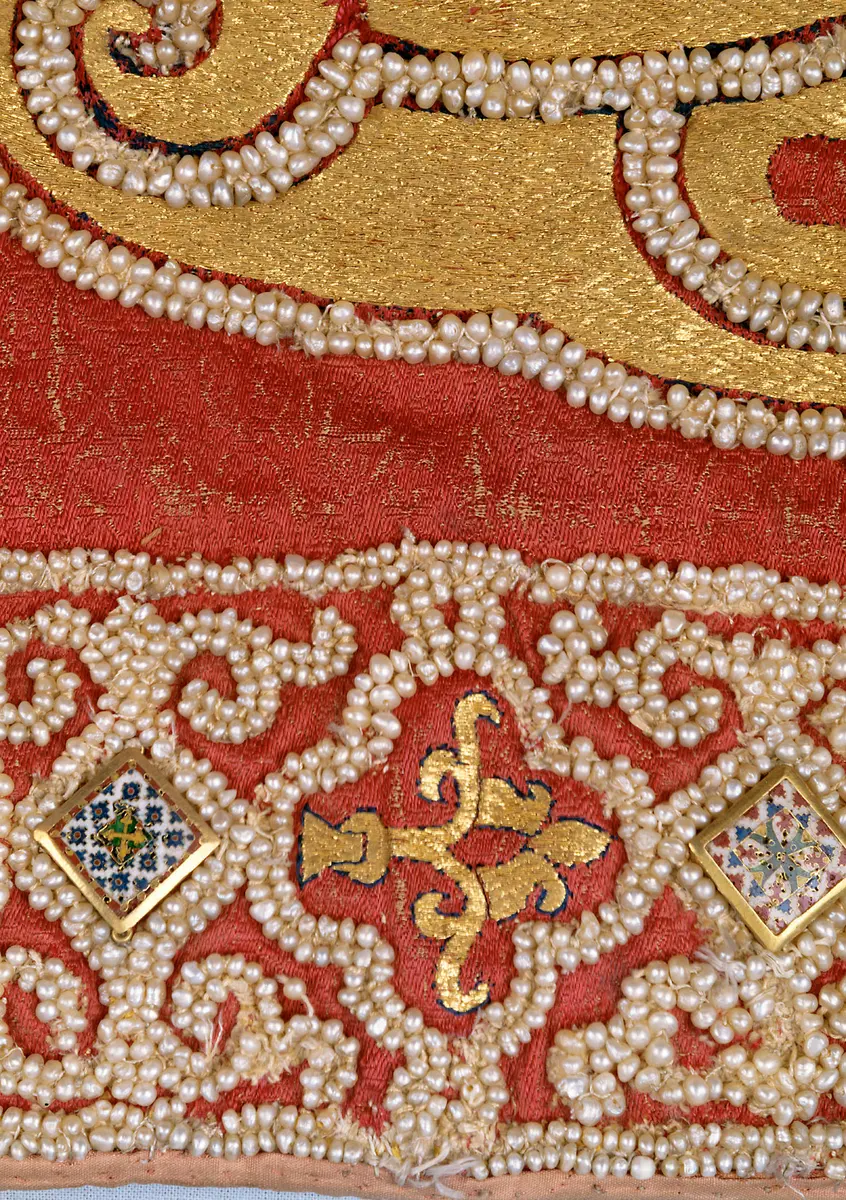
The precious mantle embroidered with gold, pearls and cloisonné-enamelled plaques was part of the coronation set of robes used at the coronations of the kings and emperors of the Holy Roman Empire. These precious robes were made by Arab artisans for the Norman kings on Sicily in the 12th and 13th centuries and passed to the German house of Hohenstaufen. This unique coronation mantle of heavy red silk is richly embroidered with gold stitching and tens of thousands of pearls. It is semicircular and was locked with a clasp decorated with precious stones and enamel. The Arabic inscription on the lower hem of the mantle tells us the date of the production at the royal workshop in Palermo in 528 (according to Islamic chronology) corresponding to the Christian year 1133/34. Thus this robe was made for Roger II of Sicily (1095-1154). The oriental motifs are borrowed from Arabic art: two symmetrically addorsed (back-to-back) lions triumph over a camel; between them like a stylised palm tree is the tree of life. The lions symbolise the ruler who defeats his foes. Because of the preciousness of the mantle, the kings and emperors of the Holy Roman Empire, ignoring the "foreign motifs, had used it as a coronation mantle since the 13th century. In the 14th century it was believed that the mantle had belonged to Charlemagne, the canonised emperor and renewer of the Roman Empire, who had supposedly won it from the Moors.
Time:
1133/1134
Object Name
Textil; liturgisches Gewand; Krönungsornat
Culture
Palermo
Material/technology:
Textil; Gemusterter Samit (Kermesfärbung), Gold- und Seidenstickerei, Perlen, Gold mit Zellenschmelzemail, Rubin, Spinelle, Saphire, Granate, Glas, Brettchengewebe
Dimensions:
H. 146 cm, B. 345 cm
Inscribed
Kufi-Inschrift (Übersetzung): (Das ist) von dem, was in der königlichen Kammer (Hofwerkstatt) angefertigt wurde, (welche) gediehen ist mit Glück und Ehre, mit Eifer und Vollkommenheit, mit Macht und Verdienst, mit (Seiner) Zustimmung und (Seinem) Wohlergehen, mit Großmut und Erhabenheit, mit Ruhm und Schönheit sowie der Erfüllung der Wünsche und Hoffnungen und mit glücklichen Tagen und Nächten ohne Unterlaß und ohne Änderung, mit Ehre und Fürsorge, mit Wahrung und Schutz, mit Erfolg und Sicherheit, mit Triumph und Tüchtigkeit. In der (Haupt)stadt Siziliens im Jahre 528
Copyright
Kunsthistorisches Museum, Weltliche Schatzkammer
Invs.
Schatzkammer, WS XIII 14
Browse more
Similar items you might be interested in
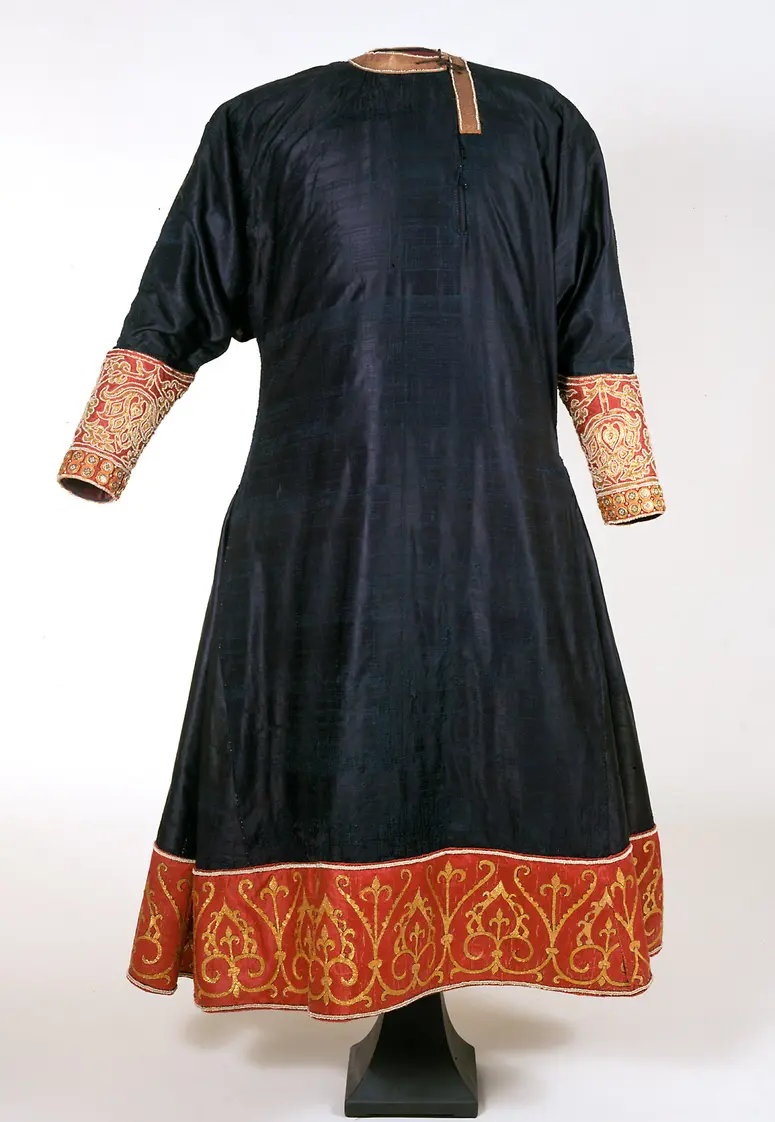
Die blaue Tunicella (Dalmatika) Palermo, Königliche Hofwerkstätten 1. Hälfte 12. Jahrhundert
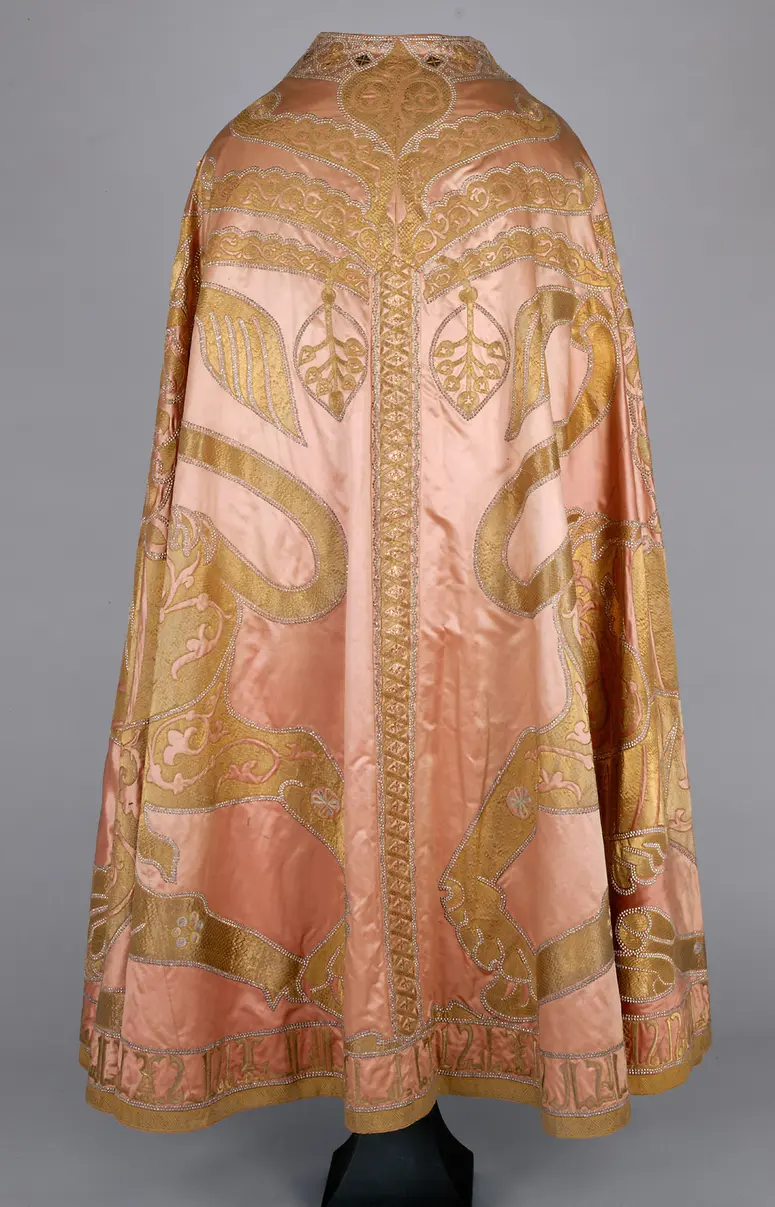
Der Mantel des Ornats Kaiser Franz I. Stephan von Lothringen (Barockkopien nach den Gewändern des Krönungsornates des Heiligen Römischen Reiches) 1763/64
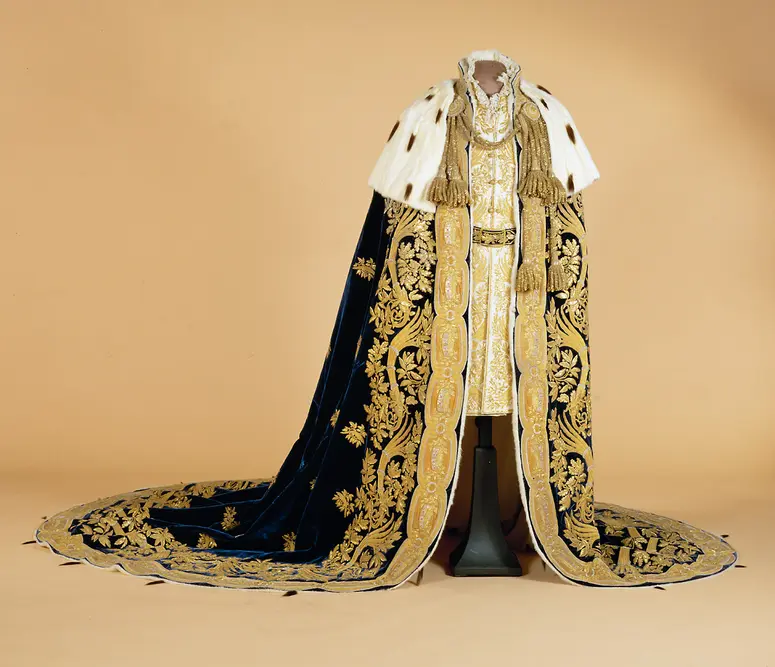
Der Mantel des Krönungsornats des Lombardo-Venezianischen Königreichs Philipp von Stubenrauch 1838
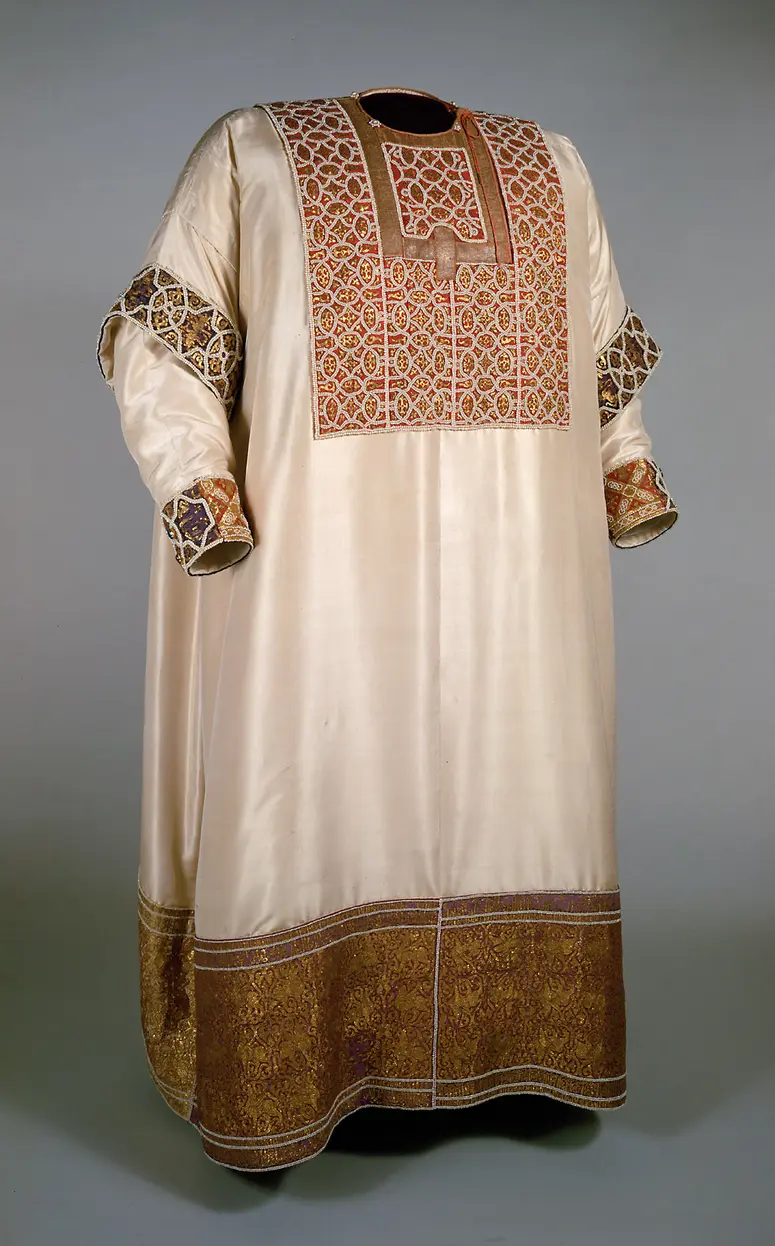
Alba Palermo, Königliche Hofwerkstätten 1181 mit späteren Ergänzungen
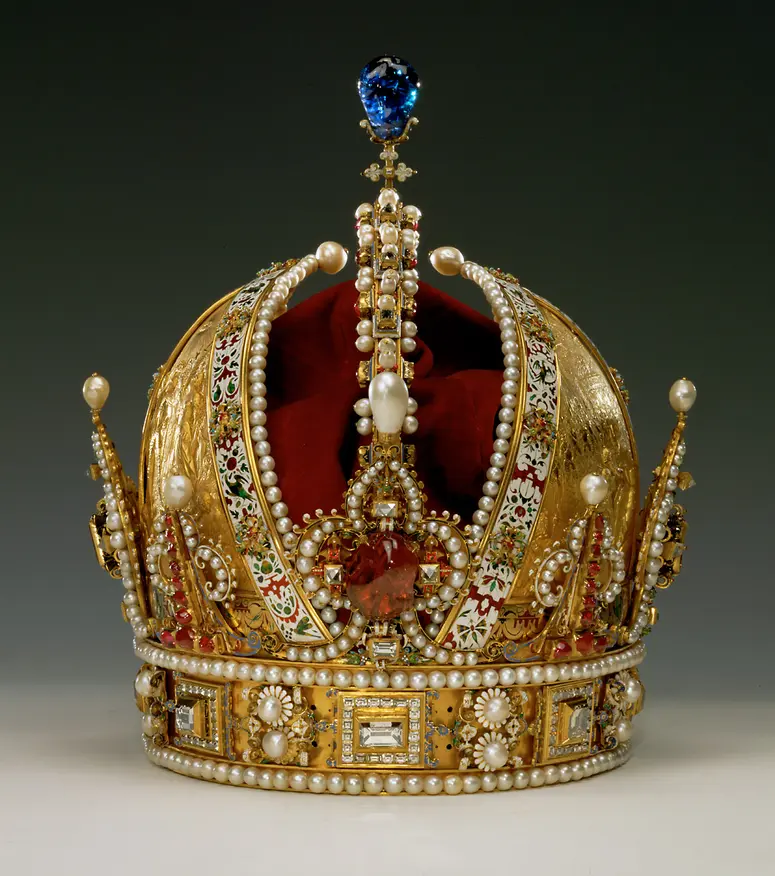
Die Krone Kaiser Rudolfs II., später Krone des Kaisertums Österreichs Jan Vermeyen 1602

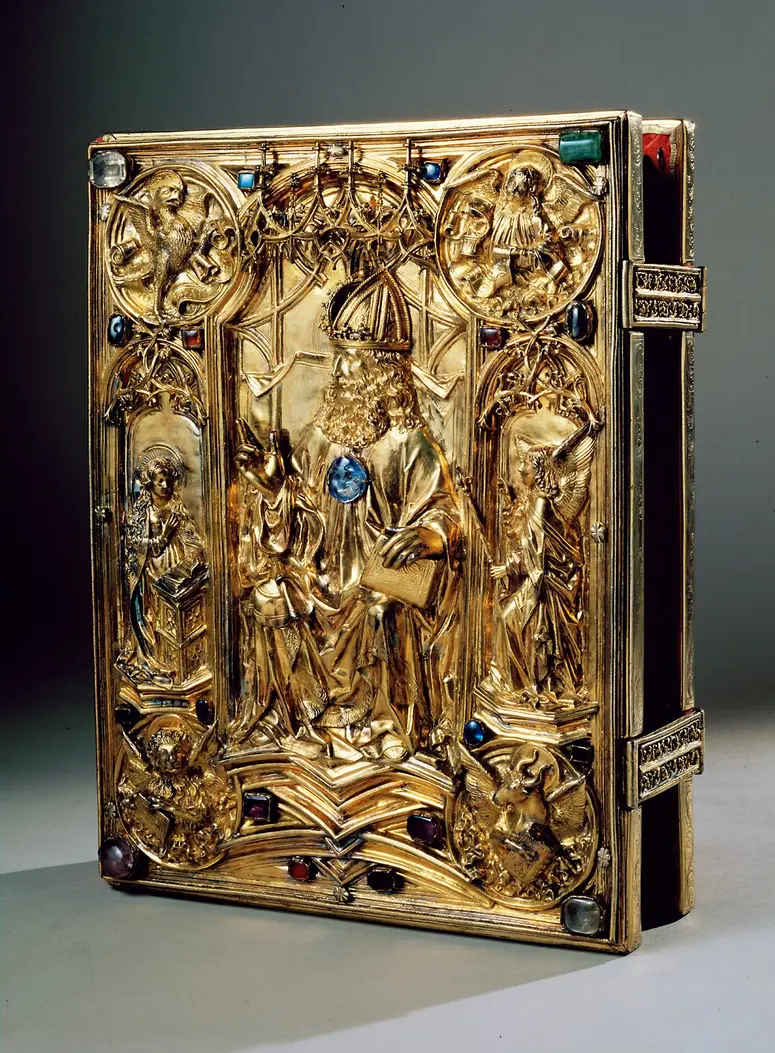
Das Krönungsevangeliar Hans von Reutlingen knapp vor 800, um 1500
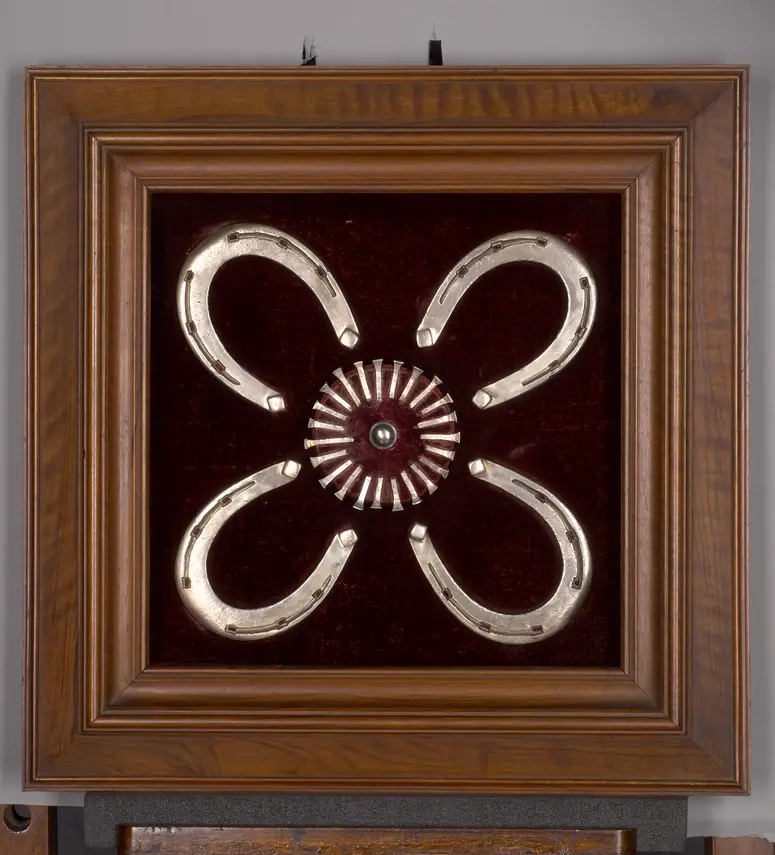

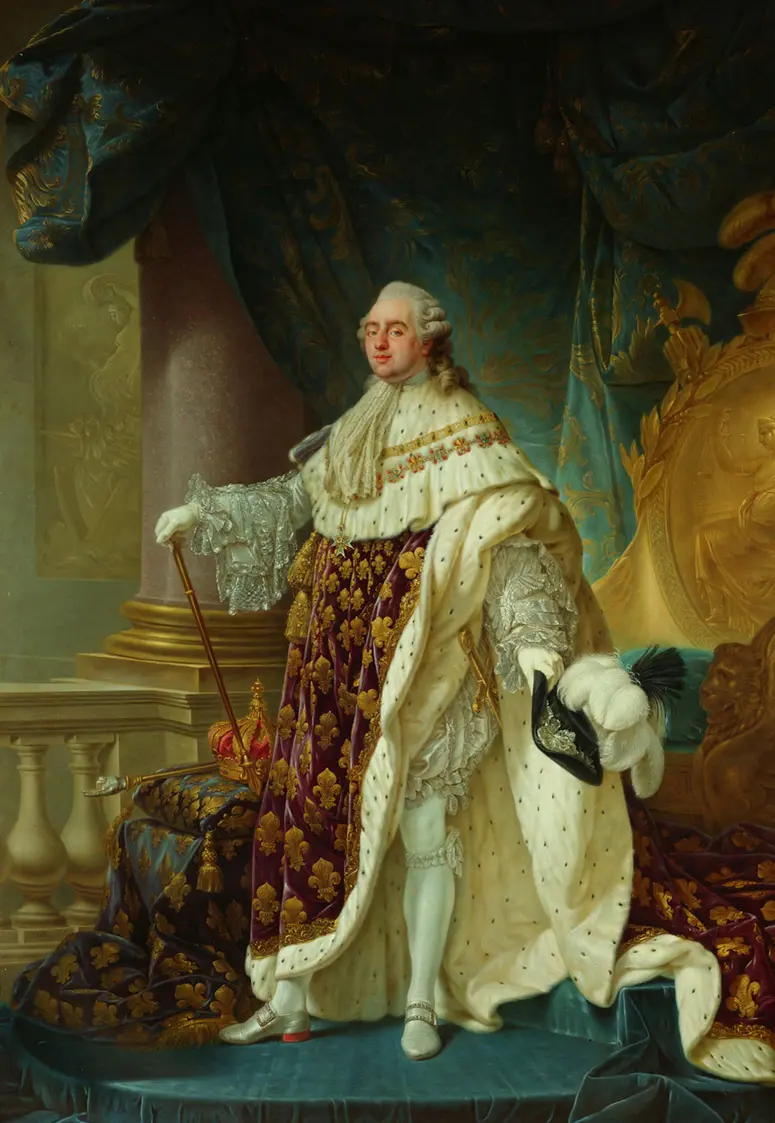
King Louis XVI (1754−1793) of France in his Coronation Robes Antoine Francois Callet 1781
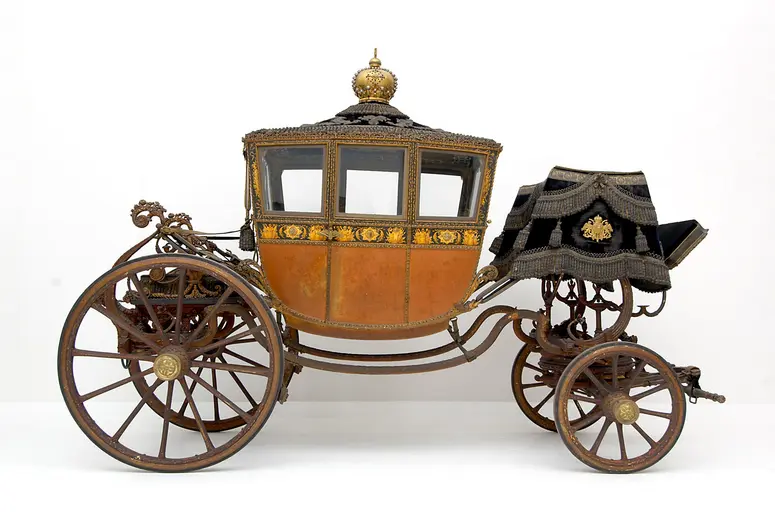
“Milan Coronation Carriage” of Napoleon I around 1790, later changed several times
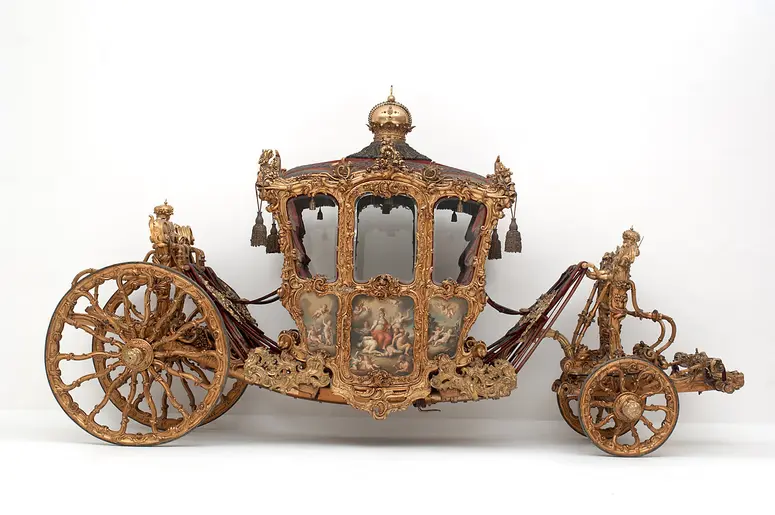
Coronation Coach ("The Imperial Carriage") 18th century
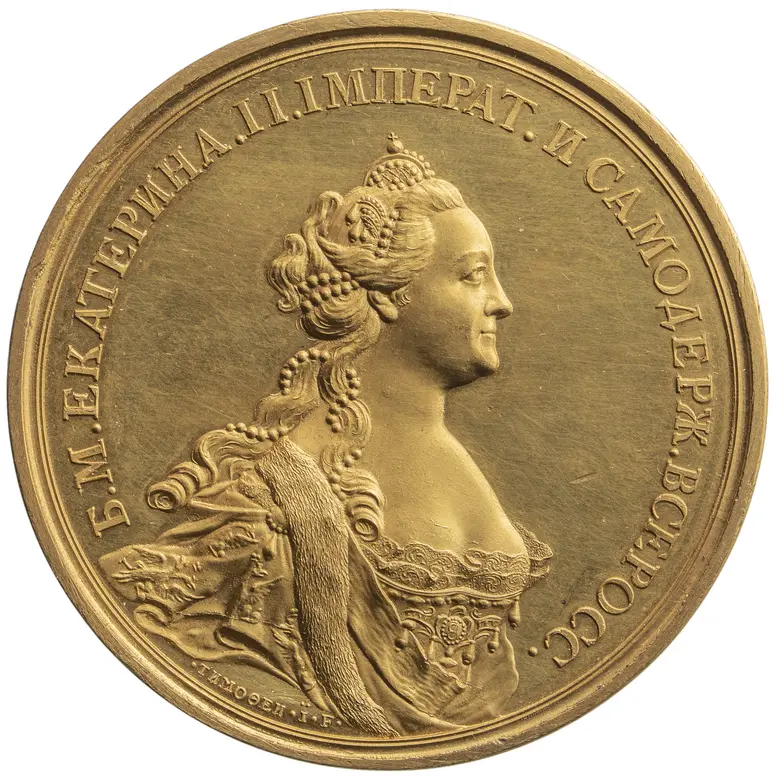
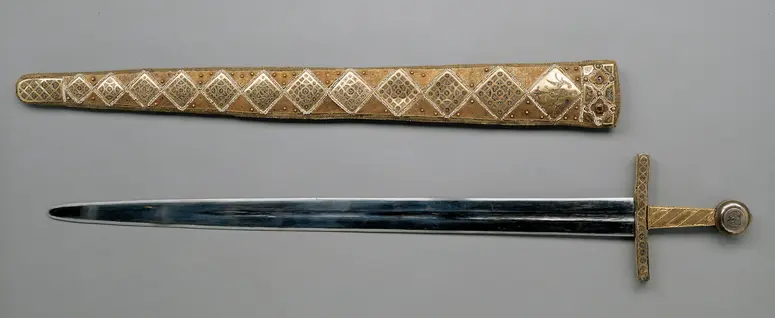
Das Zeremonienschwert vor 1220, 3. Viertel 14. Jahrhundert (Knauf)
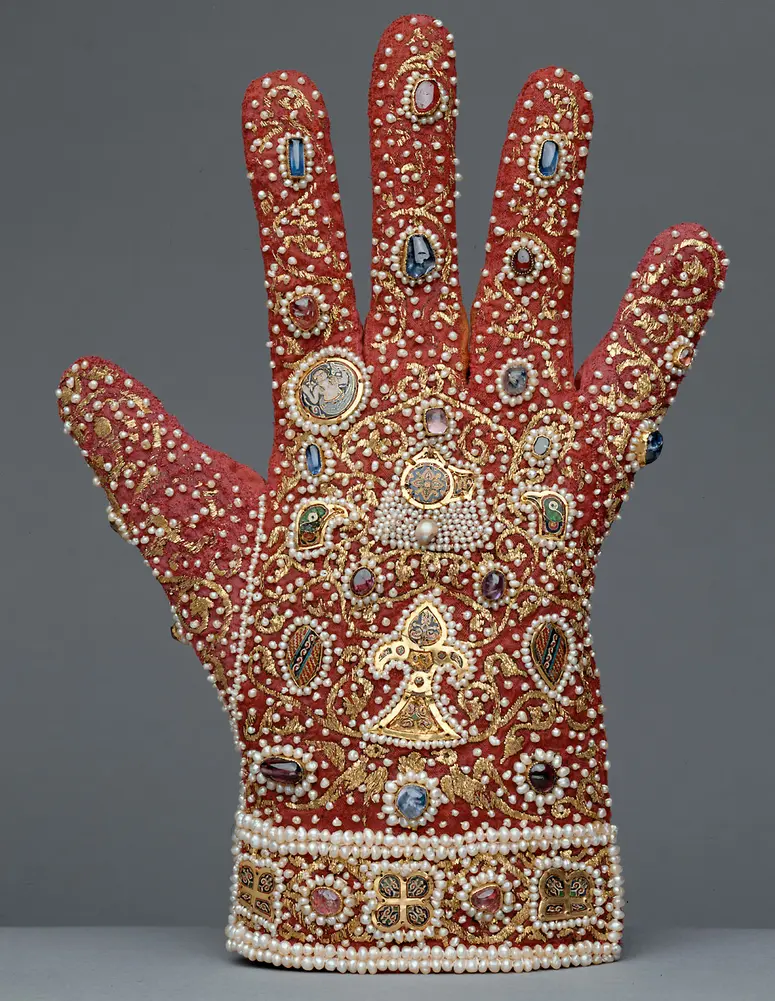
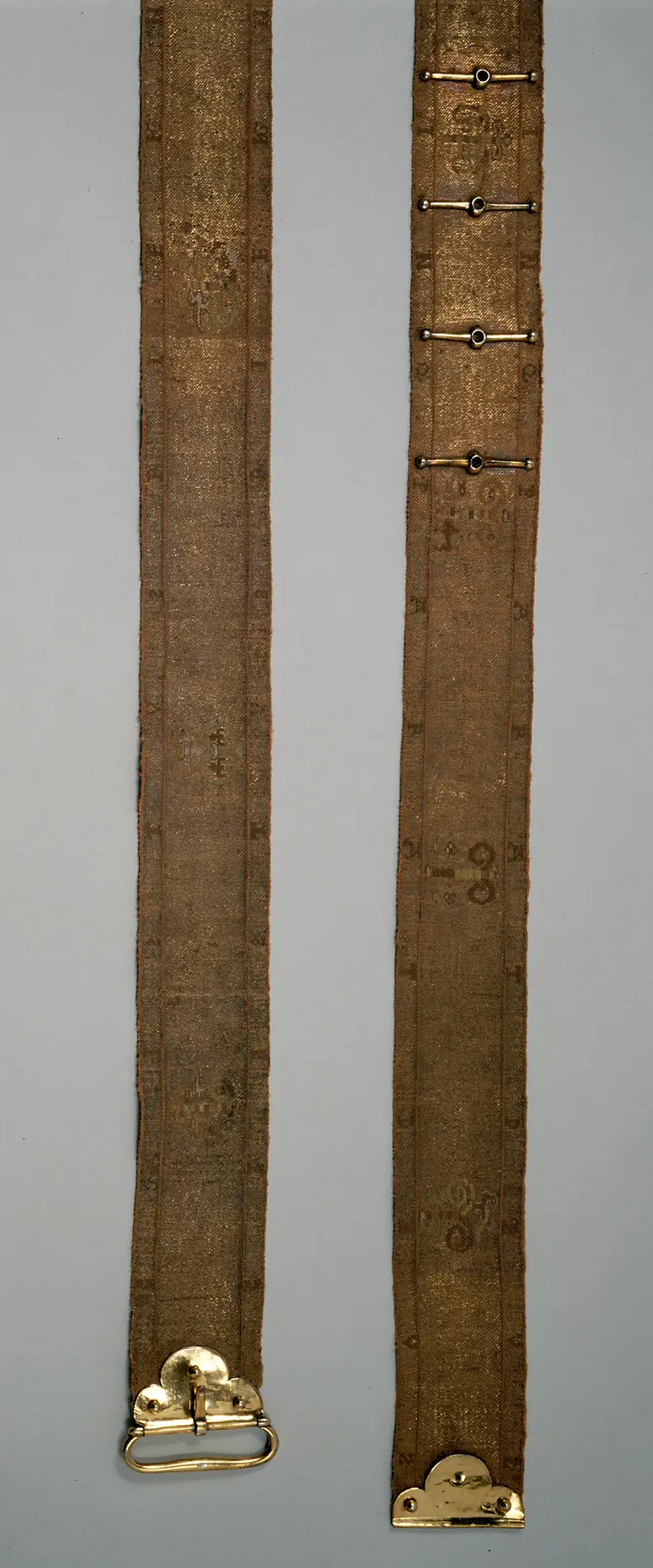
Der Gurt für das Reichsschwert 12. / 13. Jahrhundert; Beschläge spätere Ergänzung
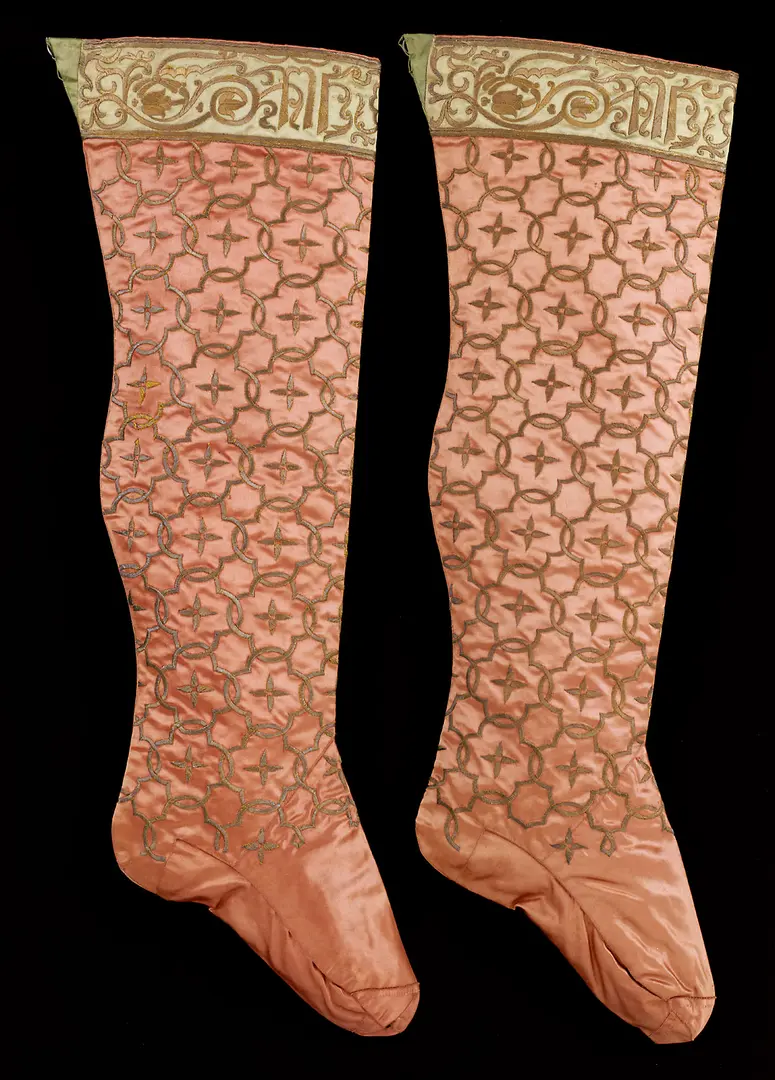
Die Strümpfe des Ornats Kaiser Franz I. Stephan von Lothringen (Barockkopien nach den Gewändern des Krönungsornates des Heiligen Römischen Reiches) 1763/64