Degen
um 1575 | Don Juan de Austria
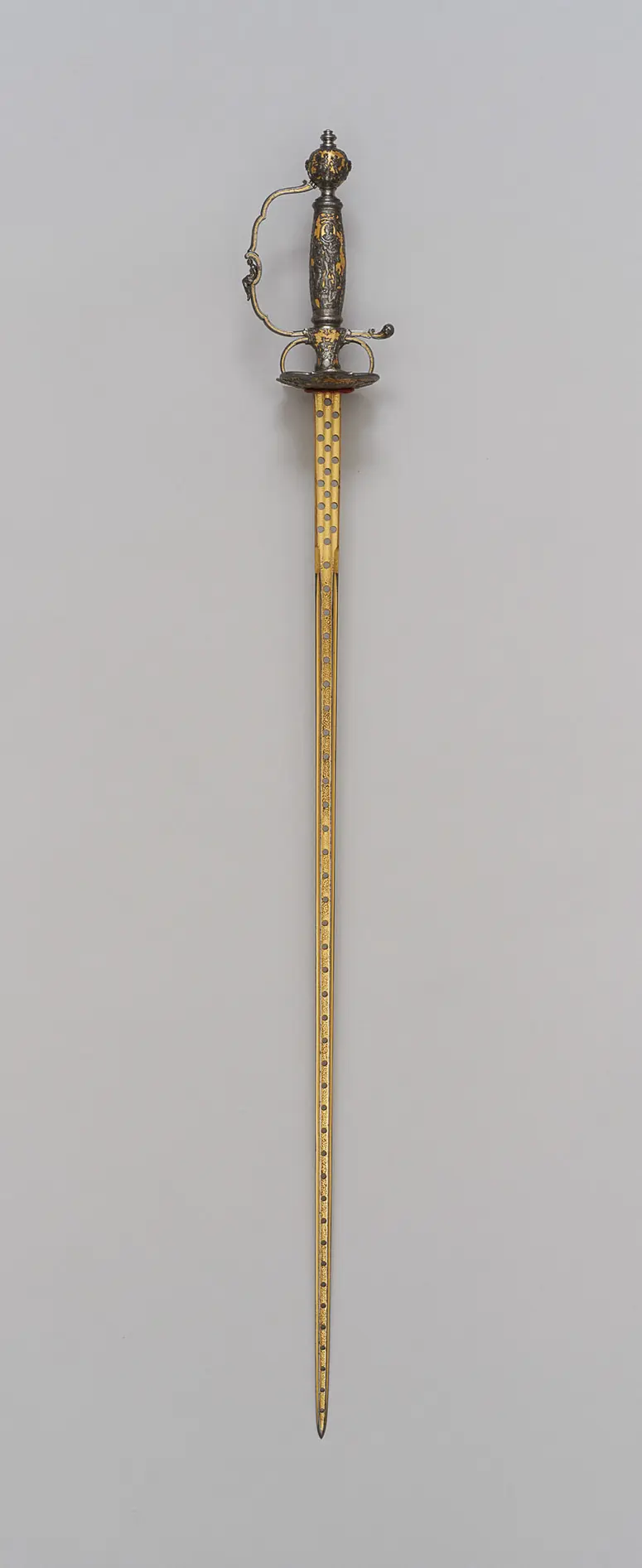
This rapier belonged to John of Austria (Don Juan de Austria), who commanded the fleet of the Holy League at the Battle of Lepanto (1571), winning a decisive victory over the Ottoman navy. A blade with pierced perforation is combined with a hilt shaped like gilt chains decorated with silver beads. Hilts supposedly constructed of chain links were all the rage in the late Renaissance.
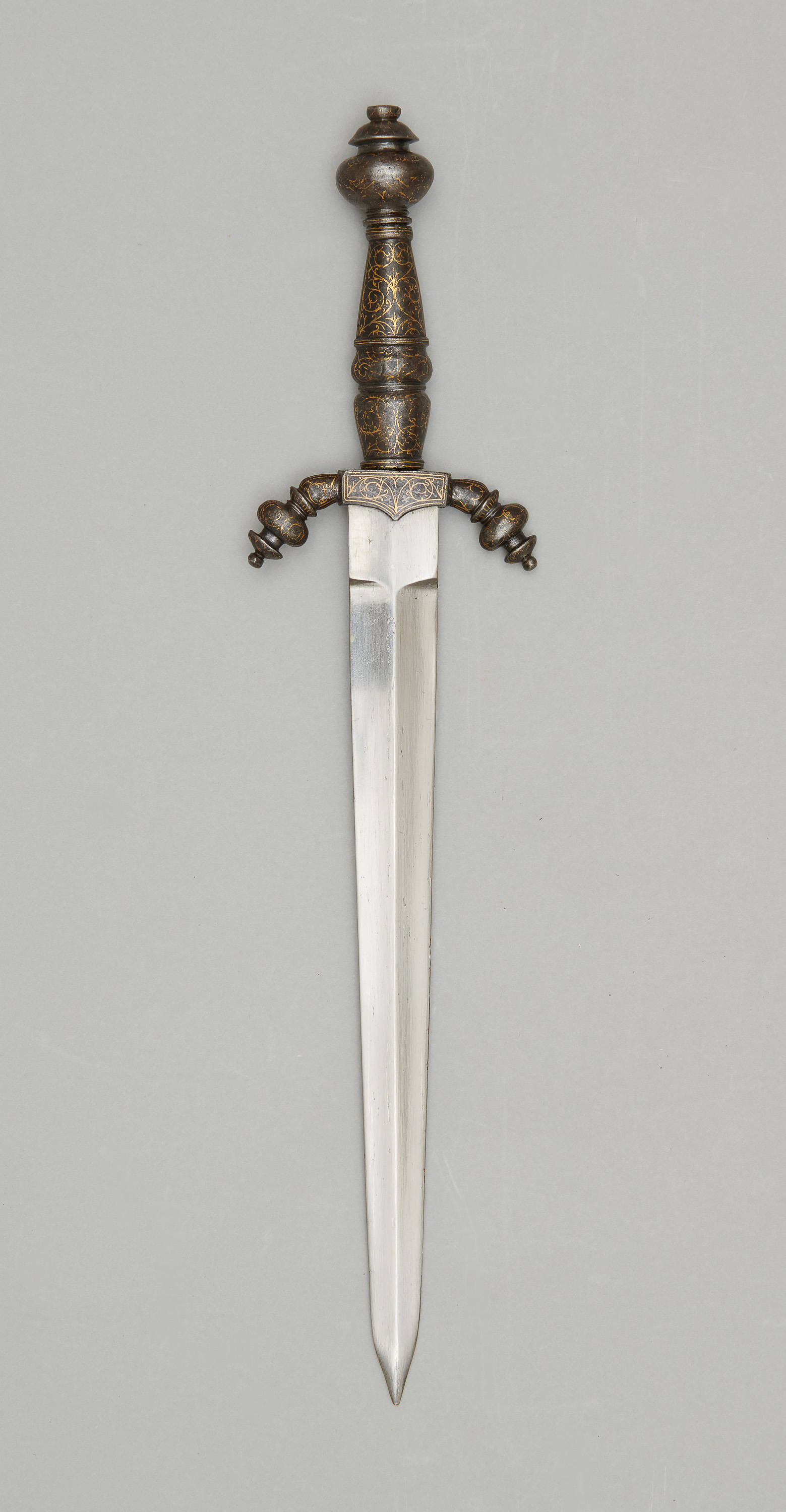
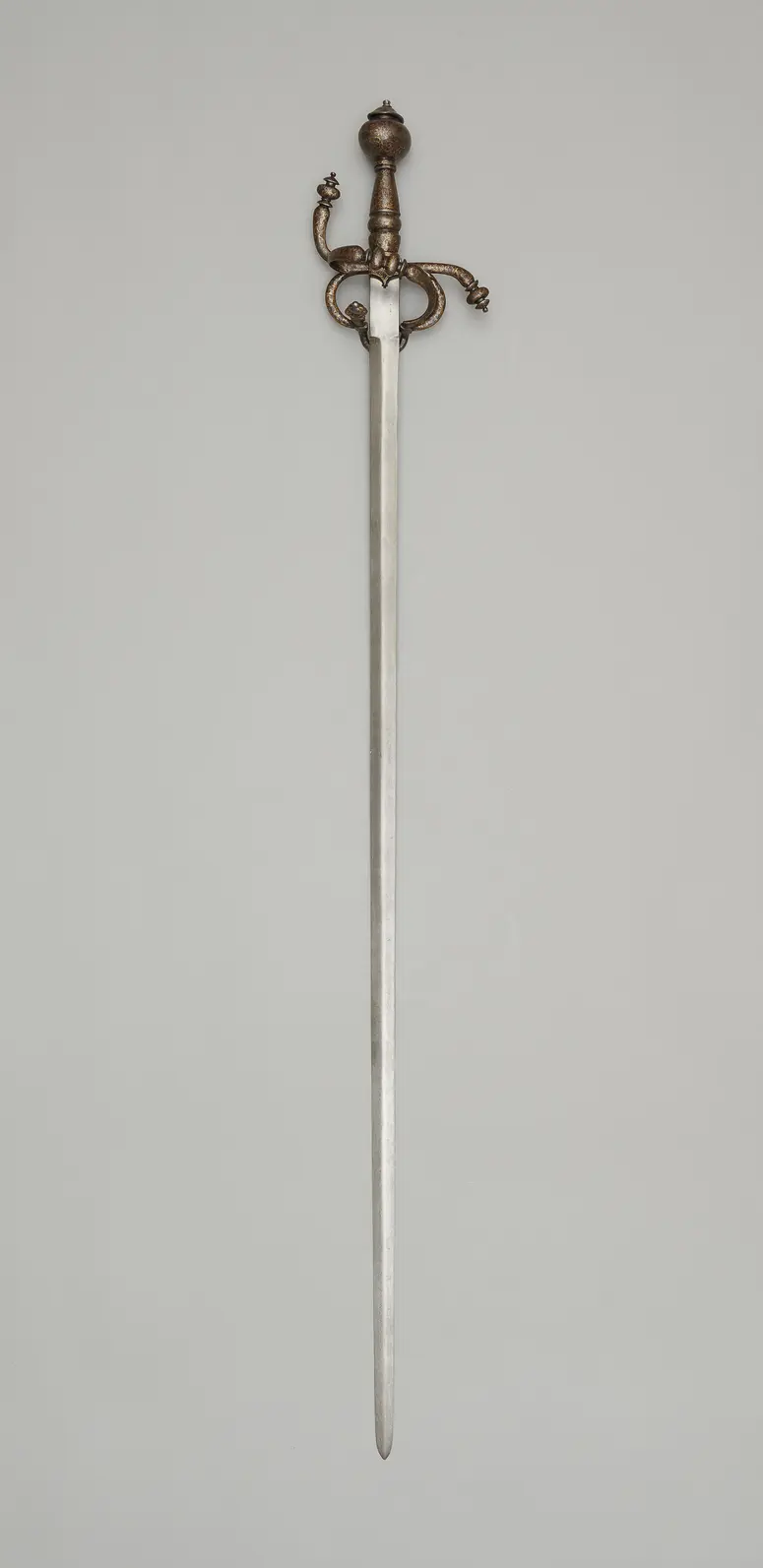
The sword was first listed in the 1596 inventory of the collection assembled by Archduke Ferdinand II at Ambras Castle near Innsbruck. It was displayed together with the lavishly decorated armour that Ferdinand had received in 1580 from the estate of Don Juan, who had died two years earlier in the Low Countries (see cat. 67). Perhaps this is also how the sword came to Ambras. The inventory of Ferdinand’s estate also lists a ‘sword and dagger’ (schwert und dollich), and the Armamentarium Heroicum, the illustrated catalogue of the Armoury of Heroes at Ambras Castle published in 1601–03, includes a depiction of Don Juan sporting the armour, with this sword on his left and the dagger on his right. In the 1788 inventory, the two weapons are listed together as ‘a Spanish sword and dagger, cross and hilt made of pierced iron chain links and partially gilt’ (ein spanischer Degen und Dolch, Kreuz und Hefte von eisen kettenweise durchbrochen und zum Teil vergoldet).
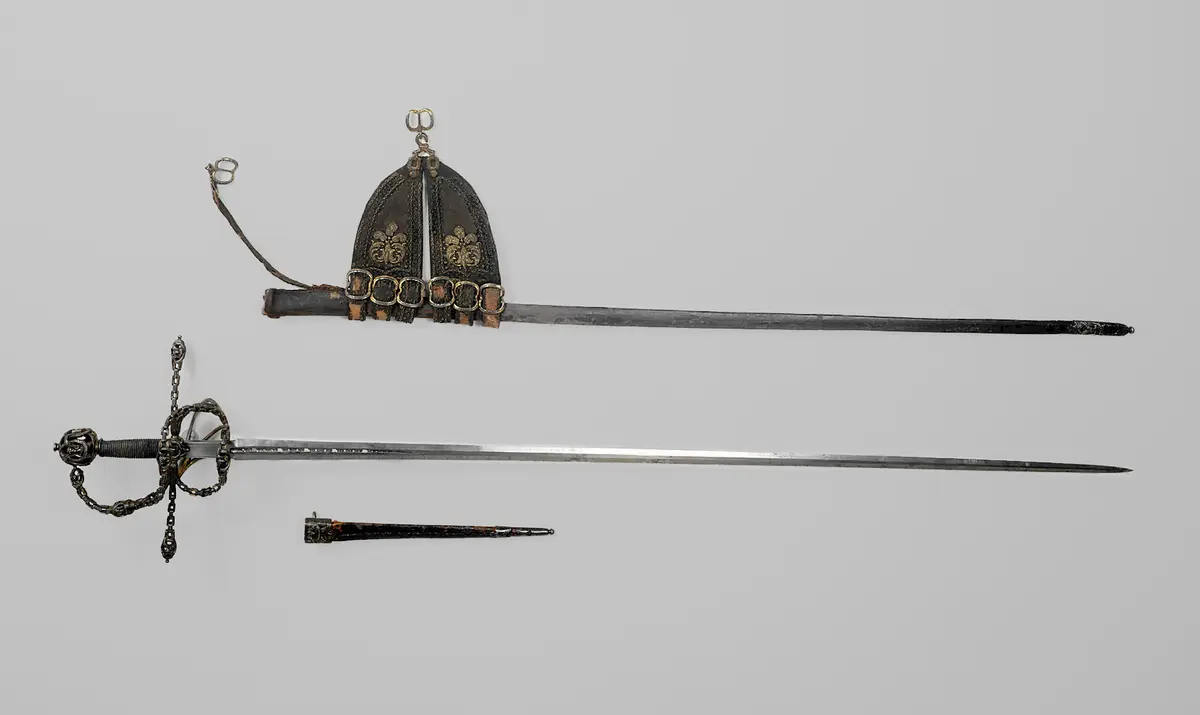
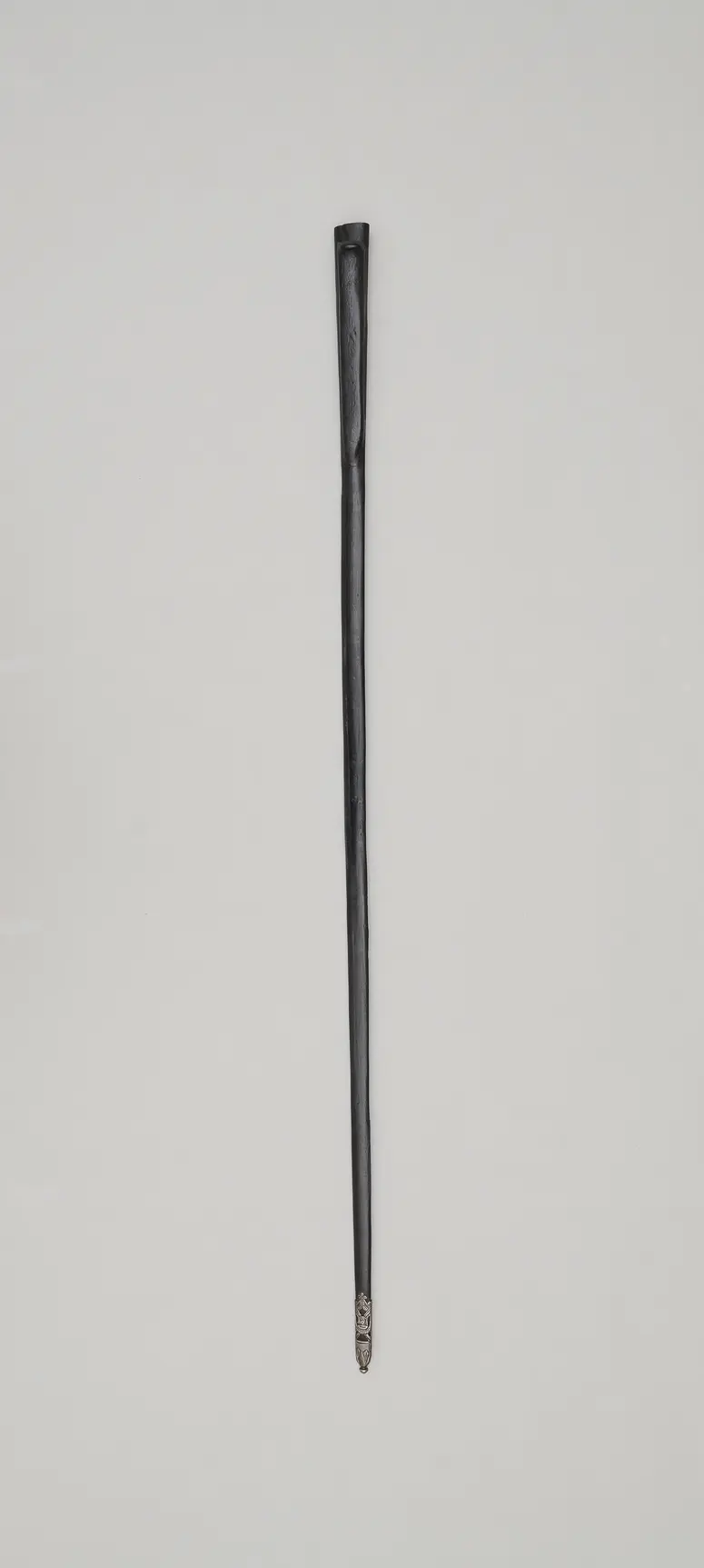
The inventory of the imperial collection of arms and armour compiled in 1896 noted that the dagger ‘was lost at the World’s Fair in Paris in 1867’ (auf der Pariser Ausstellung von 1867 abhanden gekommen). However, the dagger’s scabbard has survived, together with the sword’s, as well as the sword belt made of black velvet, lavishly embroidered with gold and silver wire.
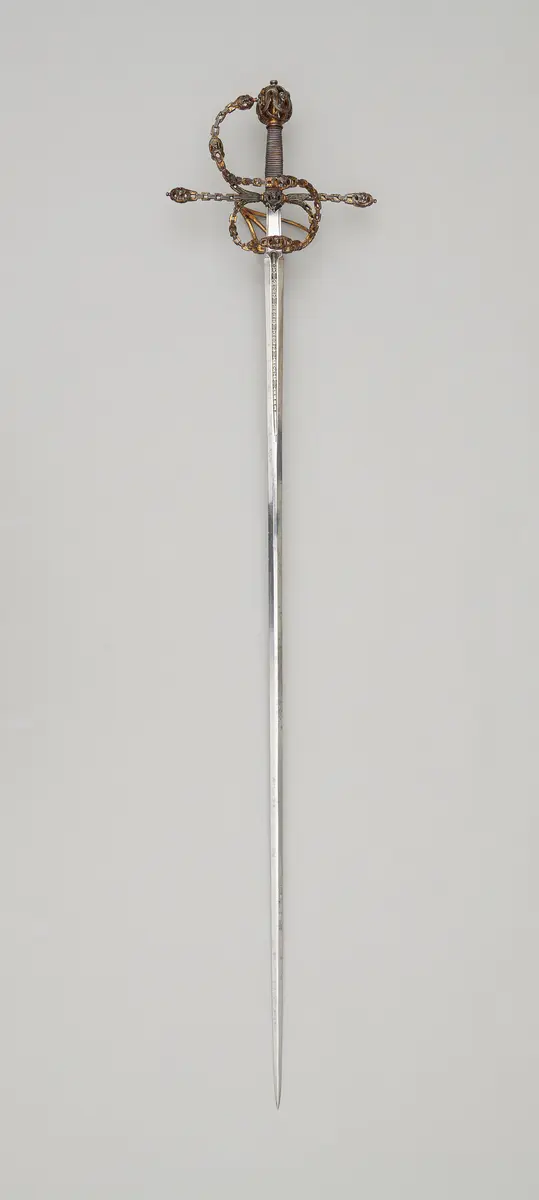
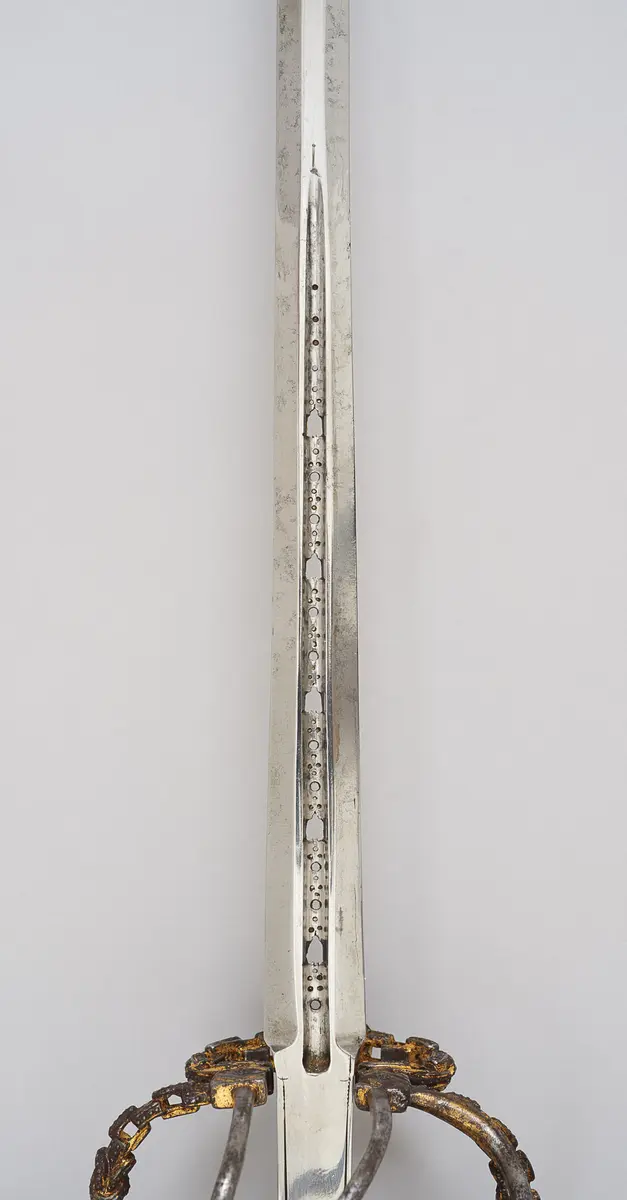
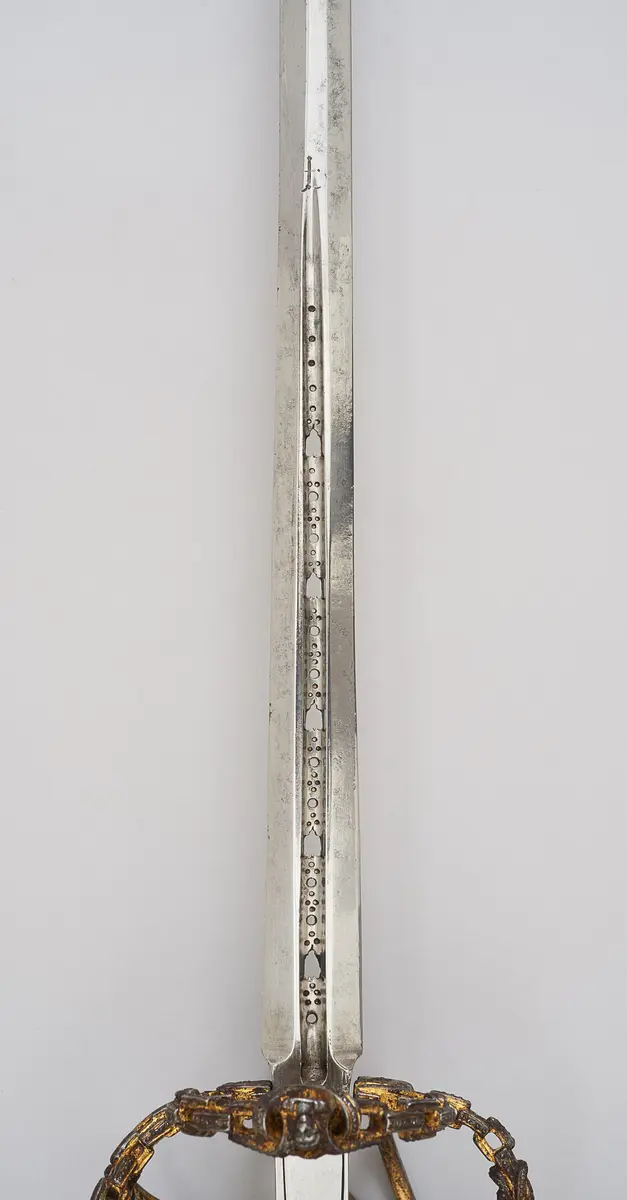
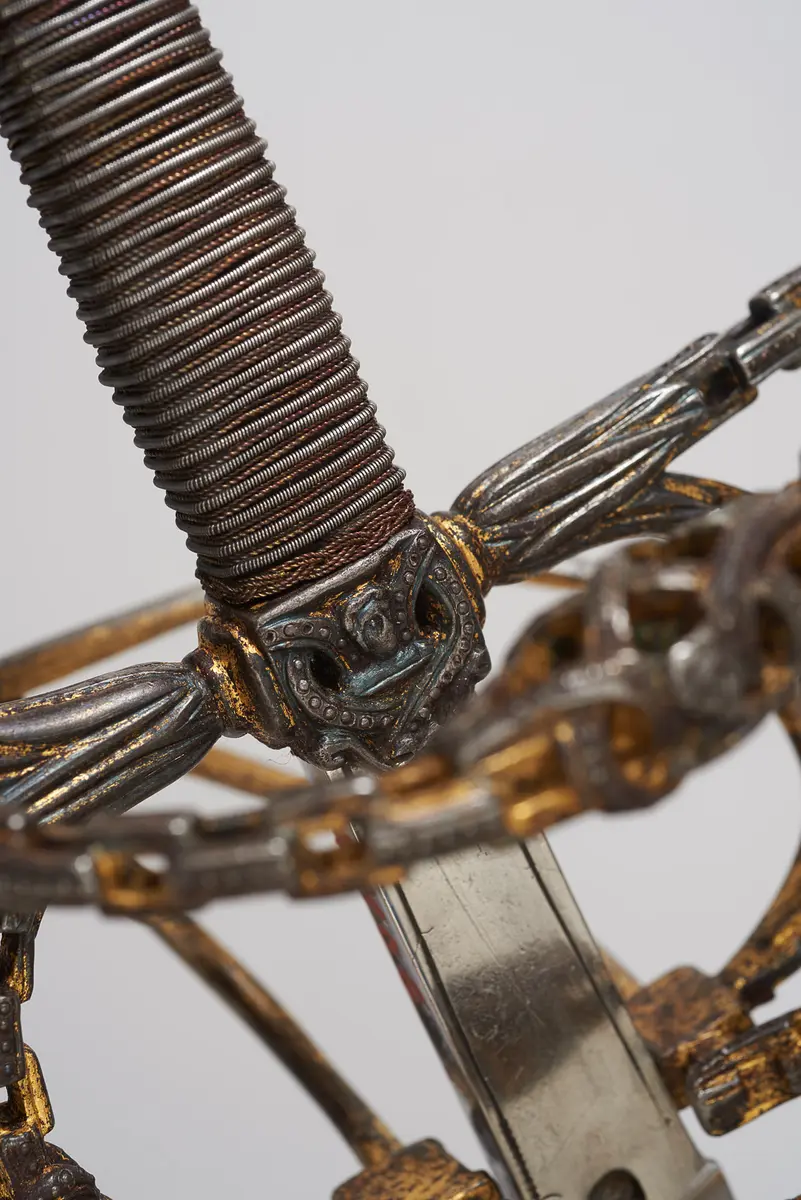
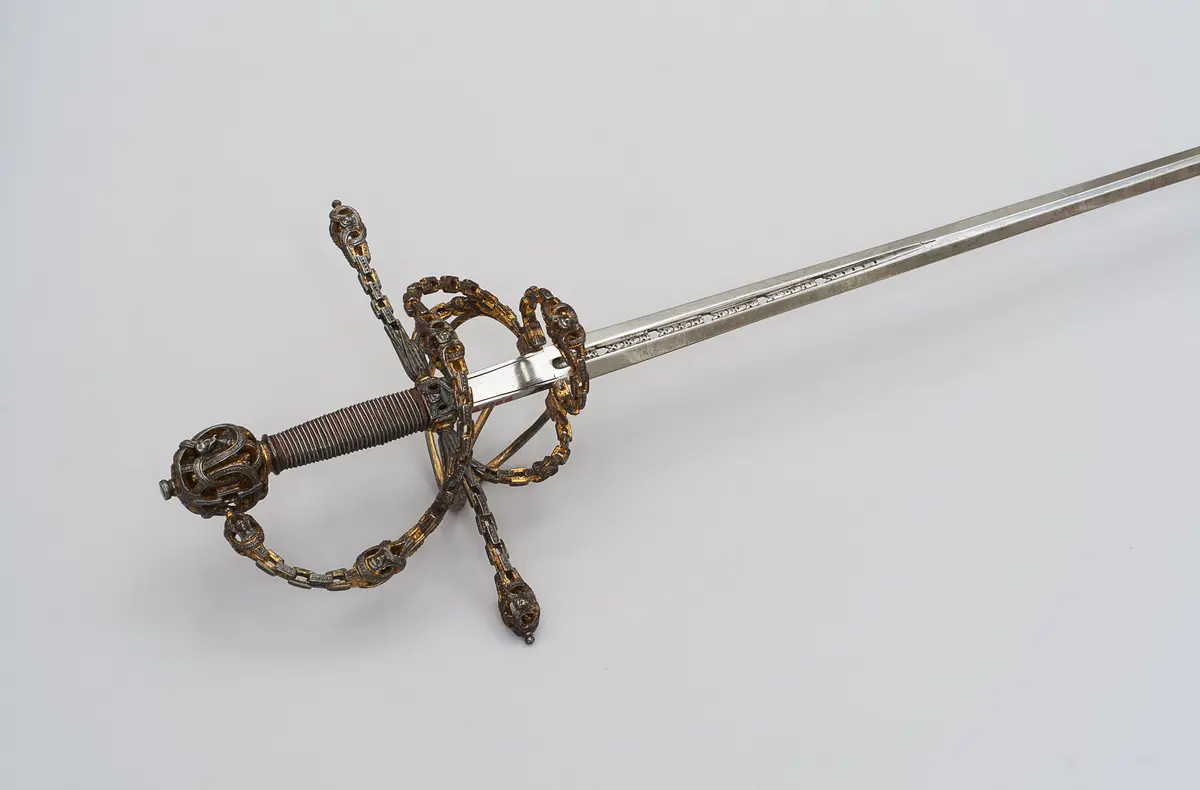
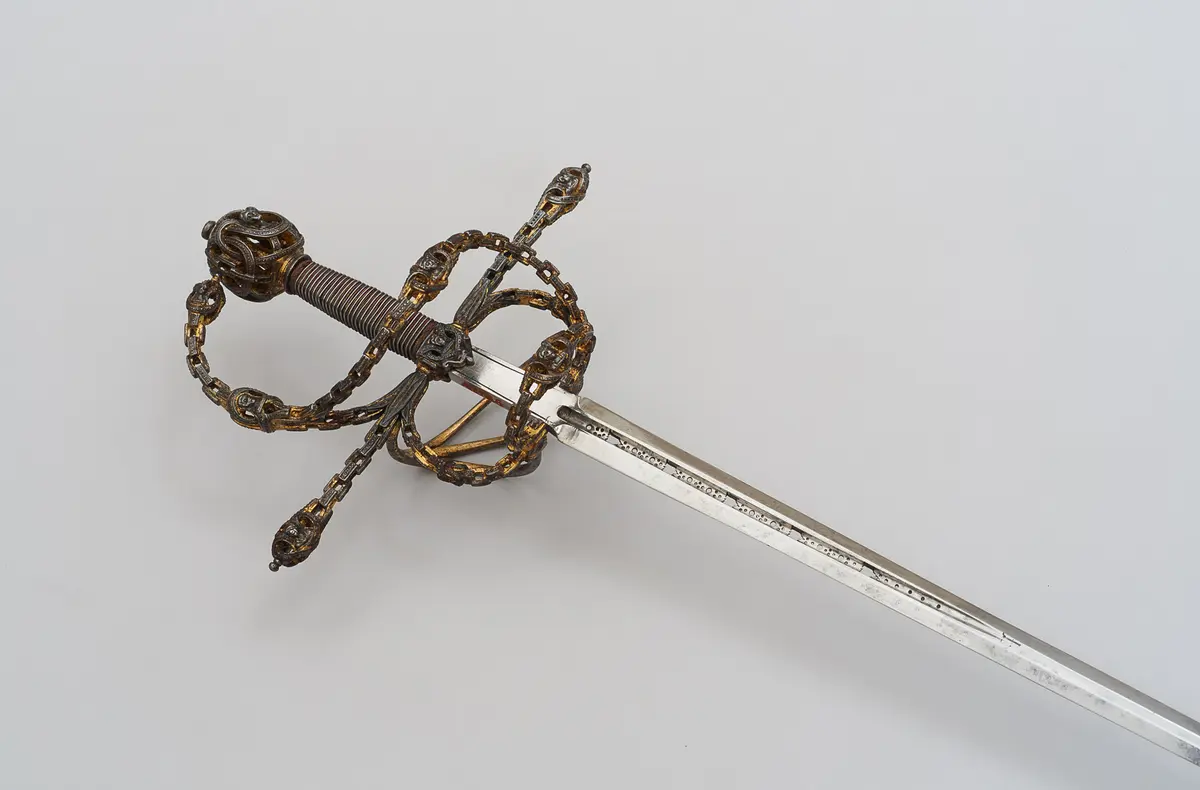
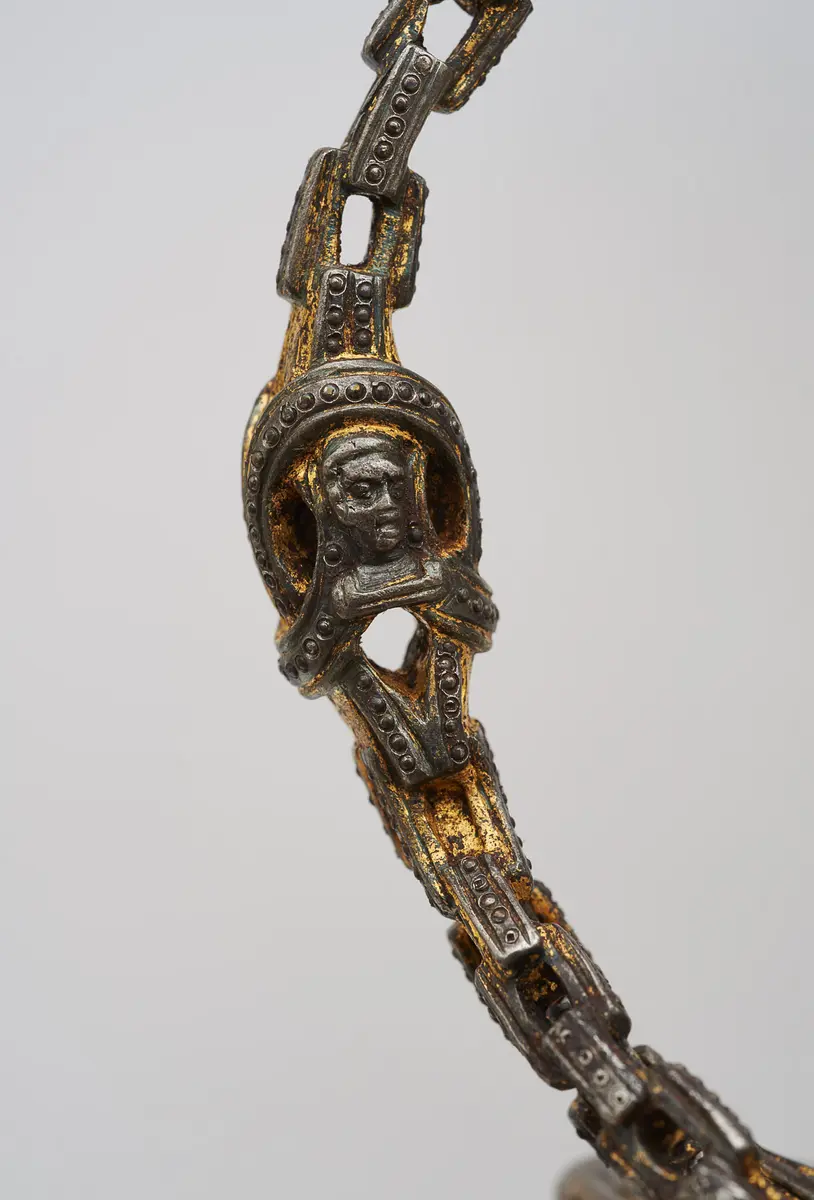
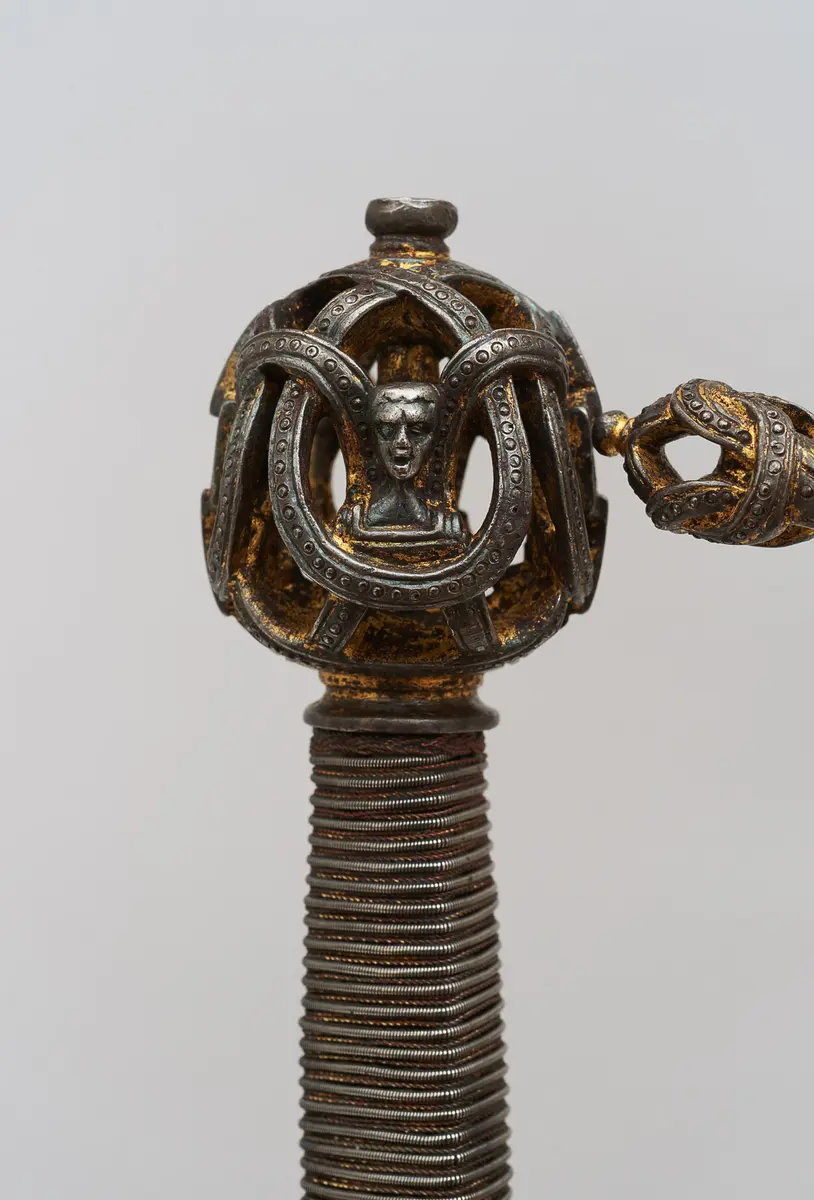
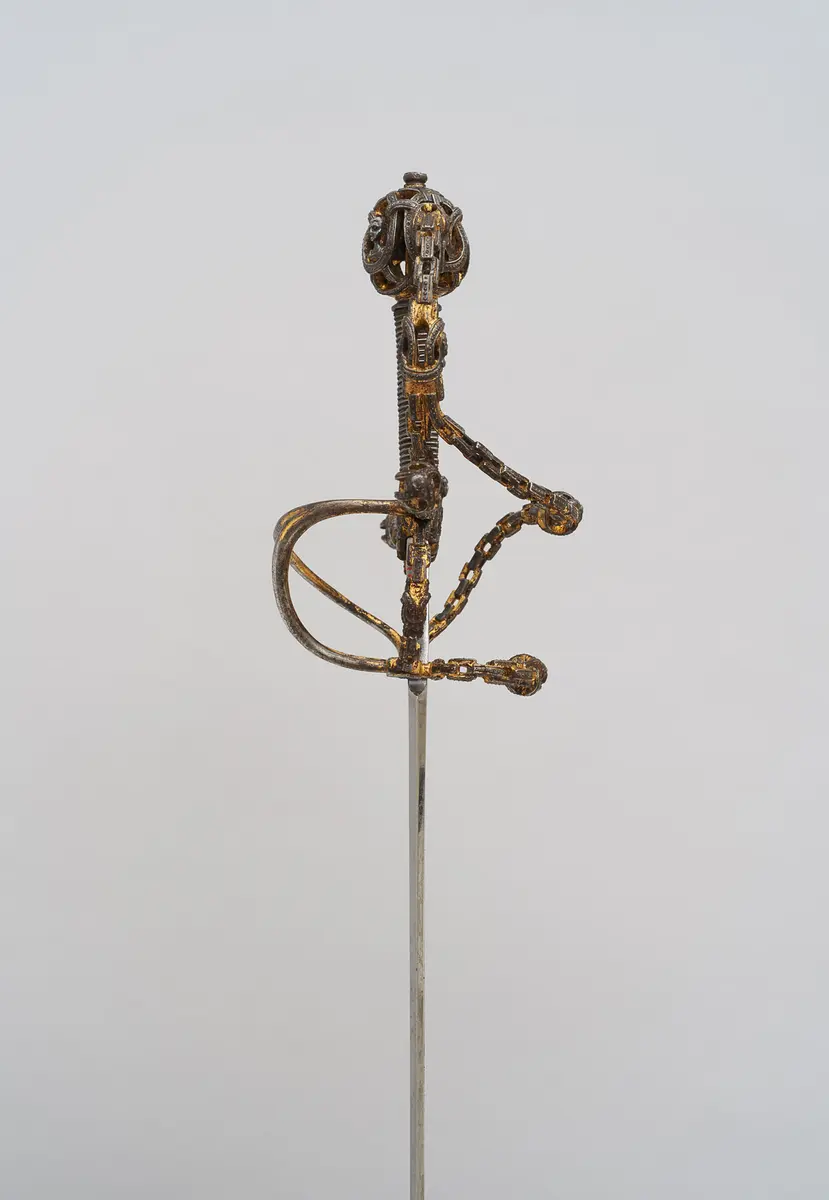
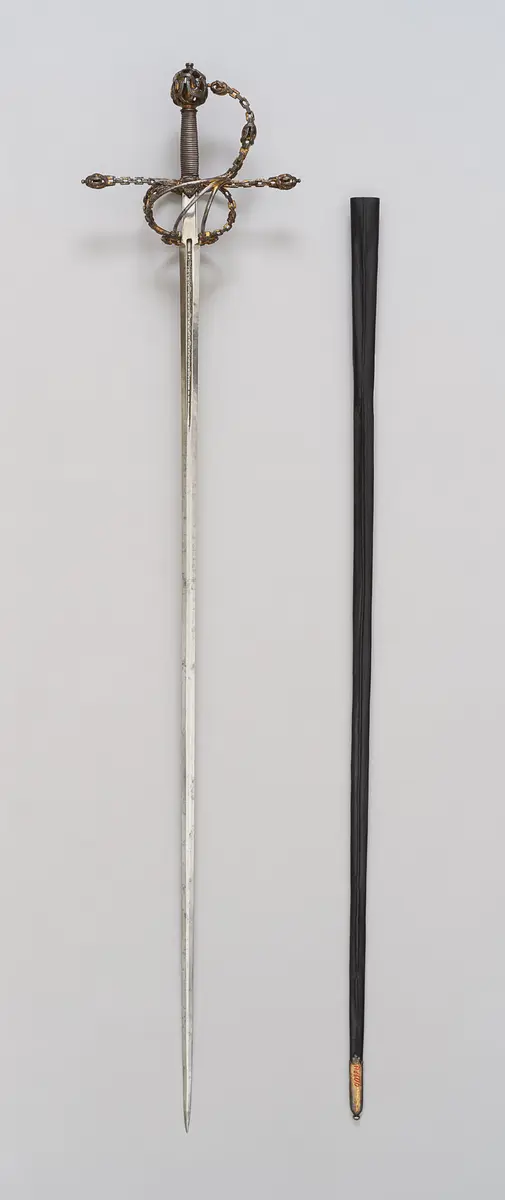
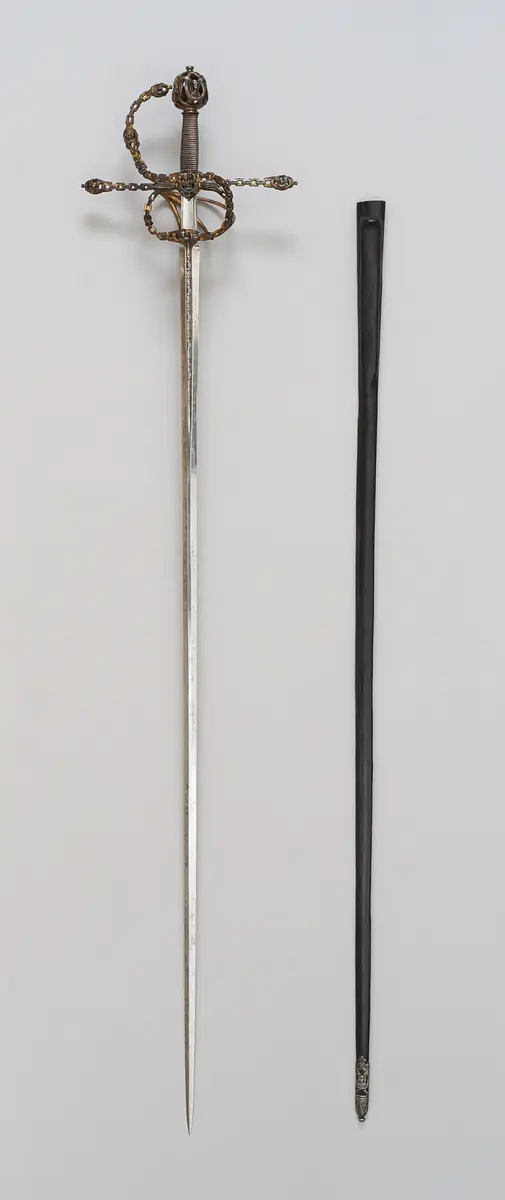
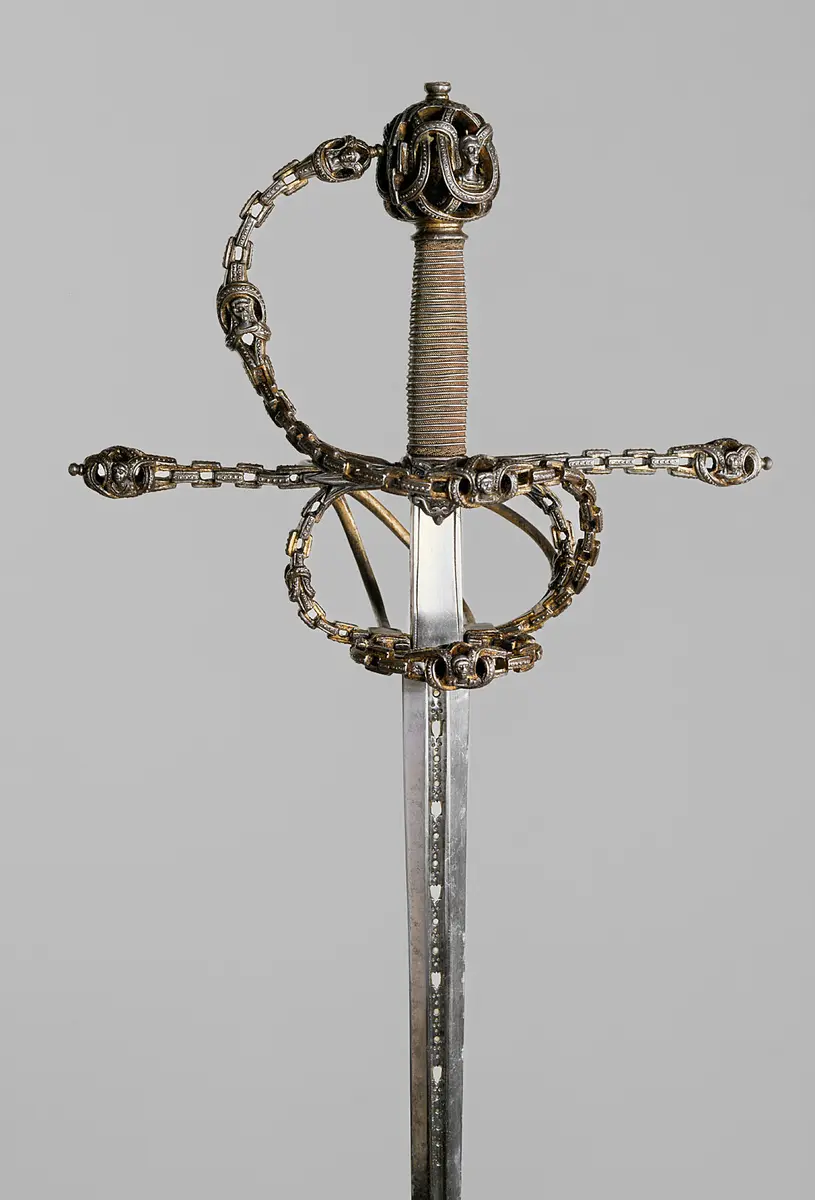
This rapier belonged to John of Austria (Don Juan de Austria), who commanded the fleet of the Holy League at the Battle of Lepanto (1571), winning a decisive victory over the Ottoman navy. A blade with pierced perforation is combined with a hilt shaped like gilt chains decorated with silver beads. Hilts supposedly constructed of chain links were all the rage in the late Renaissance.
The sword was first listed in the 1596 inventory of the collection assembled by Archduke Ferdinand II at Ambras Castle near Innsbruck. It was displayed together with the lavishly decorated armour that Ferdinand had received in 1580 from the estate of Don Juan, who had died two years earlier in the Low Countries (see cat. 67). Perhaps this is also how the sword came to Ambras. The inventory of Ferdinand’s estate also lists a ‘sword and dagger’ (schwert und dollich), and the Armamentarium Heroicum, the illustrated catalogue of the Armoury of Heroes at Ambras Castle published in 1601–03, includes a depiction of Don Juan sporting the armour, with this sword on his left and the dagger on his right. In the 1788 inventory, the two weapons are listed together as ‘a Spanish sword and dagger, cross and hilt made of pierced iron chain links and partially gilt’ (ein spanischer Degen und Dolch, Kreuz und Hefte von eisen kettenweise durchbrochen und zum Teil vergoldet).
The inventory of the imperial collection of arms and armour compiled in 1896 noted that the dagger ‘was lost at the World’s Fair in Paris in 1867’ (auf der Pariser Ausstellung von 1867 abhanden gekommen). However, the dagger’s scabbard has survived, together with the sword’s, as well as the sword belt made of black velvet, lavishly embroidered with gold and silver wire.
Owner:
Don Juan de Austria , ill. Sohn des Karl V. von Habsburg (1547 - 1578) DNB
Time:
um 1575
Object Name
Degen
Culture
Oberitalienisch
Material/technology:
Klinge: Eisen, geschmiedet, teils durchbrochen gearbeitet. Knauf, Parierstange, Griffbügel: Eisen, geschmiedet, teils geschnitten, teils durchbrochen gearbeitet, teils feuervergoldet, teils mit Silberperlen tauschiert. Griff: Holz, Eisendraht, Silberlahn, vergoldet.
Dimensions:
Maße: L 124,7 cm x B 25,3 cm x T 12,3 cm
Gewicht: 1,05 kg
Copyright
Kunsthistorisches Museum, Hofjagd- und Rüstkammer
Invs.
Hofjagd- und Rüstkammer, A 1106
Browse more
Similar items you might be interested in
Maximilian II. (1564-1576), Kaiser vor 1552


Franz I. (1745-1765), Kaiser, 1729-1737 als Franz III. Herzog von Lothringen, ab 1737 als Franz II um 1740/45


Ferdinand II. (1564-1595), Erzherzog von Österreich und Landesherr von Tirol 1559/60
Sigismund (1387-1437), König von Ungarn, ab 1419 König von Böhmen, ab 1411 deutscher König, ab um 1433
Ferdinand II. (1564-1595), Erzherzog von Österreich und Landesherr von Tirol vor 1596
Daniel Sadeler Klinge: um 1600; Fassung: 1. Drittel 17. Jahrhundert
Philipp I. (1482-1506), Herzog von Burgund, seit 1504 König von Kastilien und León between 1496/1506