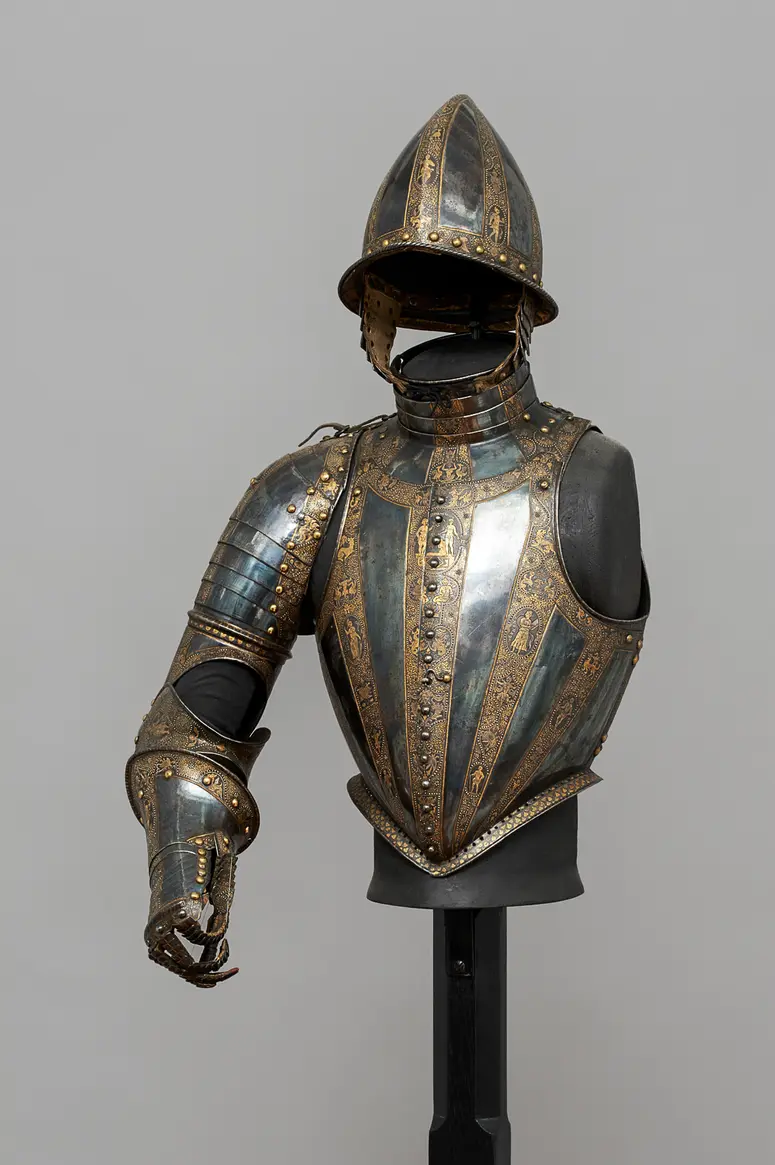
Halbharnisch
um 1575 | Don Juan de Austria
John of Austria (Don Juan de Austria) was the illegitimate son of the widowed Emperor Charles V and Barbara Blomberg, a burgher’s daughter from Regensburg. Although Charles had the boy brought to Spain at an early age, it was Philip II who officially acknowledged him as his half-brother. On 7 October 1571, Don Juan commanded the combined fleet of the Holy League in the Battle of Lepanto, scoring a decisive victory over the Ottomans. In 1576, Philip II installed him as governor of the Spanish Netherlands, but Don Juan died of typhoid only two years later, aged only 31, while fighting the rebellious Dutch provinces.
Archduke Ferdinand II had written to Don Juan in 1577/78 to request one of his armours for the Armoury of Heroes he was assembling at Ambras Castle near Innsbruck. Don Juan’s death in October 1578 delayed the promised shipment, but early in 1579 Hannibal of Hohenems, a high-ranking leader of mercenary troops who had fought under Don Juan, promised to dispatch ‘a beautiful, splendid armour that had belonged to him [Juan], but that is still at Namur’ (einen schönen, prechtigen harnisch, der ihm auch gehöre, aber noch in Namur liege).
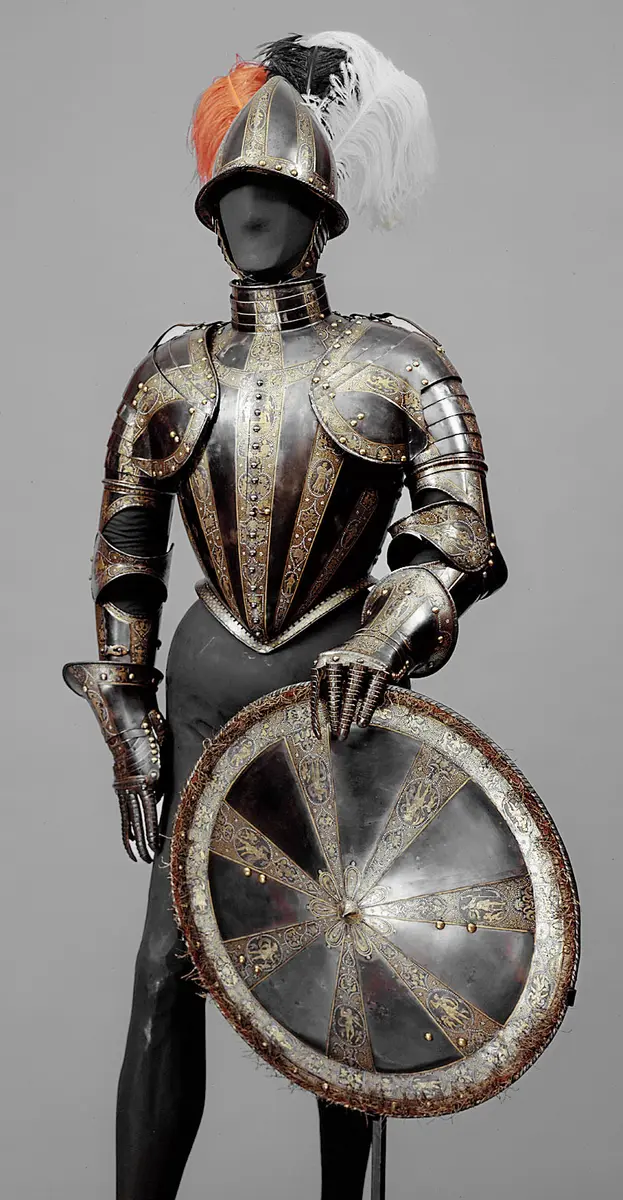
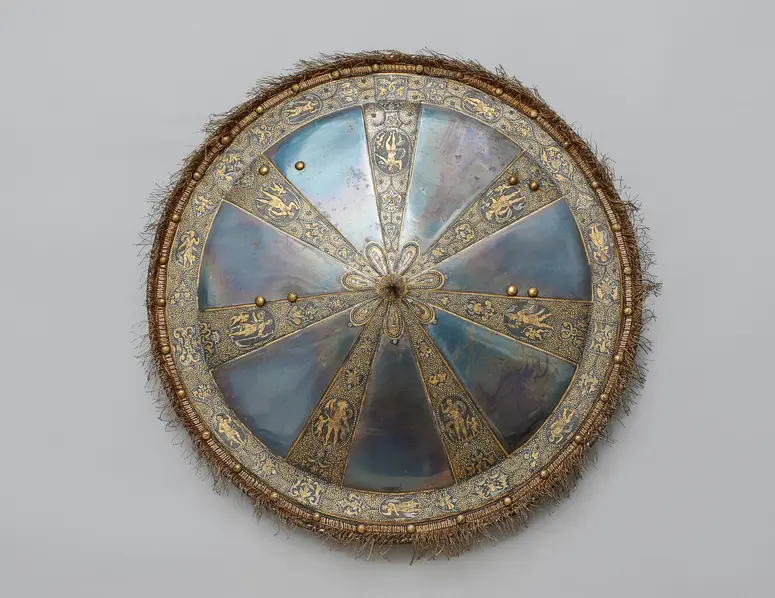
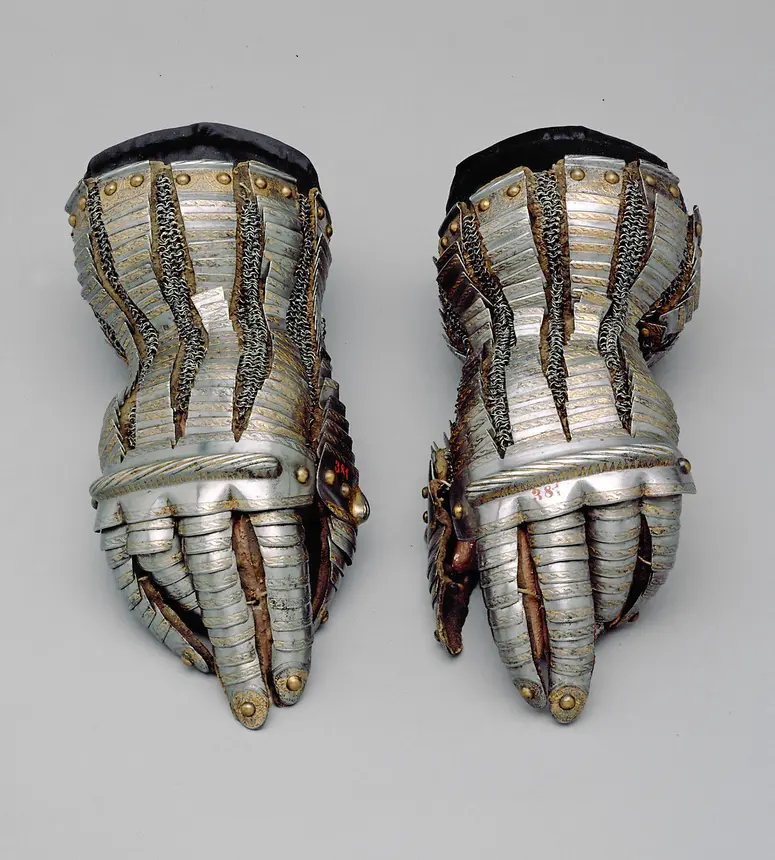
The inventory of Ferdinand’s estate, compiled after his death in 1596, lists two armours as having belonged to Don Juan ‘one whole and one half’ (ain ganze und ain halbe). The 1788 inventory, however, only lists ‘Armour without greaves and sabatons’ (Rüstung ohne Schienen und Schuh) and ‘another cuirass comprising backplate, breastplate, and bevor’ (ein anderer Leibküras aus Rückenstück, Brust und Kragen) with a vambrace and a gauntlet, a burgonet, and a round shield. All the pieces from this armour listed in 1788 survive (invs. A 1048, A 1048a, A 1049).
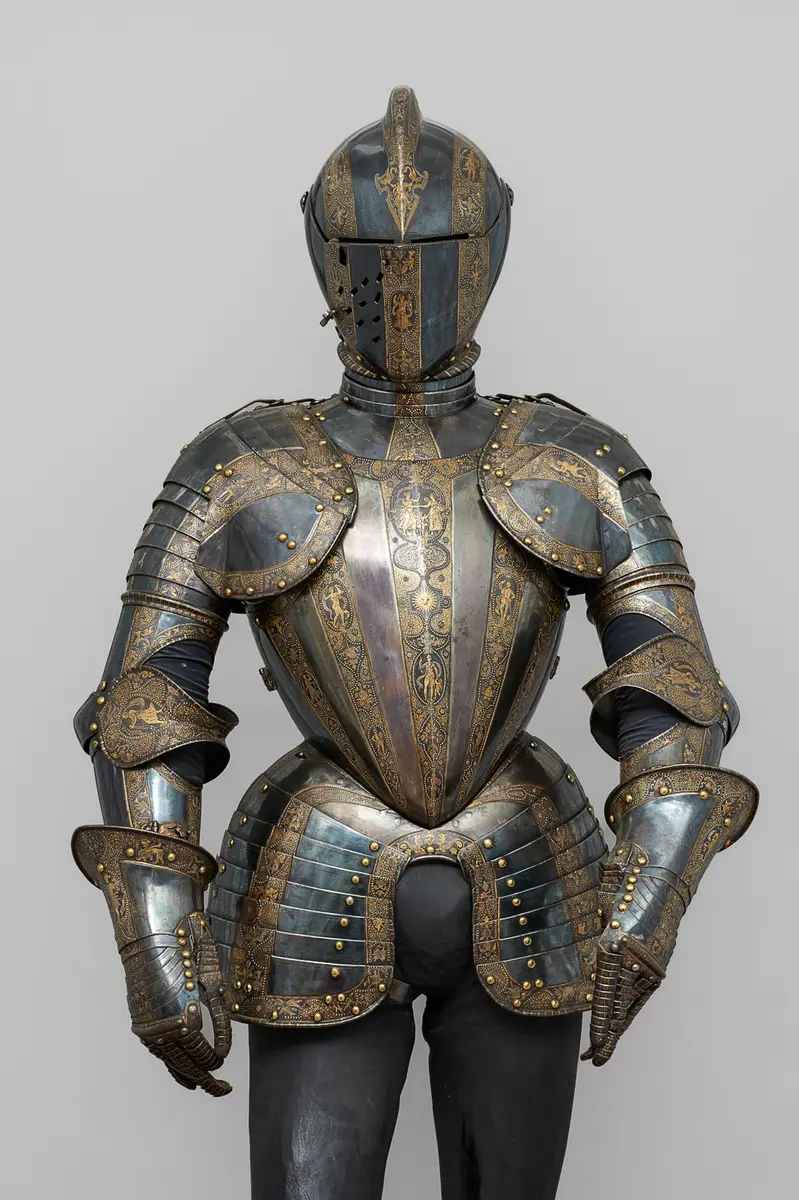
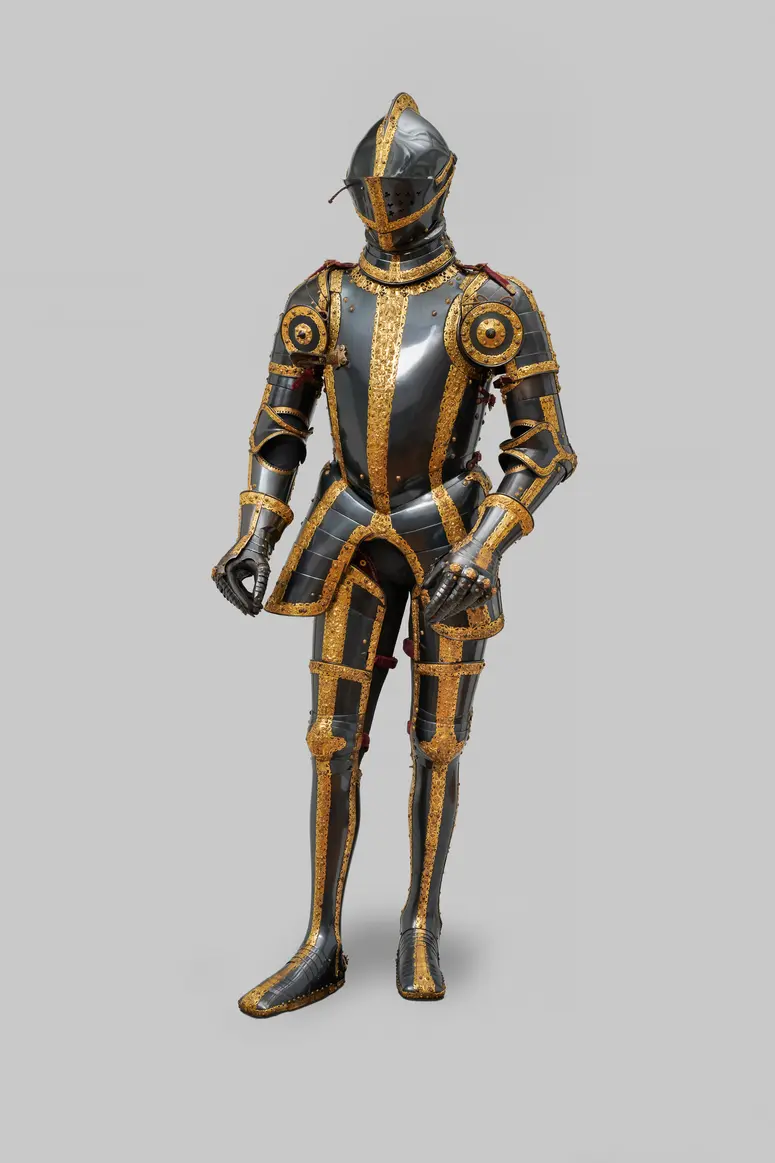
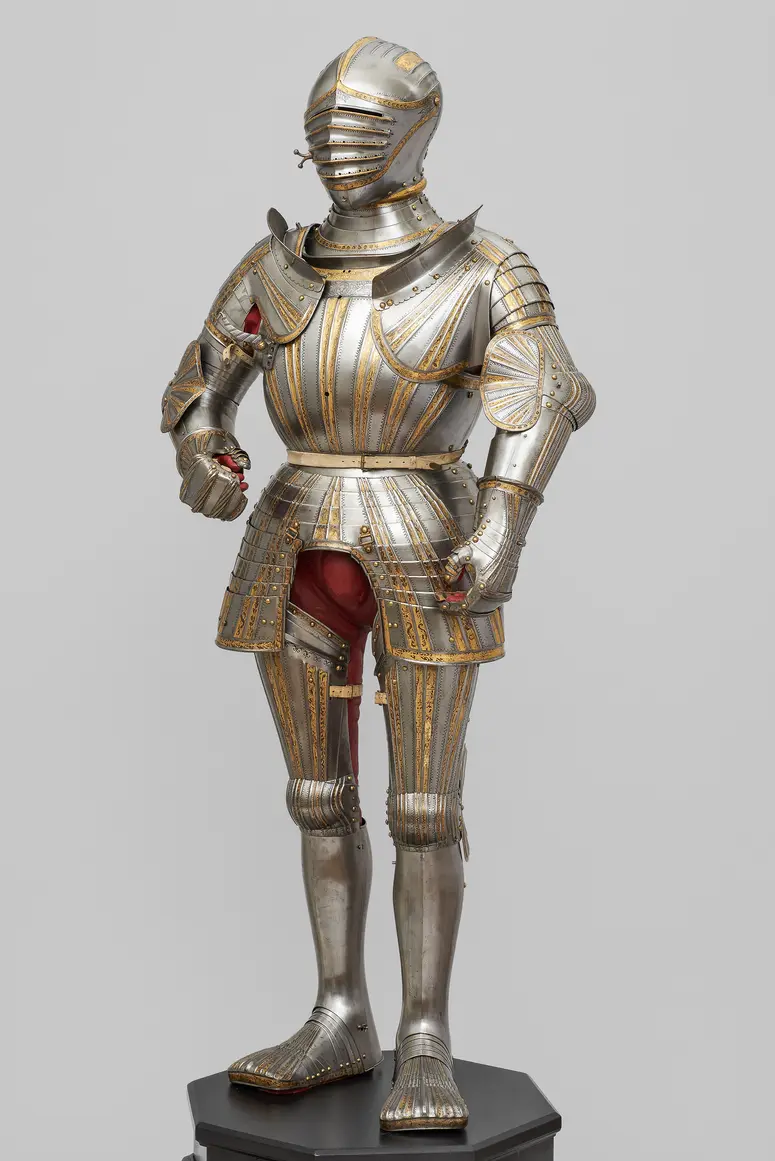
All pieces comprising this garniture are blued and decorated with bands damascened in gold and silver and edged in silvered beads. These decorative bands feature Christian and mythological allegories that reference the power of love and fame.
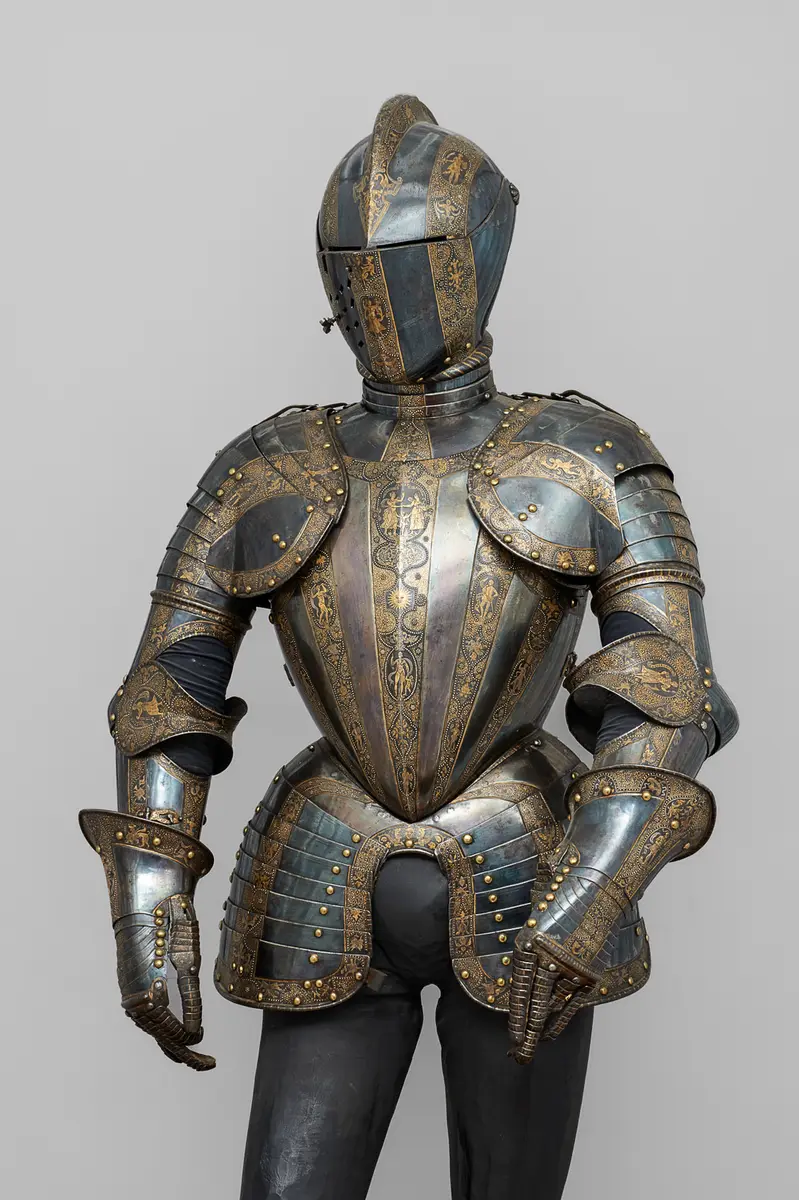
John of Austria (Don Juan de Austria) was the illegitimate son of the widowed Emperor Charles V and Barbara Blomberg, a burgher’s daughter from Regensburg. Although Charles had the boy brought to Spain at an early age, it was Philip II who officially acknowledged him as his half-brother. On 7 October 1571, Don Juan commanded the combined fleet of the Holy League in the Battle of Lepanto, scoring a decisive victory over the Ottomans. In 1576, Philip II installed him as governor of the Spanish Netherlands, but Don Juan died of typhoid only two years later, aged only 31, while fighting the rebellious Dutch provinces.
Archduke Ferdinand II had written to Don Juan in 1577/78 to request one of his armours for the Armoury of Heroes he was assembling at Ambras Castle near Innsbruck. Don Juan’s death in October 1578 delayed the promised shipment, but early in 1579 Hannibal of Hohenems, a high-ranking leader of mercenary troops who had fought under Don Juan, promised to dispatch ‘a beautiful, splendid armour that had belonged to him [Juan], but that is still at Namur’ (einen schönen, prechtigen harnisch, der ihm auch gehöre, aber noch in Namur liege).
The inventory of Ferdinand’s estate, compiled after his death in 1596, lists two armours as having belonged to Don Juan ‘one whole and one half’ (ain ganze und ain halbe). The 1788 inventory, however, only lists ‘Armour without greaves and sabatons’ (Rüstung ohne Schienen und Schuh) and ‘another cuirass comprising backplate, breastplate, and bevor’ (ein anderer Leibküras aus Rückenstück, Brust und Kragen) with a vambrace and a gauntlet, a burgonet, and a round shield. All the pieces from this armour listed in 1788 survive (invs. A 1048, A 1048a, A 1049).
All pieces comprising this garniture are blued and decorated with bands damascened in gold and silver and edged in silvered beads. These decorative bands feature Christian and mythological allegories that reference the power of love and fame.
Owner:
Don Juan de Austria , ill. Sohn des Karl V. von Habsburg (1547 - 1578) DNB
Time:
um 1575
Object Name
Halbharnisch
Culture
Mailand
Material/technology:
Eisen geschmiedet, getrieben, gebläut. Dekor: teils mit Gold, Silber, Silberperlen tauschiert, teils graviert, teils punziert. Nietkappen, Riemenzungen: Messing, teils feuervergoldet. Schnallen, Visierbolzen, Flügelmutter: Eisen, teils mit Gold tauschiert. Scharniere: Eisen, teils geätzt, teils feuervergoldet. Federhülse: Messing, feuervergoldet, teils graviert. Leder.
Copyright
Kunsthistorisches Museum, Hofjagd- und Rüstkammer
Invs.
Hofjagd- und Rüstkammer, A 1048
Browse more
Similar items you might be interested in

Maximilian II. (1564-1576), Kaiser vor 1552
Karl I. (V.) (1516-1556), als Karl I. König von Spanien, ab 1519 deutscher König, ab 1520 Kaiser vor 1535

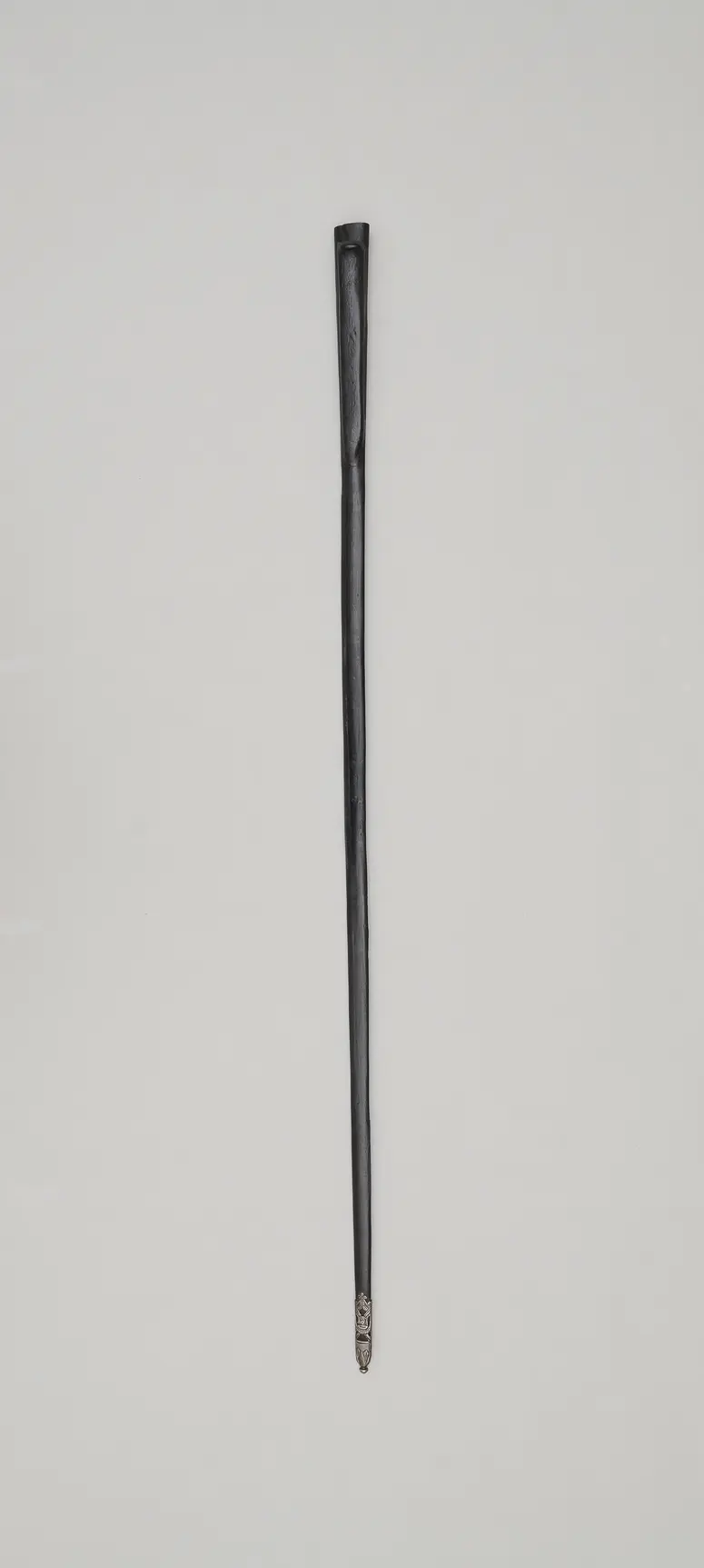

Ferdinand II. (1564-1595), Erzherzog von Österreich und Landesherr von Tirol 1559/60
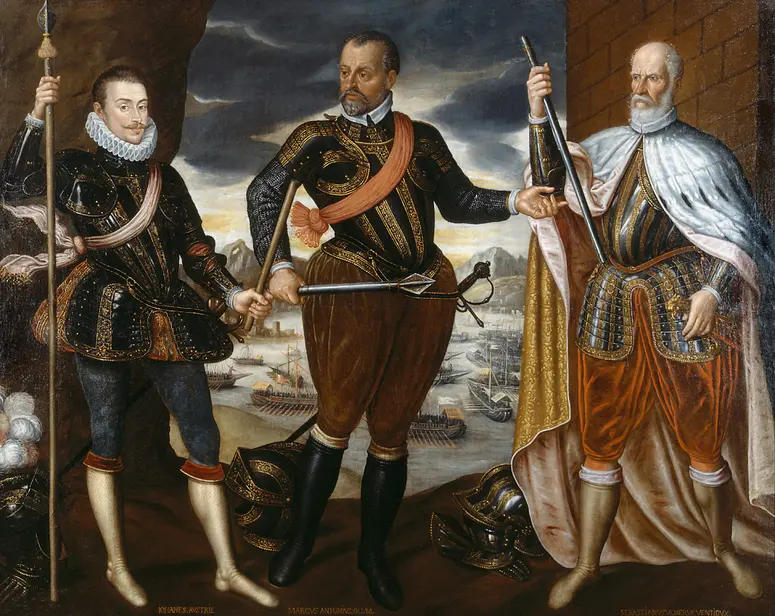
Die Sieger der Seeschlacht von Lepanto 1571 Italienisch, Florenz (?) um 1575
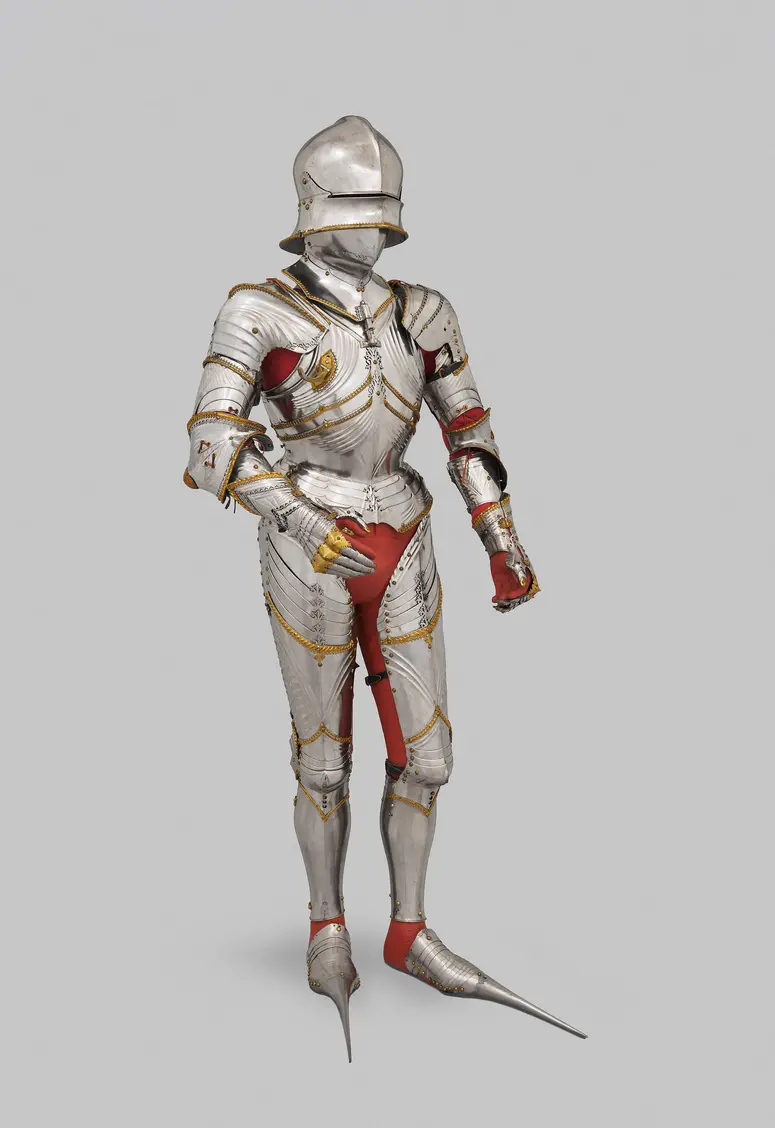
Maximilian I. (1477-1519), seit 1493 deutscher König, 1508 Kaiser um 1485
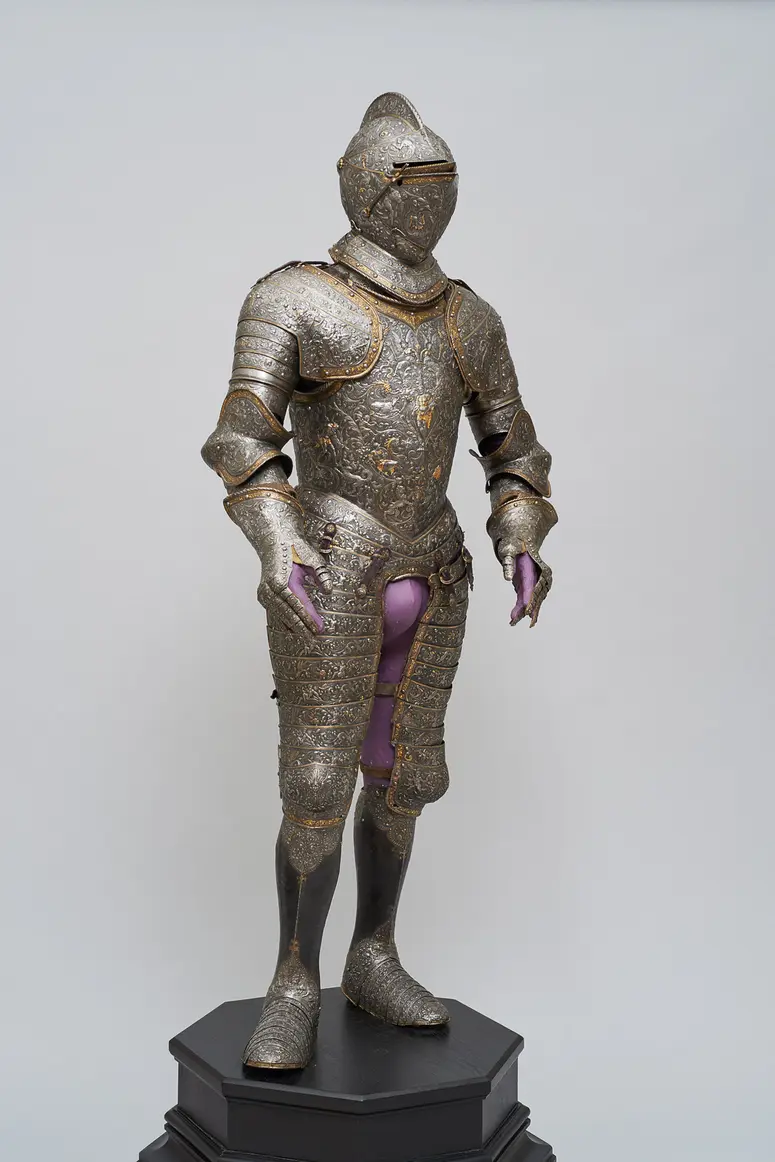
Maximilian II. (1564-1576), Kaiser um 1555-1560

Philipp II. (1556-1598), König von Spanien, seit 1580 als Philipp I. König von Portugal 1544
Maximilian II. (1564-1576), Kaiser datiert 1557

Maximilian III. (1585-1618), Erzherzog von Österreich, Koadjutor und ab 1590 Hochmeister des Deuts um 1575
Ferdinand II. (1564-1595), Erzherzog von Österreich und Landesherr von Tirol c. 1547 - 1550
Reichsfreiherr Wilhelm Sohn d. Caspar von Rogendorf 1523
Matthäus Lang von Wellenburg (1519-1540), Erzbischof von Salzburg 1511
Konrad von Boineburg (von Bemelberg) um 1535-1540