Long Dagger
between 1496/1506 | Philipp I. (1482-1506), Herzog von Burgund, seit 1504 König von Kastilien und León
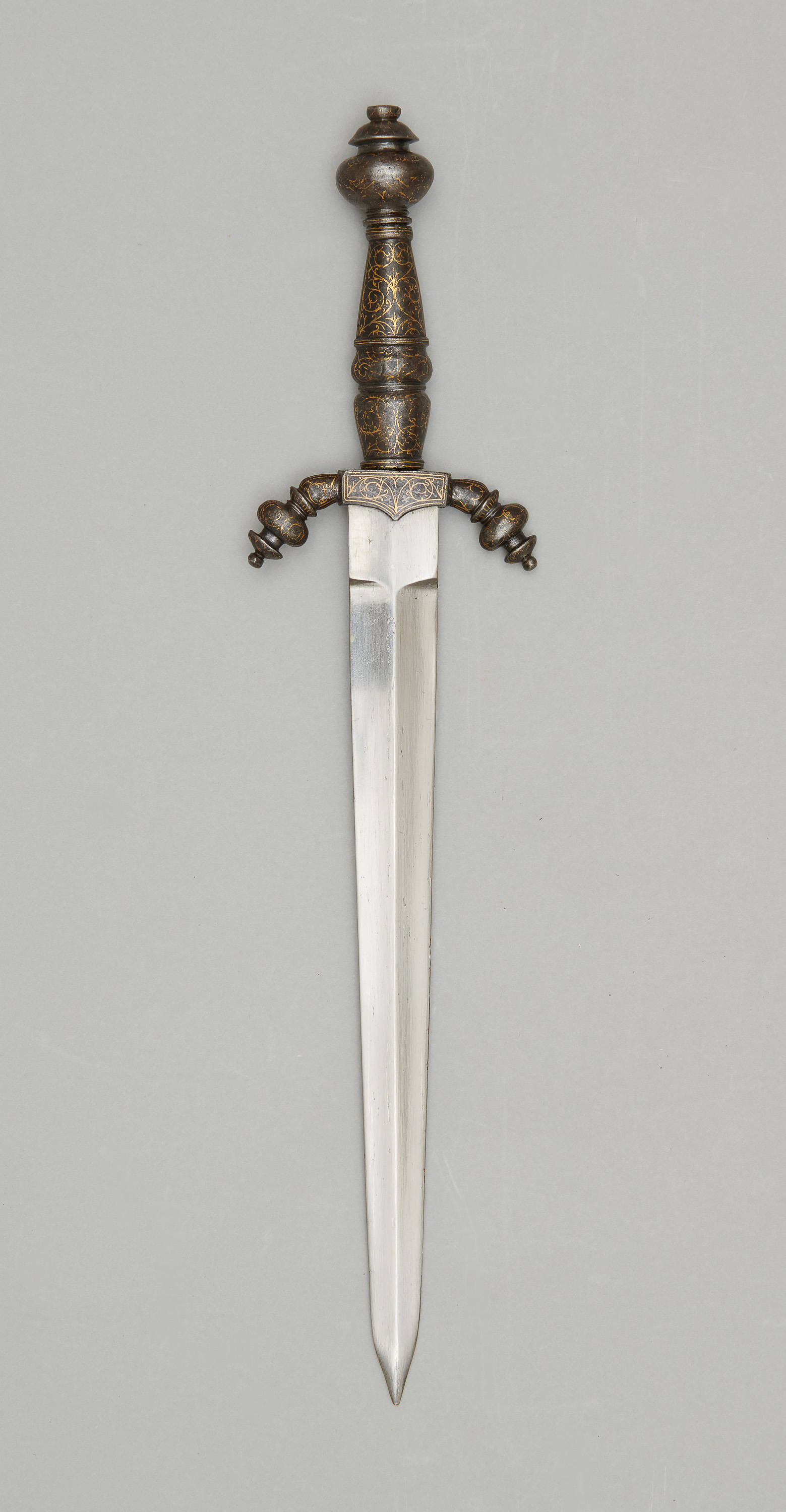
Note the elegantly curved hilt with its peaked roof-like pommel. Like the pommel, the guard is curved; on the side of the blade, it is mounted on wood and encased in a hexagonal, engraved, and gilded piece of sheet metal. The unusual shape of the hilt and the etched decoration at the base of the blade identify the dagger as the work of a Spanish swordsmith.
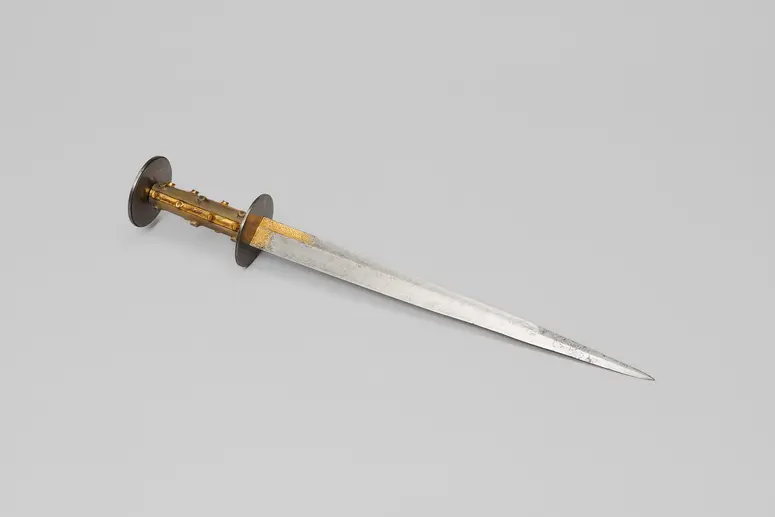
The etched decoration of roughly drawn garlands is closely related to that found on the blade of a contemporary rondel dagger that is also now in the Imperial Armoury (inv. A 55). The latter’s grip imitates knots on a tree trunk, while its striped decoration recalls the arms of Burgundy, a shield set with blue and gold bars (bendy azure and Or). On the basis of this symbolic reference to the Duchy of Burgundy and the stylistic similarities to Spanish art mentioned above, the two daggers have been attributed to Philip the Handsome, the first Habsburg on the throne of Castile (Spain).
Both the long dagger of Philip I and the rondel dagger mentioned above were originally in the collection assembled by Archduke Ferdinand II at Ambras Castle near Innsbruck. We do not know how these two weapons found their way there in the course of the sixteenth century. They may have been either mementos owned by Maximilian I or gifts presented to Ferdinand by Emperor Charles V or King Philip II of Spain.
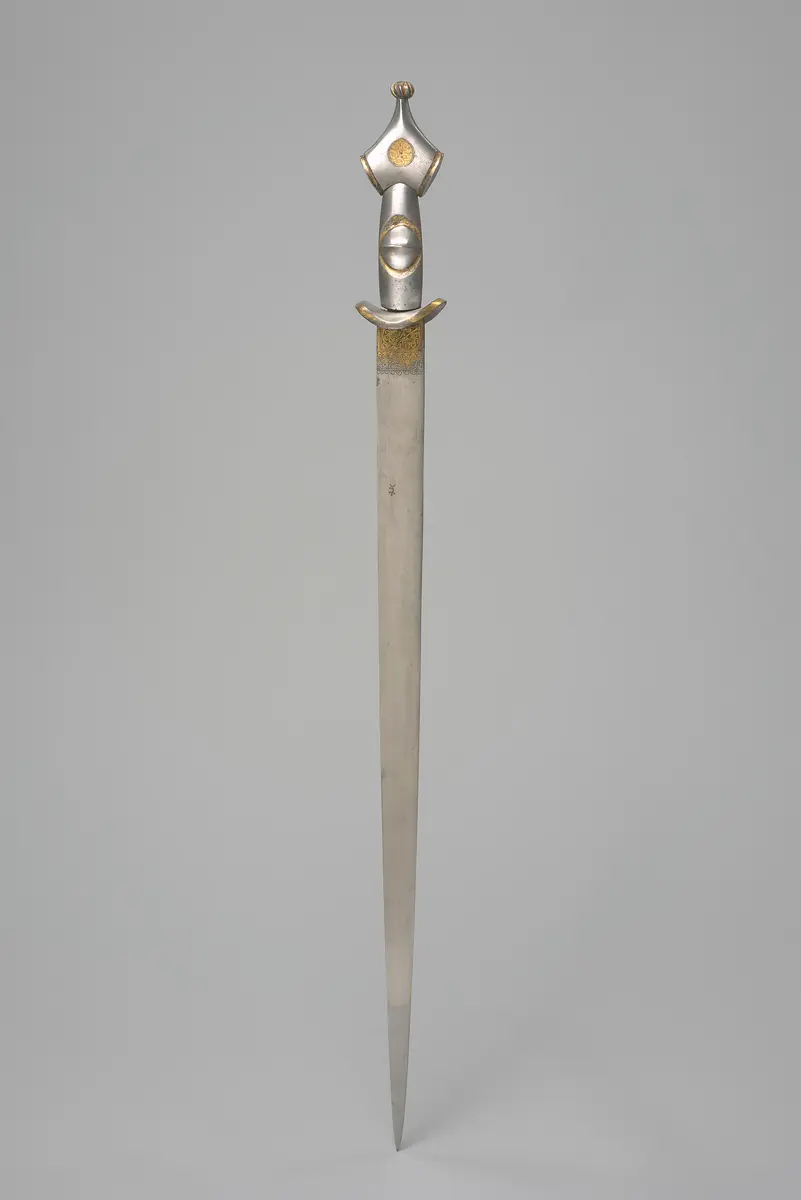
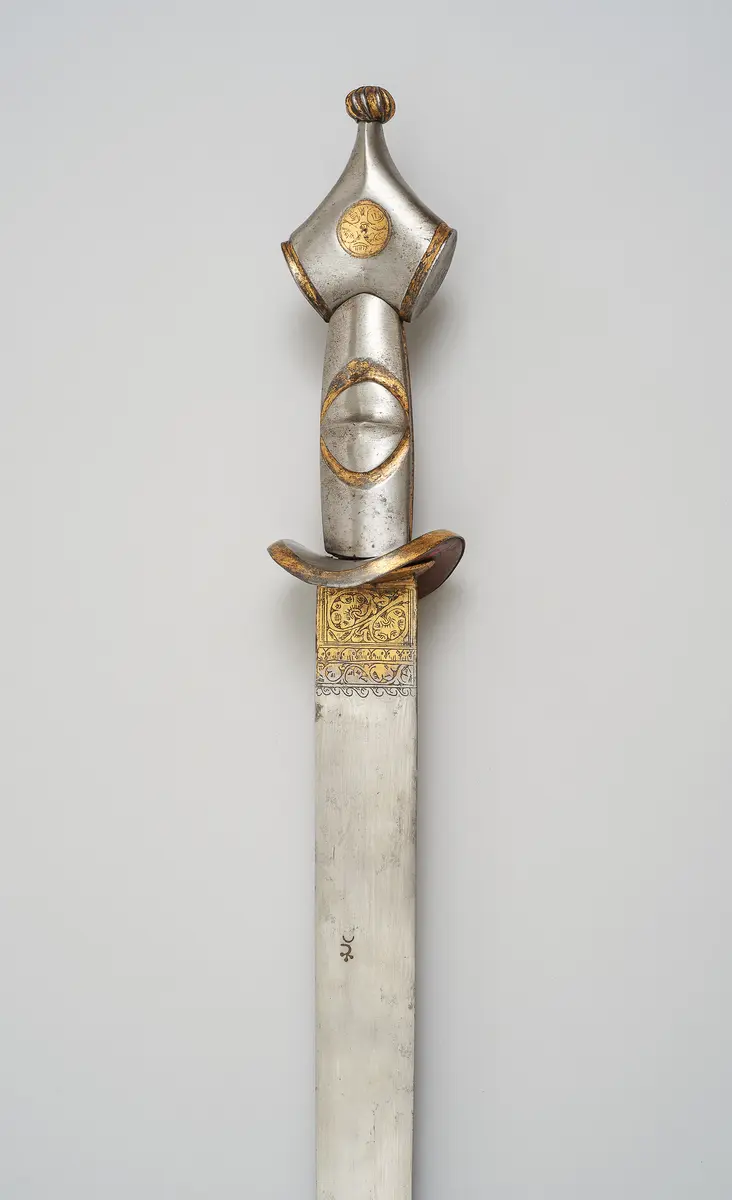
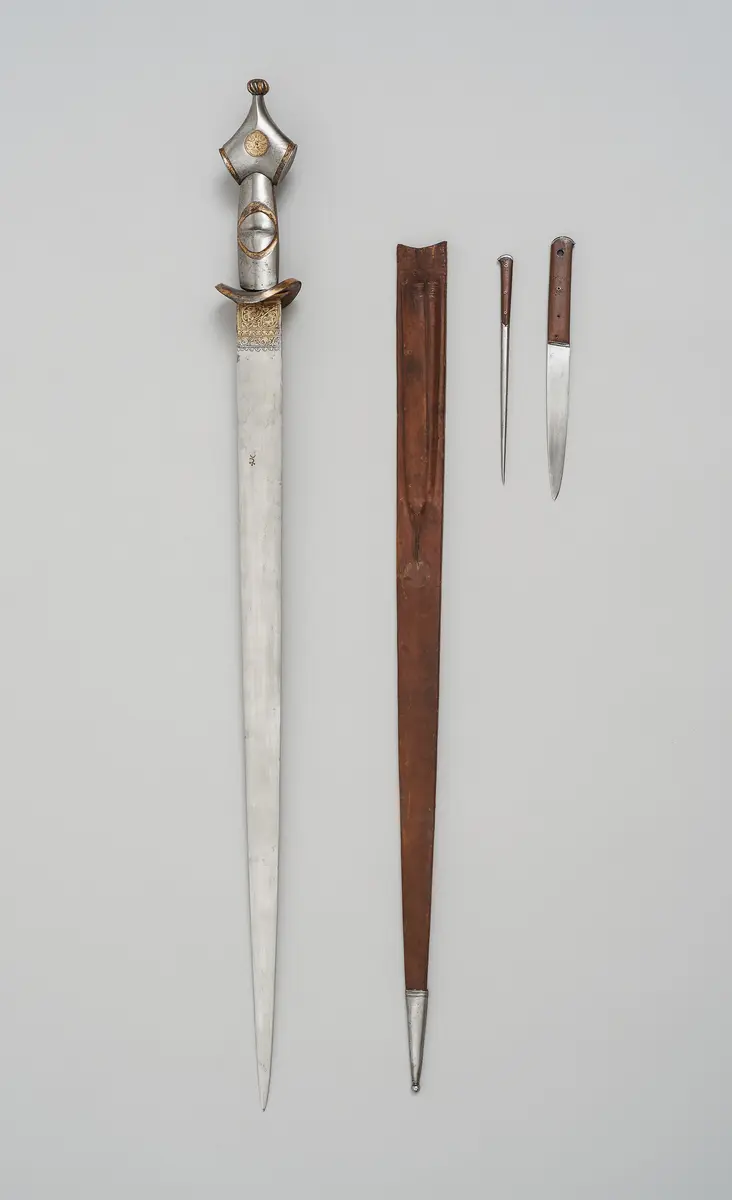
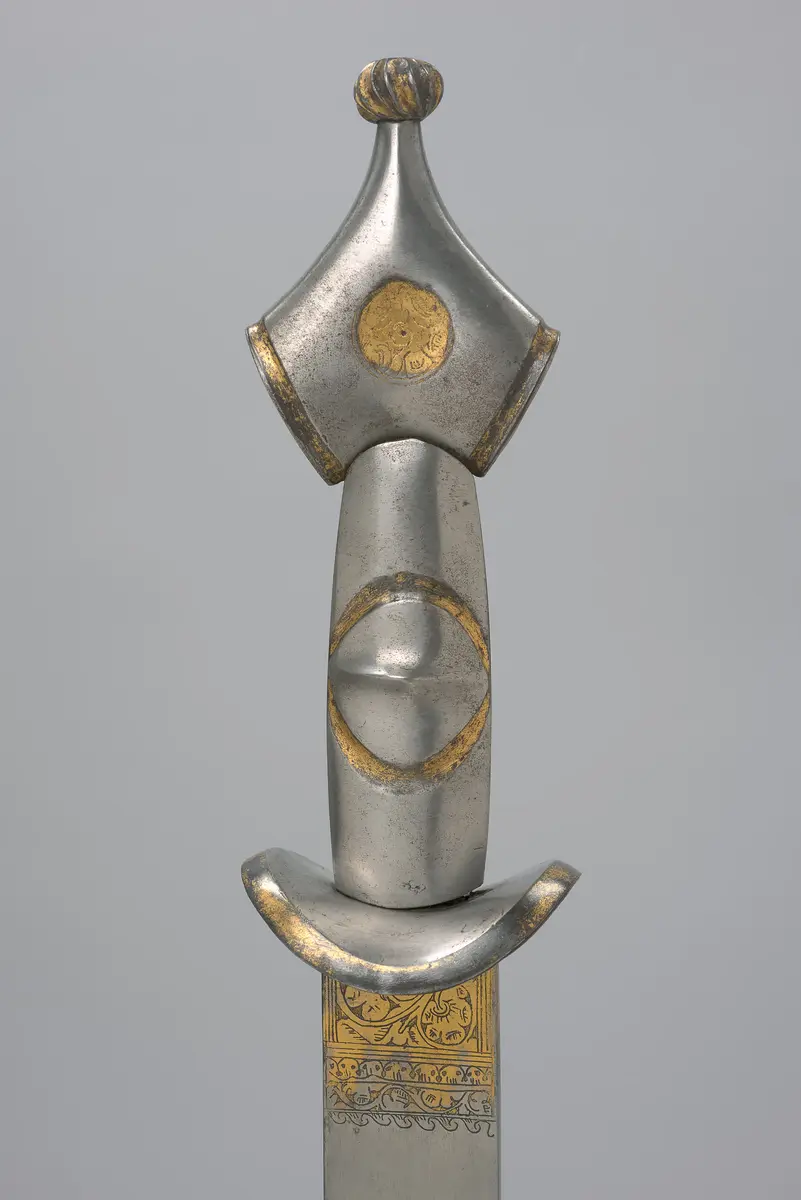
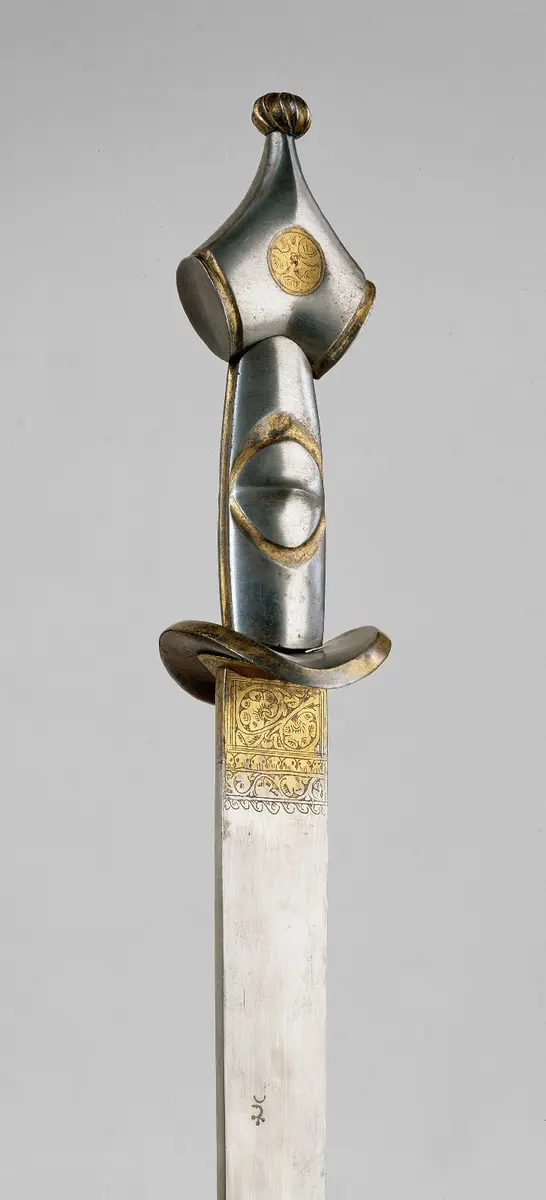
Note the elegantly curved hilt with its peaked roof-like pommel. Like the pommel, the guard is curved; on the side of the blade, it is mounted on wood and encased in a hexagonal, engraved, and gilded piece of sheet metal. The unusual shape of the hilt and the etched decoration at the base of the blade identify the dagger as the work of a Spanish swordsmith.
The etched decoration of roughly drawn garlands is closely related to that found on the blade of a contemporary rondel dagger that is also now in the Imperial Armoury (inv. A 55). The latter’s grip imitates knots on a tree trunk, while its striped decoration recalls the arms of Burgundy, a shield set with blue and gold bars (bendy azure and Or). On the basis of this symbolic reference to the Duchy of Burgundy and the stylistic similarities to Spanish art mentioned above, the two daggers have been attributed to Philip the Handsome, the first Habsburg on the throne of Castile (Spain).
Both the long dagger of Philip I and the rondel dagger mentioned above were originally in the collection assembled by Archduke Ferdinand II at Ambras Castle near Innsbruck. We do not know how these two weapons found their way there in the course of the sixteenth century. They may have been either mementos owned by Maximilian I or gifts presented to Ferdinand by Emperor Charles V or King Philip II of Spain.
Owner:
Philipp I. (1482-1506), Herzog von Burgund, seit 1504 König von Kastilien und León (1478 - 1506) DNB
Time:
between 1496/1506
Object Name
Long Dagger
Culture
Spanisch
Material/technology:
Blade: Iron, forged, partly etched, partly fire-gilded. Inlay with brass. Guard: Sheet iron, fire-gilded, partly etched. Grip: Sheet iron, partly etched, partly fire-gilded. Wood. Leather. Pommel: Sheet iron, partly etched, partly fire-gilded. Cast iron, fire-gilded.
Dimensions:
Schwert: L 88,5 cm x B 6,8 cm x T 6 cm, Gewicht: 0,85 kg
Scheide: L 72,8 cm x B 4,4 cm x T 2,5 cm, Gewicht: 0,20 kg
Messer: L 22,6 cm x B 1,9 cm x T 0,7 cm
Pfriem: L 19,8 cm x B 1,9 cm x T 0,6 cm
Stamp / markings
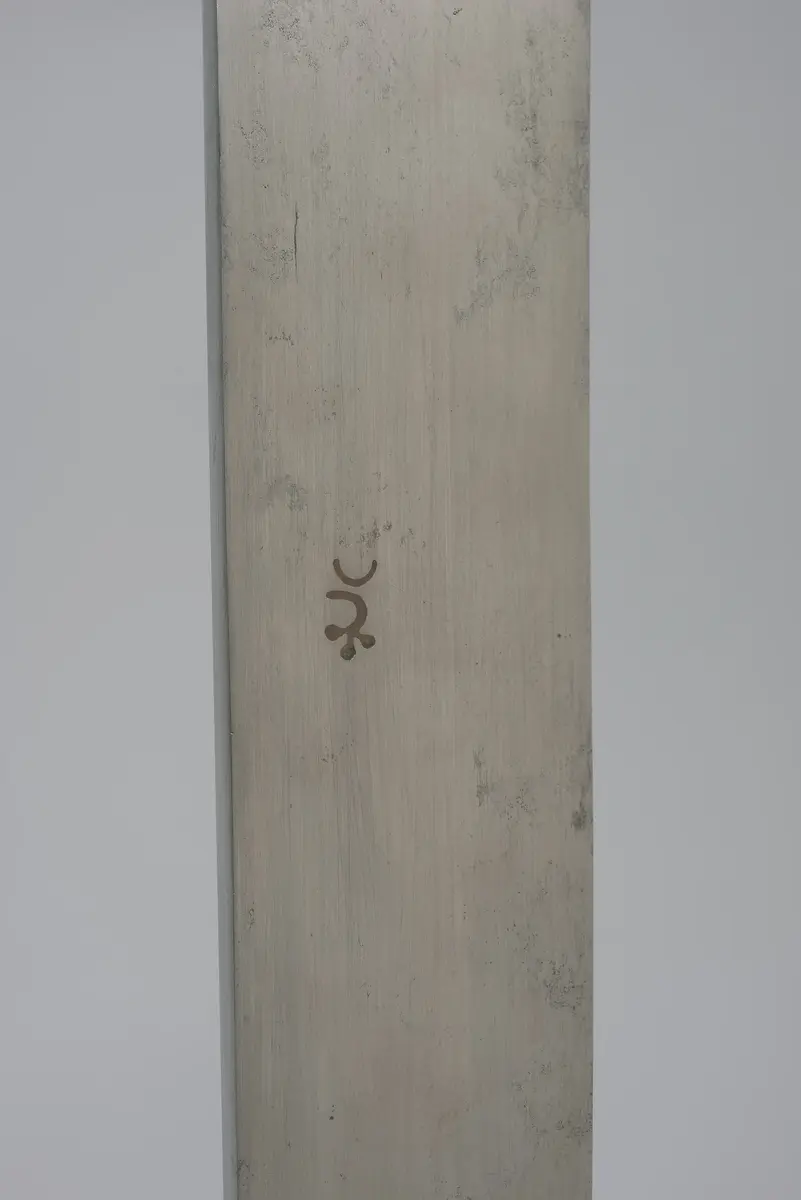
Klinge: einseitig ein Klingenschmiedstempel
Copyright
Kunsthistorisches Museum, Hofjagd- und Rüstkammer
Invs.
Hofjagd- und Rüstkammer, A 428
Browse more
Similar items you might be interested in
Maximilian II. (1564-1576), Kaiser 1545-1575


Philipp I. (1482-1506), Herzog von Burgund, seit 1504 König von Kastilien und León around 1450

Ferdinand II. (1564-1595), Erzherzog von Österreich und Landesherr von Tirol 1559
Vorlegebesteck oder Jagdbesteck: Set of hunting knives comprising a carving, slicing and serving knife Maximilian I. (1477-1519), seit 1493 deutscher König, 1508 Kaiser 1475 - 1477
Ulrich (1498-1550), Herzog von Württemberg c. 1525-1530
Philipp I. (1482-1506), Herzog von Burgund, seit 1504 König von Kastilien und León zwischen 1496 und 1506
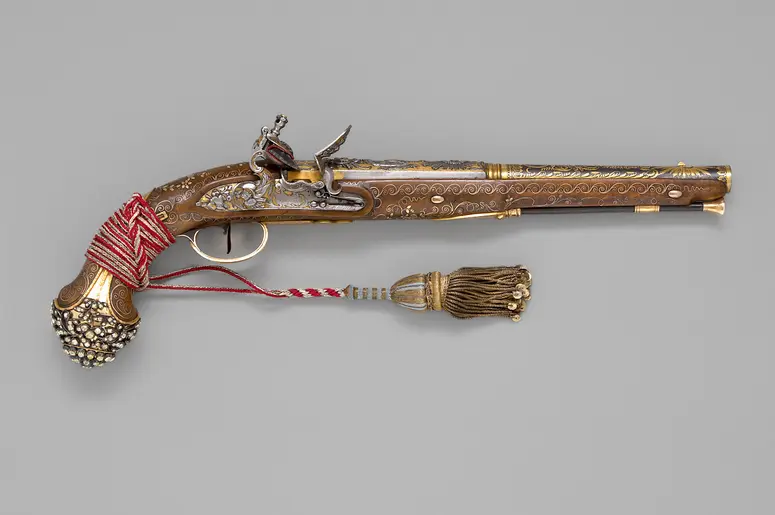

Ferdinand II. (1564-1595), Erzherzog von Österreich und Landesherr von Tirol um 1500 (Scheide: um 1540/60)
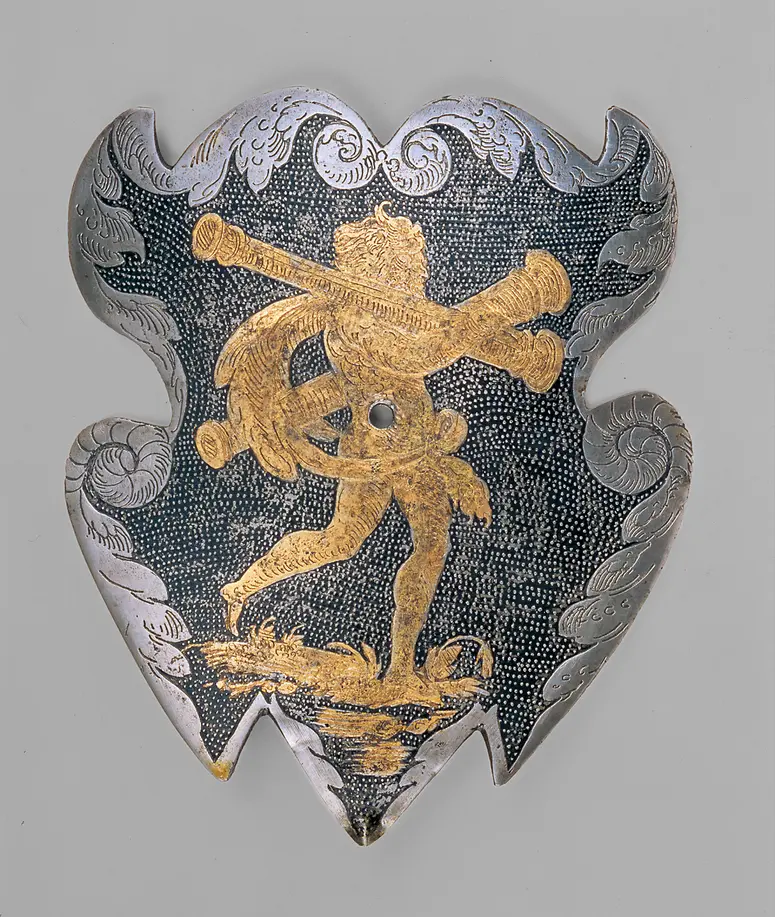
Karl I. (V.) (1516-1556), als Karl I. König von Spanien, ab 1519 deutscher König, ab 1520 Kaiser c. 1545