Rundschild aus einem all'antica ensemble
Together with a burgonet surmounted by a winged dragon (inv. A 802), this shield functioned as an all’antica garniture. We may assume that Archduke Ferdinand II wore it at some court festivity during his tenure as regent of Bohemia. In the inventory compiled after his death in 1596, these pieces are listed as ‘A handsome round shield with damascened repoussé work, with it a helmet with a dragon in the same manner’ (Ain schöne rundell von tribner und tauschierarbait, darbei die hauben mit dem lindwurmb von der gleichen arbait).
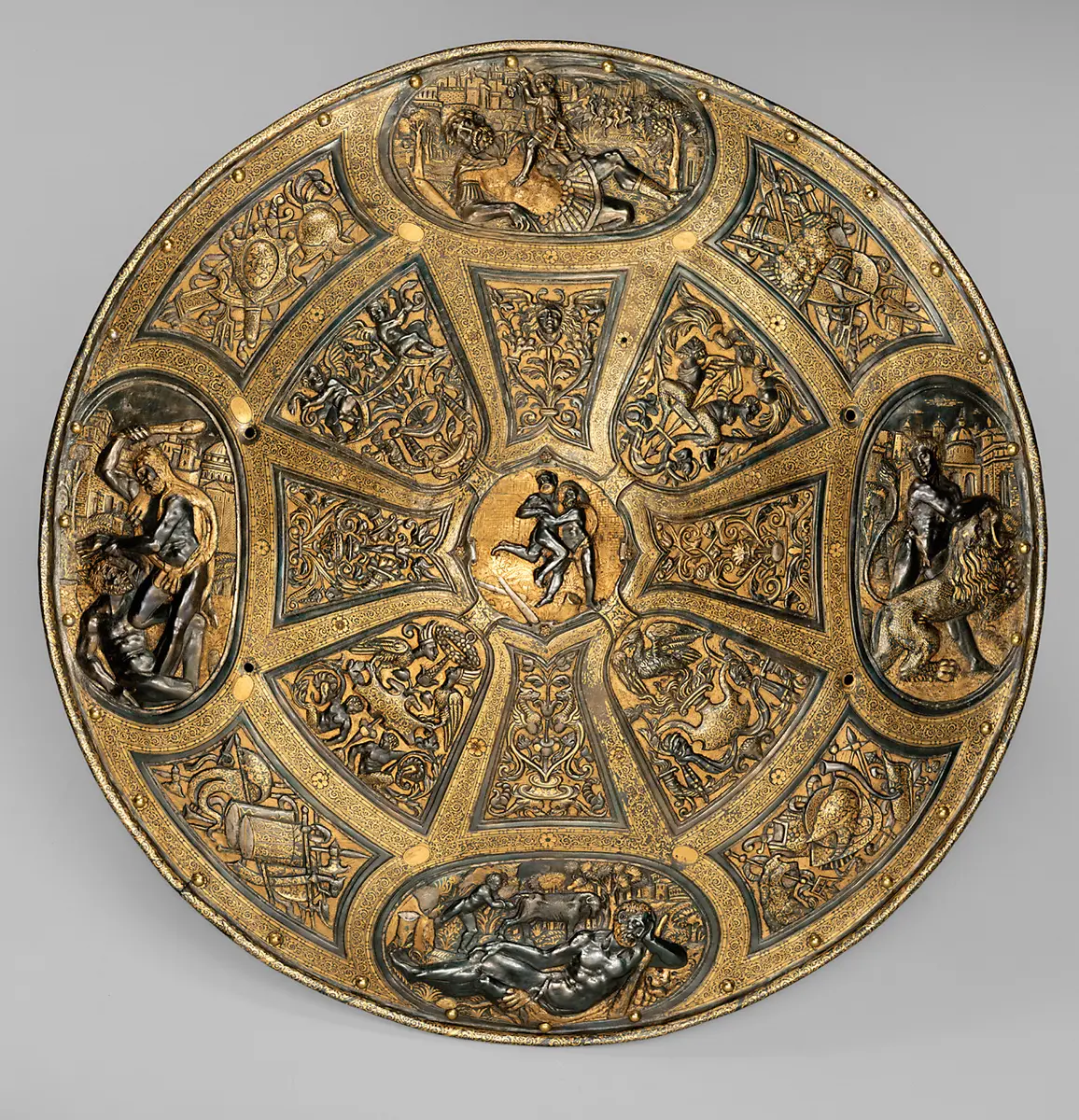
In the centre is a depiction of Hercules wrestling with Antaeus. Hercules defeated the (almost) invincible giant by exploiting his one weakness. Antaeus was the son of Poseidon and Gaia, the personification of the earth, and his strength was replenished every time he touched the ground. By lifting Antaeus up in the air, Hercules was able to overcome him. This central scene is framed by vegetal and figurative grotesques. The broad rim features trophies, and in four oval fields scenes depicting David decapitating Goliath, Samson vanquishing the lion, Hercules asleep while the giant Cacus is stealing one of his cows, and Hercules slaying Busiris.
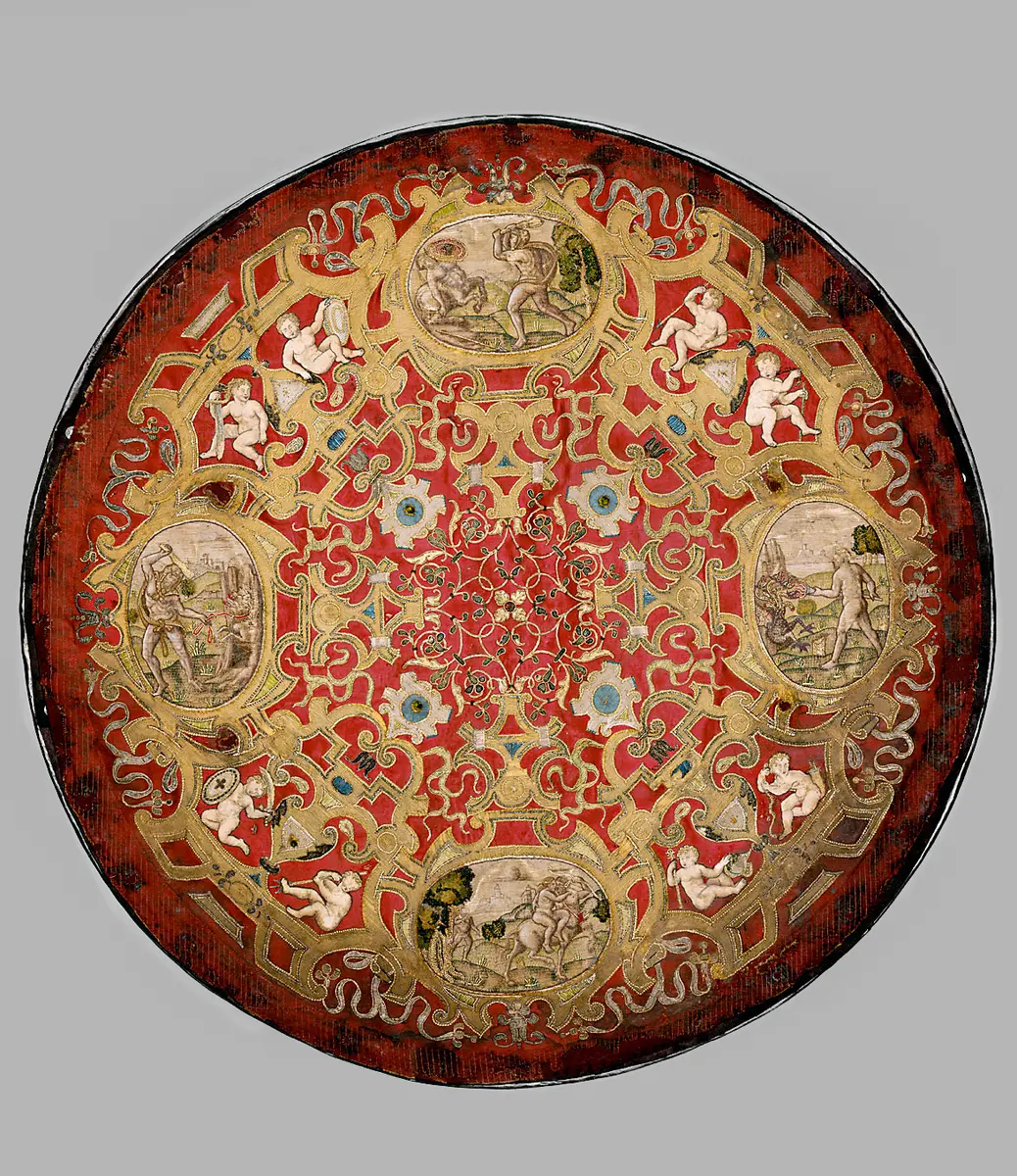
The reverse of the shield is particularly interesting, because its splendid lining has survived (see the back cover of this book). A ground of crimson satin has been lavishly embroidered with gold garlands, polychrome grotesques, and putti. Arranged along the rim are four framed ovals depicting stories from the life of Hercules, executed in polychrome silk embroidery: Hercules killing the centaur Nessus, Hercules battling the Lernaean Hydra, the centaur Nessus abducting Hercules’ wife, Deianira, and Hercules capturing Cerberus, the three-headed guardian of the gates of hell.
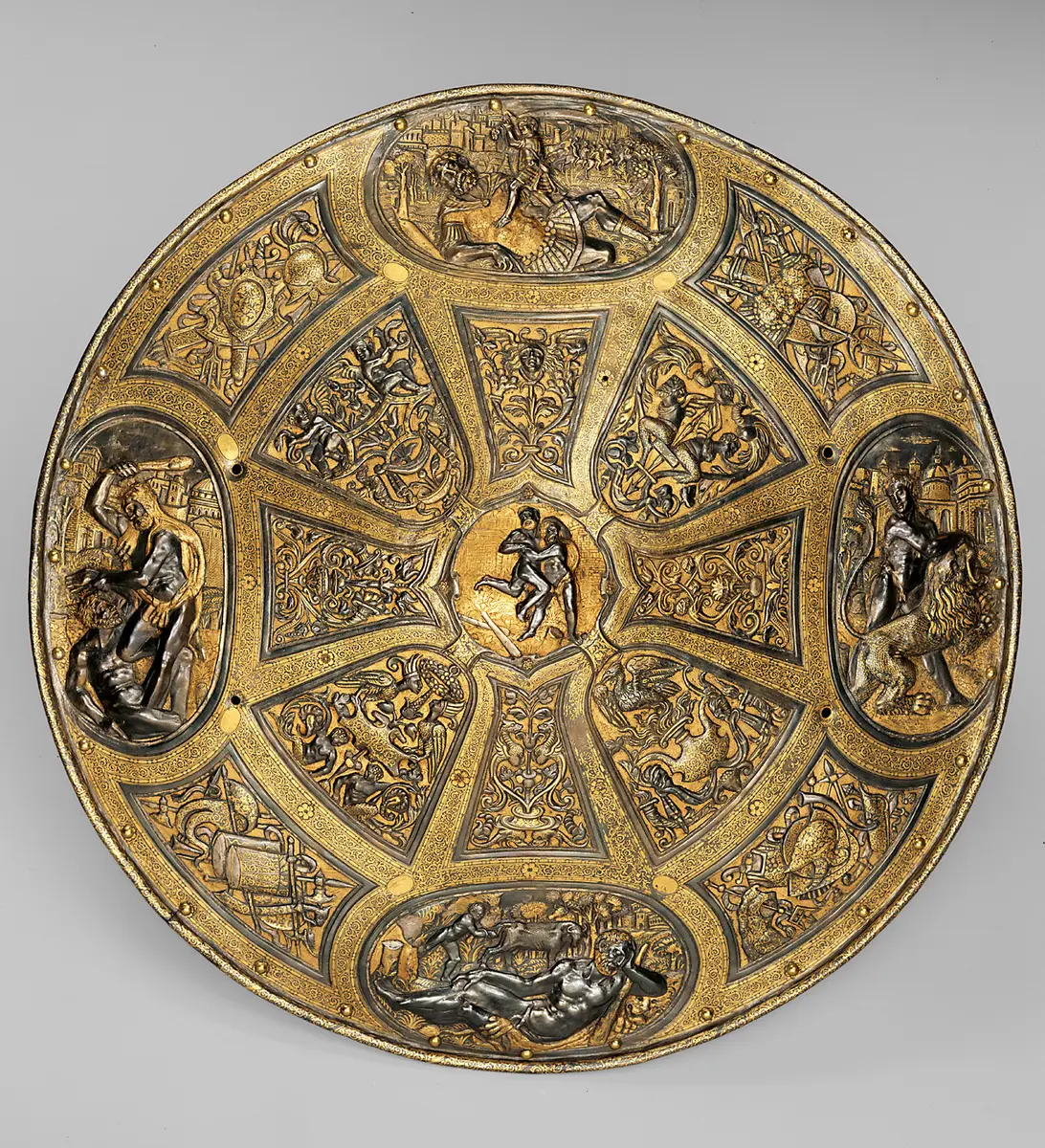
Together with a burgonet surmounted by a winged dragon (inv. A 802), this shield functioned as an all’antica garniture. We may assume that Archduke Ferdinand II wore it at some court festivity during his tenure as regent of Bohemia. In the inventory compiled after his death in 1596, these pieces are listed as ‘A handsome round shield with damascened repoussé work, with it a helmet with a dragon in the same manner’ (Ain schöne rundell von tribner und tauschierarbait, darbei die hauben mit dem lindwurmb von der gleichen arbait).
In the centre is a depiction of Hercules wrestling with Antaeus. Hercules defeated the (almost) invincible giant by exploiting his one weakness. Antaeus was the son of Poseidon and Gaia, the personification of the earth, and his strength was replenished every time he touched the ground. By lifting Antaeus up in the air, Hercules was able to overcome him. This central scene is framed by vegetal and figurative grotesques. The broad rim features trophies, and in four oval fields scenes depicting David decapitating Goliath, Samson vanquishing the lion, Hercules asleep while the giant Cacus is stealing one of his cows, and Hercules slaying Busiris.
The reverse of the shield is particularly interesting, because its splendid lining has survived (see the back cover of this book). A ground of crimson satin has been lavishly embroidered with gold garlands, polychrome grotesques, and putti. Arranged along the rim are four framed ovals depicting stories from the life of Hercules, executed in polychrome silk embroidery: Hercules killing the centaur Nessus, Hercules battling the Lernaean Hydra, the centaur Nessus abducting Hercules’ wife, Deianira, and Hercules capturing Cerberus, the three-headed guardian of the gates of hell.
Owner:
Ferdinand II. (1564-1595), Erzherzog von Österreich und Landesherr von Tirol (1529 - 1595) DNB
Artist:
zugeschrieben an Caterina Leuca (Cantona) , (Stickerin) (1542 - 1605) DNB
Time:
um 1560
Object Name
Rundschild aus einem all'antica ensemble
Culture
Mailand
Material/technology:
Eisen, geschmiedet, getrieben, teils ziseliert, teils brüniert, teils mit Silber und Gold tauschiert, teils graviert. Futter: Seidensamt, Seidenfäden, Silber- und Goldlahn, Baumwolle (modern). Leder (modern).
Dimensions:
H 10,6 cm x Dm 62 cm
Copyright
Kunsthistorisches Museum, Hofjagd- und Rüstkammer
Invs.
Hofjagd- und Rüstkammer, A 802a
Browse more
Similar items you might be interested in

Statuette, Kleinbronze, Bronze, Herkules, Herakles um 1550
Maximilian II. (1564-1576), Kaiser um 1555-1560
Herkules, Herkules-Torso, Fragment, Statue 2. Hälfte 16. Jahrhundert (?)
All'antica-Sturmhaube, sog. Löwen-Sturmhaube: All'antica burgonet, so-called Lion Burgonet Karl I. (V.) (1516-1556), als Karl I. König von Spanien, ab 1519 deutscher König, ab 1520 Kaiser c. 1550 - 1555
3 Arbeiten des Herkules, Arbeiten des Herkules, Relief Ende 16. Jahrhundert - Anfang 17. Jahrhundert
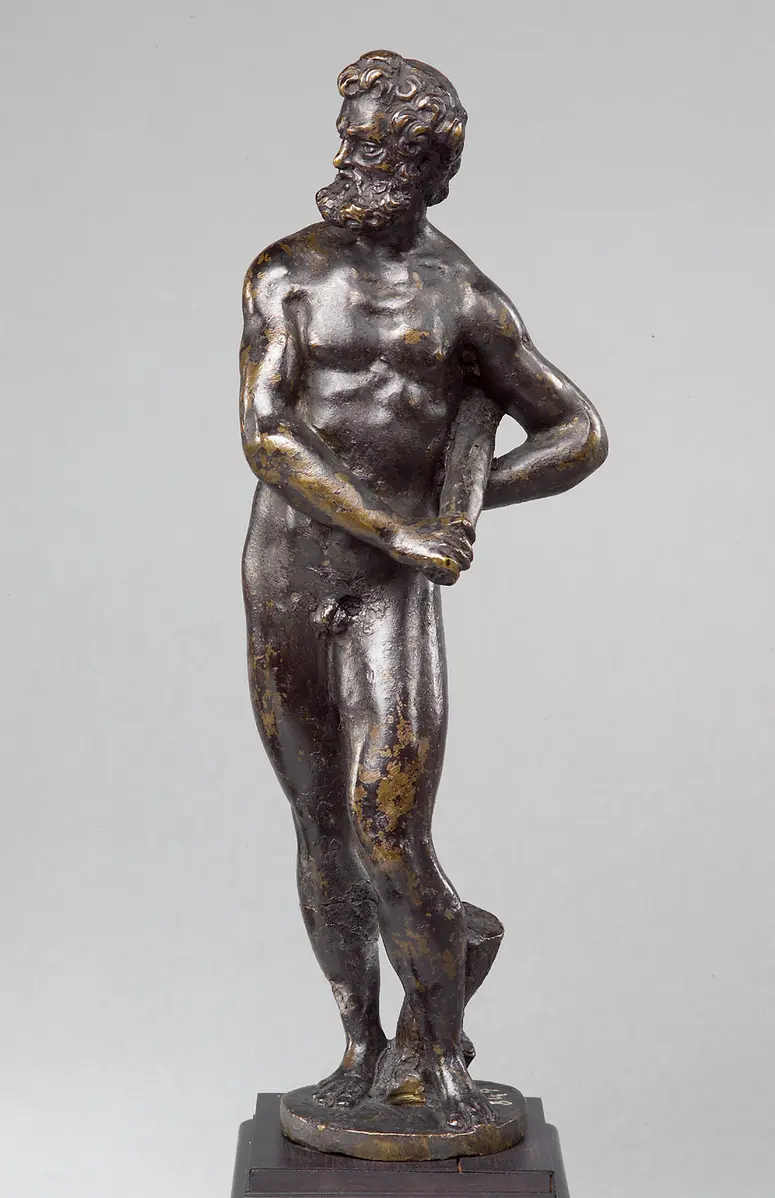
Statuette, Kleinbronze, Herkules, Herakles Nicolo Roccatagliata Ende 16. Jahrhundert / Anfang 17. Jahrhundert
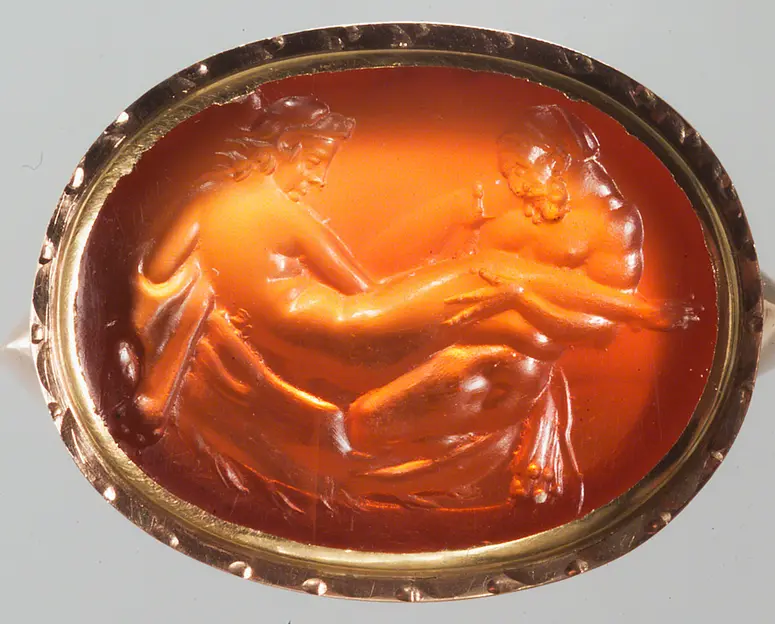
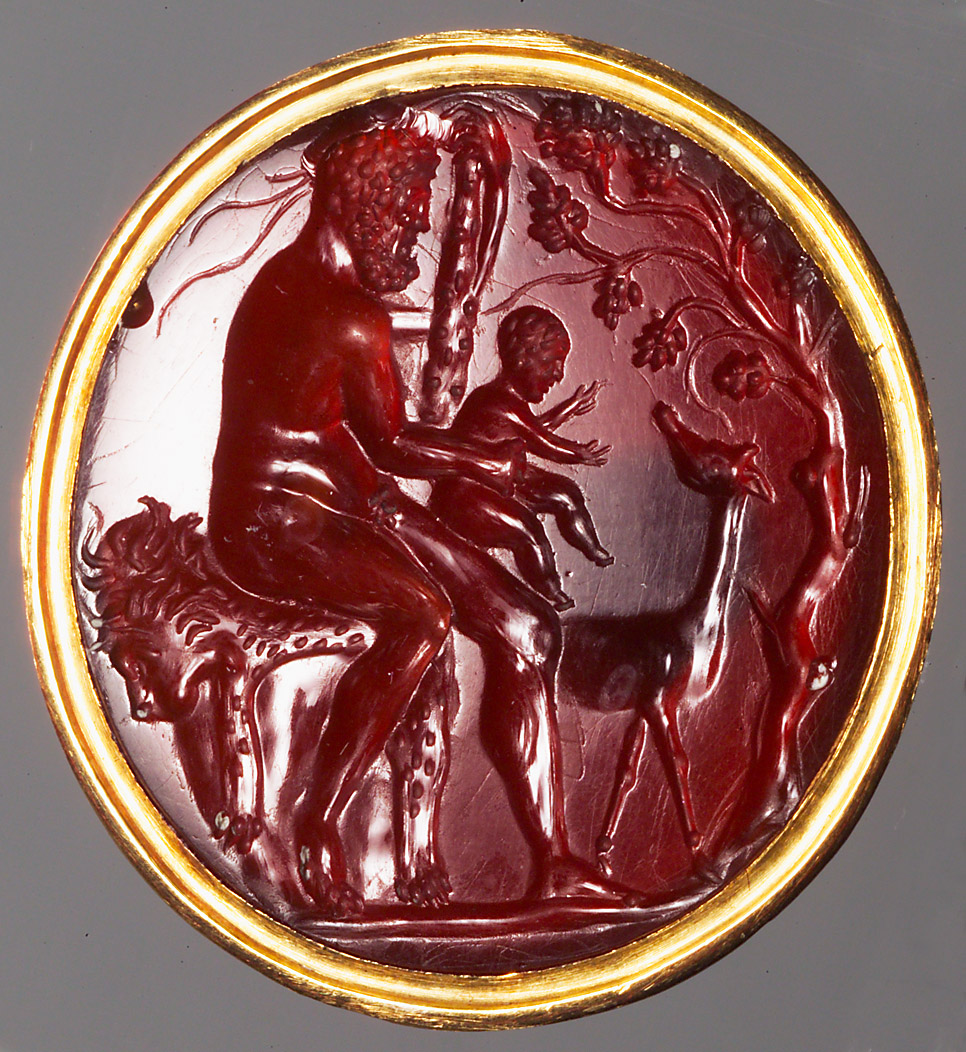
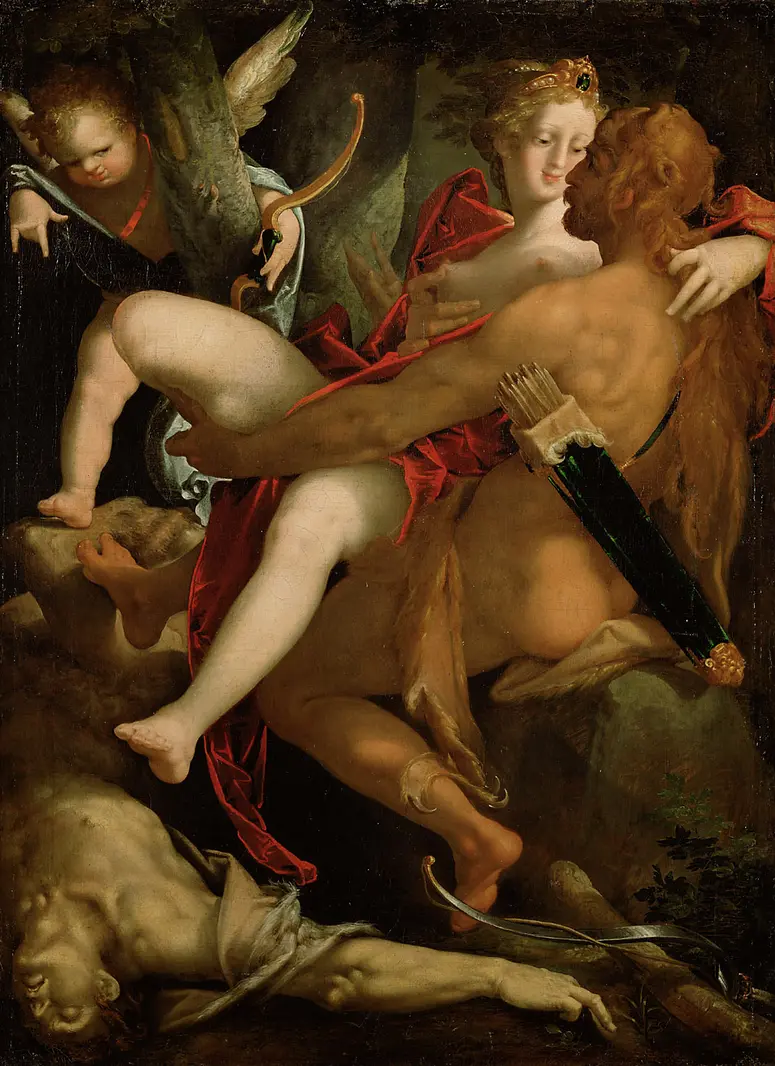
Gemme: Herkules wird von Amor gefesselt Römisch, Republikanisch 3. Viertel 1. Jh. v. Chr.
Statuette; Skulptur, Koralle, Naturalie, Herkules im Kampf mit der Hydra 2. Hälfte 16. Jahrhundert

Ferdinand II. (1564-1595), Erzherzog von Österreich und Landesherr von Tirol 1559/60
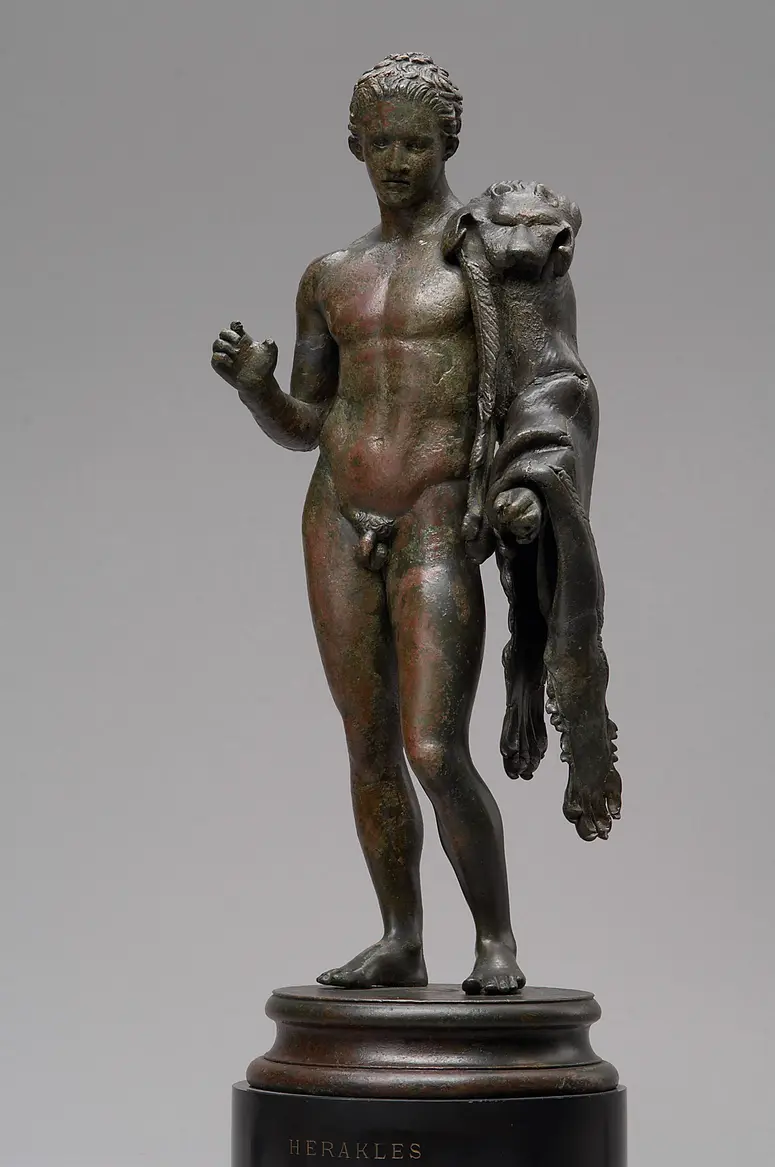
Statuette: Herkules Römisch, Kaiserzeit 1. - 2. Jh. n. Chr., nach griechischem Original der 1. Hälfte des 4. Jhs. v.Chr.