Jump to navigation Jump to content Jump to contact Jump to search Jump to search Jump to footer

Canaletto & Bellotto

Explore Venice, London, and Vienna through the eyes of Canaletto and Bellotto, two of the eighteenth century’s most celebrated city painters. Discover how these Venetian masters created views that are scientifically precise and yet also dramatic compositions – works crafted to captivate an international audience. 

Ausstellung

24 March 2026 – 6 September 2026

Maria-Theresien-Platz, 1010 Wien

From € 22

Tickets available soon Program

About the Exhibition

The famous city views of Giovanni Antonio Canal (better known as Canaletto) and his nephew Bernardo Bellotto (who often called himself Canaletto as well, to emphasize his connection to his celebrated uncle) take centre stage in the upcoming exhibition at the Kunsthistorisches Museum. With the help of optical devices, such as the camera obscura, these two Venetian painters surveyed European cities with scientific precision, yet creatively transformed what they saw into grand pictorial scenes.

Both artists painted spectacular views of their hometown, Venice, but they both left the lagoon city to pursue their careers abroad: Canaletto moved to London, while Bellotto worked in Dresden and Vienna.  

Featuring major international loans – many of which have never before been exhibited in Austria – the exhibition invites you to rediscover the eighteenth-century city and two artists whose careers mirror a Europe shaped by mobility, war, and uncertainty.
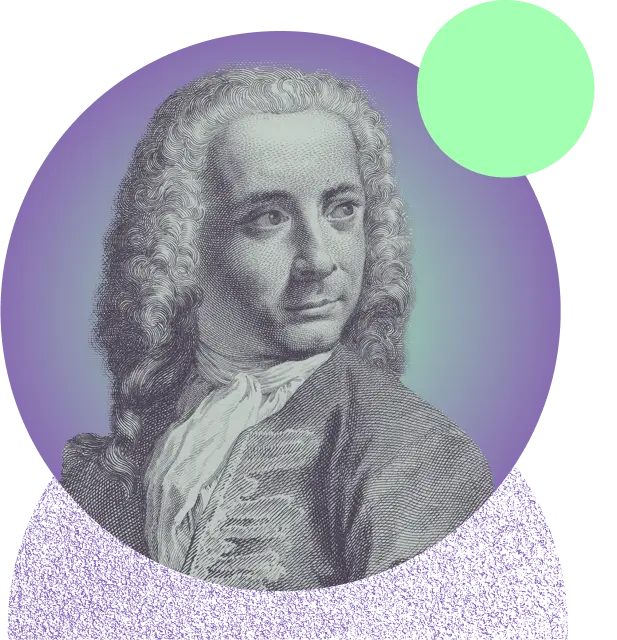
Canaletto

‘Canaletto amazes everyone who sees his works … from which the very Sun shines.’

Venetian Beginnings: 
Sought-After Souvenirs 

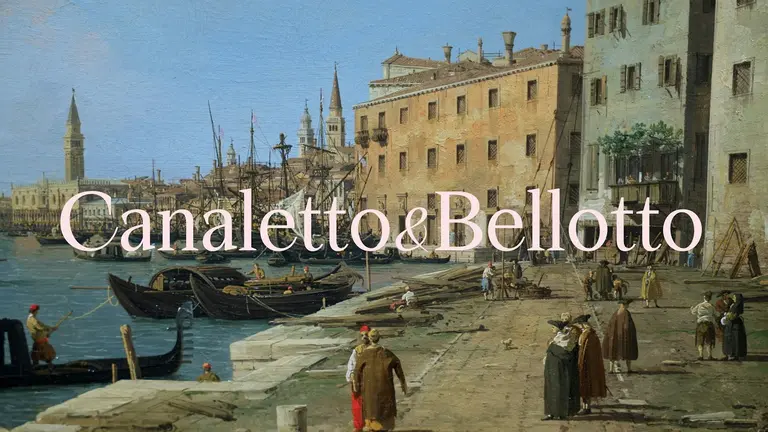
Canaletto first made a name for himself by painting his hometown, Venice. His vedute (Italian for ‘city views’) were particularly popular with British aristocrats on the ‘Grand Tour’, an extended educational journey through Europe.  

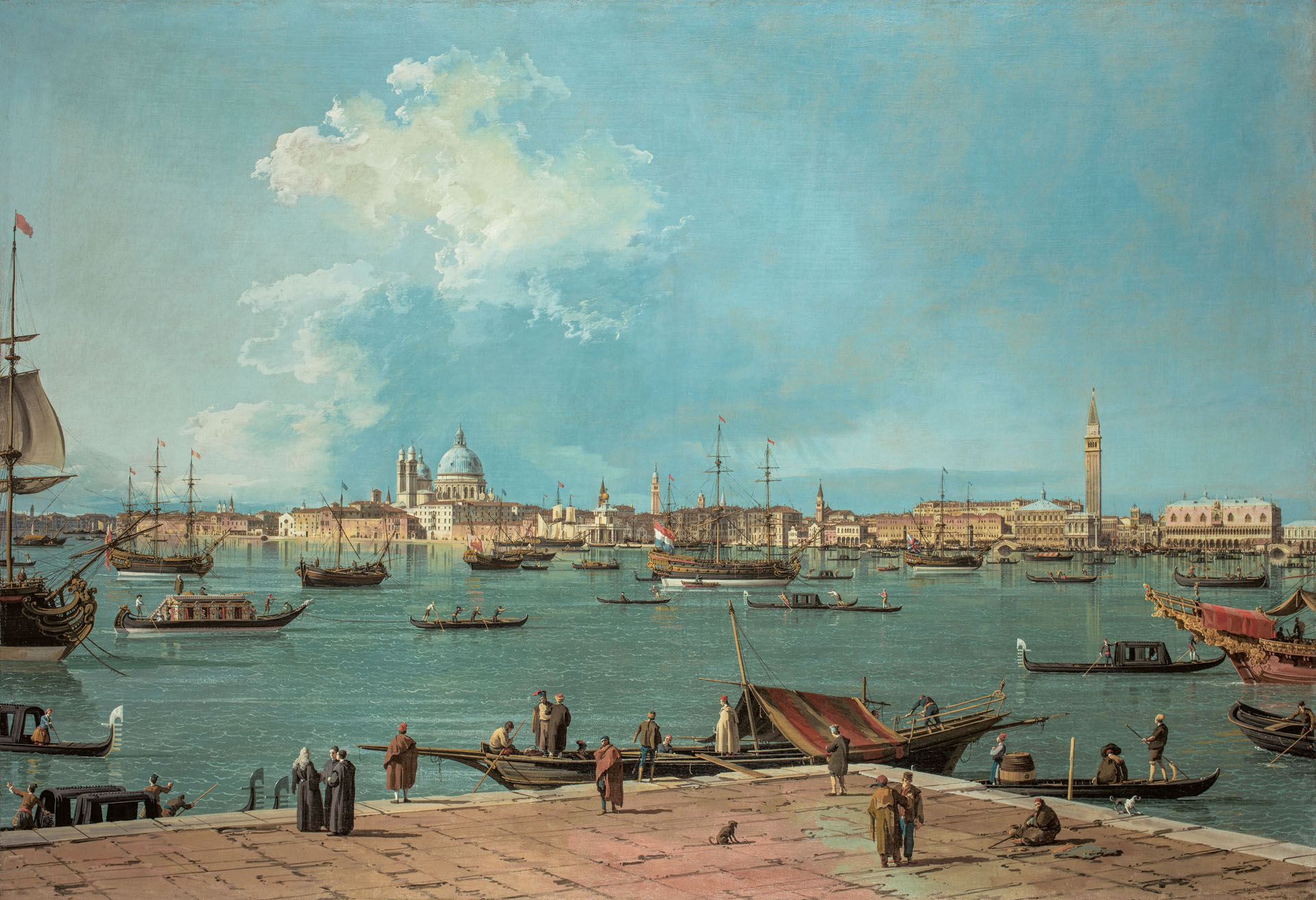
One of Canaletto’s most ambitious paintings is this spectacular view: Looking towards the Palazzo Ducale from the island of San Giorgio Maggiore, he orchestrates a sweeping panorama. A triangular quay juts into the foreground like a stage, with lawyers, priests, merchants, and beggars animating the scene. Behind them, gondolas and ships enliven the lagoon against the city’s distant skyline.  

Though the scene appears strikingly real, Canaletto subtly adjusts viewpoints and manipulates the proportions of the city’s famous landmarks. The result is Venice not as it was, but as Canaletto re-imagined it: luminous, ordered, and irresistibly theatrical. 

London Calling: 
Canaletto’s Sojourn in England 

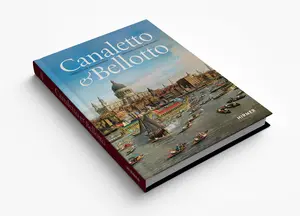
In 1746, Canaletto moved to London, where he painted this exceptional panorama. The newly elected Lord Mayor travels upstream toward Westminster in his state barge, escorted by vessels of the city’s livery companies. Against this lively foreground rises the city, with its forest of church spires – most of which were built after the Great Fire of 1666.  

Dominating it all is St Paul’s Cathedral, whose great dome was conceived as a symbol of London’s confidence as the capital of a great power. Canaletto transforms London’s greatest civic ceremony into a spectacle that echoes the atmosphere of Venice, transposing his painterly idiom to the English capital.  

Bellotto

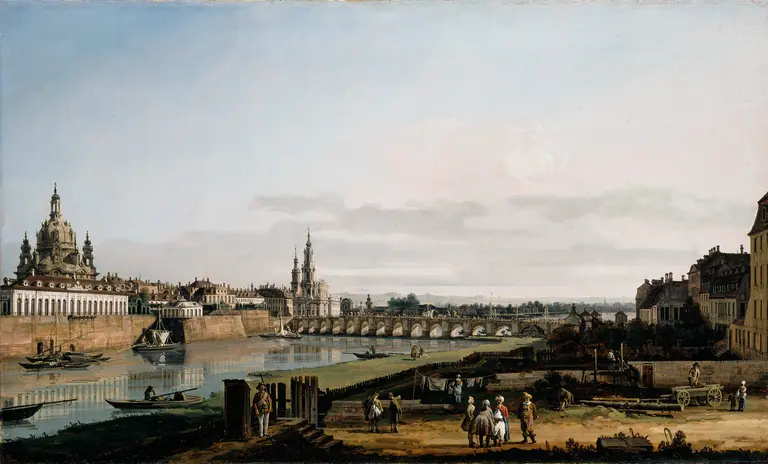
Bellotto, Dresden from the Right Bank of the Elbe, Above the Augustus Bridge, c.1750
Like Uncle, So Nephew? 
Bellotto in Dresden 

Just a year after Canaletto left Venice for London, his nephew Bernardo Bellotto – who had trained with him – also departed the lagoon city. He moved to Dresden, setting out to make Venetian veduta painting famous throughout Europe. 

In the 1740s, Dresden was at the height of its cultural prestige, thanks to its art-loving ruler August III. Adopting his famous uncle’s name, Bellotto became court painter. Like Canaletto, he used optical aids such as the camera obscura to record the city with unprecedented precision, harnessing the latest technical advances of a century marked by growing scientific interest in optics. 

But times were trying. After a highly successful decade in Dresden, the Seven Years’ War (1756–1763) forced Bellotto to leave the city. He headed south – to Vienna. 

Imperial Splendour: Bellotto’s Views of Vienna 

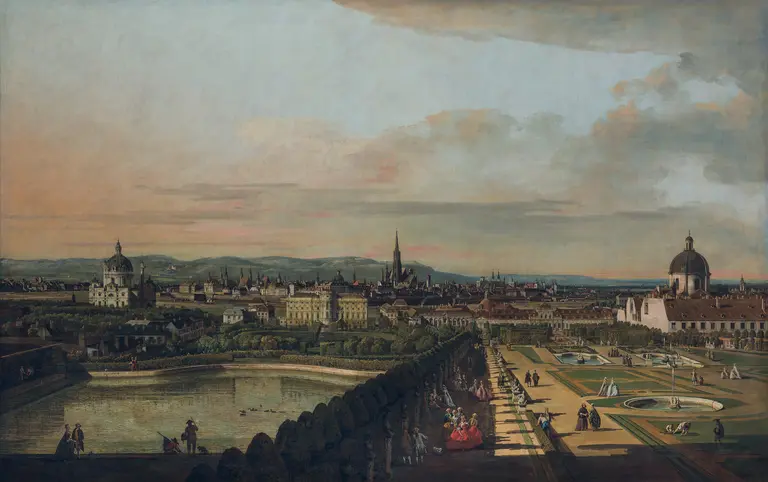
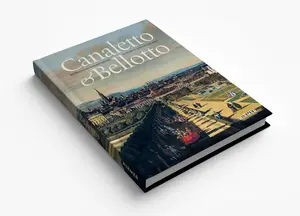
Although Bellotto spent only two years in Vienna, his time in the Imperial capital was highly productive. The exhibition features almost the entire body of known works painted during his brief stay, including all 13 paintings that ended up in the Habsburg collection. Among them is the most iconic work of the series, the View of Vienna from the Belvedere, painted shortly after the artist’s arrival in 1759. 

The panoramic view looks north from the Upper Belvedere, the summer palace built for Prince Eugene of Savoy but purchased in 1752 by Empress Maria Theresia. The city unfolds as a sequence of monumental landmarks. Bellotto seems to render Vienna with near-cartographic precision, but subtly compresses distances and steepens towers to guide the viewer’s eye inward and upward. The result is a carefully constructed image of Imperial order, presenting Vienna as flourishing under the rule of Maria Theresa and Francis I Stephen. 

Big City Life? 
Bellotto Sets the Stage 

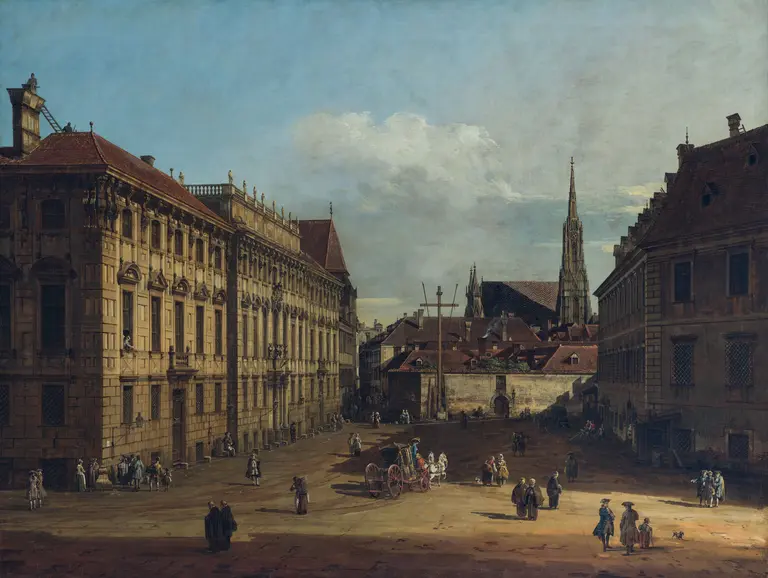
From nobles and chimney sweeps to monks and maids, and from soldiers to little children, Bellotto depicts the full spectrum of urban society. In this painting, he seems to reflect on the coexistence of splendour and hardship in Vienna: The Palais Lobkowitz basks in sunlight, while the Bürgerspital – home to the poor and infirm – lies in shadow.  

Like many eighteenth-century artists, Bellotto took an interest in depicting infirmity. At the lower right, he includes a girl with a crutch. However, he casts her into shadow. Hardship is acknowledged, yet visually subdued. By tracing Bellotto’s strategies of visual staging, the exhibition asks how political power, architectural splendour, and social hardship intertwine in representations of urban space – a question that remains highly relevant in today's visual culture. 

Exhibition programme

Discover our diverse art education program.

Visitor Information

Address

Kunsthistorisches Museum – special exhibition
Maria-Theresien-Platz, 1010 Vienna
Google Maps

Opening times

Tue - Sun, 10 a.m. - 6 p.m.
Thu until 9 p.m.
 

further visit information

On average, visitors spend about 1 hour in the special exhibition.

Further exhibitions

Our exhibitions take you back to the rich history of our museum. Here, proven masterpieces meet newly explored themes - a look at art, culture and the past that continuously illuminates the collection.