born May 20, 1722, Venice
died October 17, 1780, Warsaw
Bernardo Bellotto in our online collection
born May 20, 1722, Venice
died October 17, 1780, Warsaw
Bernardo Bellotto in our online collection
Venice, Rome, Dresden, Vienna, and Warsaw—these are just some of the European cities that Bernardo Bellotto captured on canvas in the eighteenth century. The fact that he kept using the name of his famous uncle and teacher, Canaletto, gave cause for confusion even among his contemporaries. Bellotto’s highly detailed cityscapes—called vedute—combine precise observation with theatrical staging. The countless figures populating the architectural sceneries not only enliven the composition but also speak of everyday life in bygone times. Today, Bernardo Bellotto is regarded as one of the most eminent European veduta painters—his works offering a fascinating look into the past.
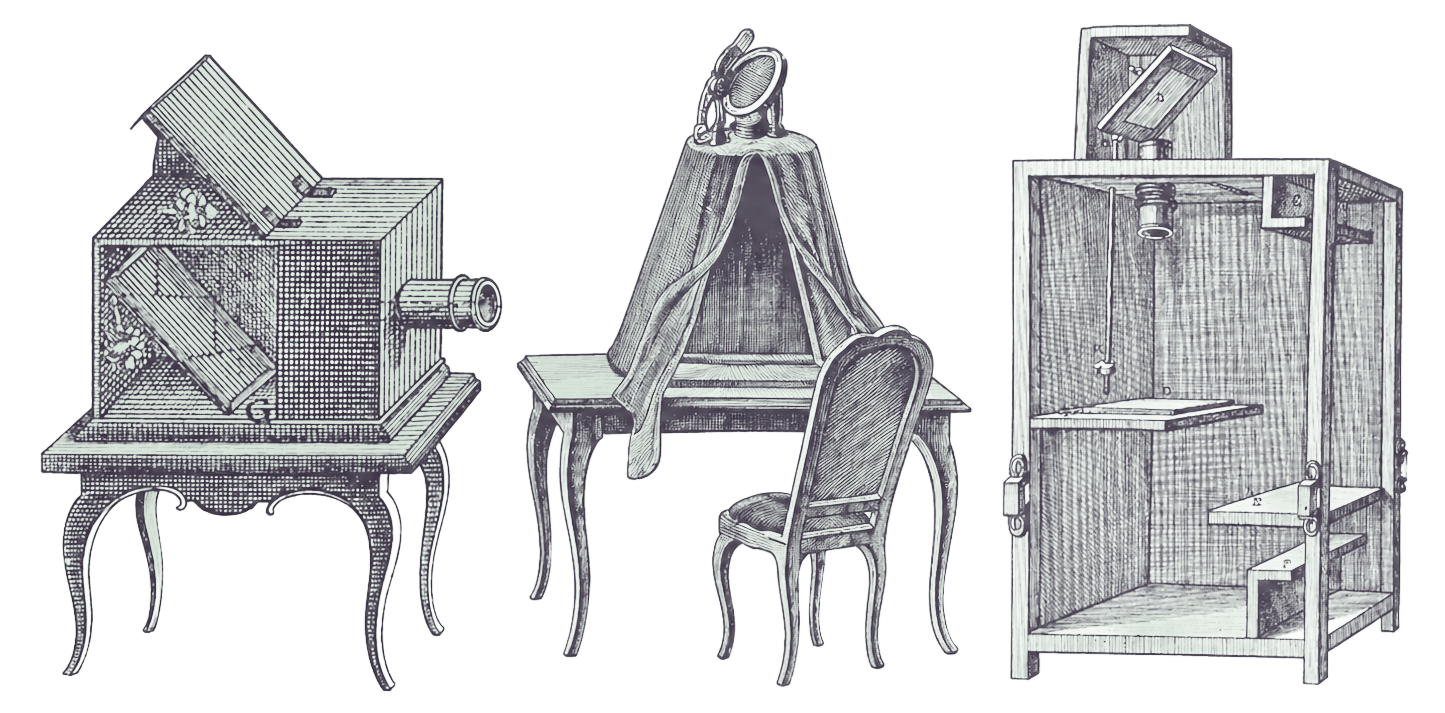
When Bernardo Bellotto was born in Venice in 1722, art, it would seem, was in his blood: His grandfather was a stage designer, and his maternal uncle was the famous veduta painter Giovanni Antonio Canal, known as Canaletto. Bernardo, too, was highly talented; just thirteen years of age, he began his apprenticeship in the workshop of his uncle who introduced him to the secrets of the craft: He taught him how to handle pen and brush, and also how to use optical aids such as the camera obscura, a pinhole camera that enabled “capturing” images—long before the invention of photography! The device is based on a physical phenomenon: light, when entering a darkened box through a hole and a lens, creates on the opposite wall an upside-down and reversed image of whatever is in front of the opening.
Like his uncle, Bellotto transformed the raw images captured by the camera obscura into idealized city views on the canvas, by combining different angles, shifting elements and changing proportions. In this way, he arranged canals, houses, churches, and palaces into a balanced harmonious whole.
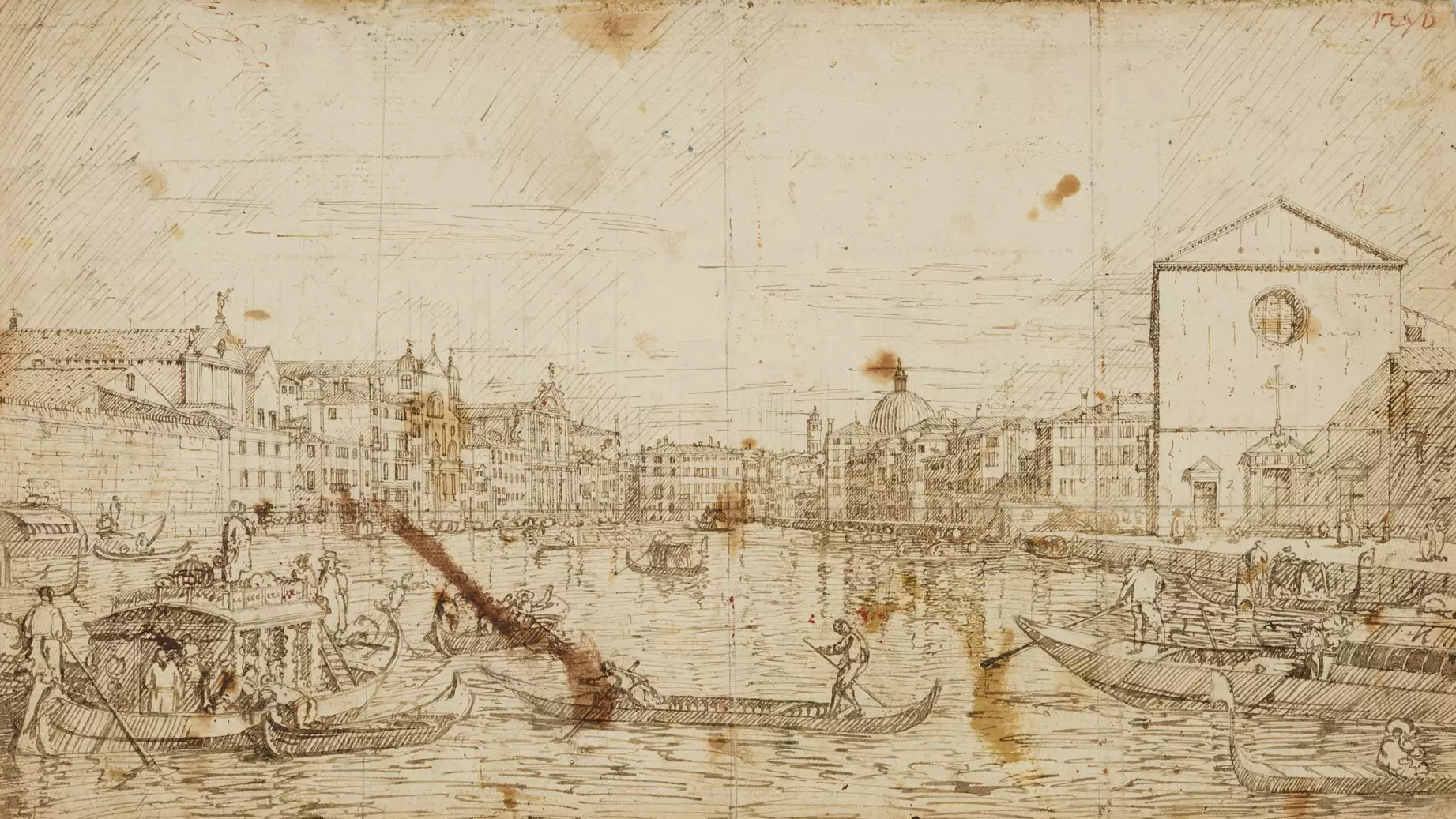
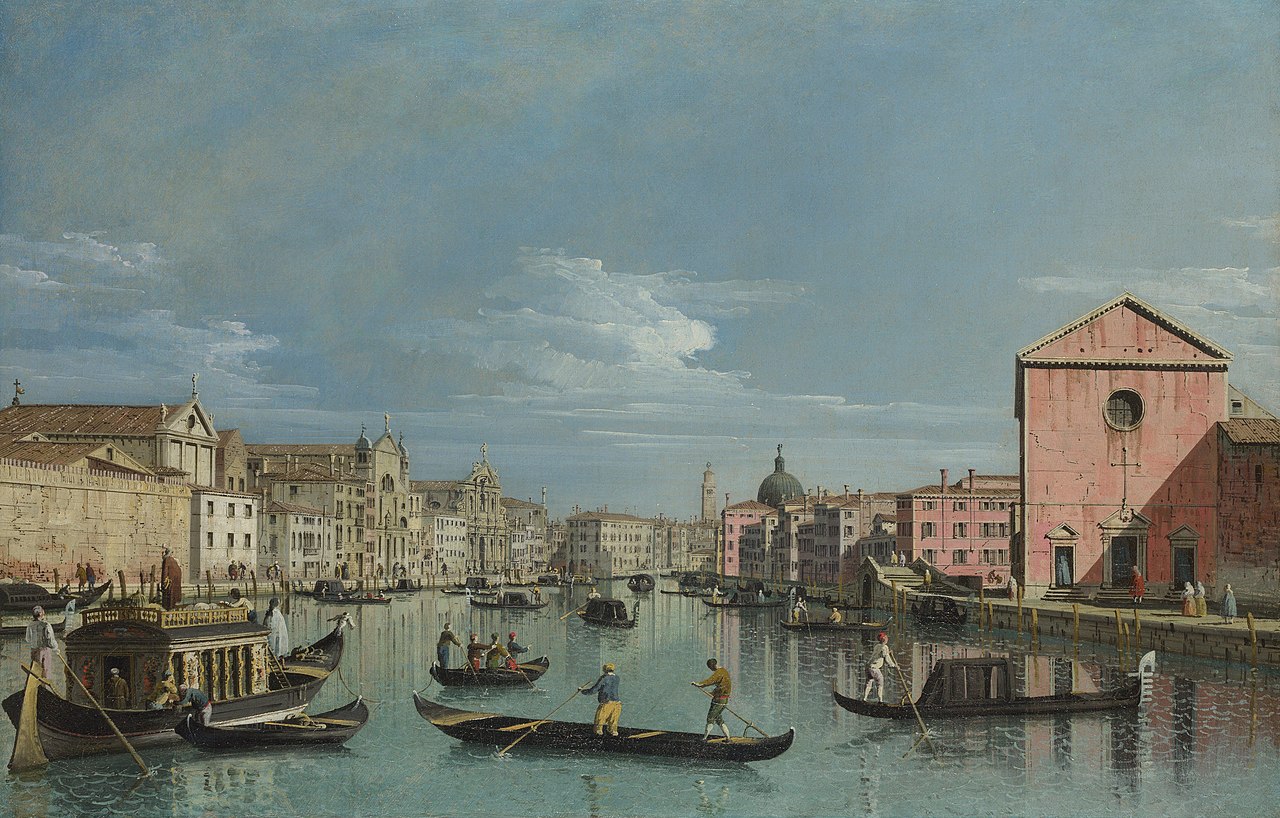
From the drawing to the strikingly realistic painting: view of the Grand Canal
Standing on his own two feet?
Bellotto, known as Canaletto
As Bellotto started out copying his uncle’s compositions, his early work is sometimes difficult to distinguish from paintings by the latter. Just three years after beginning his apprenticeship, the pupil enrolled in the painters’ guild as an independent master. In the early 1740s, Bellotto traveled via Florence to Rome for further study. It did not take him long to develop his own style: The color palette of his works became more saturated; heightened contrasts between light and shadow enhanced the sculptural effect of architecture and figures. Further travels took him through Lombardy, Piedmont, and Veneto in northern Italy. His canvases became larger, and the panoramic views they showed, wider. Despite all artistic differences, Bellotto took on his famous uncle’s name, Canaletto, as a by-name to boost his own market value.
The War of the Austrian Succession led to fewer and fewer travelers making their way to Venice after 1740. The market for vedute was beginning to dry up. Bellotto’s uncle Canaletto therefore decided to move to London in 1746. Bellotto himself also left Venice with his family a year later, heading to Dresden. But was the economic situation the real reason for him to turn his back on his hometown? Or was he driven by ambition? As it turned out, relocating to Dresden held a major career leap in store for the then just twenty-five-year-old: Not long after his arrival, he was appointed court painter to Augustus III, Elector of Saxony and King of Poland.
While a city of moderate size, Dresden in the mid-eighteenth century still was one of the cultural hubs in Europe: New Baroque buildings defined the cityscape, and the extensive collection of the art-loving king was considered particularly exquisite. Augustus III was eager to attract international talent to the city on the Elbe and spared no expense to secure the services of the nephew of the famous Canaletto.
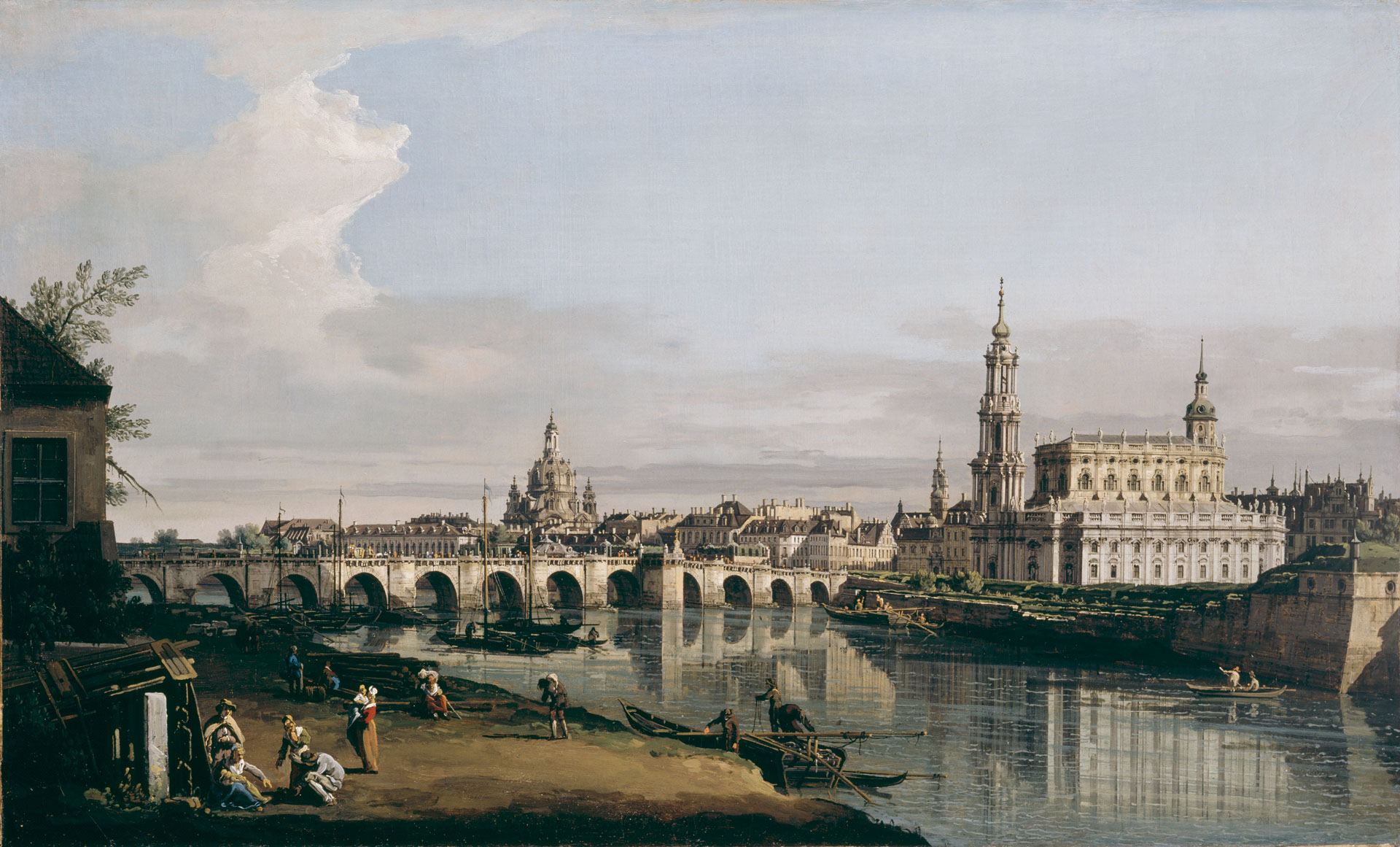
View and counterview: Dresden from above and below the Augustus Bridge
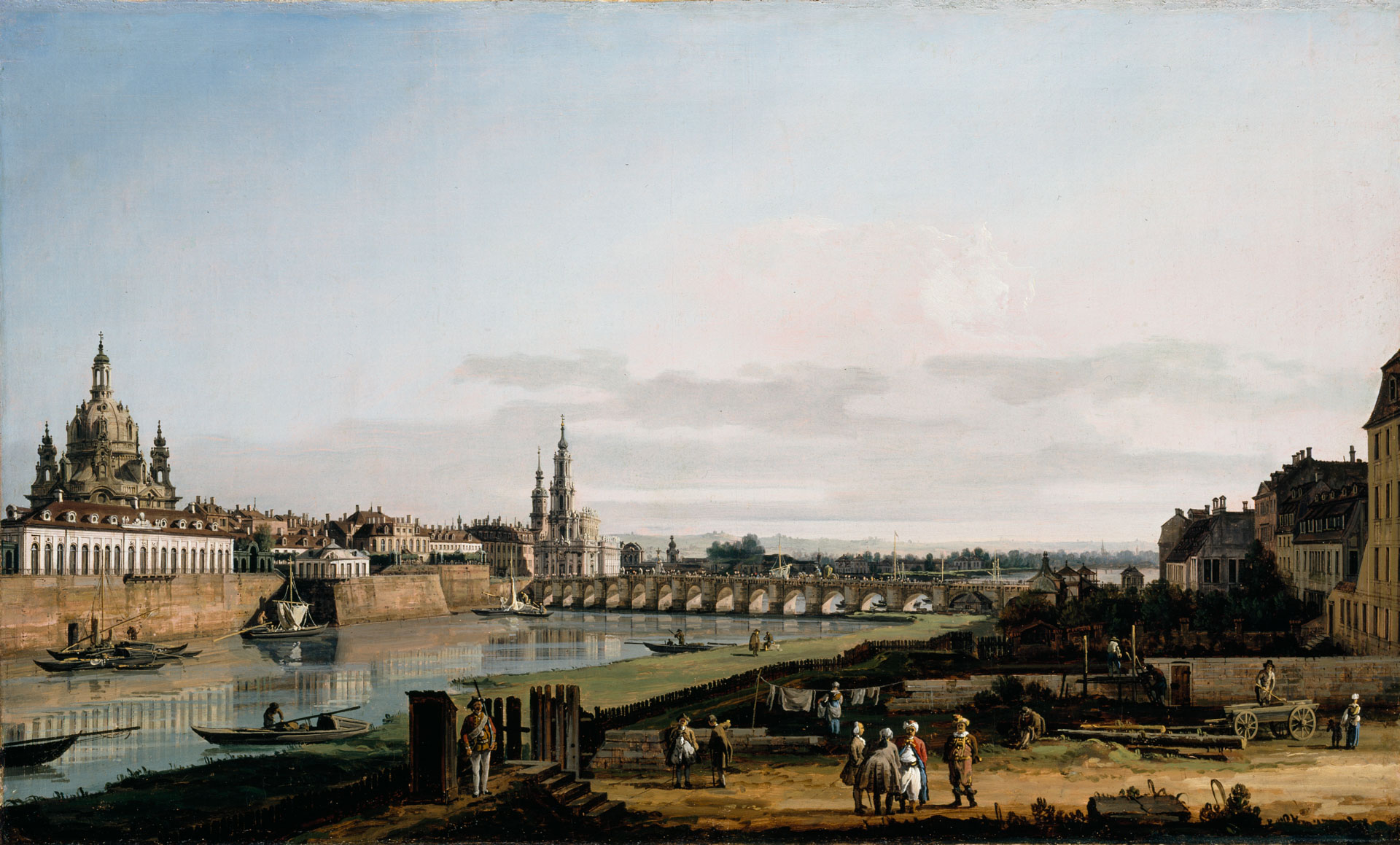
Bellotto’s Dresden vedute impress with their clarity and monumental grandeur—his brush transforms the Saxon capital into a Baroque ideal. After nearly a decade, the outbreak of the Seven Years’ War (1756–1763) put a sudden end to Bellotto’s success in Dresden: In August 1756, Prussian troops marched in; the king fled to Warsaw. The situation was becoming more and more precarious for the painter. In December 1758, after eleven and a half years, he took off for the south, accompanied by his son Lorenzo. Bellotto’s wife and his three daughters stayed behind in Dresden.
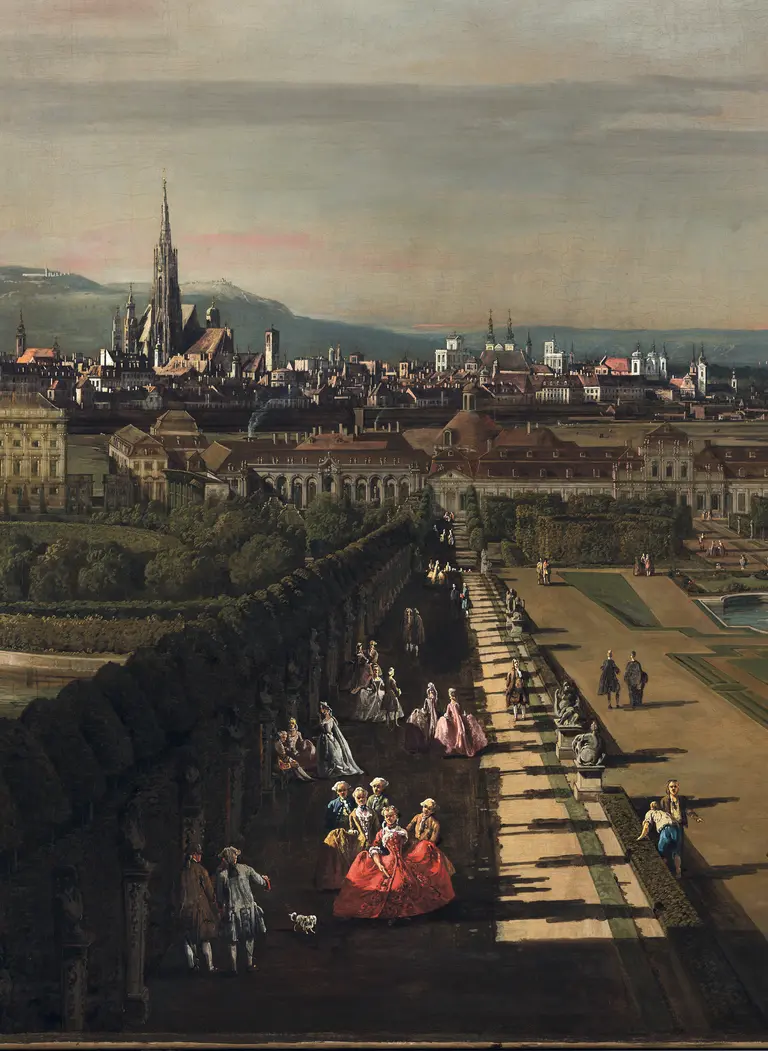
A few weeks later, father and son arrived in Vienna. The Habsburg capital was in a stage of reconfiguration: New Baroque buildings rose within the medieval city walls, while the suburbs featured many freshly completed aristocratic palaces with extensive gardens. Bellotto set about to work right away: His extensive network facilitated commissions from the Princes Kaunitz and Liechtenstein. The pictures Bellotto created for them brought a novelty to veduta painting: The artist depicted not only the nobles’ magnificent estates but also the patrons themselves, innovatively combining portraiture with architectural representation. It was likely those princes, who introduced Bellotto to the imperial couple, Maria Theresa and Francis I Stephen. Over a very short period of time, Bellotto painted thirteen views—including Schönbrunn Palace, the Freyung with the Schottenkirche, the University Quarter, and the view towards the inner city as seen from the Upper Belvedere—which are now in the collection of the Kunsthistorisches Museum. Were these works commissioned by the Empress herself? Presumably. The combination of precise observation and political staging suggests so; however, no contracts survived.
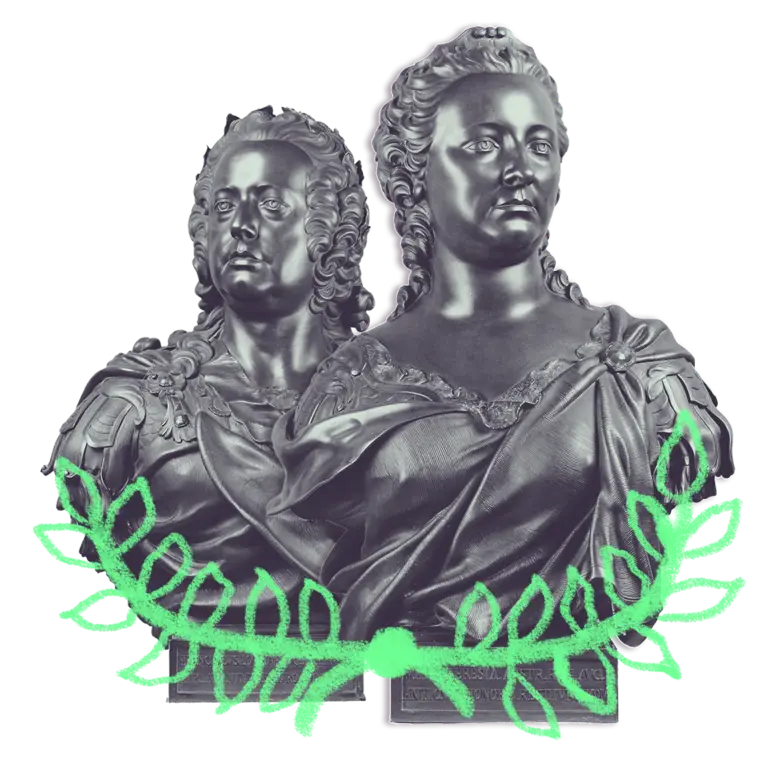
These paintings by Bellotto are today part of the collections of the Kunsthistorisches Museum.
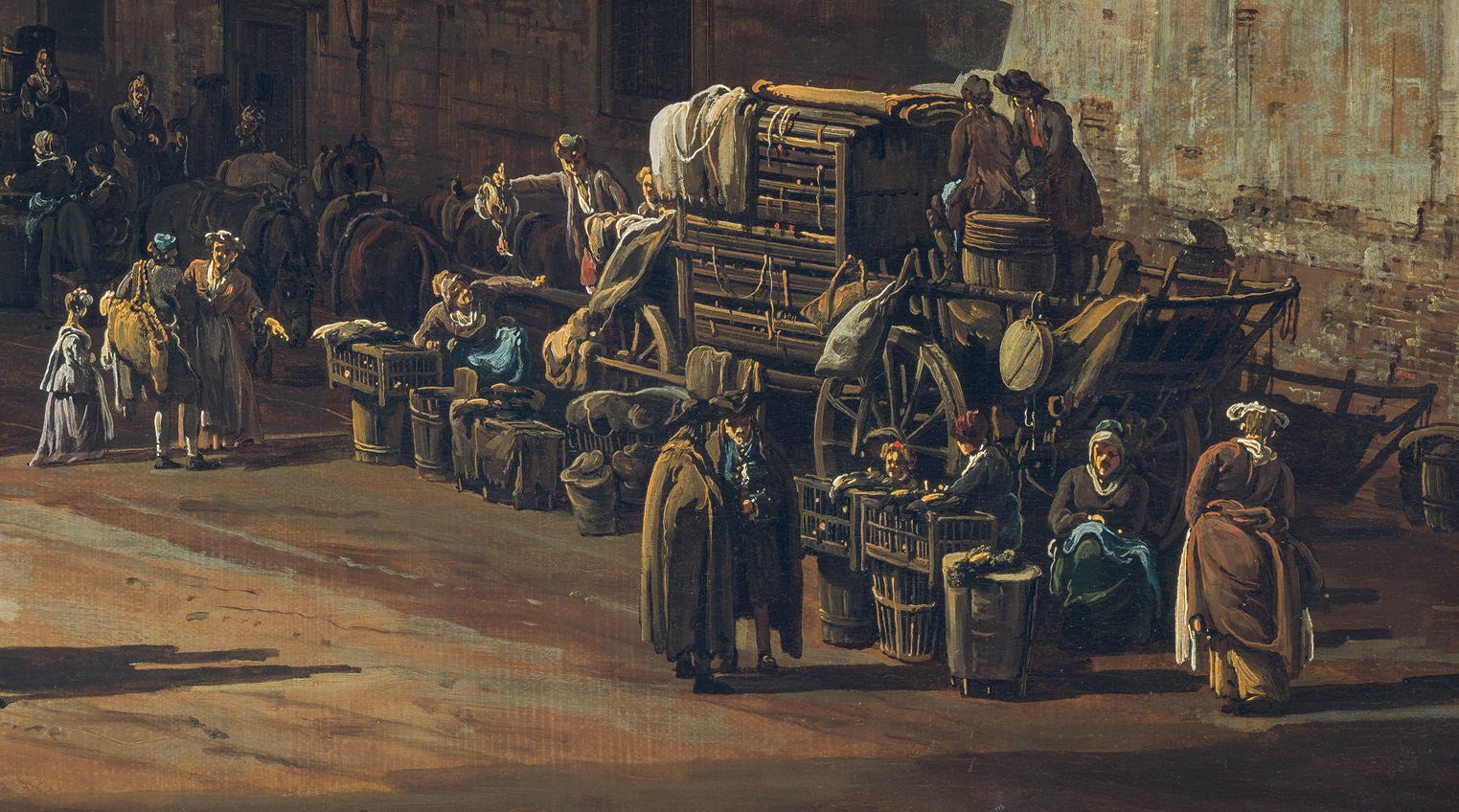
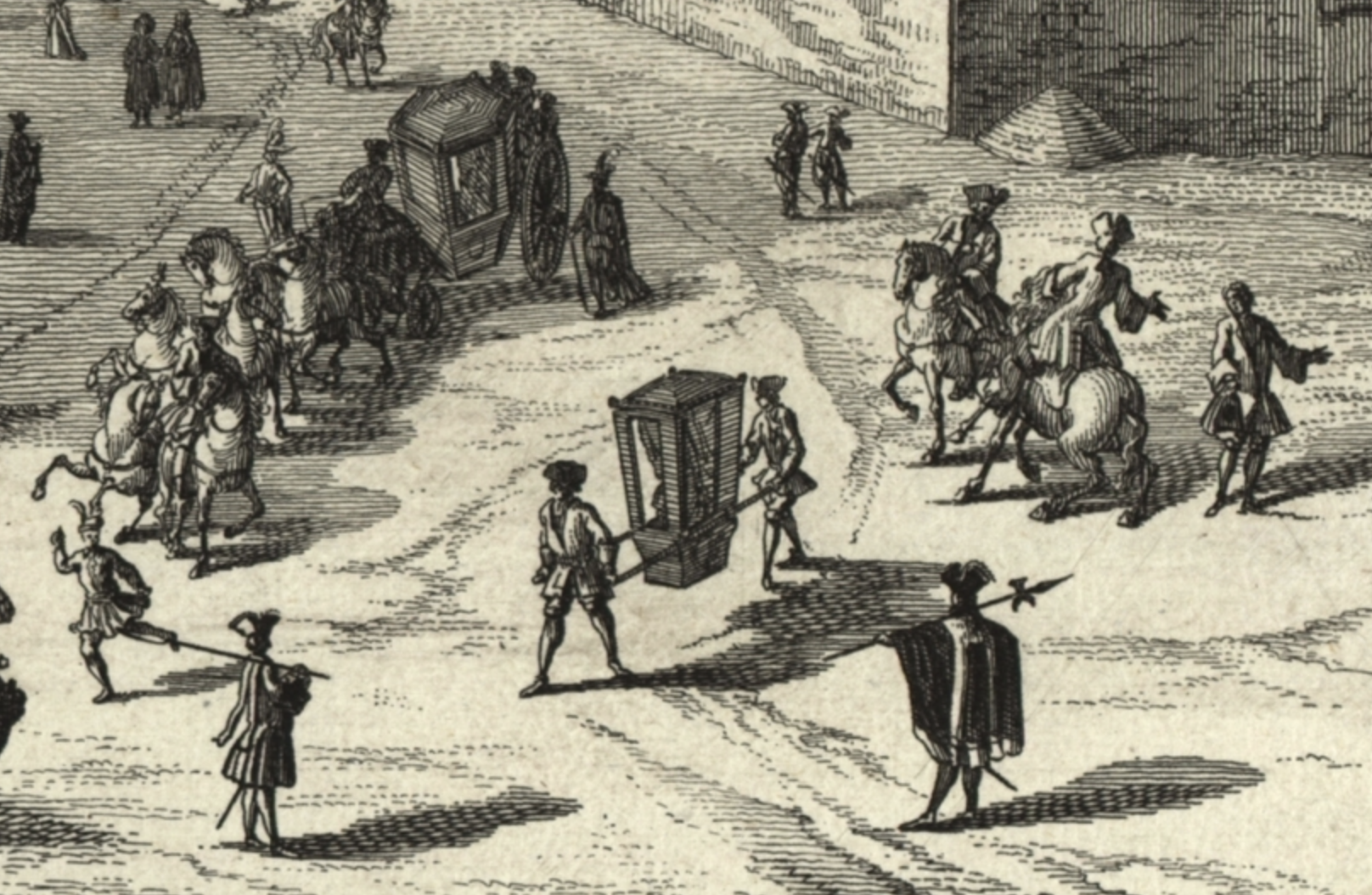
Nobles, chimney sweeps, monks, maidservants, soldiers, and children—it is the entire spectrum of society that is seen bustling about in Bellotto’s Viennese views. With incredible detail, he depicted everyday life in the Imperial capital city and, as if casually, documented typical local phenomena in the process.
The mobile stalls where market traders offer their wares for sale, for example, aroused the astonishment of the English traveler Charles Burney in 1773: “The inhabitants do not, as elsewhere, go to the shops to make purchases; but the shops come to them”.
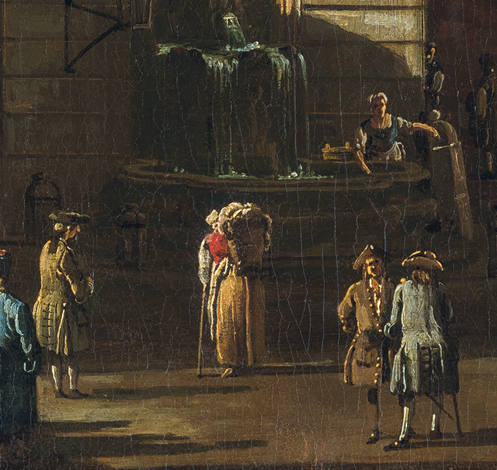
The “Viennese washer girls” that Bellotto shows in his view of the university square are also considered a peculiarity of eighteenth-century Vienna: They picked up dirty laundry from their customers’ homes to wash it in rivers and fountains before delivering it back.
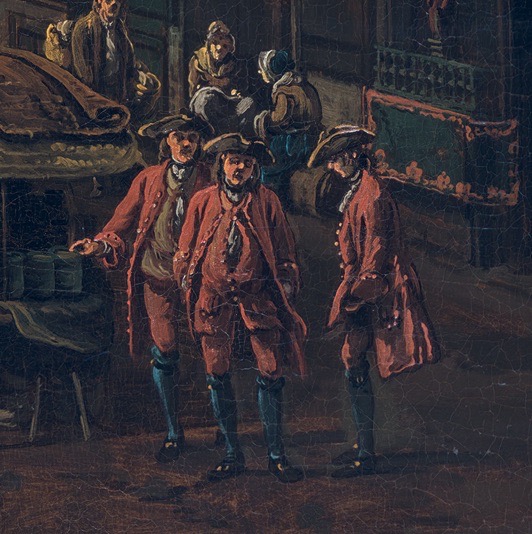
Chair bearers who, almost like taxis, carried their passengers around in so-called sedan chairs were also found in other major European cities in the eighteenth century. One distinctive feature of Viennese chairmen, though, were their eye-catching red uniforms. A comparison with written sources shows just how accurately Bellotto rendered their garments.
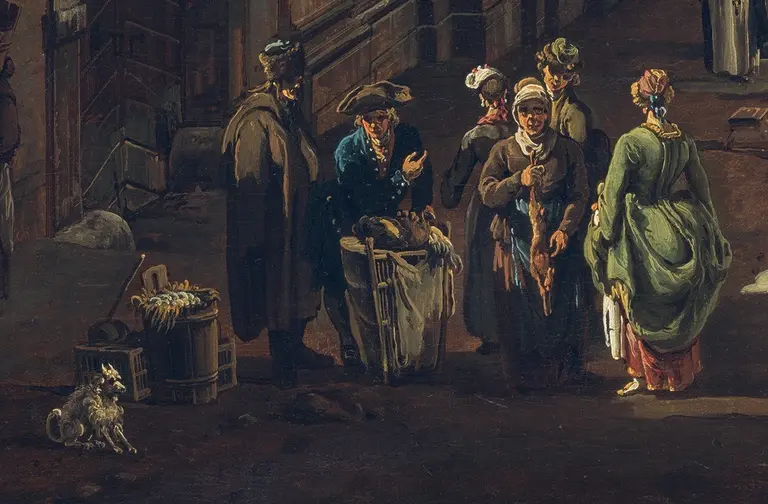
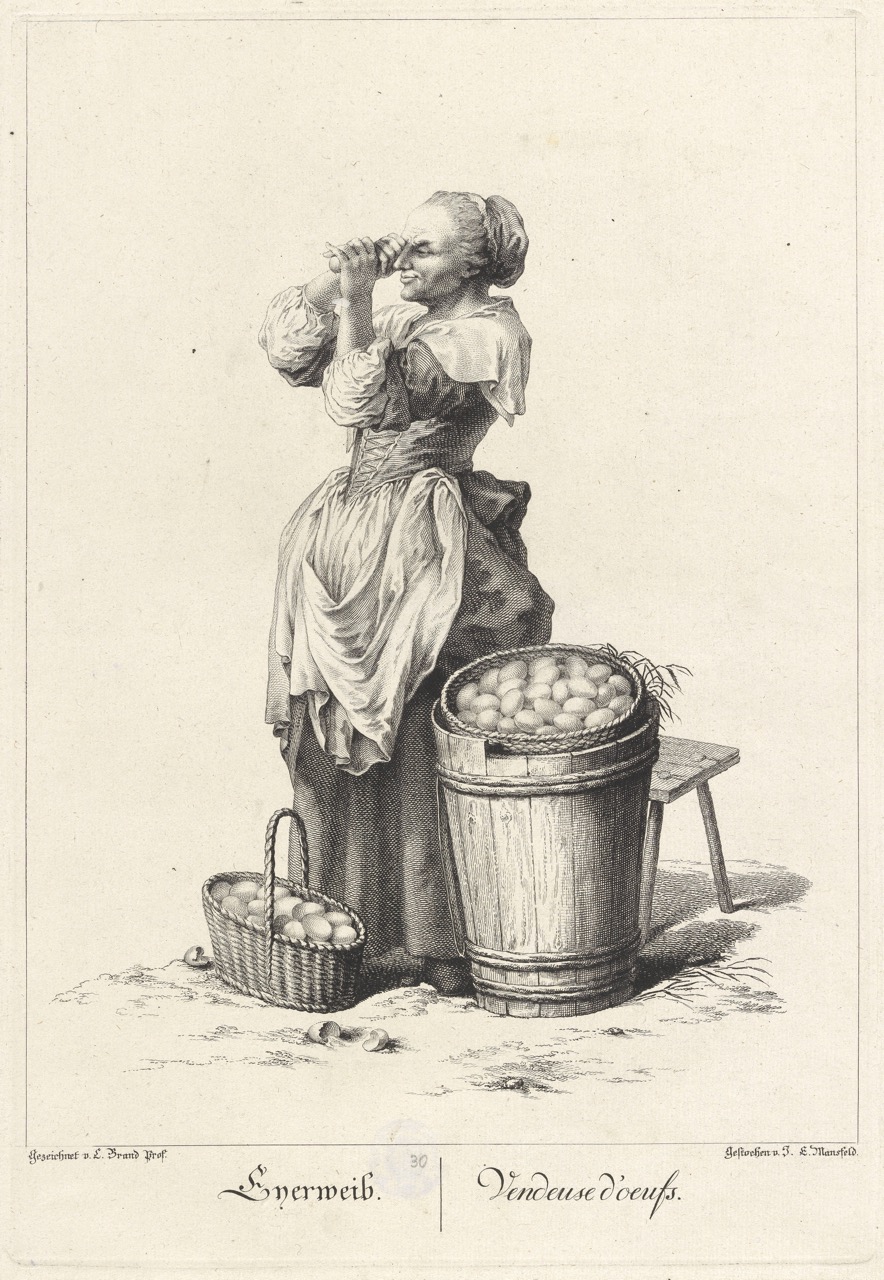
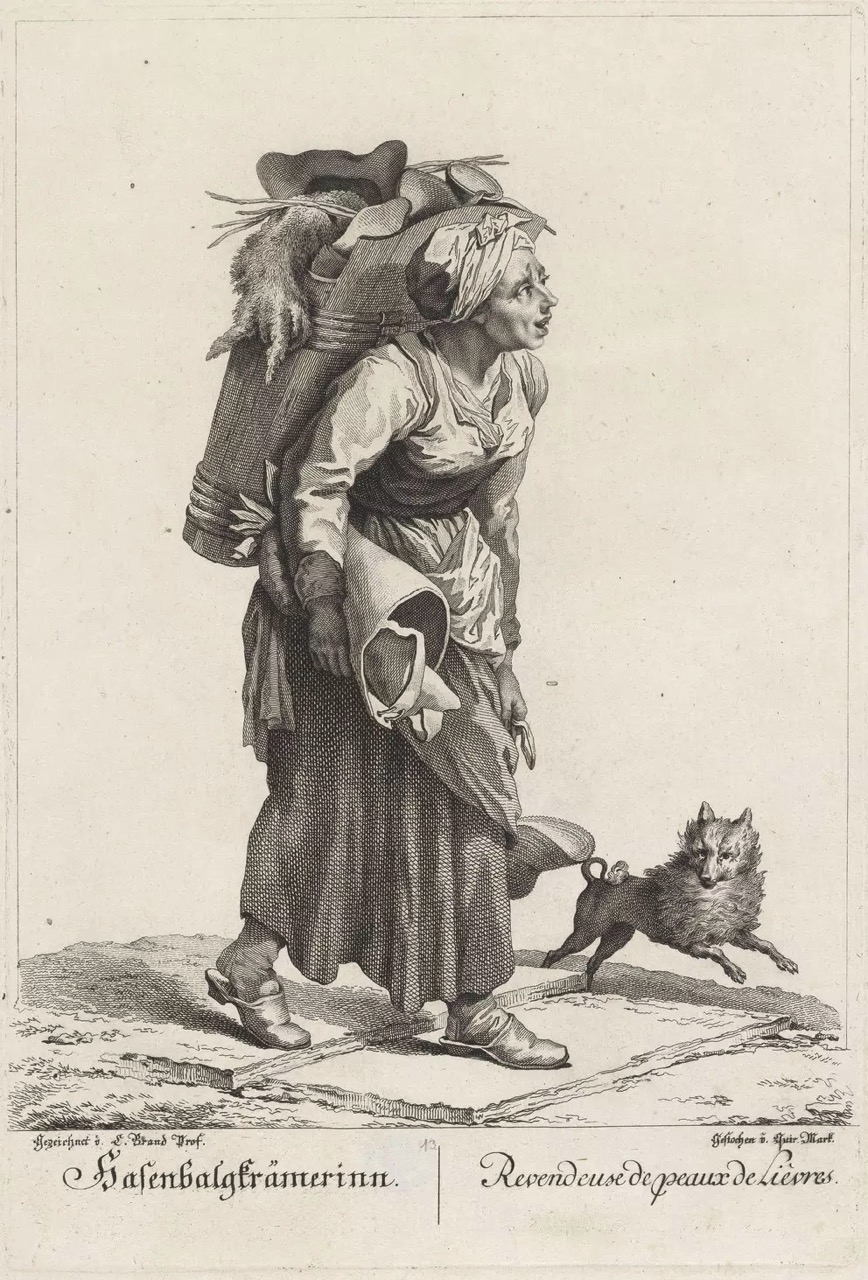
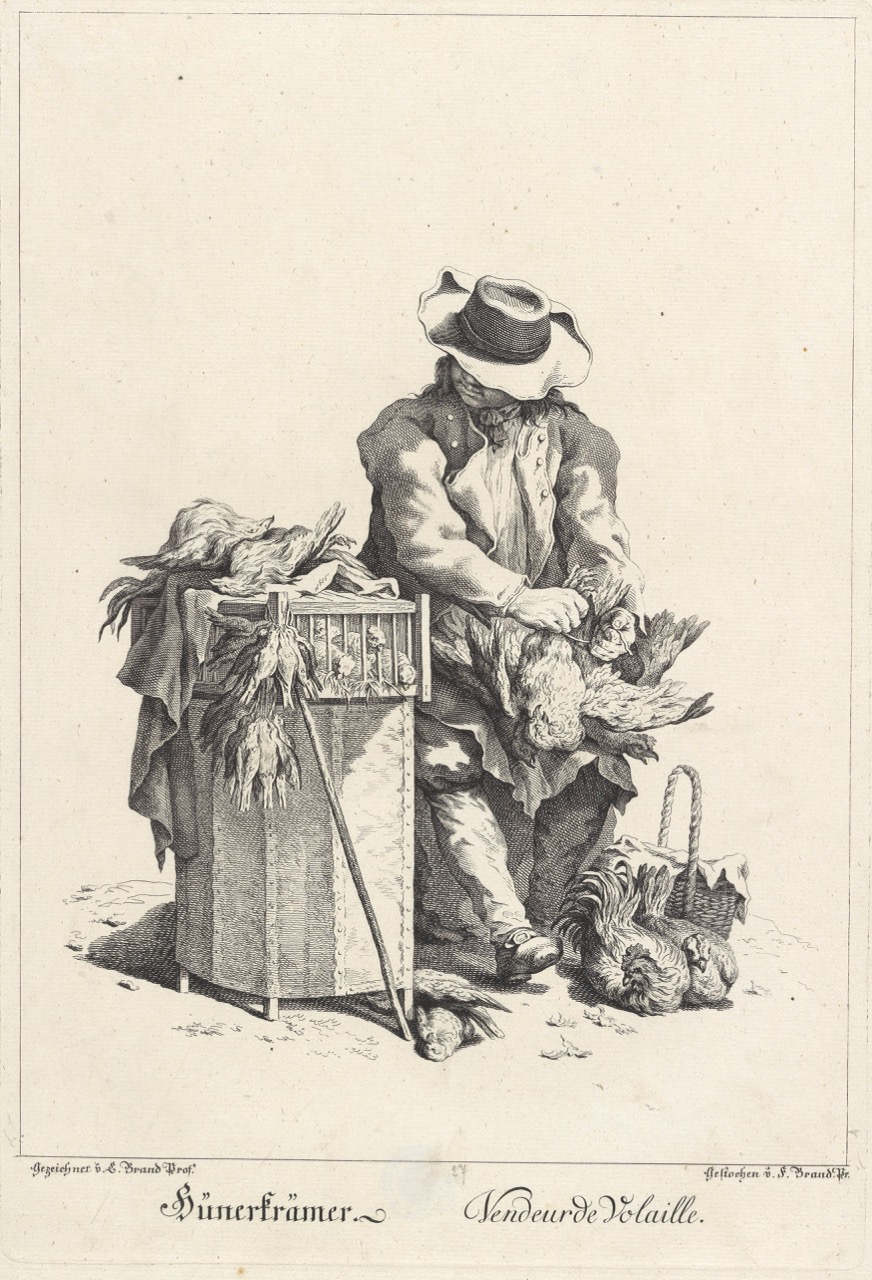
Bellotto’s almost ethnographically precise rendition of everyday life was very much in keeping with the interests of the era, as is evidenced by a comparison with Johann Christian Brand’s series of engravings, called Wiener Kaufruf [Street Cries of Vienna], of 1775.
What impression did Vienna have on the Italian Bellotto? One thing is certain: It is the figures, painted from his own observation, that imbue his works with life and account for the fascinating effect of his city views.
Despite the artistic quality of his work, Bellotto was unable to attain a permanent position at the Viennese court. Disappointed, he left for Munich in January 1761. But there, too, he could not secure a court position. At the end of the year, Bellotto eventually returned, with his son Lorenzo, to Dresden, where his wife and three daughters were waiting for him. The happy reunion, however, was overshadowed by the aftermath of the war: The family home was in ruins, and artworks and printing plates that had been kept in it were irretrievably lost.
Depressingly modern: Bellotto’s view of the ruins in Dresden
Bellotto documented the devastation wrought by the conflict in two views, which, as painted cautionary tales, were far ahead of their time. He soberly depicted the ruins of the Pirna suburb and the Kreuzkirche [Church of the Holy Cross] in Dresden, in limbo between the destruction of war and hopes of reconstruction.
The Seven Years’ War had taken a heavy toll on the once-flourishing Electorate of Saxony; King Augustus III died in exile in Warsaw in the fall of 1763. Without the support of his most important patron, Bellotto could not maintain his social position. He was demoted to “teacher of perspective” at the newly founded academy, on only a third of the salary he had once earned as court painter.
To improve his situation, Bellotto was planning on making a fresh start at the court of the Russian Empress Catherine II. But things turned out differently: The journey he went on in 1766 did not take him all the way to Saint Petersburg, but only as far as Warsaw, where he would be spending the next fourteen years. There, he was able, unexpectedly, to become court painter to the Polish King Stanisław II August Poniatowski. A good salary and good company—numerous Italian fellow artists had gathered at court—prompted Bellotto to take up permanent residence in Poland with his family. But there, too, the times were politically challenging: a civil war entailed the partition of the kingdom and the ceding of territories. The king sought to bolster his claims to power not least through art—including a series of vedute intended to illustrate the splendor of Warsaw. No less than twenty-two of Bellotto’s views were mounted in the so-called Senators’ Antechamber in Warsaw’s Royal Castle, known today as the “Canaletto Room.”
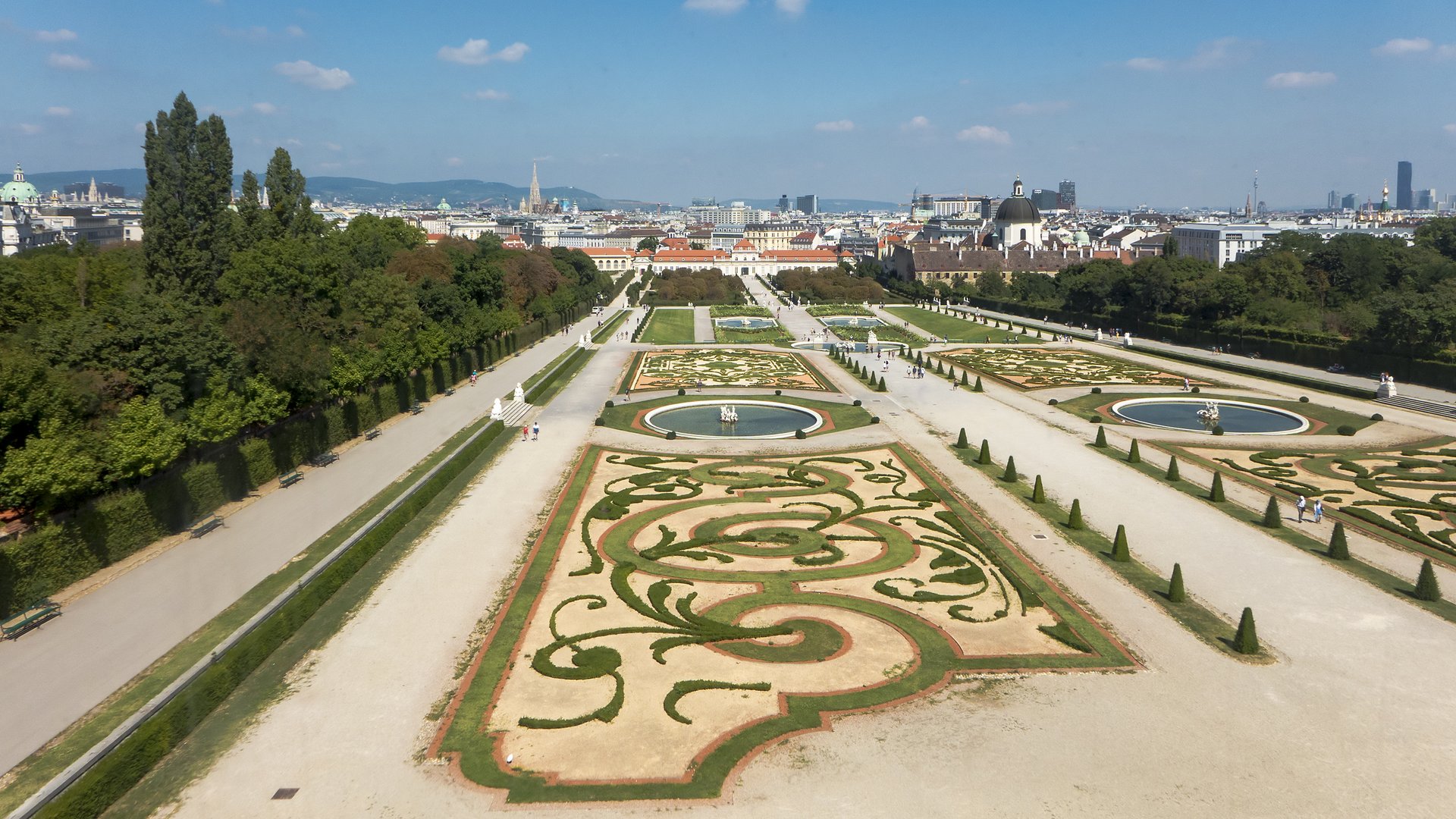
In 1780 Bellotto’s career ended abruptly when he died, aged only 58, suddenly of a stroke. But even beyond his death, his views of Europe’s metropolises continue to be a formative influence: as, for instance, in Dresden and Warsaw, where his works served as indispensable templates for the reconstruction of the historic city centers after the destructions of World War II. Or in Vienna, where the iconic view of the city from the Upper Belvedere continues to influence debates over Vienna’s status as a UNESCO World Heritage Site.
This view of Vienna from the Upper Belvedere Palace, the summer palace of Prince Eugene of Savoy built on a rise to the south of the city centre, features a number of large Baroque buildings from left to right in the middle ground: standing isolated on the left with its monumental dome is the Karlskirche (Church of St. Charles Borromeo), the Schwarzenberg Palace with its proportions greatly exaggerated, the Orangerie and the Lower Belvedere Palace. Finally, on the right, is the Salesian Convent. Behind them can be seen the city centre with its fortifications.
Title:
Vienna Viewed from the Belvedere Palace
Artist:
Bernardo Bellotto, gen. Canaletto (1722 Venedig - 1780 Warschau)
Time:
1758/61
An eye-catcher, back then and now: View of Vienna from the Belvedere