born October 28, 1697, Venice
died April 19, 1768, Venice
Giovanni Antonio Canal, called Canaletto in our online collection
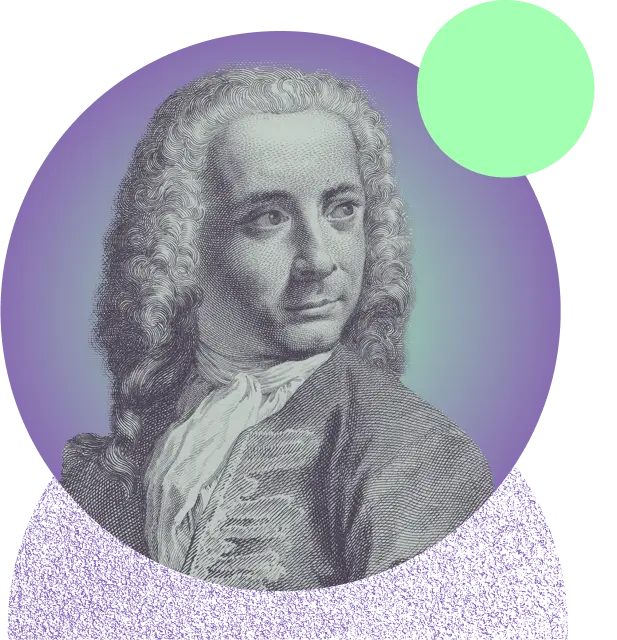
born October 28, 1697, Venice
died April 19, 1768, Venice
Giovanni Antonio Canal, called Canaletto in our online collection
Grand palazzi, imposing bell-towered churches, the glitter of sunlight on water—Venice with its unique atmosphere has always been a fascinating place to visit. The image of the lagoon city with its labyrinthine array auf canals, bridges, narrow streets and wide places was not least shaped by the works of Italian painter Canaletto. In the eighteenth century he glorified his hometown in numerous painted cityscapes—called vedute. Today, his name stands for architecturally precise, light-bathed, and atmospheric views of Venice.
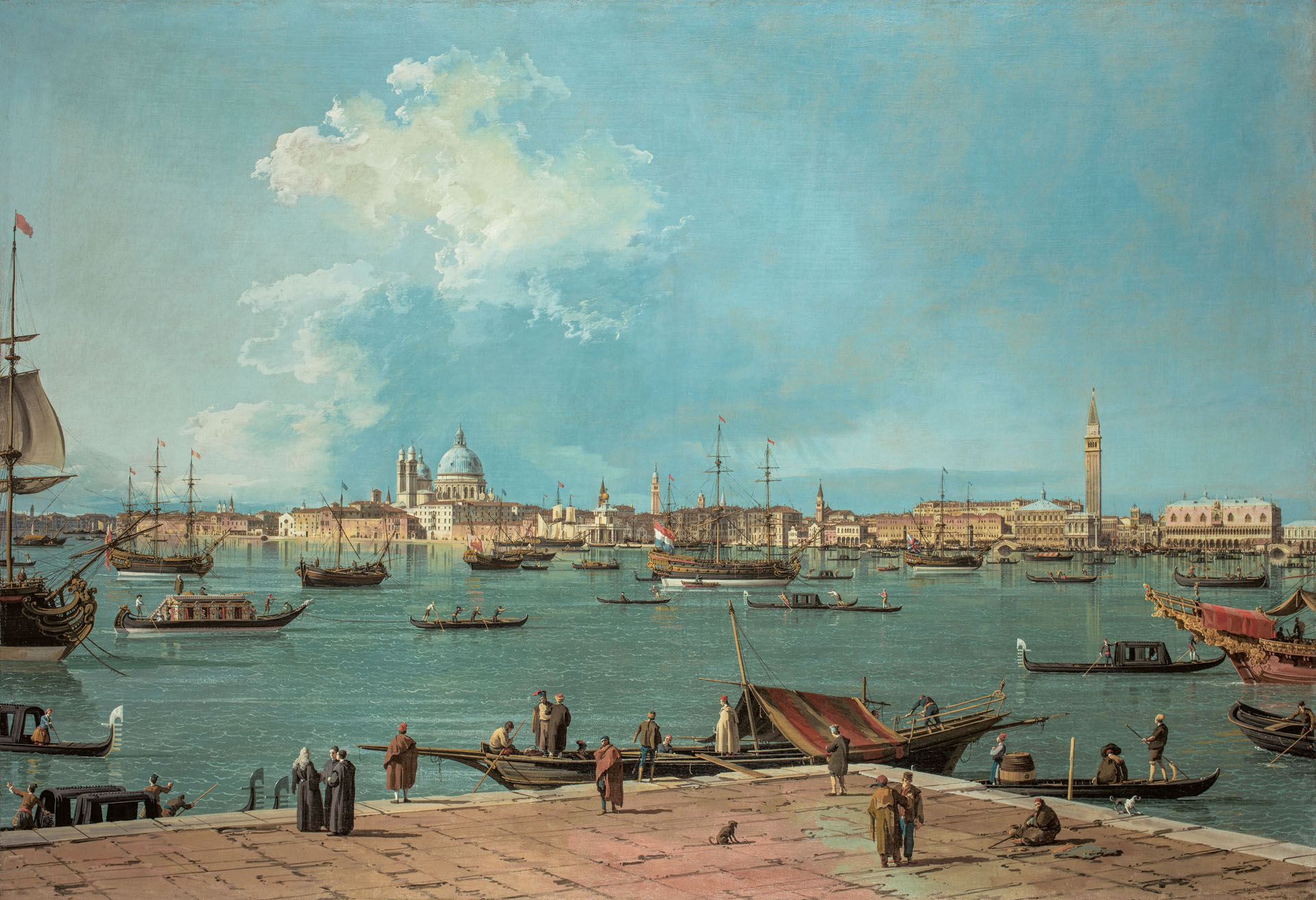
The view sweeps along the Riva degli Schiavoni to the Doggia’s Palace and the Campanile. Far off in the distance the Dogana is visible at the mouth of the Canal Grande. Canaletto used the “camera obscura” to achieve this charming panoramic effect and topographical exactitude. The compositional framework thus achieved was then fully painted in exact detail, enlivened by picturesque scenes from ordinary life and bathed in radiant midday light.
Title:
Die Riva degli Schiavoni in Venedig
Artist:
Antonio Canal, gen. Canaletto (1697 - 1768 Venedig)
Time:
um 1724/30
Timeless beauty:
Canaletto’s paintings of the lagoon city still astound viewers today.
But let’s start at the beginning: For a long time, the Republic of Venice was Europe’s most important center of trade between East and West and a major seafaring power. In the eighteenth century, though, the city lost some of its political and economic influence, but continued to be an important cultural center. Aside from the visual arts, Venice was best known for its theaters, opera houses, and concert halls. Numerous festivities—most prominently, the carnival—inspired enjoyment of life to the fullest. Such was the environment that Giovanni Antonio Canal was born into in the fall of 1697. His family belonged to the cittadini originari—the native citizens of Venice. His father, Bernardo Canal, was a stage painter, and it was in his workshop that Giovanni Antonio started his artistic career. To distinguish son from father, he was called Canaletto—little Canal. Working alongside his parent, he delved into the world of theater and made himself familiar with the perspective construction of backdrops and illusionistic spatial sceneries.
Change of scenery:
A trip to Rome
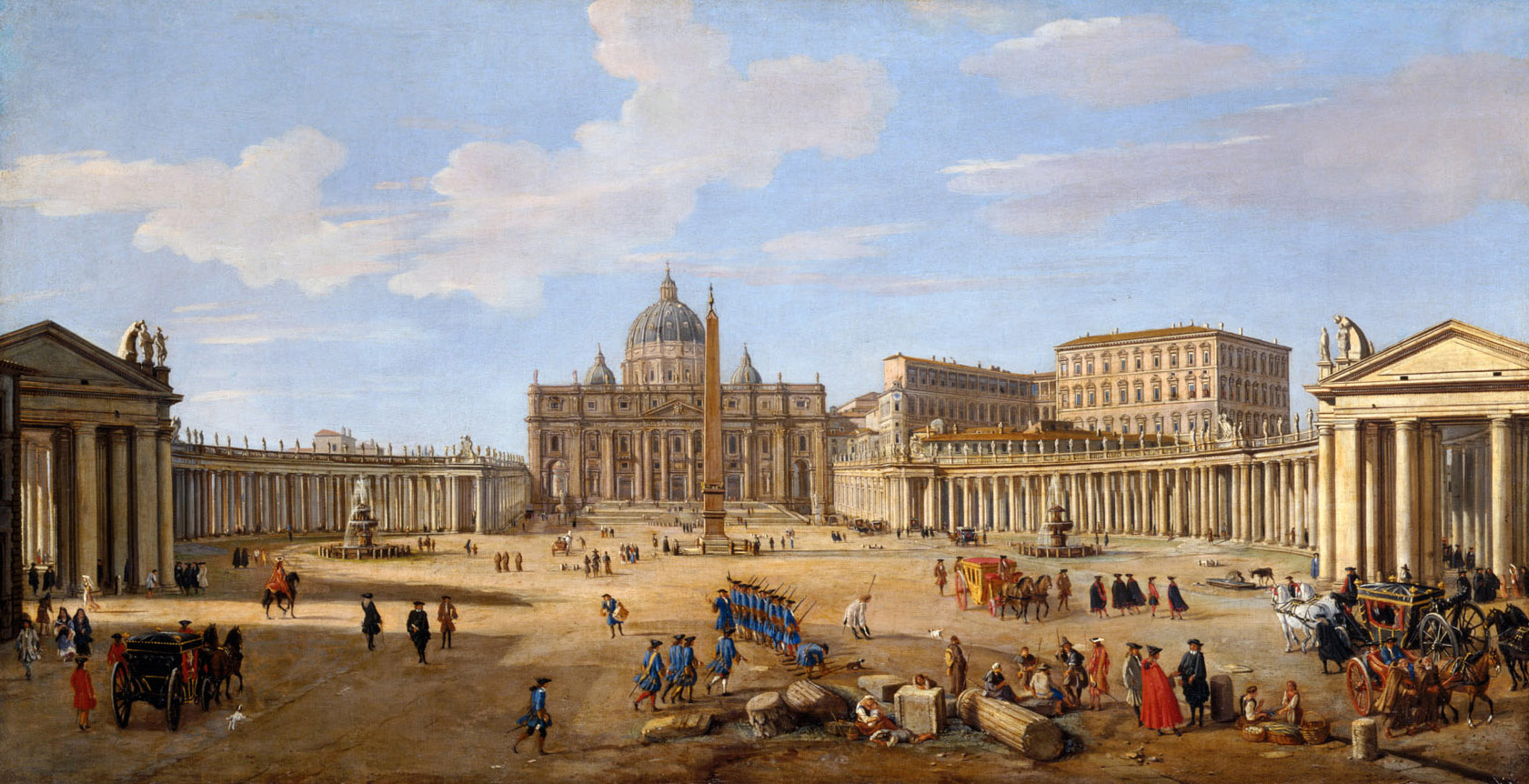
In 1719, Canaletto accompanied his father to Rome on a commission. Deeply impressed by the ancient monuments and new Baroque buildings, the young artist began to depict Rome in drawings and paintings. It was also here that he probably met Gaspar van Wittel, a Dutch veduta painter known in Italy as Vanvitelli. It actually was van Wittel who had first popularized the city as a pictorial subject—a seventeenth century Dutch invention—in Italy.
Canaletto, too, now became enthused about city views—so much so that he turned his back on theater painting for good. Back home, he joined the painters’ guild, the Fraglia dei Pittori. With the new subject matter he had brought with him, he took Venice by storm.
Title:
Petersplatz in Rom
Artist:
Gaspar Adriaensz van Wittel, gen. Vanvitelli (um 1652 Ammersfoort bei Utrecht - 1736 Rom)
Time:
um 1703-1710
City turned image:
Canaletto’s work process
How was Canaletto able to become the leading veduta painter in Venice in such a short time? His contemporaries admired above all the luminosity of his colors and the delicate gradation of the lighting in his paintings—to them, the sunlight itself seemed to be radiating from the pictures. To render perspective and lighting effects with such accuracy, the painter used optical devices like the camera obscura. This early-type camera consists of a darkened box with a hole and a lens, on the back wall of which the incoming light projects an upside-down and reversed image of the scene in front of the camera. In the 18th century, the device was available in all kinds of shapes and sizes—from walk-in chambers to tent-like apparatuses and down to small, handy boxes. One example bearing the stamped inscription “A. Canal” has survived in the Museo Correr. In addition, Canaletto made freehand drawings. He used this picture material as a visual archive that he drew on to compose his city views in the studio. All topographical and architectural precision notwithstanding, he always brought his inventive imagination into play: Like a set designer, he moved buildings, adjusted proportions, and combined multiple perspectives into one clear and harmonious whole. In the end, he imbued the sceneries with life using staffage figures. Unlike with his predecessors, however, the figures came not from sample books but from his own observation: Canaletto depicts everyday life in Venice. This creates, as Antonio Conti, a scholar from Padua, put it, “such a vivid impression that when first looking at his painting, I am convinced I am seeing the actual scene before me.”
“such a vivid impression that when first looking at his painting, I am convinced I am seeing the actual scene before me.”
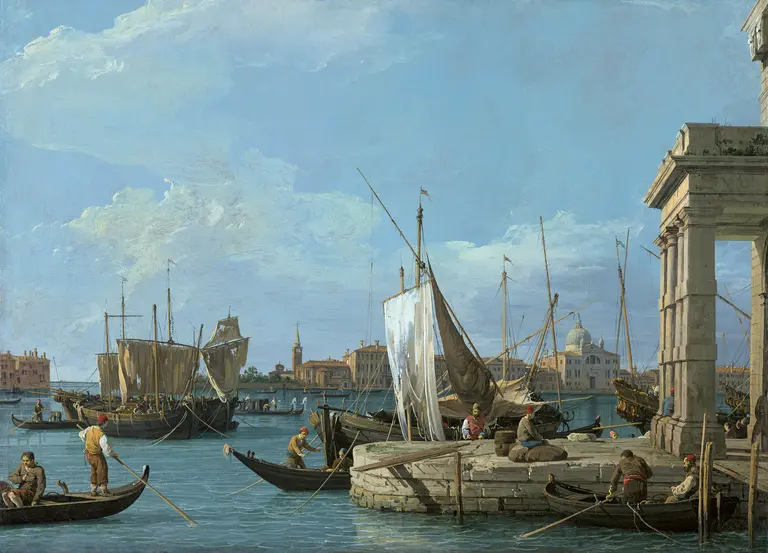
Canaletto begins by painting the sky. Thickly laid-on color transforms into light, airy clouds.
In a second step, he adds the water and buildings. Suggested ripples of waves, reflections, and shadows bring movement to the water’s surface.
The nuanced articulation of materials—like the weather-beaten stone-built Dogana da Mar, the customs house of Venice—enhances the sculpturesque effect of the pictorial elements.
The wet-on-wet application of paint gives the fabric of the sails a particularly realistic look. Canaletto often uses the brush handle to draw lines into the wet paint to suggest shadows and give the objects additional texture.
In a final step, Canaletto adds the figures. Their lifelike quality is owed, among other things, to the adept use of lighting. Some layers of paint added at the end have become translucent over time, revealing the elements underneath.
Throughout the 1730s, Canaletto’s works were so much sought-after that he could barely keep up with the commissions. Due to the high demand, he likely employed one or two workshop assistants to prime canvases, grind pigments, and the like. Starting in 1735, he was also supported by his nephew Bernardo Bellotto, who trained under Canaletto and would soon be making a name for himself as a veduta painter.
Vedute were particularly popular at the time among foreign travelers visiting Venice on what was called the Grand Tour. Back in the eighteenth century this extended educational journey was considered an indispensable part of the upbringing of young aristocrats. Such a journey could take several months, sometimes even years, the primary destination being Italy. The cityscapes purchased there were not only popular souvenirs but were also supposed to give proof of their owners’ education and status. Works from Canaletto were especially popular among British aristocrats. This was, to a large part, due to the dealings of the English merchant, art dealer, and diplomat Joseph Smith. He not only acquired numerous works by Canaletto himself—54 paintings and over 140 drawings in total—but also acted as a broker for his works. And for a lot of them: The Earl of Carlisle, for example, bought 17 of Canaletto’s paintings, the Duke of Marlborough 20, and the Duke of Bedford no less than 24. It is pretty unsurprising therefore that the largest collection of paintings of the Venetian artist is not found in Italy today but in Great Britain, for example in the collection of the Royal Family or in the National Gallery.
Many of Canaletto’s works are now on view in England.
Going up north:
Canaletto’s years in England
The outbreak of the War of the Austrian Succession (1740–1748) led to a marked decline in foreign visitors coming to Venice, and selling vedute was becoming increasingly difficult. Canaletto therefore decided to move to England himself. Introduced by a letter of recommendation from Joseph Smith, he settled in London in 1746. With a population of around 675,000, the city on the Thames was at the time one of the largest metropolises in Europe. Classicist new buildings shaped its silhouette; the Enlightenment, trade, and the flourishing financial sector were transforming London into the modern center of the British Empire.
Canaletto the vedutista had come to the right place at the right time—his idealized cityscapes were met with great interest. And he was adroit at adapting his painterly vocabulary to the new conditions. Soon, he gained important patrons, among them the Duke of Richmond and Lord Brooke, the future Earl of Warwick, for whom he documented the renovation of his country seat, Warwick Castle.
Far from home, the Venetian Canaletto always felt drawn to the water: The building of Westminster Bridge appears to have held particular fascination for him. He captured the novel construction—a masterpiece of contemporary engineering—in drawings and paintings in numerous variations.
Aside from urban festivities, bridges, and noble estates, Canaletto also painted newly opened establishments of public entertainment such as the so-called Rotunda, an event venue in Ranelagh Gardens where people from different social classes mingled. Unlike many of his British fellow artists, however, Canaletto always portrays London as orderly, serene, and harmonious—there is no trace of the misery of impoverished workers or the filth and grime of the growing metropolis city in any of his about fifty English city views.
Home, sweet home?
Return to Venice
It probably was a decline in revenues that made Canaletto return to his native home, Venice, in 1755—after nearly a decade away. The city remained the defining subject of his art. Aside from paintings, he was now doing more and more drawings to be used as designs for copperplate engravings. In 1763, he received a belated honor: Aged 66, he was accepted into the Venetian Academy and elected prior of the painters’ guild. His last surviving drawing shows the Interior of St Mark’s Basilica. Canaletto proudly notes that he drew all the details without eyeglasses on—a reference to his keen faculty of observation, which makes his works so special? Despite his successful career, Canaletto’s possessions were modest: a small sum of money, a few pieces of jewelry, furniture, and a humble, still-mortgaged plot of land in the Zattere district was all the lifelong bachelor had to his name for his twilight years. In 1768, Canaletto finally died, aged 71, in the lagoon city, whose glory—along with his own—he had ensured with his paintings.