The Meeting at Nördlingen
ö 1635 | Peter Paul Rubens
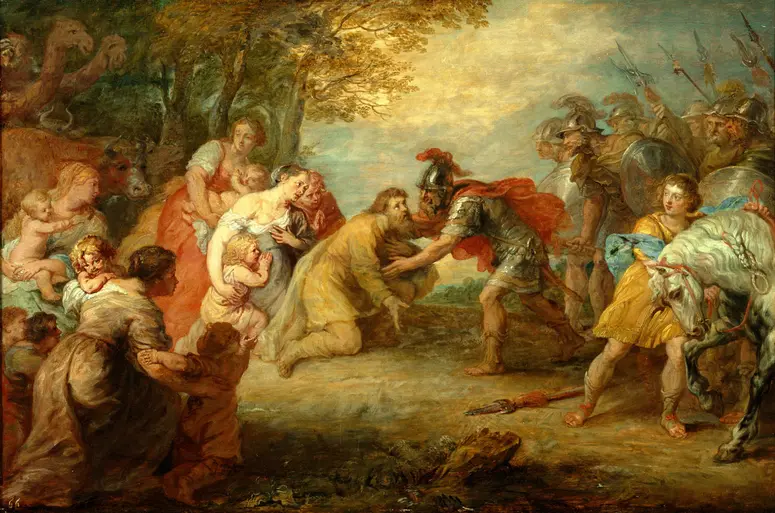
For the triumphal entry into Antwerp of the new governor (cf. Inv. No. GG 699), Rubens designed triumphal arches and stages. Some of the largest paintings integrated in the architectural designs, including this one, were painted by Rubens himself. It depicts the meeting of the cardinal-infante Ferdinand with his cousin, the future Emperor Ferdinand III before the Battle of Nördlingen, in which the imperial and Spanish forces scored a brilliant victory over the troops of the Swedes and the German Protestant princes.
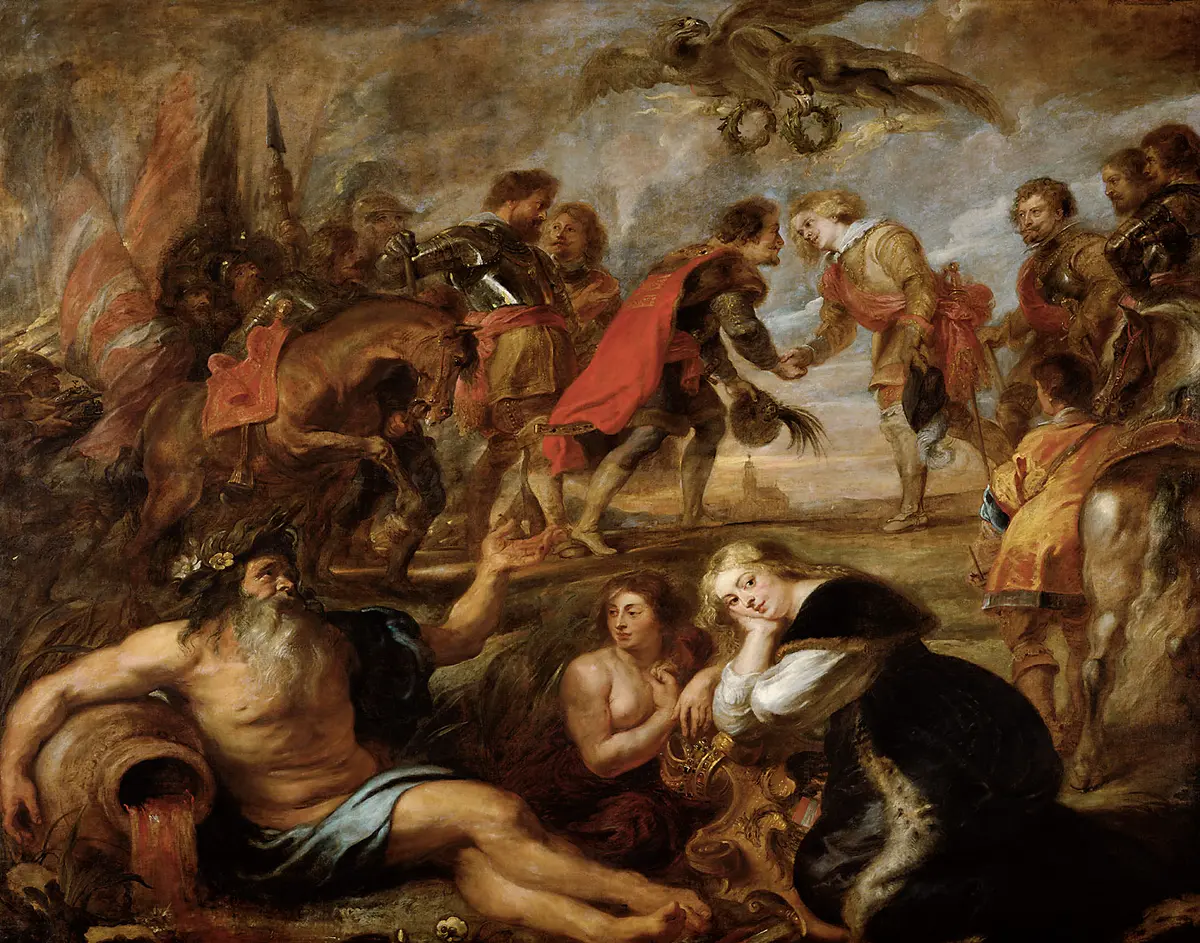
For the triumphal entry into Antwerp of the new governor (cf. Inv. No. GG 699), Rubens designed triumphal arches and stages. Some of the largest paintings integrated in the architectural designs, including this one, were painted by Rubens himself. It depicts the meeting of the cardinal-infante Ferdinand with his cousin, the future Emperor Ferdinand III before the Battle of Nördlingen, in which the imperial and Spanish forces scored a brilliant victory over the troops of the Swedes and the German Protestant princes.
Artist:
Peter Paul Rubens (1577 Siegen - 1640 Antwerpen) DNB
Depiction/Person:
Ferdinand III. (1637-1657), Kaiser (1608 - 1657) DNB
Time:
ö 1635
Object Name
Painting
Culture
Flemish
Material/technology:
Canvas
Dimensions:
328 x 388 cm
Framed: 375 cm × 450 cm × 27 cm
Copyright
Kunsthistorisches Museum, Gemäldegalerie
Invs.
Gemäldegalerie, 525
Provenance
1682 Jan Gillis, Antwerp; Elector Johann Wilhelm of the Palatinate; 1701 gift of the Elector to Emperor Leopold I; 1730 shown in the gallery
Browse more
Similar items you might be interested in


Eleonore von Gonzaga (1598-1655), Kaiserin, im Alter von zwei Jahren, Kniestück Peter Paul Rubens um 1600/1601