Stechzeug
um 1480
These two suits of armour for the joust of peace were owned by Archduke Sigmund and Emperor Maximilian I. The weight of this armour is about 45 kilograms. The most heavy elements are the breastplate and backplate and the helmet screwed to them. The arms were protected by pauldrons, besagues, and the vamplate; the left hand was in a manifer (overized left gauntlet). The lance was fitted with a coronell, the lance head shaped like a small crown with three or four prongs, which were blunted to reduce the danger of injury.The Joust of peace (Stechen) was one of the two main forms of tournay on horseback. The aim of the contest was to unseat the opponent and to break the lance against his armour. Other variants aimed at tearing down the »targe« (attached shield) or the crest of the opponent’s helmet. Around 1500, a distinction was made between the joust in the German fashion (Joust of peace, witho ut the tilt) and a joust in the Italian fashion Plankengestech or Wesches Gestech (Joust of peace, with the tilt). In the second version, the opponents were separated from each other by a wooden barrier (called a tilt). The armor was thick, heavy, and rigid. The helmet was screwed firmly to the breast- and backplate. In order to deliver a more precise blow, the c.3.5 metre long blunt lance was would be couched on a lance-rest attached to the breastplate. Leg armour was not necessary, as blows below the belt were forbidden.
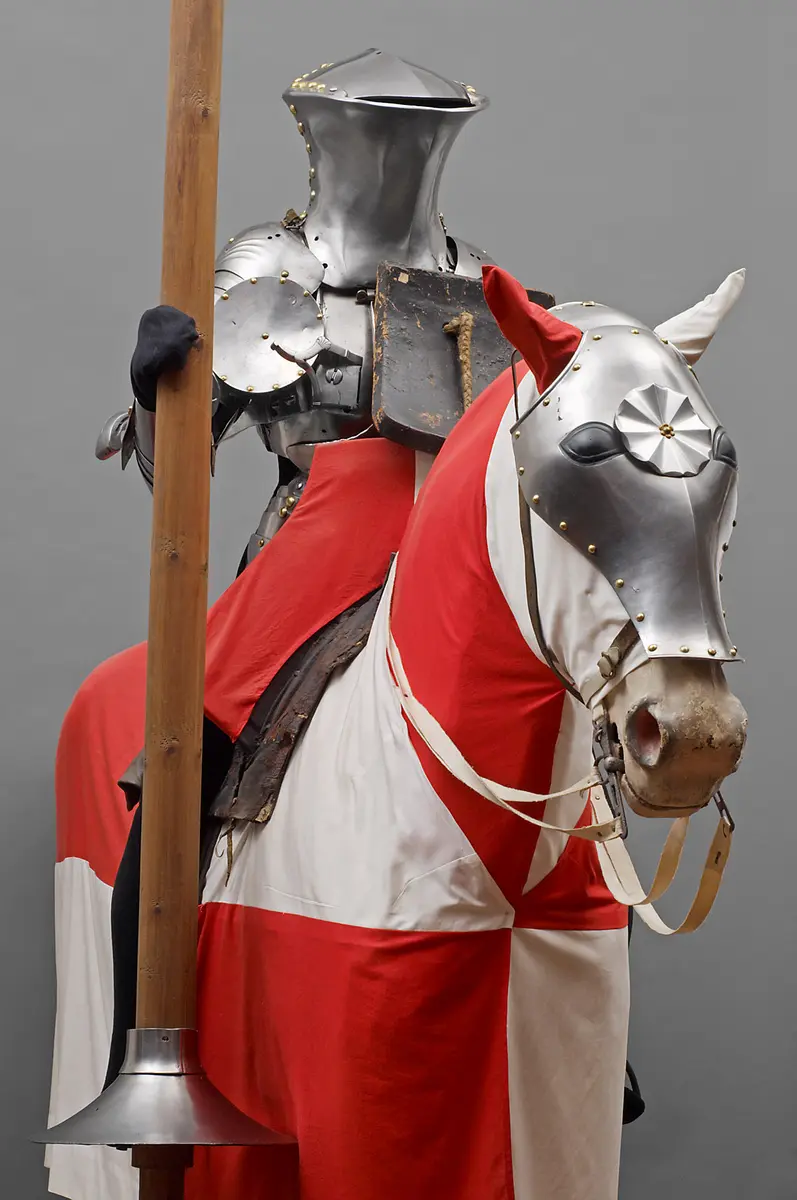
These two suits of armour for the joust of peace were owned by Archduke Sigmund and Emperor Maximilian I. The weight of this armour is about 45 kilograms. The most heavy elements are the breastplate and backplate and the helmet screwed to them. The arms were protected by pauldrons, besagues, and the vamplate; the left hand was in a manifer (overized left gauntlet). The lance was fitted with a coronell, the lance head shaped like a small crown with three or four prongs, which were blunted to reduce the danger of injury.The Joust of peace (Stechen) was one of the two main forms of tournay on horseback. The aim of the contest was to unseat the opponent and to break the lance against his armour. Other variants aimed at tearing down the »targe« (attached shield) or the crest of the opponent’s helmet. Around 1500, a distinction was made between the joust in the German fashion (Joust of peace, witho ut the tilt) and a joust in the Italian fashion Plankengestech or Wesches Gestech (Joust of peace, with the tilt). In the second version, the opponents were separated from each other by a wooden barrier (called a tilt). The armor was thick, heavy, and rigid. The helmet was screwed firmly to the breast- and backplate. In order to deliver a more precise blow, the c.3.5 metre long blunt lance was would be couched on a lance-rest attached to the breastplate. Leg armour was not necessary, as blows below the belt were forbidden.
Time:
um 1480
Object Name
Stechzeug
Culture
Innsbruck
Material/technology:
Eisen, Messing, Leder, Pferdedecke modern
Dimensions:
Gesamtgewicht (inkl. Lanze & Brechscheibe): 47,55 kg
Stamp / markings
Helm, Oberarmzeug und Mäusel tragen verschiedene Stempel
Copyright
Kunsthistorisches Museum, Hofjagd- und Rüstkammer
Invs.
Hofjagd- und Rüstkammer, S X
Browse more
Similar items you might be interested in

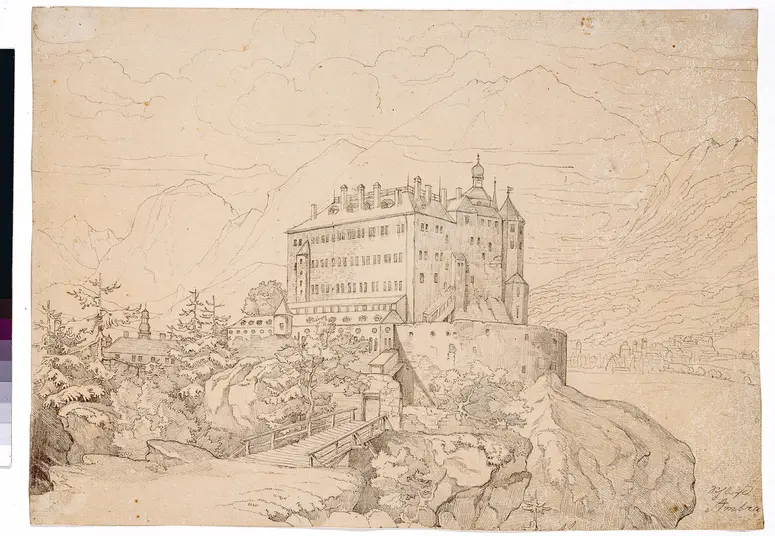
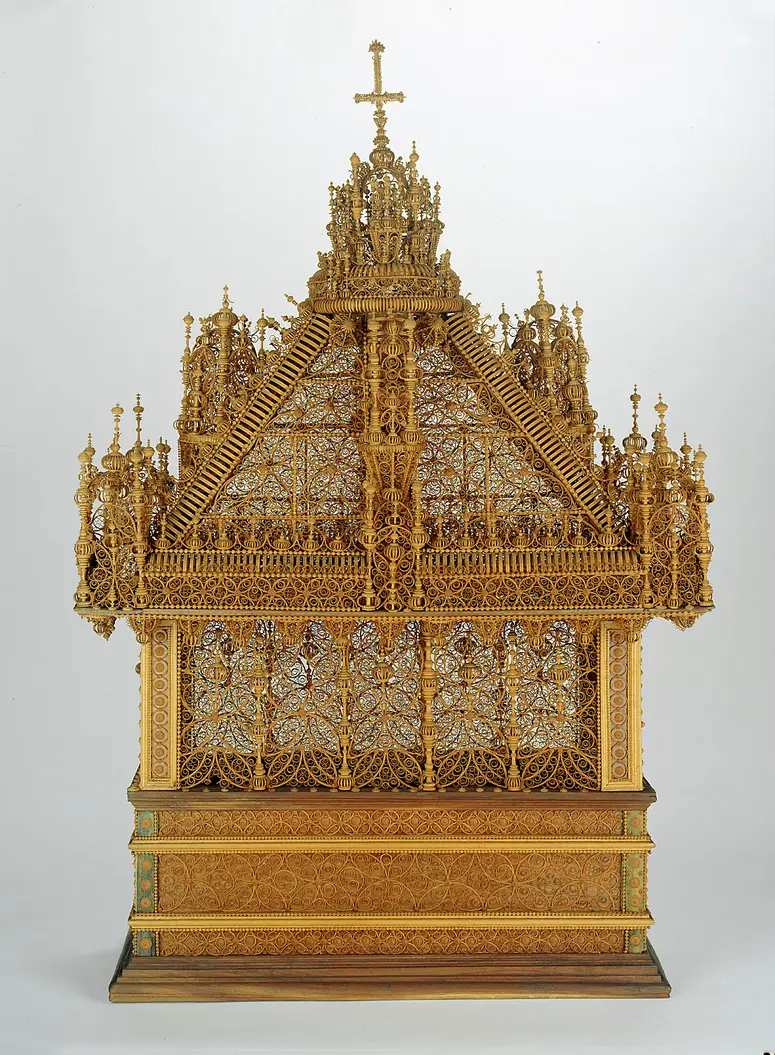
Heiliges Grab, Mikroschnitzerei, Schnitzerei, Holzarbeit 2. Hälfte 16. Jahrhundert
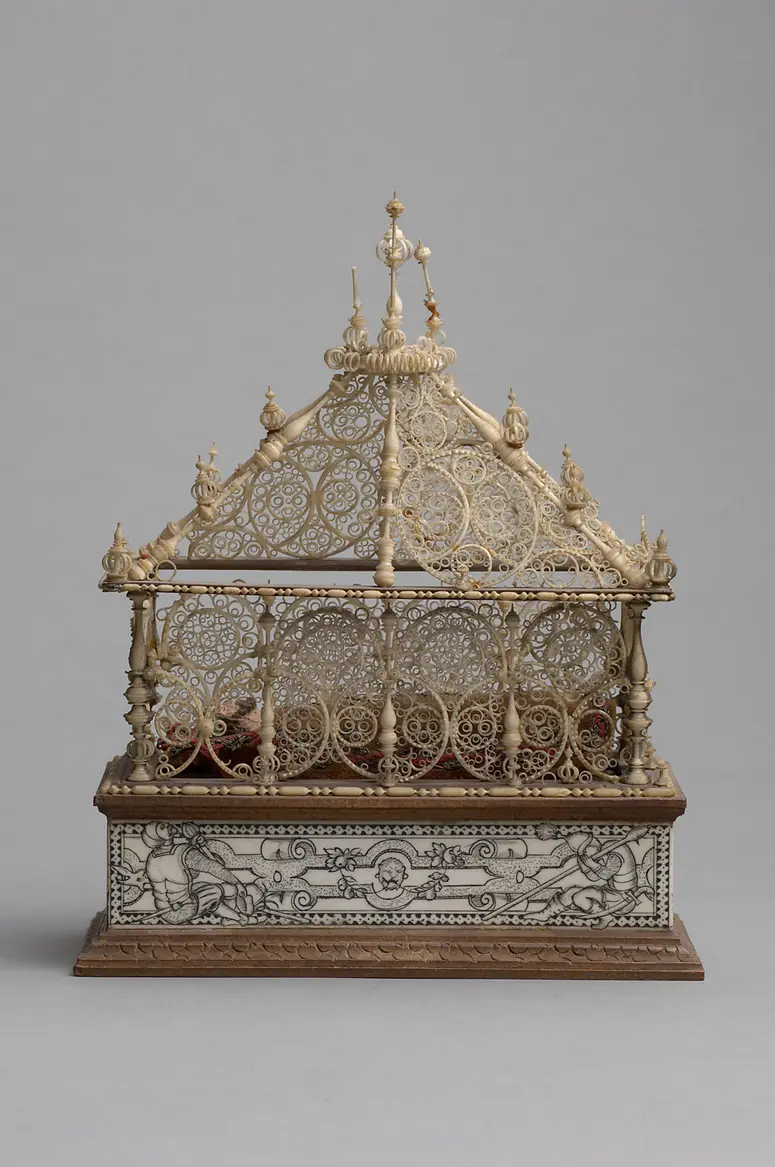
Aufsatz, Schnitzarbeit, Filigranarbeit, Heiliges Grab 2. Hälfte 16. Jahrhundert


Graviertes Nautilusgehäuse, Nautilus-Schale, Nautilus-Gehäuse, Nautlius, Meeresschnecke 2. Hälfte 16. Jahrhundert
Kranz, Schnitzarbeit, Holzarbeit 2. Hälfte 16. Jahrhundert
Reiterstatuette des Hl. Georg, Statuette, Kleinbronze, Bronze, Heiliger Georg Caspar Gras spätes 17. Jahrhundert (?)
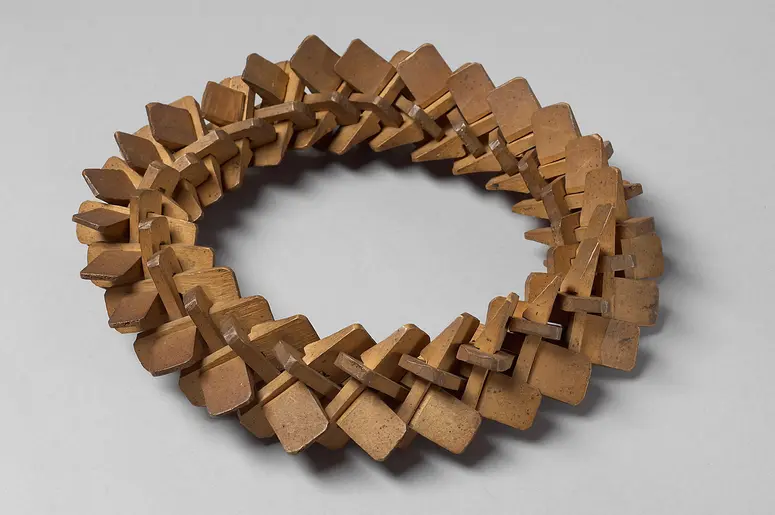
Kranz, Schnitzarbeit, Holzarbeit 2. Hälfte 16. Jahrhundert
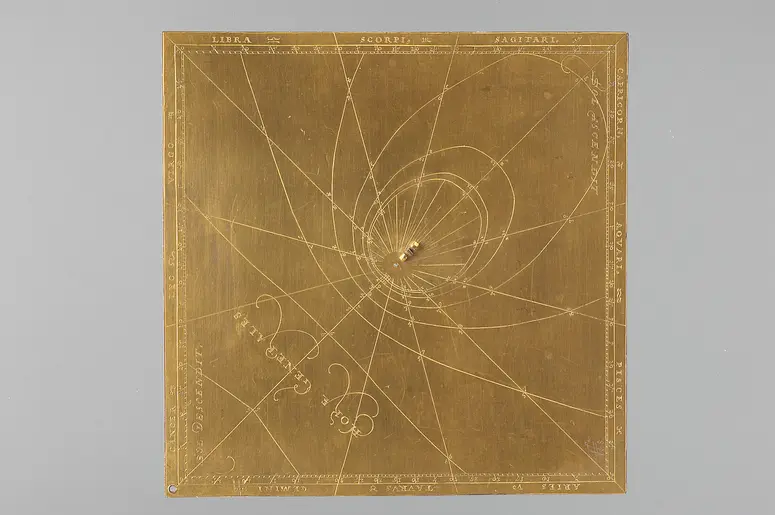
Reisesonnenuhr, wissenschatliches Instrument, Meßinstrument
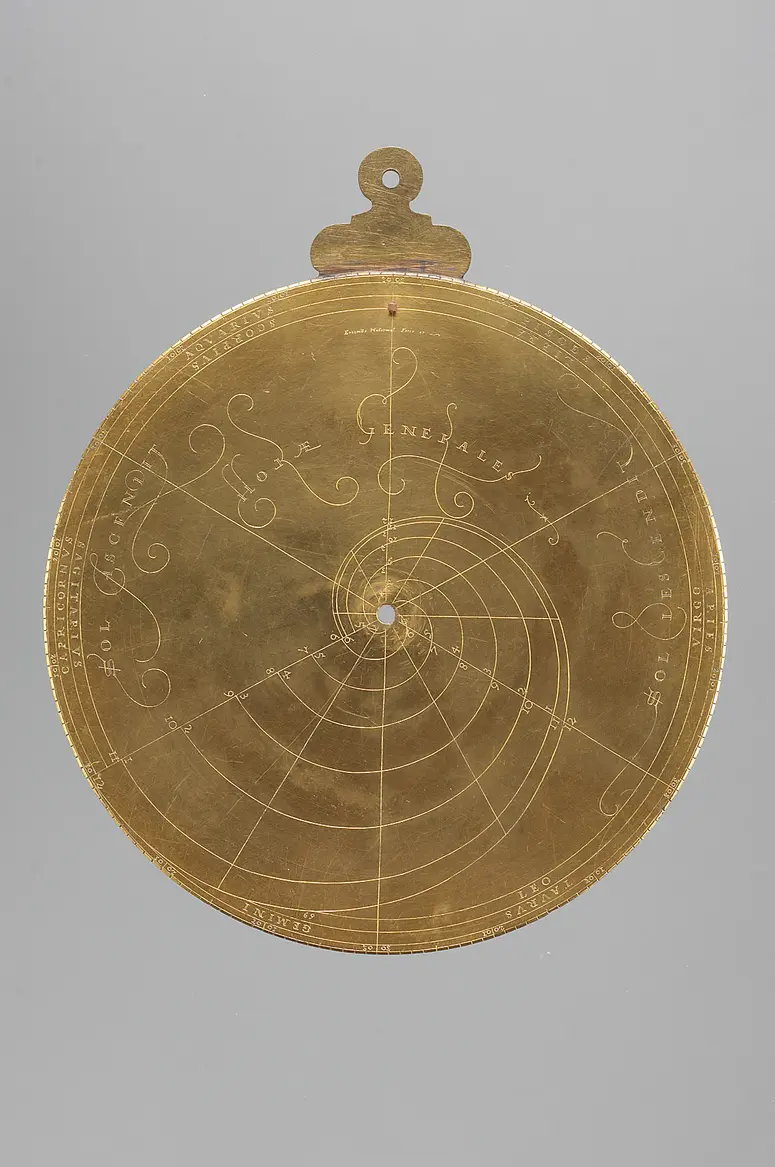
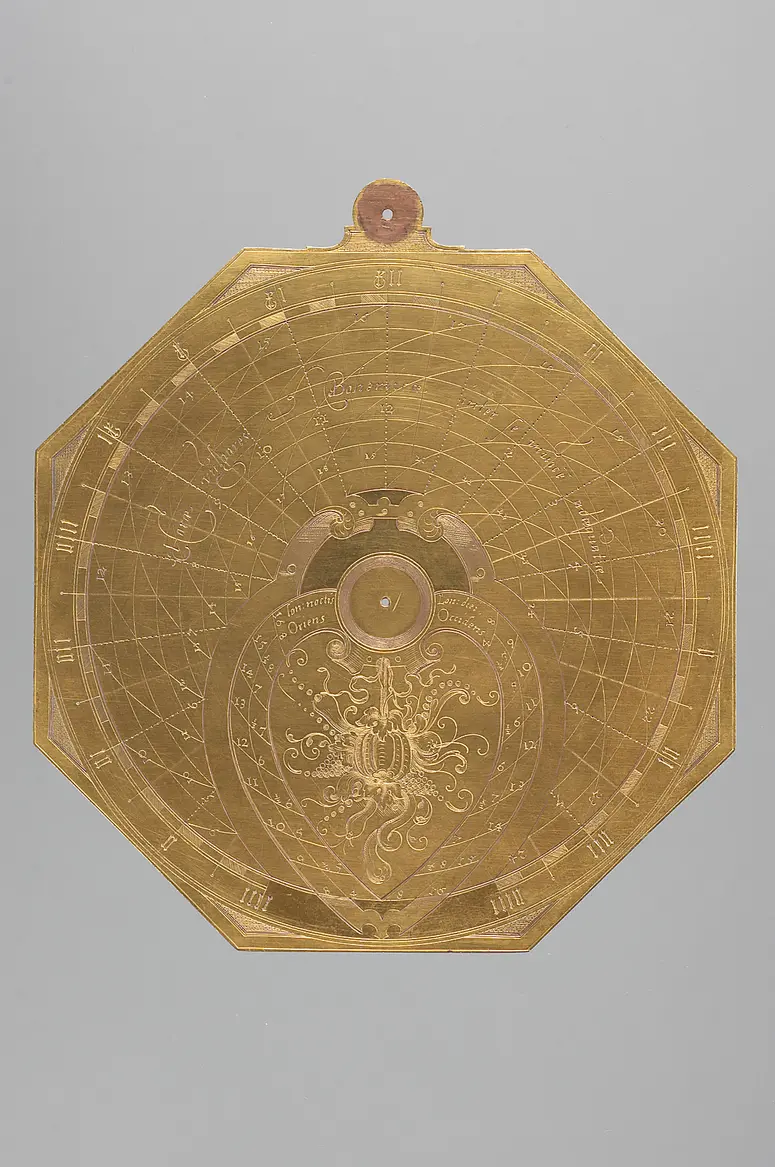
Reisesonnenuhr, Meßinstrument, wissenschaftliches Instrument Erasmus Habermel Ende 16. Jahrhundert
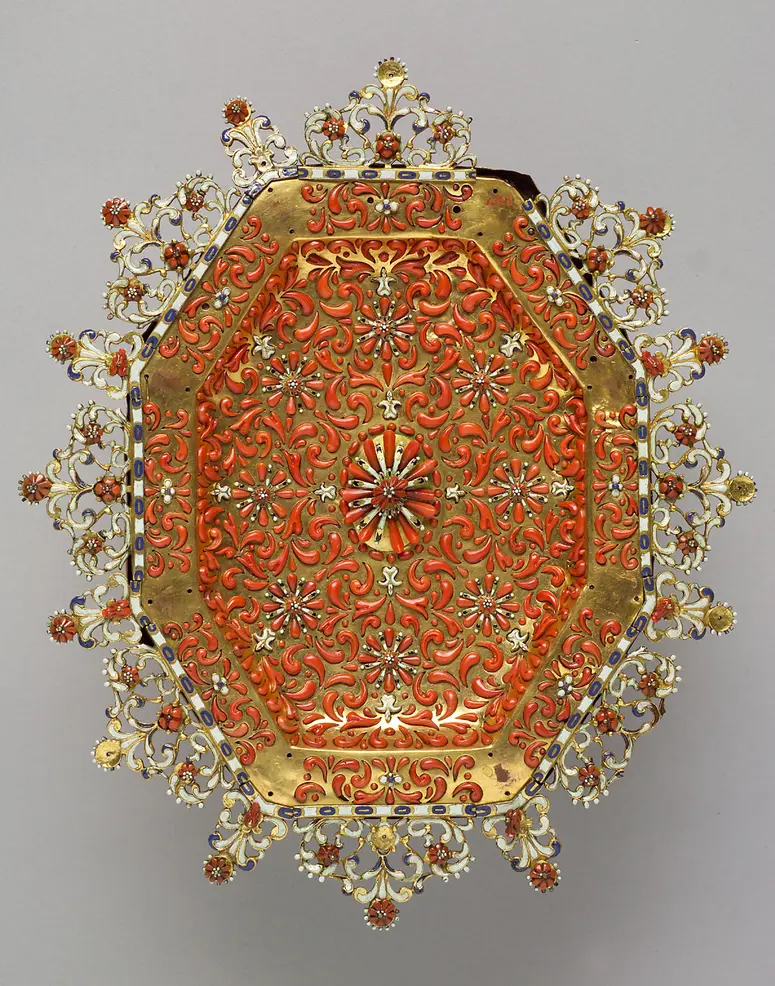
Gefäß, Teller, Platte, Korallenmosaik, Einlegearbeit Ende 16. Jahrhundert / Anfang 17. Jahrhundert
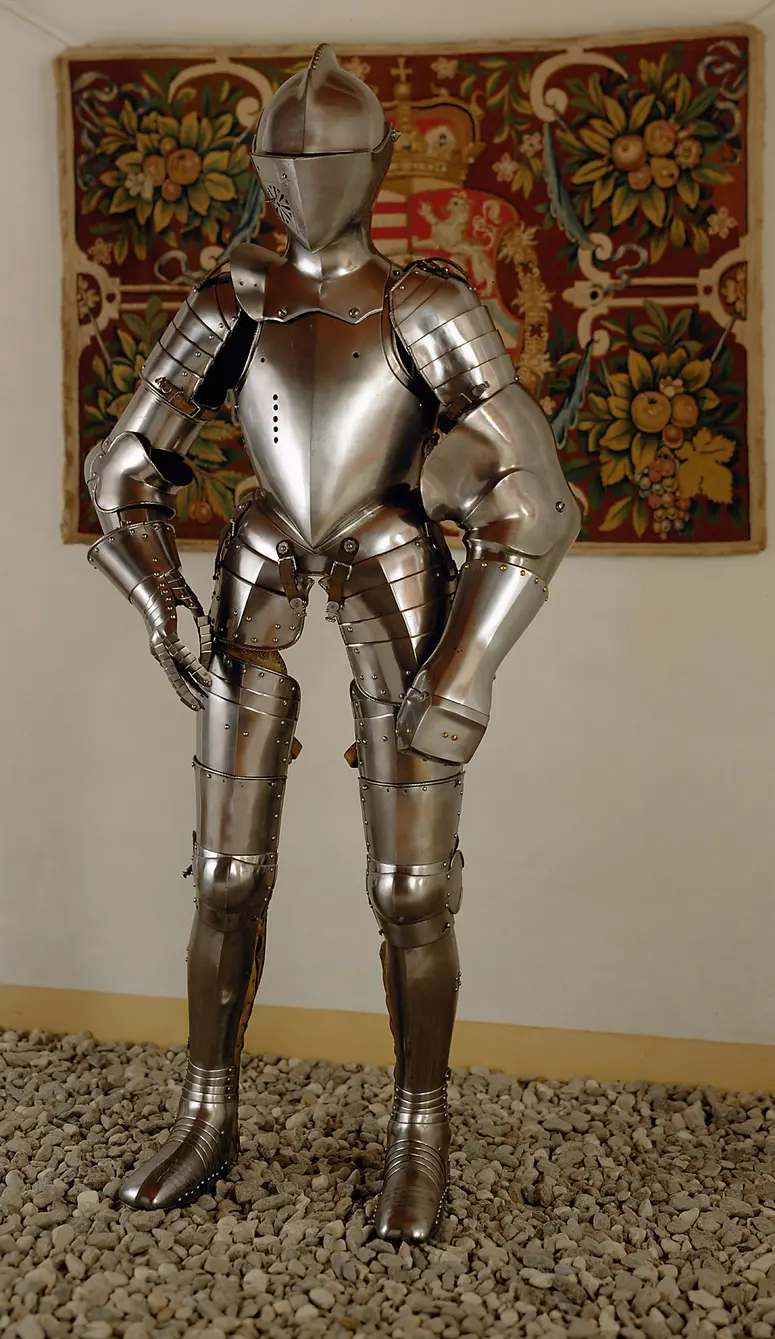
Ganzer blanker Harnisch, Rüstung zum Plankenstechen / Freirennen Anton Peffenhauser um 1570