Spiralring mit zwei Büsten
1. Jh. n. Chr.
Der dicke Golddraht ist in zwei Windungen spiralförmig gedreht. Die Enden werden von Frauenköpfen gebildet. Bei den Dargestellten könnte es sich um Isis und Nephthys handeln, möglicherweise sind auch Demeter und Persephone gemeint. Eine der Frauen trägt auf dem Kopf Ähren, die andere einen Kalathos. Isis wird in römischer Zeit als Naturgottheit mit Demeter gleichgesetzt und kann daher wie diese mit Getreideähren dargestellt werden.
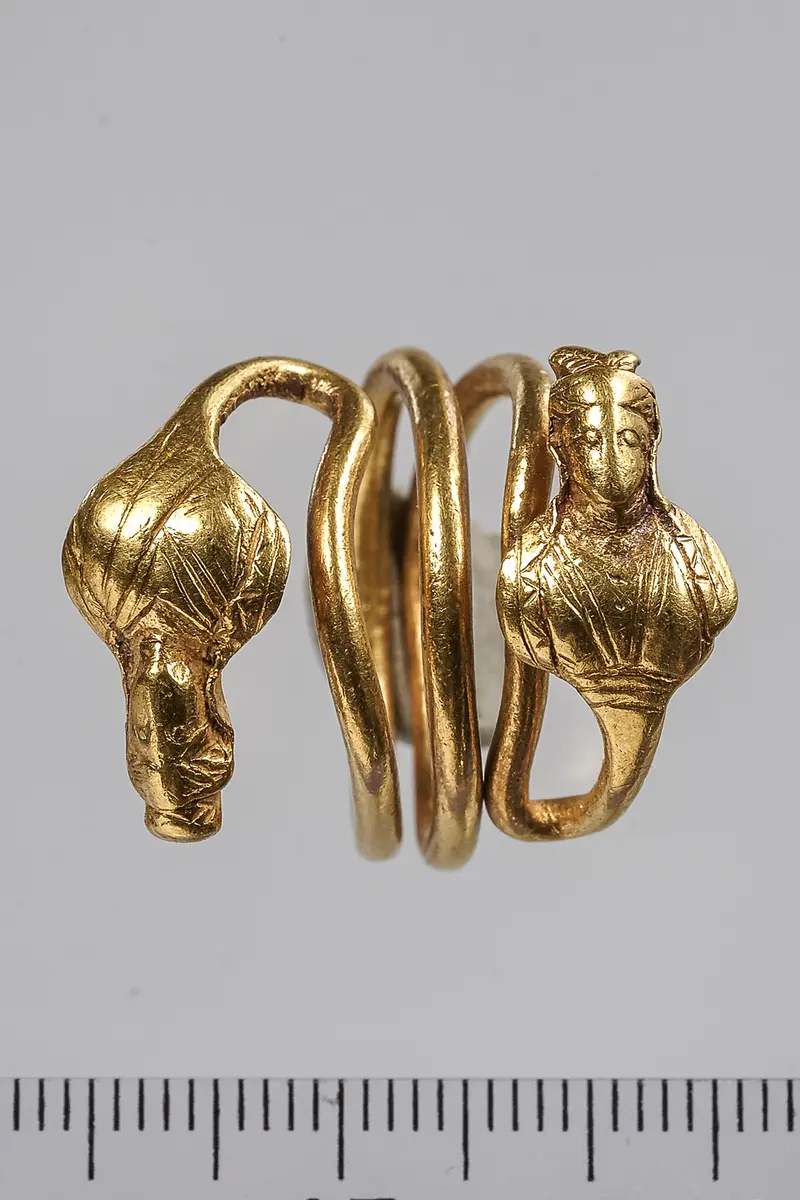
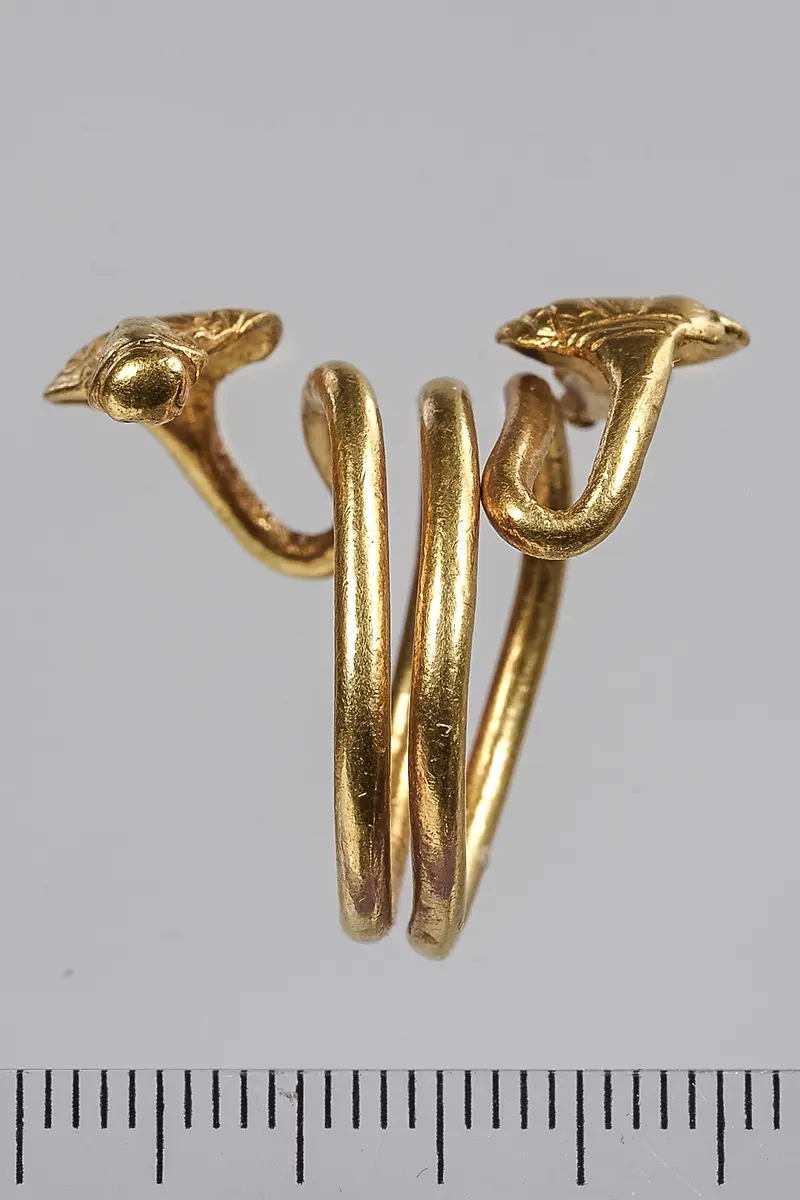
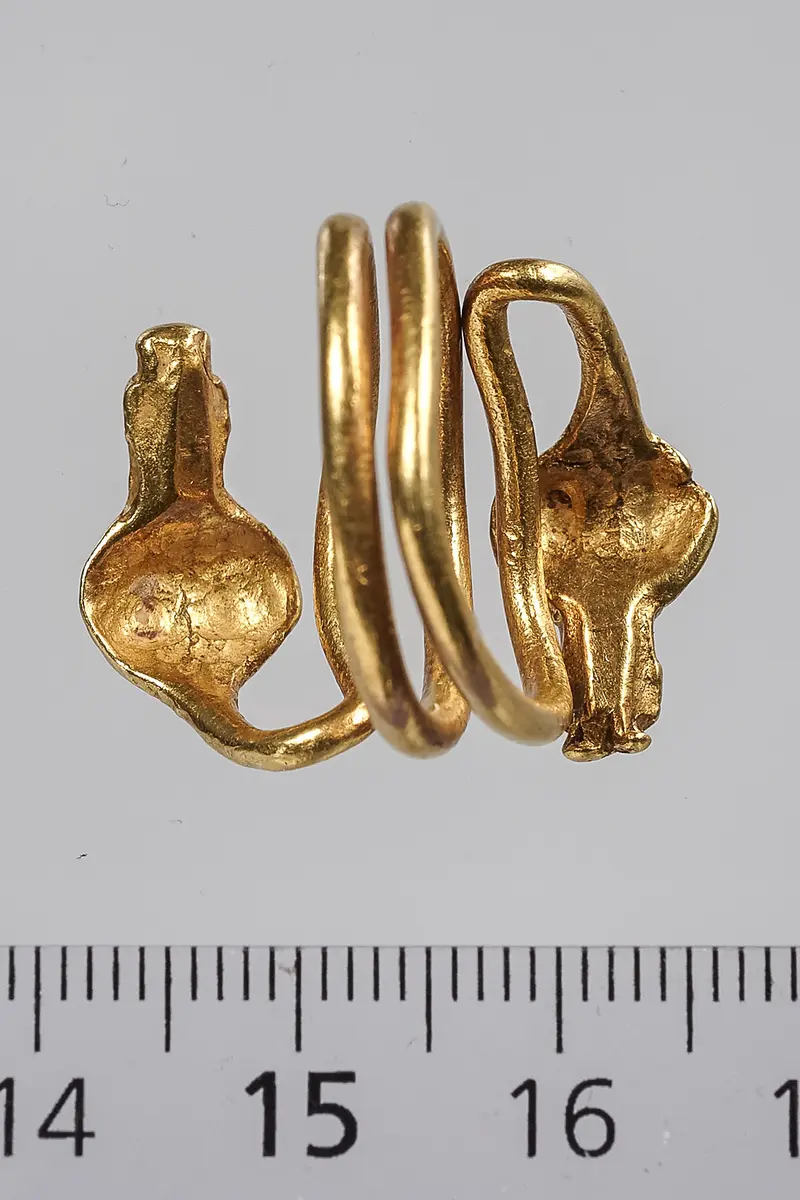
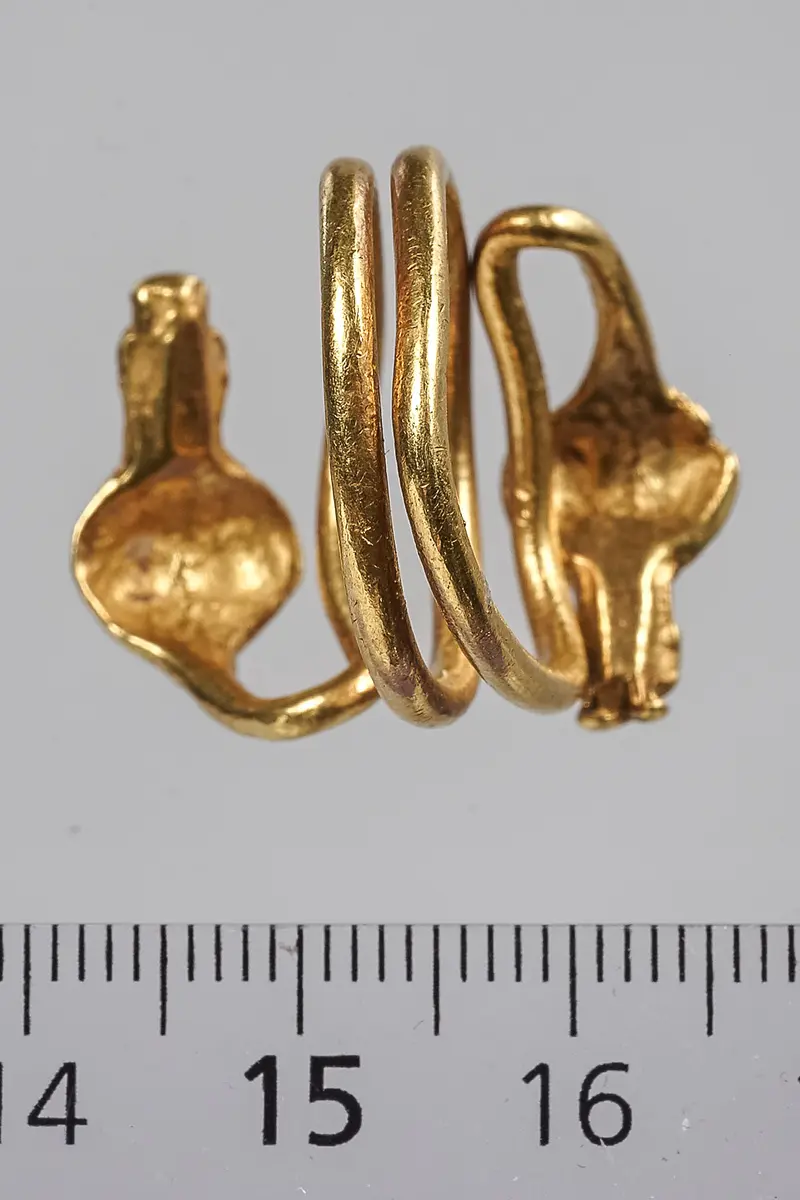
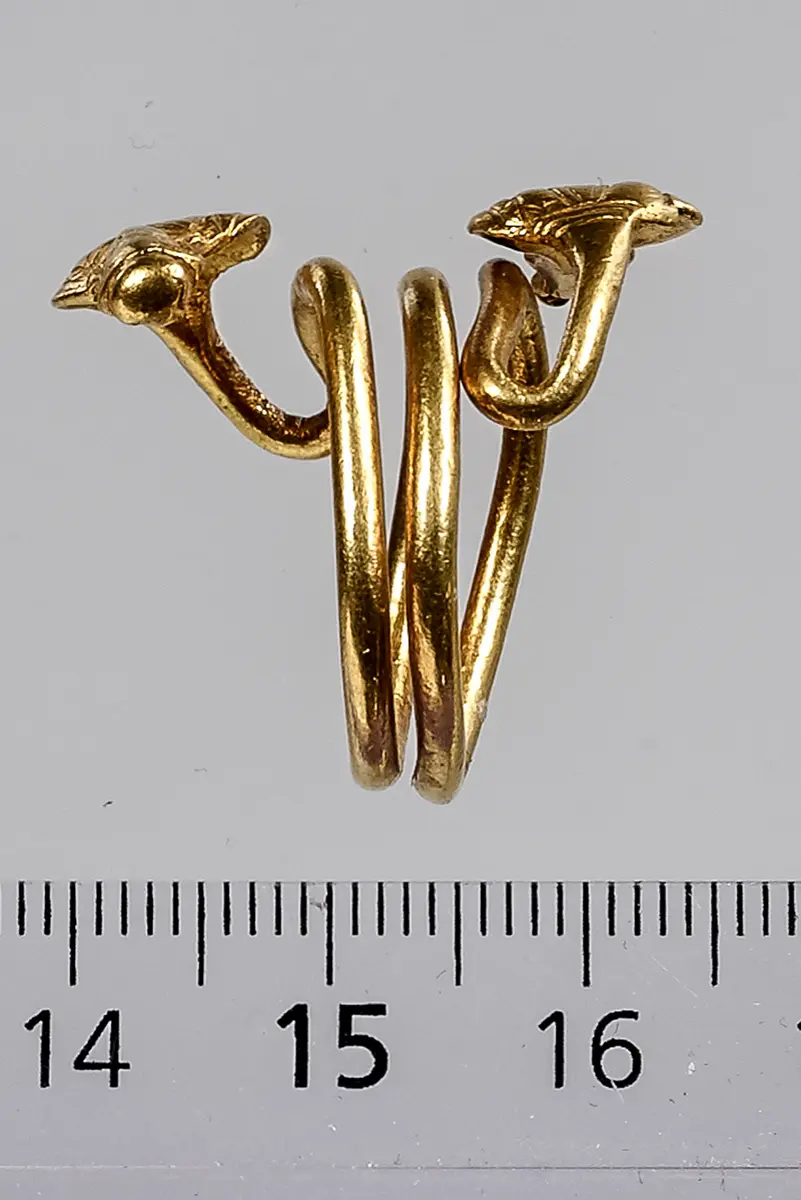
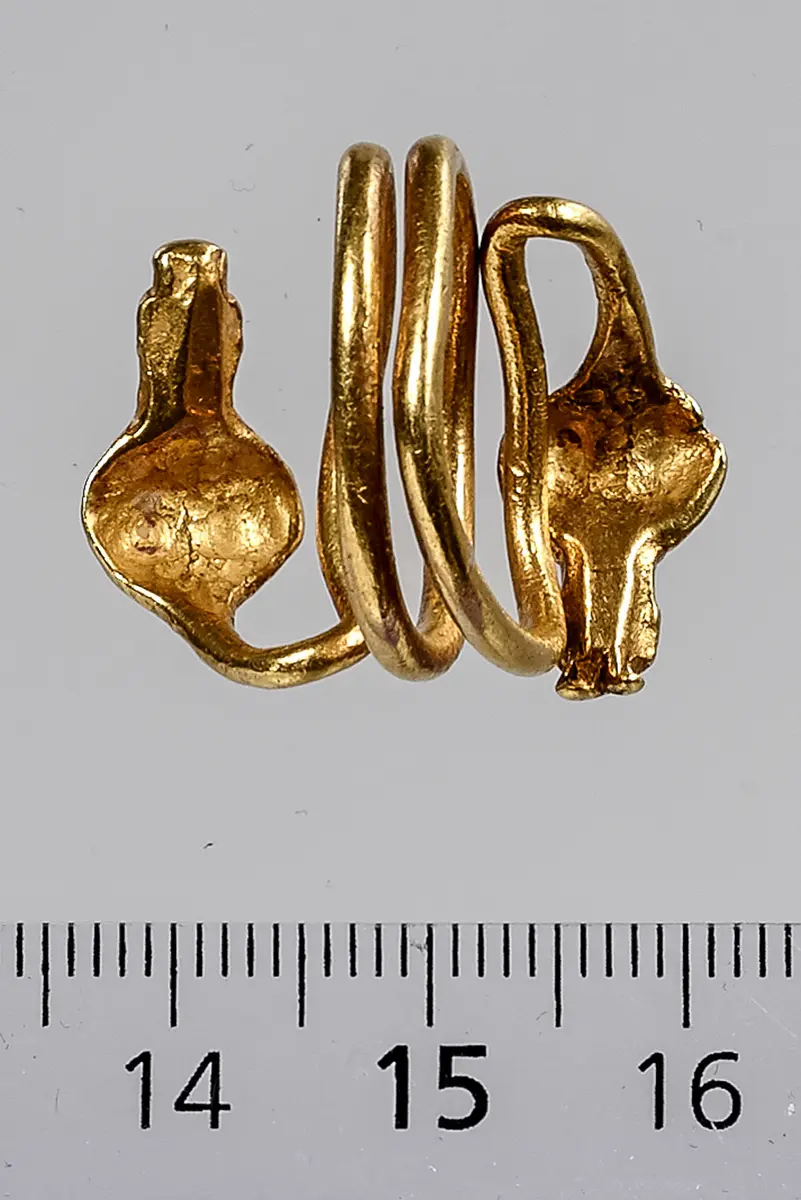
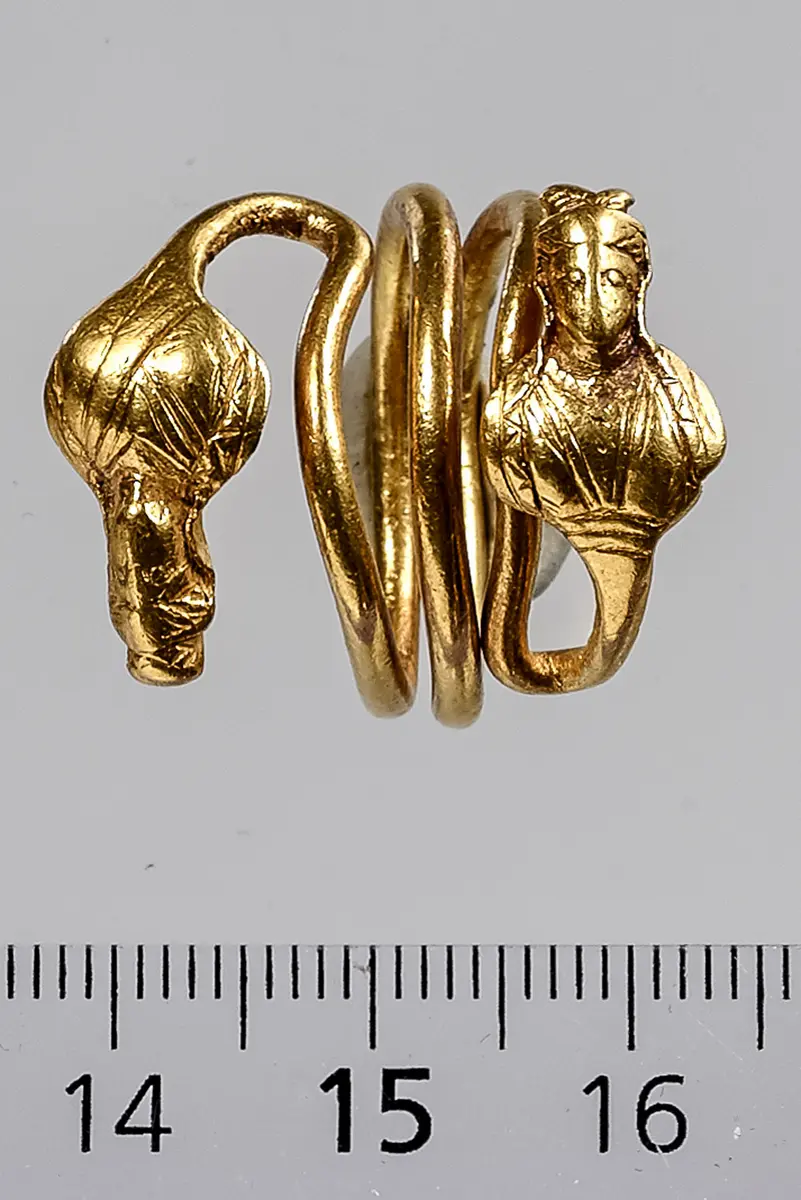
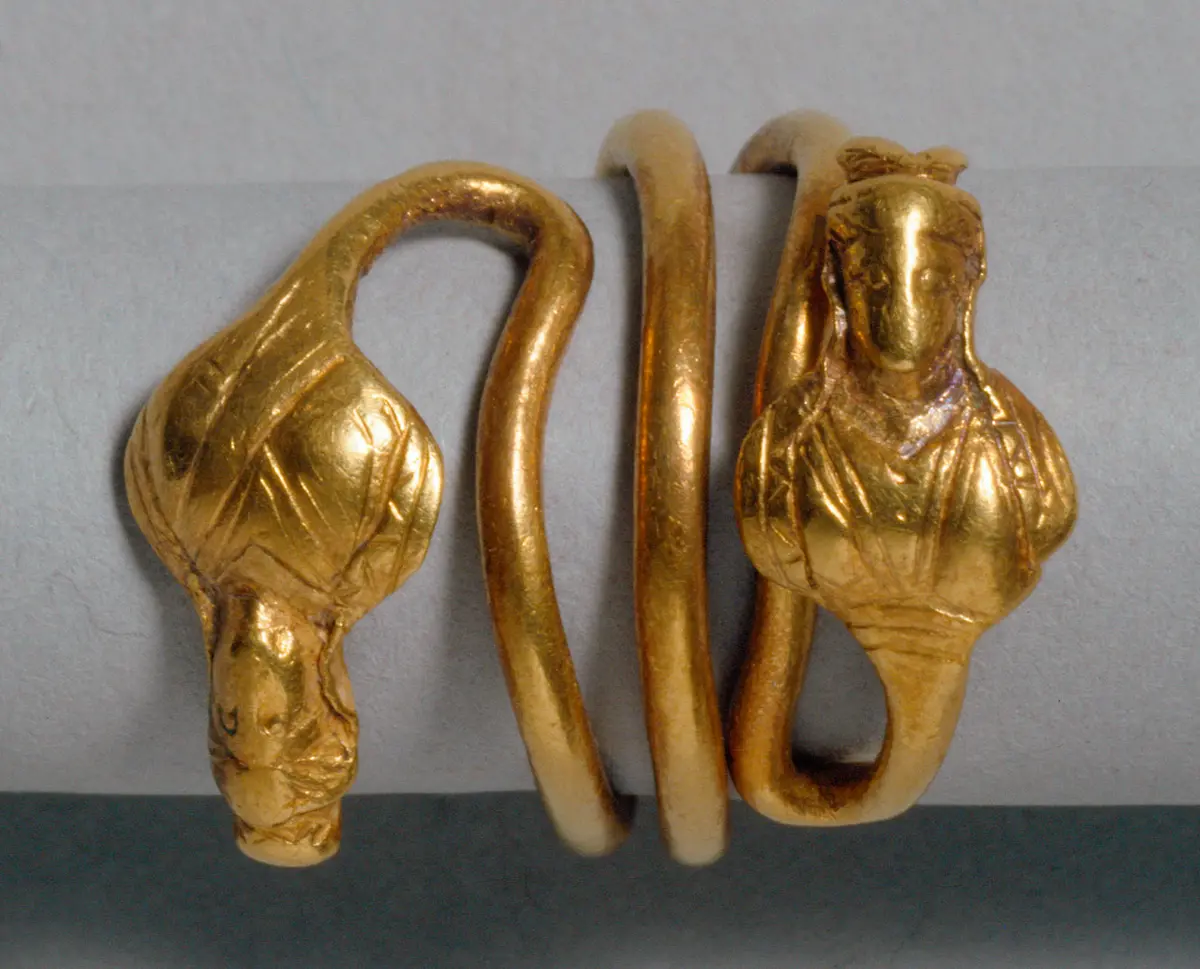
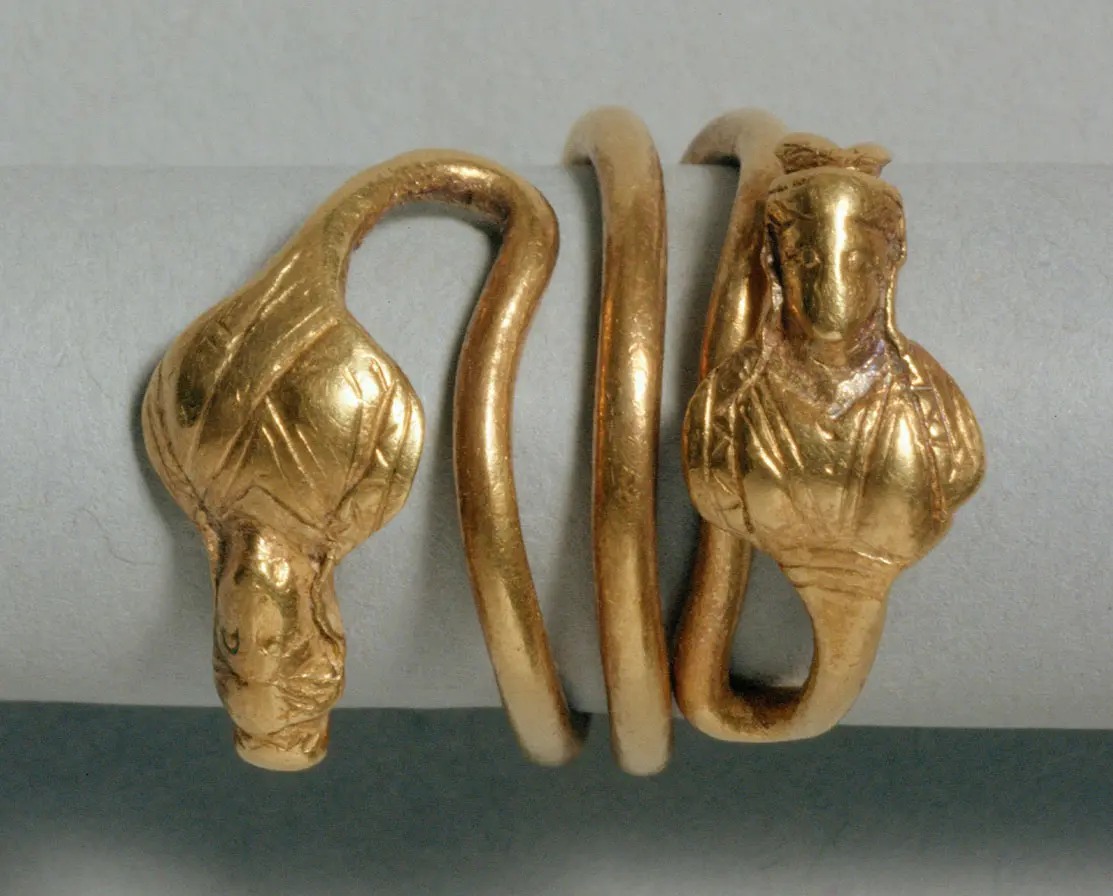
Der dicke Golddraht ist in zwei Windungen spiralförmig gedreht. Die Enden werden von Frauenköpfen gebildet. Bei den Dargestellten könnte es sich um Isis und Nephthys handeln, möglicherweise sind auch Demeter und Persephone gemeint. Eine der Frauen trägt auf dem Kopf Ähren, die andere einen Kalathos. Isis wird in römischer Zeit als Naturgottheit mit Demeter gleichgesetzt und kann daher wie diese mit Getreideähren dargestellt werden.
Time:
1. Jh. n. Chr.
Object Name
Schmuck
Culture
Römisch
Location of discovery:
Saqqara
Material/technology:
Gold
Dimensions:
H 2,57 cm, Dm 2,1 cm, G 12,5 g
Copyright
Kunsthistorisches Museum, Ägyptisch - Orientalische Sammlung
Invs.
Ägyptische Sammlung, INV 8224
Provenance
1939 Ankauf
Browse more
Similar items you might be interested in
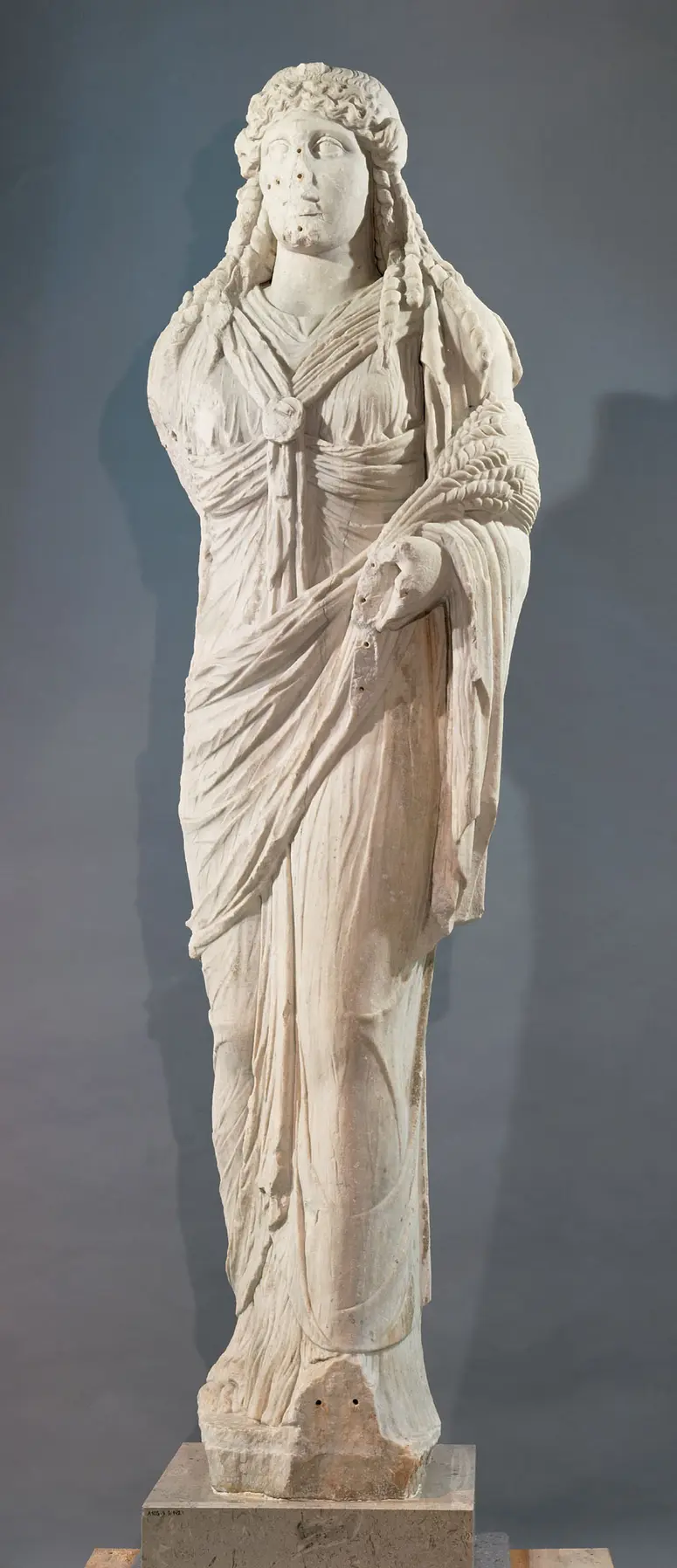
Statue: Isis Römisch, Kaiserzeit 1. - 2. Jh. n. Chr., nach griechischem Vorbild des 4. Jh. v. Chr.
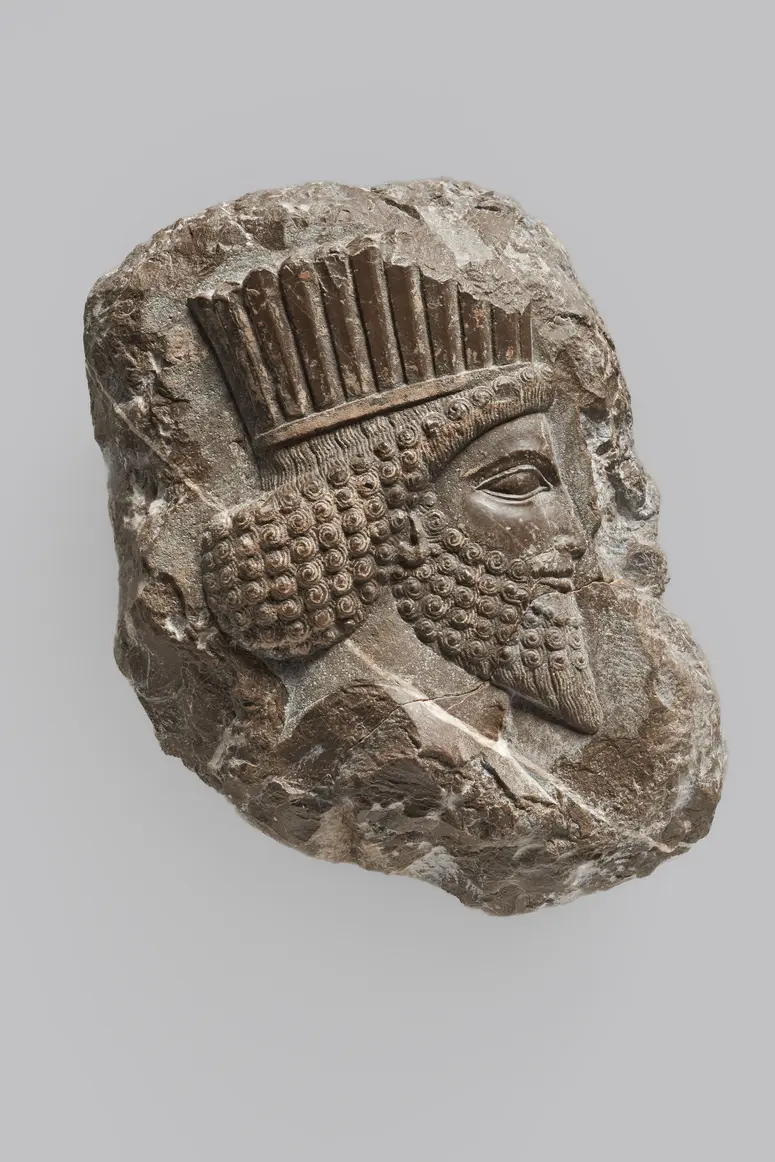
Relieffragment mit dem Kopf eines persischen Adeligen Persepolis Zeit des Königs Darius, 522-486 v. Chr.
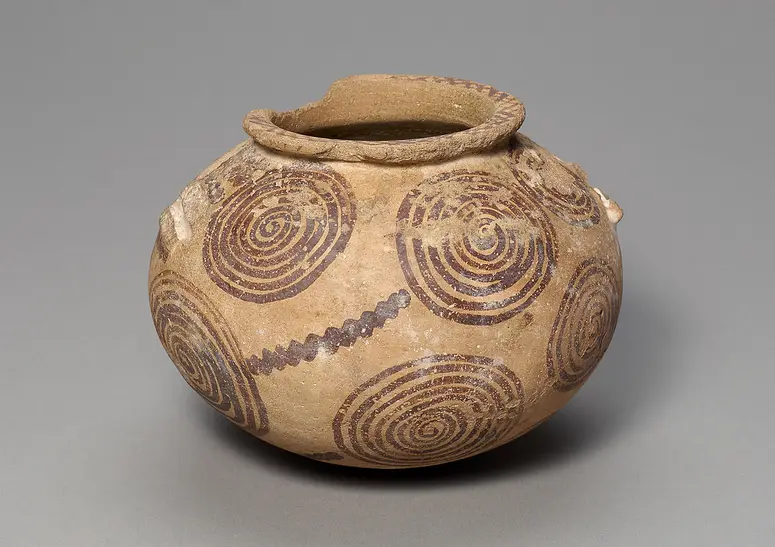
Topf mit Spiralbemalung El-Kubanija Süd, Grab 20 h 1 Naqada II-Kultur, 3400-3200 v. Chr.

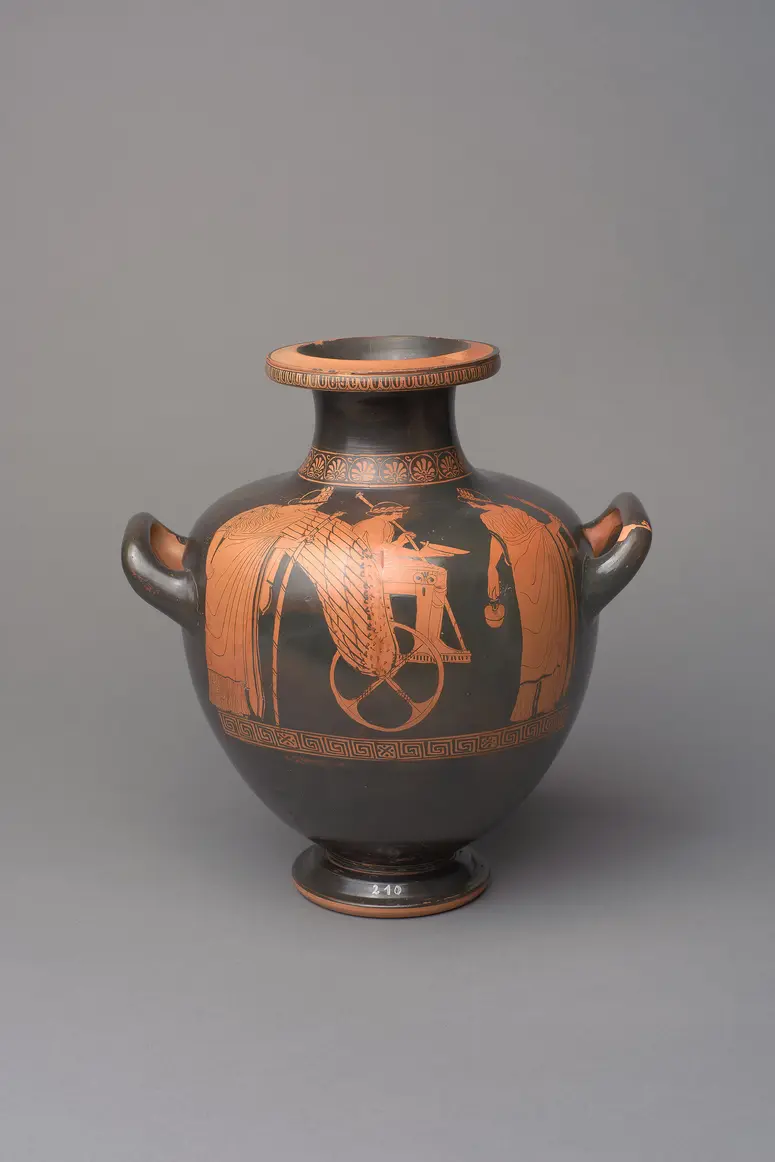
Hydria: Aussendung des Triptolemos Griechisch, Attisch, rotfigurig Mitte 5. Jh. v. Chr.
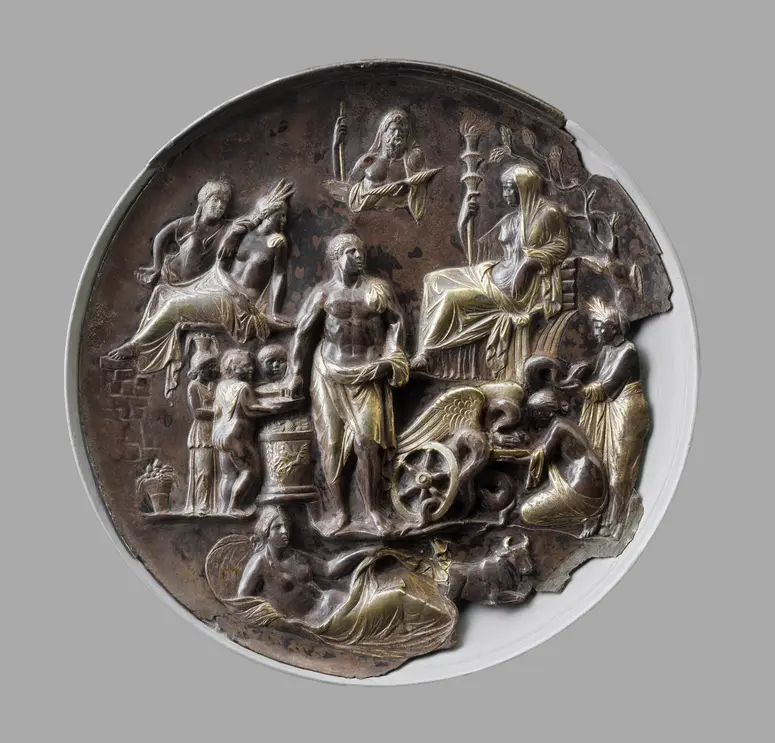
Schale: Silberschale mit Allegorie der Fruchtbarkeit Römisch, Hellenistisch - Frühe Kaiserzeit 2. Hälfte 1. Jh. v. Chr.
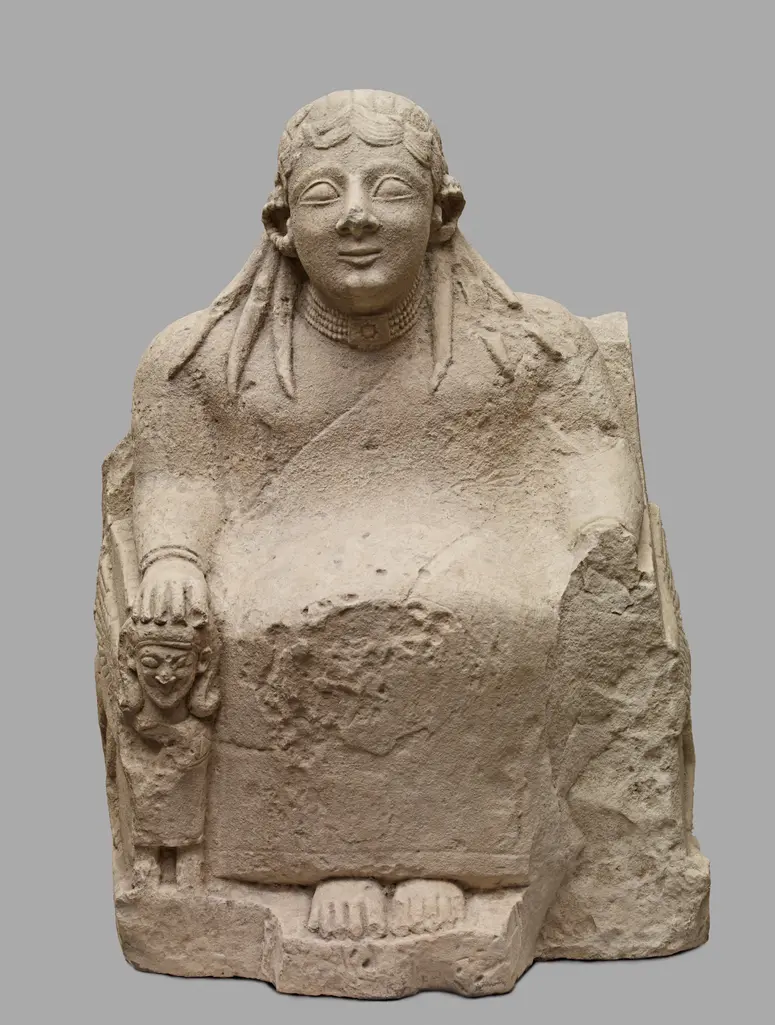
Statuette: Thronende Göttin (Astarte?) Zyprisch, Eisenzeit, archaisch 1. Hälfte 6. Jh. v. Chr.
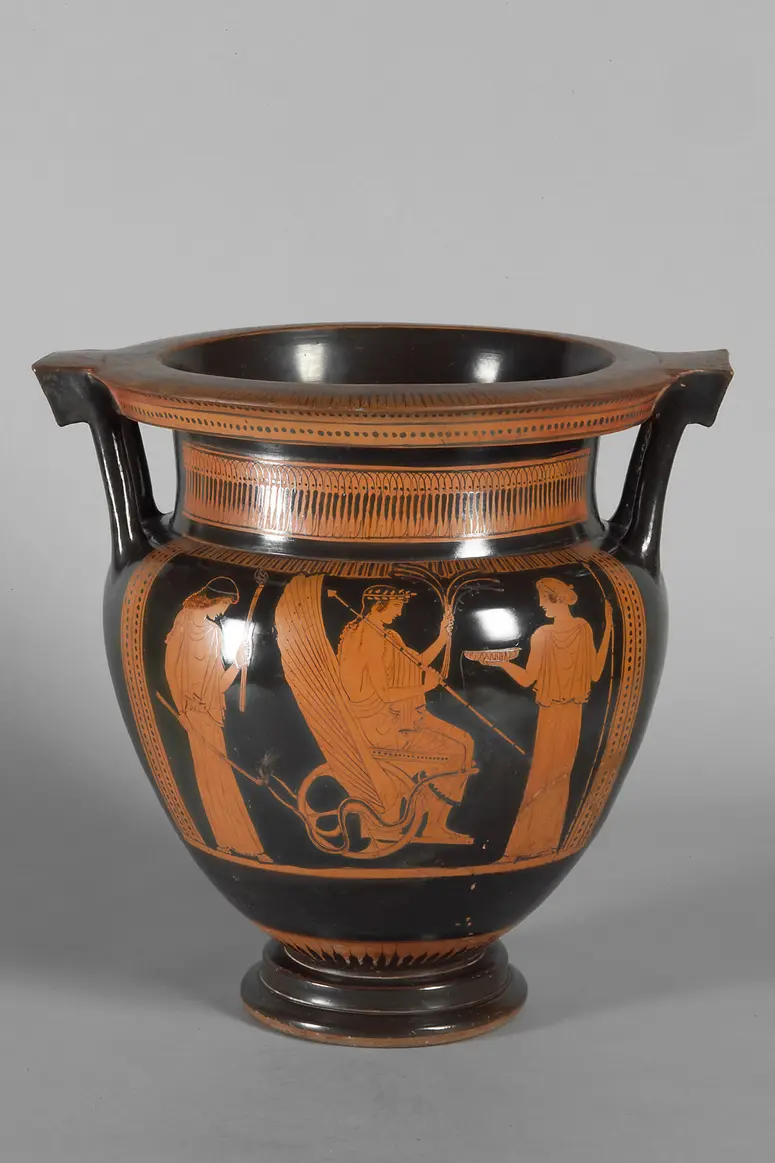
Kolonettenkrater: Triptolemos zwischen Demeter und Persephone Griechisch, Attisch, rotfigurig Mitte 5. Jh. v. Chr.
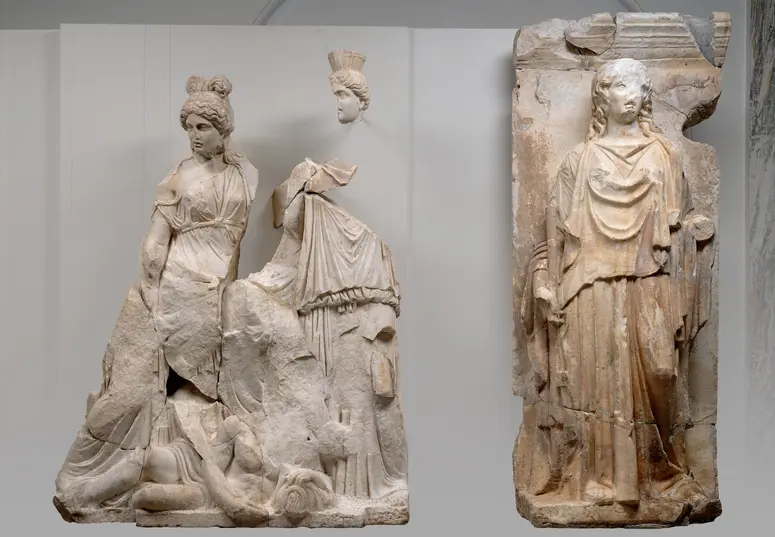
Relief: Götterversammlung: Demeter Römisch, Mittlere Kaiserzeit Mitte des 2. Jhs. n. Chr.
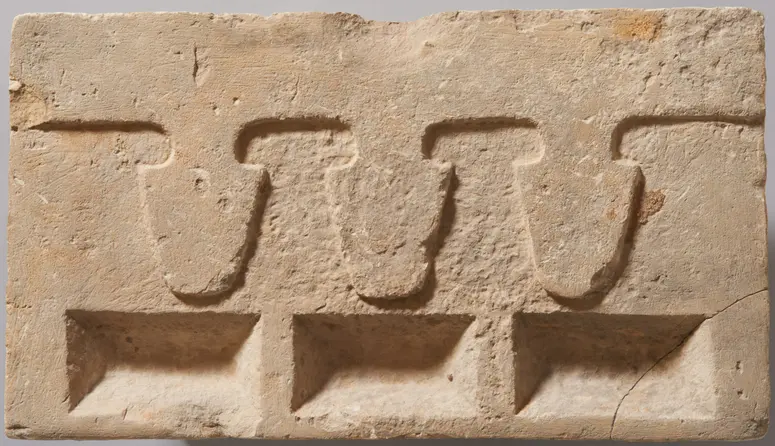
Offering table Giza, Westfriedhof, vor Schacht S 684 des Grabes S 676/707 6th Dynasty, ca. 2374–2191 BC
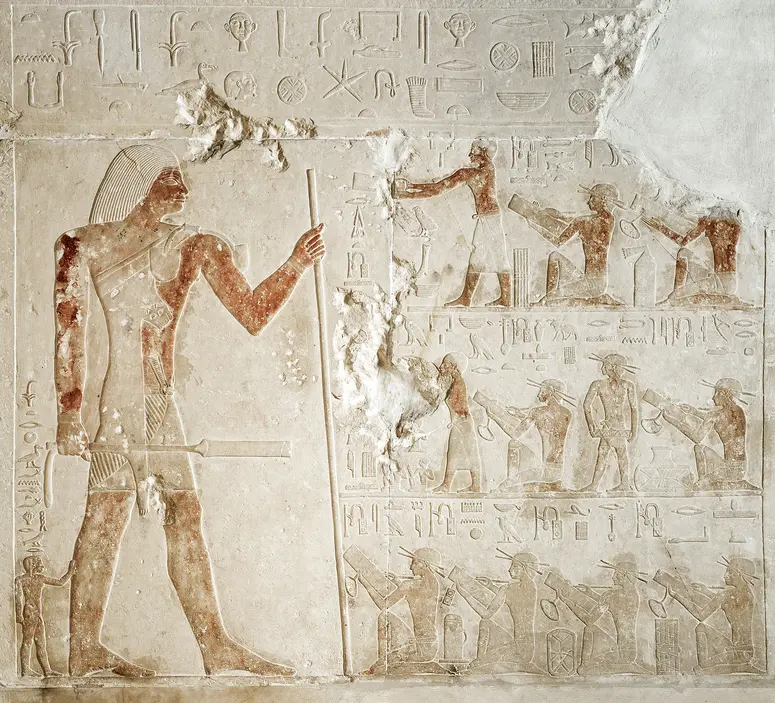
Chapel of Ka-ni-nisut Giza, Westfriedhof, Mastaba des Ka-ni-nisut early 5th Dynasty, ca. 2500 BC
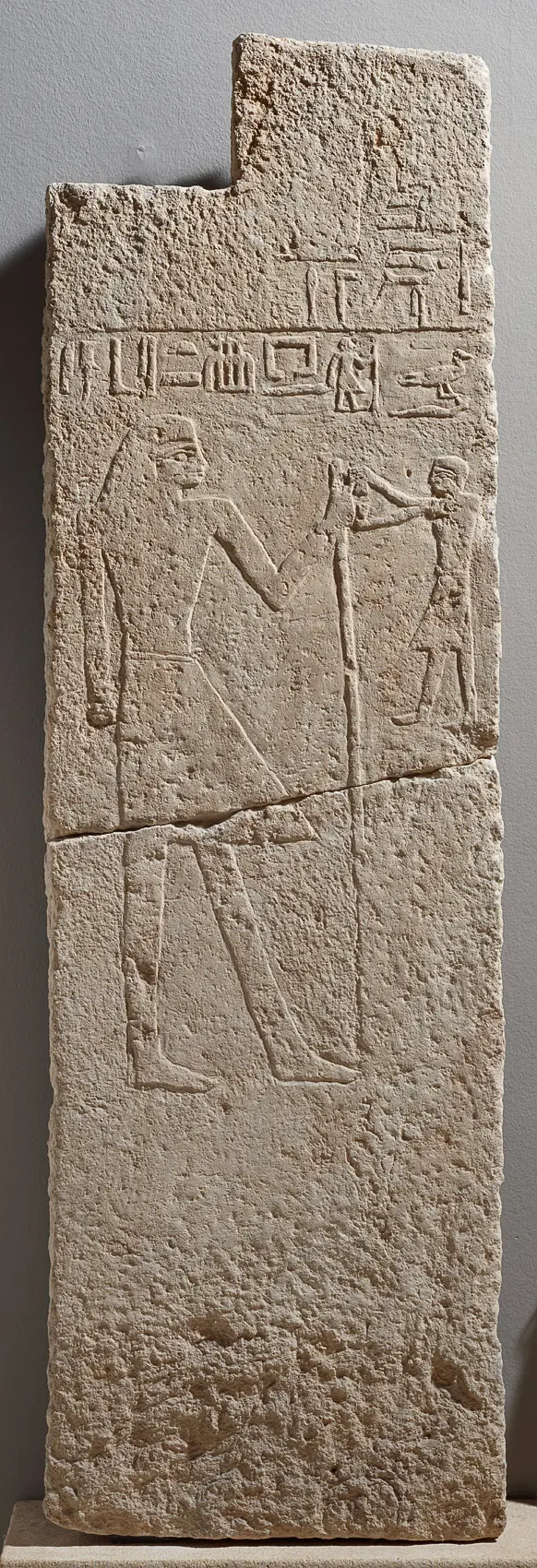
Doorjamb from the tomb of Ked-nes Giza, Westfriedhof, Mastaba des Ked-nes 6th Dynasty or later, ca. 2374–2165 BC
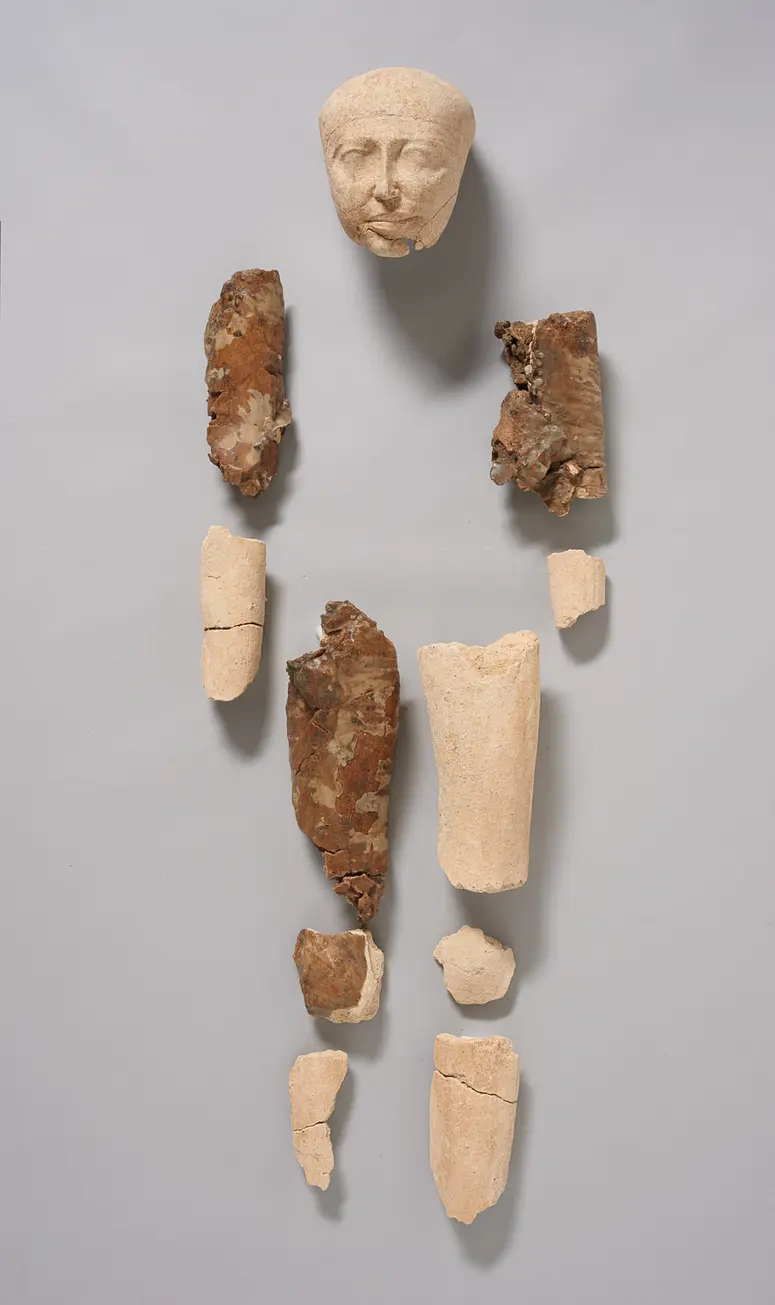
Layer of plaster from a human skull Giza, Westfriedhof, Mastaba S 466/467, Schacht 466 5th – 6th Dynasty, ca. 2514 – 2191 BC
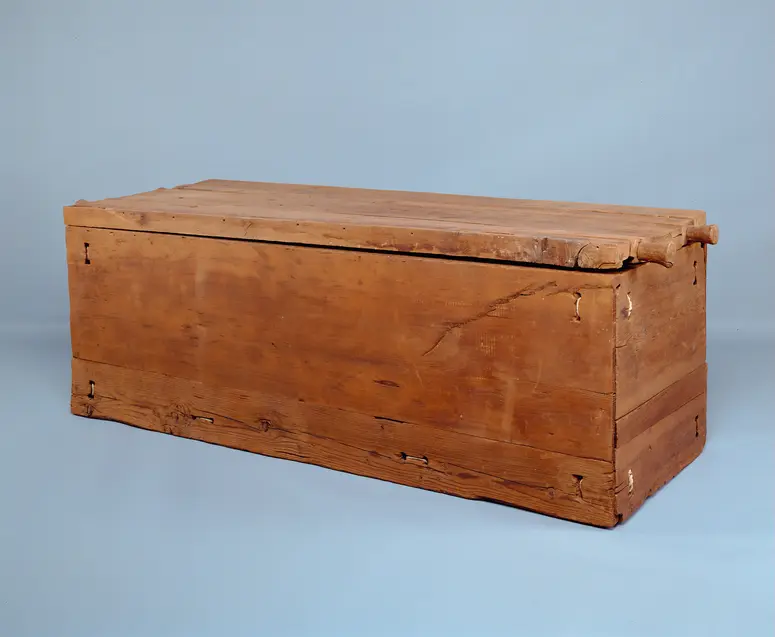
Double box-like coffin Giza, S 316 end of the 5th to beginning of the 6th Dynasty, ca. 2450–2350 BC
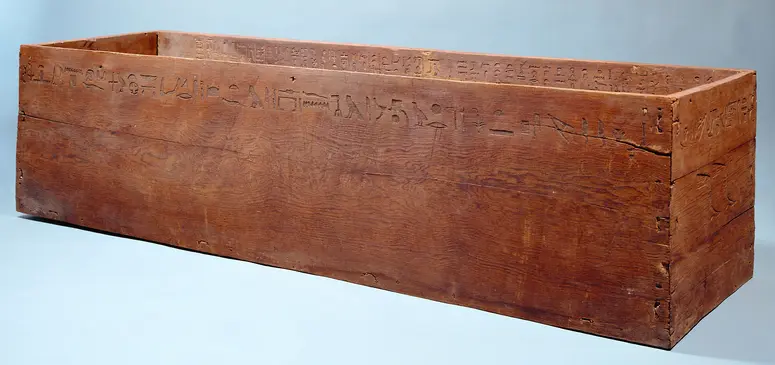
Coffin of Meri-ib Giza, Westfriedhof, Schacht 693 (Meri-ib) 6th Dynasty, ca. 2374 – 2191 BC