Samurai-Harnisch, Samurai, Samurai Rüstung
um 1580, Ende 16. Jahrhundert
The gold lacquer emblems showing among others a dragon prove that the armour once belonged to the Shogun Tokugawa Ieyasu (1542–1616). He was one of the three »Great Unifiers« of Japan, through which the Sengoku era came to an end and the peaceful Edo period began. Only 13 armours of that kind which were mostly exported to Europe have been preserved in Japan. King Philip II of Spain was offered presents by Toyotomi Hideyoshi in 1584, among others armours, saddles and spears, partly to be seen in the Royal Armoury in Madrid.
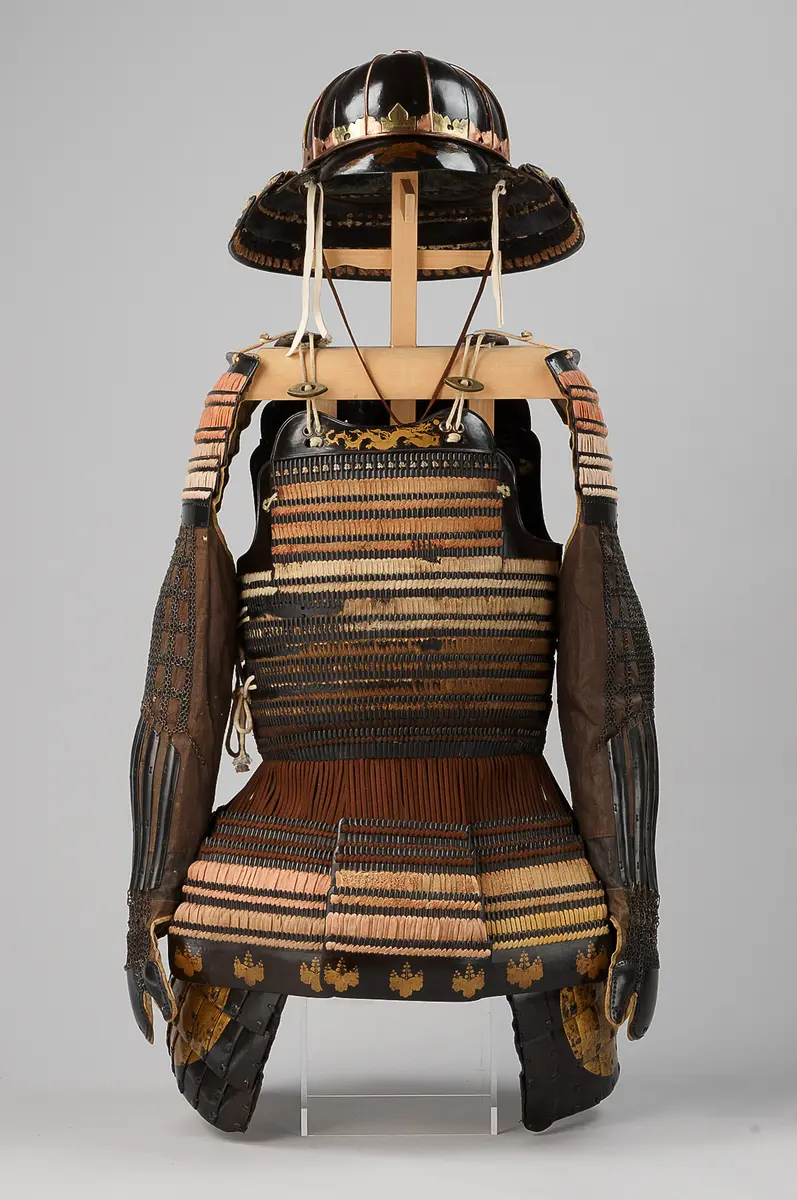
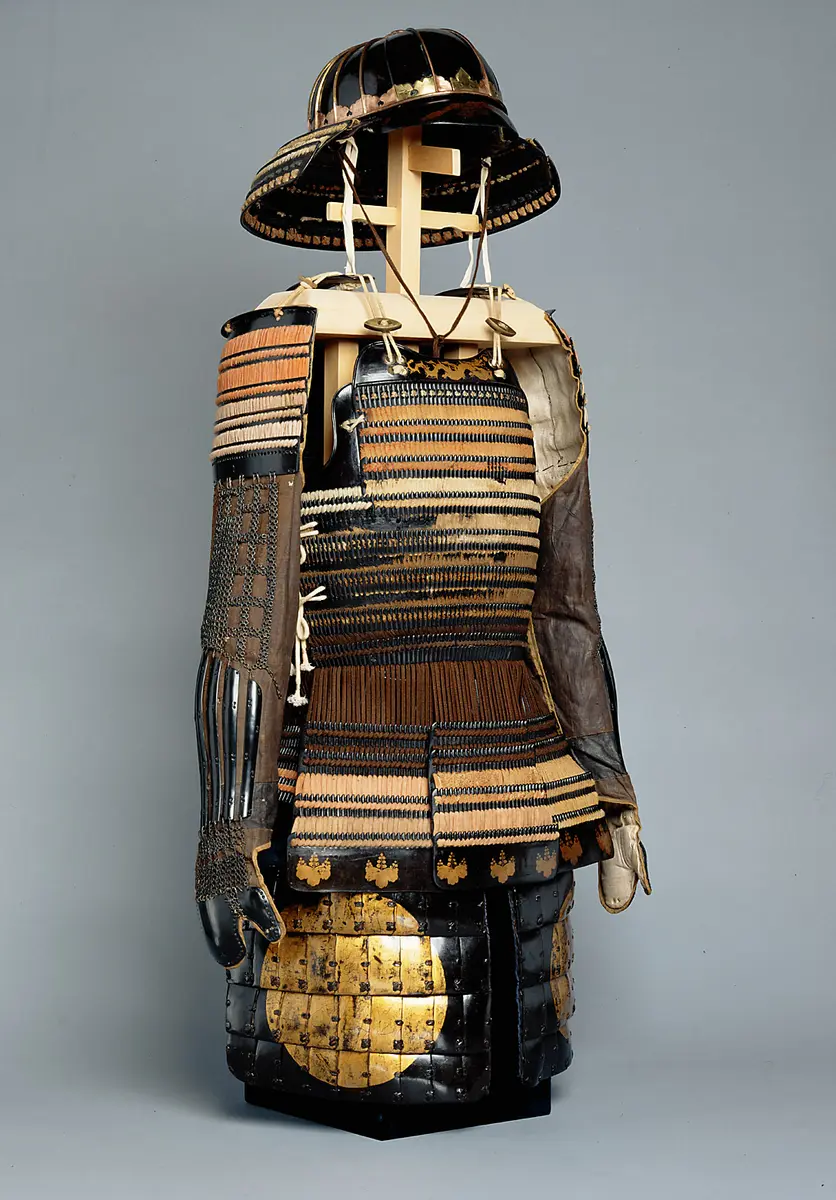
The gold lacquer emblems showing among others a dragon prove that the armour once belonged to the Shogun Tokugawa Ieyasu (1542–1616). He was one of the three »Great Unifiers« of Japan, through which the Sengoku era came to an end and the peaceful Edo period began. Only 13 armours of that kind which were mostly exported to Europe have been preserved in Japan. King Philip II of Spain was offered presents by Toyotomi Hideyoshi in 1584, among others armours, saddles and spears, partly to be seen in the Royal Armoury in Madrid.
Time:
um 1580, Ende 16. Jahrhundert
Object Name
Samurai-Rüstung (IROITO-ODOSHI GUSOKU), Samurai Harnisch, Samurai
Culture
Japanisch, Nara ?
Material/technology:
Eisen, Messing, Kupfer, Leder, Lack, textile Knüpfungen
Copyright
Schloss Ambras Innsbruck
Invs.
Schloss Ambras Innsbruck, PA 587
Browse more
Similar items you might be interested in
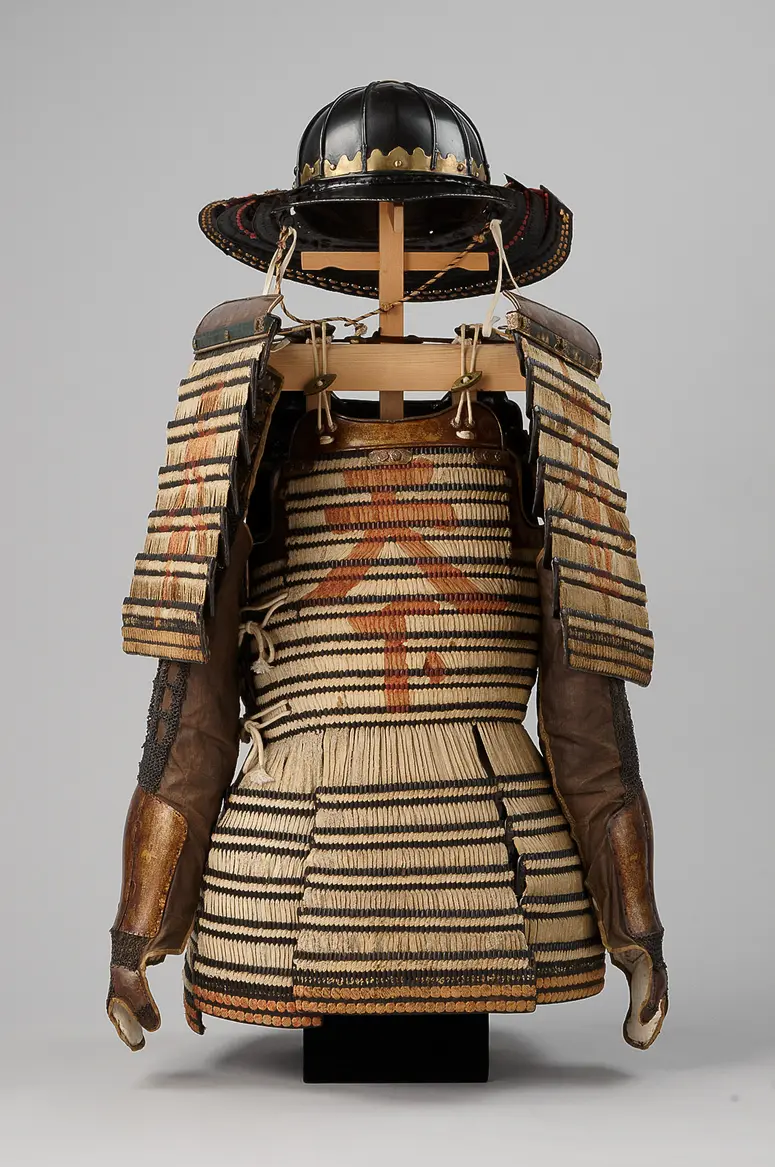
Samurai, Samurairüstung um 1580, Ende 16. Jahrhundert
Ferdinand II. (1564-1595), Erzherzog von Österreich und Landesherr von Tirol c. 1547 - 1550

Ferdinand II. (1564-1595), Erzherzog von Österreich und Landesherr von Tirol 1556 - 1557

Halbharnisch Ferdinands II. von Tirol mit Harnischröckchen ("Hochzeitsharnisch") 1582

Ferdinand II. (1564-1595), Erzherzog von Österreich und Landesherr von Tirol 1559/60
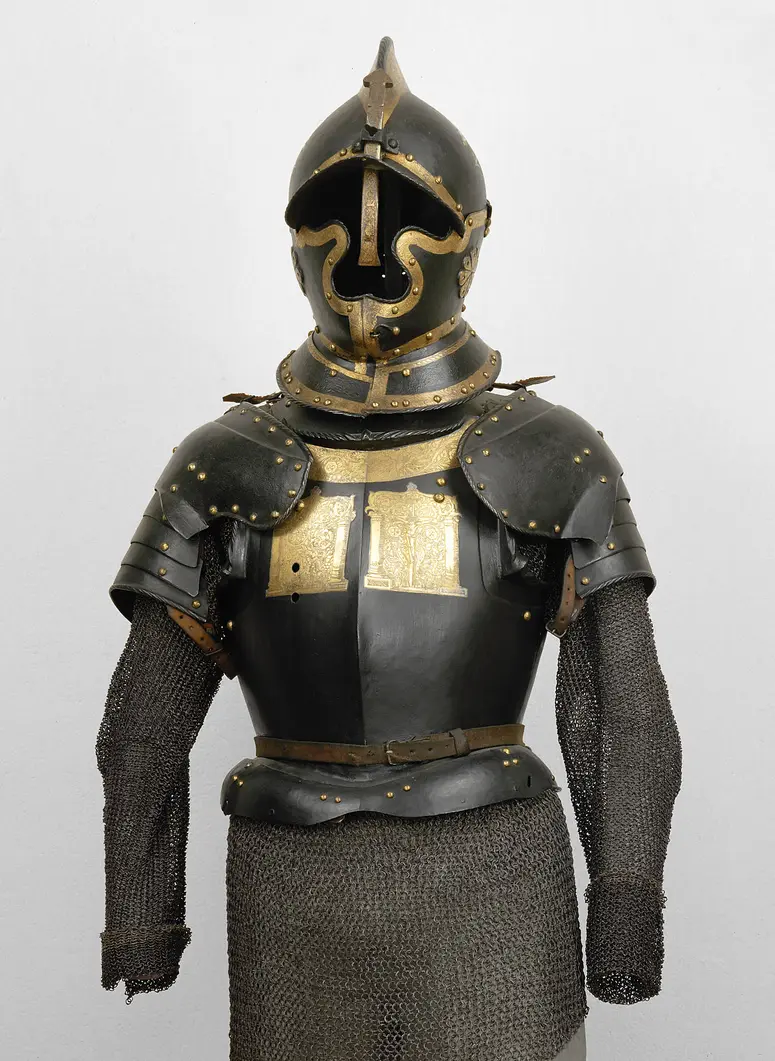
Trabharnisch des Andreas Teufel (Andre Teuffel), Rüstung des Andreas Teufel um 1555
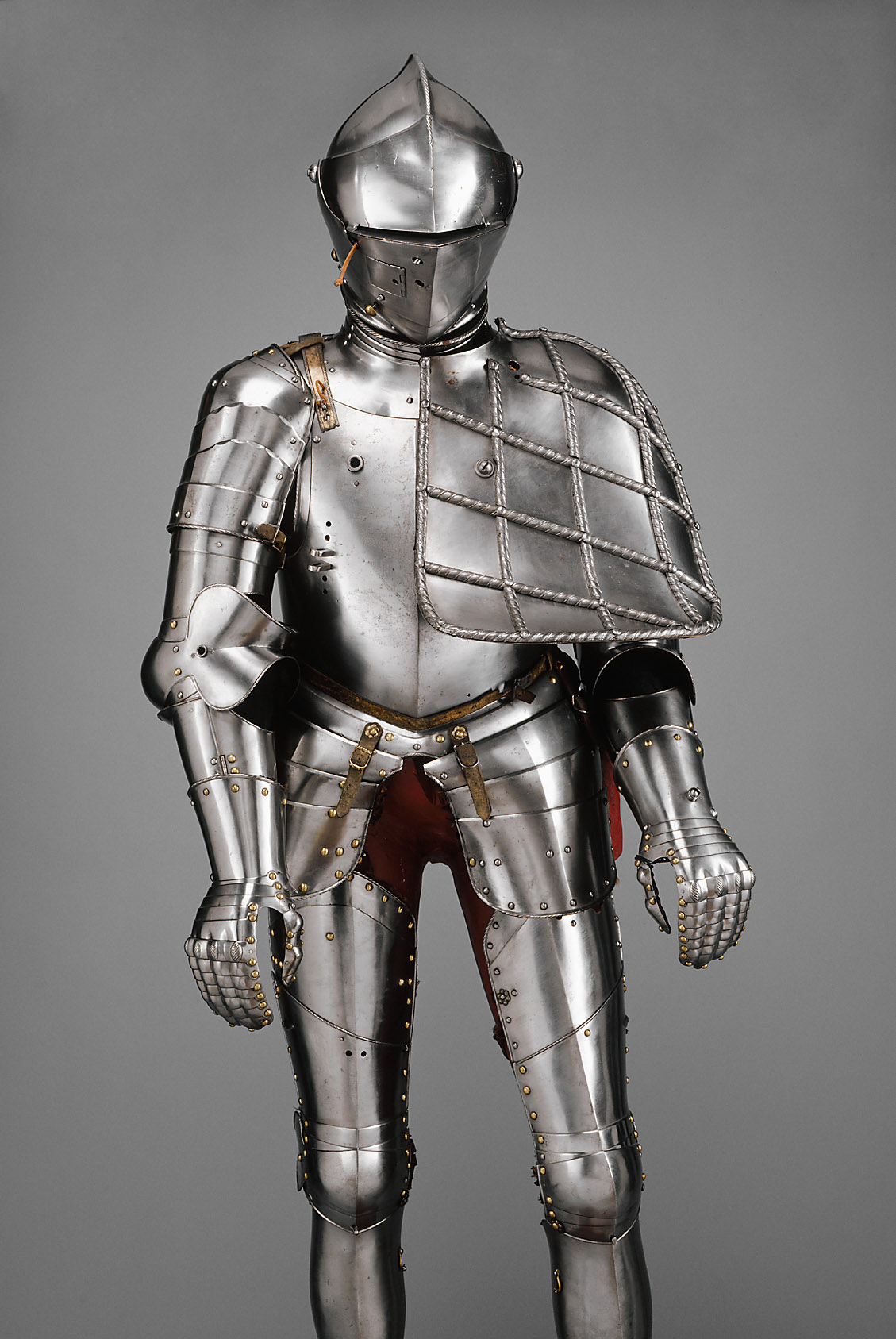
Harnisch zum Plankengestech mit Gittertartsche um 1555/1560
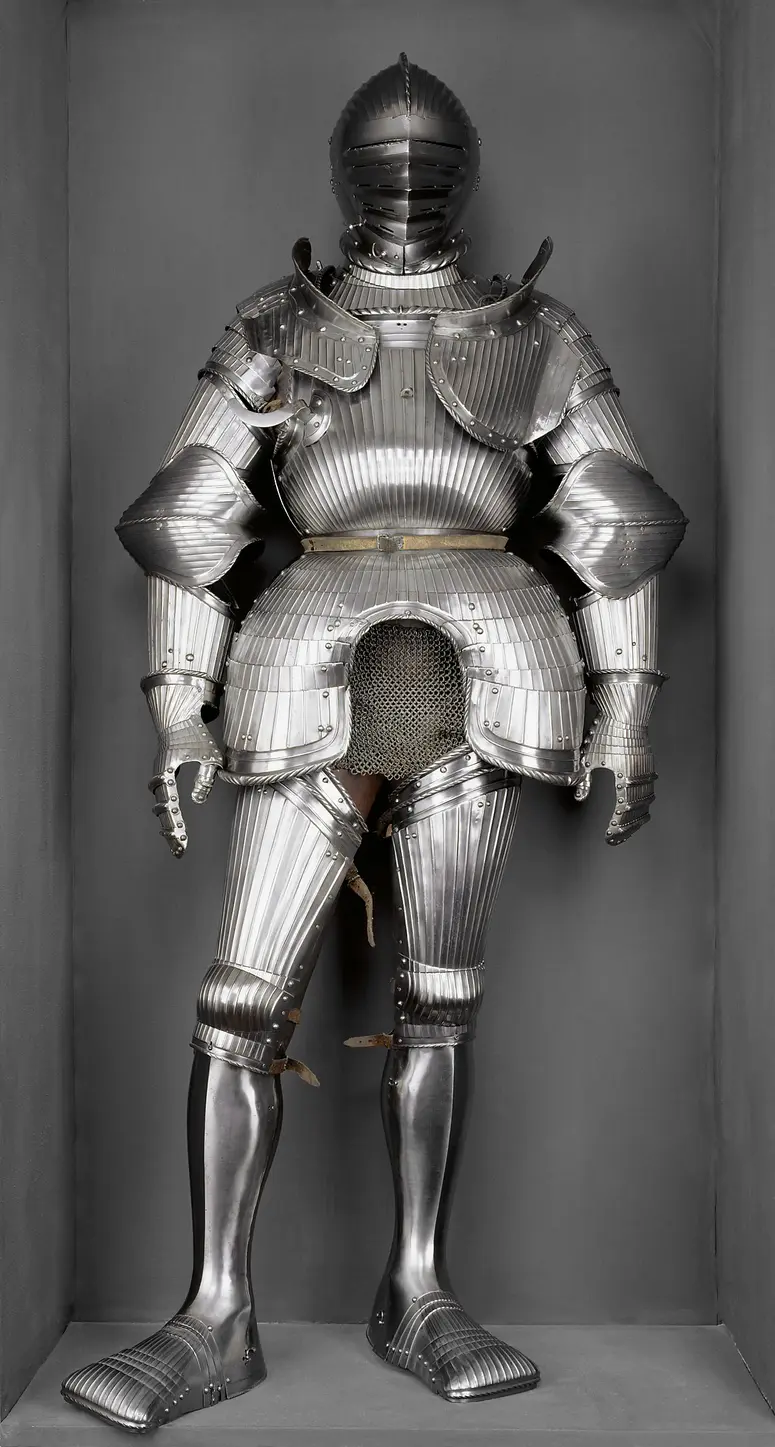
Riefelharnisch von Pfalzgraf Philipp bei Rhein um 1525

Ferdinand II. (1564-1595), Erzherzog von Österreich und Landesherr von Tirol um 1550