Philip "the Handsome" (1478–1506)
about 1618 | Peter Paul Rubens
The sitter was long identified as Emperor Maximilian I, who is generally depicted with a prominent aquiline nose, something Rubens must realised as the ruler’s portrait was widely known. Here, the sitter wears a royal not the imperial crown. The armour presumably dates from around 1500, which, together with the sitter’s similarity with other portraits of Philip the Handsome, suggests he is Philip I of Castile, the son of Maximilian I. The St. Andrew’s cross on the breastplate was incorporated into Philip’s coat of arms following his marriage to Joanna of Castile.
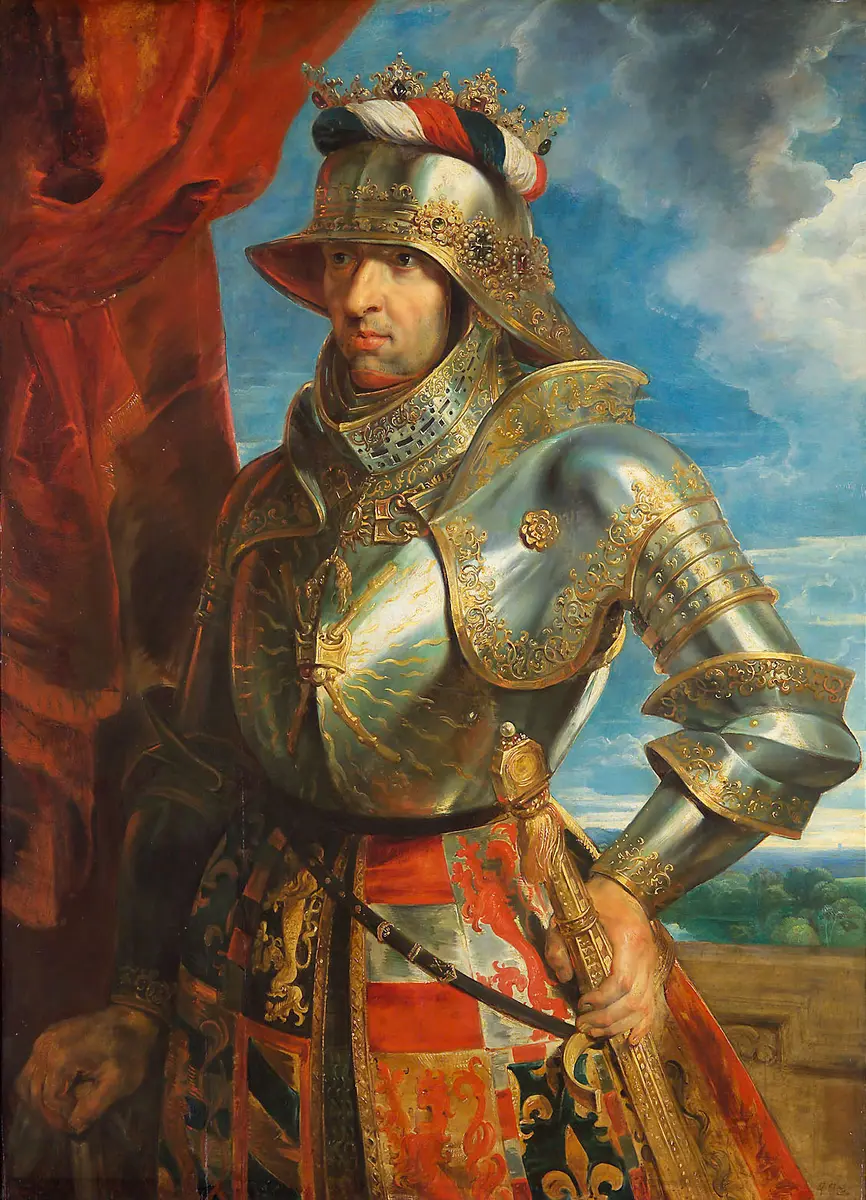
The sitter was long identified as Emperor Maximilian I, who is generally depicted with a prominent aquiline nose, something Rubens must realised as the ruler’s portrait was widely known. Here, the sitter wears a royal not the imperial crown. The armour presumably dates from around 1500, which, together with the sitter’s similarity with other portraits of Philip the Handsome, suggests he is Philip I of Castile, the son of Maximilian I. The St. Andrew’s cross on the breastplate was incorporated into Philip’s coat of arms following his marriage to Joanna of Castile.
Artist:
Peter Paul Rubens (1577 Siegen - 1640 Antwerpen) DNB
Depiction/Person:
Philipp I. (1482-1506), Herzog von Burgund, seit 1504 König von Kastilien und León (1478 - 1506) DNB
Time:
about 1618
Object Name
Painting
Culture
Flemish
Material/technology:
oak wood
Dimensions:
140,5 x 101,5 cm
Copyright
Kunsthistorisches Museum, Gemäldegalerie
Invs.
Gemäldegalerie, 700
Provenance
Probably from Rubens' estate; city palace Prinz Eugen, Vienna; 1772 documented in the gallery;
Browse more
Similar items you might be interested in


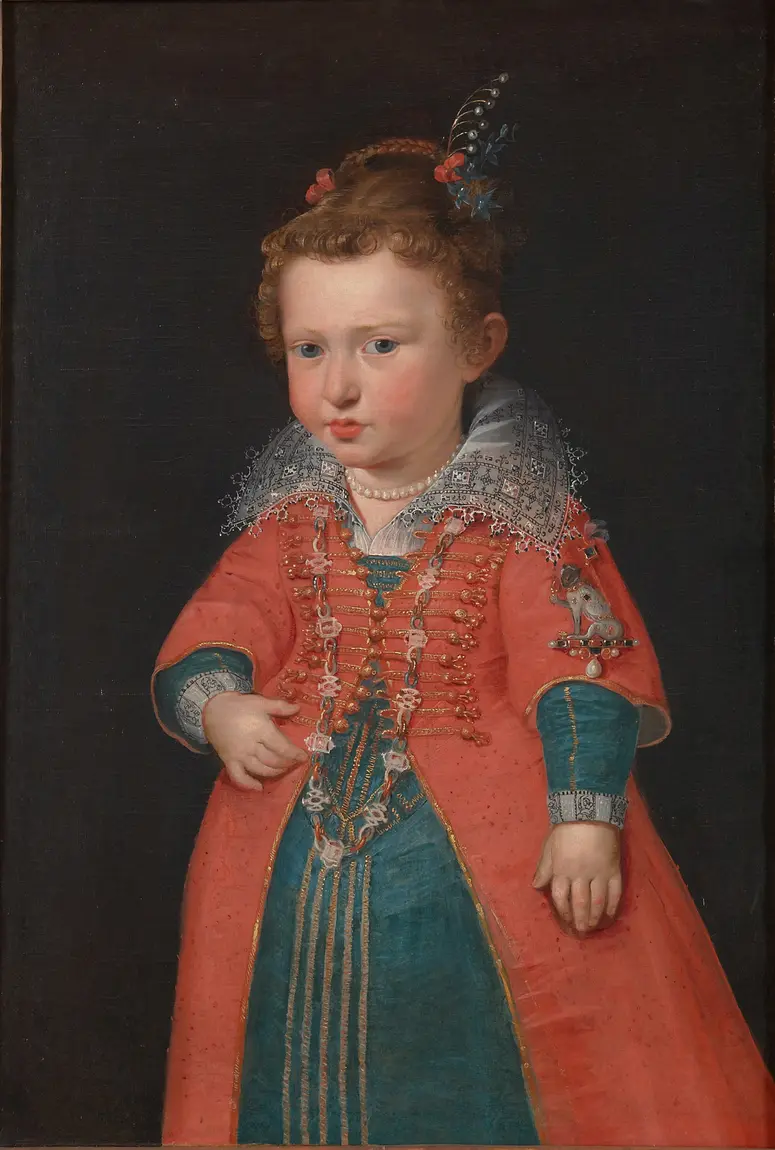
Eleonore von Gonzaga (1598-1655), Kaiserin, im Alter von zwei Jahren, Kniestück Peter Paul Rubens um 1600/1601