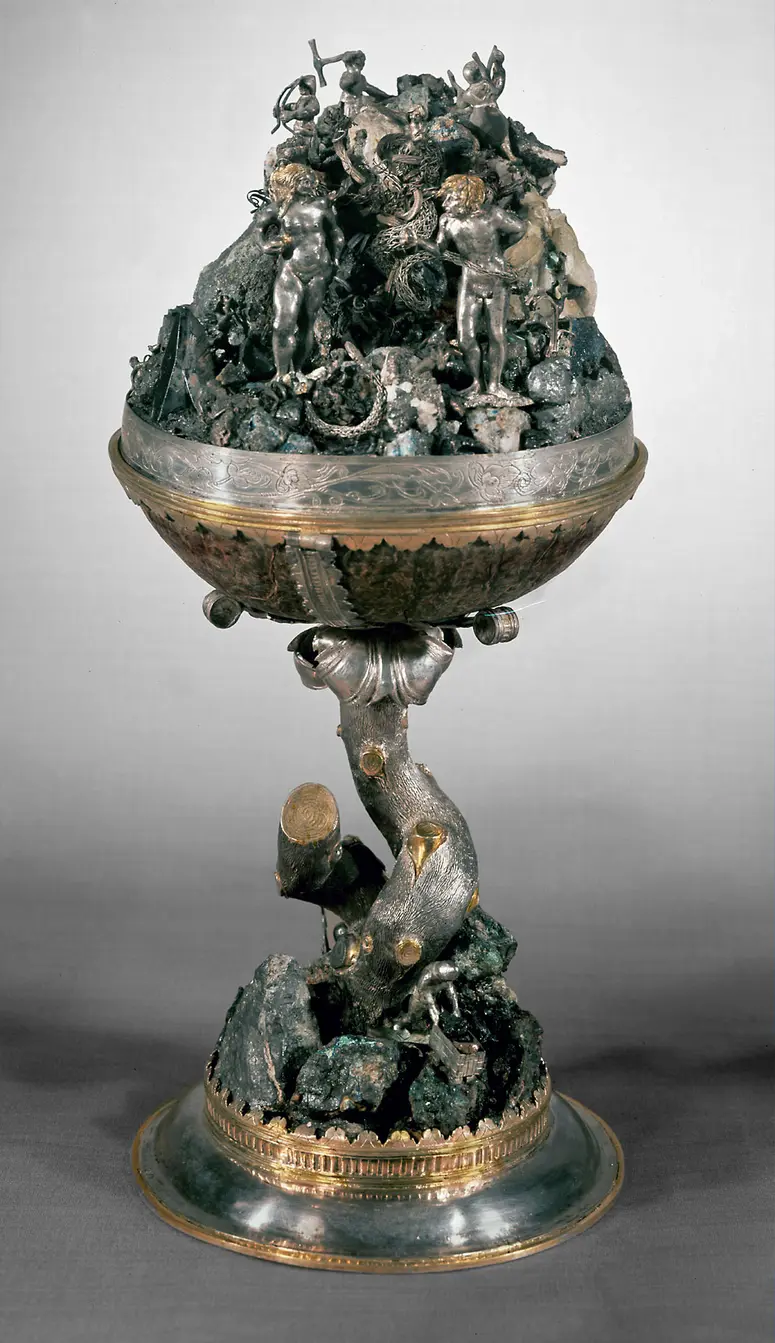
Handstone with Mine and Crucifixion
3rd quarter 16th c. | Caspar Ulich
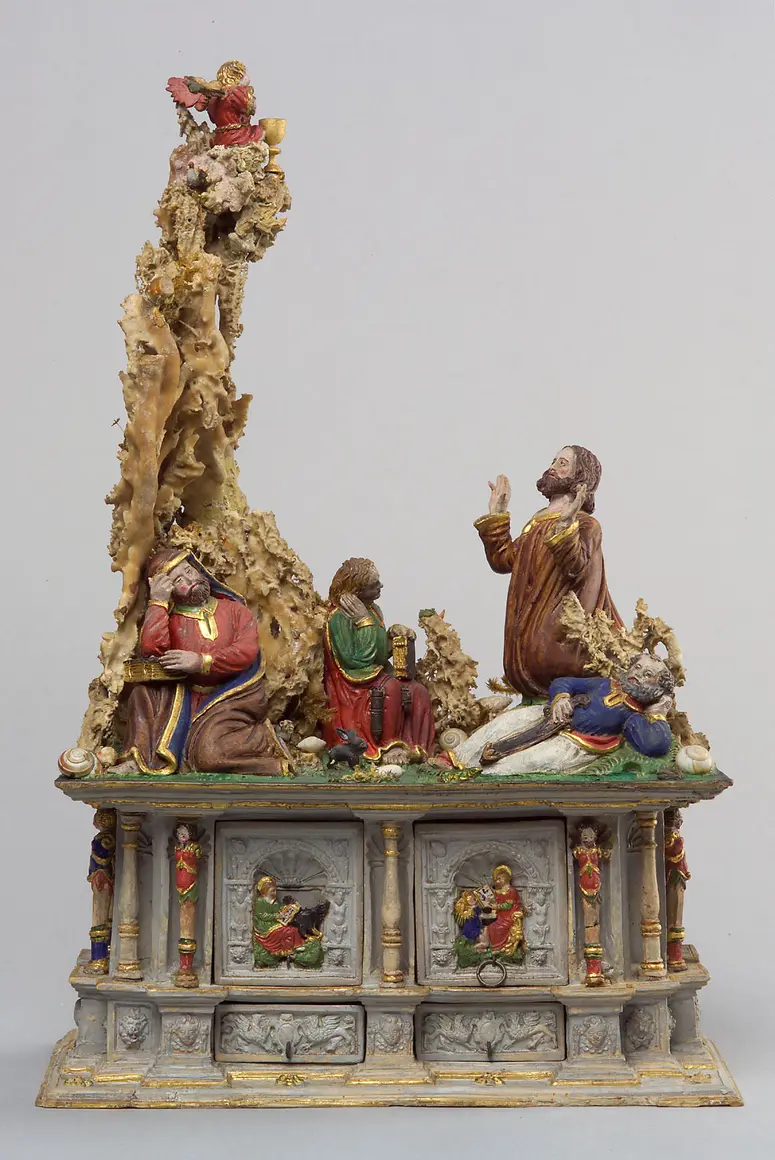
Handstones are samples of rock or ore that have been artistically altered or augmented; mining scenes are generally combined with religious subjects. In the princely Kunstkammer, handstones symbolized the natural wealth of a country, but were also prototypical demonstrations of the bond between nature and art. The group preserved from the collection of Archduke Ferdinand II is today the most significant of its kind worldwide.
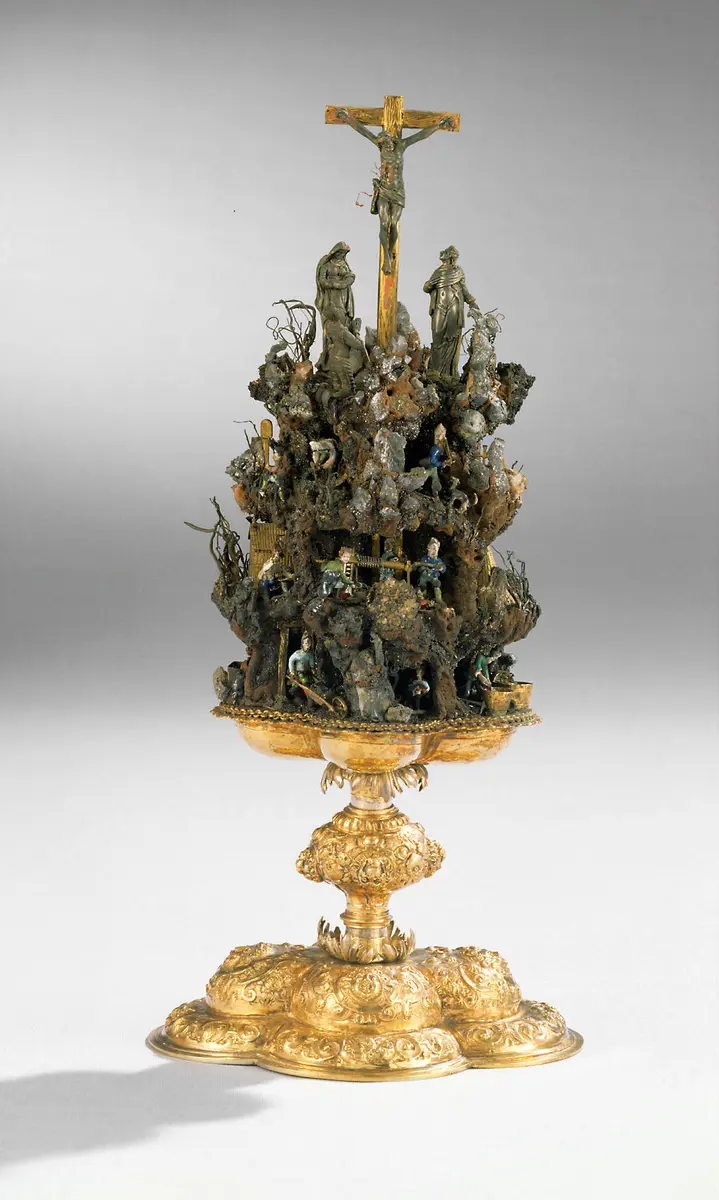
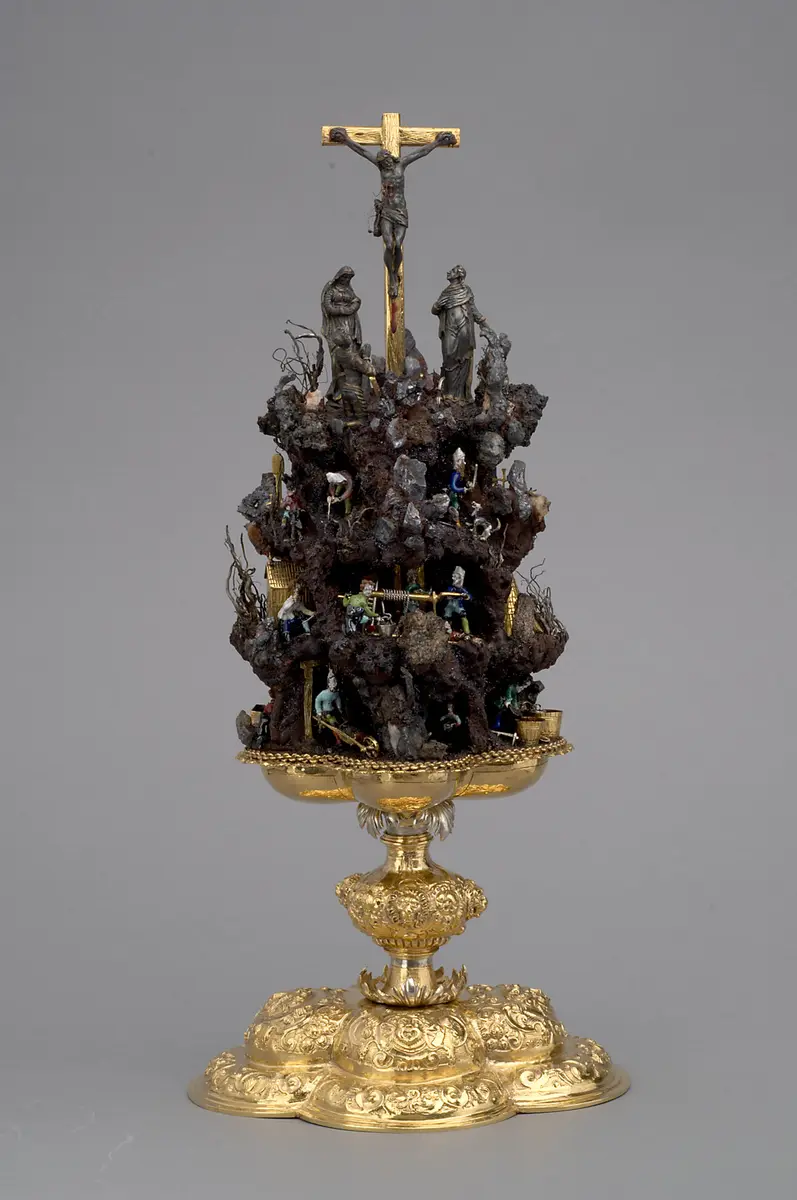
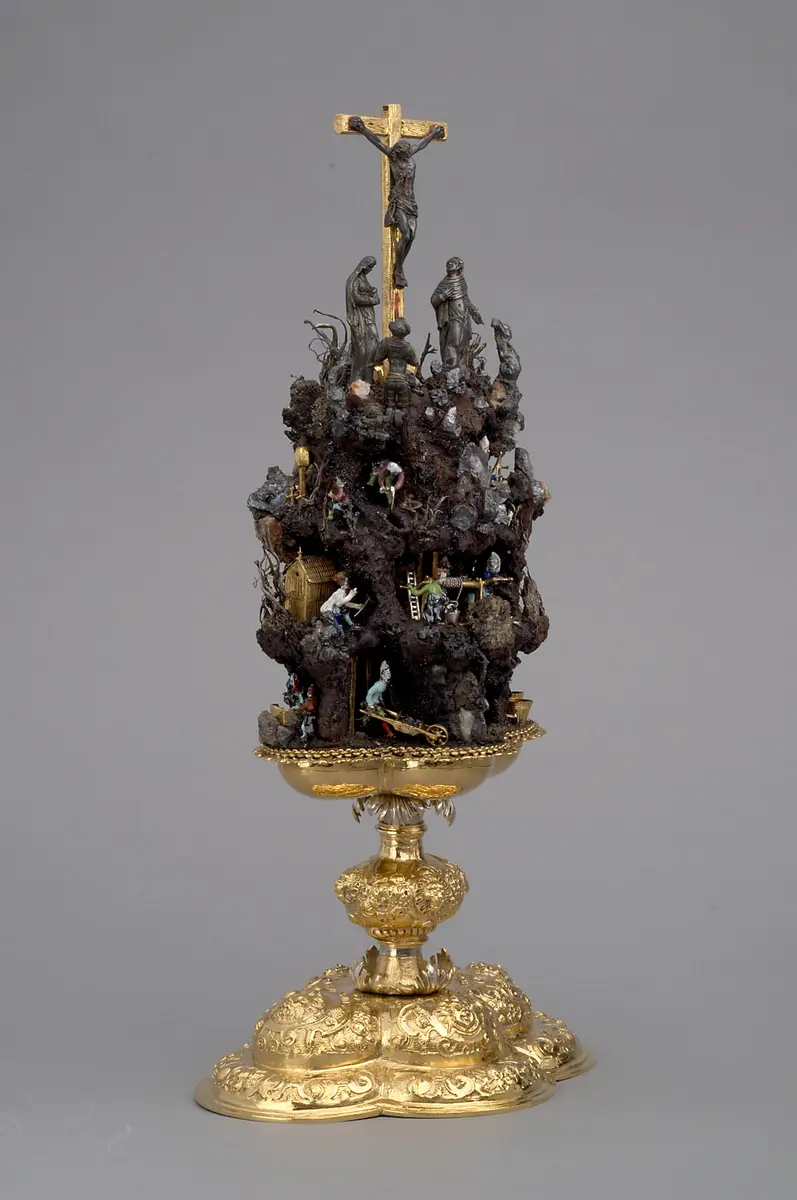
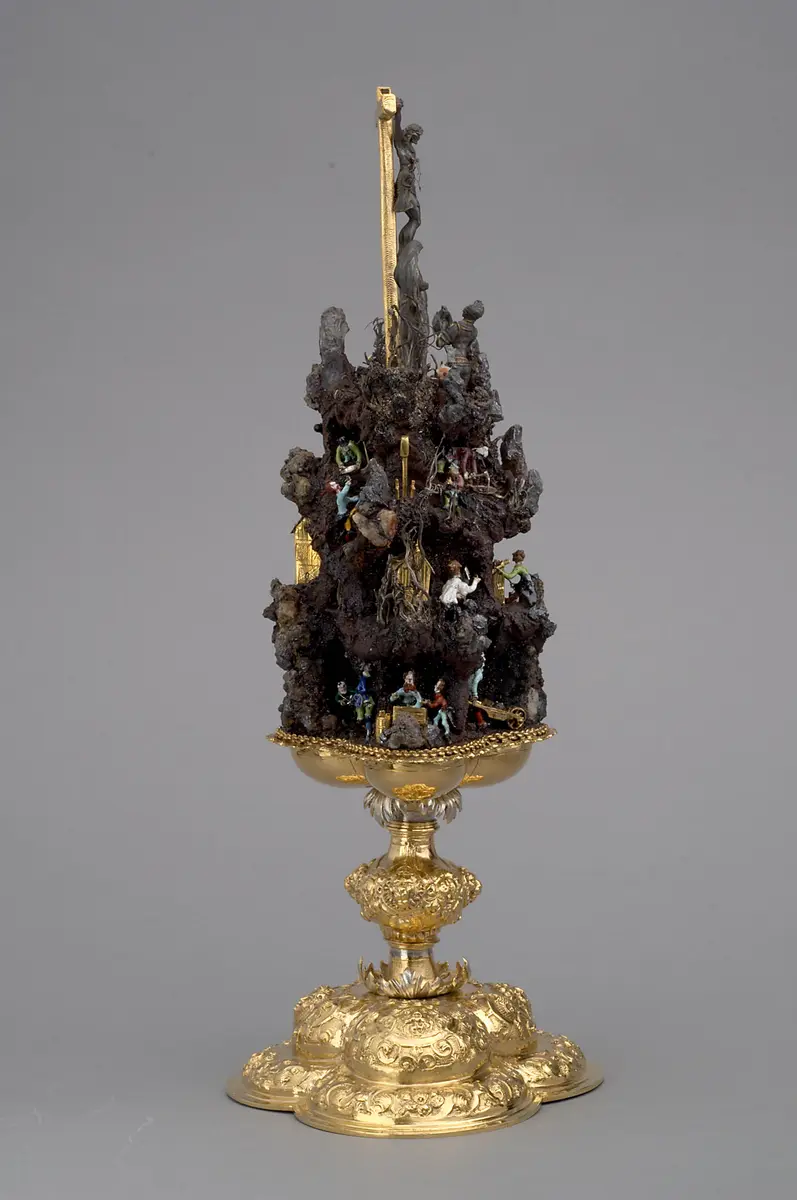
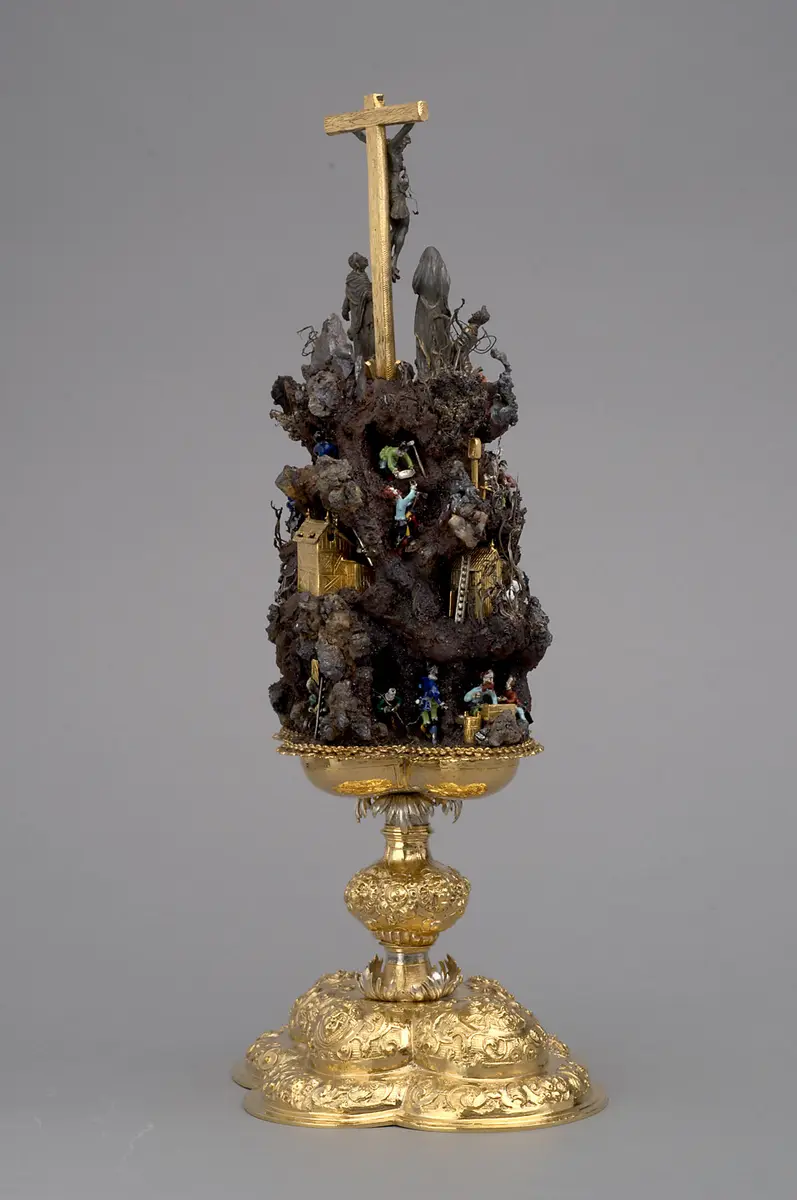
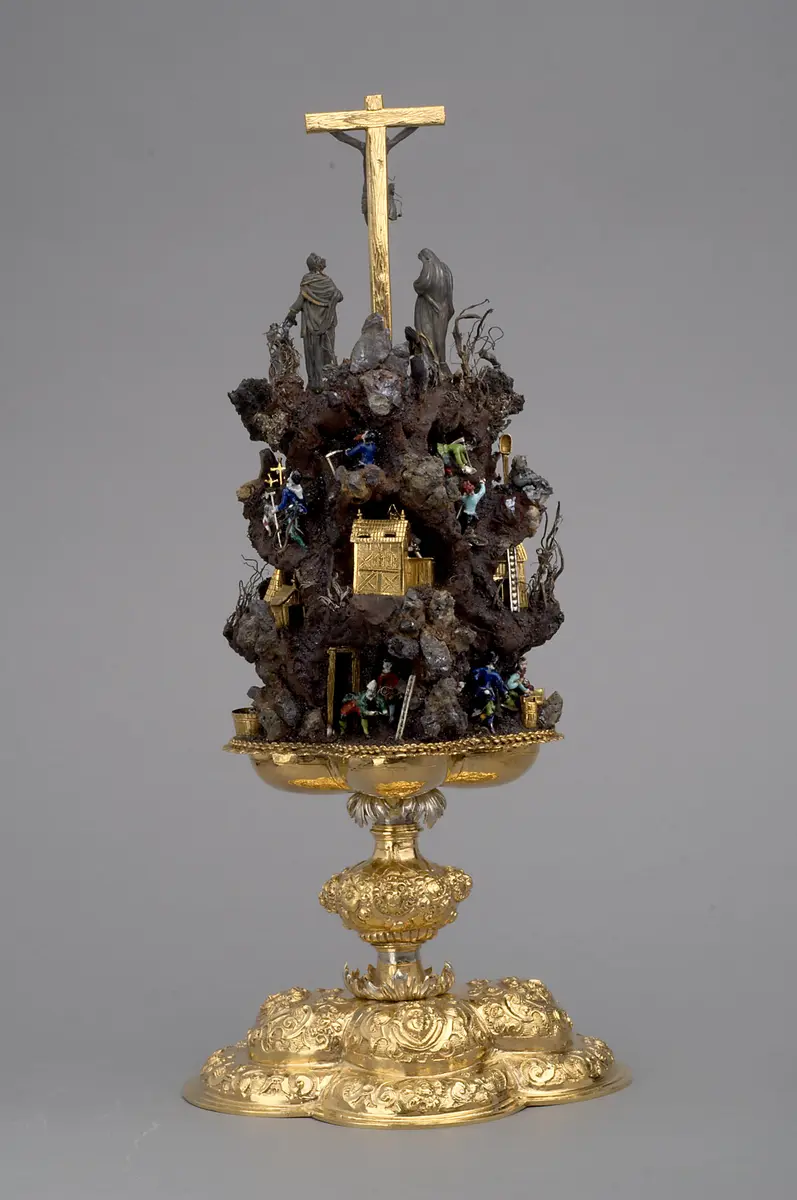
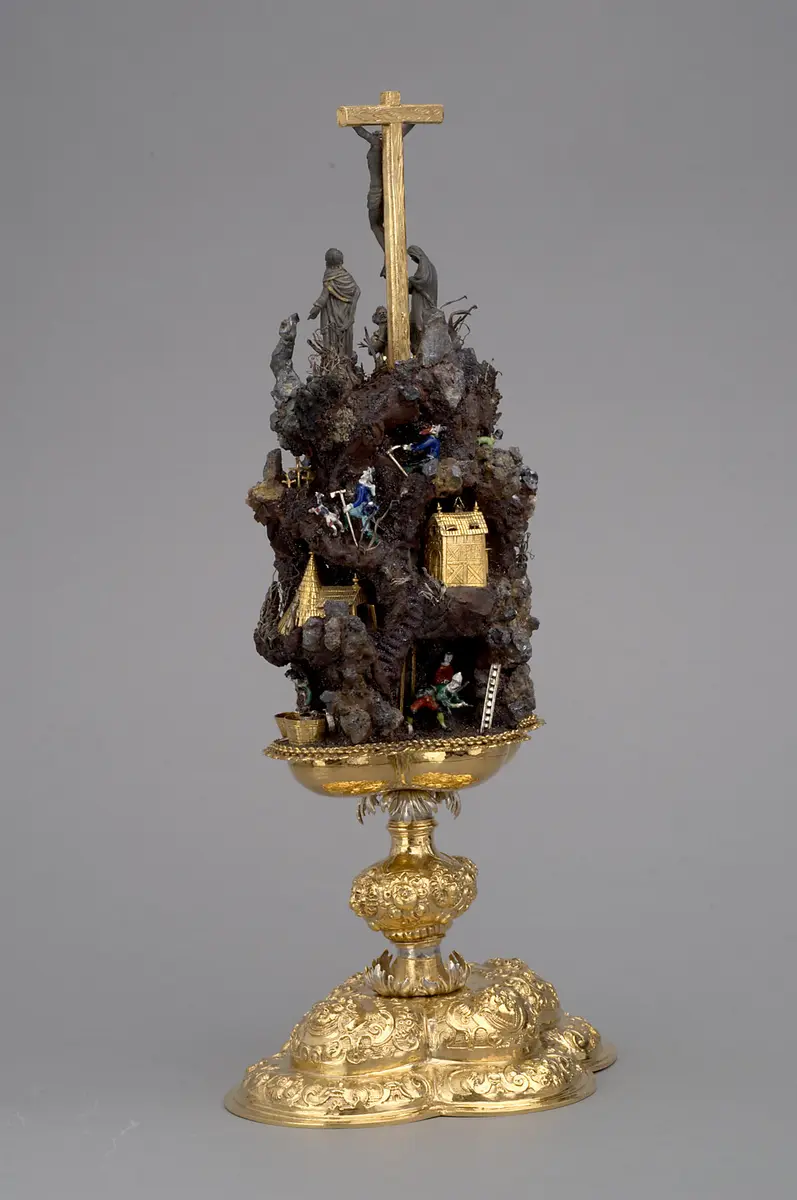
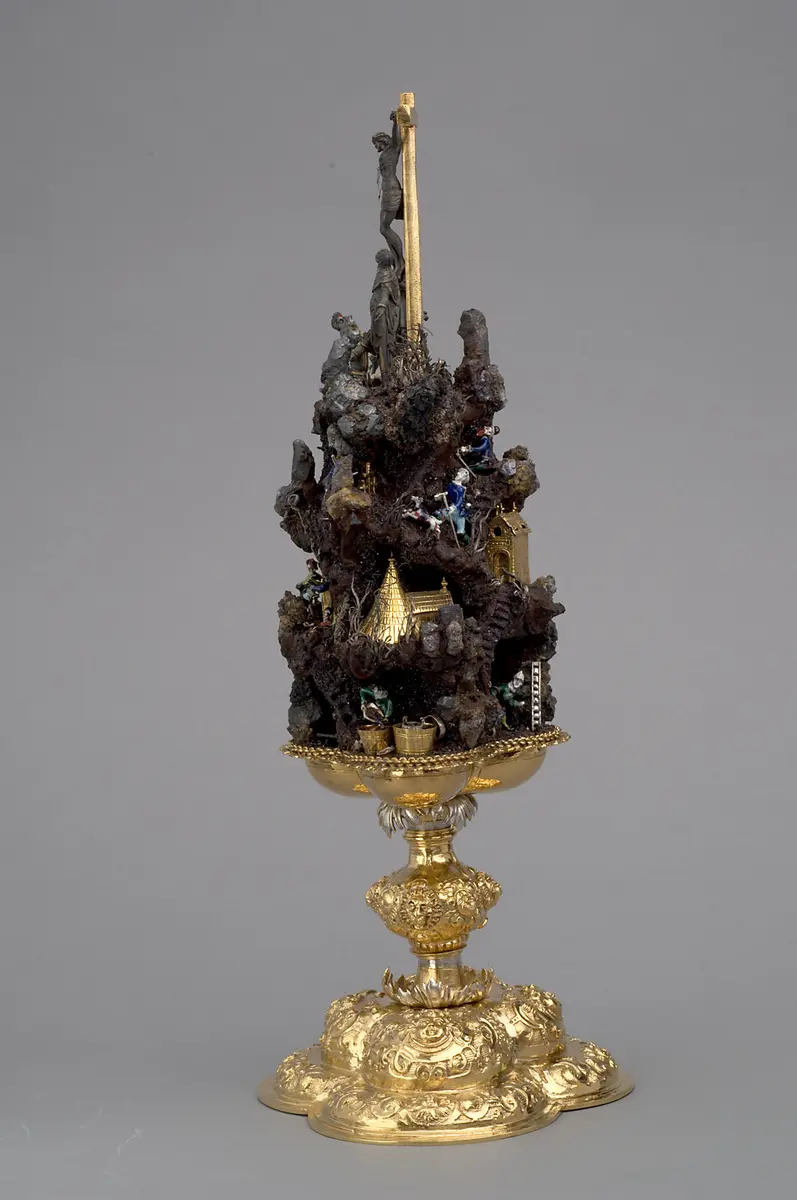
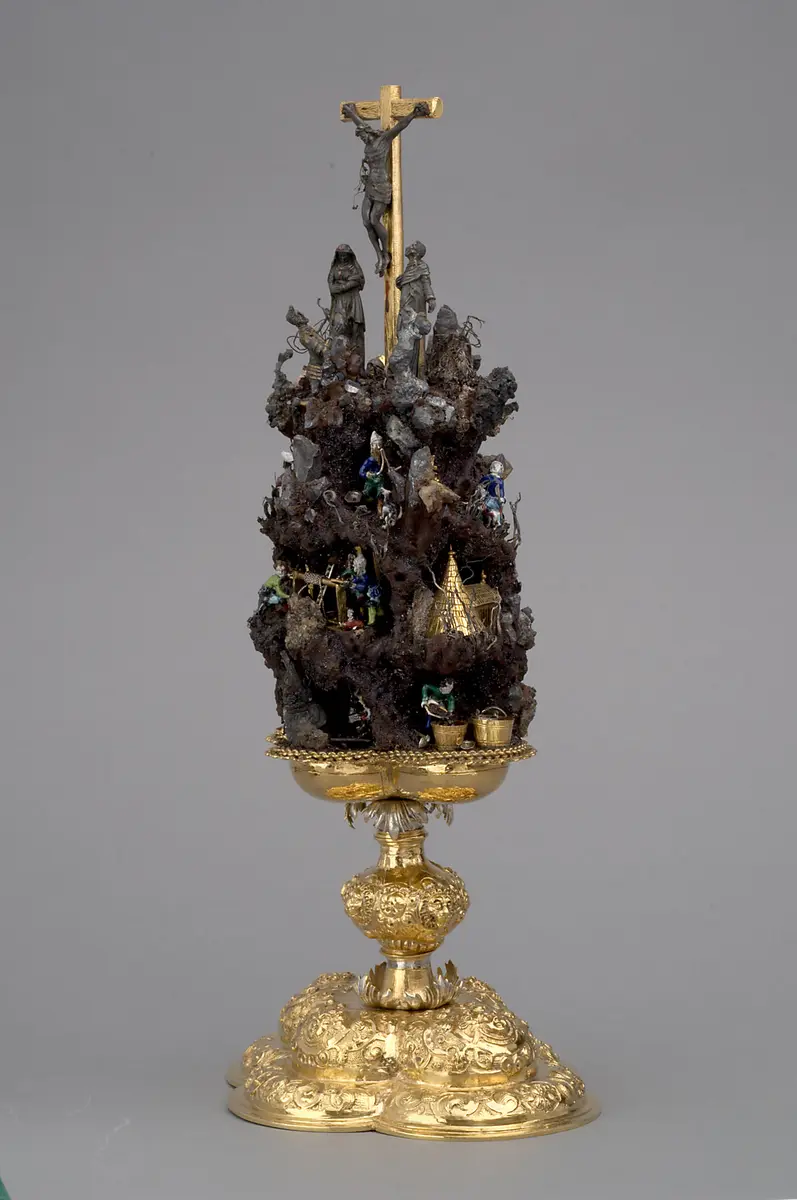
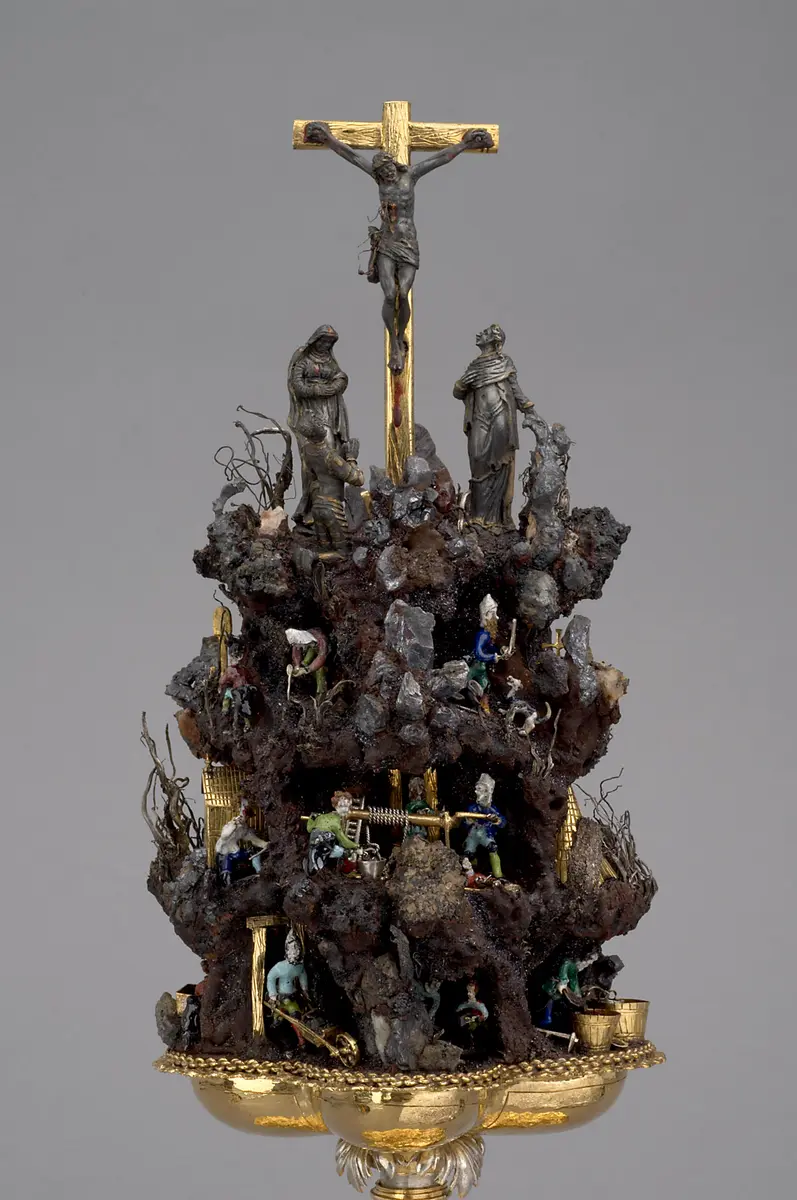
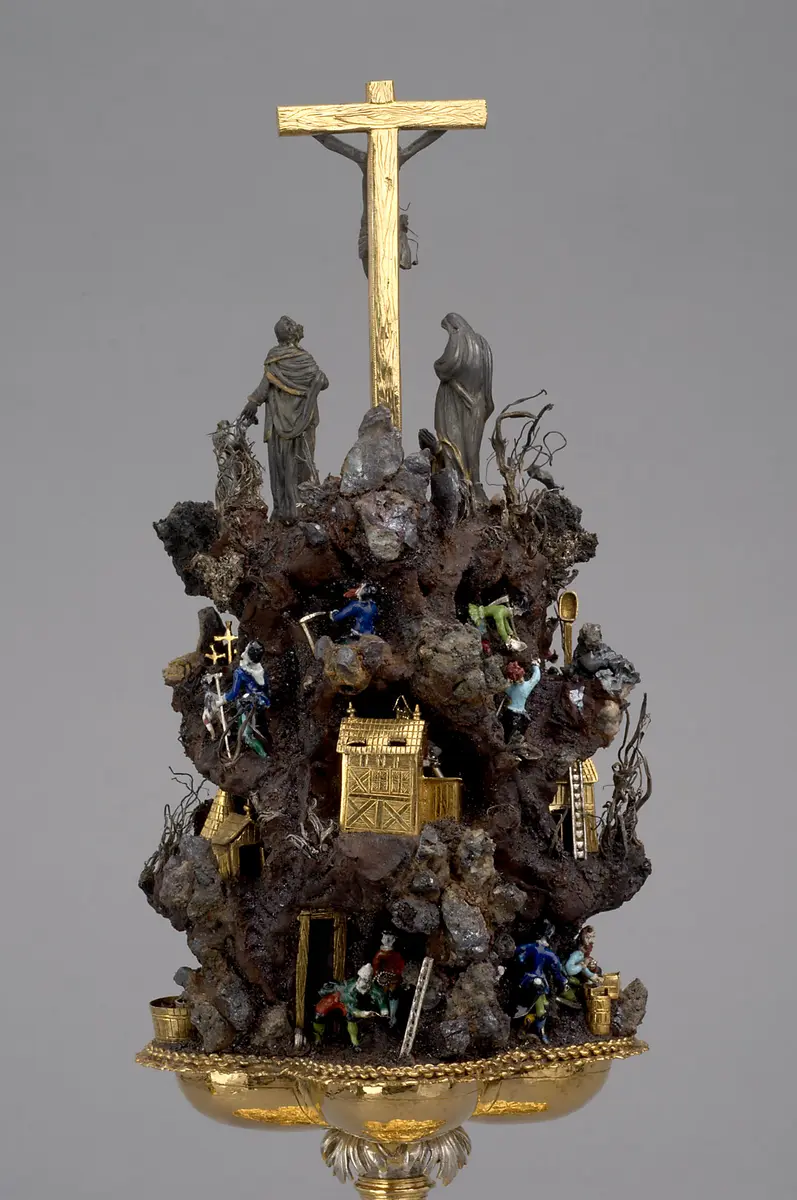
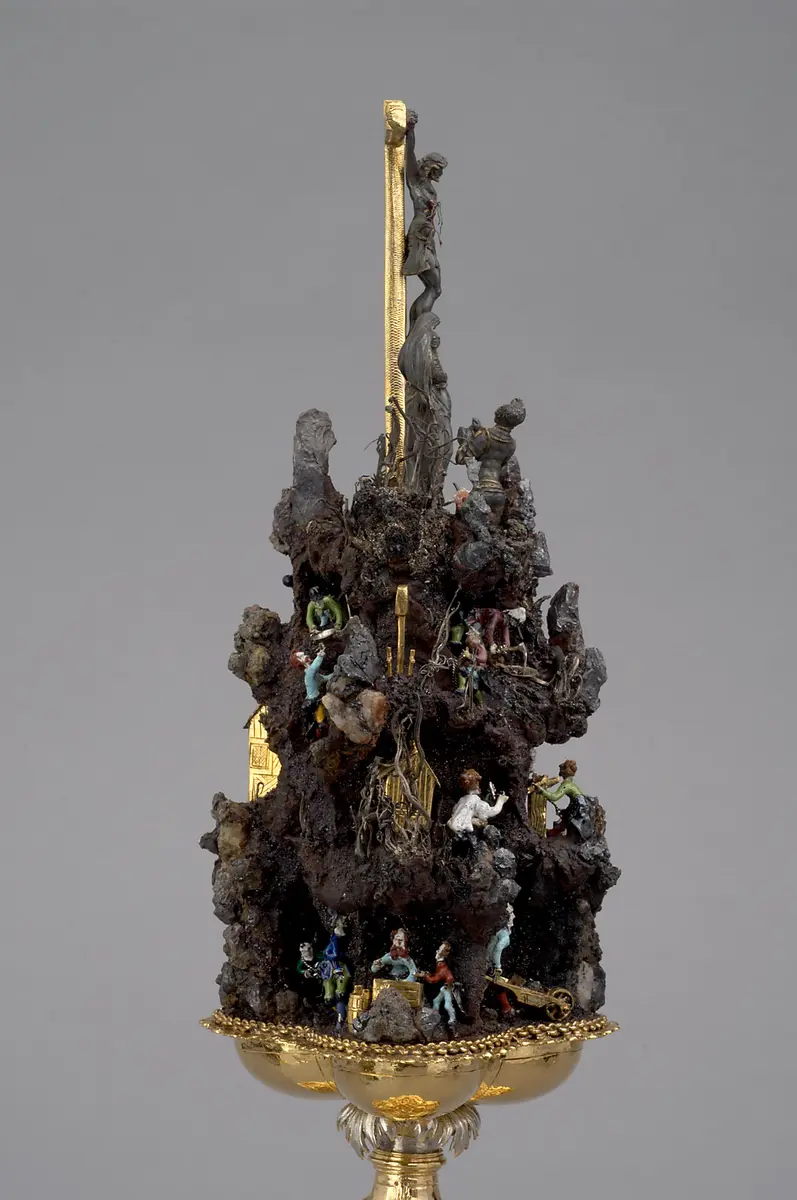
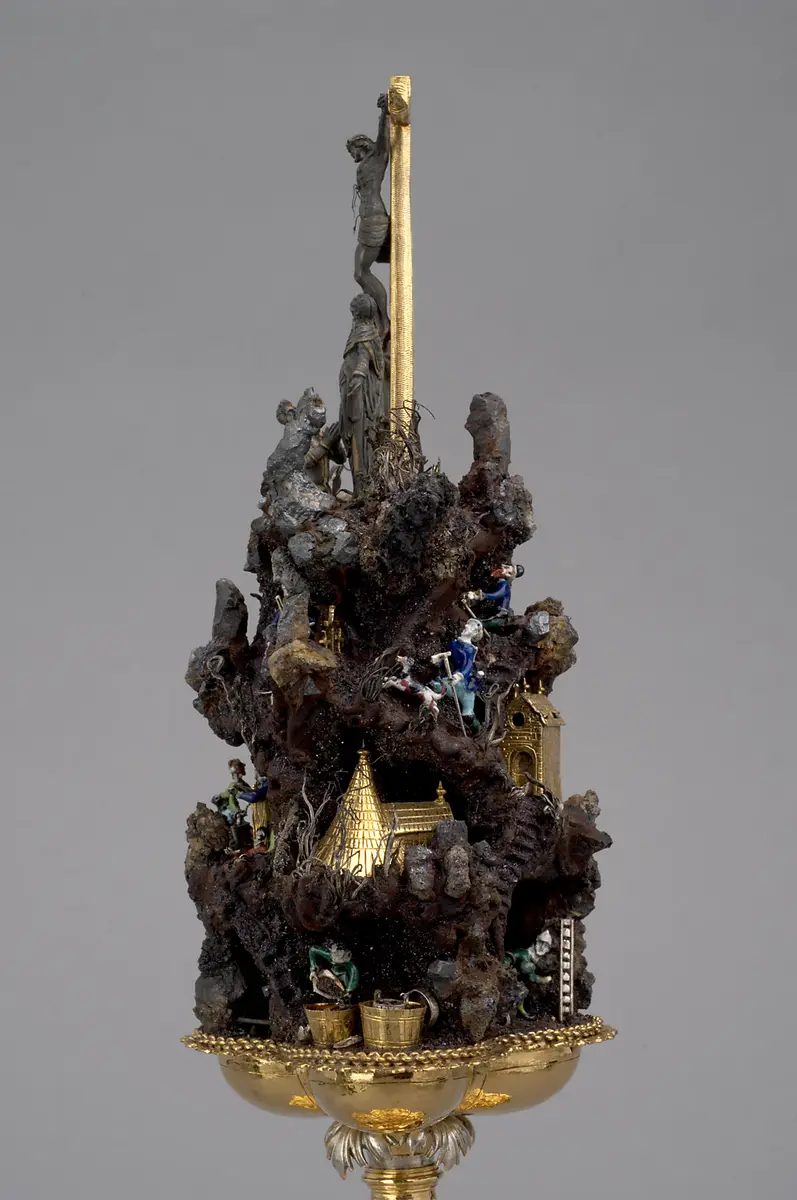
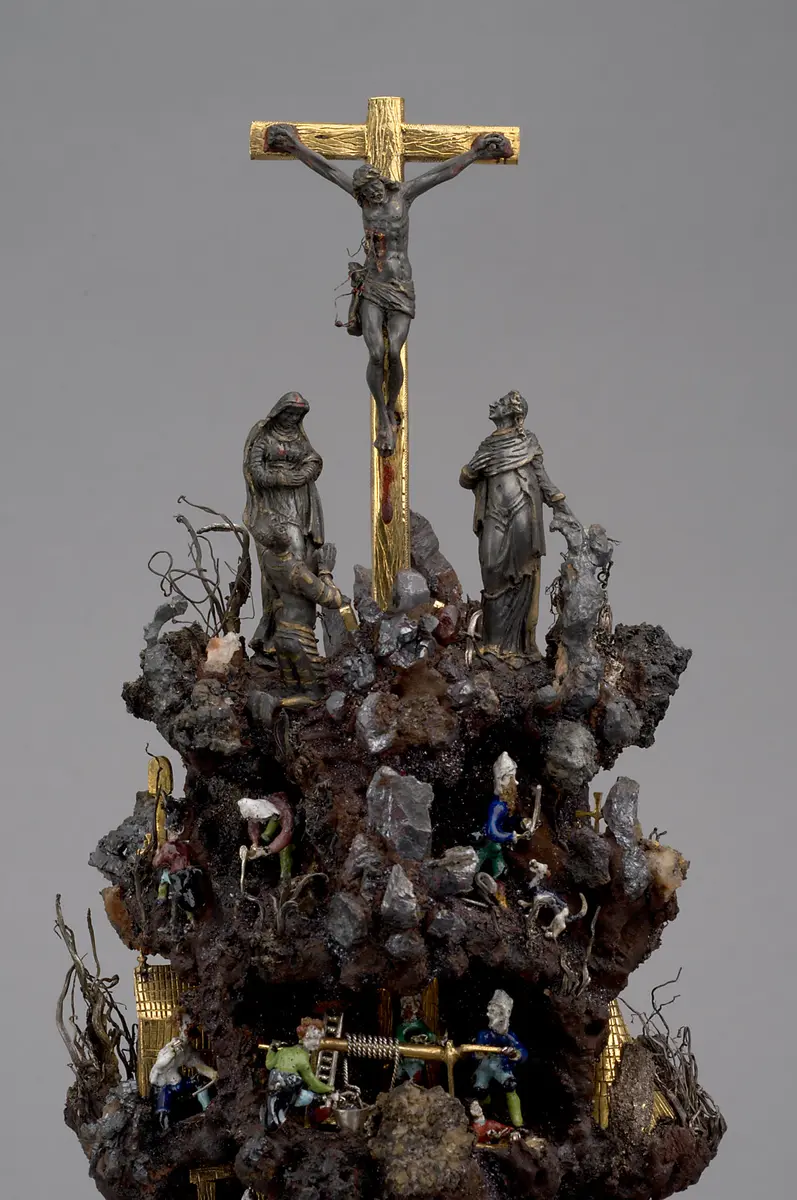
Handstones are samples of rock or ore that have been artistically altered or augmented; mining scenes are generally combined with religious subjects. In the princely Kunstkammer, handstones symbolized the natural wealth of a country, but were also prototypical demonstrations of the bond between nature and art. The group preserved from the collection of Archduke Ferdinand II is today the most significant of its kind worldwide.
Artist:
Caspar Ulich (nachweisbar 1555 - 1576 St. Joachimsthal)
Time:
3rd quarter 16th c.
Object Name
Handstone
Culture
Jáchymov (St. Joachimsthal)
Material/technology:
Acanthite, minerals, gilded silver, enamel, glass
Dimensions:
30 cm × 14 cm × 11 cm
Copyright
Kunsthistorisches Museum, Kunstkammer
Invs.
Kunstkammer, 4157
Browse more
Similar items you might be interested in
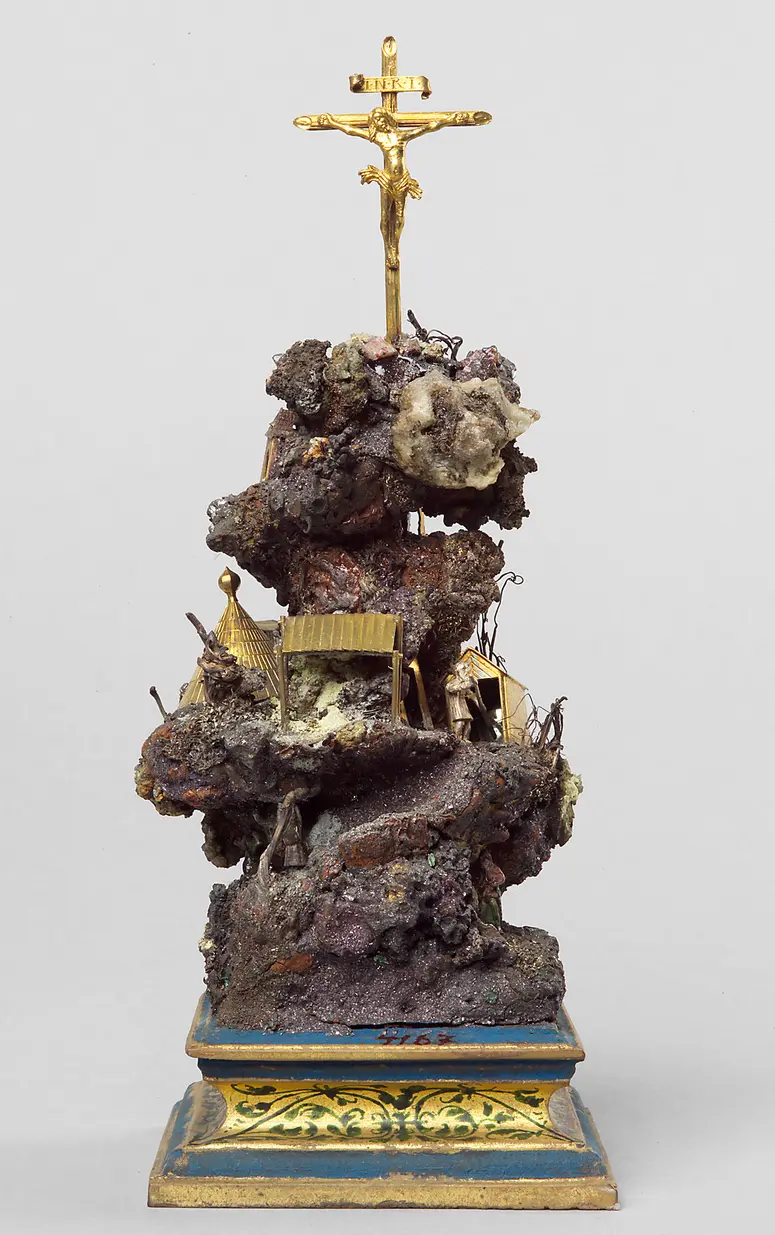

Handstein, Grotte, Kreuzigungsgruppe 3. Viertel 16. Jahrhundert
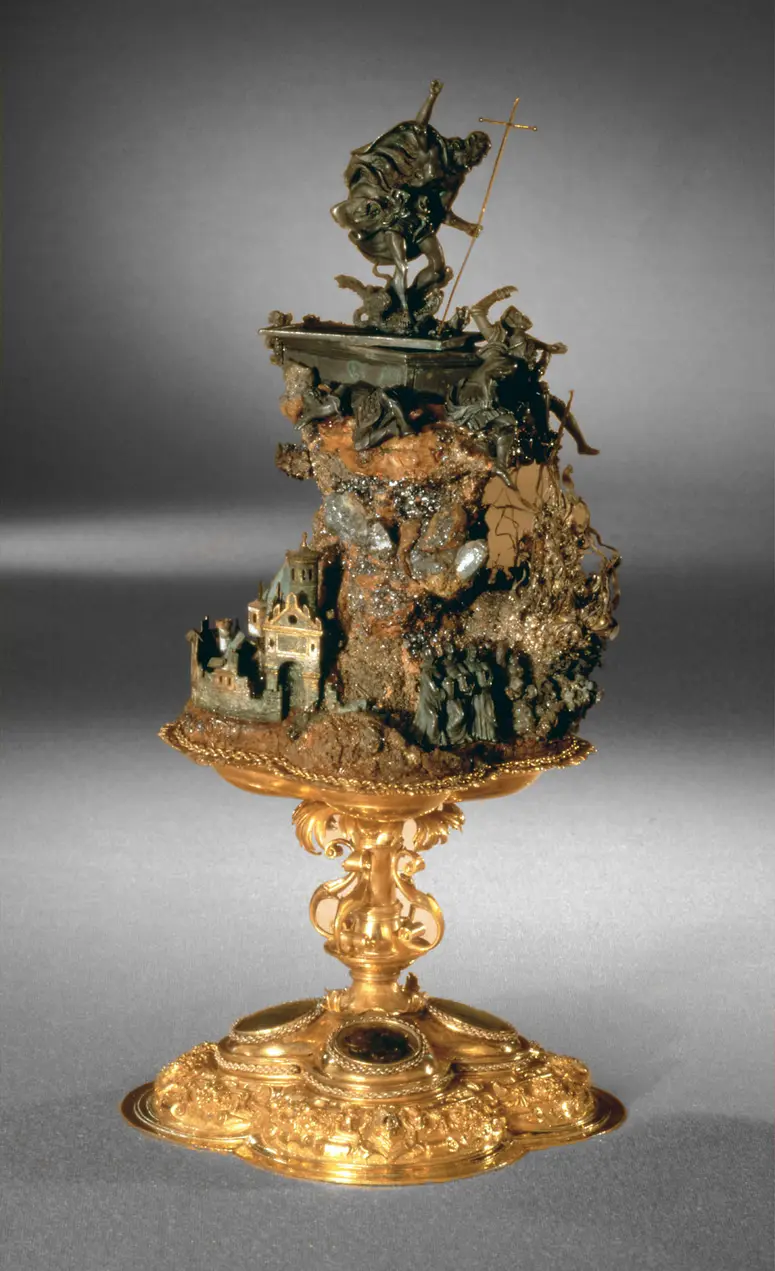
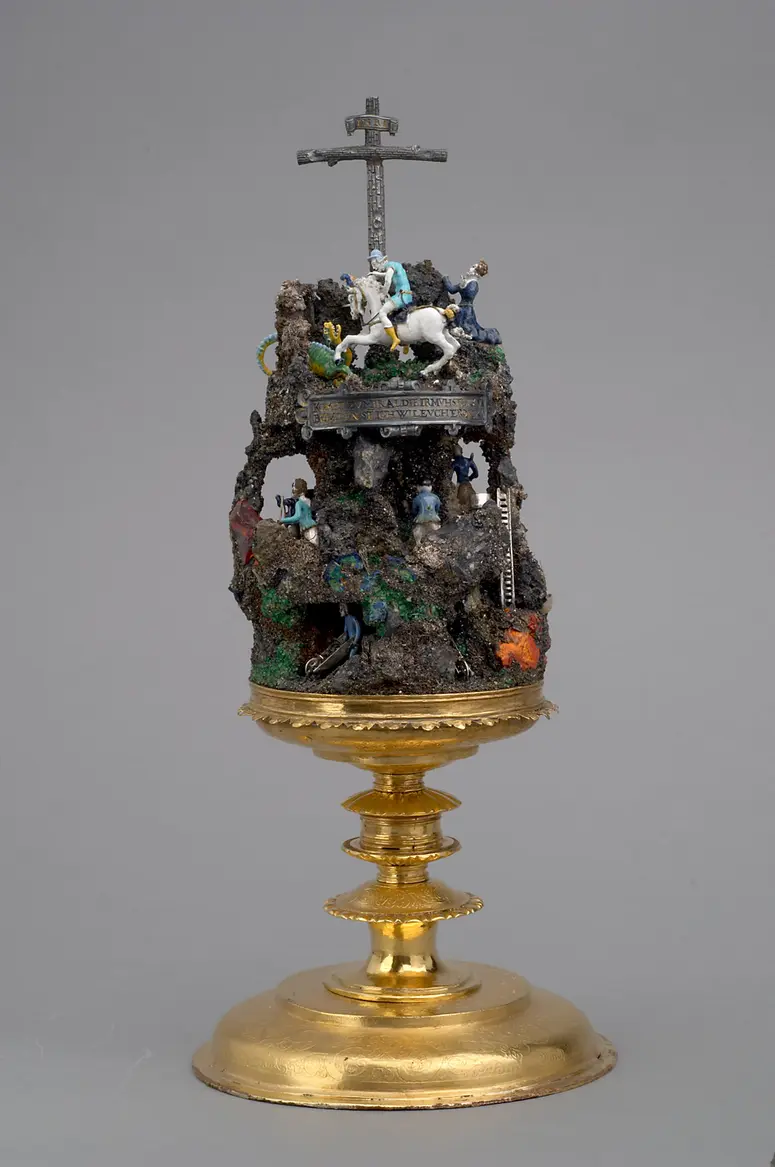
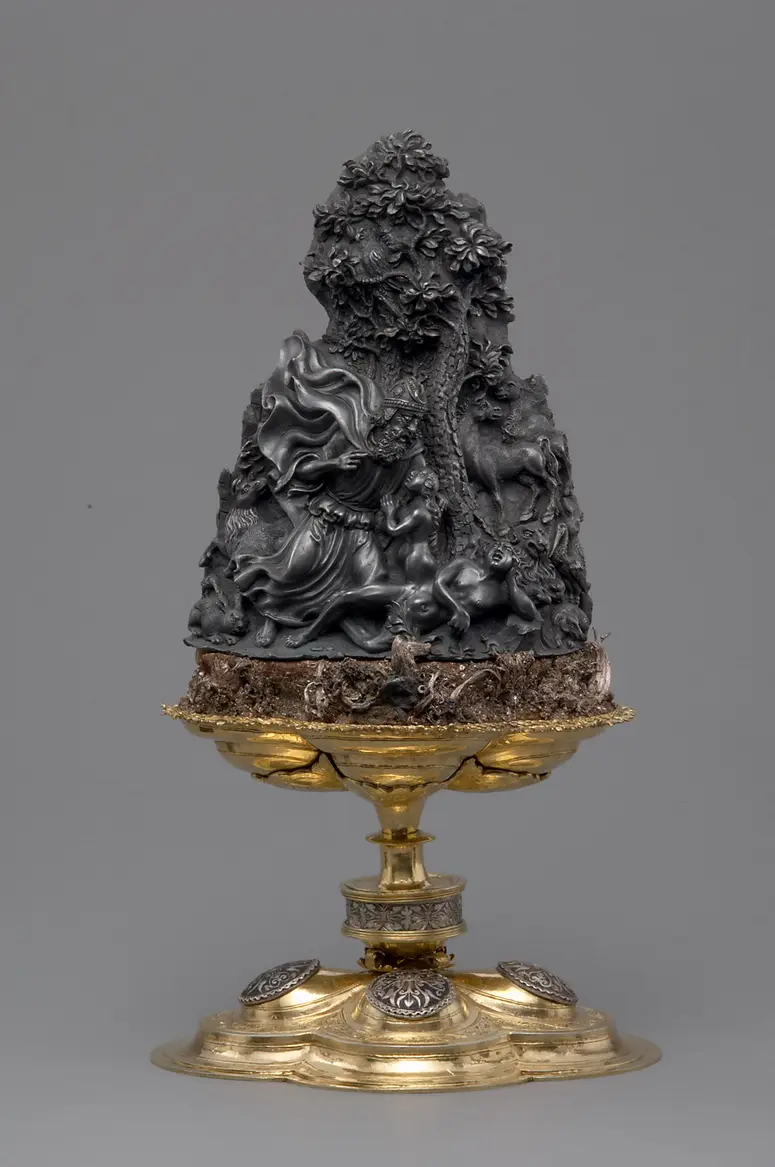
Handstone with the Creation of Eve and the Adoration of the Shepherds Caspar Ulich 3rd quarter 16th c.
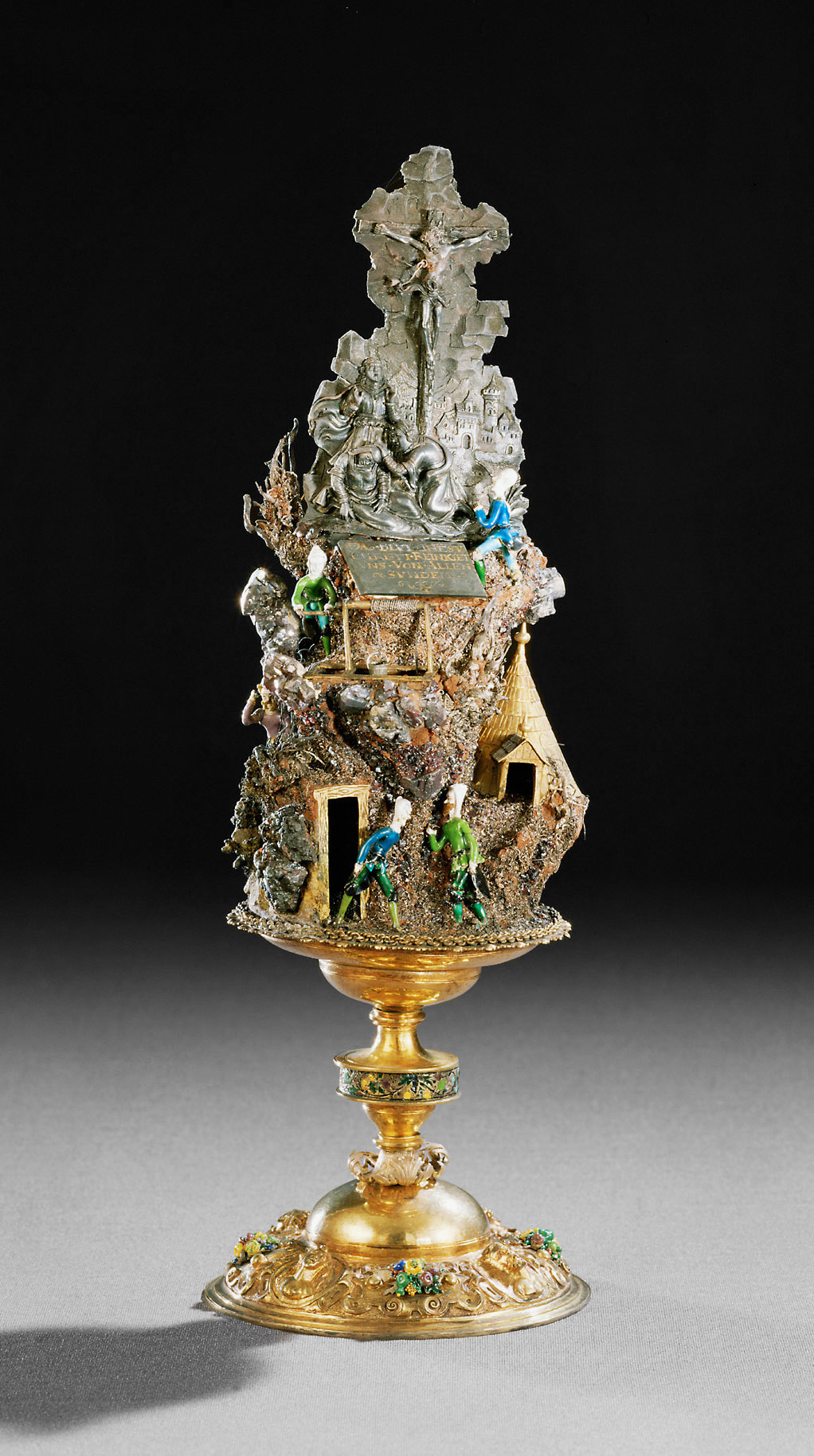
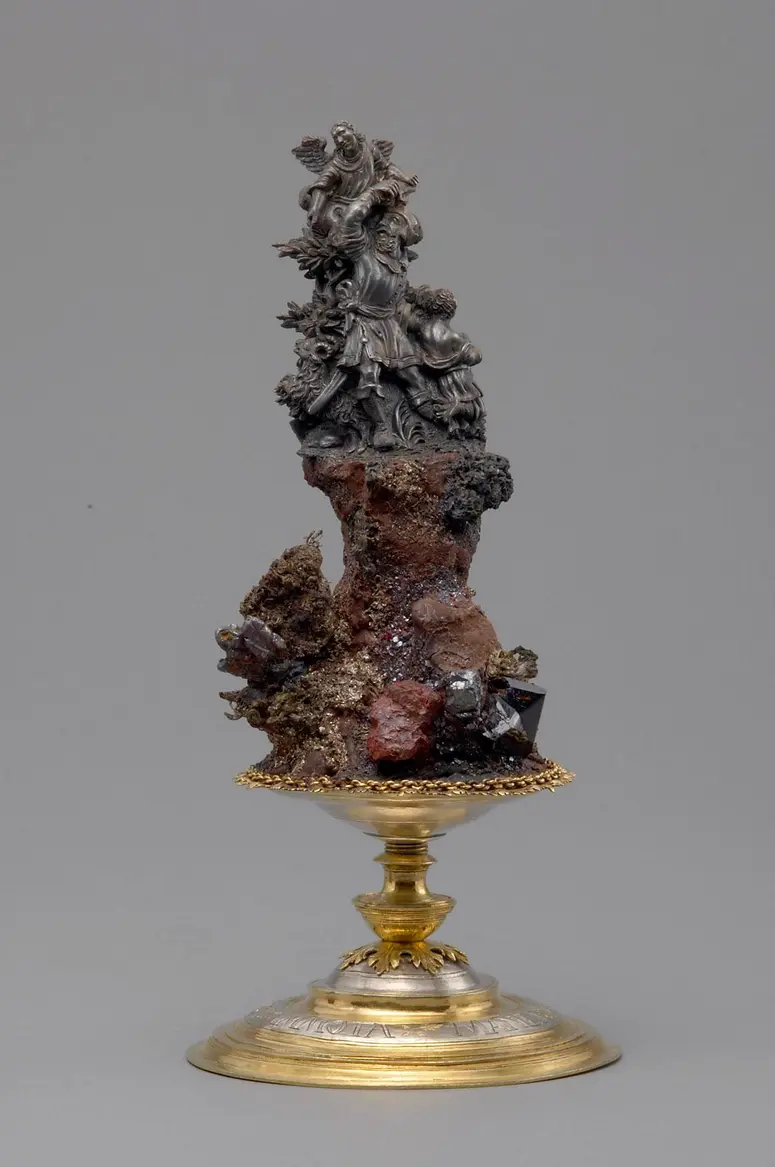
Handstone with the Crucifixion and Resurrection of Christ Caspar Ulich 3rd quarter 16th c.
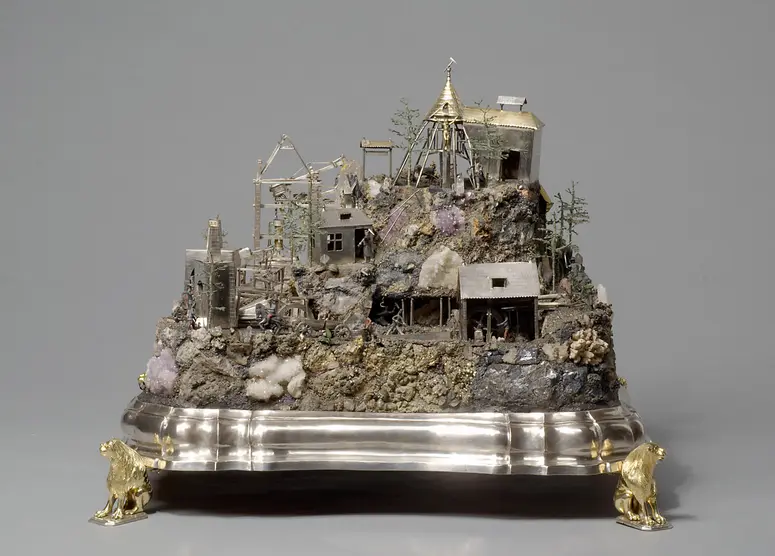
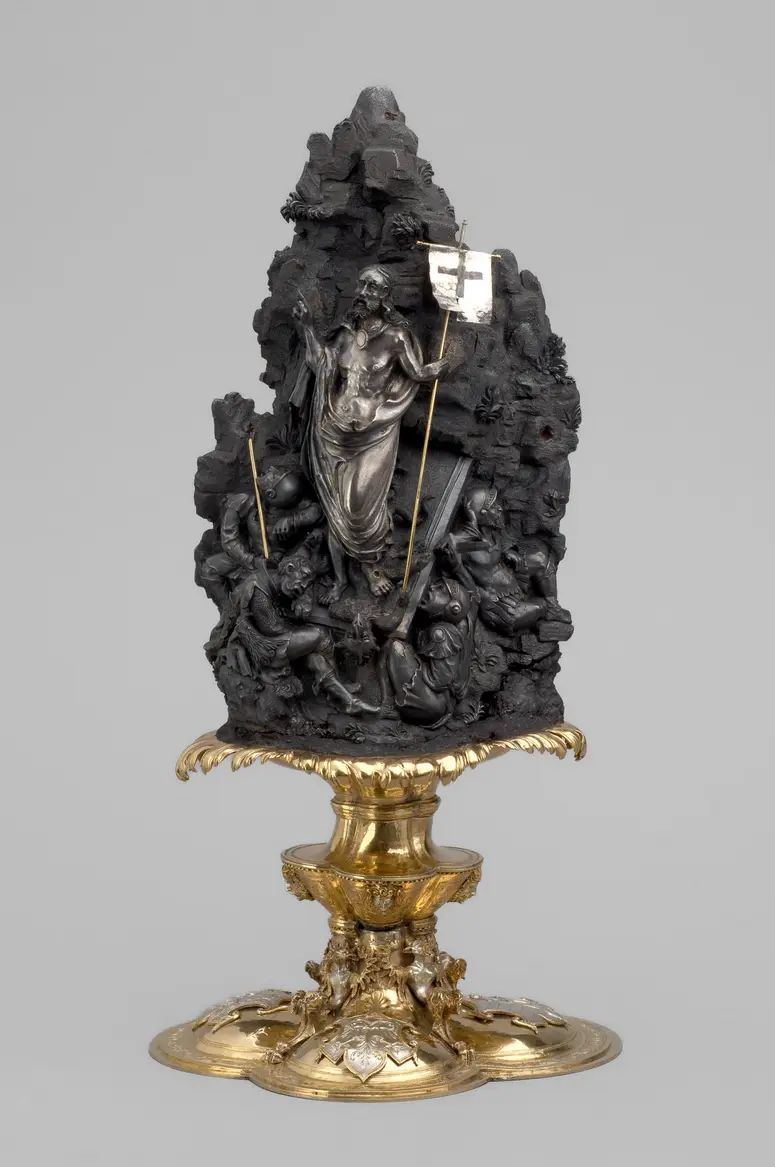
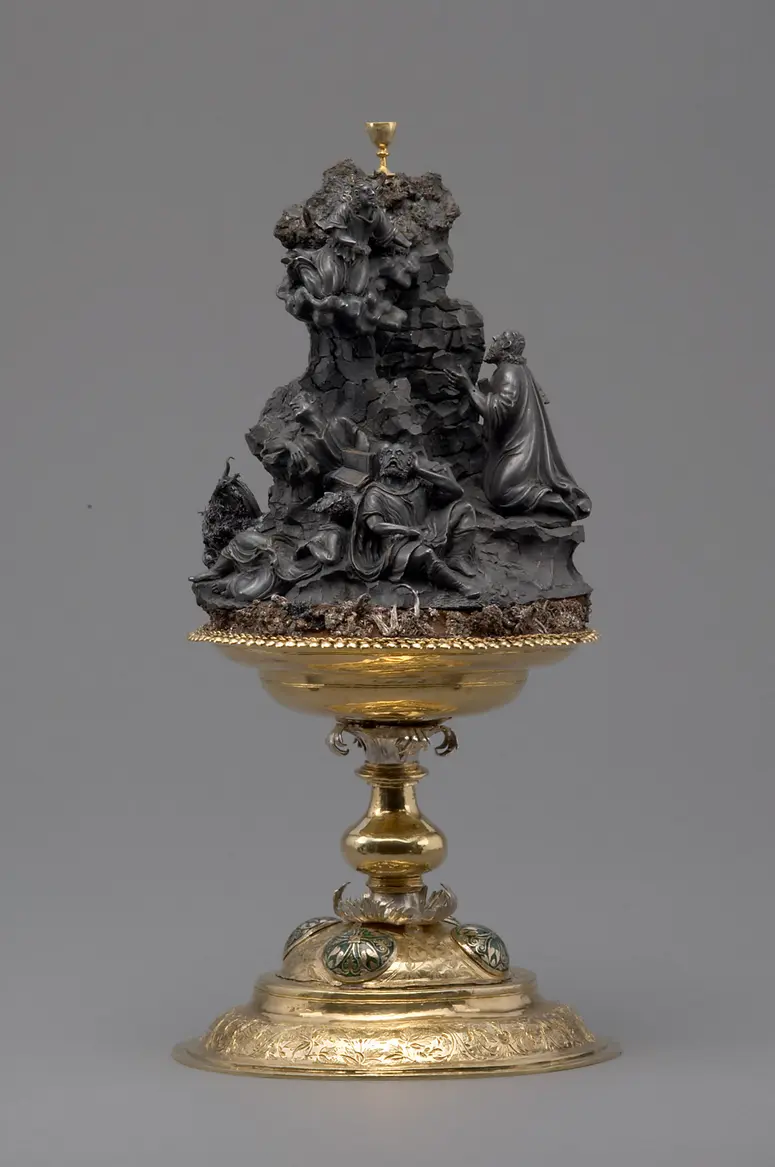
Handstone with the Resurrection and Emperor Charles V after the Battle of Pavia Caspar Ulich ca. 1560
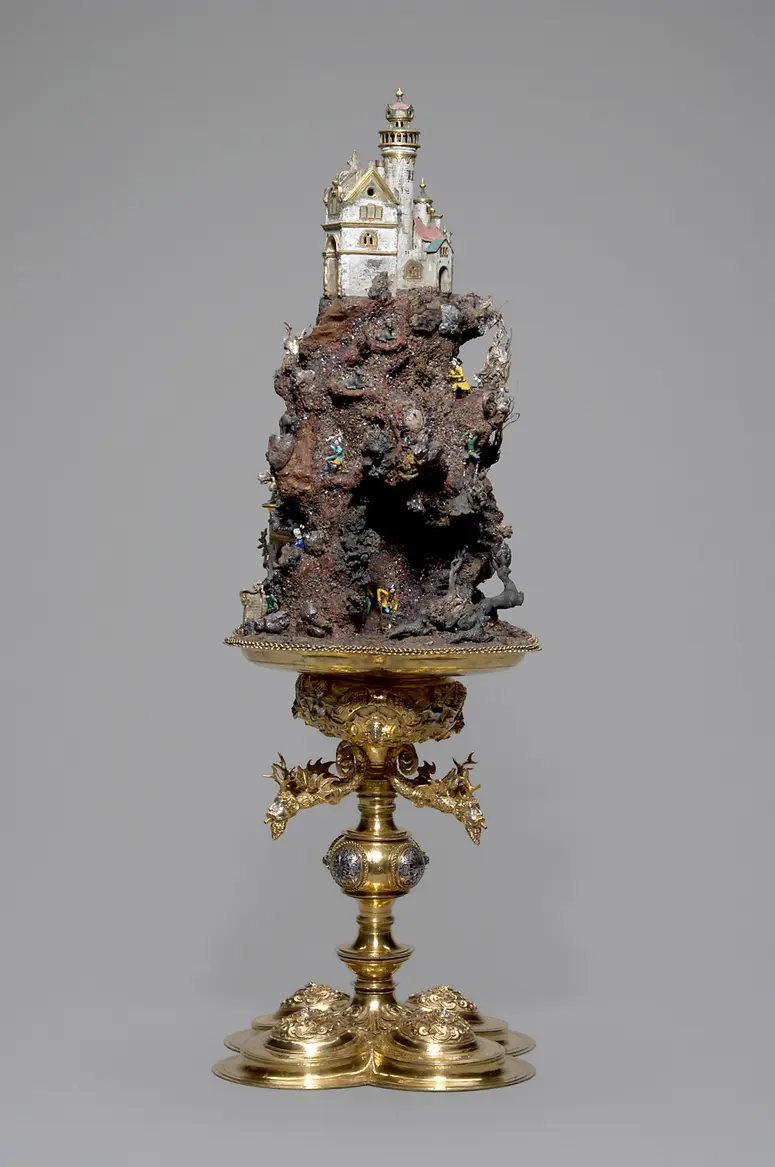
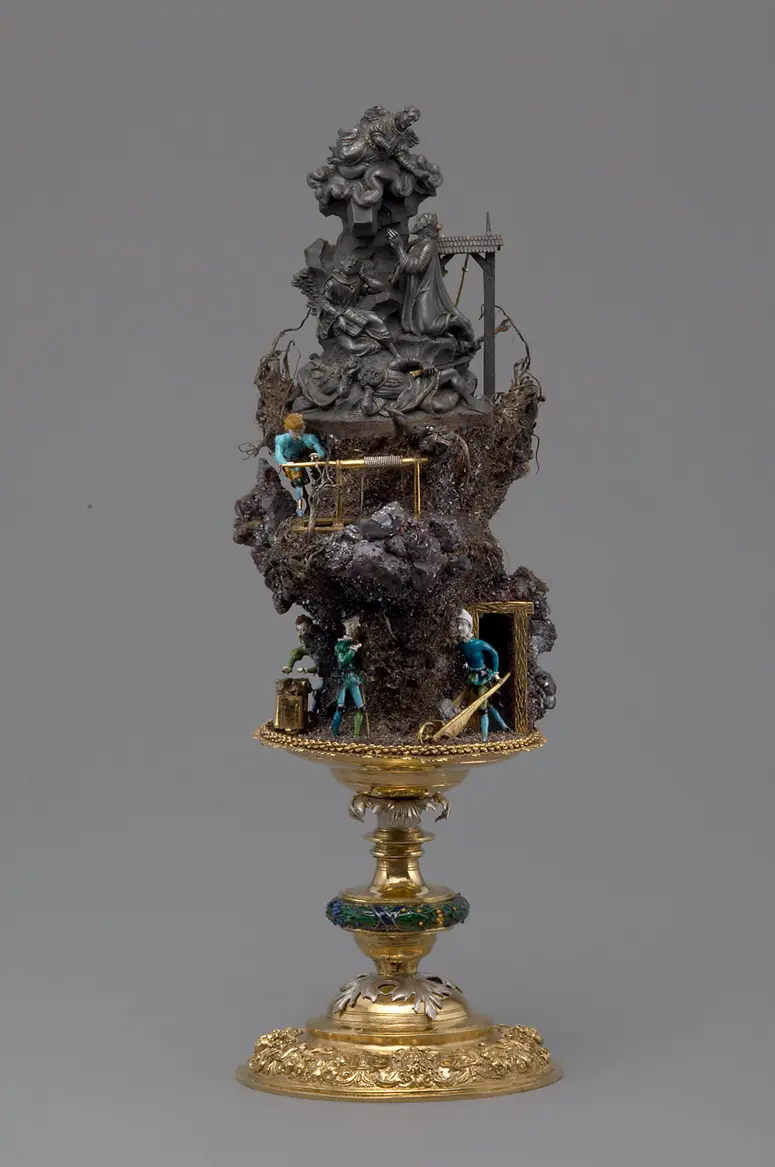
Handstone in the Form of a Table Fountain with David and Bathsheba Caspar Ulich 3rd quarter 16th c.
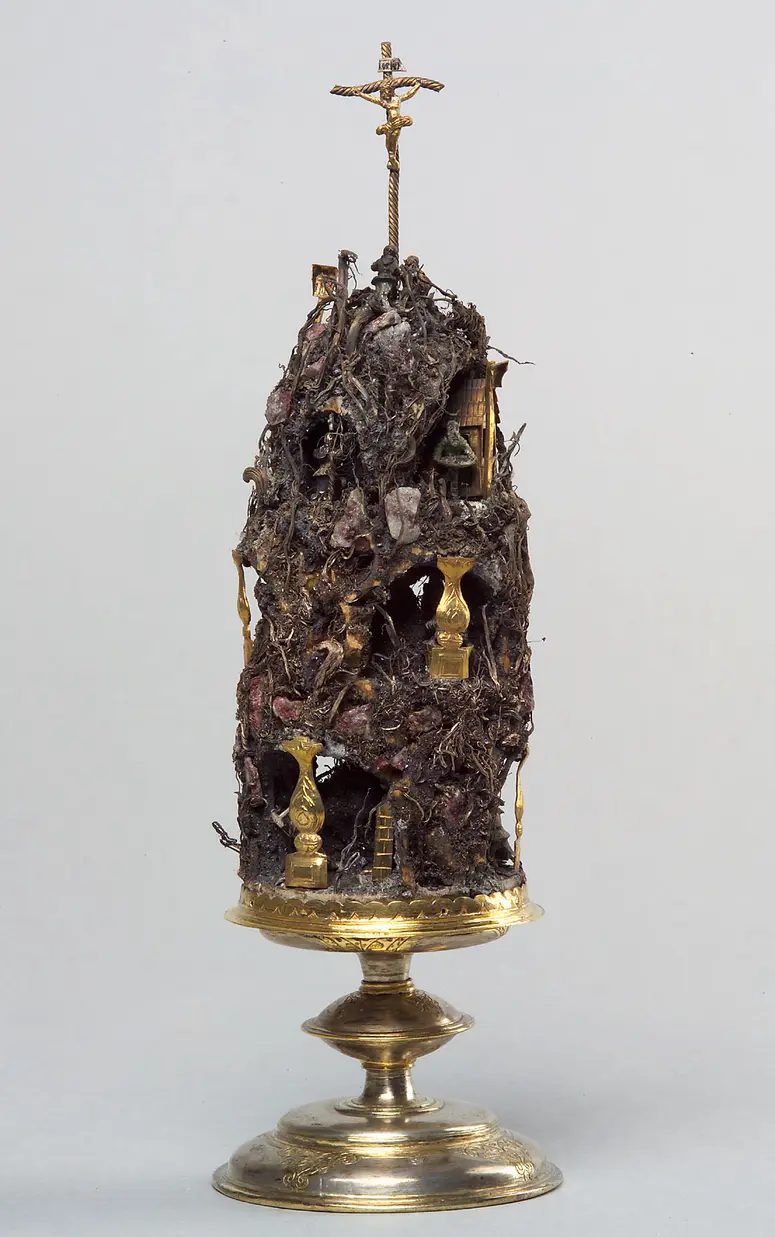
Handstein mit Bergwerk und Kreuzigung 2. Hälfte 16. Jahrhundert
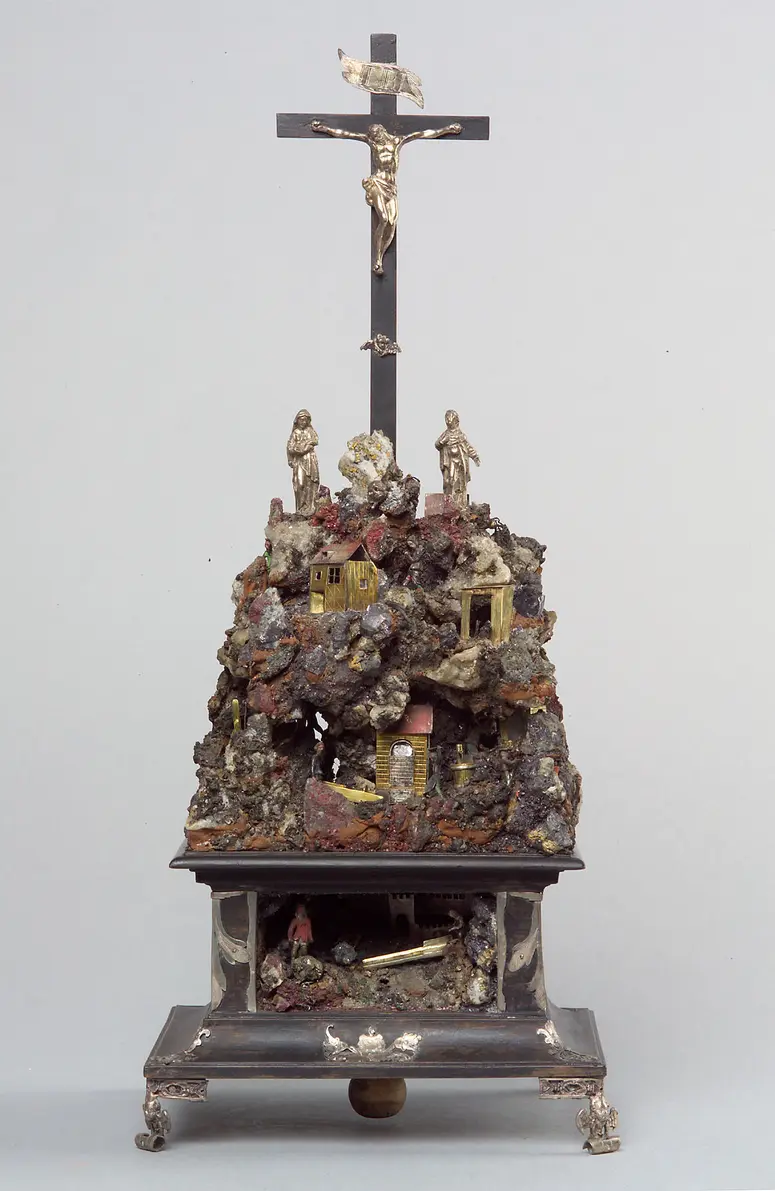
Handstein mit Bergwerk und Kreuzigung 3. Viertel 16. Jahrhundert
Schreibzeug, Handstein, Aufsatz, Christus am Ölberg 16. Jahrhundert