Erzherzog Ferdinand II. (1529-1595), Kniestück in Adlerrüstung
um 1550 | Francesco Terzio
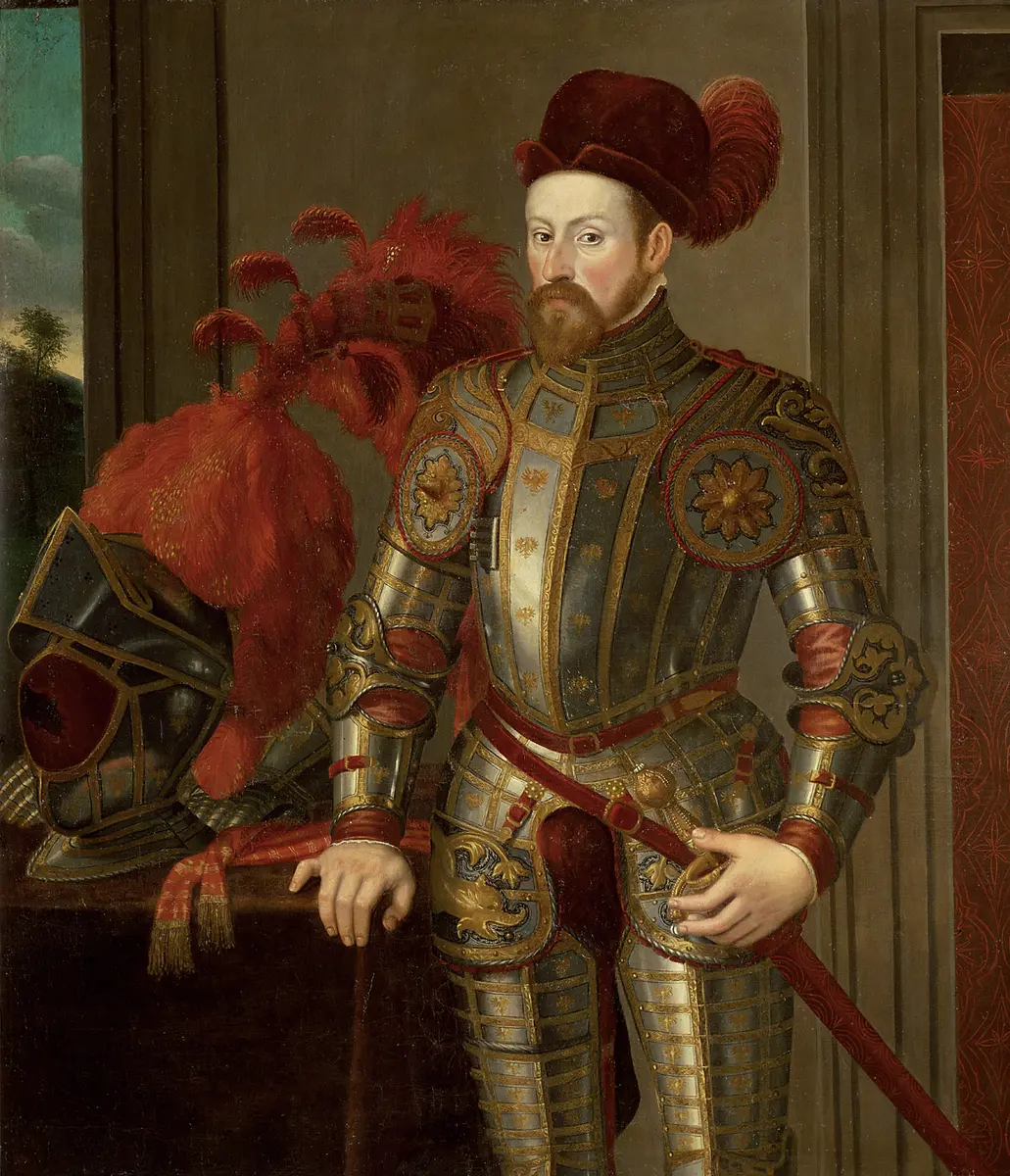
The knee-length portrait shows Archduke Ferdinand II in the so-called ‘Eagle Garniture’, one of the most expensive ensembles of plate-armour made during that period. Ferdinand is depicted at the height of his regency in Bohemia. He wears his trademark ‘Bohemian hat’, a head-covering made of felt and silver wire. On the table beside him lie a mantled helmet with a red plume, a gauntlet and a red sash. These military accoutrements probably allude to Ferdinand’s military command in Hungary against the Ottoman army in 1556, where he was responsible for the organisation of supplies of food and munitions for the royal fortress of Szigetvár. When Archduke Ferdinand II was appointed regent of Bohemia in 1547, his exceptional position as supreme representative of the House of Austria demanded a display of magnificence at court. This also included operating an armoury, which produced not only military equipment but also suits of plate-armour and accoutrements for courtly tournaments. Armourers who worked for Ferdinand included the Nuremberg-born Wolf Keser (also Kheser), Melchior Pfeiffer and Wolfgang Kaiser. One Francesco Ligozzi (also Ligotza) is also mentioned as a ‘harnischmaister’ (master harnesser). The Court Armoury was kept very busy supplying equipment for the numerous tournaments that Ferdinand hosted, notably those in 1556, 1559 and 1560. New suits of armour were also made for the Hungarian campaign of 1556. The Prague harnesses are typified by their elegant lines, compact, rounded shape and high waist. Other remarkable features include the burgonets made in two pieces, a striking motif of scales on the gorgets with powerful corded edges and the lames (overlapping plates) of the pauldrons (shoulder-guards) divided into two sections.
The knee-length portrait shows Archduke Ferdinand II in the so-called ‘Eagle Garniture’, one of the most expensive ensembles of plate-armour made during that period. Ferdinand is depicted at the height of his regency in Bohemia. He wears his trademark ‘Bohemian hat’, a head-covering made of felt and silver wire. On the table beside him lie a mantled helmet with a red plume, a gauntlet and a red sash. These military accoutrements probably allude to Ferdinand’s military command in Hungary against the Ottoman army in 1556, where he was responsible for the organisation of supplies of food and munitions for the royal fortress of Szigetvár. When Archduke Ferdinand II was appointed regent of Bohemia in 1547, his exceptional position as supreme representative of the House of Austria demanded a display of magnificence at court. This also included operating an armoury, which produced not only military equipment but also suits of plate-armour and accoutrements for courtly tournaments. Armourers who worked for Ferdinand included the Nuremberg-born Wolf Keser (also Kheser), Melchior Pfeiffer and Wolfgang Kaiser. One Francesco Ligozzi (also Ligotza) is also mentioned as a ‘harnischmaister’ (master harnesser). The Court Armoury was kept very busy supplying equipment for the numerous tournaments that Ferdinand hosted, notably those in 1556, 1559 and 1560. New suits of armour were also made for the Hungarian campaign of 1556. The Prague harnesses are typified by their elegant lines, compact, rounded shape and high waist. Other remarkable features include the burgonets made in two pieces, a striking motif of scales on the gorgets with powerful corded edges and the lames (overlapping plates) of the pauldrons (shoulder-guards) divided into two sections.
Artist:
Francesco Terzio (?) (um 1523 Bergamo - 1591 Rom) DNB
Depiction/Person:
Ferdinand II. (1564-1595), Erzherzog von Österreich und Landesherr von Tirol (1529 - 1595) DNB
Time:
um 1550
Object Name
Gemälde
Culture
Italienisch, Oberitalienisch
Dimensions:
135 × 130 cm
Framed: 151,5 × 145 × 5,3 cm
Copyright
Kunsthistorisches Museum, Gemäldegalerie
Invs.
Gemäldegalerie, 8063
Provenance
aus Ambras
nachweisbar Ambras Inventar 1788 (Primisser), Band 2, fol. 175v, Nr. 351
Browse more
Similar items you might be interested in
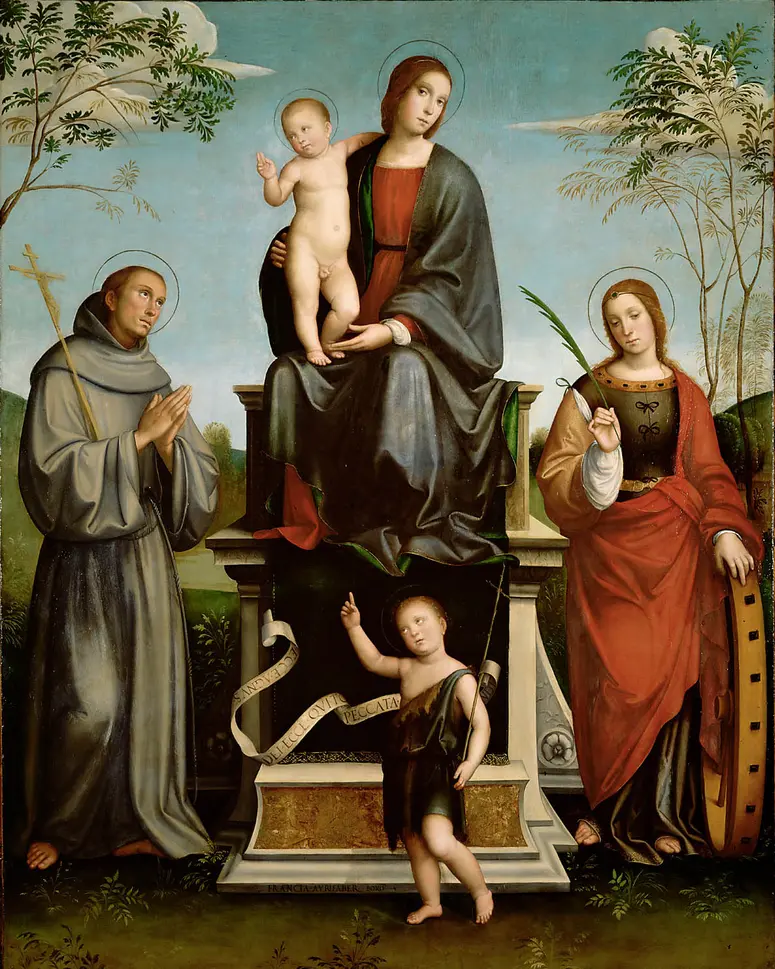
Mary with Child and the Saints Francis, Catherine and John Francesco Raibolini, gen. Francia around 1504
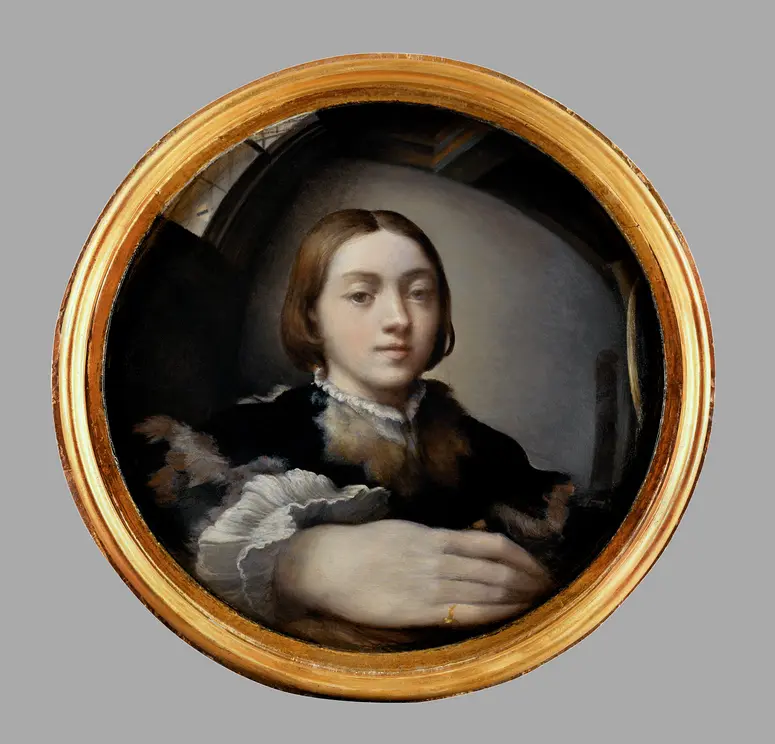
Selbstbildnis im Konvexspiegel Francesco Mazzola gen. Parmigianino um 1523/1524

Isabella von Portugal, Statue, Statuette, Terracotta Isabella von Portugal um 1600
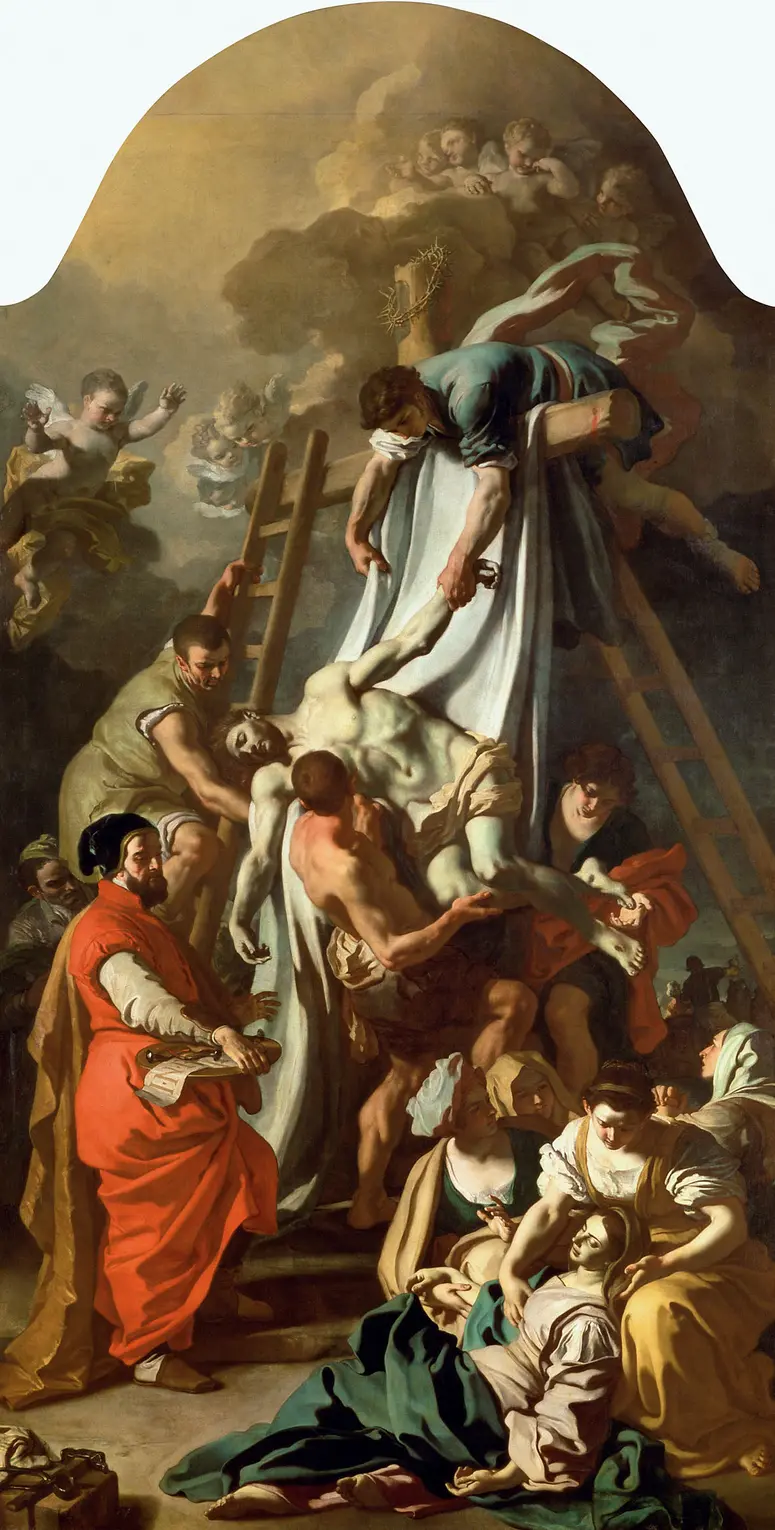
Kreuzabnahme J. Löwy, K. und K. Hof-Photograph, Kunst- und Verlagsanstalt (Wien) 1888 bis 1891

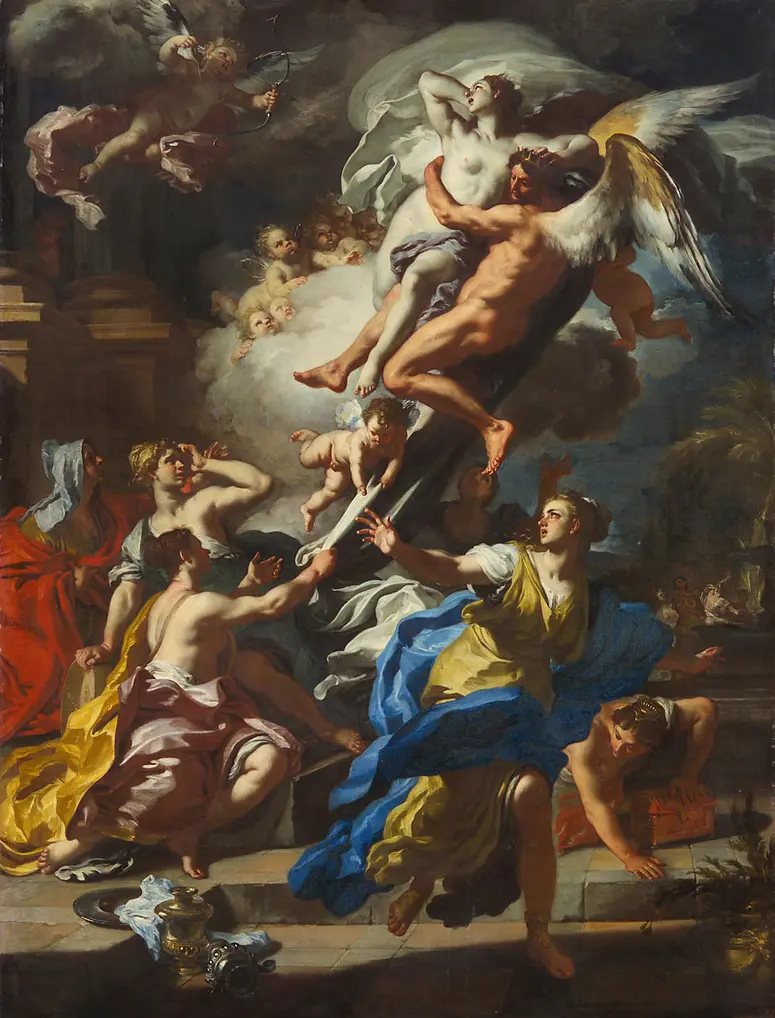
Boreas raubt Orethyia J. Löwy, K. und K. Hof-Photograph, Kunst- und Verlagsanstalt (Wien) 1888 bis 1891

Thronende Madonna mit Heiligen J. Löwy, K. und K. Hof-Photograph, Kunst- und Verlagsanstalt (Wien) 1888 bis 1910
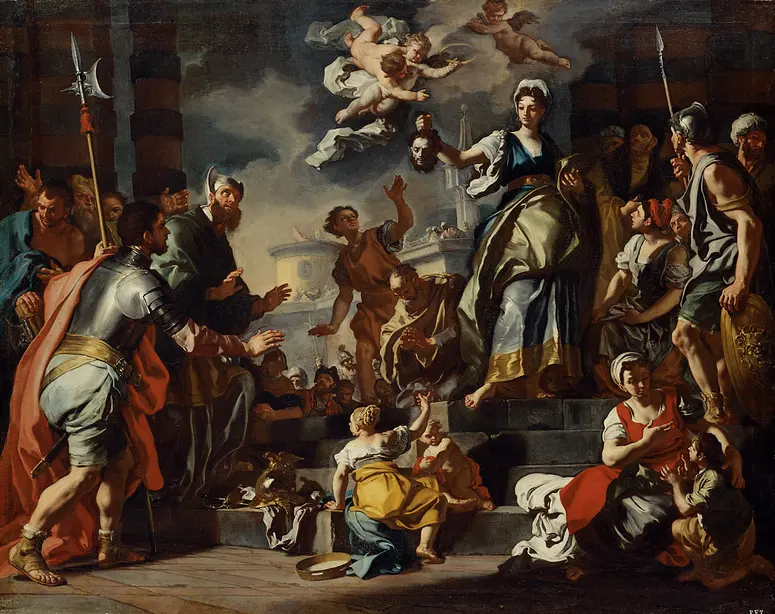
Judith mit dem Haupt des Holofernes J. Löwy, K. und K. Hof-Photograph, Kunst- und Verlagsanstalt (Wien) 1888 bis 1910


Martyrium des heiligen Januarius und seiner Gefährten J. Löwy, K. und K. Hof-Photograph, Kunst- und Verlagsanstalt (Wien) 1888 bis 1910

Kaiser Karl V., Statue, Statuette, Terracotta Karl I. (V.) (1516-1556), als Karl I. König von Spanien, ab 1519 deutscher König, ab 1520 Kaiser um 1600

Maria von Burgund, Statue, Statuette, Terracotta Maria (1477-1482), Herzogin von Burgund um 1600


Isabella von Geldern, Statue, Statuette, Terracotta Francesco Terzio um 1600
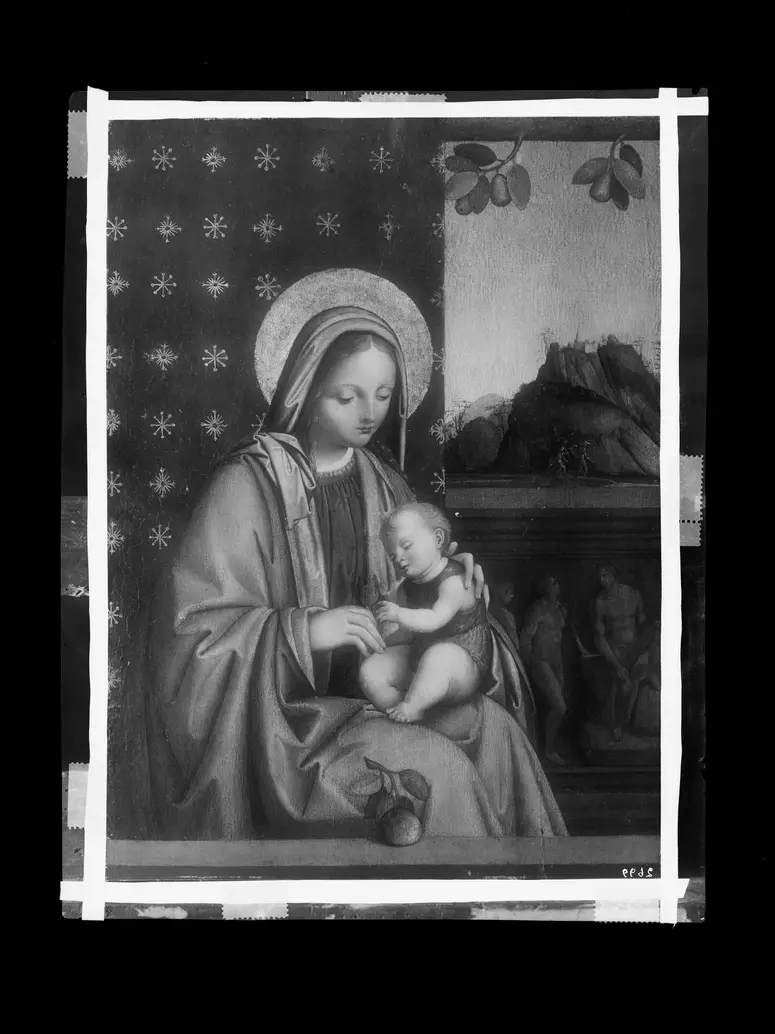
Madonna mit Kind J. Löwy, K. und K. Hof-Photograph, Kunst- und Verlagsanstalt (Wien) 1888 bis 1910