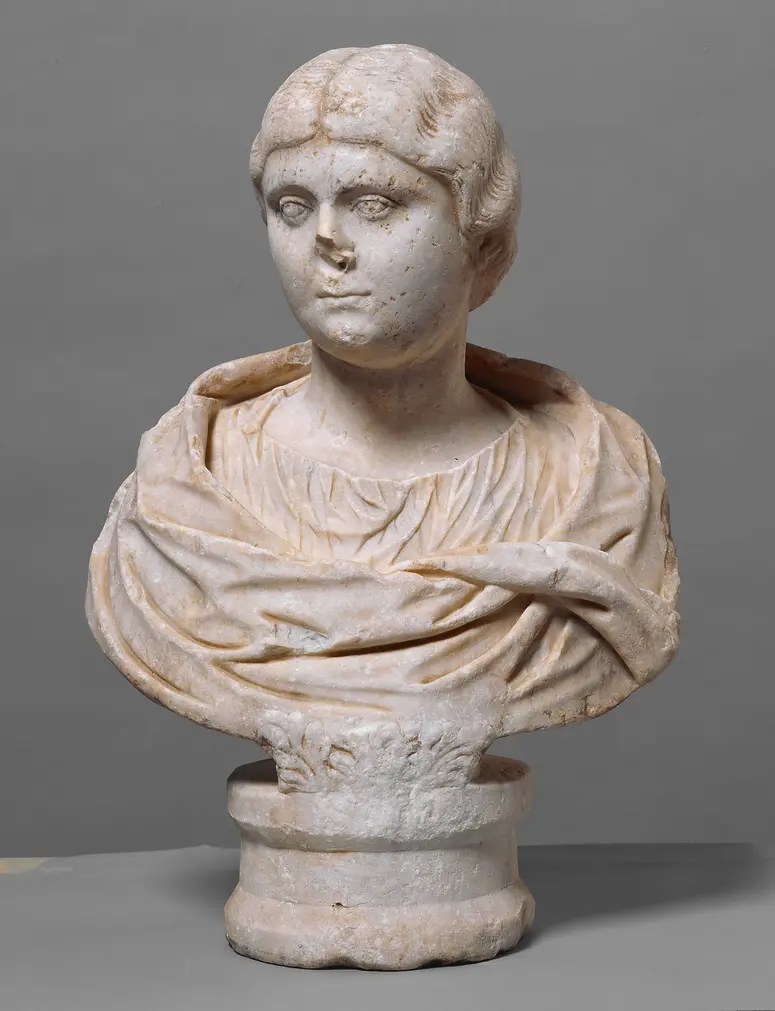
Bust of a Child
Roman Imperial period, 1st–2nd cent., nose and bust added in the 16th cent.
This portrait of a small child (girl or boy?) with chubby cheeks and fine, feathery hair probably had its origin as a classical Roman tomb bust. Children who had died at an early age were frequently depicted with a melancholy expression. When this piece was rediscovered, an unknown sculptor added a bust in classical style to the child’s head. The clothing, a cloak with fringes, is held together in front by a decorative knot similar to that of the goddess Isis.
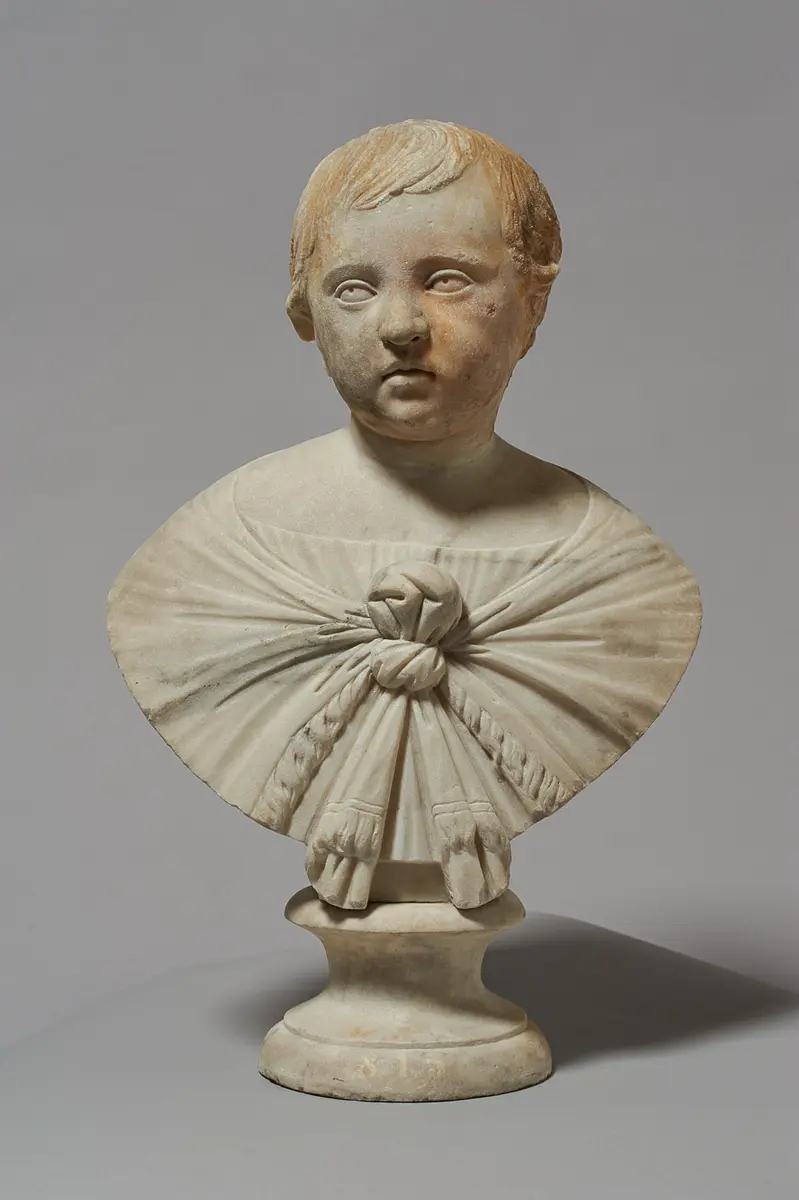
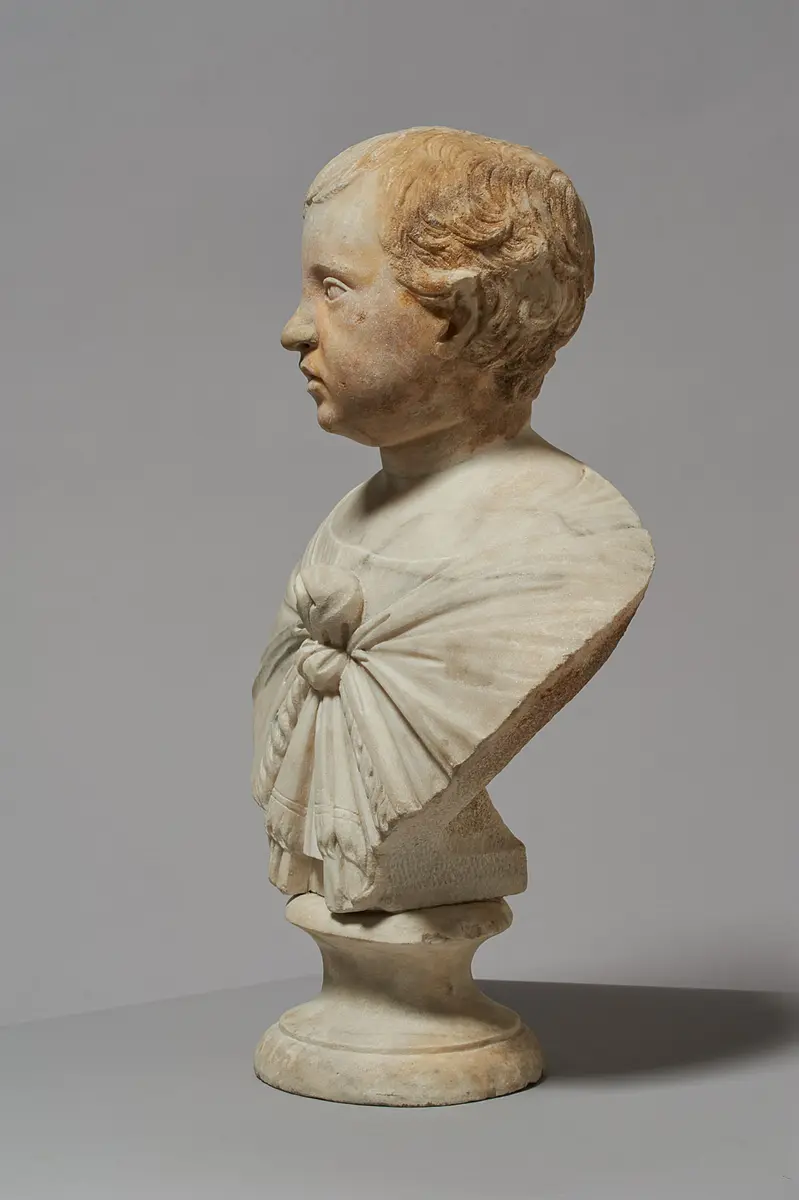
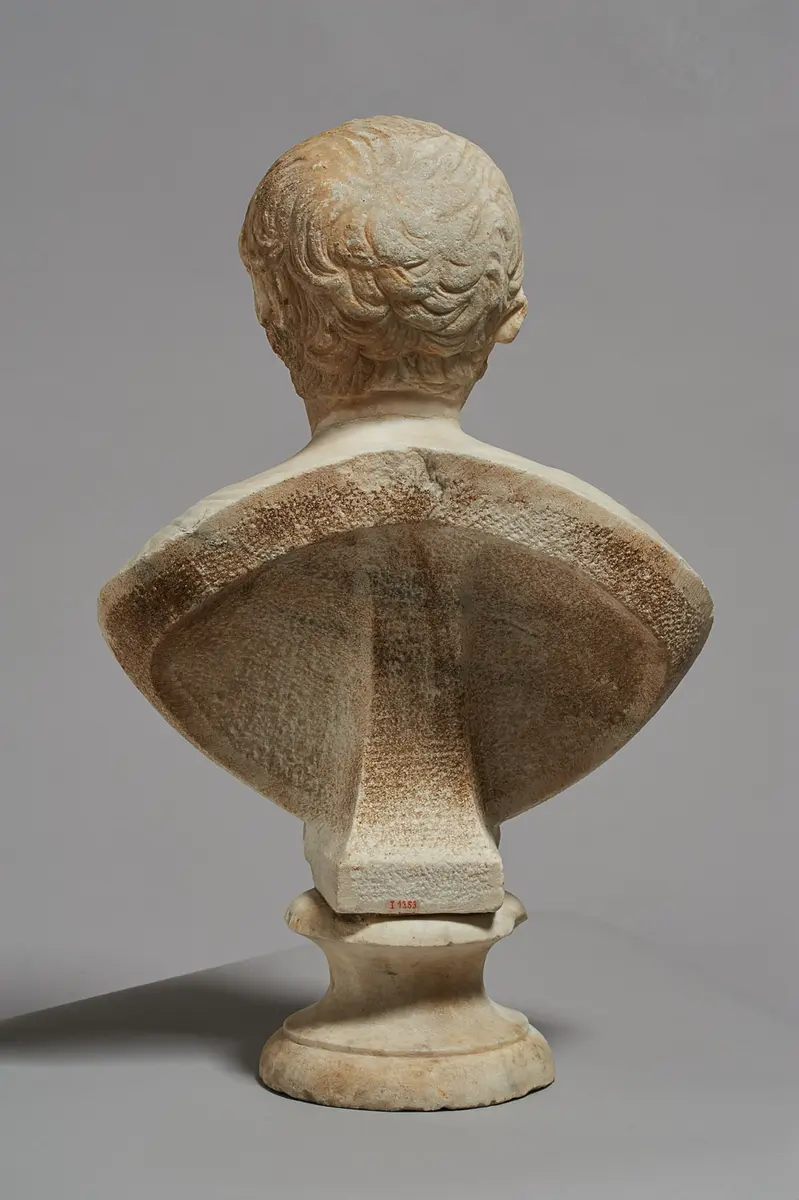
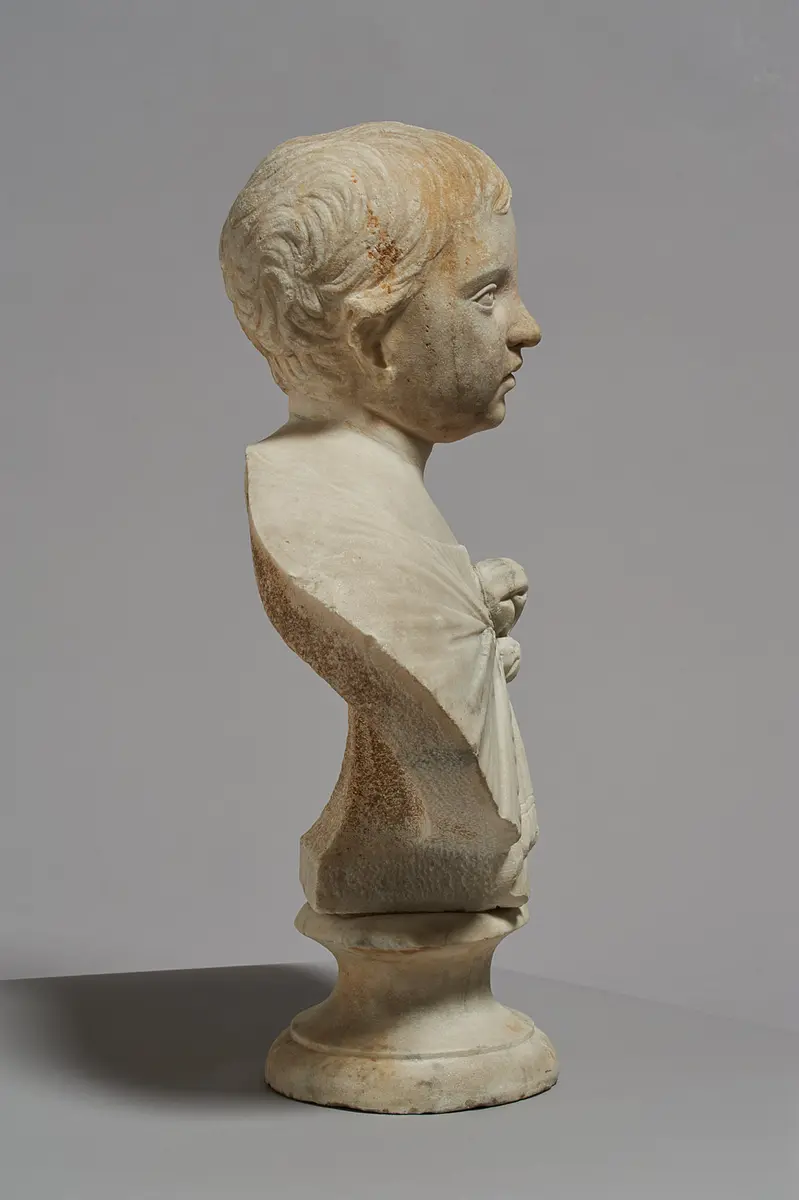
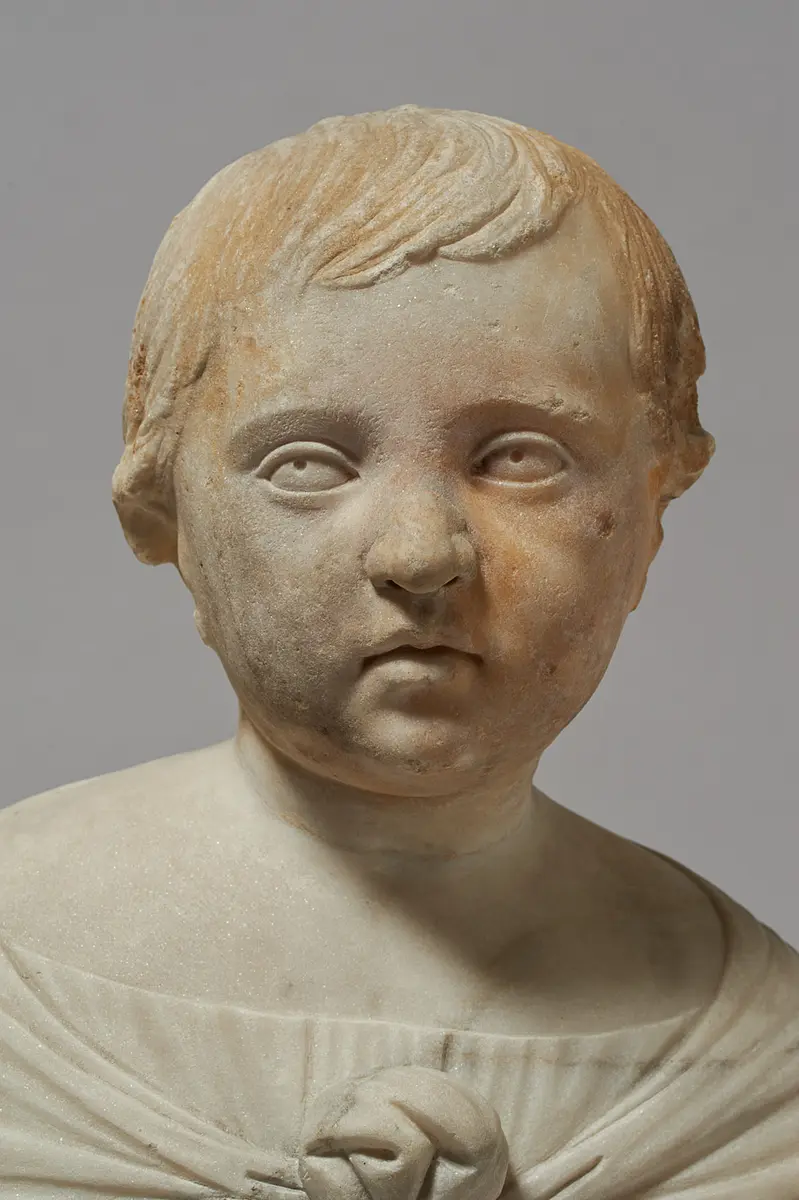
This portrait of a small child (girl or boy?) with chubby cheeks and fine, feathery hair probably had its origin as a classical Roman tomb bust. Children who had died at an early age were frequently depicted with a melancholy expression. When this piece was rediscovered, an unknown sculptor added a bust in classical style to the child’s head. The clothing, a cloak with fringes, is held together in front by a decorative knot similar to that of the goddess Isis.
Time:
Roman Imperial period, 1st–2nd cent., nose and bust added in the 16th cent.
Object Name
portrait bust
Culture
Römisch
Location of discovery:
Unbekannt
Material/technology:
Marble
Dimensions:
H. (Kopf 18,5 cm): 53 cm
Copyright
Kunsthistorisches Museum, Antikensammlung
Invs.
Antikensammlung, I 1353
Provenance
Coll. Este - Catajo; in the possession of Archduke Franz Ferdinand; 1923 added to the inventory
Browse more
Similar items you might be interested in
Relief: Porträtkopf eines Knaben Römisch, Späte Kaiserzeit Mitte 3. Jh. n. Chr.
Porträtbüste: Porträt eines Priesters, sog. Commodus (?) Römisch, Mittlere Kaiserzeit 2. Jh. n. Chr.
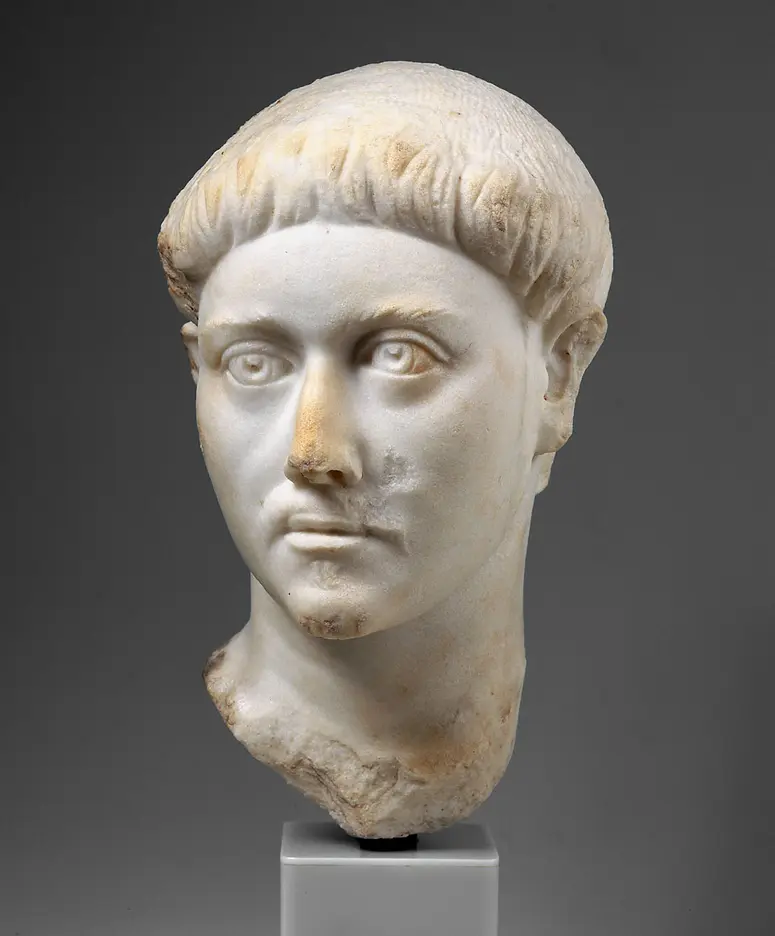
Porträtkopf: Porträtkopf eines jungen Mannes Römisch, Spätantik Anfang 4. Jh. n. Chr.
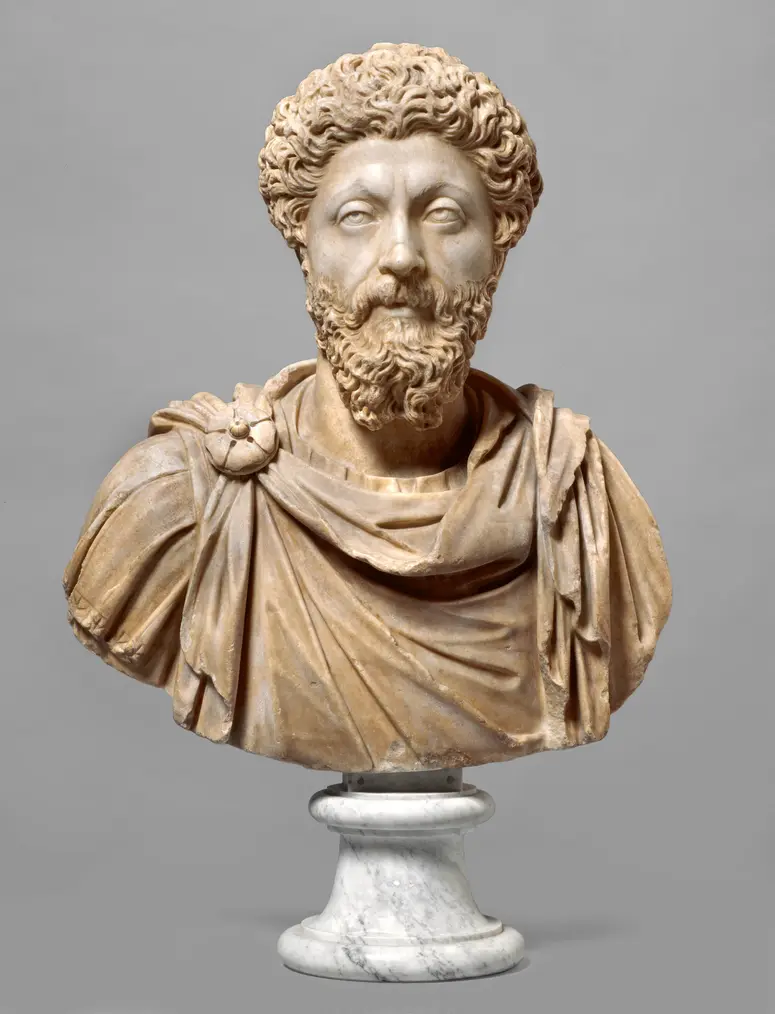
Porträtkopf, Büste ergänzt: Kaiser Marc Aurel Römisch, Mittlere Kaiserzeit 170 - 180 n. Chr.
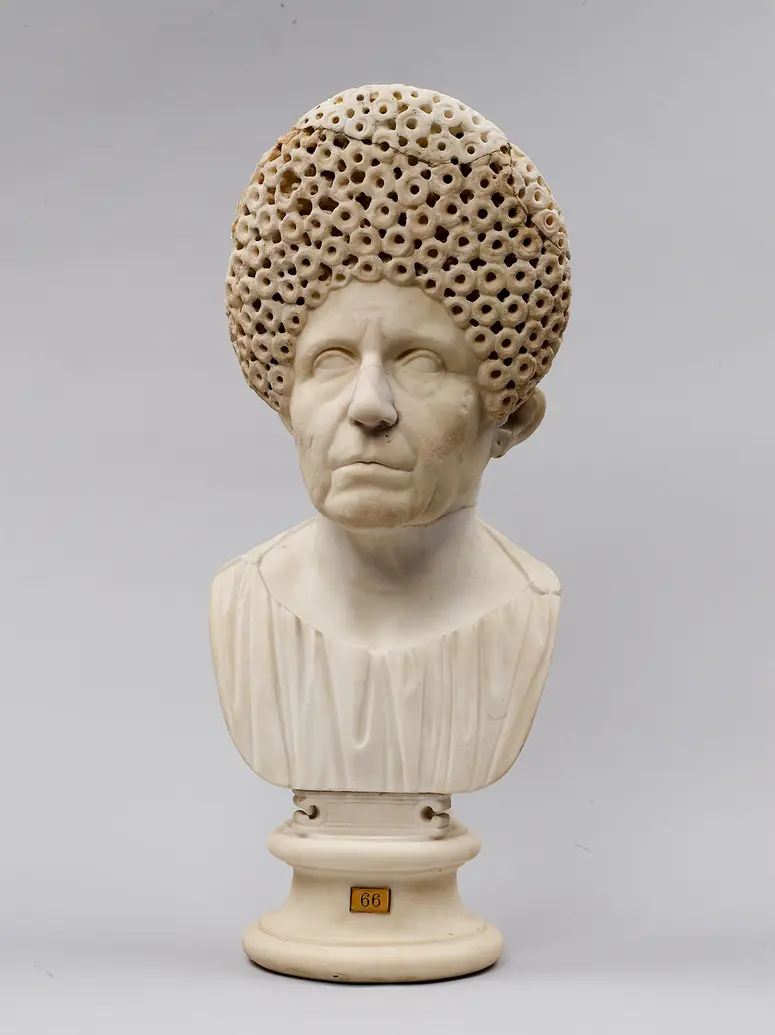
Porträtkopf, Büste ergänzt: Matrone Römisch, Frühe Kaiserzeit 3. Viertel 1. Jh. n. Chr.

Grabdenkmal: Grabstein mit fünf Porträtbüsten Römisch, Frühe Kaiserzeit 2. Drittel 1. Jh. n. Chr.
Gemme: Porträtbüste des Mithradates I. von Parthia Griechisch, Hellenistisch 2. - 3. Viertel 2. Jh. v. Chr.
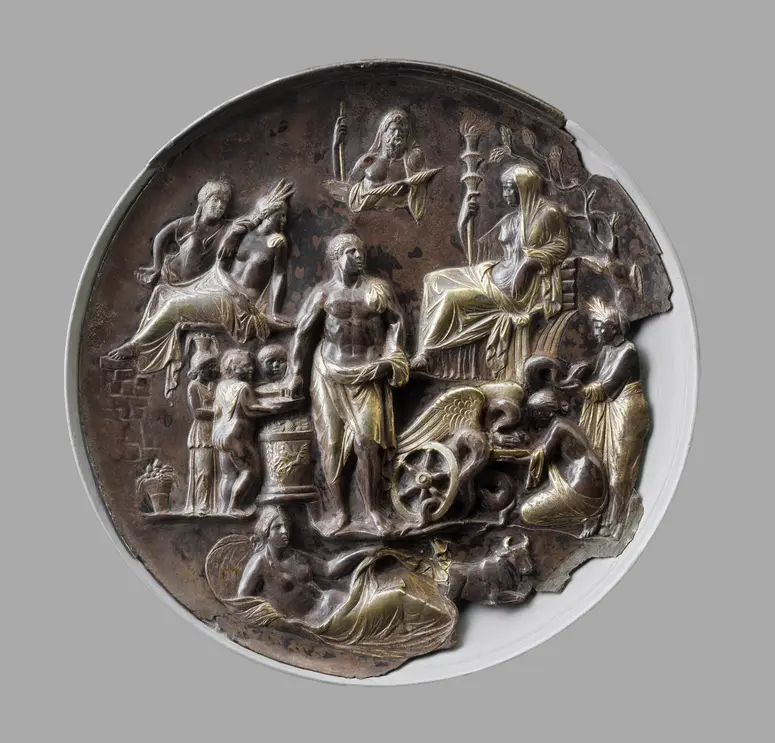
Schale: Silberschale mit Allegorie der Fruchtbarkeit Römisch, Hellenistisch - Frühe Kaiserzeit 2. Hälfte 1. Jh. v. Chr.
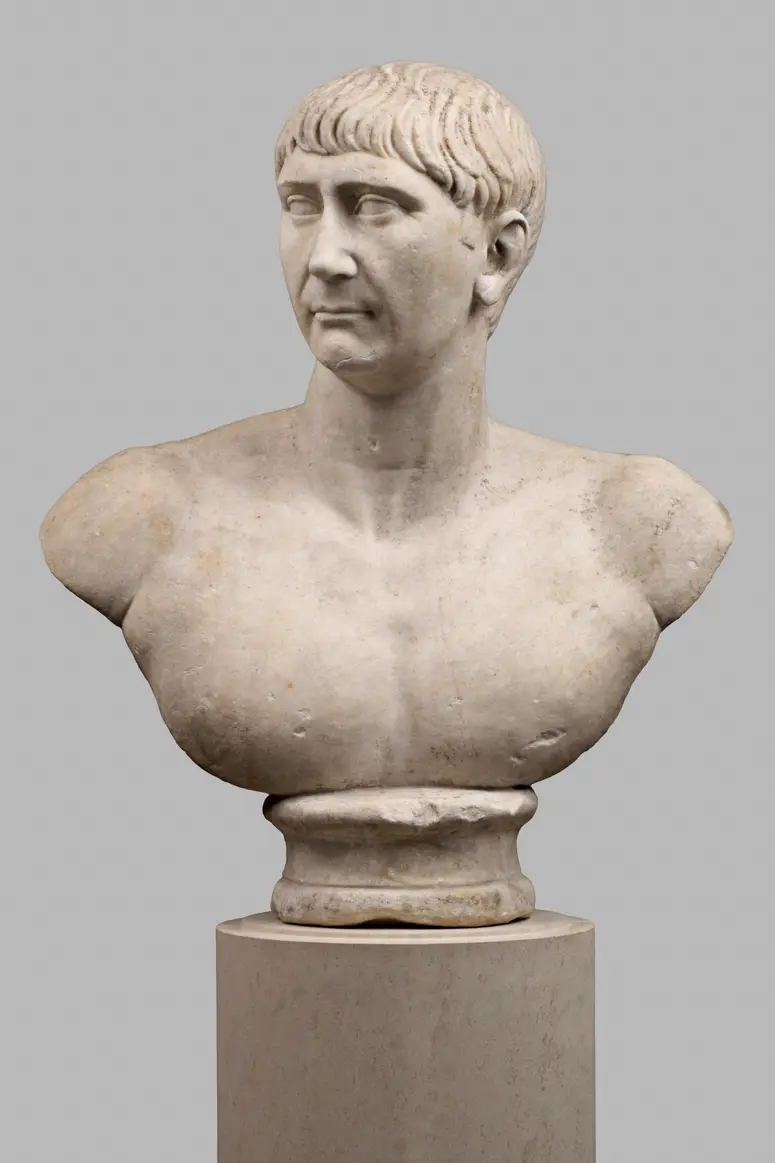
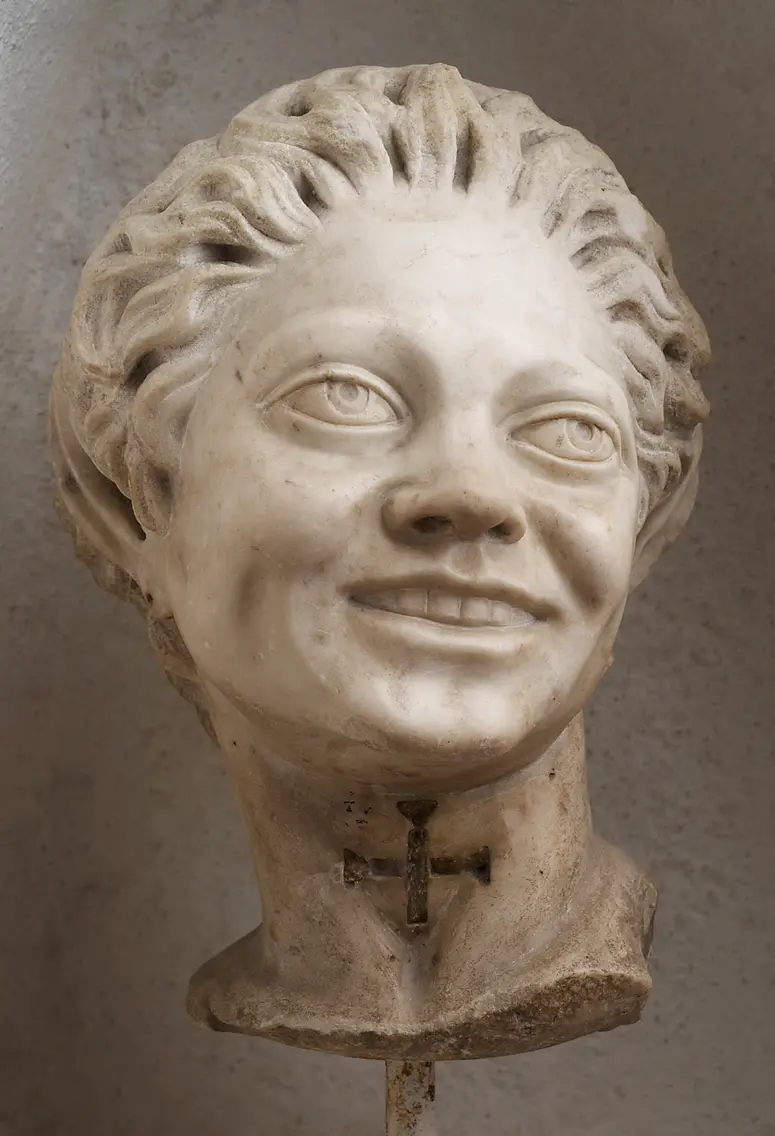
Satyr, Büste, Kopf, Porträtbüste, Porträtkopf, Faun 2. Hälfte 16. Jahrhundert
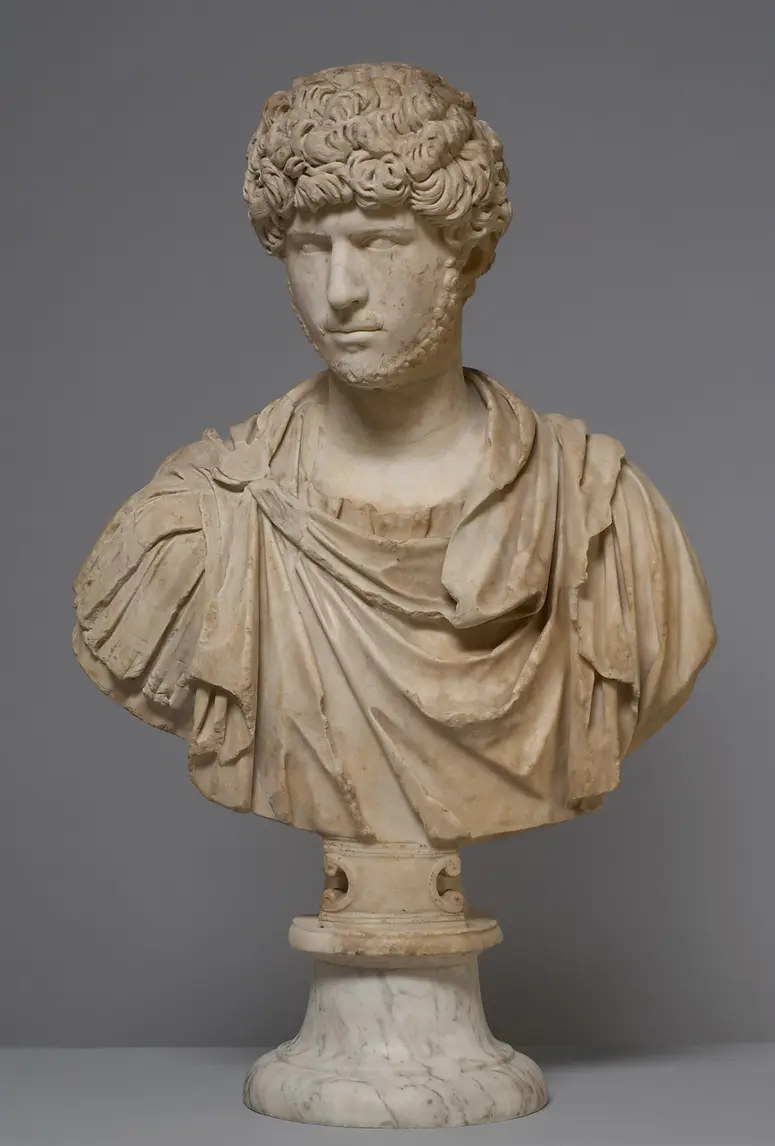
Porträtkopf, antike Büste ergänzt: Kaiser Lucius Verus Römisch, Mittlere Kaiserzeit Mitte 2. Jahrhundert