Kaiser Lucius Verus
Mitte 2. Jahrhundert
In 1875 this Roman bust depicting the Emperor Lucius Verus (A.D. 130–169) was identified in the inventory of the Collection of Greek and Roman Antiquities and in the painting executed by the Flemish artist David Tenier the Younger in 1651; it depicts Archduke Leopold Wilhelm (1614–1662) in his gallery in Brussels (GG_739). But the reason for the bust’s prominent place in Teniers’ composition was discovered only recently: because of the family likeness between Marcus Aurelius and his son it had been erroneously identified in 1659 as a portrait of the former, the celebrated “philosopher king” regarded as a model prince since the Renaissance. The bust, still virtually unaltered, is a typical Renaissance pastiche. The antique bust of Lucius Verus, with its characteristic short beard and curls falling over a low forehead, is joined with the fragment of an – originally unconnected - ancient armoured bust and supplemented by a pseudo-ancient round Baroque base.
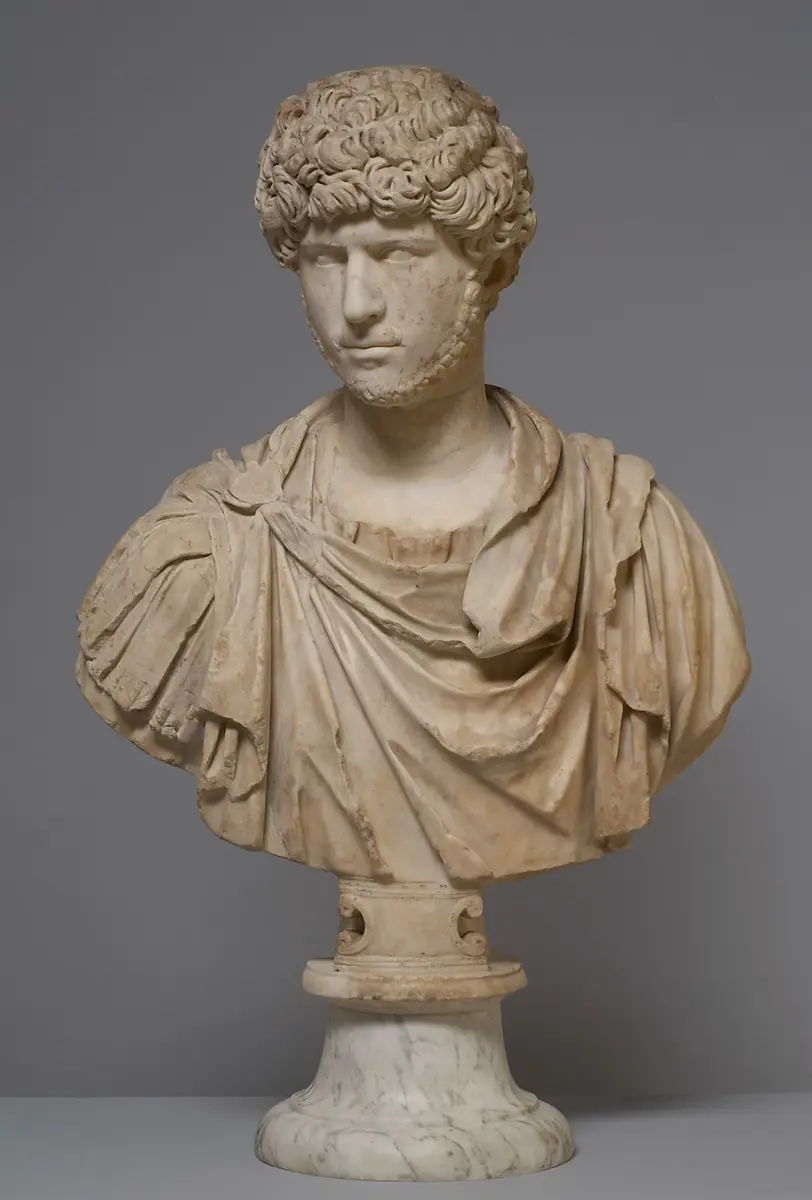
In 1875 this Roman bust depicting the Emperor Lucius Verus (A.D. 130–169) was identified in the inventory of the Collection of Greek and Roman Antiquities and in the painting executed by the Flemish artist David Tenier the Younger in 1651; it depicts Archduke Leopold Wilhelm (1614–1662) in his gallery in Brussels (GG_739). But the reason for the bust’s prominent place in Teniers’ composition was discovered only recently: because of the family likeness between Marcus Aurelius and his son it had been erroneously identified in 1659 as a portrait of the former, the celebrated “philosopher king” regarded as a model prince since the Renaissance. The bust, still virtually unaltered, is a typical Renaissance pastiche. The antique bust of Lucius Verus, with its characteristic short beard and curls falling over a low forehead, is joined with the fragment of an – originally unconnected - ancient armoured bust and supplemented by a pseudo-ancient round Baroque base.
Time:
Mitte 2. Jahrhundert
Object Name
Porträtkopf, antike Büste ergänzt
Culture
Römisch
Location of discovery:
Unbekannt
Material/technology:
Marmor
Dimensions:
H. x B. x T.: 100 cm × 61 cm × 29,7 cm
Copyright
Kunsthistorisches Museum, Antikensammlung
Invs.
Antikensammlung, I 115
Provenance
Schatzkammer; Erzherzog Leopold Wilhelm, 1660 in der Stallburg nachweisbar; 1800 Übernahme
Browse more
Similar items you might be interested in