Messkelch mit Patene
1438 datiert
The inscription A.E.I.O.U. and the date 1438 on the upper side of the bas indicate (that the chalice was donated by Emperor Friedrich II who used these vowels as an multivalent device (e.g. "Austria Est Imperare Orbi Universo" - It is for Austria to rule the whole world). It was understood as meaning that the House of Austria was legitimately entitled to the Kingdom of Germany and the Roman Empire. This piece and the sundial in the Kunstkammer ( KK_166), which is a dated 1438, provide the earliest testimony to the dynasty's clear consciousness of its own significance an mission in the world. The octagonal shaft-rings bear the inscription: + GOT BUES + ZU DIER AMEN (God atones for thee. Amen). The composition of the chalice juxtaposes smooth zones with zones of Ornamental decoration. The bulbous, ajouré nodus has been worked in two lavers. Its outer Layer consists of a plaited central ring, bordered on each side by a sequence of six identical ornamental leaves. Since the leases were only adapted for this purpose afterwards, and the inner mounting of the nodus does not belong to the original either, this unusual form of nodus is probably the result of modern restoration (l7th century?). The original nodus perhaps had tracery decoration or lozenge-shaped rotoli. On account of the wide distribution of this type of chalice, the artistic origin of this piece cannot be determined for certain. Similar proportions are to be found in other pieces too, above all in chalices from Nuremberg, a centre which seems to have supplied the Emperor with other implements as well (chrismatory in the Neukloster Monastery, Wiener Neustadt). The chalice was formerly kept in the Chapel of St. George, founded by Emperor Friedrich III in the Burg in Wiener Neustadt, and was not transferred to the Vienna Treasury until 1831.
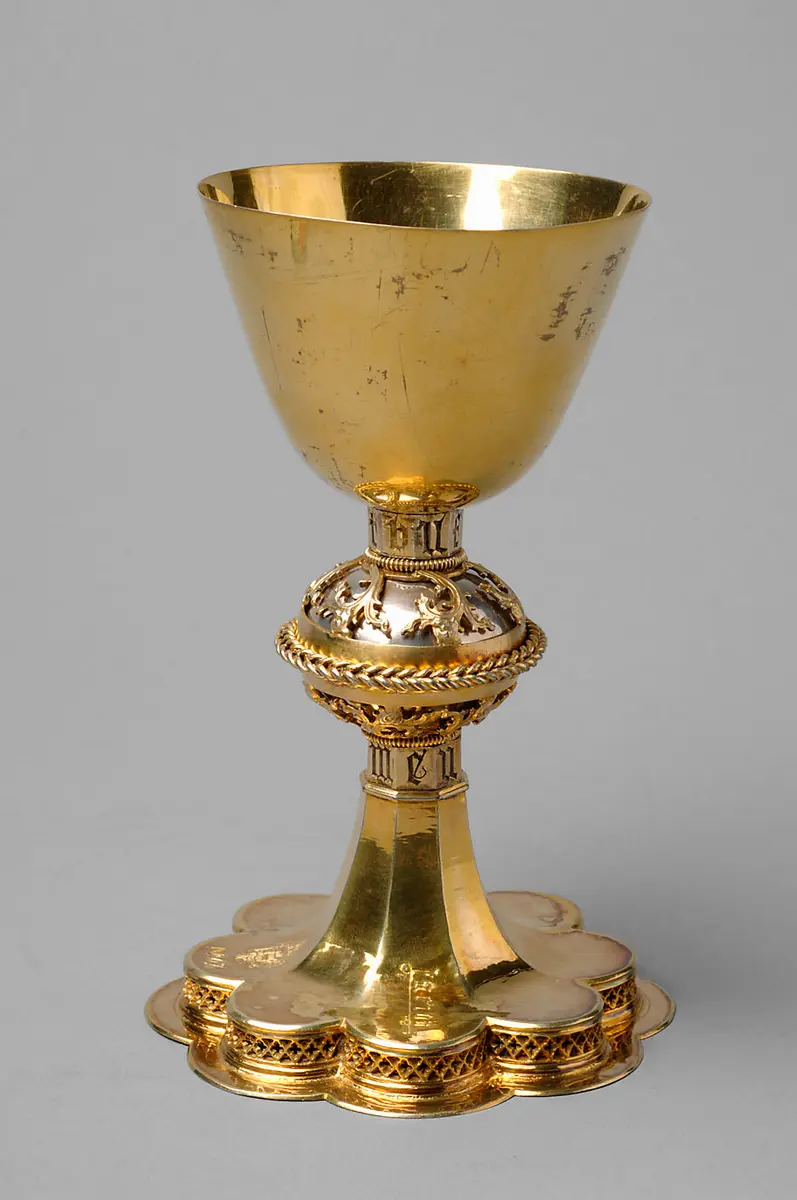
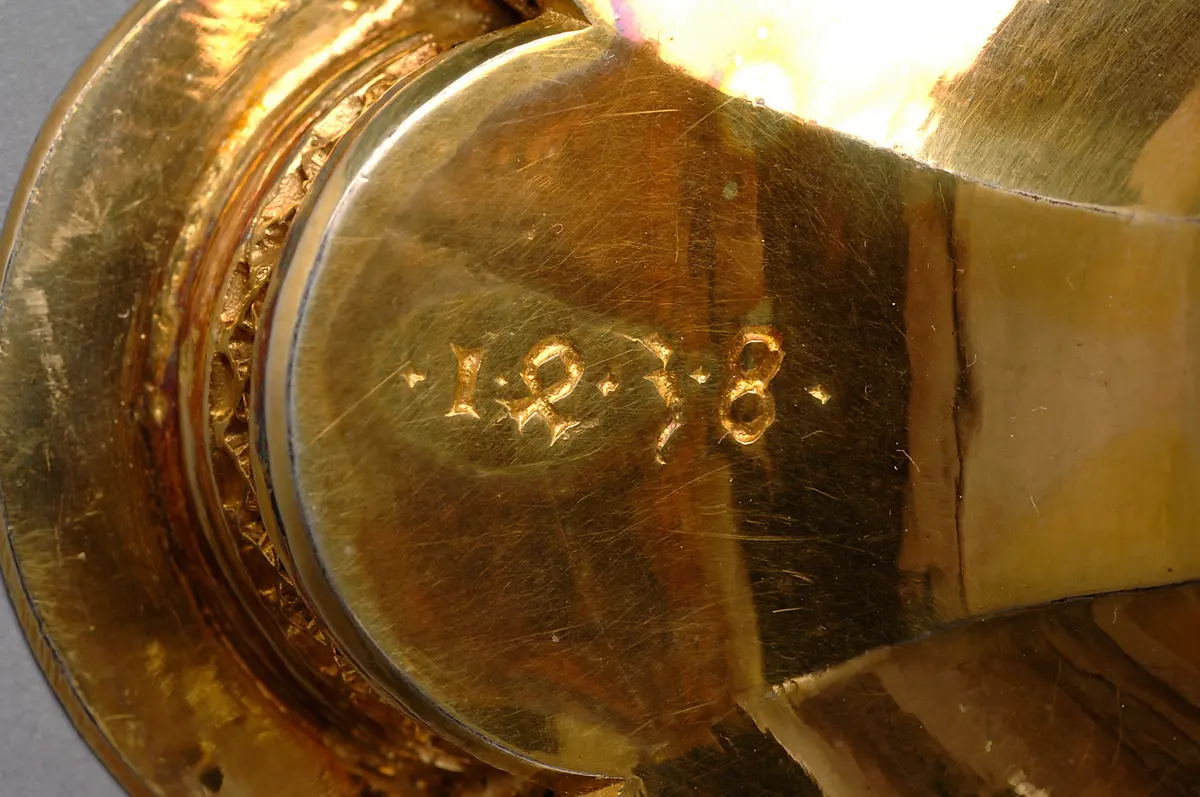
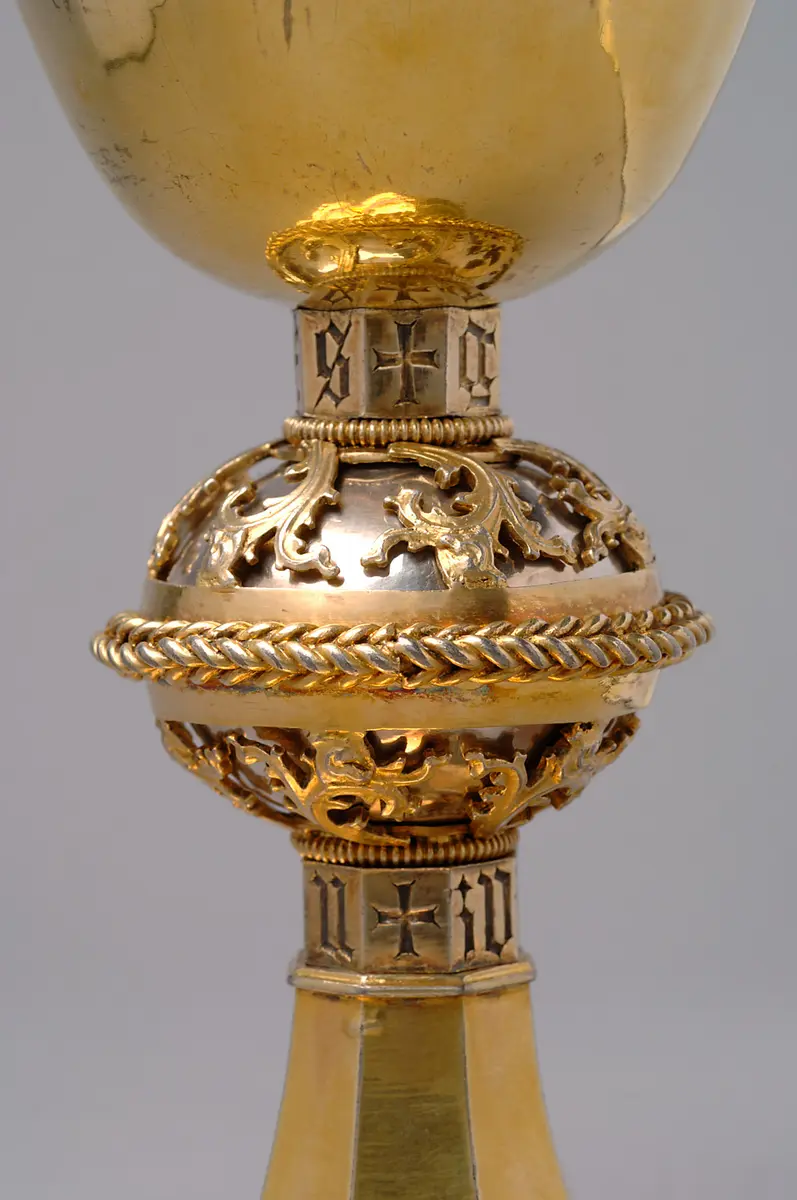
The inscription A.E.I.O.U. and the date 1438 on the upper side of the bas indicate (that the chalice was donated by Emperor Friedrich II who used these vowels as an multivalent device (e.g. "Austria Est Imperare Orbi Universo" - It is for Austria to rule the whole world). It was understood as meaning that the House of Austria was legitimately entitled to the Kingdom of Germany and the Roman Empire. This piece and the sundial in the Kunstkammer ( KK_166), which is a dated 1438, provide the earliest testimony to the dynasty's clear consciousness of its own significance an mission in the world. The octagonal shaft-rings bear the inscription: + GOT BUES + ZU DIER AMEN (God atones for thee. Amen). The composition of the chalice juxtaposes smooth zones with zones of Ornamental decoration. The bulbous, ajouré nodus has been worked in two lavers. Its outer Layer consists of a plaited central ring, bordered on each side by a sequence of six identical ornamental leaves. Since the leases were only adapted for this purpose afterwards, and the inner mounting of the nodus does not belong to the original either, this unusual form of nodus is probably the result of modern restoration (l7th century?). The original nodus perhaps had tracery decoration or lozenge-shaped rotoli. On account of the wide distribution of this type of chalice, the artistic origin of this piece cannot be determined for certain. Similar proportions are to be found in other pieces too, above all in chalices from Nuremberg, a centre which seems to have supplied the Emperor with other implements as well (chrismatory in the Neukloster Monastery, Wiener Neustadt). The chalice was formerly kept in the Chapel of St. George, founded by Emperor Friedrich III in the Burg in Wiener Neustadt, and was not transferred to the Vienna Treasury until 1831.
Time:
1438 datiert
Object Name
Liturgisches Gerät; vasa sacra; Altargerät
Culture
Süddeutsch, Nürnberg (?) (Kelch); Wien (Patene)
Material/technology:
Silber, teilweise vergoldet, getrieben, gegossen und graviert
Dimensions:
H. 19 cm, Dm. 12 cm
Patene: Dm. 14,6 cm
Inscribed
"a e i o u"; "1438"; "+got bves+zv dier amen" (Kelch)
Stamp / markings
Wr. Repunze 1806/07 (Kelch und Patene)
Copyright
Kunsthistorisches Museum, Geistliche Schatzkammer
Invs.
Schatzkammer, GS B 1
Browse more
Similar items you might be interested in
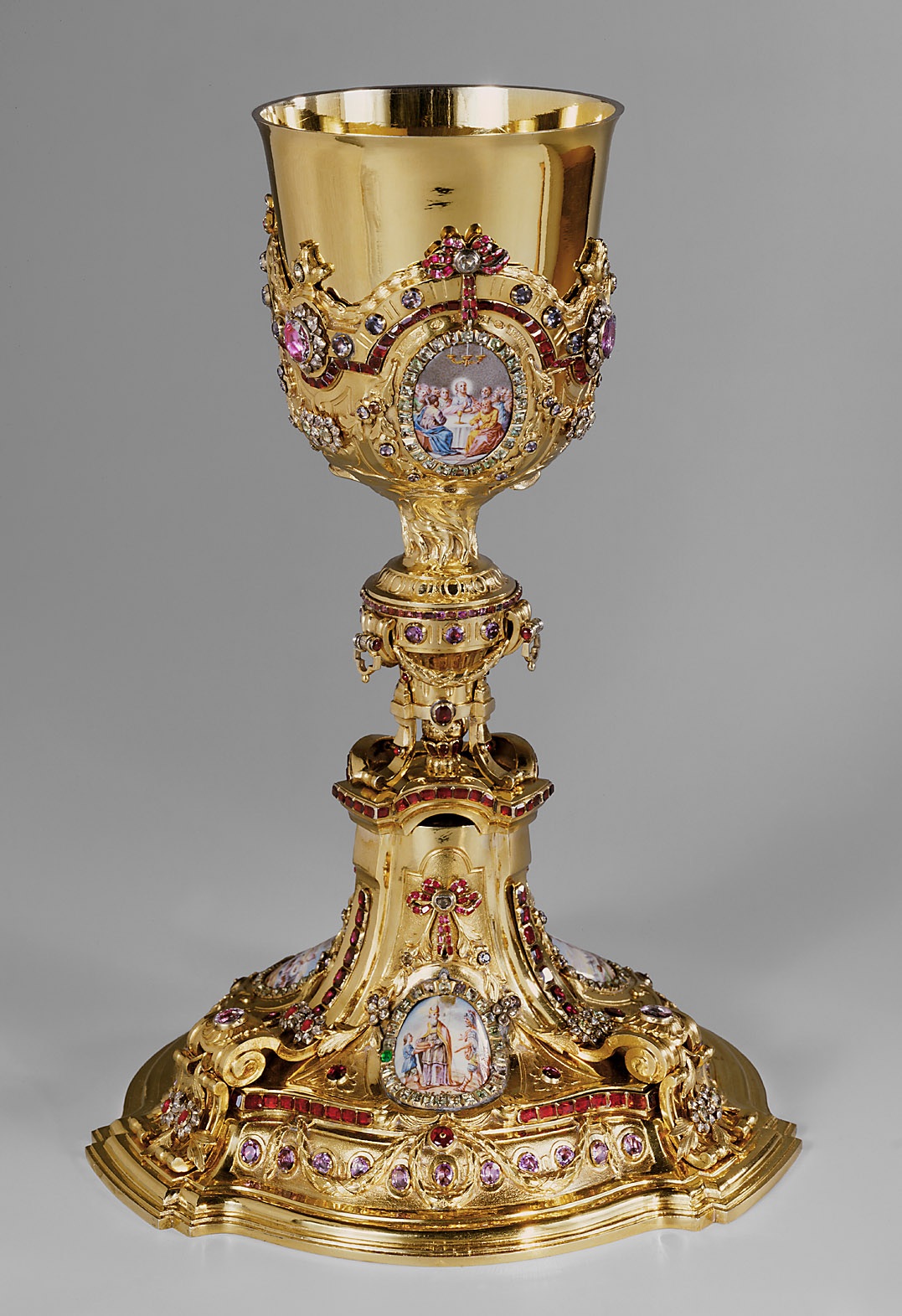
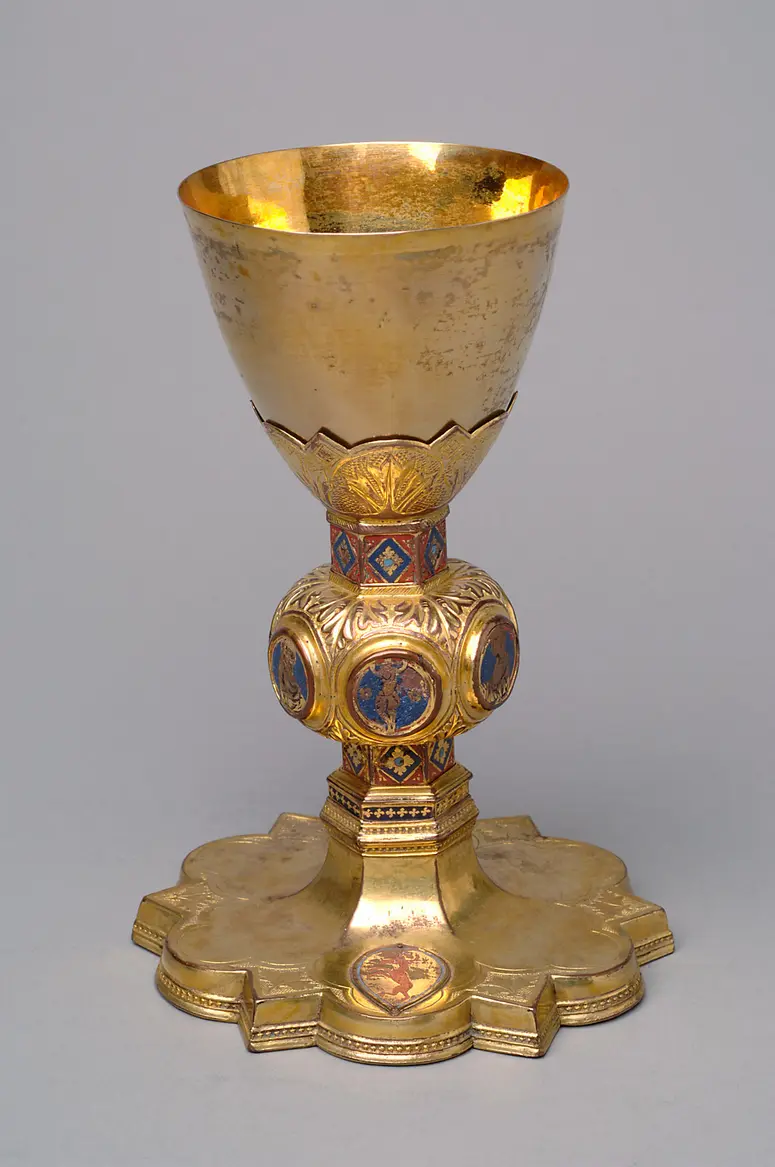
Messkelch mit Patene aus dem Besitz Kaiser Maximilians von Mexiko Tondino di di Guerrino, Tondino 2. Viertel 14. Jahrhundert, Ende 19. Jahrhundert
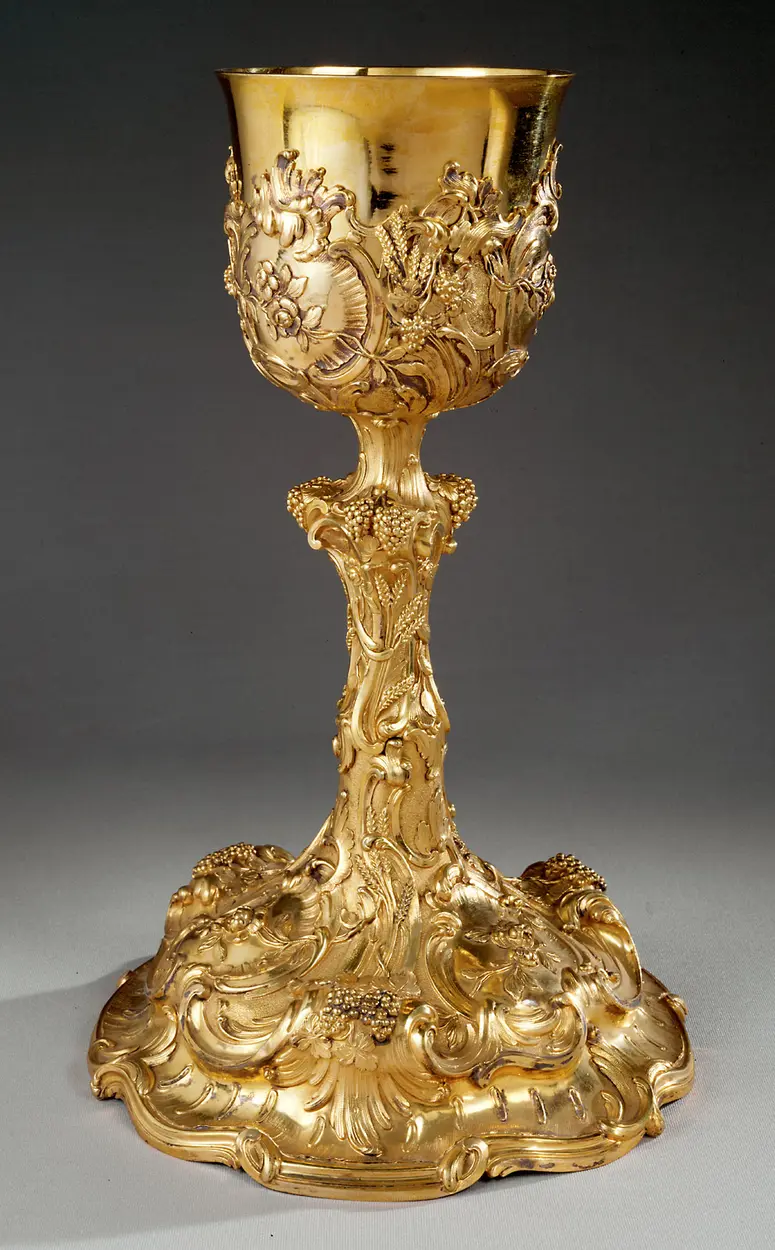
Messkelch mit Patene Johann Michael Heinisch 1767
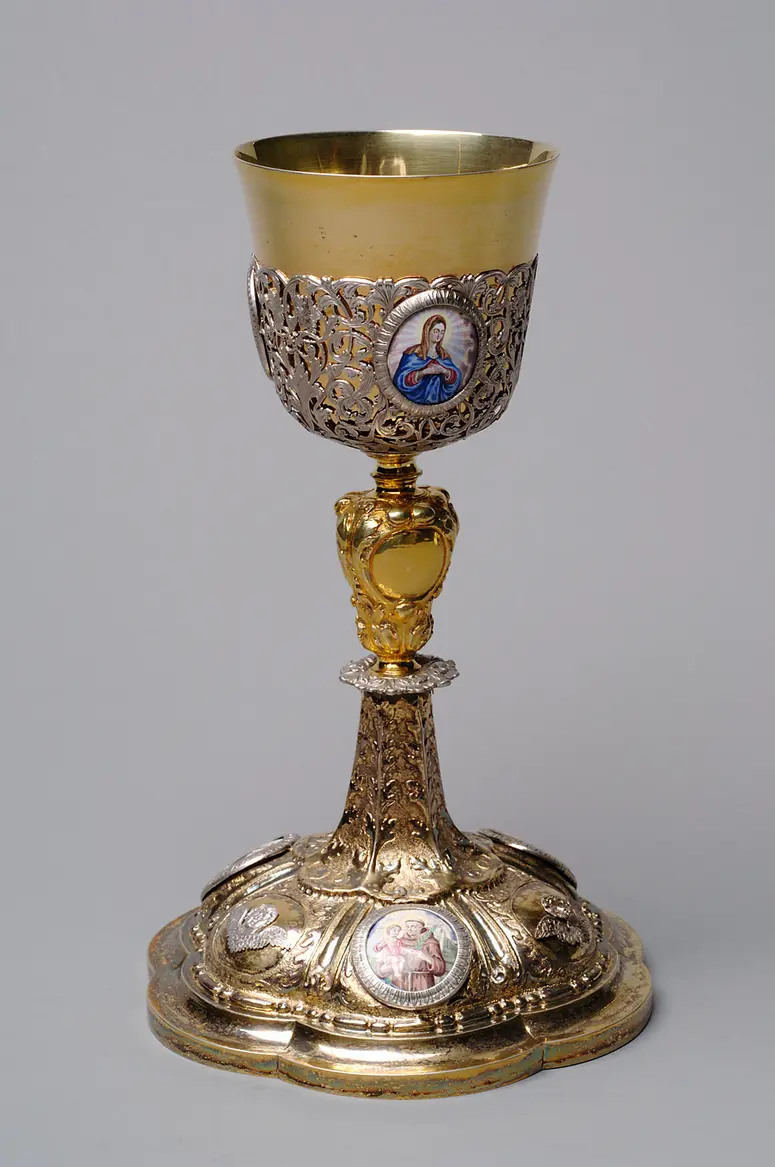
Messkelch mit dem Wappen Kaiser Karls VI., mit Patene nach 1711
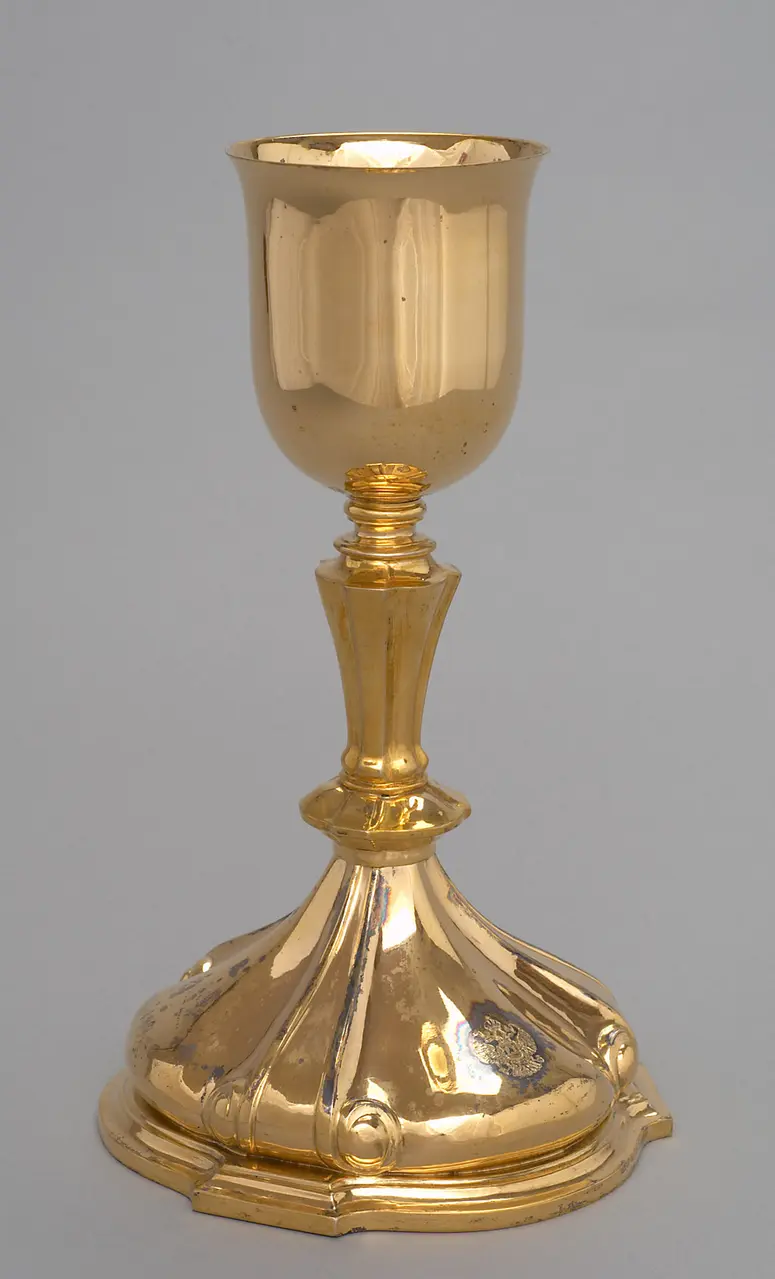
Messkelch mit dem Wappen Kaiser Ferdinands I. von Österreich, mit Patene Heinrich Kern 1840
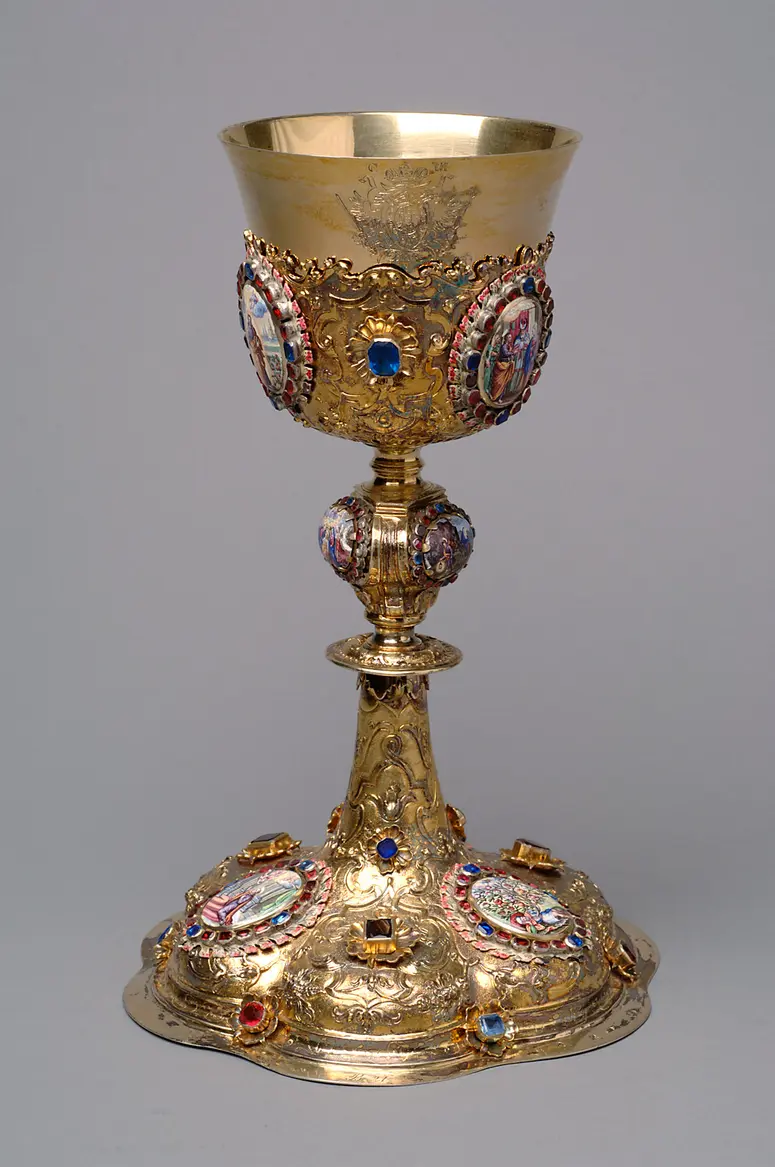
Messkelch mit dem Wappen Kaiser Karls VI. mit Patene Ludwig Schneider um 1708/10 (Kelch),1711/40 (Patene)
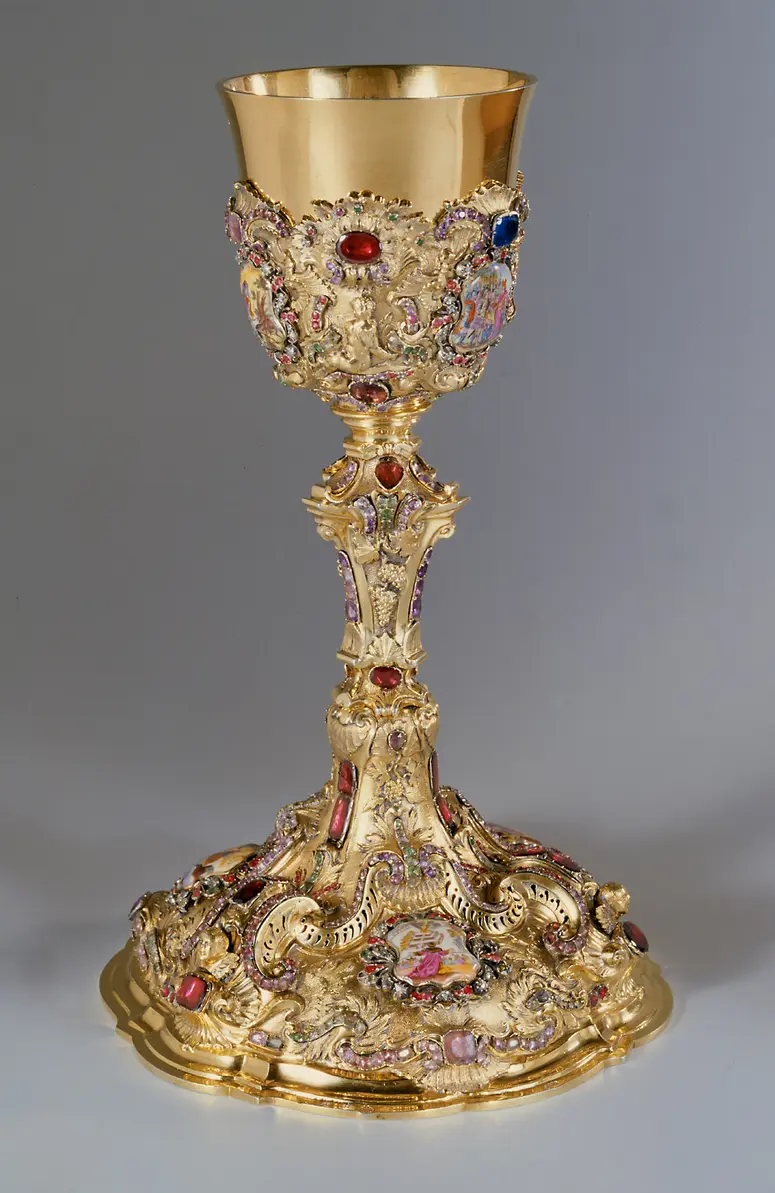
Messkelch mit dem Wappen des Bischofs von Großwardein, Paul Graf Forgach, mit Patene 1747
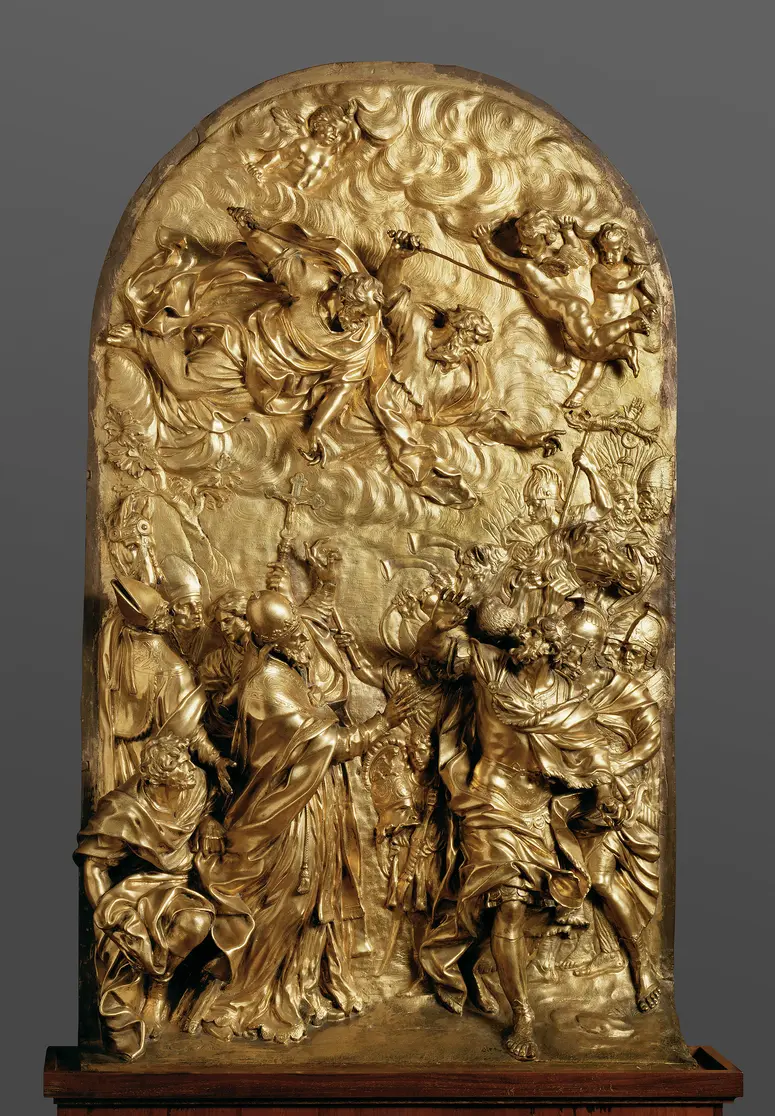
Die Begegnung von Papst Leo des Großen mit dem Hunnenkönig Attila Ercole Ferrata nach 1657
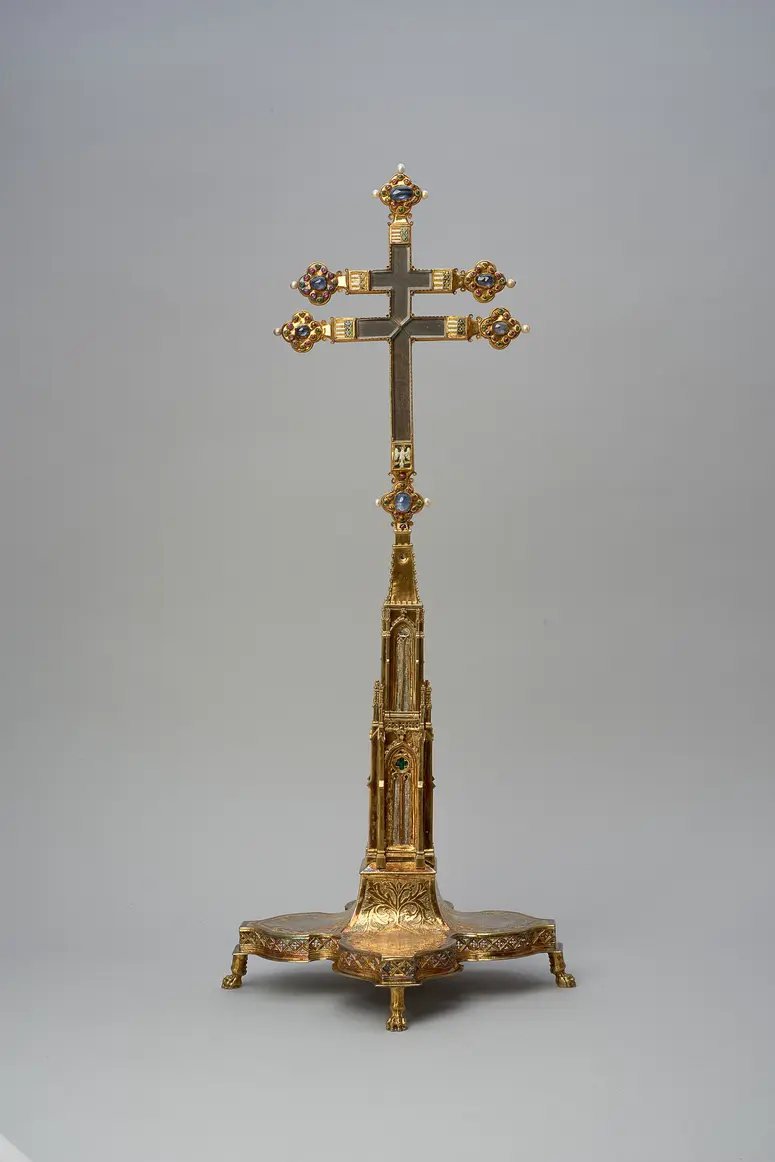
Reliquienkreuz König Ludwigs des Großen von Ungarn; sogenanntes Anjou - Kreuz Pietro di Simone da Siena 1370/82
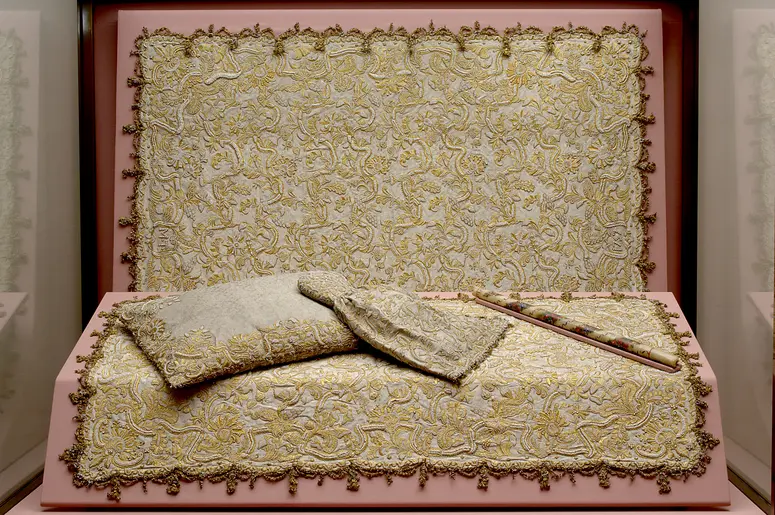
Die von Maria Theresia gestiftete Taufgarnitur 1757 datiert
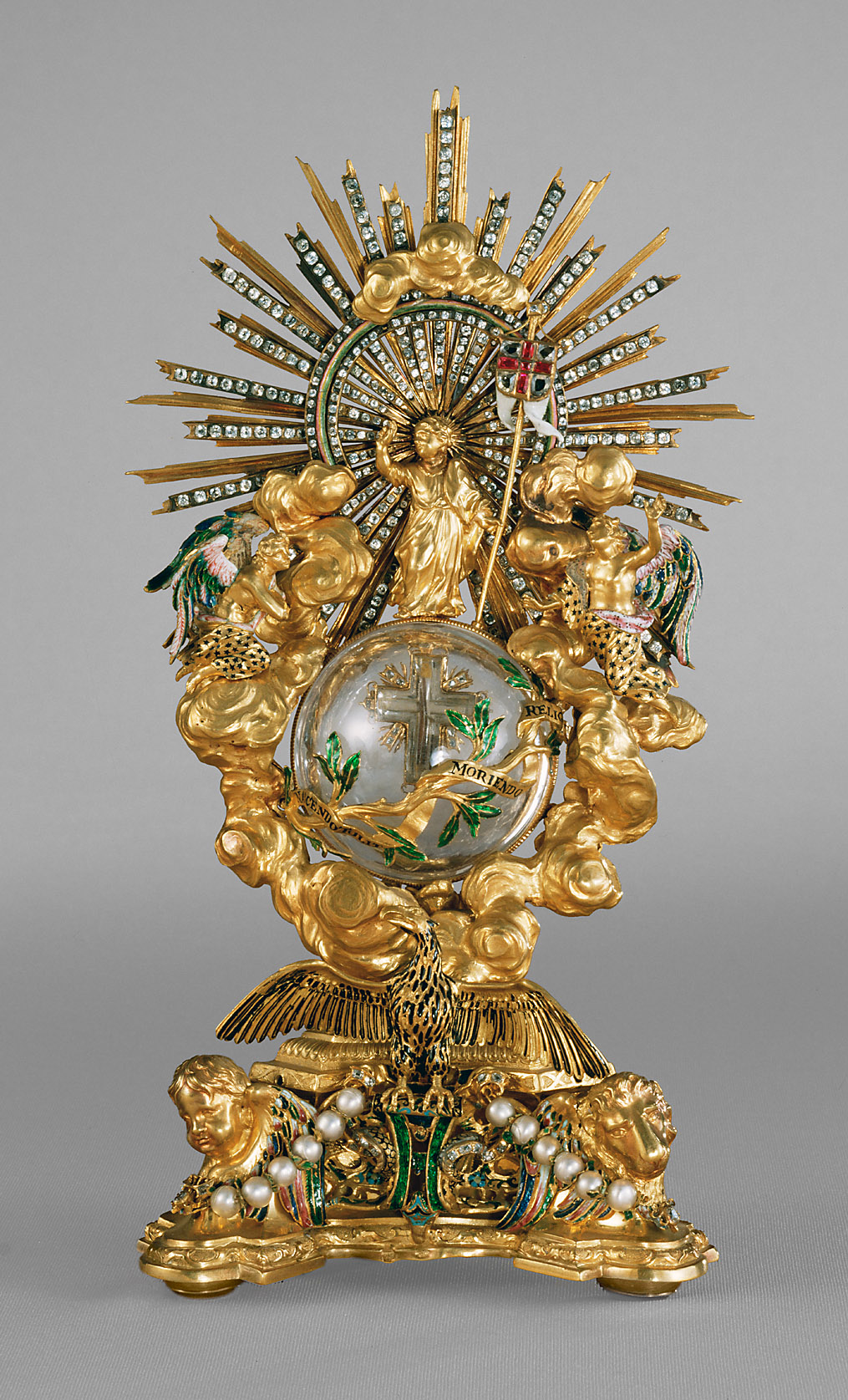
Kreuzpartikel-Pacificale: Christus als Weltenherrscher Johann Baptist Känischbauer von Hohenried 1726 datiert
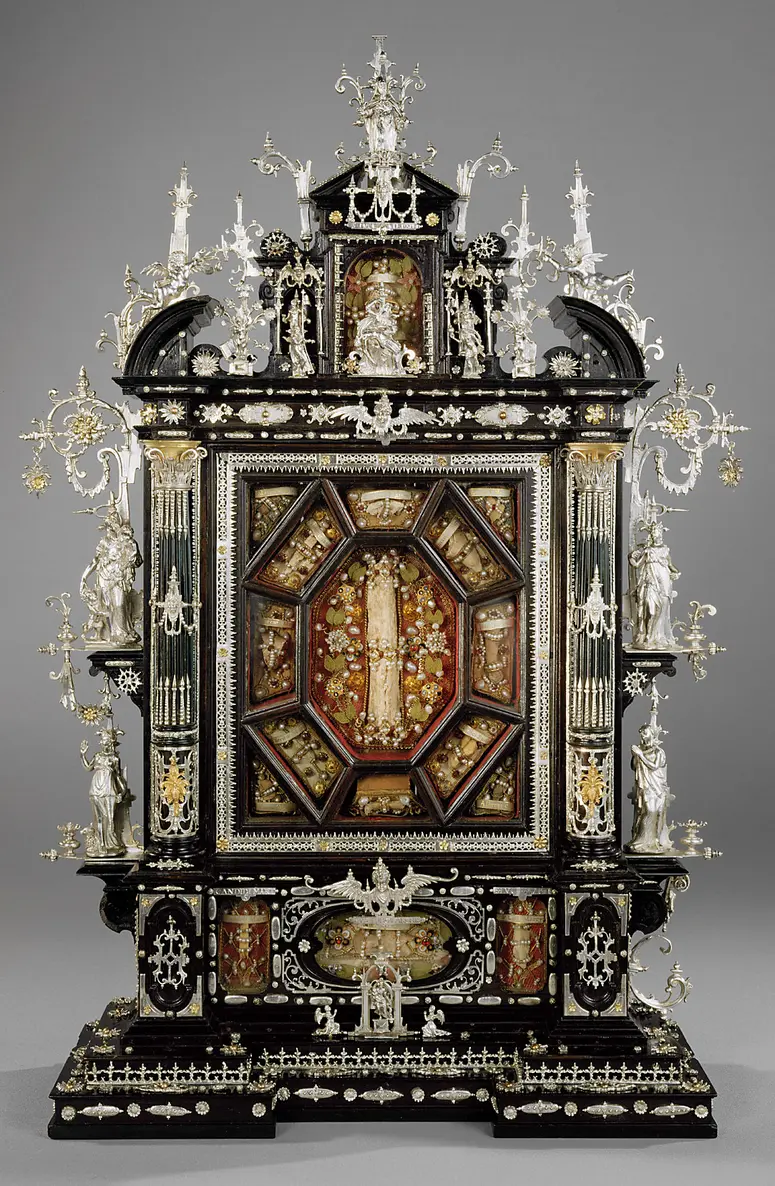
Reliquienostensorium Matthäus Walbaum um 1600/05

Reliquienkassette Georg (Joris) Hoefnagel Ende 16. Jahrhundert
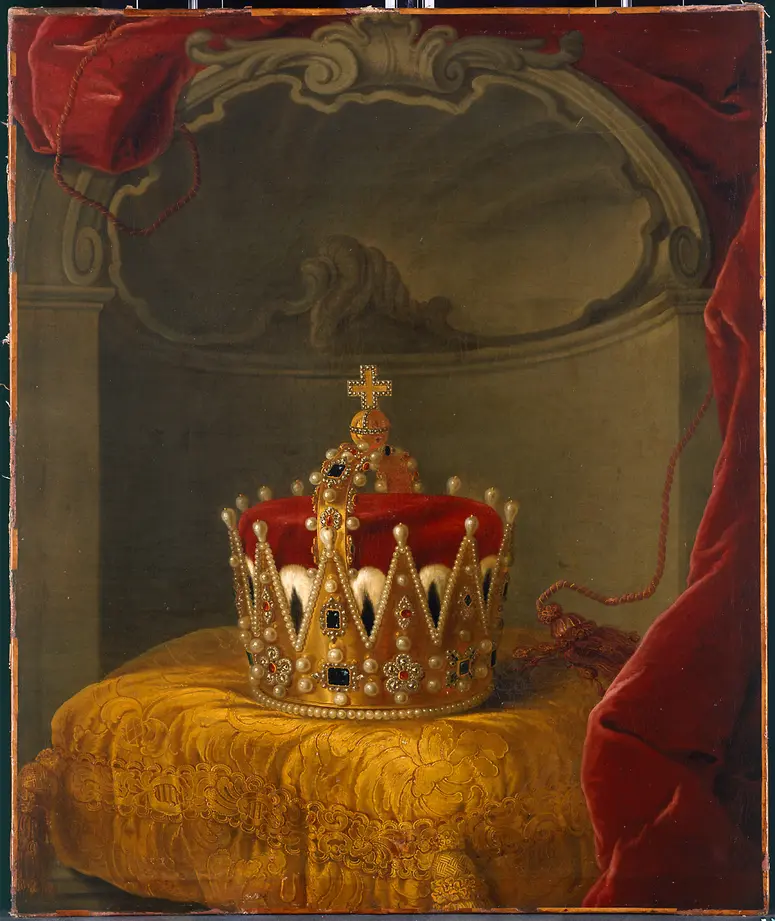
Darstellung der Barockkopie des österreichischen Erzherzoghutes um 1765
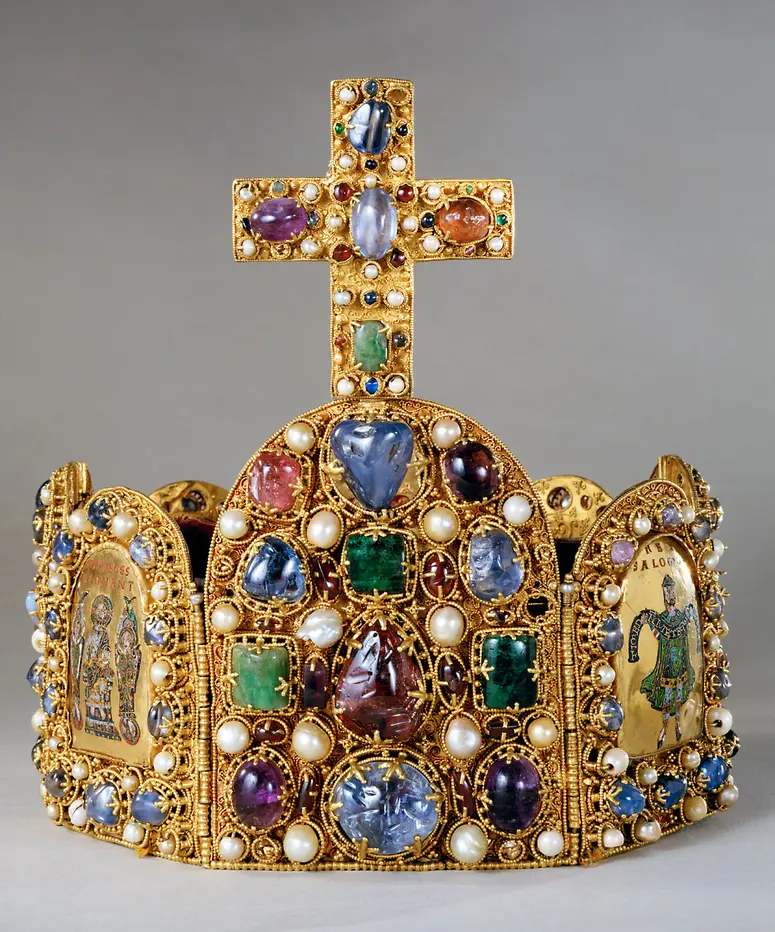
Die Reichskrone 2. Hälfte 10. Jahrhundert; Kronenkreuz Hinzufügung des frühen 11. Jahrhunderts
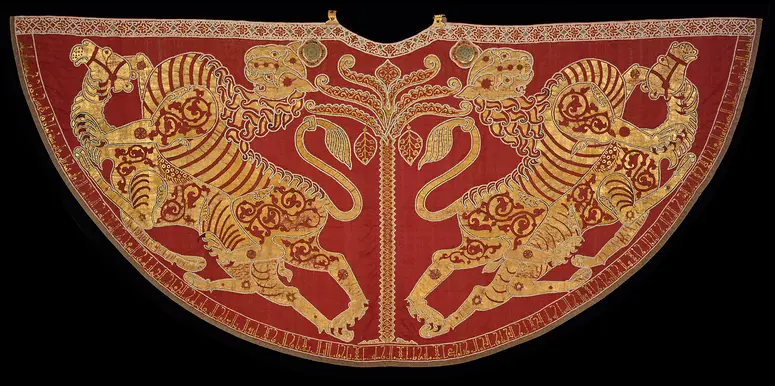
Der Krönungsmantel Palermo, Königliche Hofwerkstätten 1133/1134
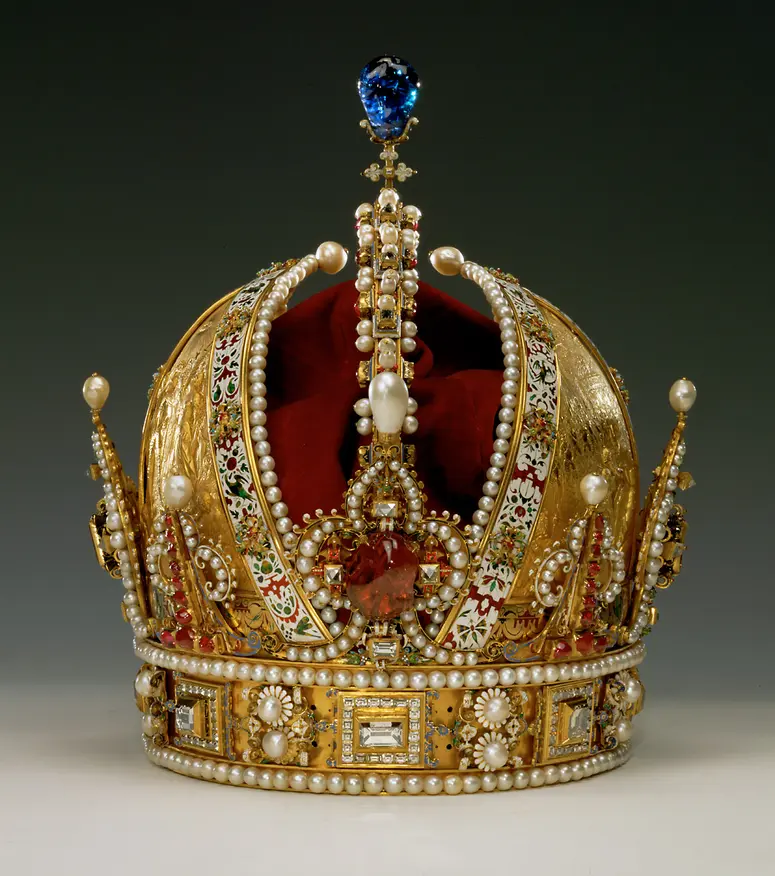
Die Krone Kaiser Rudolfs II., später Krone des Kaisertums Österreichs Jan Vermeyen 1602
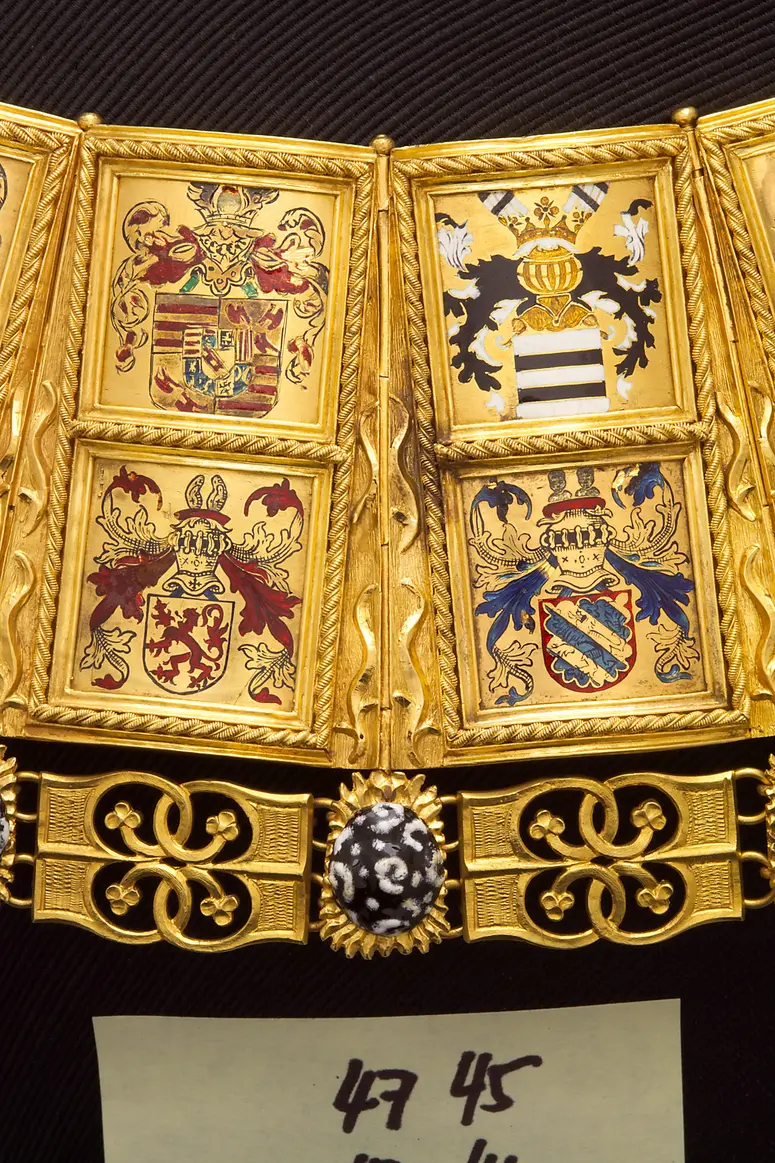
Die Potence (Wappenkette) für den Herold des Ordens vom Goldenen Vlies um 1517