Die Reichskrone
2. Hälfte 10. Jahrhundert; Kronenkreuz Hinzufügung des frühen 11. Jahrhunderts
Eight hinged plates form the octagonal body of the imperial crown. Four smaller plates bear pictorial representations from the Old Testament in cloisonné enamel; the four main plates of differing sizes are decorated solely by precious stones and pearls in raised settings. The programmatic theological concept can be recognised in the more prominent of the four stone-encrusted plates. The twelve precious stones on the brow plate correspond to the number of the Apostles. The twelve stones on the neck plate refer to the pectoral of the Jewish high priest; they are engraved with the names of the twelve tribes of Israel. In the place of the heart-shaped sapphire at the top of the arch of the brow plate, there was once the "Waise. The stone was last mentioned in an inventory of 1550; it later vanished. The cloisonné enamel plaques are symbolically related to one another. The prophets included in these inscriptions hold banderoles inscribed with their own quotations explaining their relationship to one another. All of the biblical texts in the inscriptions are also quotations from the coronation liturgy, as laid down in the Ordo of 960. Only on the Maiestas Domini plate is there a quotation (Proverbs 8:15) instead of an inscription a revelation of the pre-existing Christ and ruler of the universe of the Old Testament. Like his son and successor, Solomon, David both king of Israel and prophet, symbolises justice; Solomon symbolises wisdom and the fear of God; Isaiah prophesies a further fifteen years of life to King Hezekiah, lying on his deathbed, for his pious prayers to God. God shows mercy to the king by prolonging his life and destroying his enemies. This crown is regarded as an imperial symbol representing in a suitably formal fashion the self-confidence of the Ottonian dynasty, endowed with the divine right of kings.
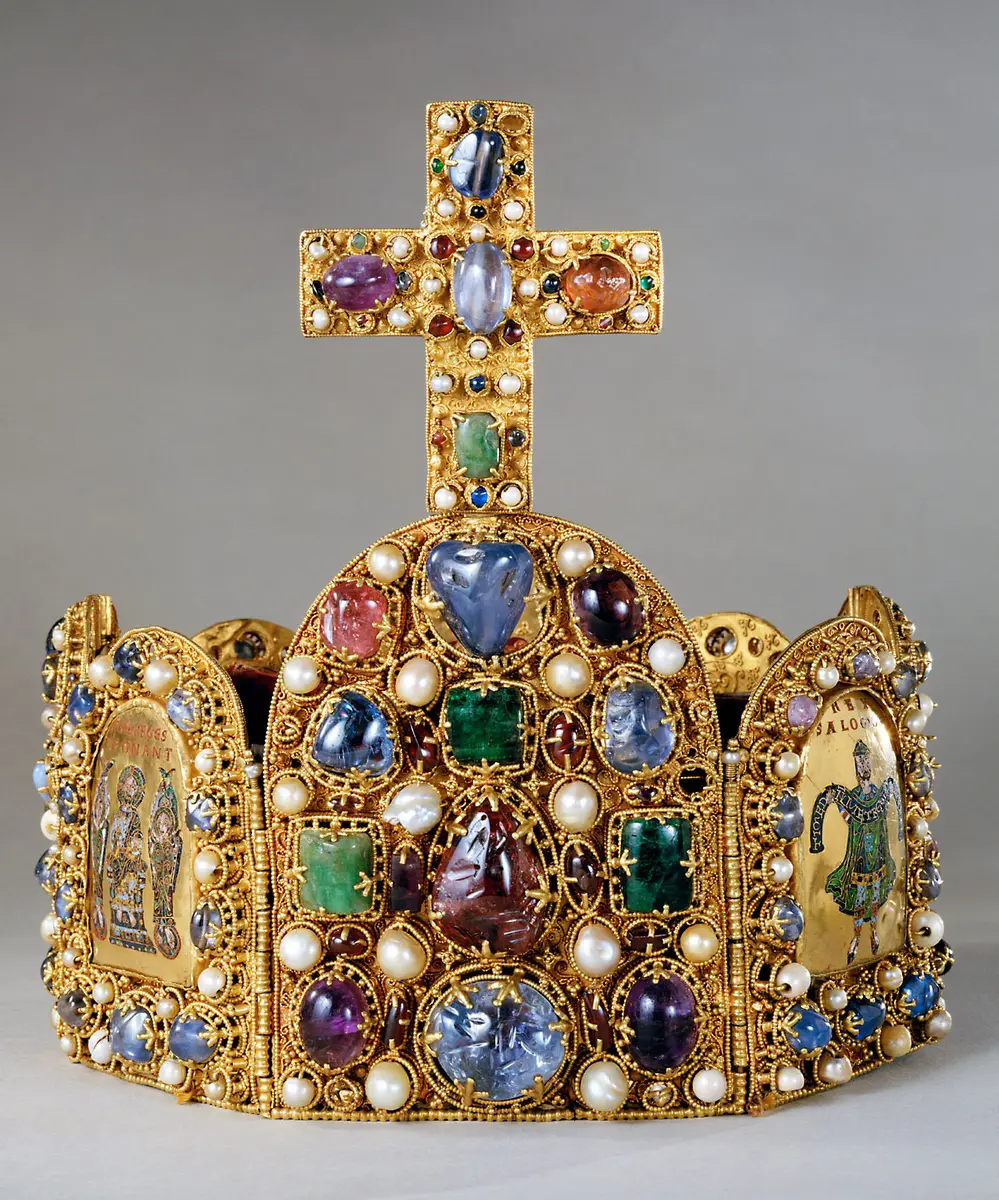
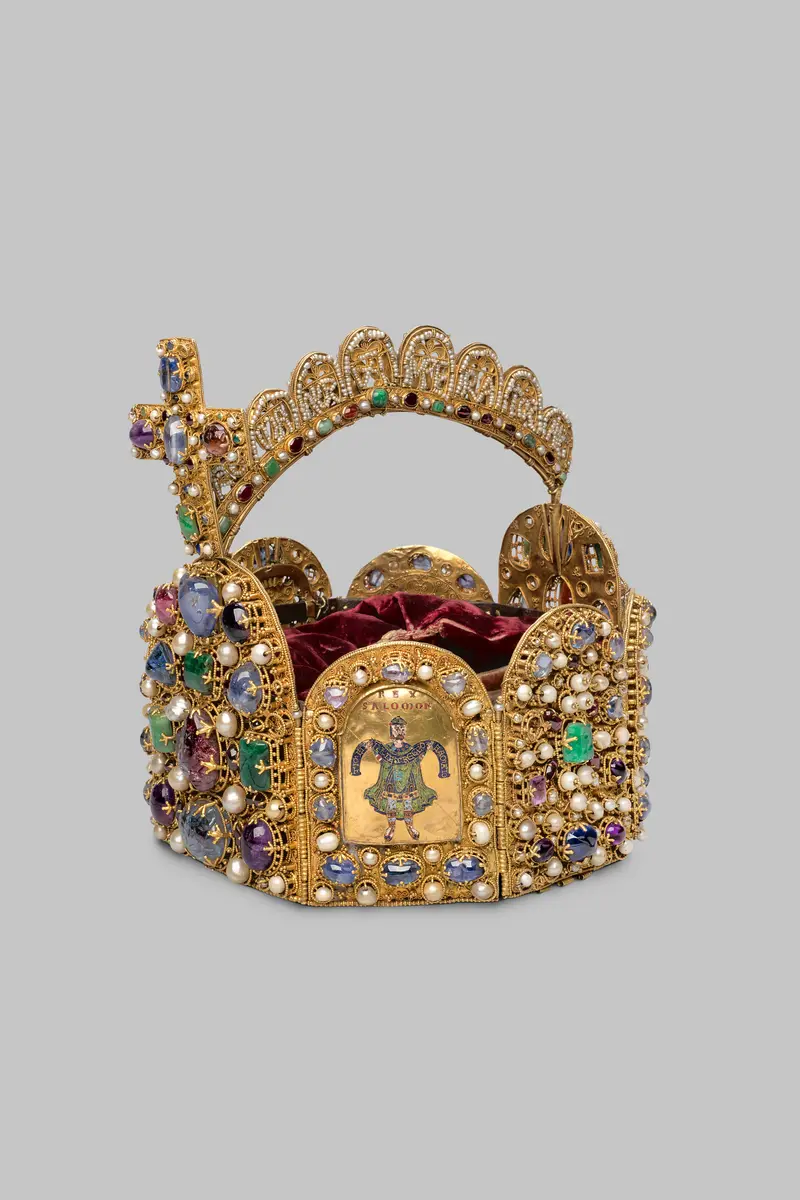
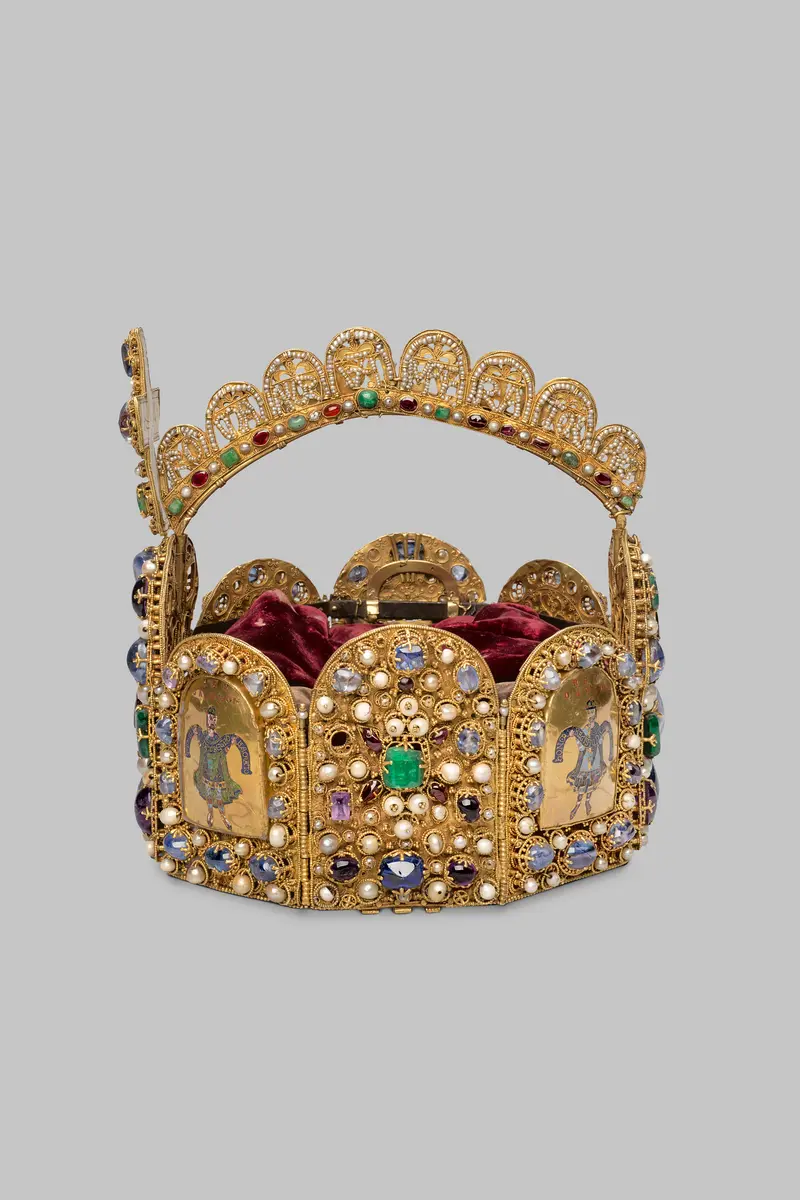
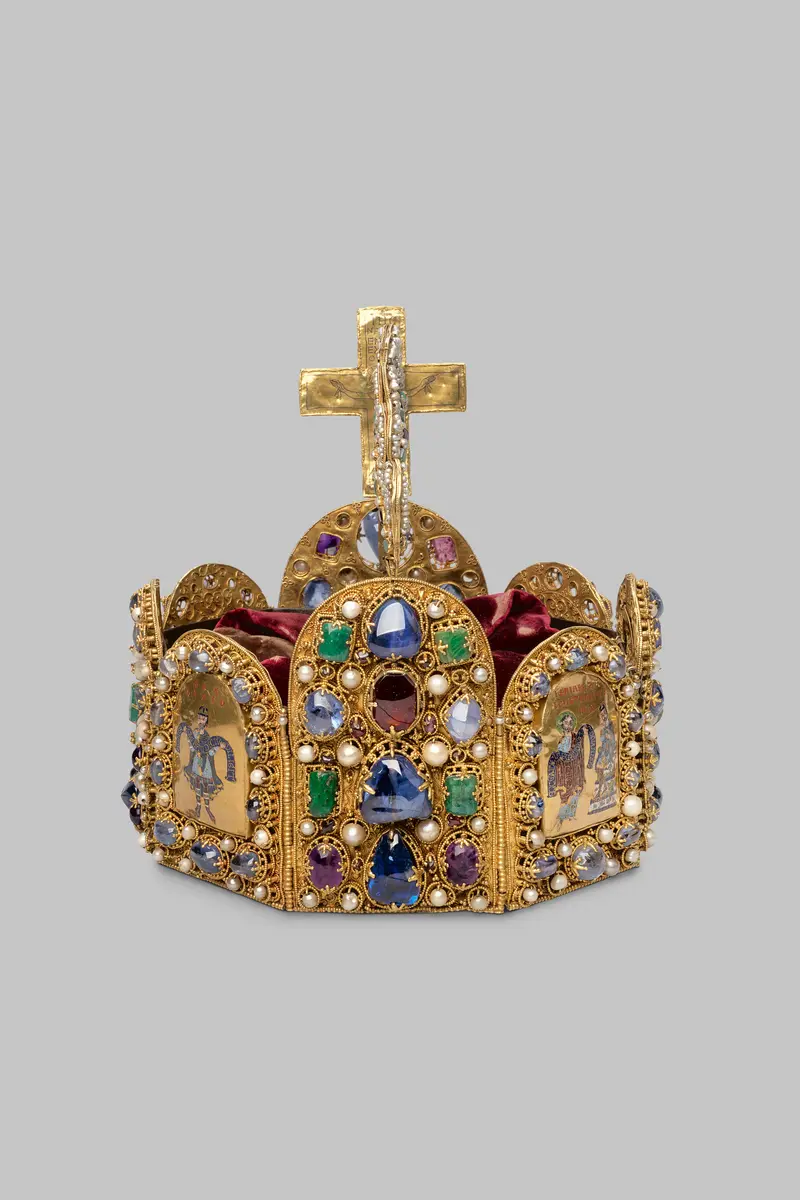
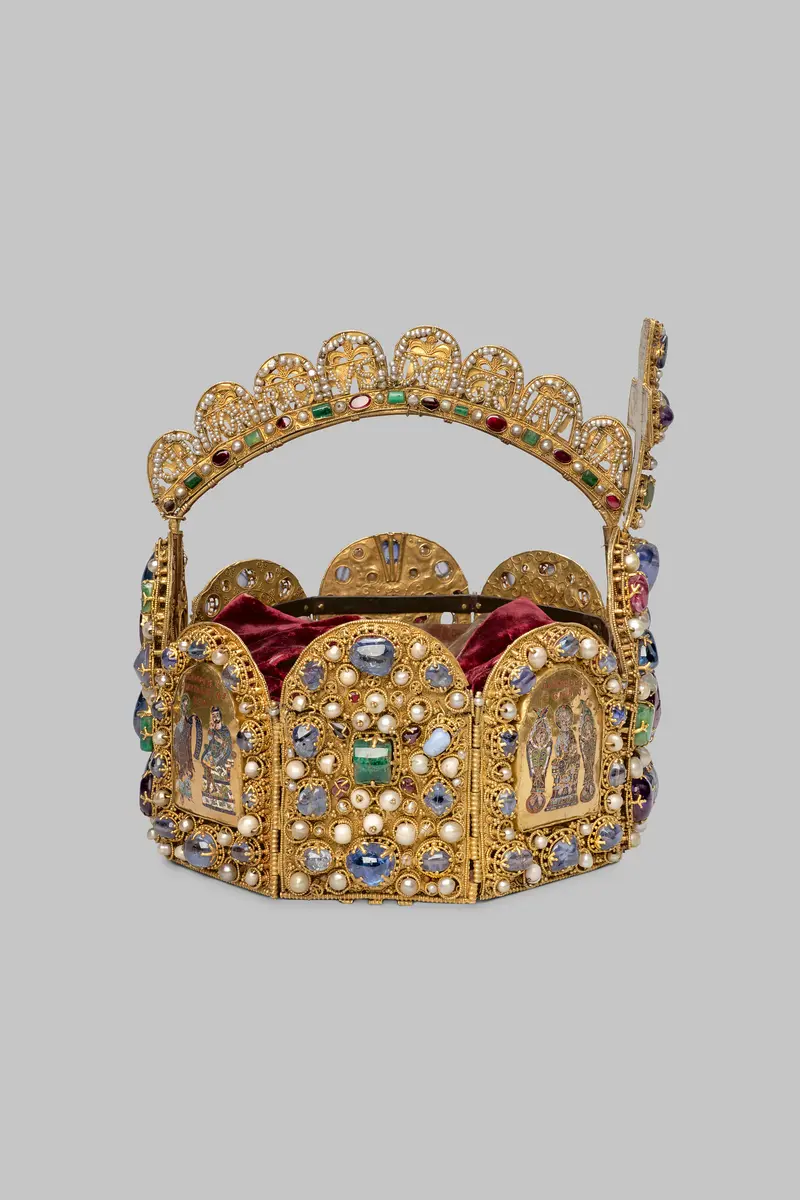
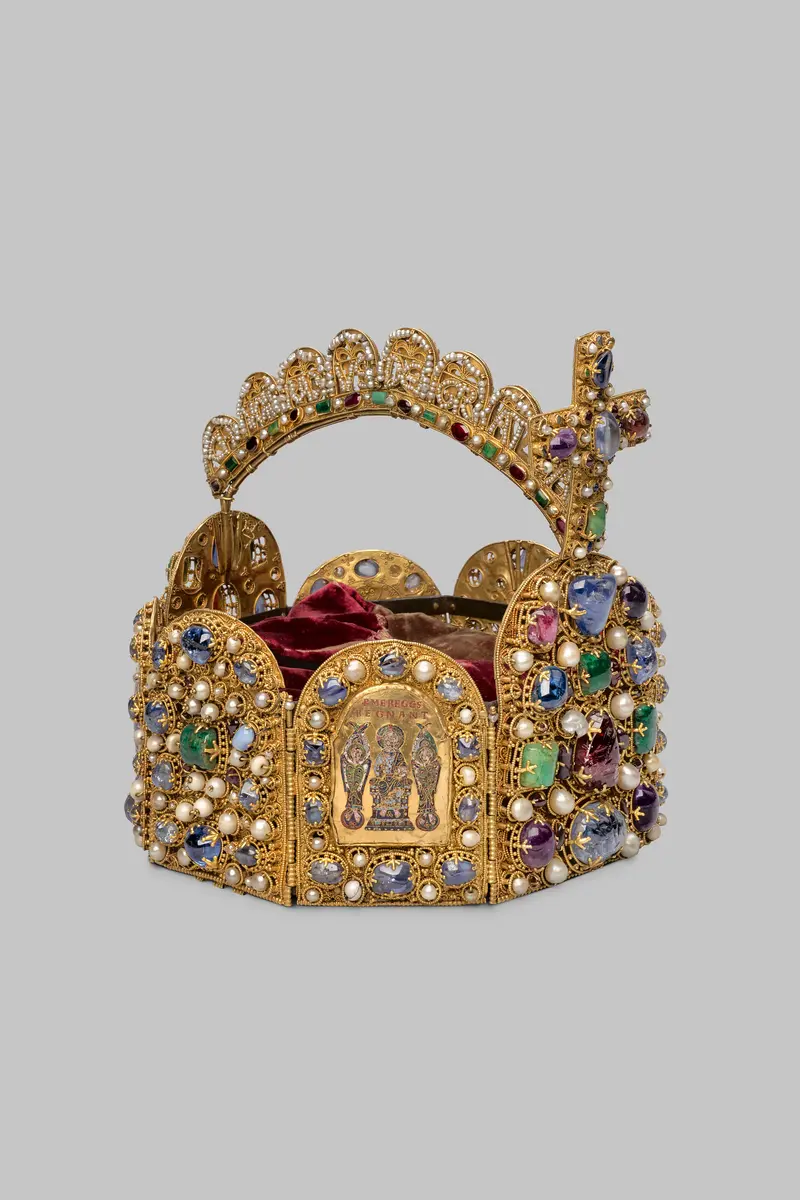
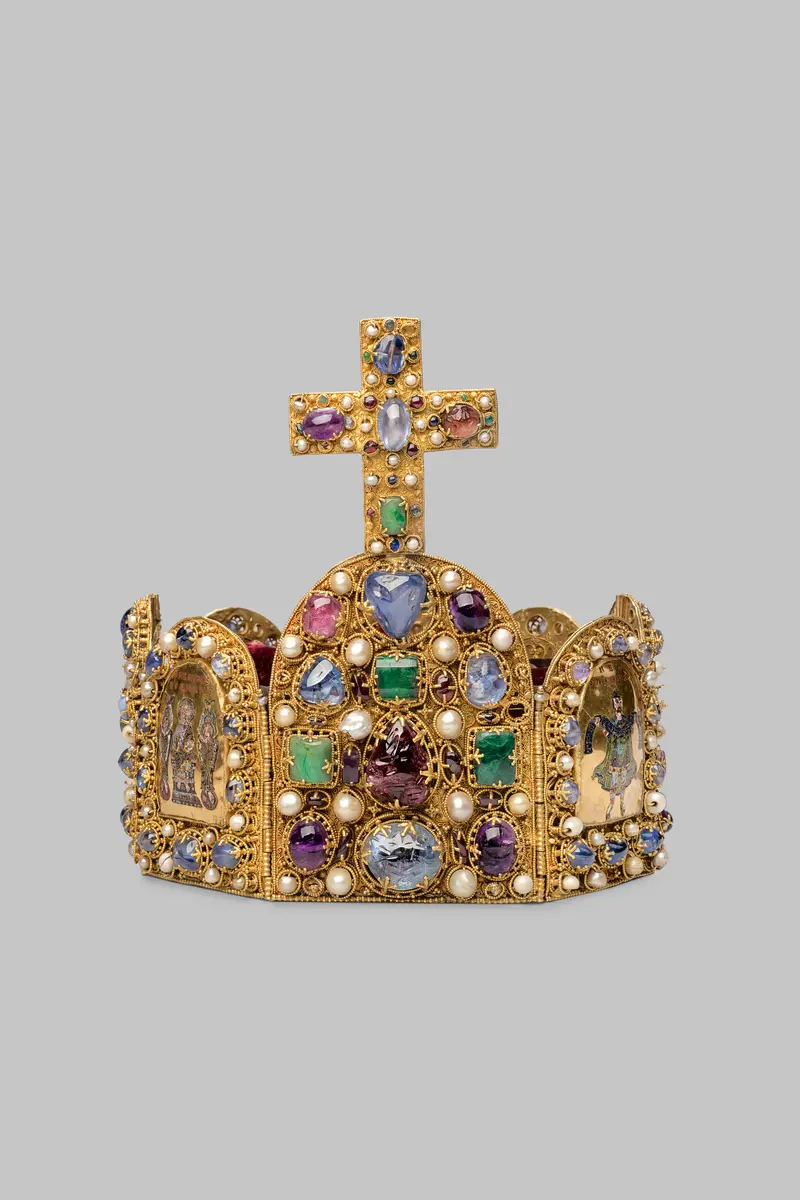
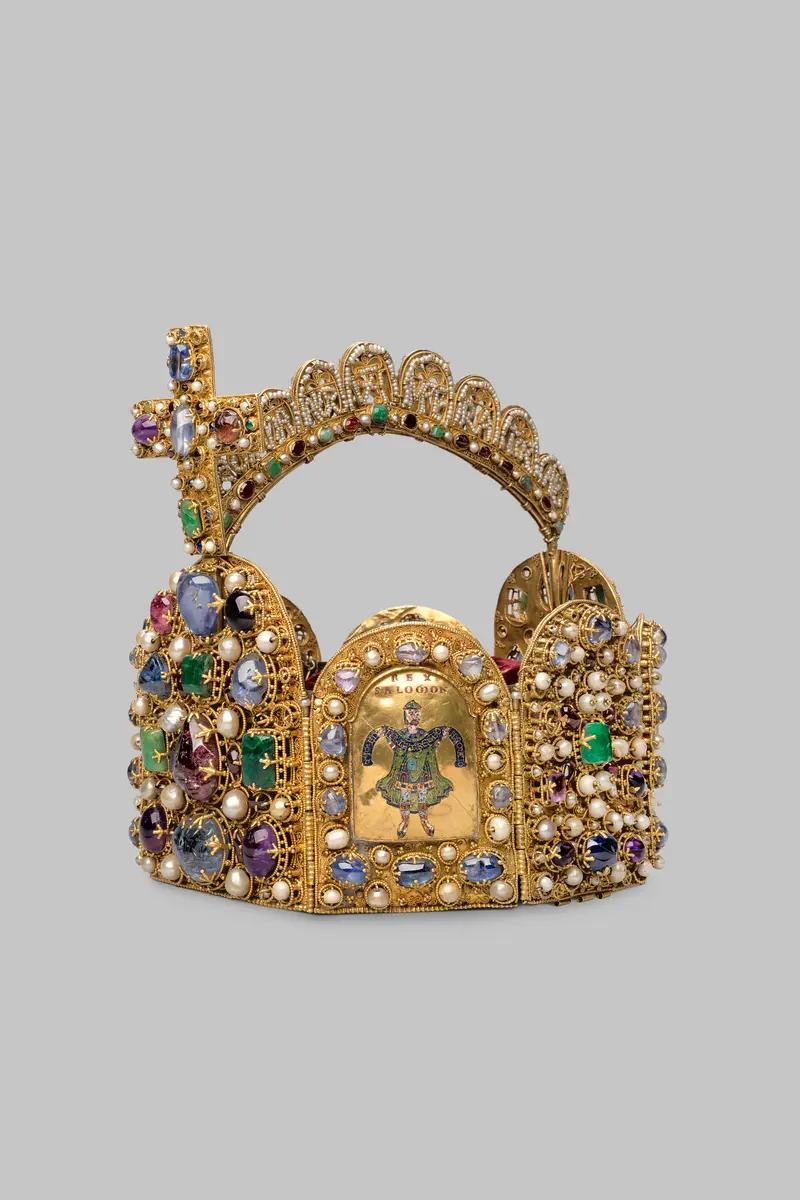
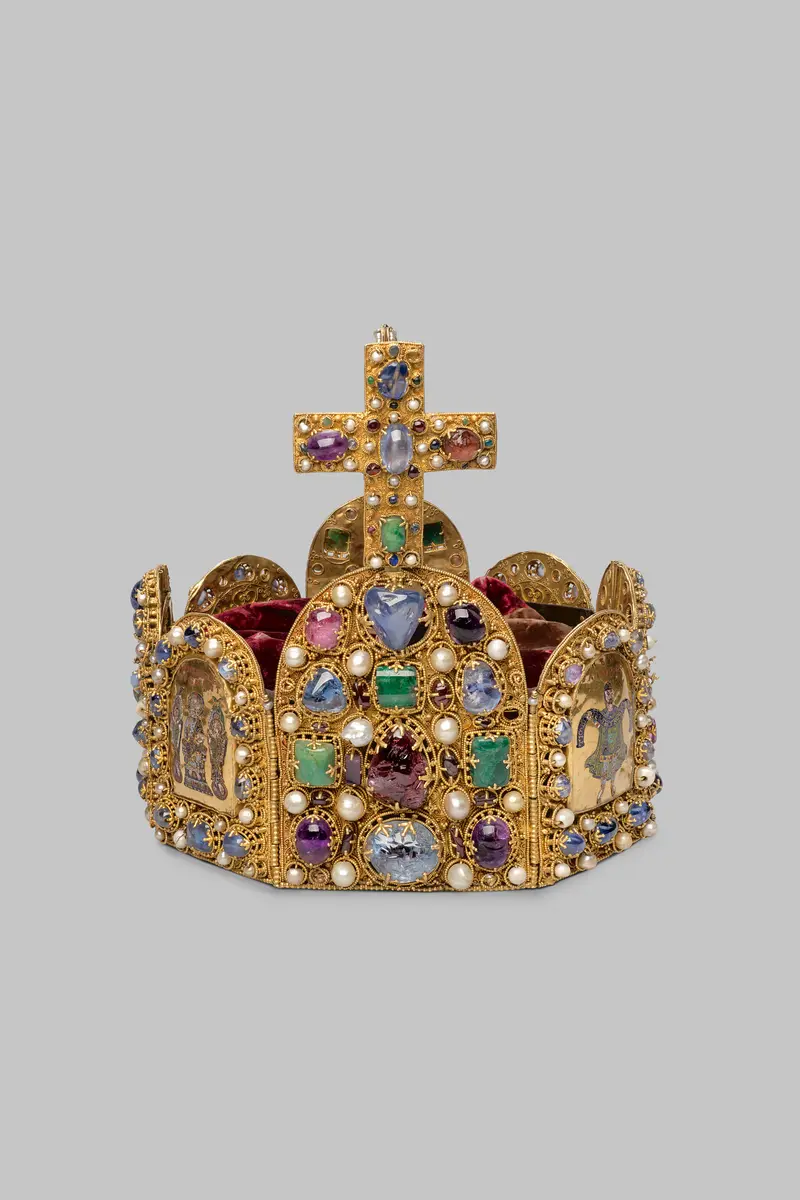
Eight hinged plates form the octagonal body of the imperial crown. Four smaller plates bear pictorial representations from the Old Testament in cloisonné enamel; the four main plates of differing sizes are decorated solely by precious stones and pearls in raised settings. The programmatic theological concept can be recognised in the more prominent of the four stone-encrusted plates. The twelve precious stones on the brow plate correspond to the number of the Apostles. The twelve stones on the neck plate refer to the pectoral of the Jewish high priest; they are engraved with the names of the twelve tribes of Israel. In the place of the heart-shaped sapphire at the top of the arch of the brow plate, there was once the "Waise. The stone was last mentioned in an inventory of 1550; it later vanished. The cloisonné enamel plaques are symbolically related to one another. The prophets included in these inscriptions hold banderoles inscribed with their own quotations explaining their relationship to one another. All of the biblical texts in the inscriptions are also quotations from the coronation liturgy, as laid down in the Ordo of 960. Only on the Maiestas Domini plate is there a quotation (Proverbs 8:15) instead of an inscription a revelation of the pre-existing Christ and ruler of the universe of the Old Testament. Like his son and successor, Solomon, David both king of Israel and prophet, symbolises justice; Solomon symbolises wisdom and the fear of God; Isaiah prophesies a further fifteen years of life to King Hezekiah, lying on his deathbed, for his pious prayers to God. God shows mercy to the king by prolonging his life and destroying his enemies. This crown is regarded as an imperial symbol representing in a suitably formal fashion the self-confidence of the Ottonian dynasty, endowed with the divine right of kings.
Time:
2. Hälfte 10. Jahrhundert; Kronenkreuz Hinzufügung des frühen 11. Jahrhunderts
Object Name
Insigne; Krone
Culture
Westdeutsch
Material/technology:
Gold, Email, Edelsteine, Perlen / Zellenschmelz
Dimensions:
Stirnplatte: 14,9 cm × 11,2 cm
Kreuz: 9,9 cm
28,6 cm
Inscribed
Platten: "REX DAVID"; "HONOR REGIS IVDICIVM DILIGIT"; "REX SALOMON"; "TIME DOMINVM ET RECEDE A MALO"; "PER ME REGES REGNANT"; "ISAIAS PROPHETA EZECHIAS REX"; "ECCE ADICIAM SVPER DIES TVOS XV ANNOS"; "IHC NAZARENVS REX IVDEORVM"; Bügel: "CHVONRADVS DEI GRATIA ROMANORV(M) IMPERATOR AVG(VSTVS)"
Copyright
Kunsthistorisches Museum, Weltliche Schatzkammer
Invs.
Schatzkammer, WS XIII 1
Browse more
Similar items you might be interested in
Das Zeremonienschwert vor 1220, 3. Viertel 14. Jahrhundert (Knauf)
Hyazinth "La Bella" frühes 15. Jahrhundert (Fassung des Steines); 1687
Fragment einer Kreuzigungsgruppe Matthias Steinl um 1685/87
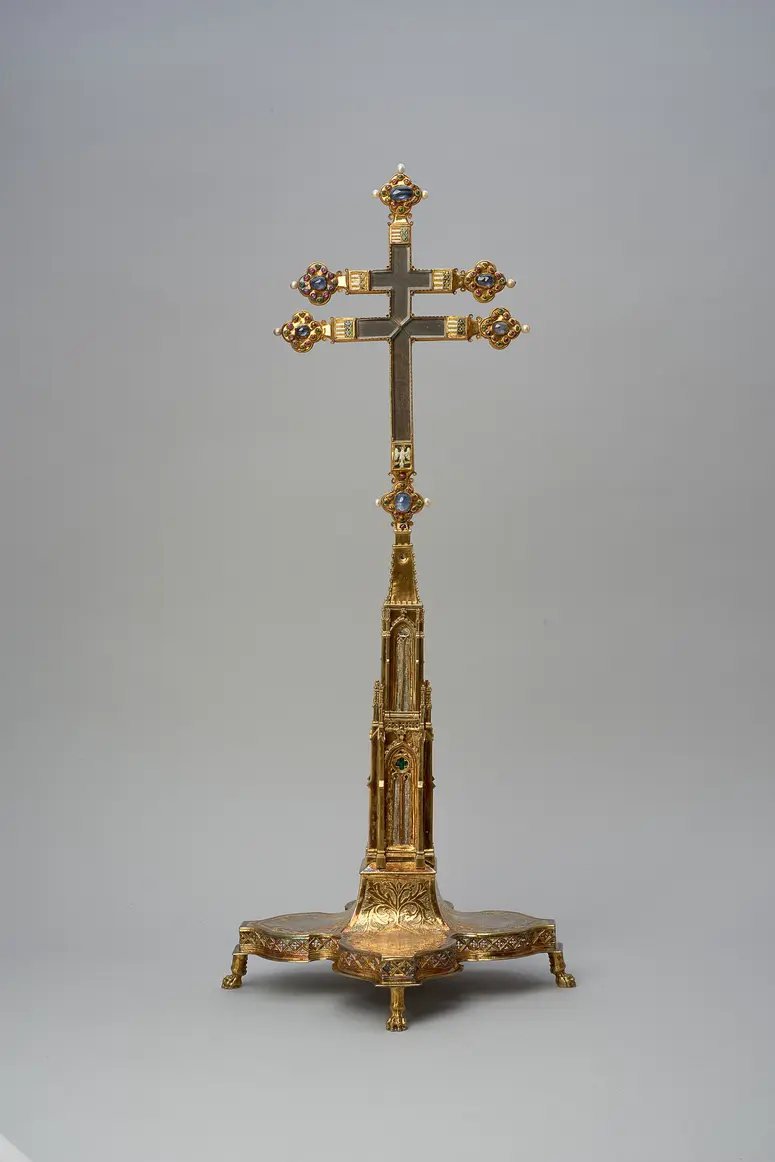
Reliquienkreuz König Ludwigs des Großen von Ungarn; sogenanntes Anjou - Kreuz Pietro di Simone da Siena 1370/82

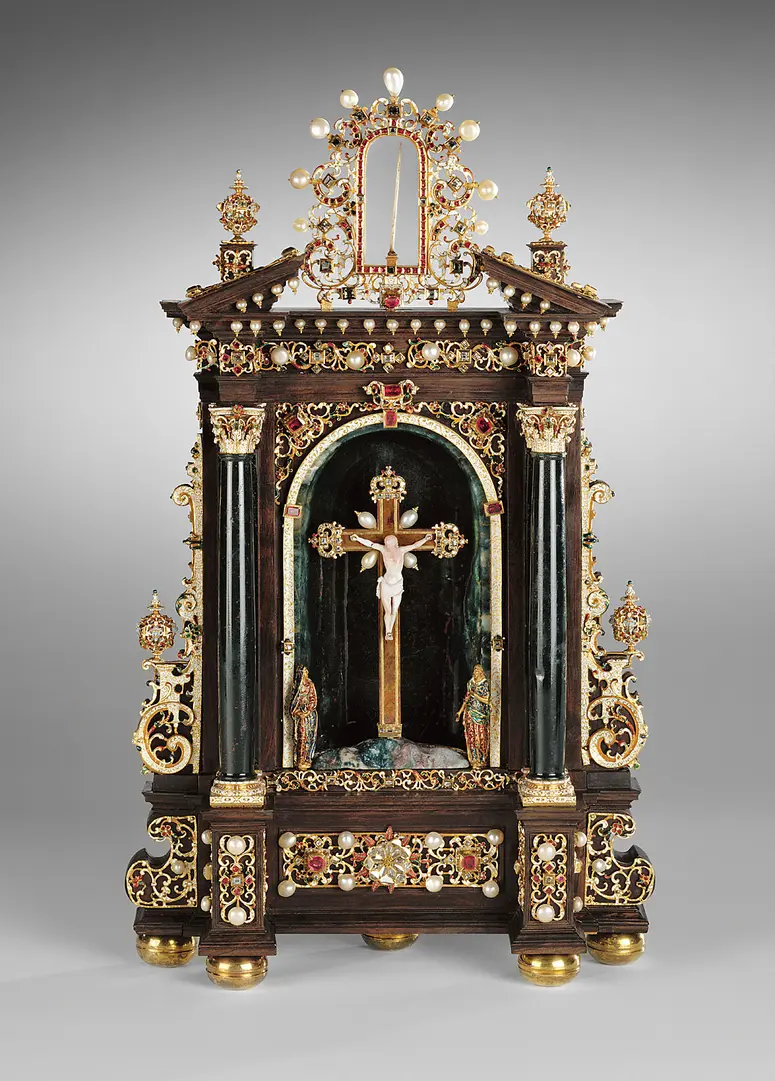
Reliquienaltärchen für einen Dorn der Krone Christi, mit Kreuzigungsgruppe Ottavio Miseroni Anfang 17. Jahrhundert
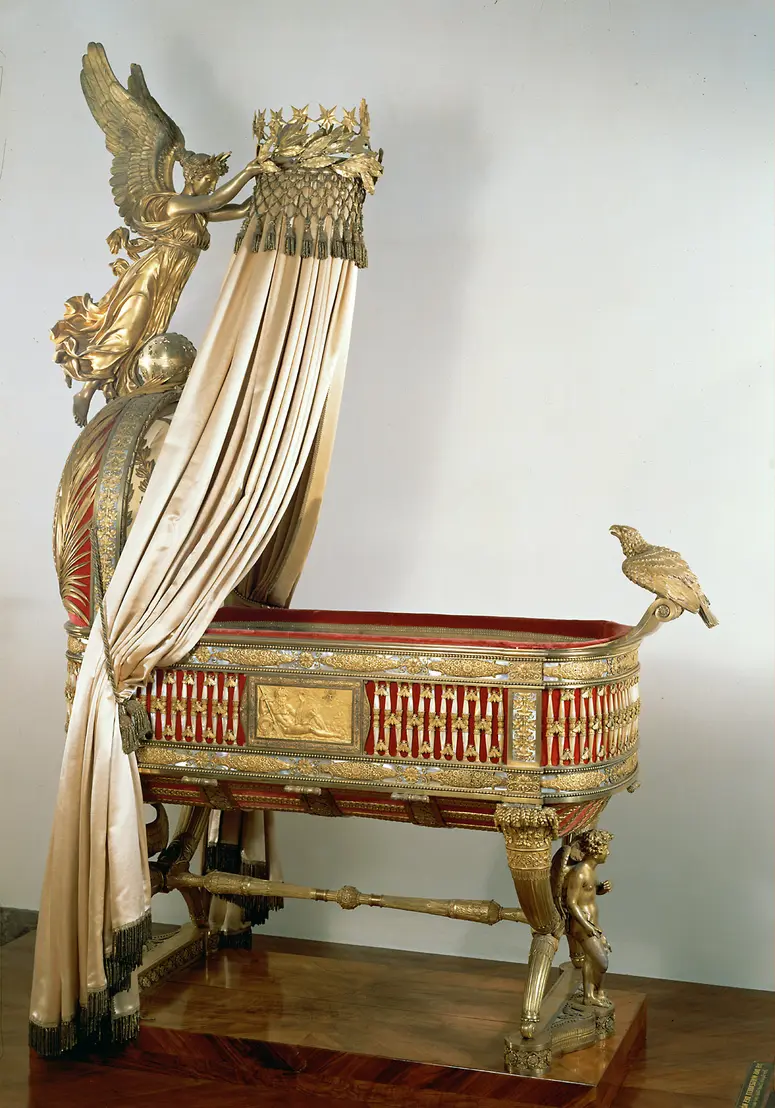
Das Thron-Wiegenbett des Königs von Rom Pierre-Paul Prud'hon 1811 datiert
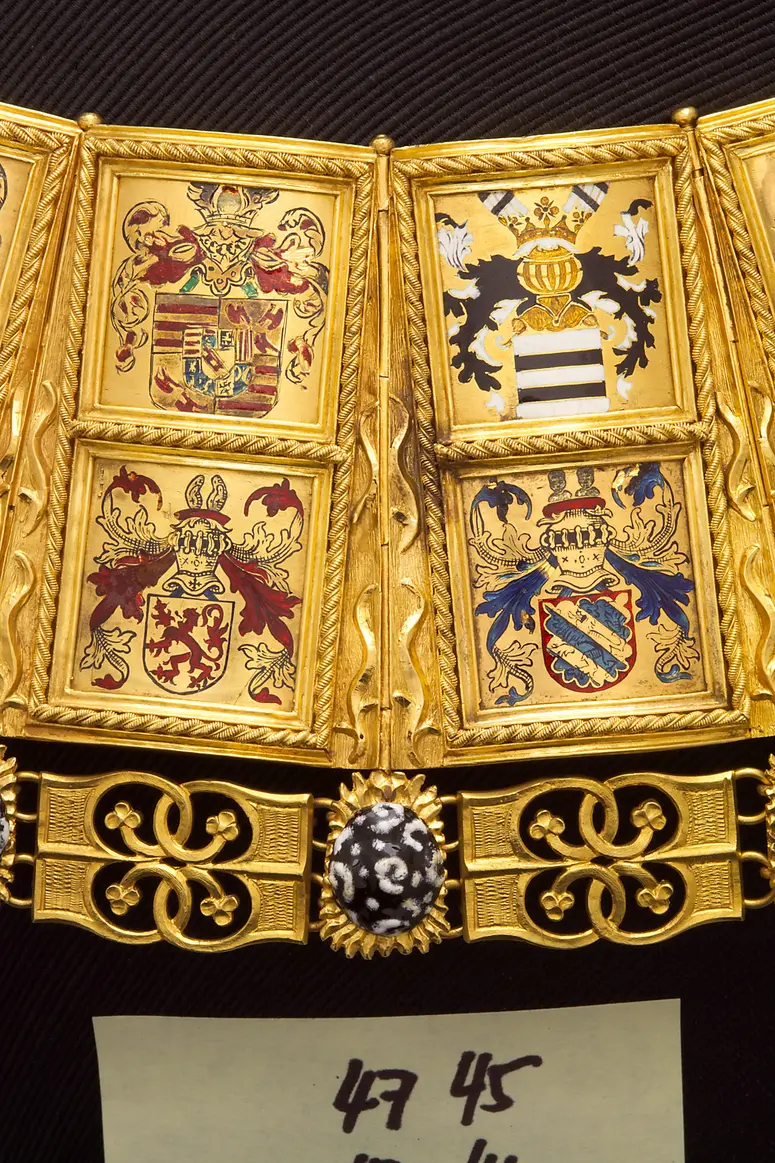
Die Potence (Wappenkette) für den Herold des Ordens vom Goldenen Vlies um 1517
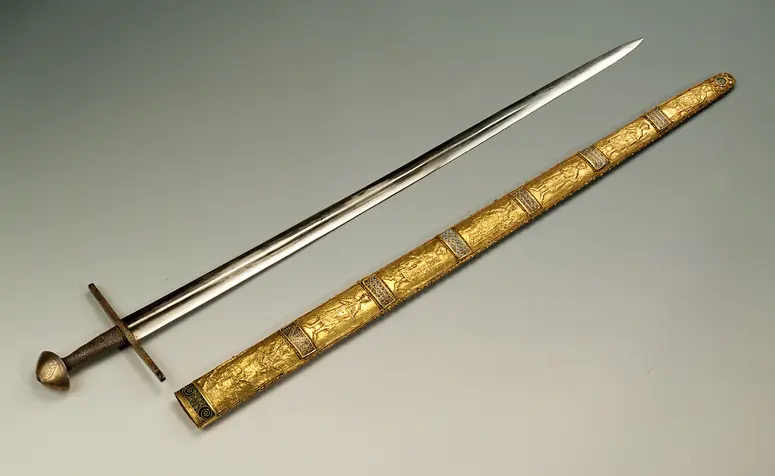
Das Reichsschwert (Mauritiusschwert) Scheide: 2.Hälfte 11.Jahrhundert, Schwert: 1198/1218
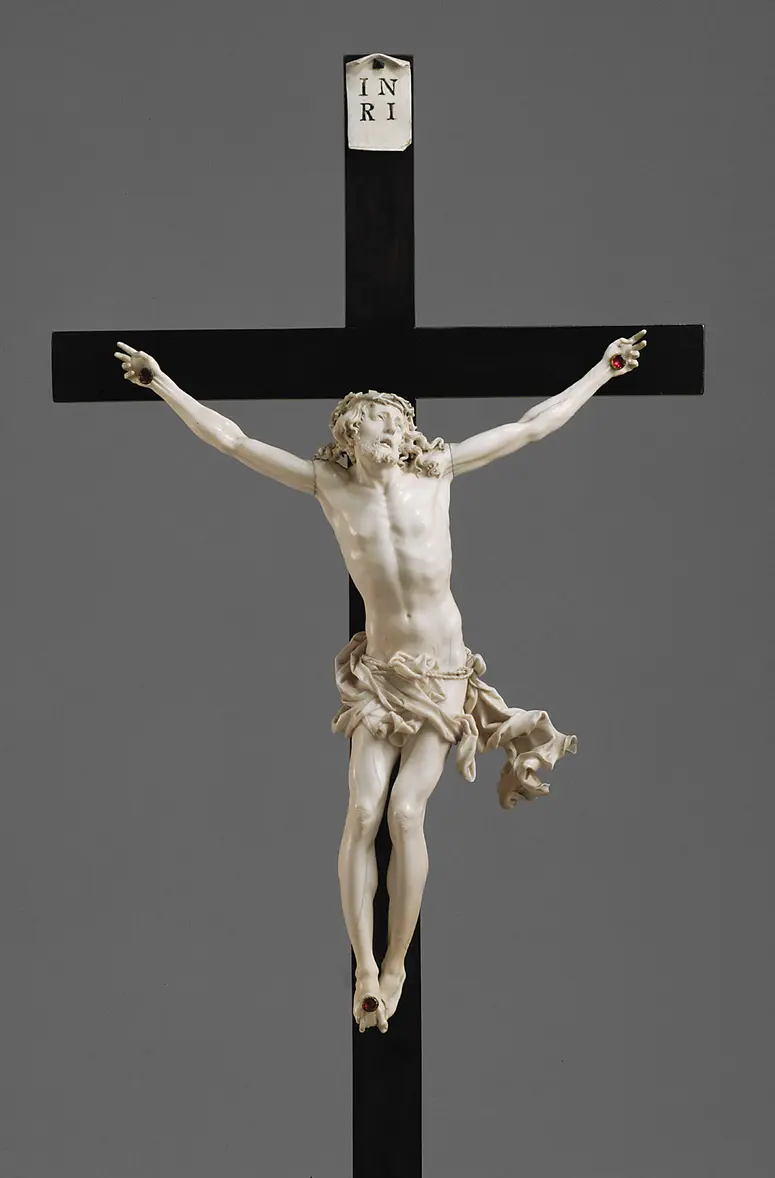
Kruzifix Gabriel Grupello Mitte 18. Jahrhundert
Die Heilige Lanze 8. Jh.,Silbermanschette: 2. Hälfte 11. Jh; Goldmanschette: 3. Viertel 14. Jh.
Schwurkreuz des Ordens vom Goldenen Vlies um 1400 (Kreuz), 1453/67 (Ständer)
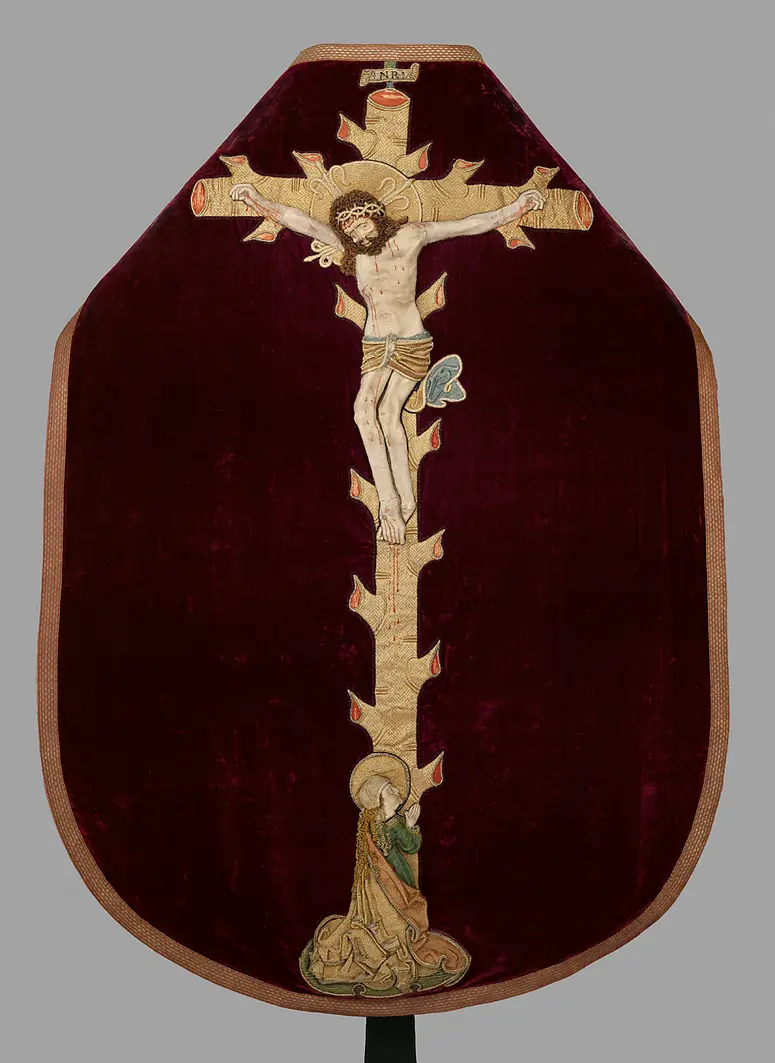
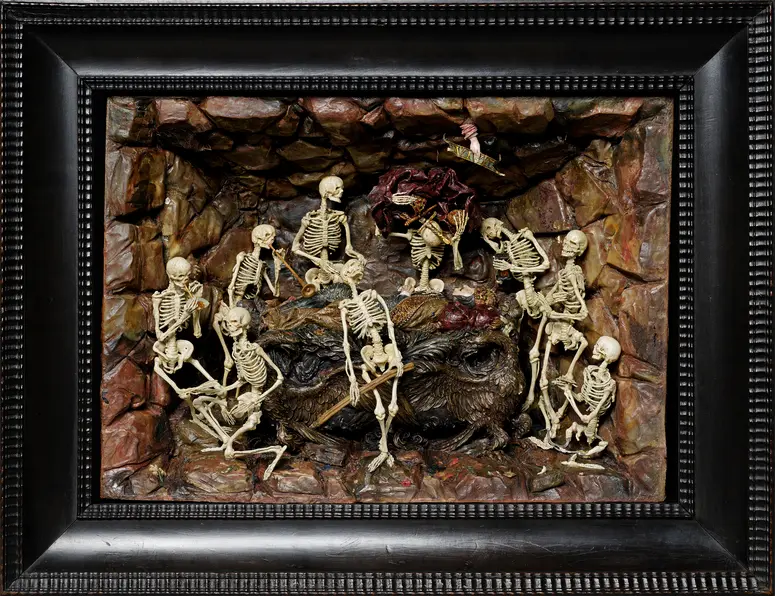
Der Tod Kaiser Ferdinands III. als Sinnbild der Vergänglichkeit Daniel Neuberger um 1660
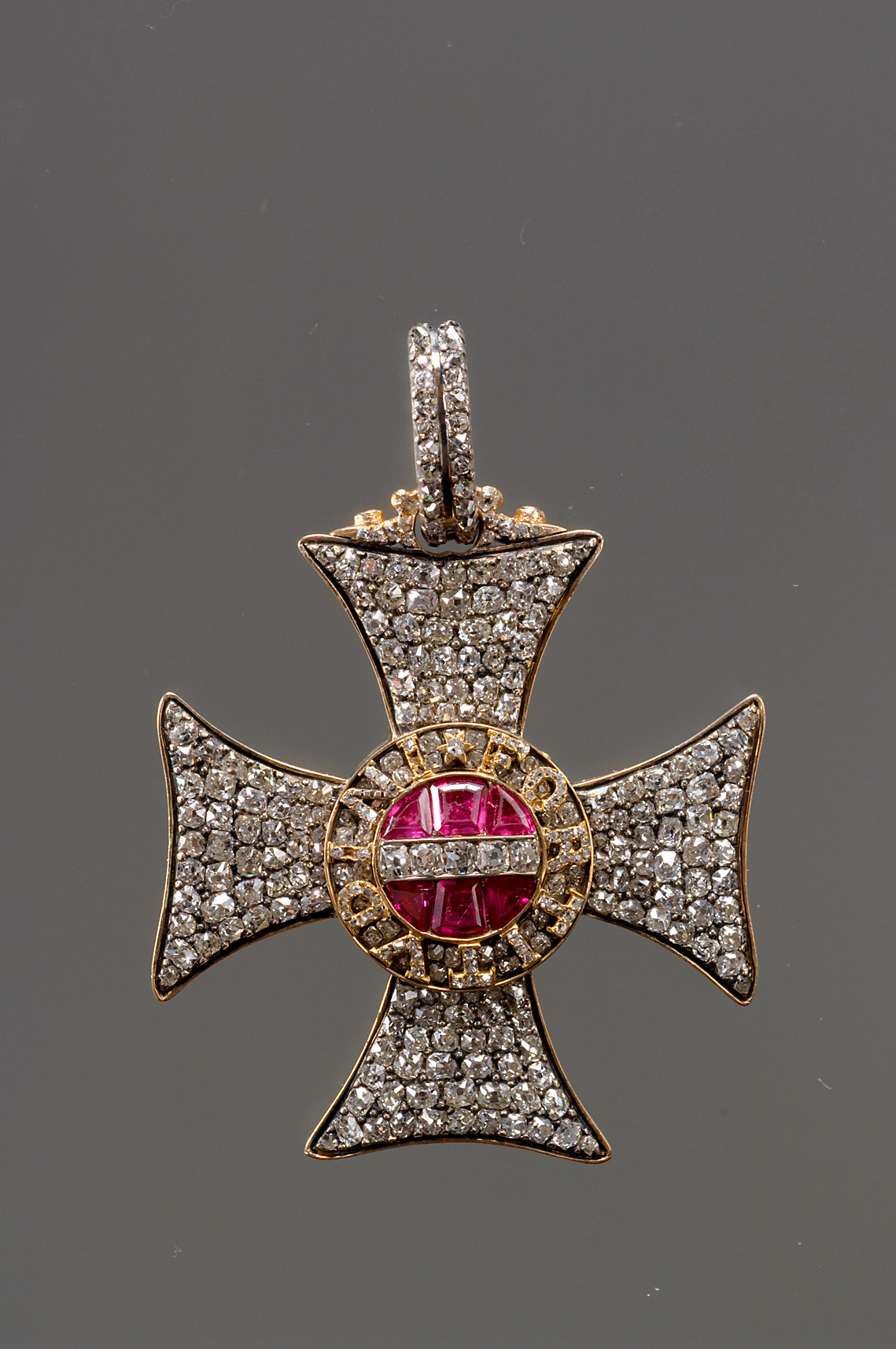
Kreuz des Militär-Maria-Theresien-Ordens Johann Michael Grosser 1757 datiert
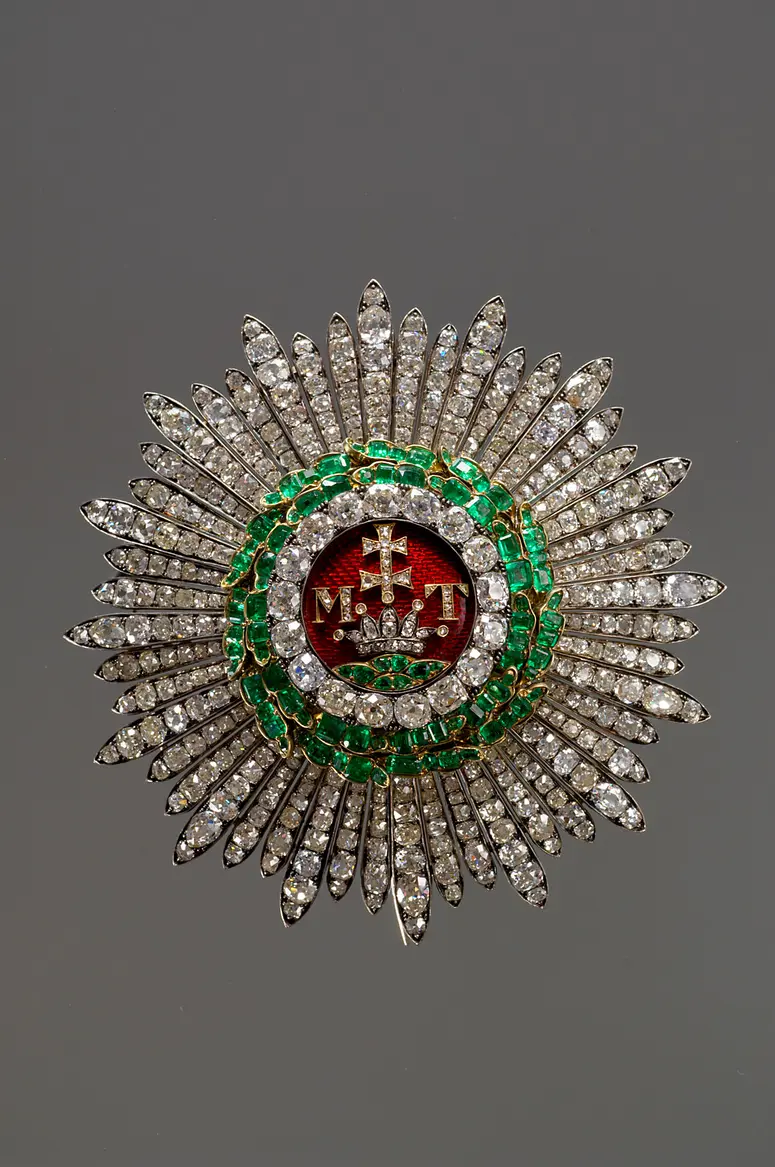
Stern des ungarischen St. Stephans-Ordens Joseph und Anton Biedermann 1. Hälfte 19.Jahrhundert