Die Heilige Lanze
8. Jh.,Silbermanschette: 2. Hälfte 11. Jh; Goldmanschette: 3. Viertel 14. Jh.
The Holy Lance is a Carolingian winged lance with a pointed, oval aperture chiselled out of the centre of the blade in order to insert an ornamental iron pin. In addition, two blades have been added symmetrically above the wings of the lance and tied with leather thongs. The band of silver wire probably dates from a later repair after the blade of the lance was broken. Pious wishful thinking soon turned the central pin into one of the nails with which Christ was hung on the cross. The lance itself has gone through a succession of interpretations and has been variously seen as the lance of Emperor Constantine and as the spear of the patron saint of the empire, Maurice. Over the course of the 13th century, finally, it became seen as the lance of Longinus, who wounded Christ in the side and was covered with the blood from his heart. Its value as a relic was legendary and may be explained by the need of the Holy Roman emperor to equal his Byzantine counterpart, who possessed the most important relics of Christ, and acquire a treasure of relics of his own that would support his divine right to rule, his legitimacy and his invincibility. For a long time the Holy Lance was seen as a symbol of imperial power and the most noble of the imperial insignia, and its miraculous powers were considered capable of turning the course of battle. In keeping with its status as a precious relic of the Passion, the Lance was stored from the early 11th century in the cross-beam of the Imperial Cross (Inv. No. SK_WS_XIII_21). Emperor Charles IV (reigned 1346-1378), who deeply venerated the Lance, added the gold sleeve with the inscription "Lance and Nail of the Lord" and got the pope to introduce a religious festival honouring the Lance and the Nail.
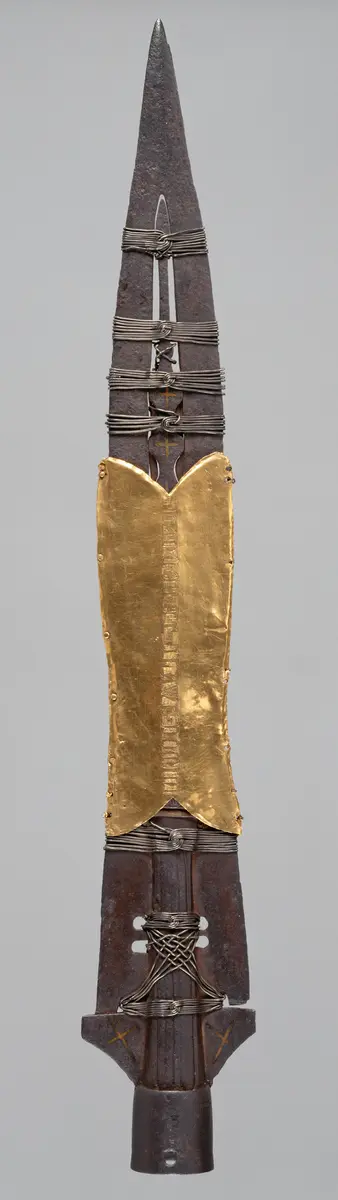
The Holy Lance is a Carolingian winged lance with a pointed, oval aperture chiselled out of the centre of the blade in order to insert an ornamental iron pin. In addition, two blades have been added symmetrically above the wings of the lance and tied with leather thongs. The band of silver wire probably dates from a later repair after the blade of the lance was broken. Pious wishful thinking soon turned the central pin into one of the nails with which Christ was hung on the cross. The lance itself has gone through a succession of interpretations and has been variously seen as the lance of Emperor Constantine and as the spear of the patron saint of the empire, Maurice. Over the course of the 13th century, finally, it became seen as the lance of Longinus, who wounded Christ in the side and was covered with the blood from his heart. Its value as a relic was legendary and may be explained by the need of the Holy Roman emperor to equal his Byzantine counterpart, who possessed the most important relics of Christ, and acquire a treasure of relics of his own that would support his divine right to rule, his legitimacy and his invincibility. For a long time the Holy Lance was seen as a symbol of imperial power and the most noble of the imperial insignia, and its miraculous powers were considered capable of turning the course of battle. In keeping with its status as a precious relic of the Passion, the Lance was stored from the early 11th century in the cross-beam of the Imperial Cross (Inv. No. SK_WS_XIII_21). Emperor Charles IV (reigned 1346-1378), who deeply venerated the Lance, added the gold sleeve with the inscription "Lance and Nail of the Lord" and got the pope to introduce a religious festival honouring the Lance and the Nail.
Time:
8. Jh.,Silbermanschette: 2. Hälfte 11. Jh; Goldmanschette: 3. Viertel 14. Jh.
Object Name
Reliquie; Waffe; Insigne
Culture
Karolingisch
Material/technology:
Stahl, Eisen, Messing, Silber, Gold, Leder
Dimensions:
L. 50,7 cm, Gewicht 968 g
Inscribed
Silbermanschette: "CLAVVS DOMINICVS + HEINRICVS D(E)I GR(ATI)A TERCIVS ROMANO(RVM) IMPERATOR AVG(VSTVS) HOC ARGENTVM IVSSIT FABRICARI AD CONFIRMATIONE(M) CLAVI D(OMI)NI ET LANCEE SANCTI MAVRICII . SANCTVS MAVRITIVS."; Goldmanschette: LANCEA ET CLAVVS DOMINI"
Copyright
Kunsthistorisches Museum, Weltliche Schatzkammer
Invs.
Schatzkammer, WS XIII 19
Browse more
Similar items you might be interested in

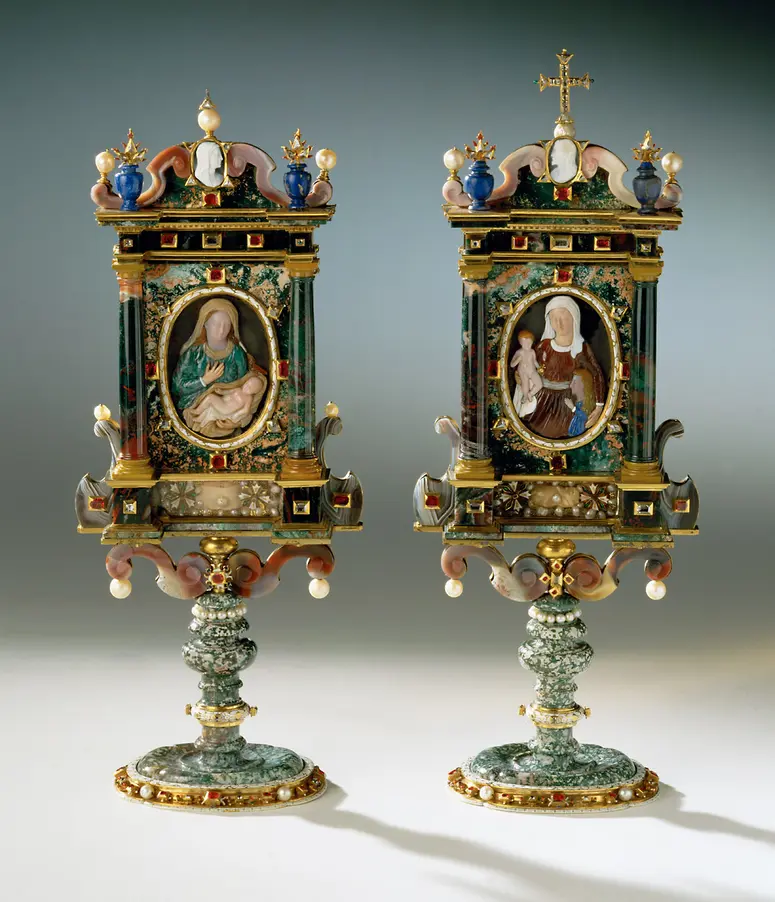
Zwei Reliquienmonstranzen Ottavio Miseroni um 1620
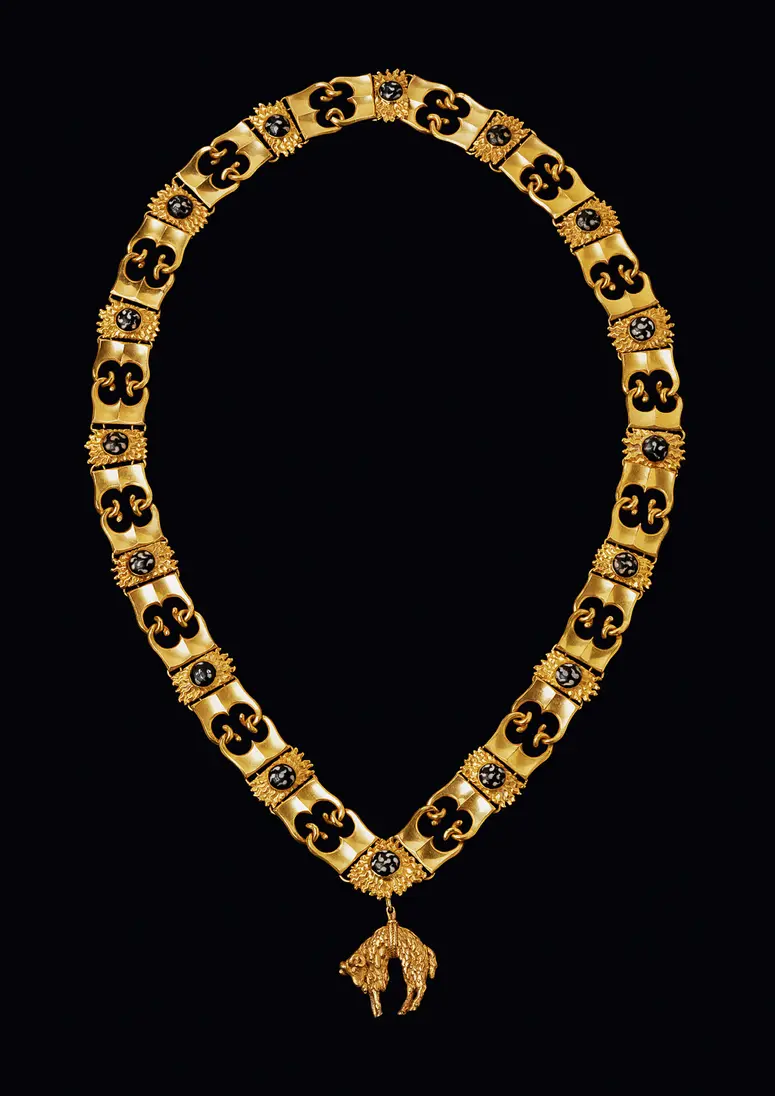
Collane des Ordens vom Goldenen Vlies 2. - 3. Drittel 15. Jahrhundert

Wappenrock für den Herold des Kaisertums Österreich 1830
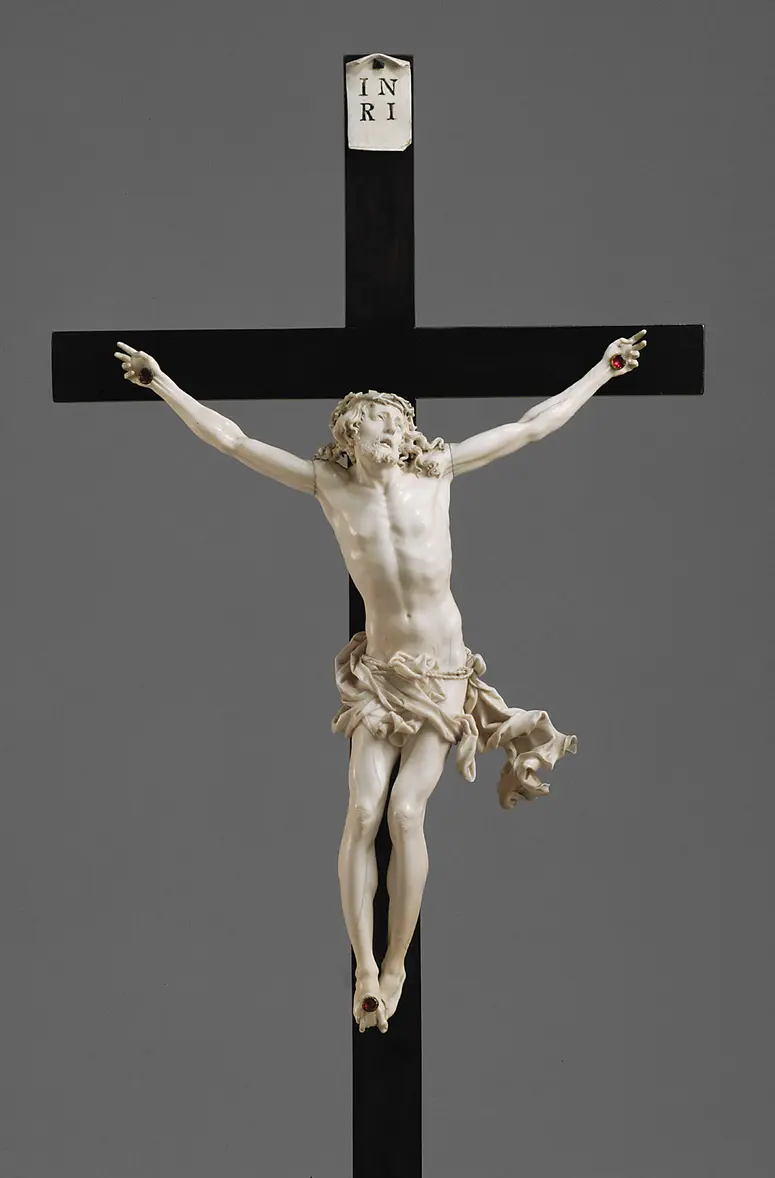
Kruzifix Gabriel Grupello Mitte 18. Jahrhundert
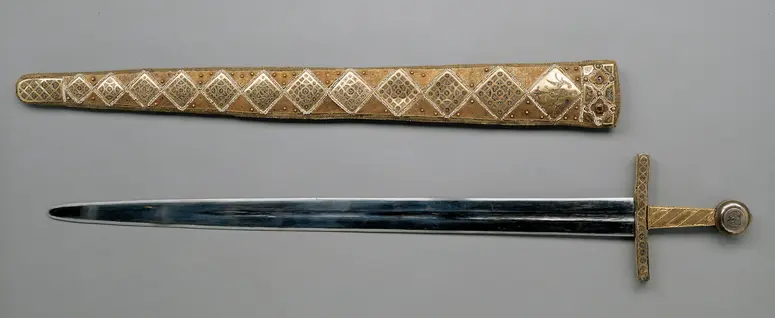
Das Zeremonienschwert vor 1220, 3. Viertel 14. Jahrhundert (Knauf)
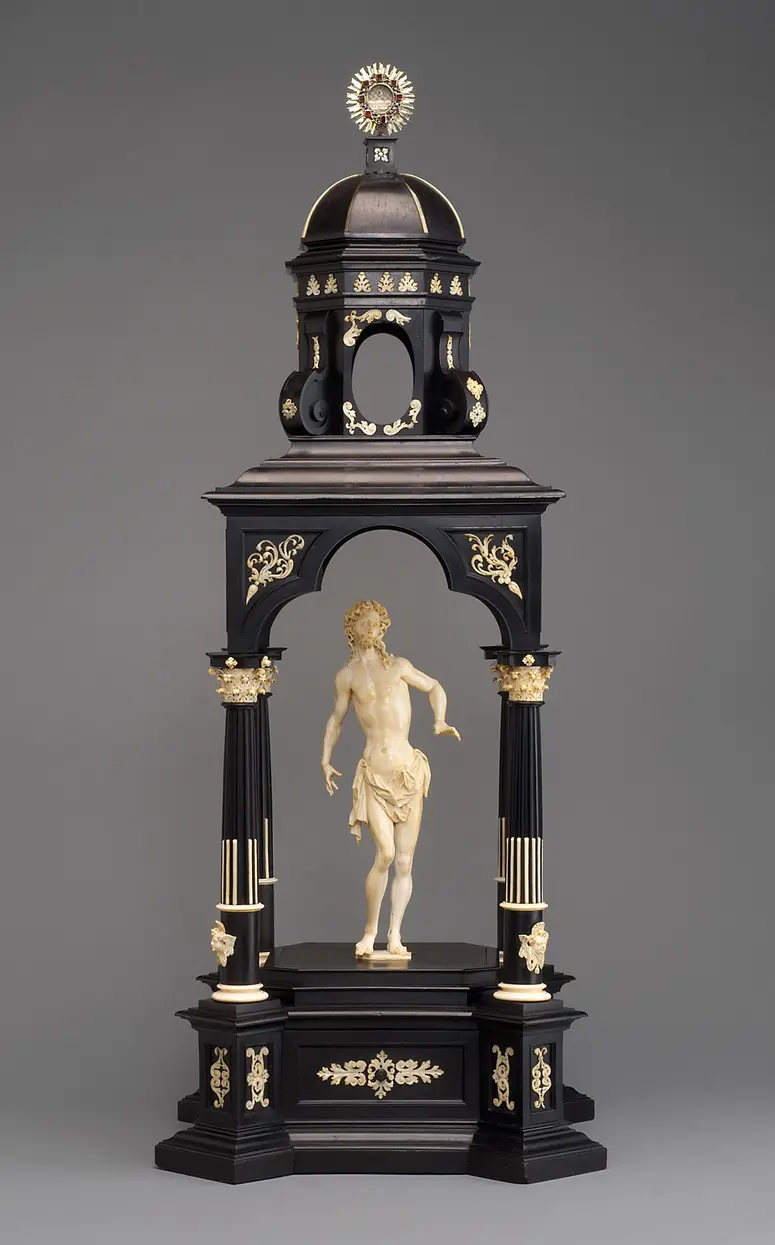
Tempietto mit Schmerzensmann Christoph Angermair um 1613/20
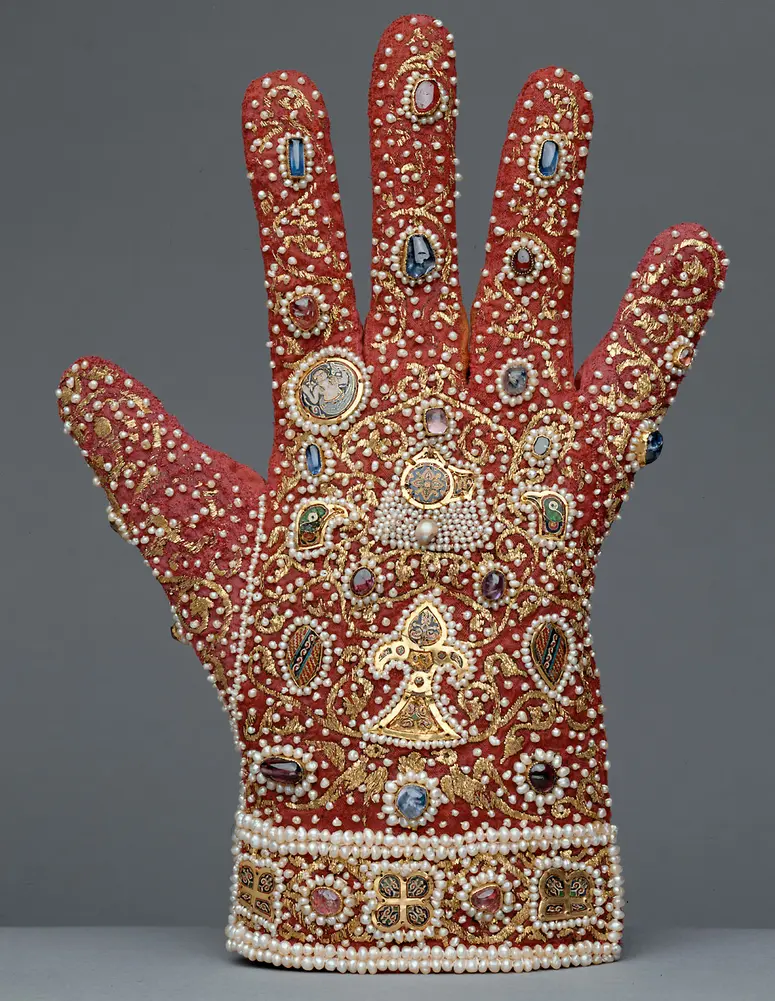
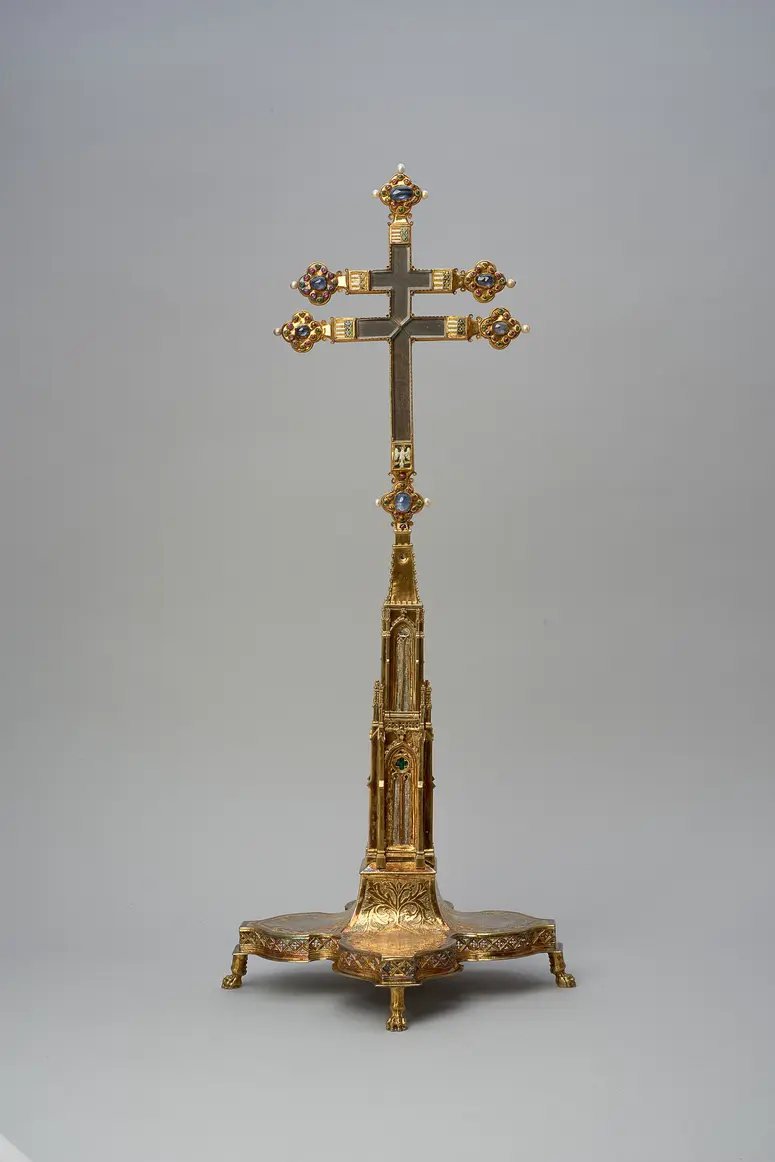
Reliquienkreuz König Ludwigs des Großen von Ungarn; sogenanntes Anjou - Kreuz Pietro di Simone da Siena 1370/82
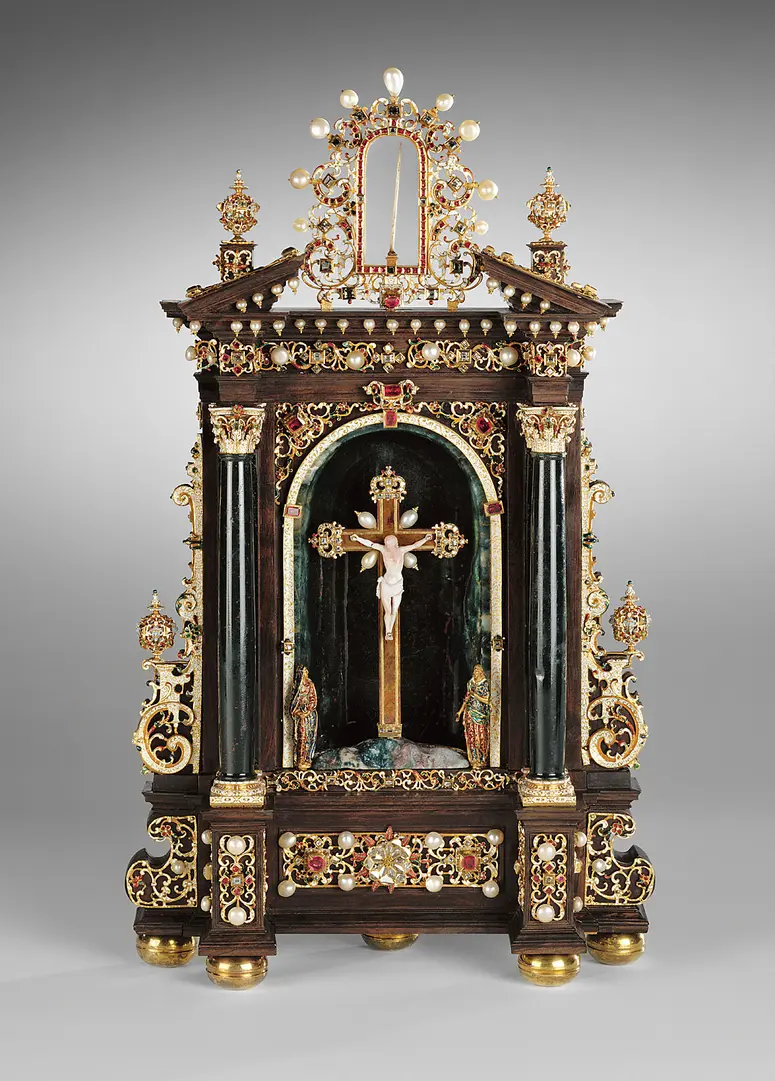
Reliquienaltärchen für einen Dorn der Krone Christi, mit Kreuzigungsgruppe Ottavio Miseroni Anfang 17. Jahrhundert
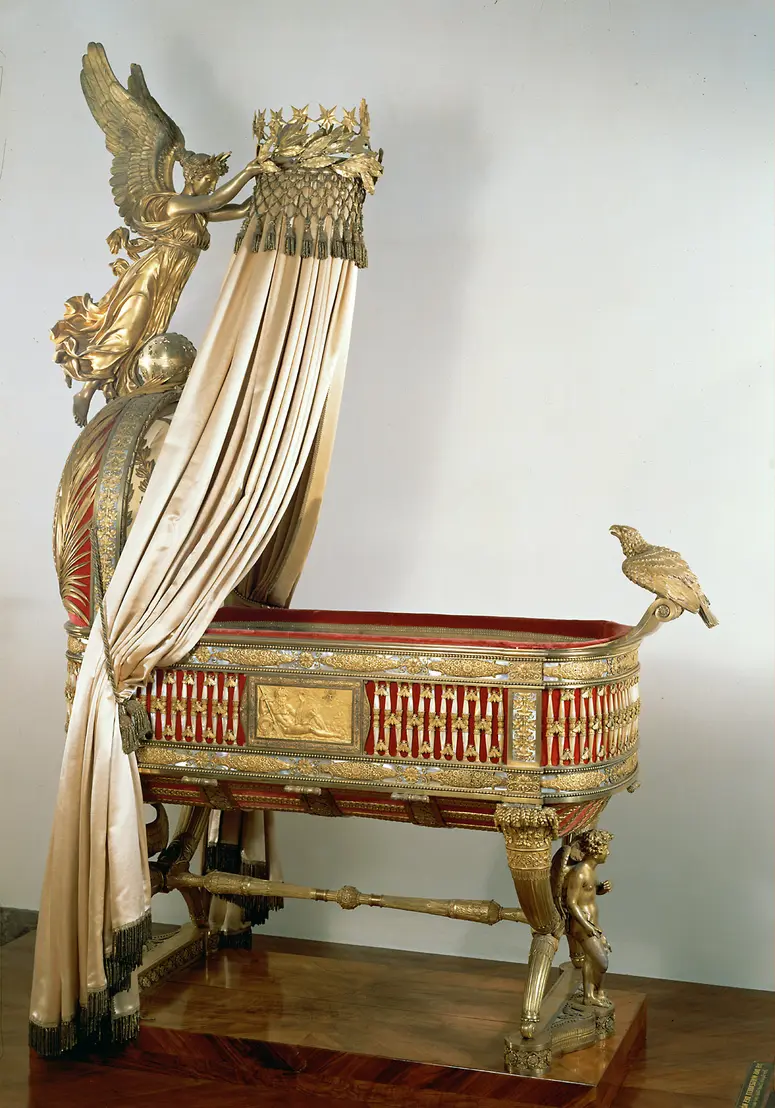
Das Thron-Wiegenbett des Königs von Rom Pierre-Paul Prud'hon 1811 datiert
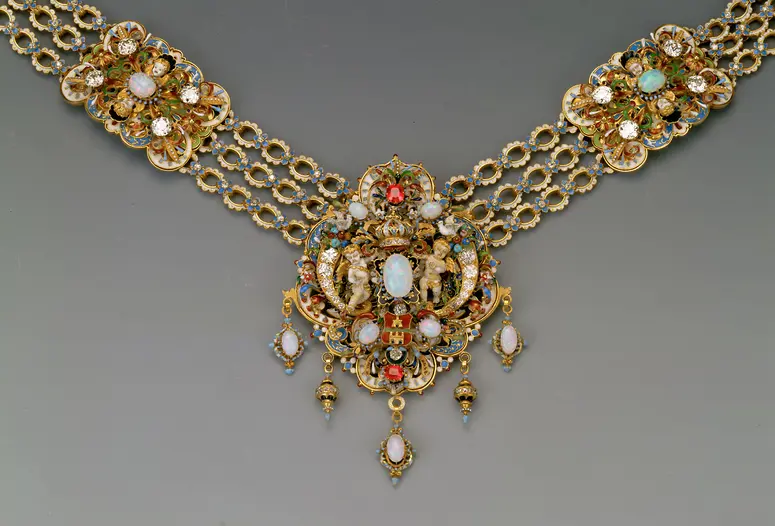
Der ungarische Opalschmuck Gebrüder Egger 1881 datiert
Kaiserin Marie Louise Jean Baptiste Isabey 1810 datiert
Kreuz des Militär-Maria-Theresien-Ordens Johann Michael Grosser 1757 datiert