Collane des Ordens vom Goldenen Vlies
2. - 3. Drittel 15. Jahrhundert
This is the only surviving neck chain from the early period of the Order of the Golden Fleece. The chain consists of two elements recurring in a continuous pattern: flint (a type of stone that produces sparks when struck with steel, employed for igniting fires), represented by black-enamelled, hemispheric stones with white flecks, emitting flashes of fire laterally; and fire-steels (used to strike the flint), two of which frame each flint and whose hook-shaped handles are linked together to form the chain. Each of the thirty knights of the order is represented by one fire-steel, with the sovereign (for reasons of symmetry) symbolised by two. Duke Philip the Good incorporated flint and fire-steel into his coat of arms when he ascended the throne in 1419, as an illustration of his motto "Ante ferit quam flamma micet" ("It strikes before bursting into flame"). These symbols were later also adopted by the order, whose actual insignia is the ram's fleece that hangs from the chain. The chain was awarded by the sovereign and symbolised the fundamental concept of equality and brotherhood among members of a secular order of knights, since membership in the Order of the Golden Fleece was experienced as a strong, distinctly holy bond. Consisting of a series of loose elements that support each other and create a unified whole only when they are linked together, the chain is thus a vivid symbol of this idea of unity.
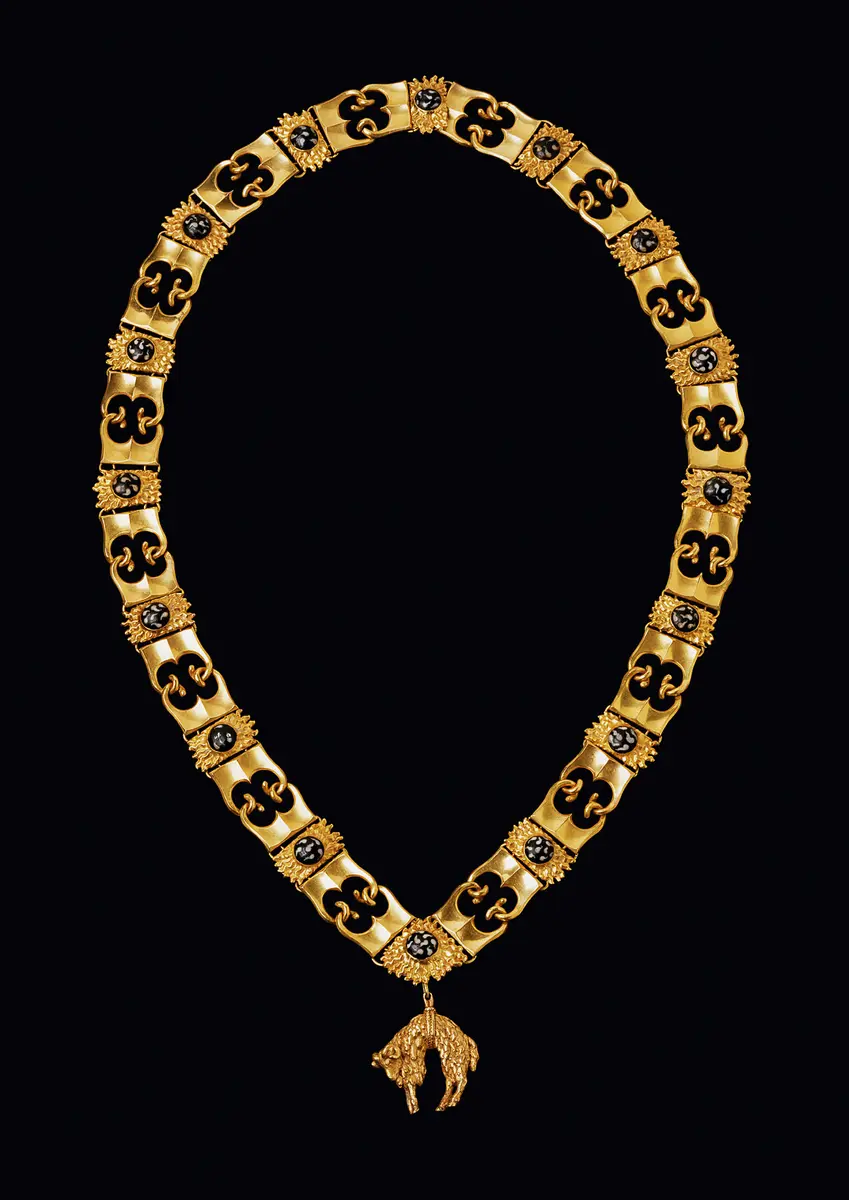
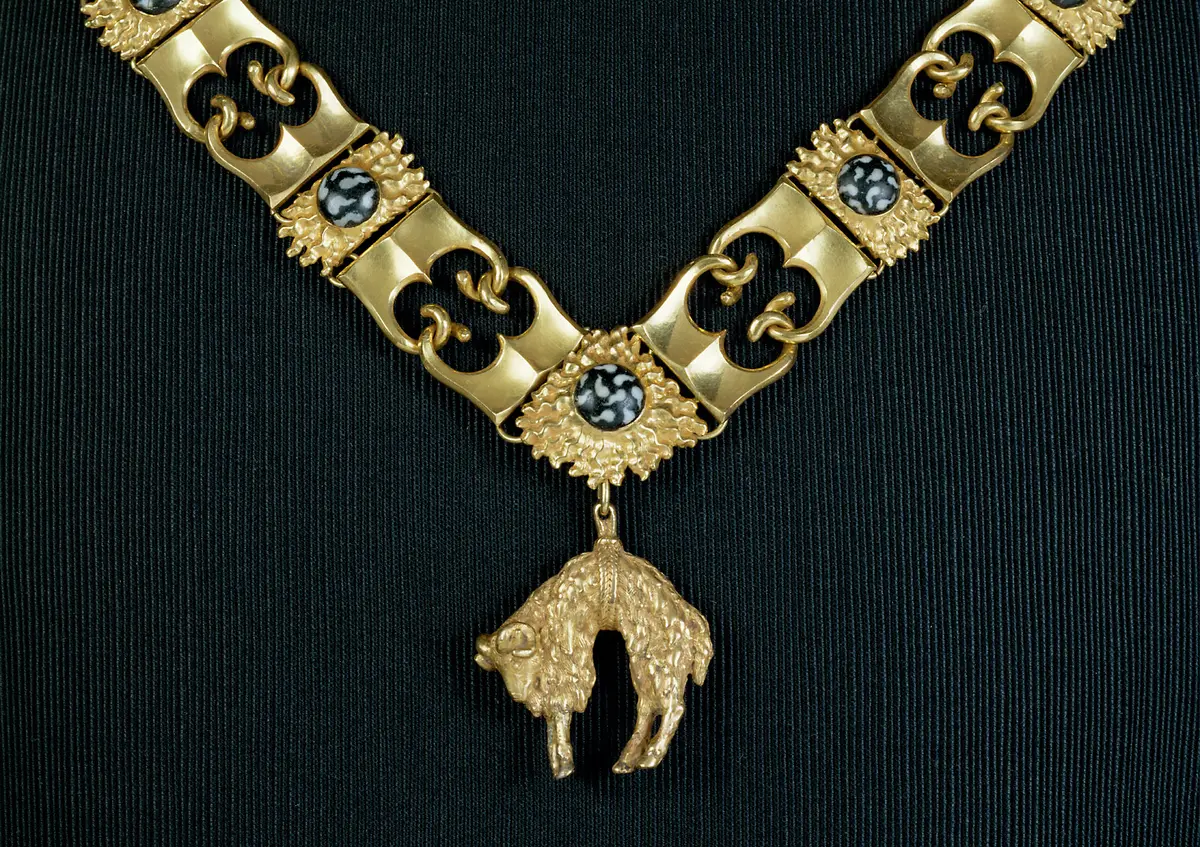
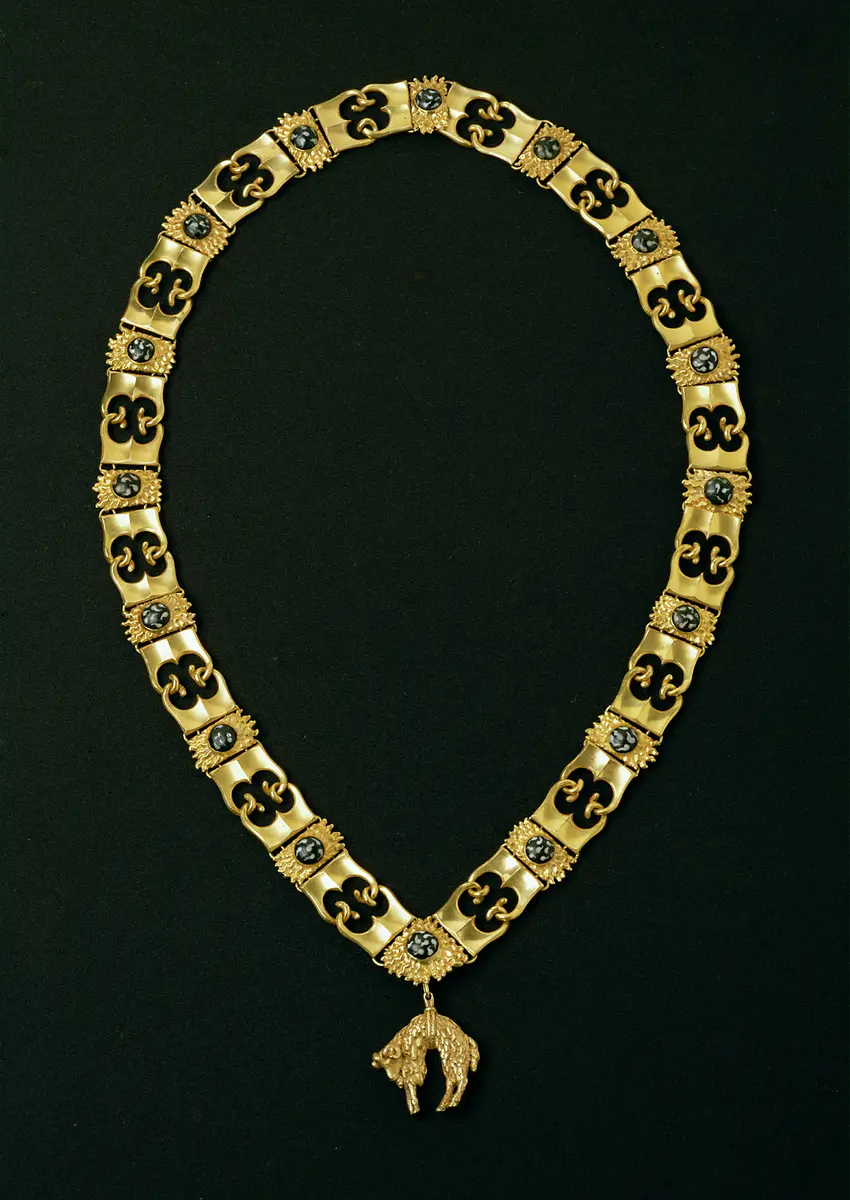
This is the only surviving neck chain from the early period of the Order of the Golden Fleece. The chain consists of two elements recurring in a continuous pattern: flint (a type of stone that produces sparks when struck with steel, employed for igniting fires), represented by black-enamelled, hemispheric stones with white flecks, emitting flashes of fire laterally; and fire-steels (used to strike the flint), two of which frame each flint and whose hook-shaped handles are linked together to form the chain. Each of the thirty knights of the order is represented by one fire-steel, with the sovereign (for reasons of symmetry) symbolised by two. Duke Philip the Good incorporated flint and fire-steel into his coat of arms when he ascended the throne in 1419, as an illustration of his motto "Ante ferit quam flamma micet" ("It strikes before bursting into flame"). These symbols were later also adopted by the order, whose actual insignia is the ram's fleece that hangs from the chain. The chain was awarded by the sovereign and symbolised the fundamental concept of equality and brotherhood among members of a secular order of knights, since membership in the Order of the Golden Fleece was experienced as a strong, distinctly holy bond. Consisting of a series of loose elements that support each other and create a unified whole only when they are linked together, the chain is thus a vivid symbol of this idea of unity.
Time:
2. - 3. Drittel 15. Jahrhundert
Object Name
Ordenscollane
Culture
Burgundisch - Niederländisch
Material/technology:
Gold, Maleremail
Dimensions:
L. 90 cm
Copyright
Kunsthistorisches Museum, Weltliche Schatzkammer
Invs.
Schatzkammer, WS XIV 263
Browse more
Similar items you might be interested in
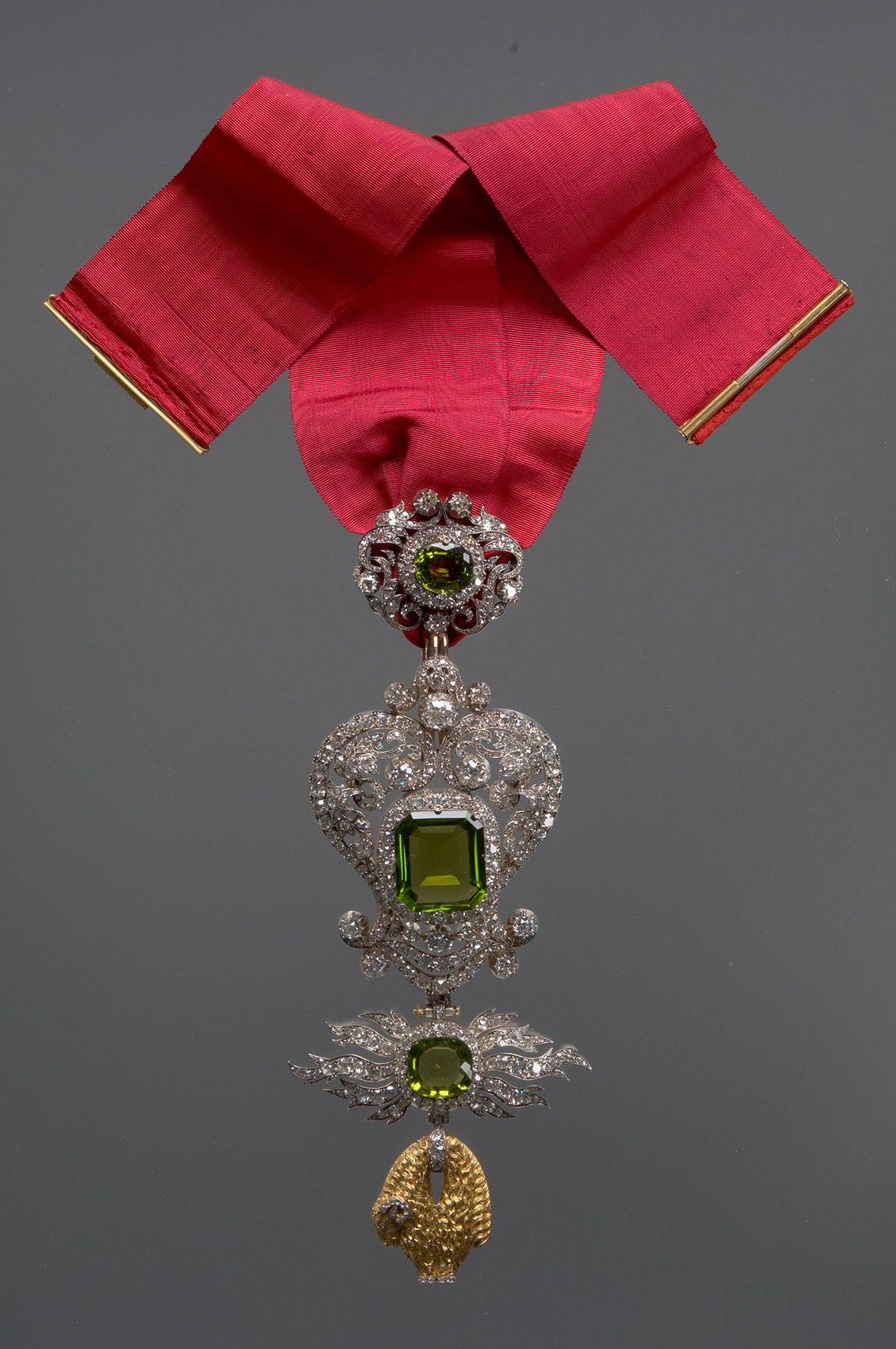
Kleinod des Ordens vom Goldenen Vlies um 1870/1890
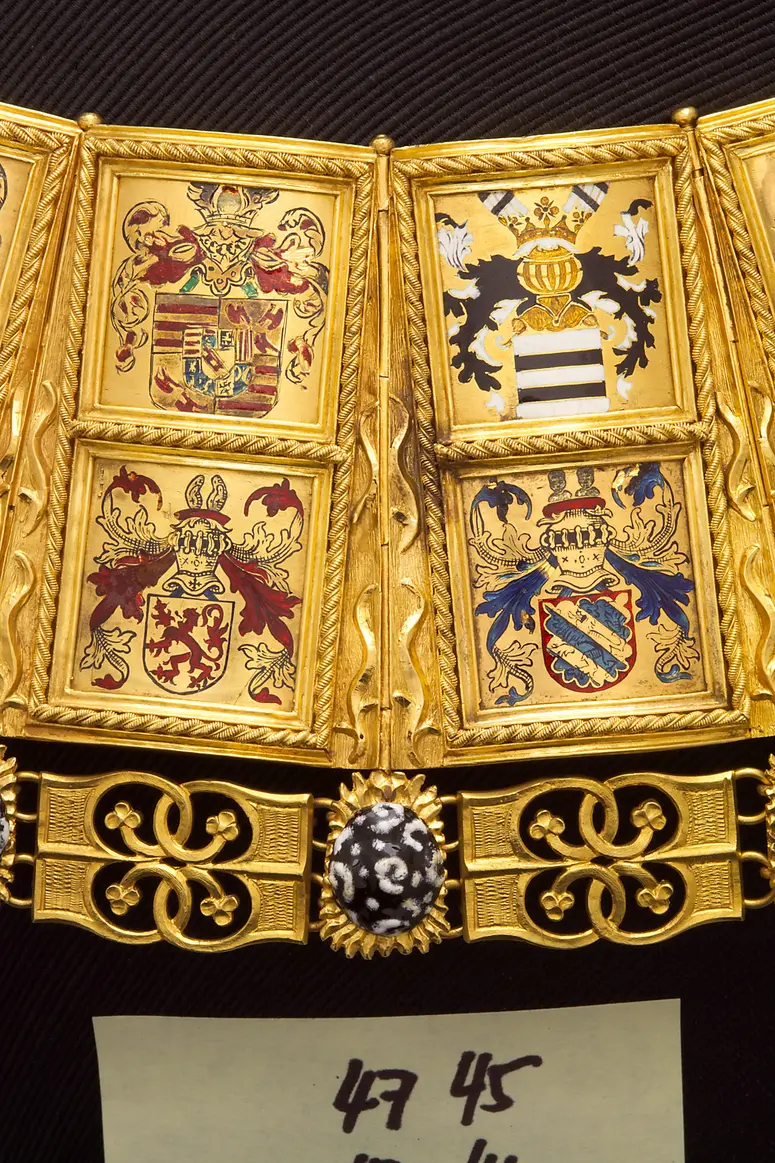
Die Potence (Wappenkette) für den Herold des Ordens vom Goldenen Vlies um 1517
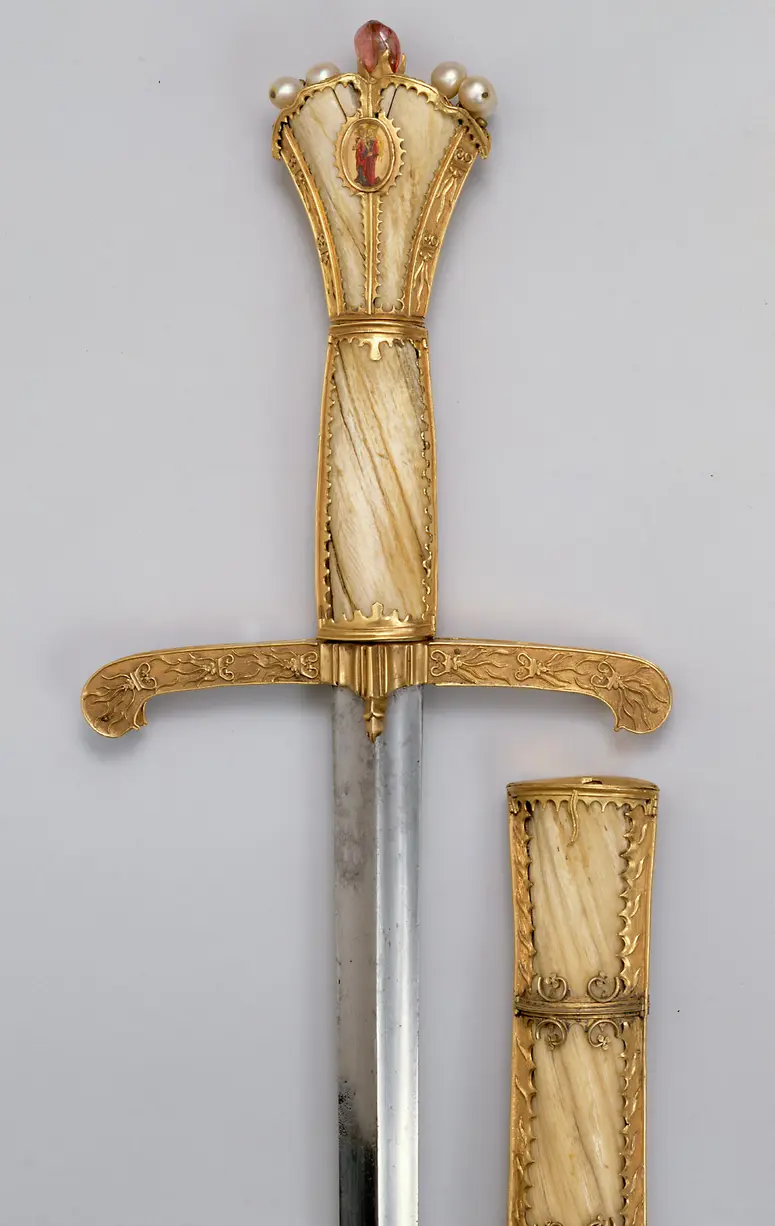
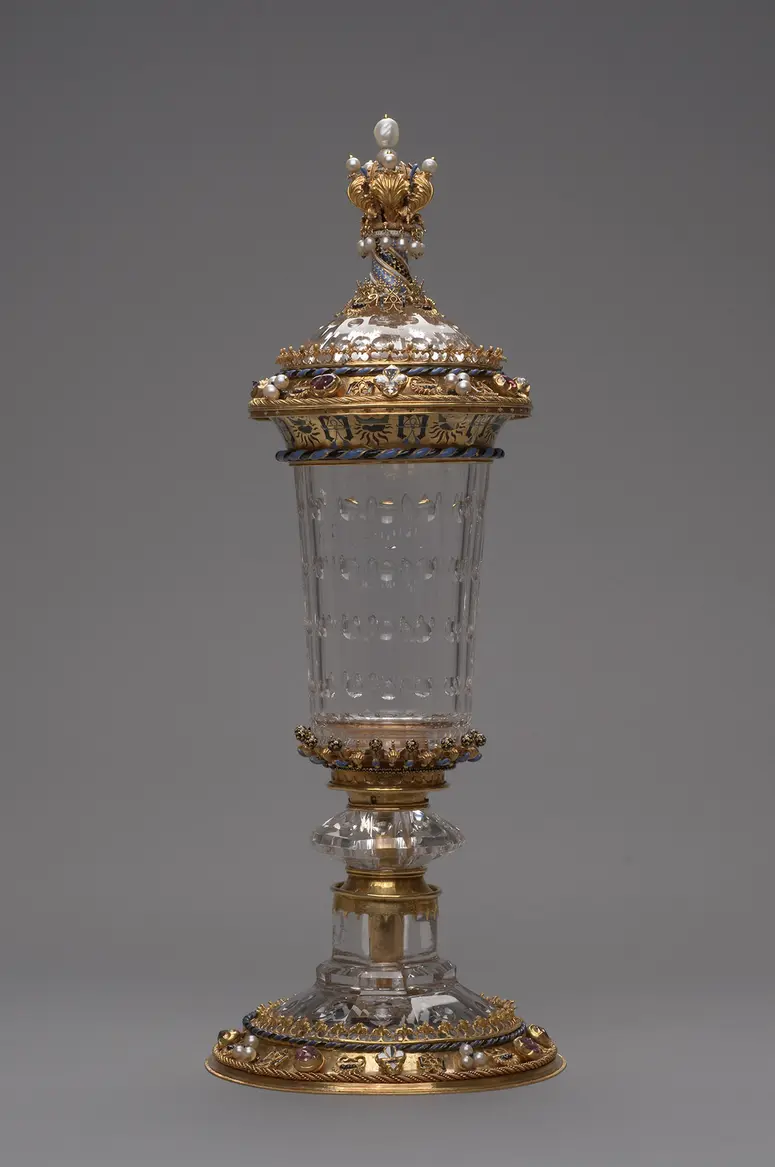
Deckelpokal; sog. Burgundischer Hofbecher Duc Philippe III le Bon de Jean sans Peur Valois 1453/1467
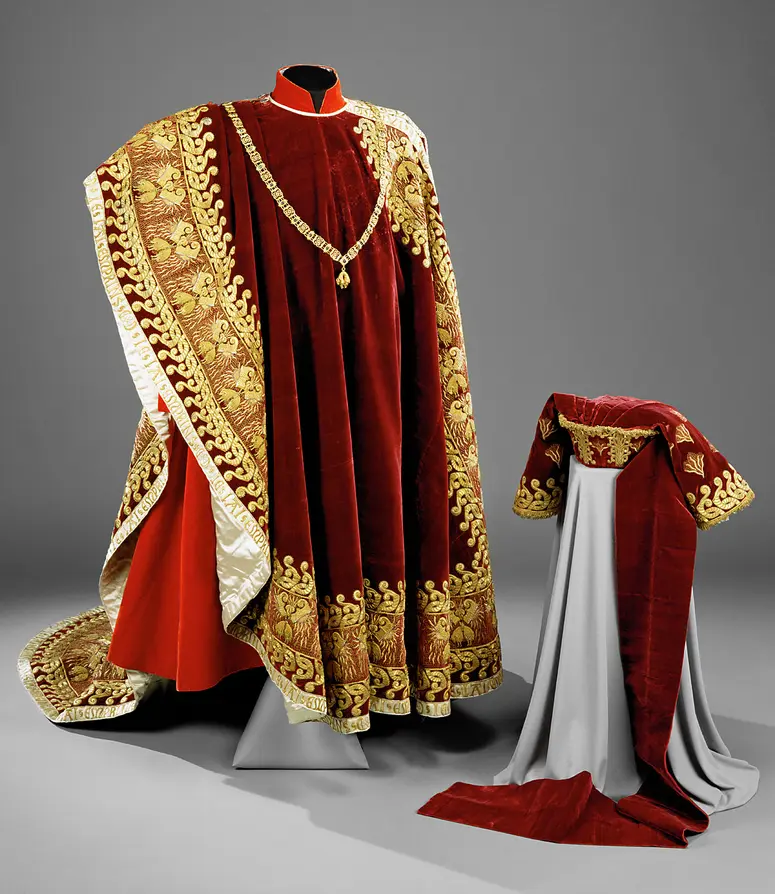
Ornat eines Ritters des Ordens vom Goldenen Vlies 18th century
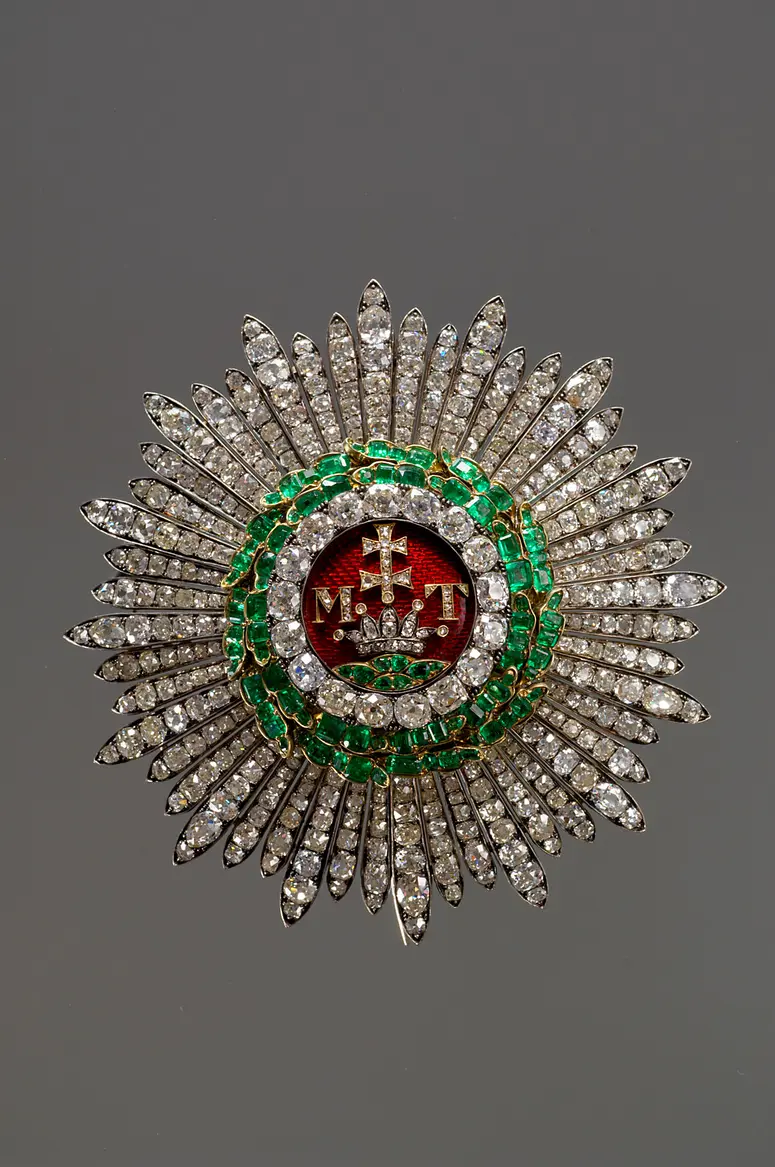
Stern des ungarischen St. Stephans-Ordens Joseph und Anton Biedermann 1. Hälfte 19.Jahrhundert
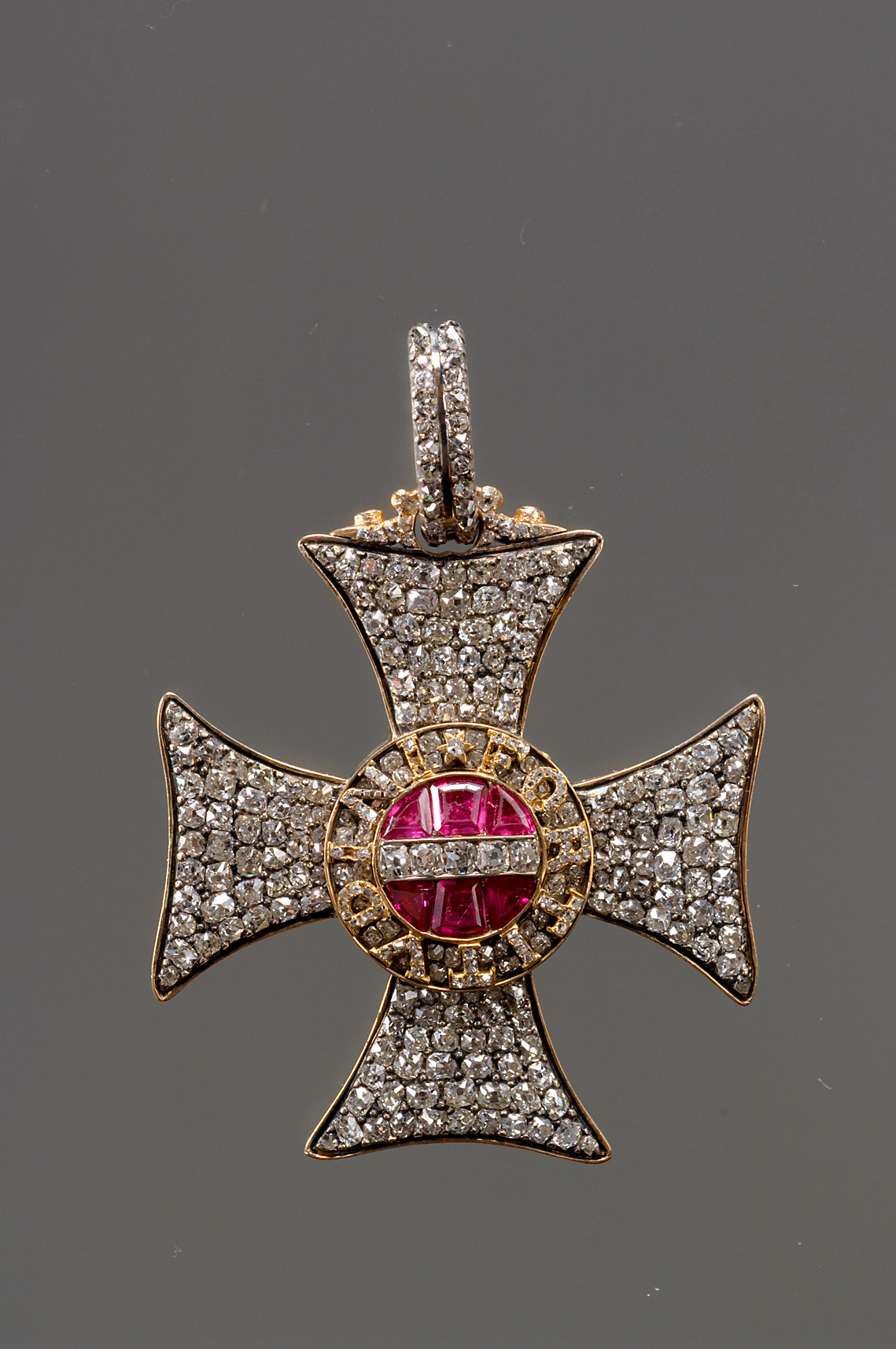
Kreuz des Militär-Maria-Theresien-Ordens Johann Michael Grosser 1757 datiert
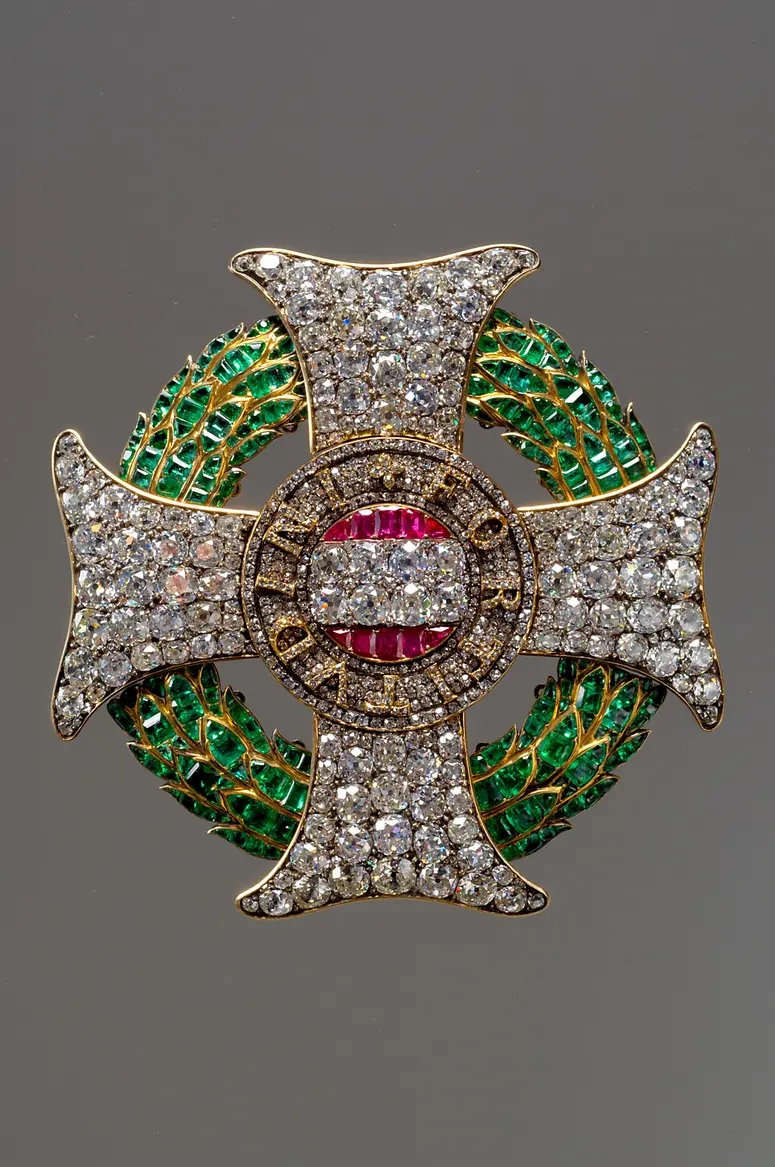
Großkreuz des Militär-Maria-Theresien-Ordens J. A. Schöll 1765 datiert
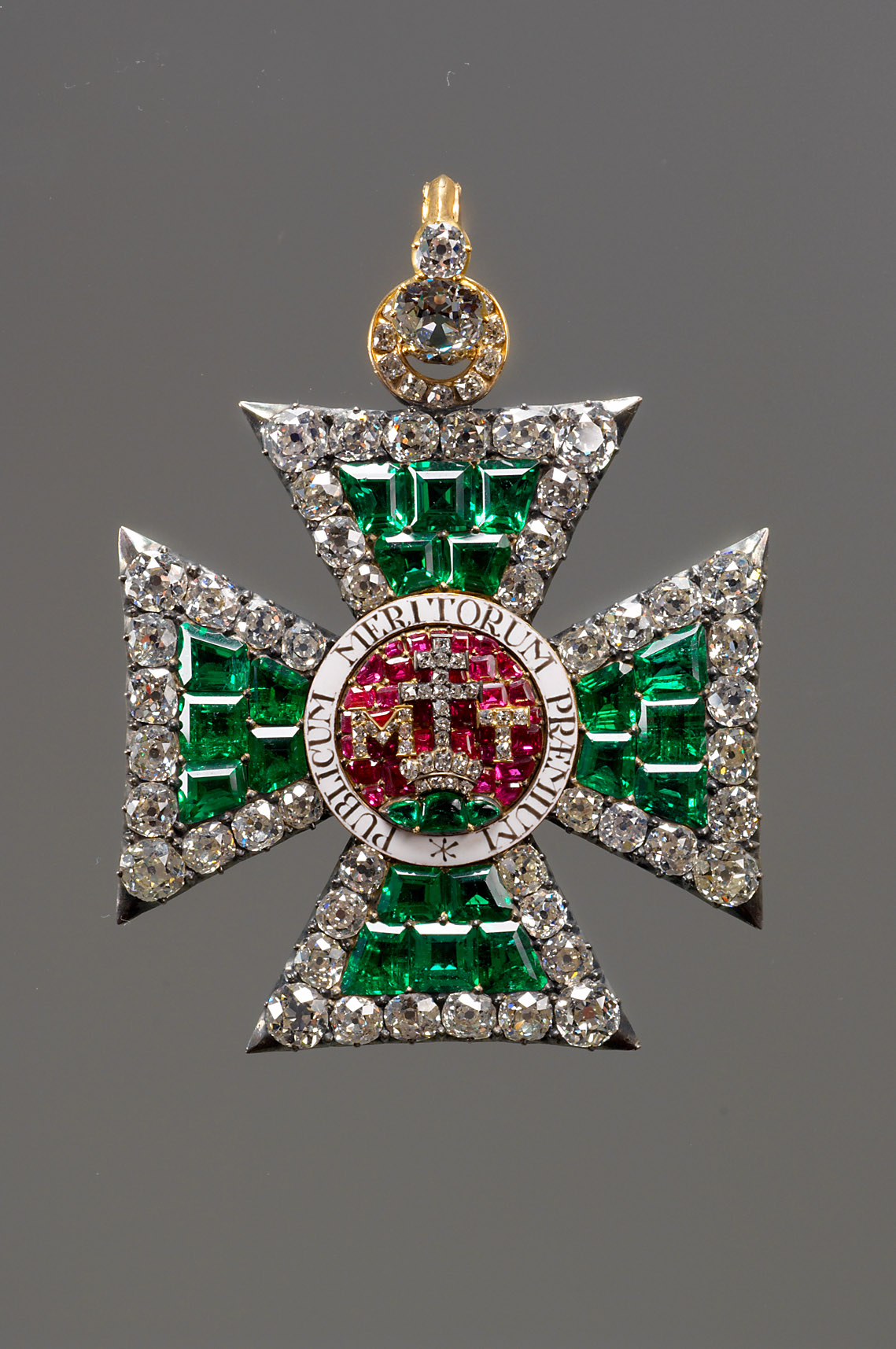
Kreuz des ungarischen St. Stephans-Ordens 2. Hälfte 18. Jahrhundert
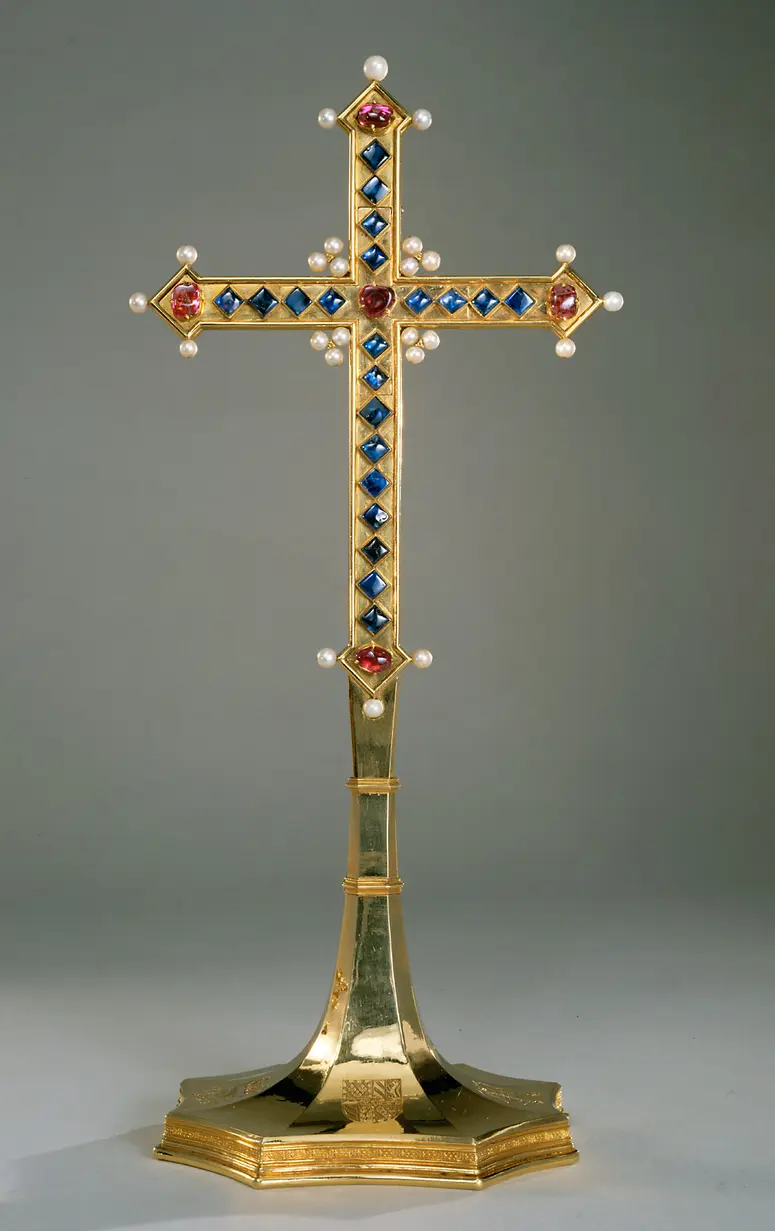
Schwurkreuz des Ordens vom Goldenen Vlies um 1400 (Kreuz), 1453/67 (Ständer)
Sternkreuzordensmonstranz Hans Jakob Mair um 1668
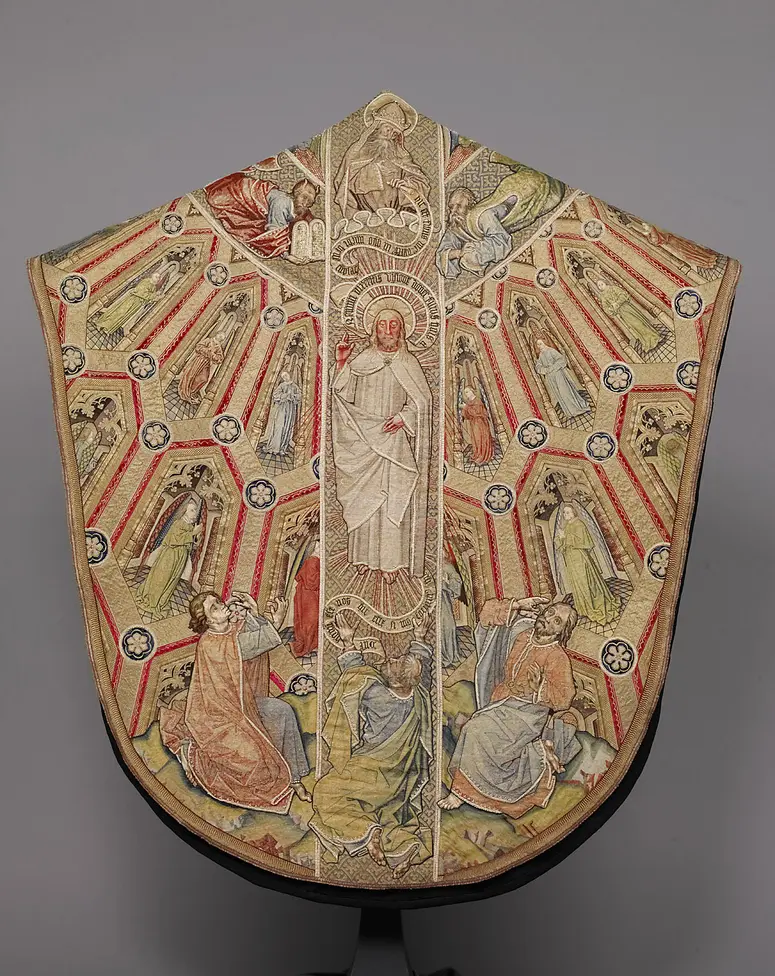
Casula des Meßornats des Ordens vom Goldenen Vlies um 1430/40
Marienmantel des Meßornats des Ordens vom Goldenen Vlies (Pluviale) um 1425/1440
Zwei Collanen des Ordens vom Goldenen Vlies; Reste der substitutorischen Reichskrone Kaiser Ferdinands III. Alexander Emanuel Köchert 1873
Collane des Ordens vom Goldenen Vlies Schmidt's Joseph Witwe, K.K. Hof- und Galanteriewaren 1836
Collane des österreichischen Leopolds-Ordens Schmidt's Joseph Witwe, K.K. Hof- und Galanteriewaren 1836
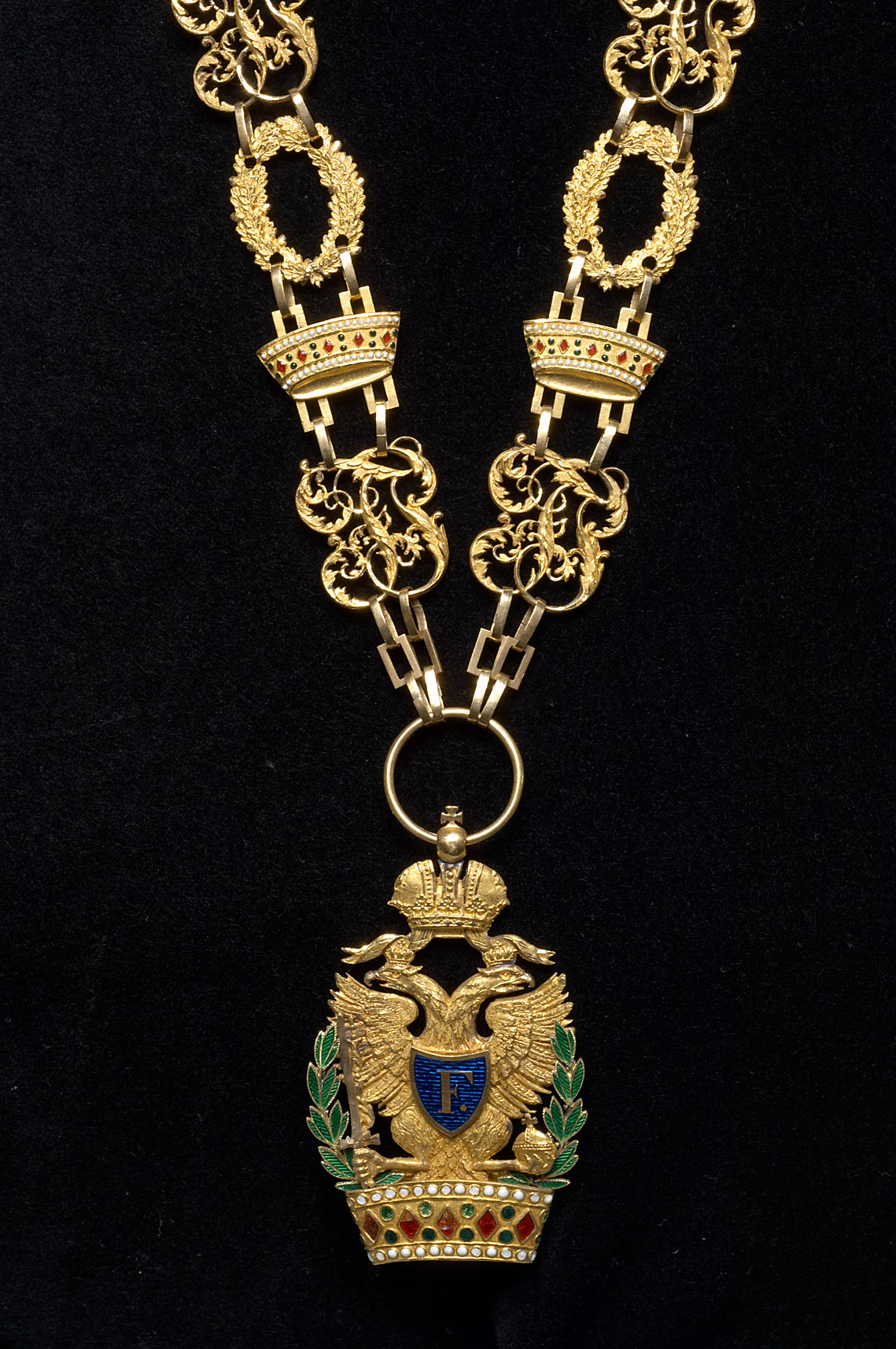
Collane des österreichischen Ordens der Eisernen Krone Schmidt's Joseph Witwe, K.K. Hof- und Galanteriewaren 1836
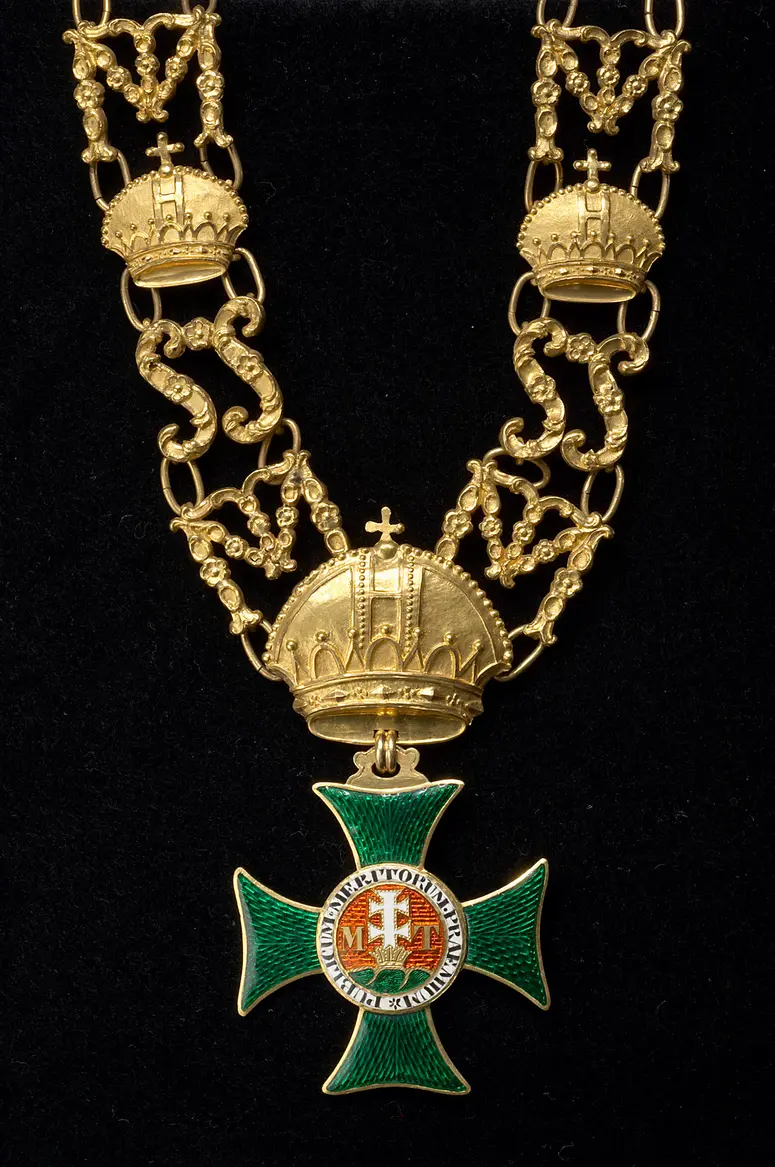
Collane des ungarischen St. Stephans-Ordens Schmidt's Joseph Witwe, K.K. Hof- und Galanteriewaren 1836
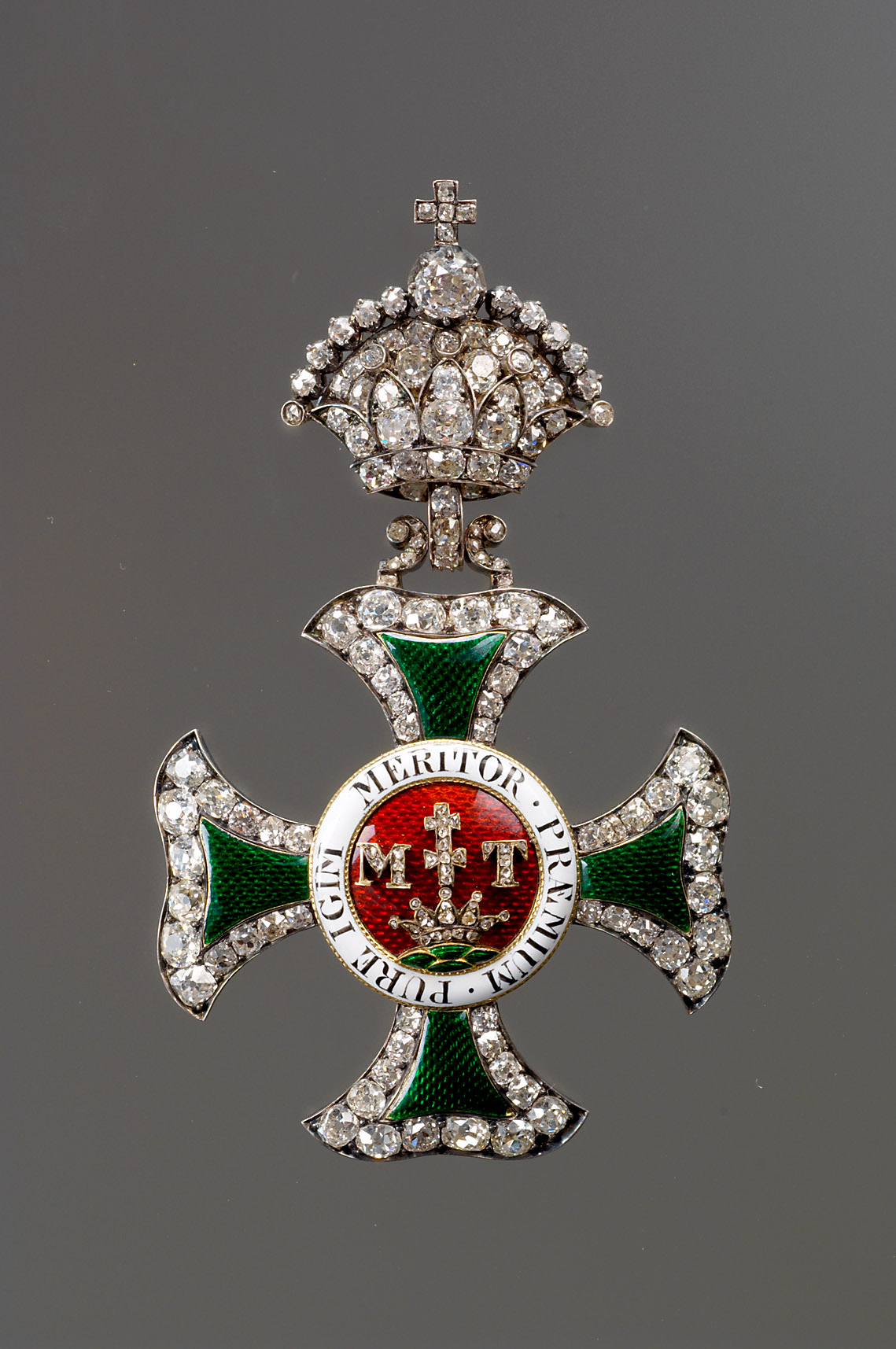
Kreuz des ungarischen St. Stephans-Ordens Joseph und Anton Biedermann 1. Hälfte 19. Jahrhundert