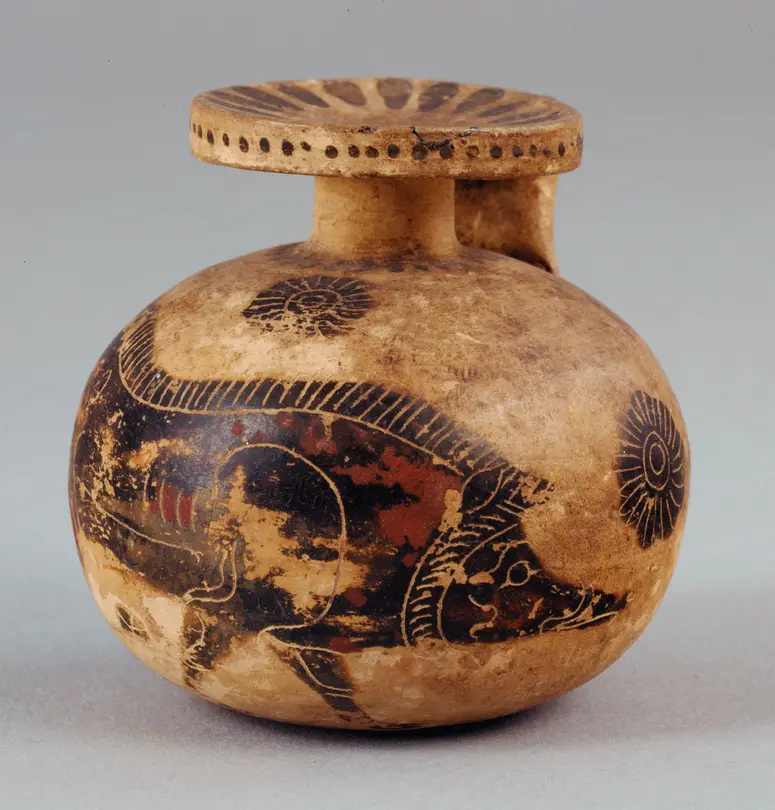
Panther
580 - 560 v. Chr.
Zwei wappenartig angeordnete Panther mit gemeinsamem, frontal gesehenem Kopf erscheinen auf dem Bildfeld des etruskischen Alabastrons, das Form und Bemalung korinthischer Vorbilder nachahmt. In den Zwischenräumen Füllrosetten.
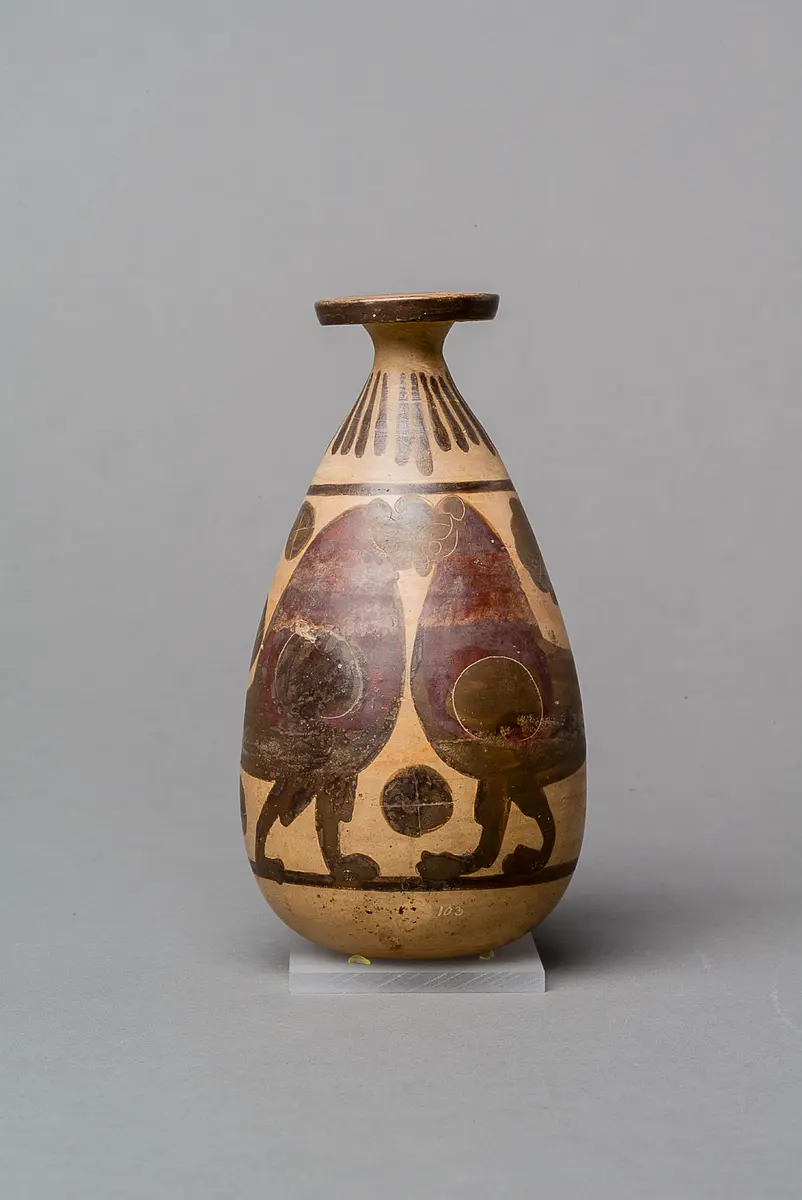
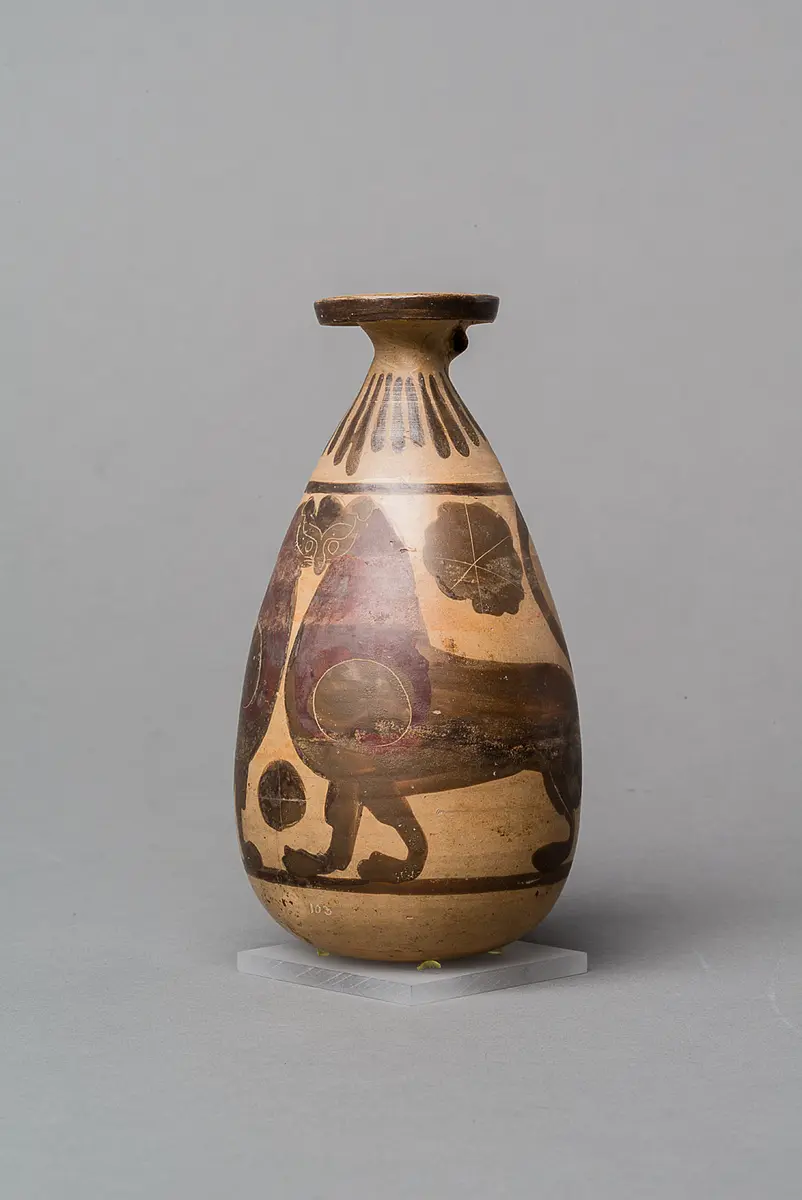
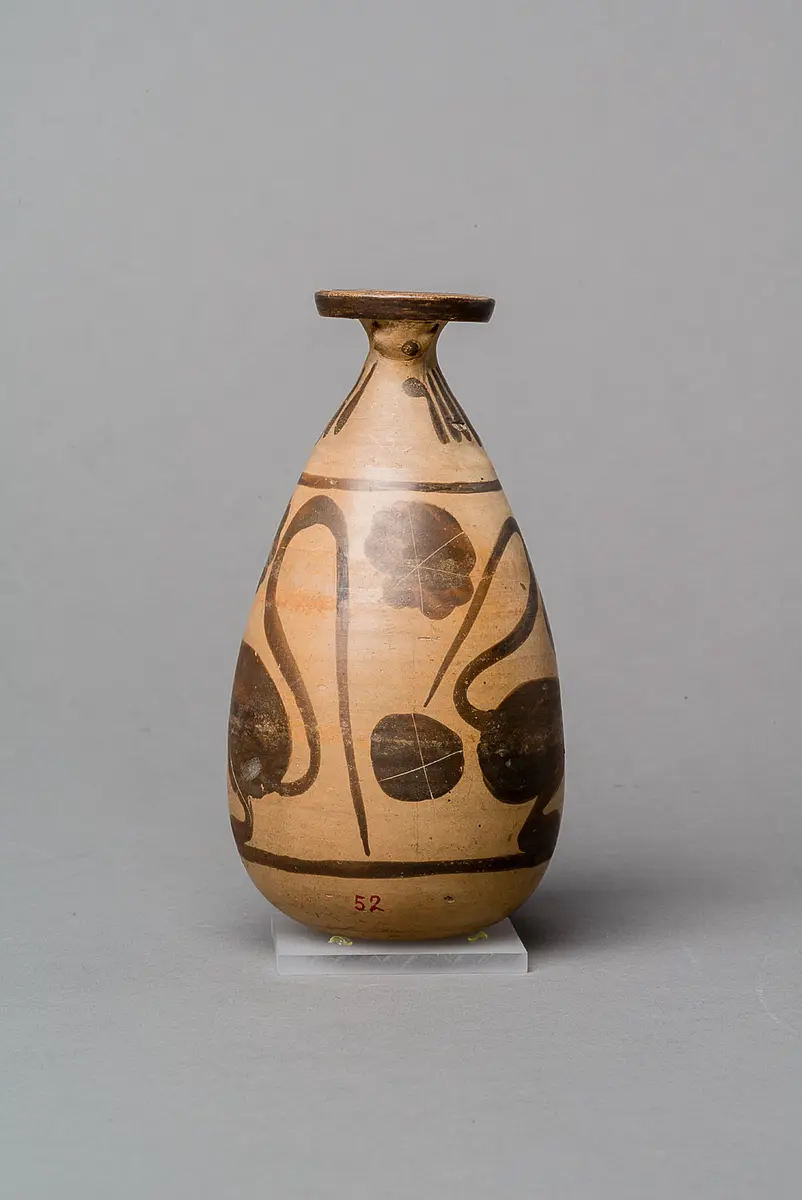
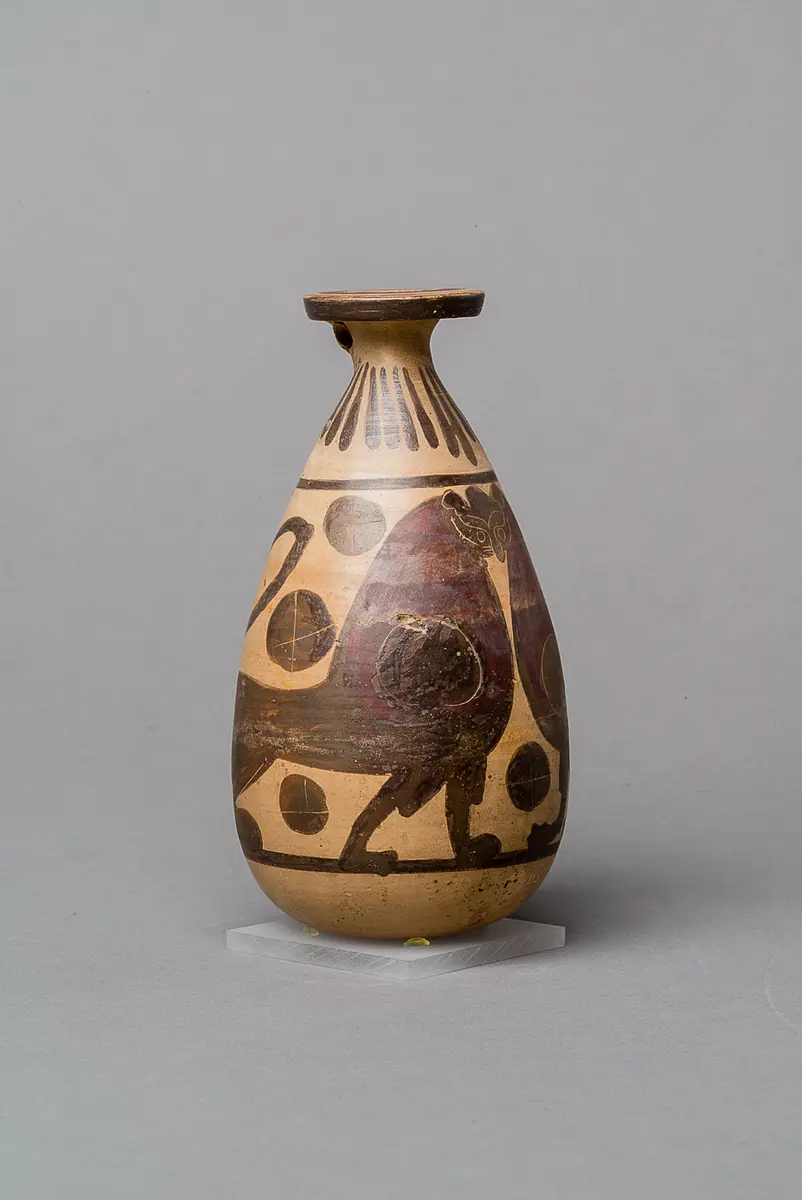
Zwei wappenartig angeordnete Panther mit gemeinsamem, frontal gesehenem Kopf erscheinen auf dem Bildfeld des etruskischen Alabastrons, das Form und Bemalung korinthischer Vorbilder nachahmt. In den Zwischenräumen Füllrosetten.
Time:
580 - 560 v. Chr.
Object Name
Alabastron
Culture
Etruskisch
Location of discovery:
Unbekannt
Material/technology:
Ton
Dimensions:
H. 15,9 cm, Dm. 8,4 cm
Copyright
Kunsthistorisches Museum, Antikensammlung
Invs.
Antikensammlung, IV 52
Provenance
unbekannt; 1814 vorhanden
Browse more
Similar items you might be interested in
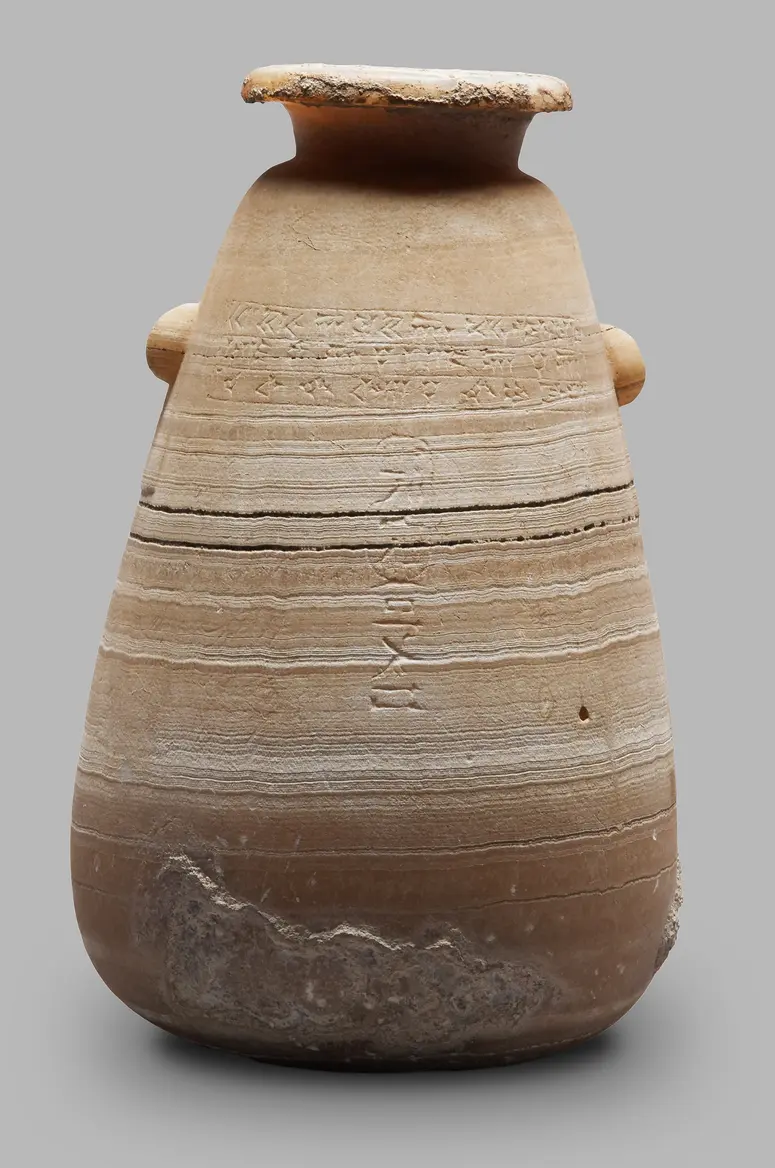
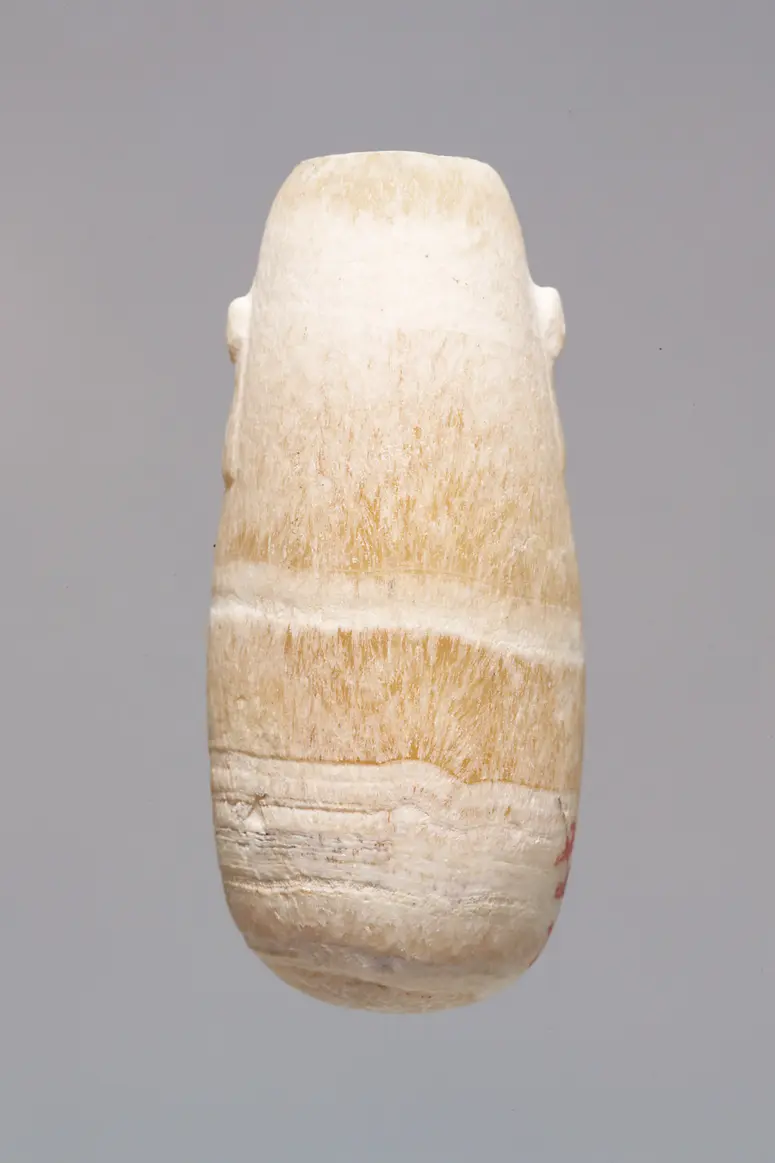
Großes Alabastron des Xerxes mit viersprachiger Inschrift Ägypten (vermutlich) Zeit des Xerxes, 486-466 v. Chr.

Korinthisches Kapitell Römisch, Mittlere Kaiserzeit Ende 1. Jh. n. Chr.
Aschenurne: Bacchus und Ariadne, Brettspiel Römisch, Mittlere Kaiserzeit 1. - 2. Jh. n. Chr.
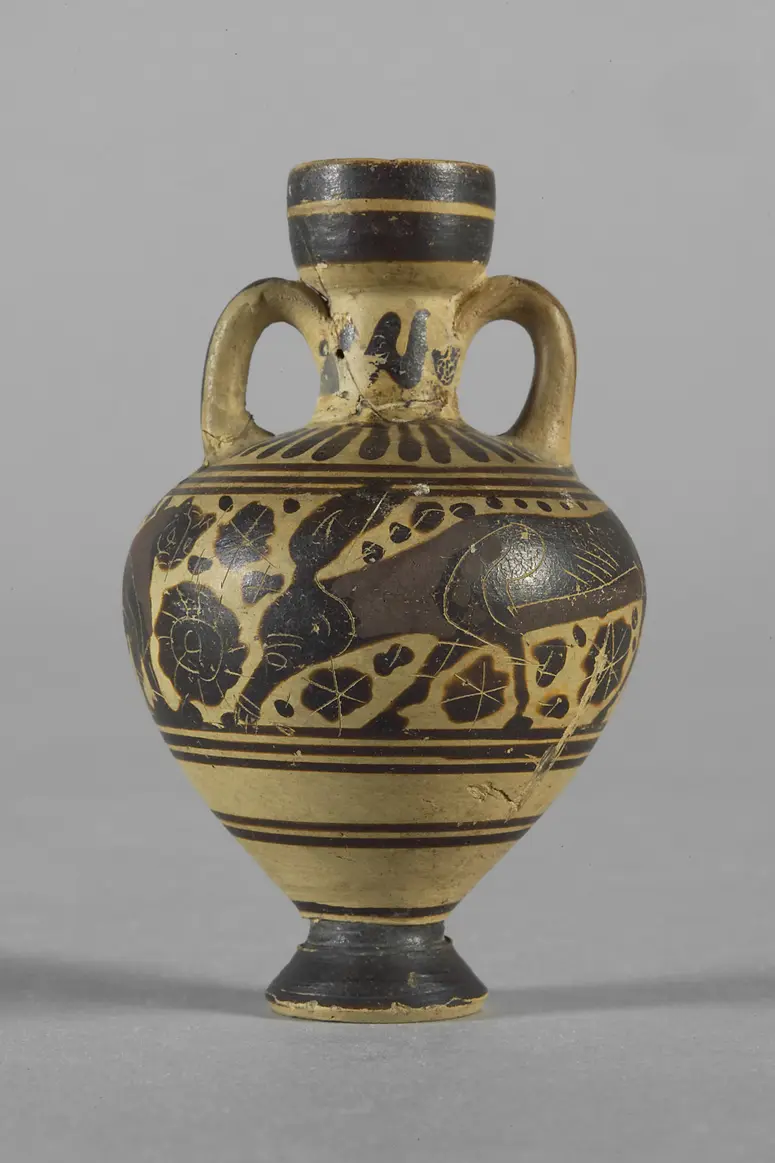
Amphoriskos: Tierfries mit Panther, Antilope und Vogel Griechisch, Mittel/Spätkorinthisch um 570 v. Chr.
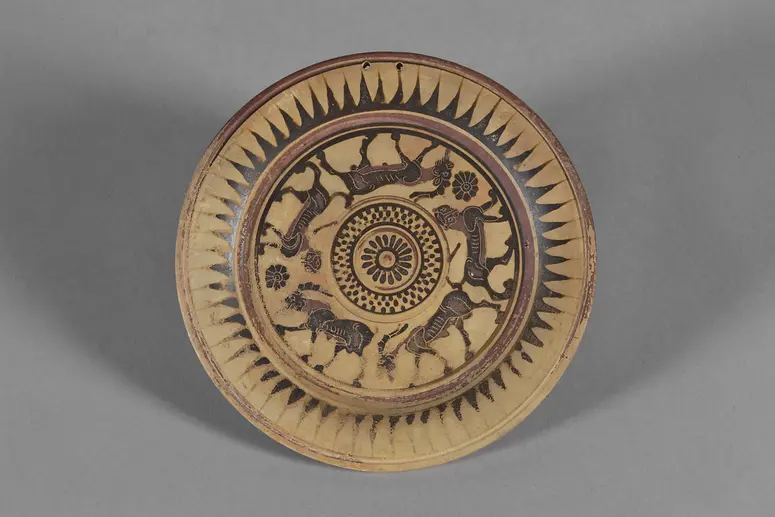
Votivteller: Tierfries mit Panther und Steinböcken Griechisch, Mittelkorinthisch 590 - 570 v. Chr.
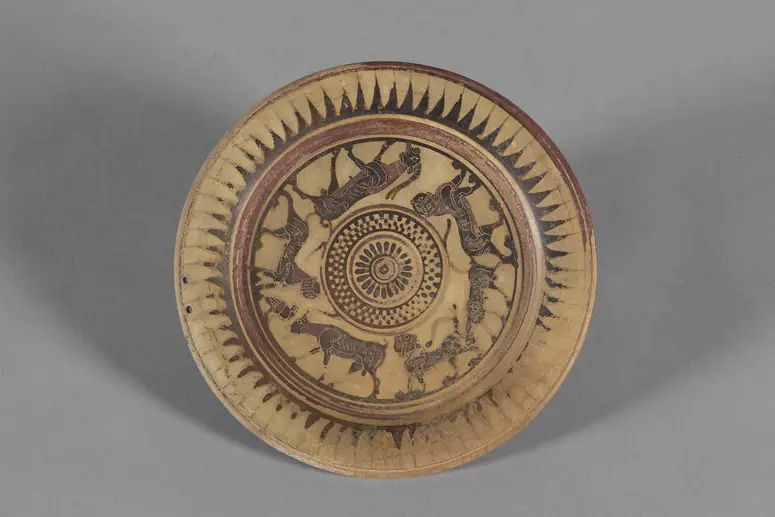
Votivteller: Tierfries mit Panther und Steinböcken Griechisch, Mittelkorinthisch 590 - 570 v. Chr.
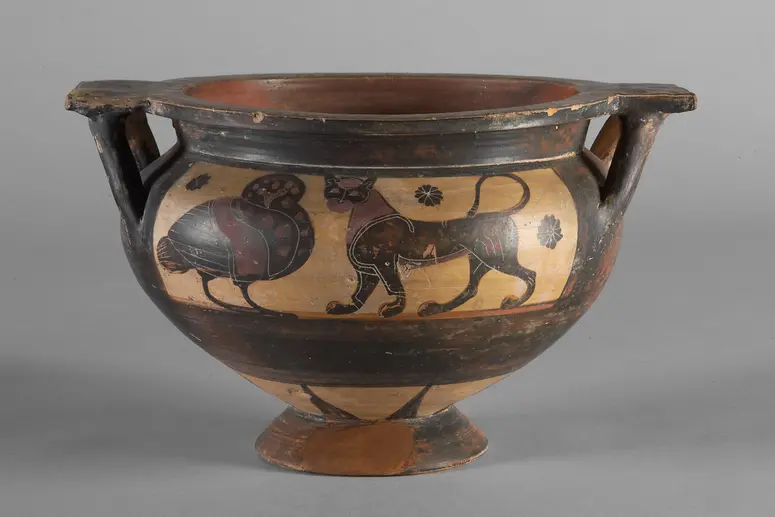
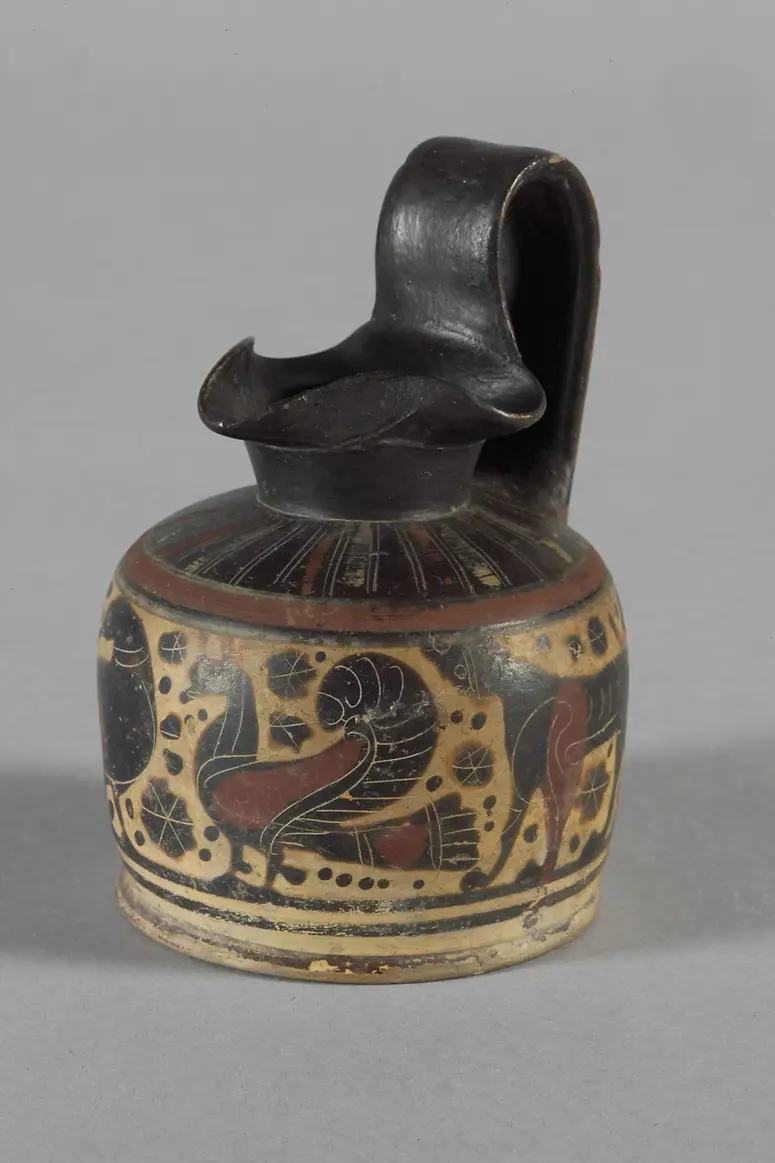
Kanne mit Kleeblattmündung: Tierfries mit Vogelgreif, Schwan und Panther Griechisch, Mittel/Spätkorinthisch um 570 v. Chr.
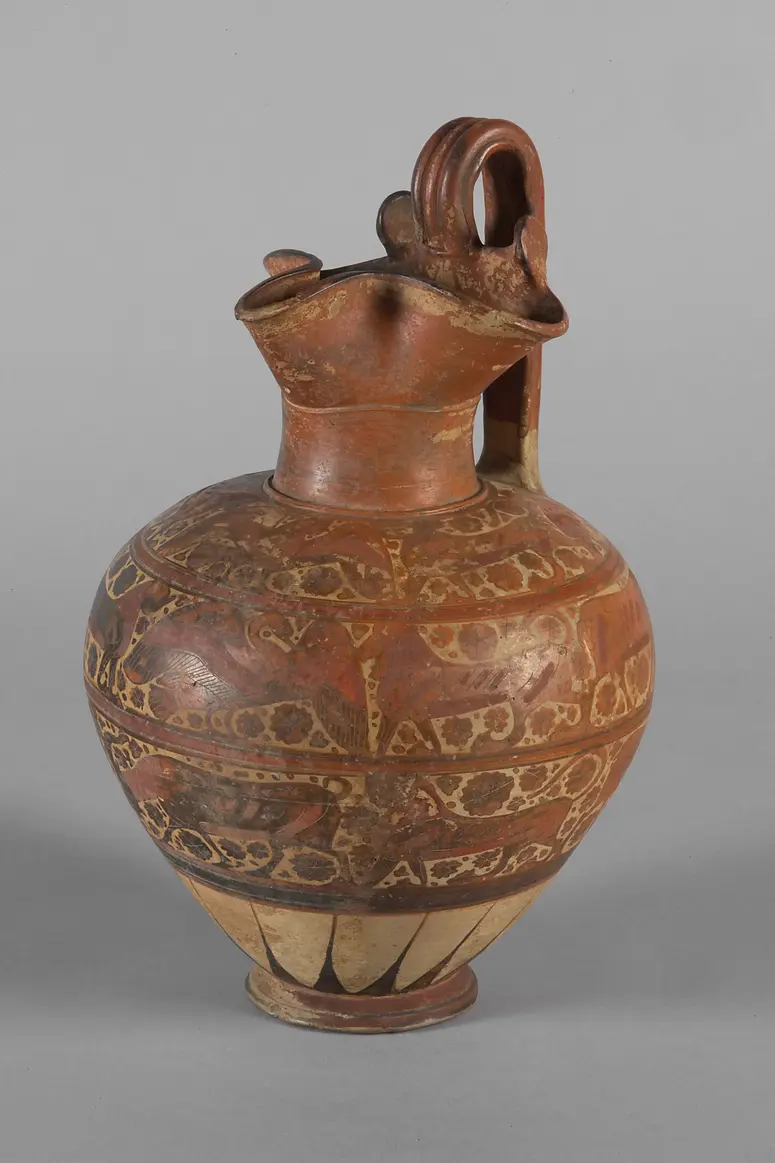
Kanne mit Kleeblattmündung: Tierfries mit Panther, Stier, Löwe und Steinbock Griechisch, Mittelkorinthisch 590 - 570 v. Chr.

Olpe (Kanne): Tierfriese mit Widdern, Panthern, Eulen und Löwen Griechisch, Korinthisch 1. Hälfte 6. Jh. v. Chr.