Figural Clock with a Pasha on Horseback
ca. 1580/90
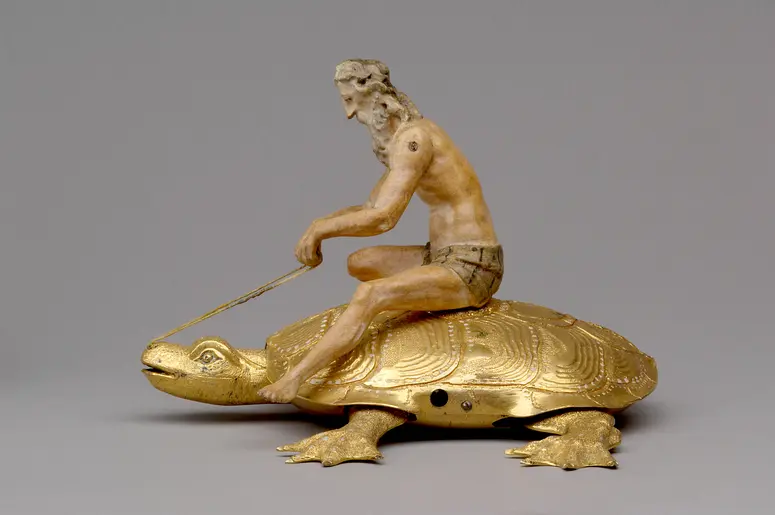
Automata powered by springs were among the most coveted objects in a princely Kunstkammer. They are highlights of mechanical artistry and an expression of the desire to make inanimate things come to life. Thus, human skill seemed to imitate the divine act of creation and to assume control over nature.
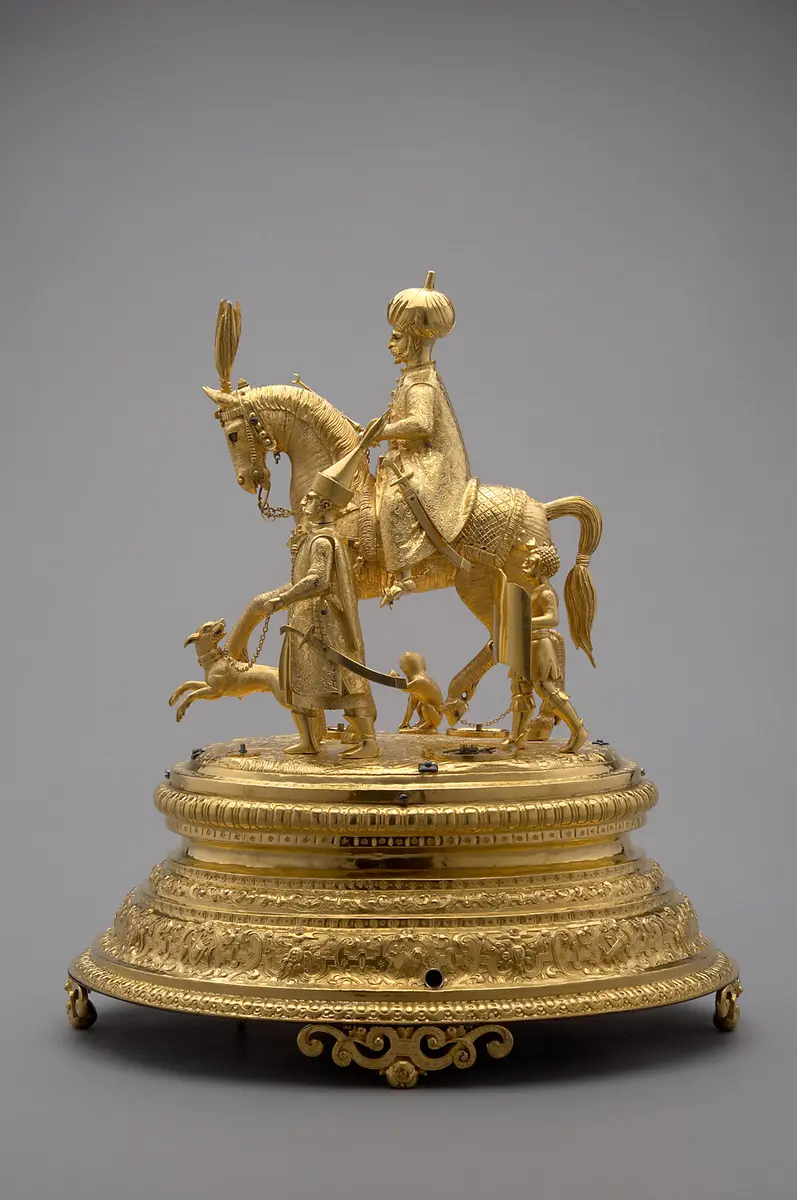
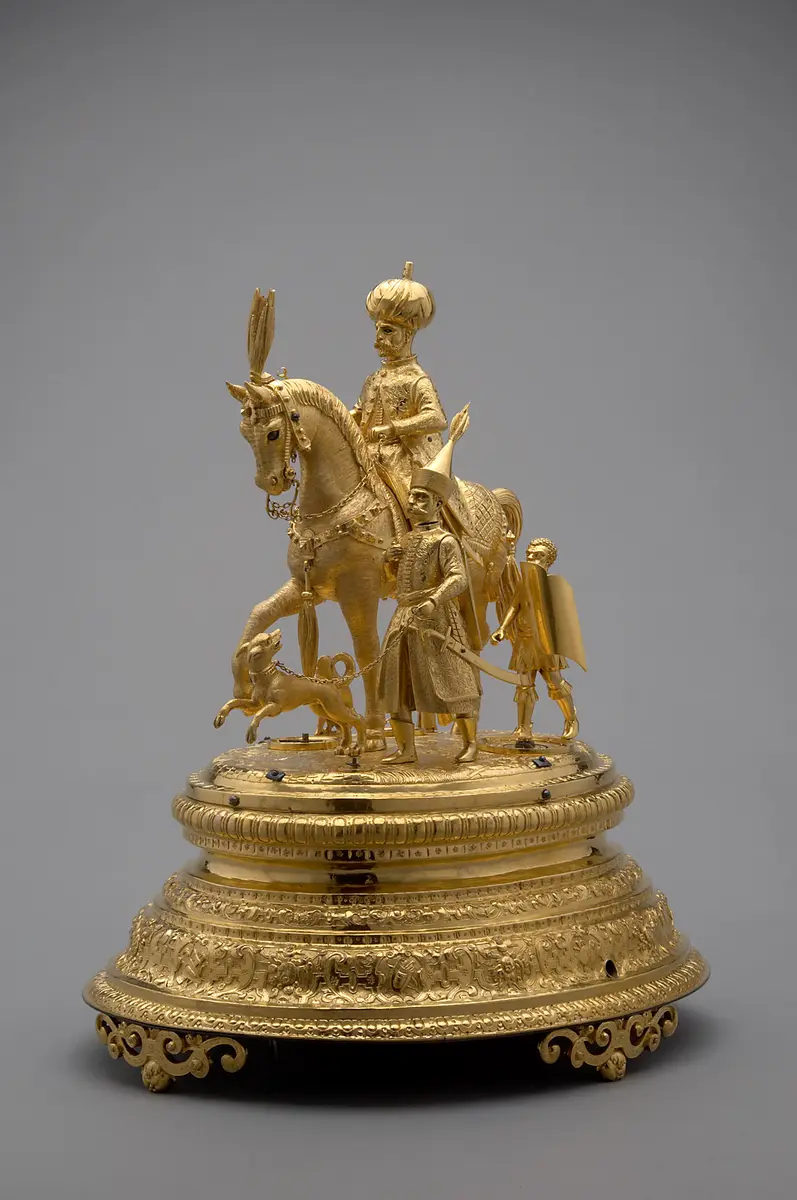
Automata powered by springs were among the most coveted objects in a princely Kunstkammer. They are highlights of mechanical artistry and an expression of the desire to make inanimate things come to life. Thus, human skill seemed to imitate the divine act of creation and to assume control over nature.
Time:
ca. 1580/90
Object Name
Automaton; Clock
Culture
Southern German
Material/technology:
Gilded copper alloy, iron
Dimensions:
H. 47,5 cm, L. 42 cm, B. 34 cm
Copyright
Kunsthistorisches Museum, Kunstkammer
Invs.
Kunstkammer, 6857
Browse more
Similar items you might be interested in
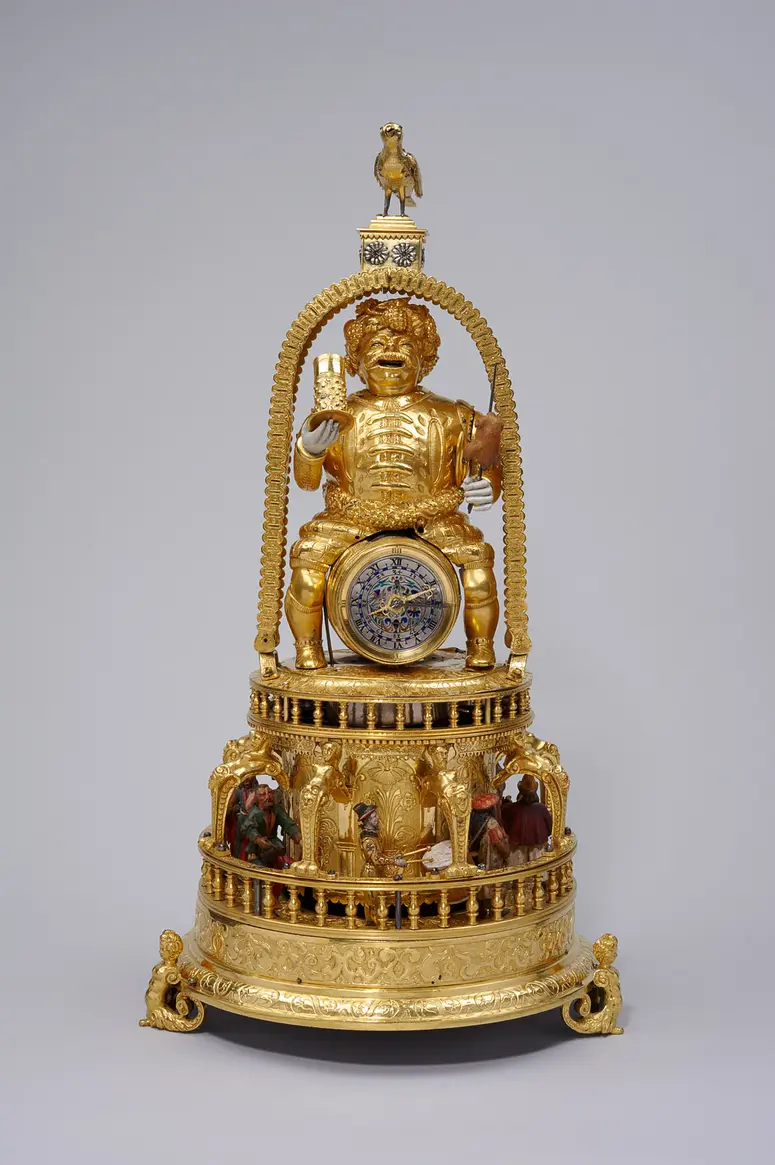
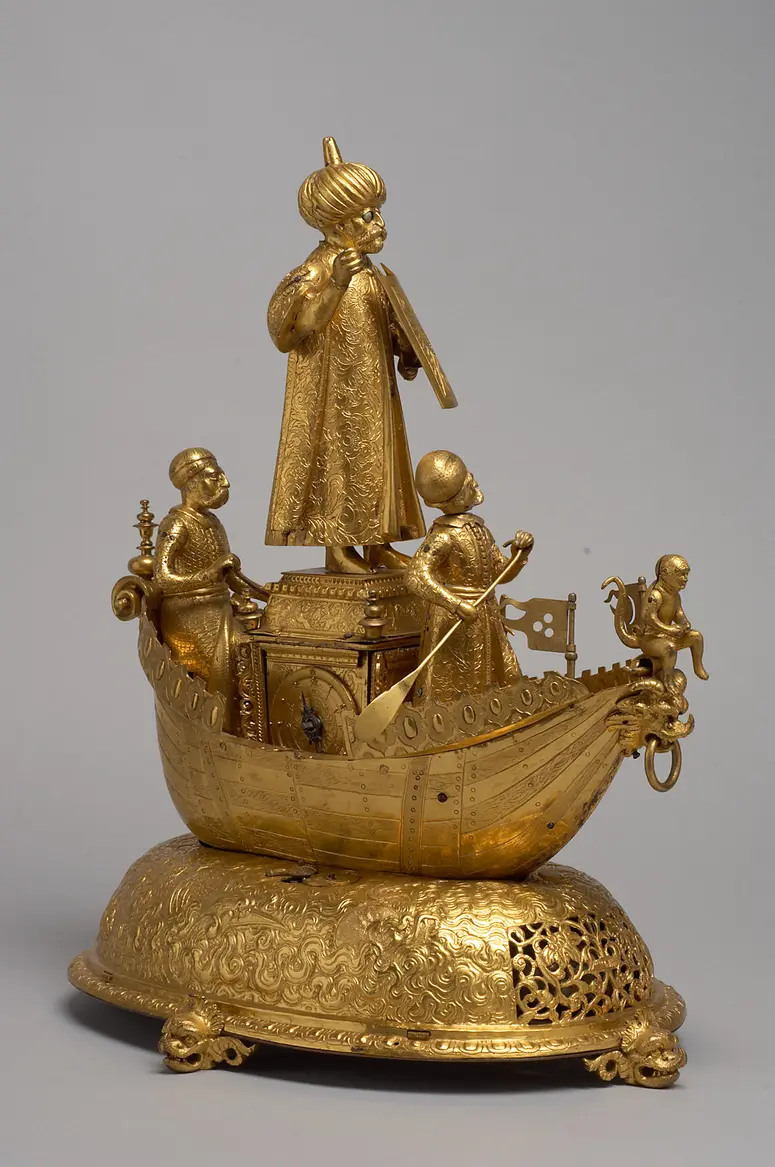
Figurenuhr mit türkischer Barke, Automat, Türkenautomat um 1580/1590
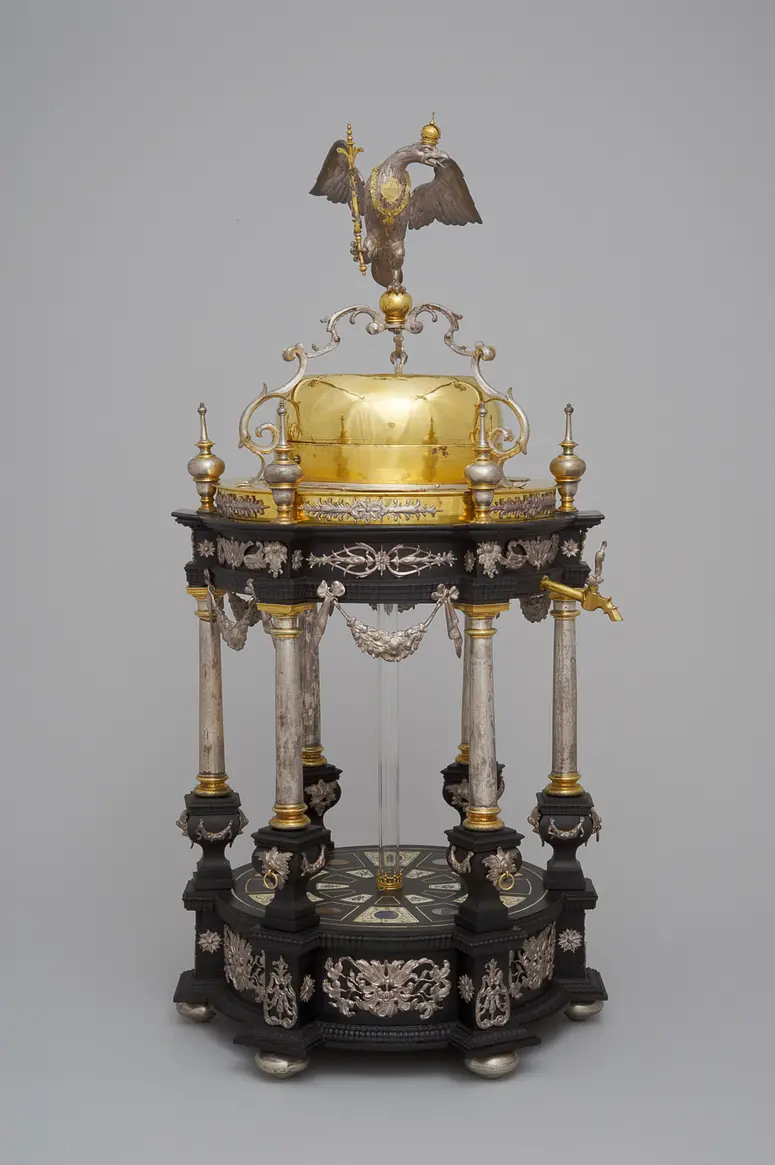
Gondelautomat, Automat, Tafelaufsatz Joachim Fries (auch Friss) um 1600