Capacete
um 1490 | Ferdinand II. (1474-1516), ab 1479 König von Aragon, 1474-1504, ab 1506 als Ferdinand V. König von
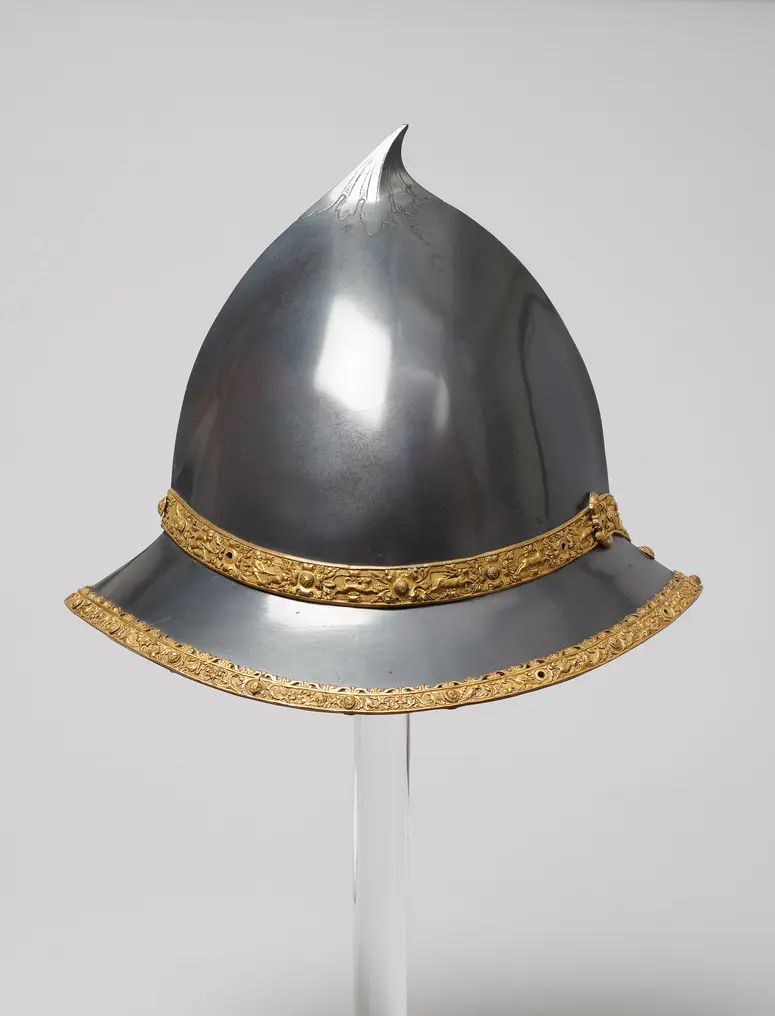
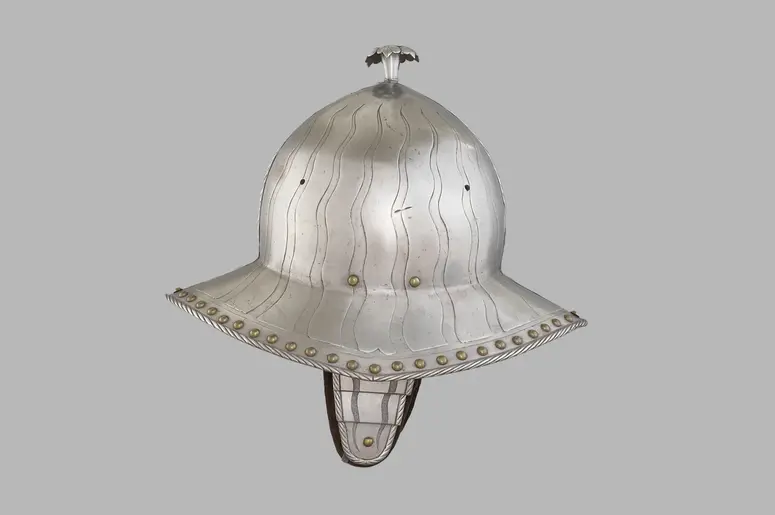
The term capacete derives from the Spanish cabeza, head. It is used for a Spanish version of the iron kettle hat common throughout Europe in the late Middle Ages. Typical characteristics are the wide brim, the marked cortex line, and the elegantly curved silhouette. Note the three blacksmith’s marks (half suns) on the side of this capacete. These and similar marks are traditionally associated with the Spanish city of Calatayud, located south-west of Saragossa. Although we cannot prove this attribution, the ornamentation suggests the helmet originated in Spain.
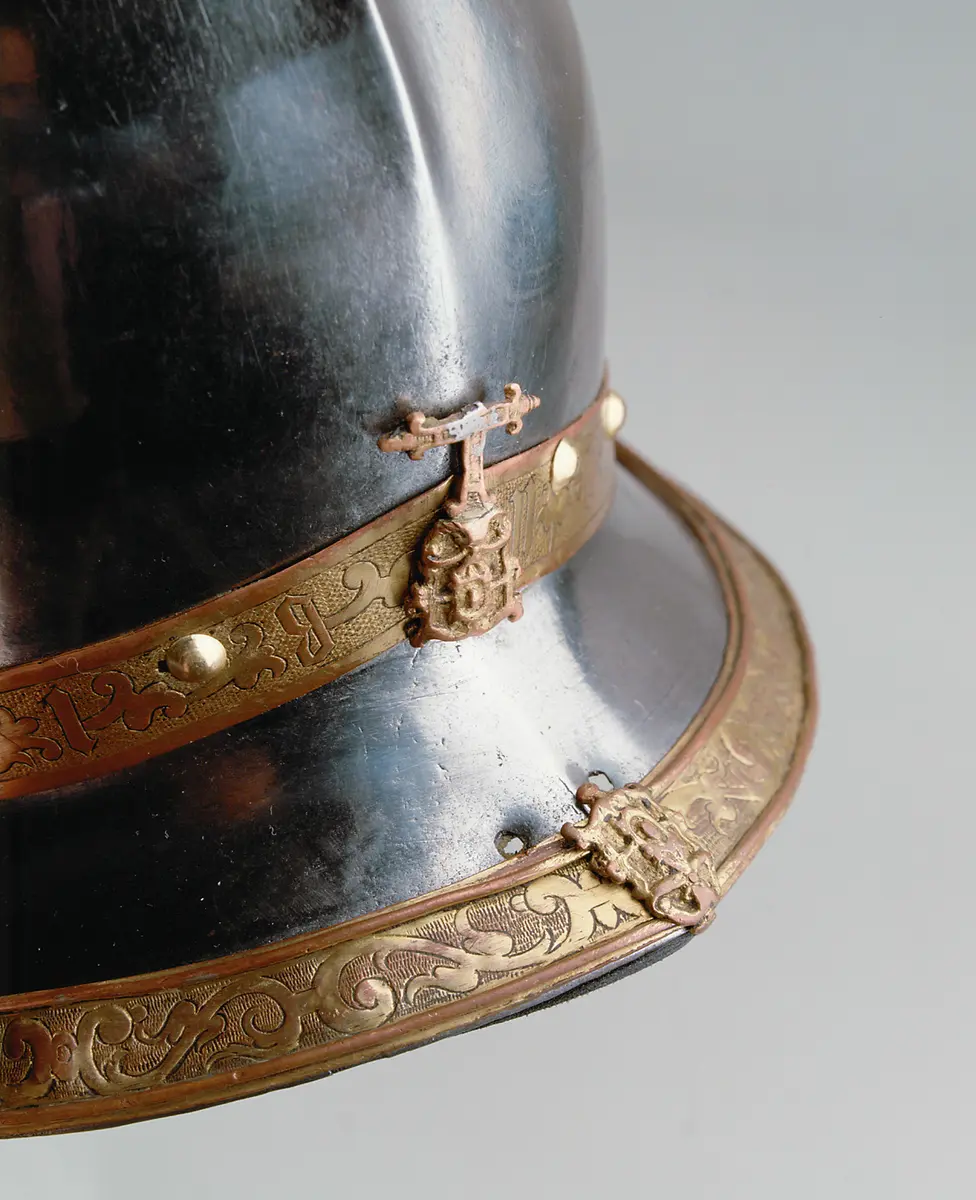
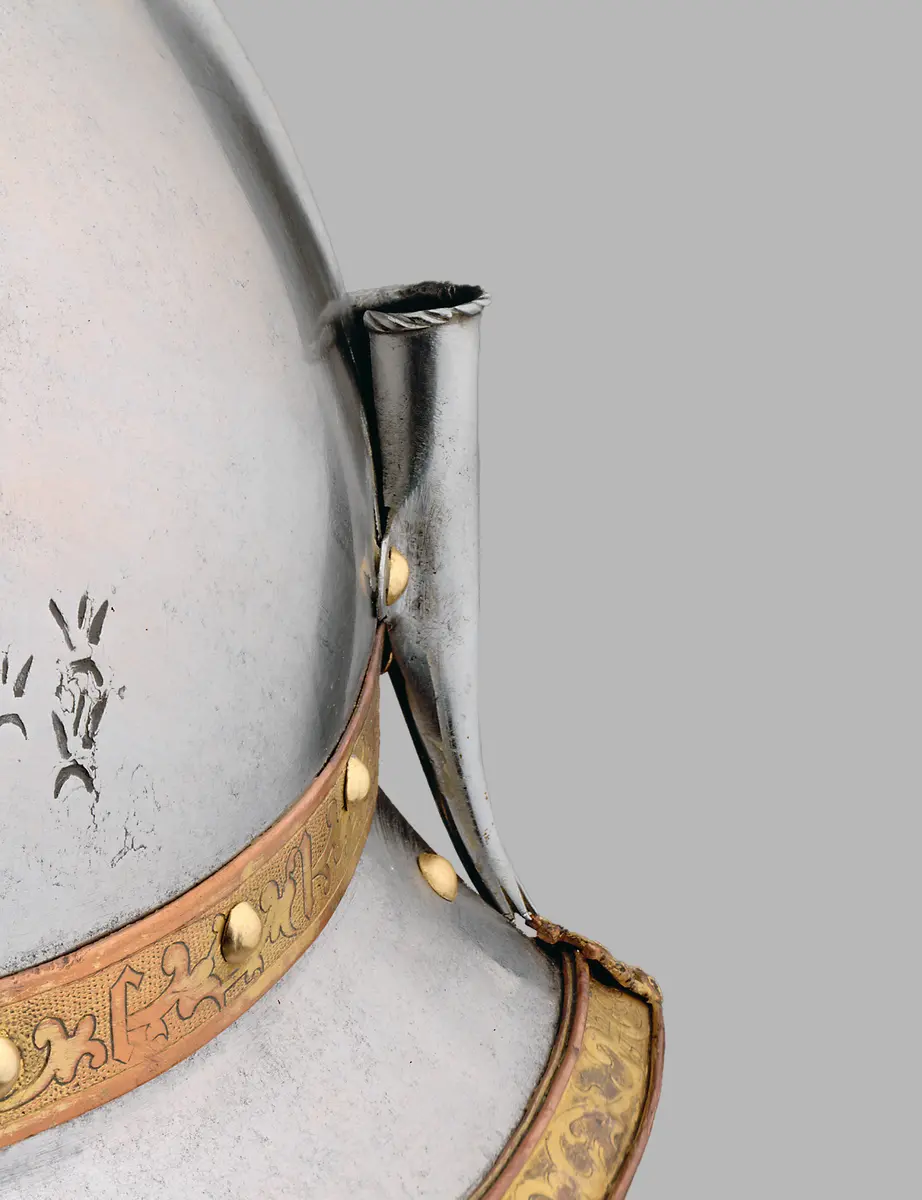
Note also the small gilt cross on the repoussé, slightly tilted tip of the helmet, and the engraved inscription in hoc signo vincit (‘in this sign he is victorious’) on the narrow gilt copper headband, the individual letters alternating with abstract leaves. The decorative border along the rim features only garlands. On forehead and back, the decorative bands are surmounted with crowned cartouches emblazoned with the arms of Granada. In addition, the frontal cartouche includes a cross (today incomplete). The small sleeve (presumably for a plume) mounted on the headband on the back of the helmet is a later addition.
Until the twentieth century, the helmet was not attributed to a particular owner; however, its decoration suggests that it may have belonged to Ferdinand the Catholic, King of Aragon. It references the conquest of Granada, Ferdinand’s great victory in 1492.
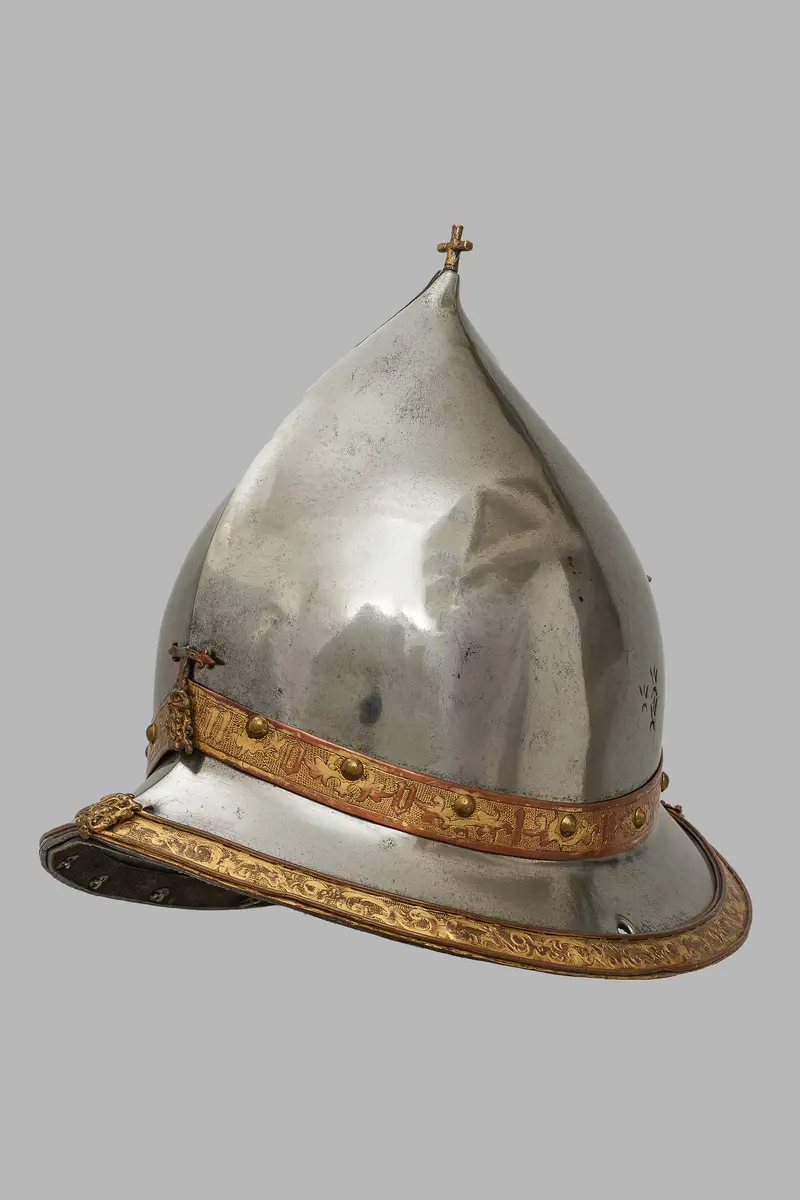
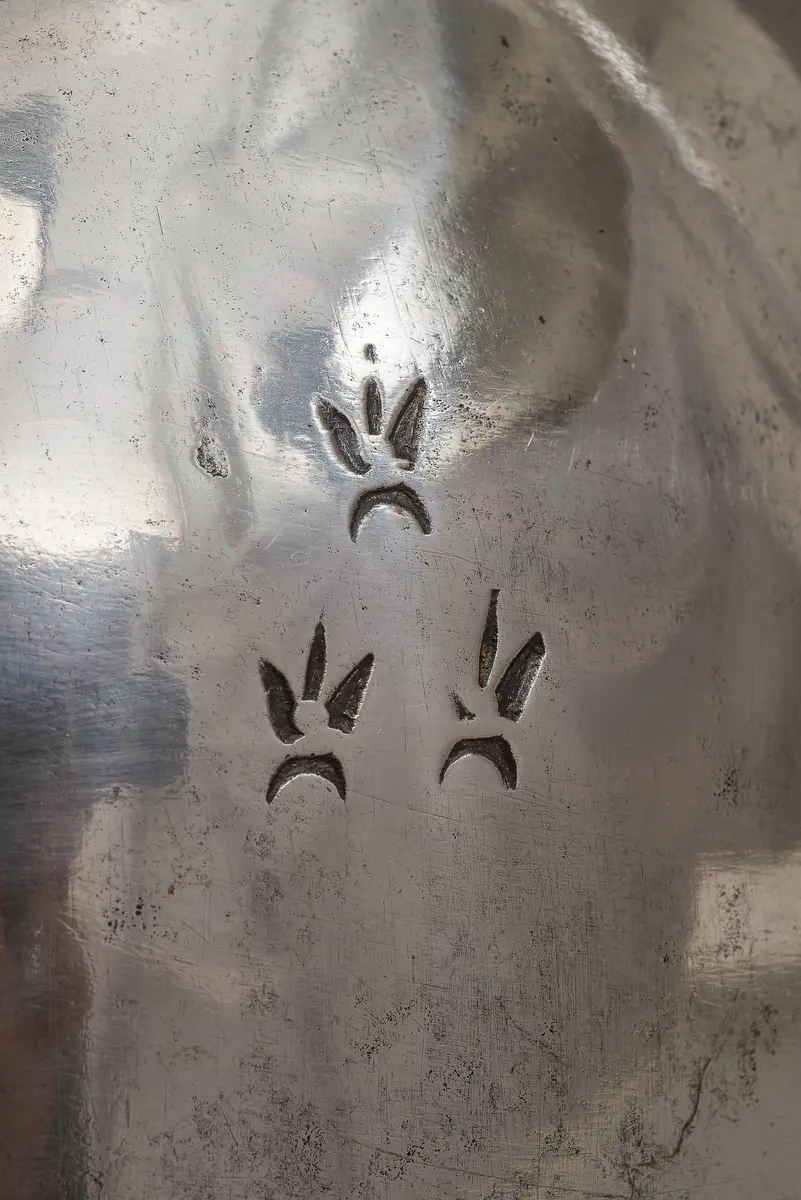
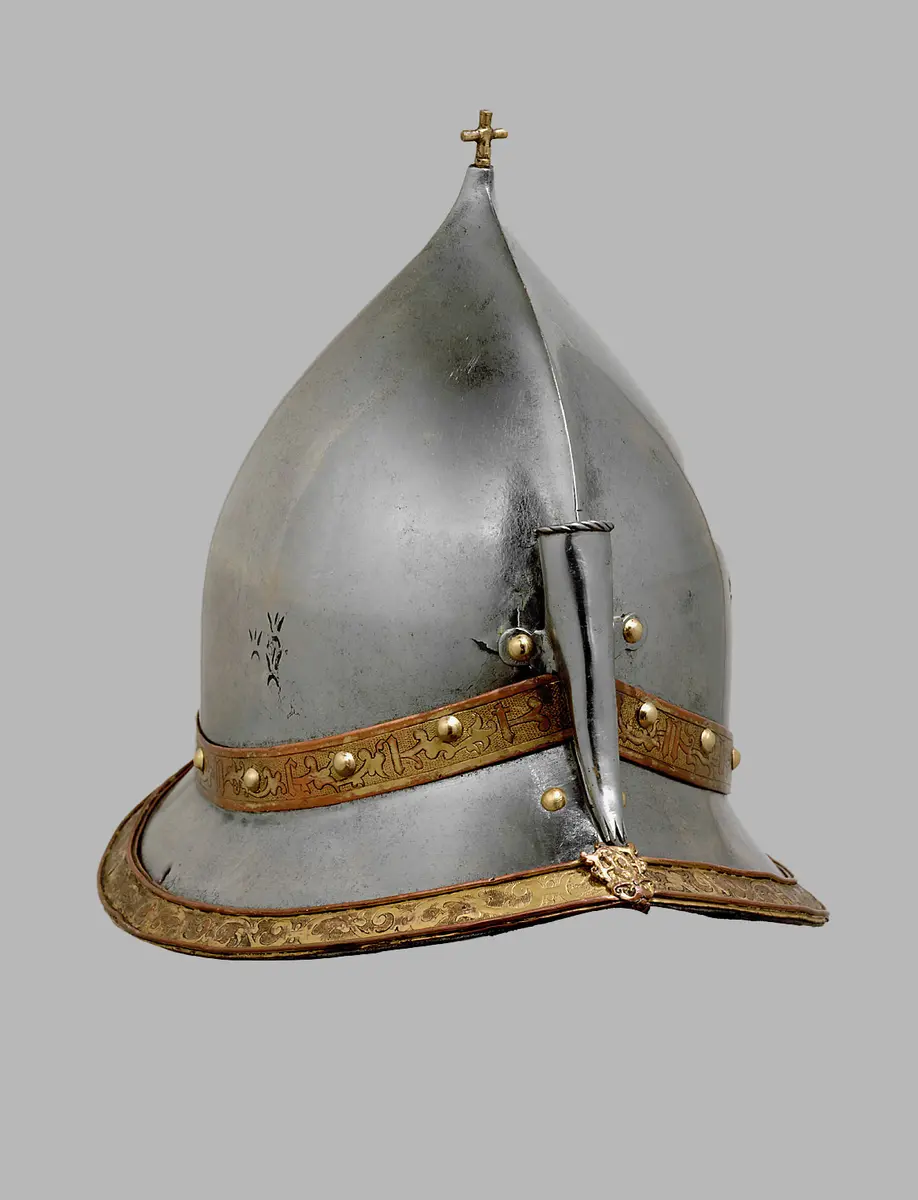
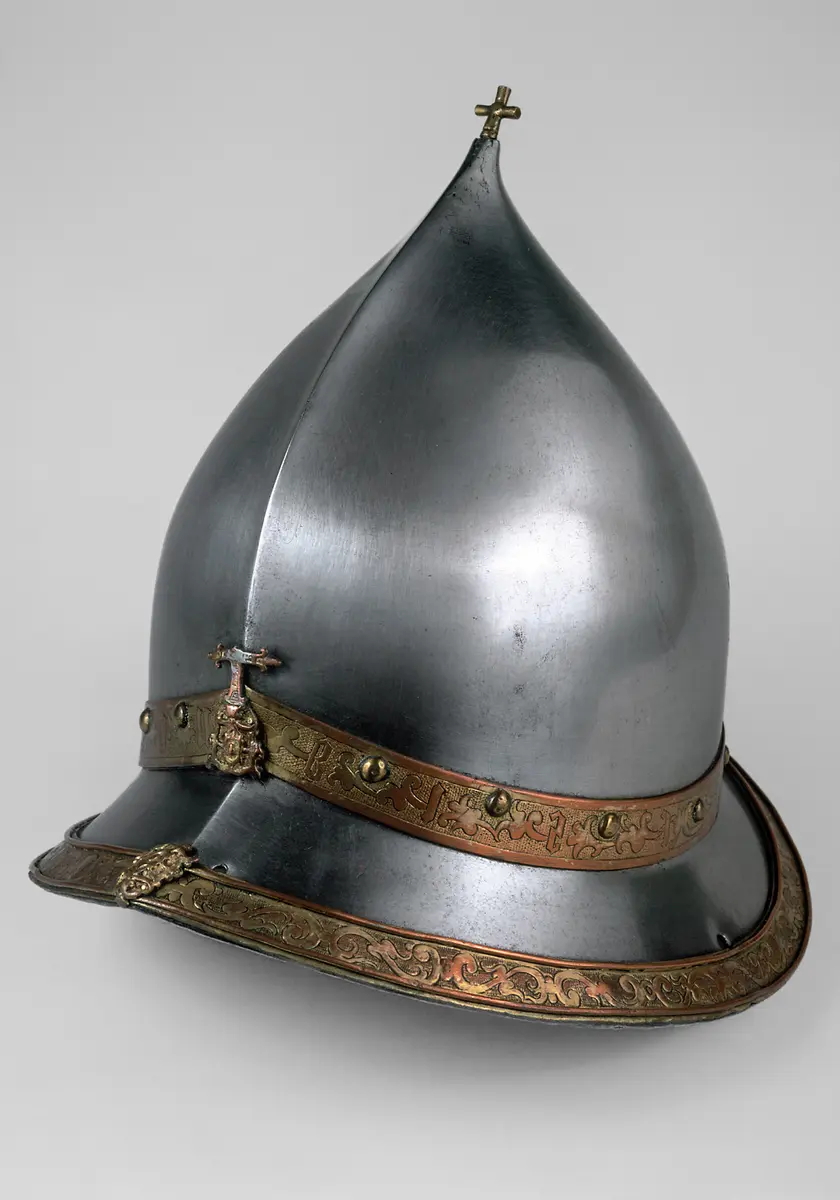
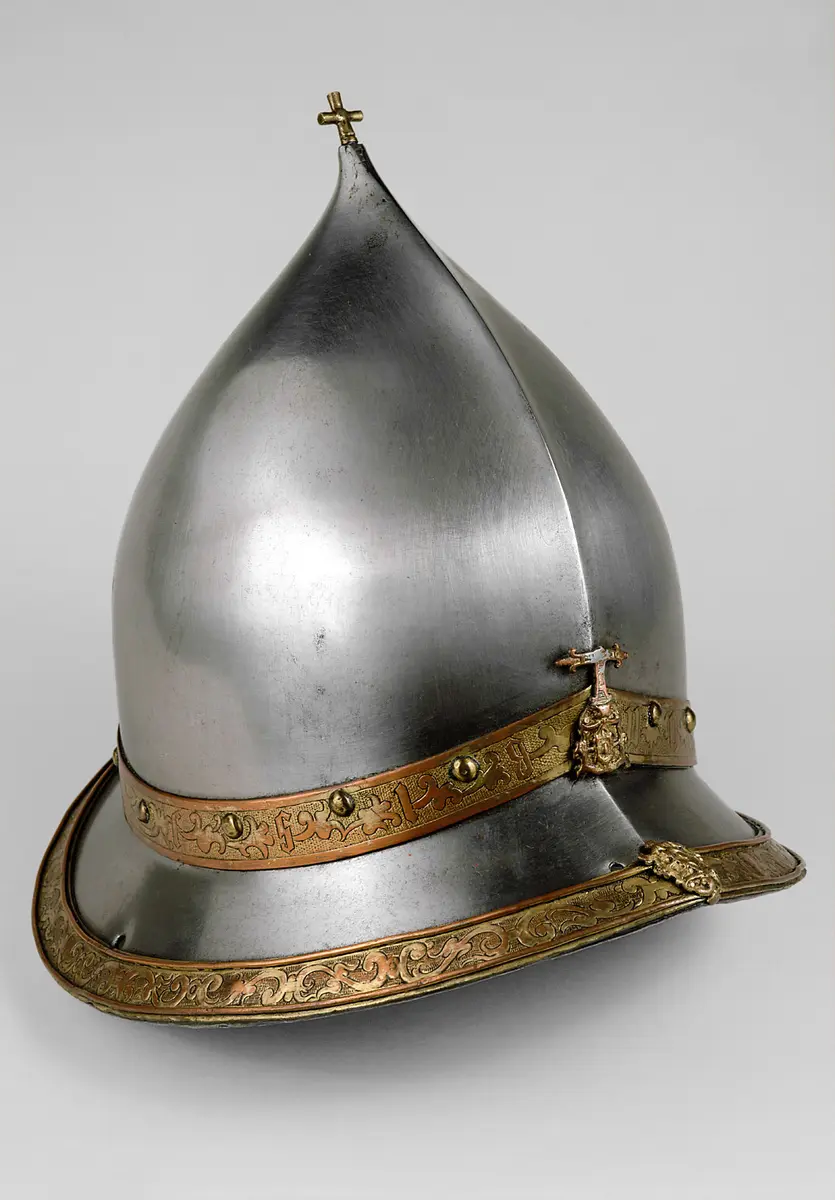
The term capacete derives from the Spanish cabeza, head. It is used for a Spanish version of the iron kettle hat common throughout Europe in the late Middle Ages. Typical characteristics are the wide brim, the marked cortex line, and the elegantly curved silhouette. Note the three blacksmith’s marks (half suns) on the side of this capacete. These and similar marks are traditionally associated with the Spanish city of Calatayud, located south-west of Saragossa. Although we cannot prove this attribution, the ornamentation suggests the helmet originated in Spain.
Note also the small gilt cross on the repoussé, slightly tilted tip of the helmet, and the engraved inscription in hoc signo vincit (‘in this sign he is victorious’) on the narrow gilt copper headband, the individual letters alternating with abstract leaves. The decorative border along the rim features only garlands. On forehead and back, the decorative bands are surmounted with crowned cartouches emblazoned with the arms of Granada. In addition, the frontal cartouche includes a cross (today incomplete). The small sleeve (presumably for a plume) mounted on the headband on the back of the helmet is a later addition.
Until the twentieth century, the helmet was not attributed to a particular owner; however, its decoration suggests that it may have belonged to Ferdinand the Catholic, King of Aragon. It references the conquest of Granada, Ferdinand’s great victory in 1492.
Time:
um 1490
Object Name
Capacete
Culture
Spanisch
Material/technology:
Eisen, geschmiedet, getrieben. Dekorband.: Kupfer, feuervergoldet, teilweise graviert. Nietkappen, Kreuz: Messing. Wappen: Kupfer gegossen, feuervergoldet.
Dimensions:
H 27,5 cm x B 25 cm x T 32,5 cm
Inscribed
"in hoc signo vincit"
Stamp / markings
unbekanntes Plattnerzeichen: 3 mal roh eingeschlagen (gestürzter Halbreis mit drei Strahlen)
Copyright
Kunsthistorisches Museum, Hofjagd- und Rüstkammer
Invs.
Hofjagd- und Rüstkammer, A 645
Browse more
Similar items you might be interested in
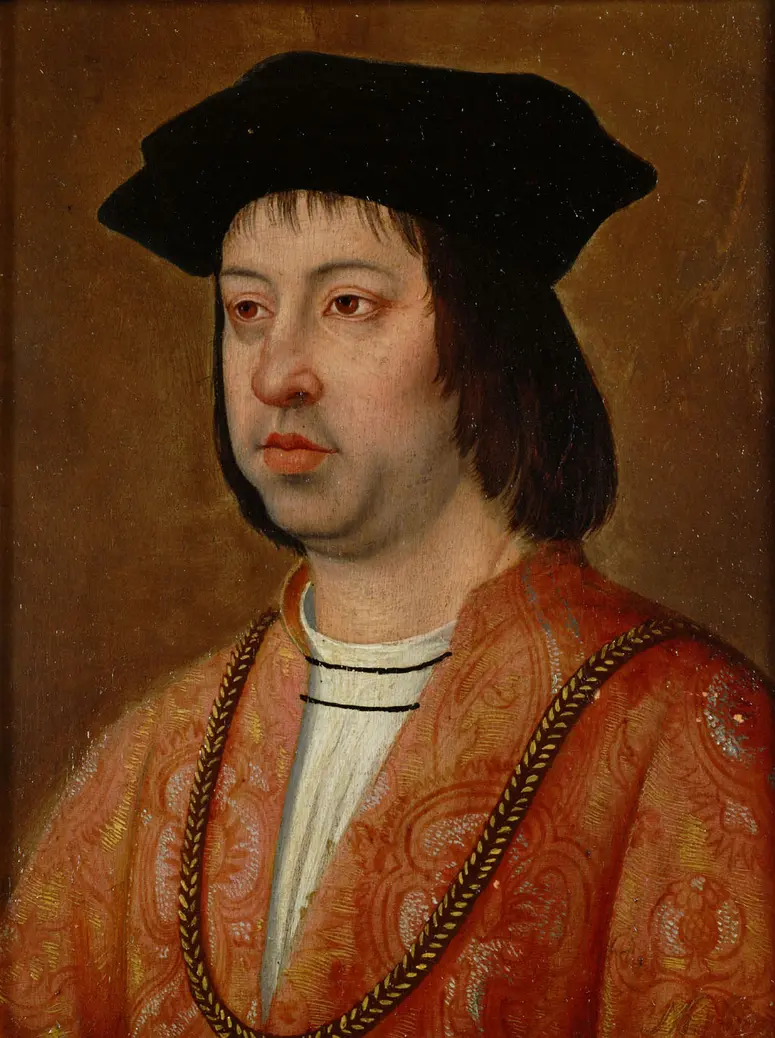
König Ferdinand II. (1452-1516) von Aragon Michiel Sittow Ende 15. / Anfang 16. Jahrhundert

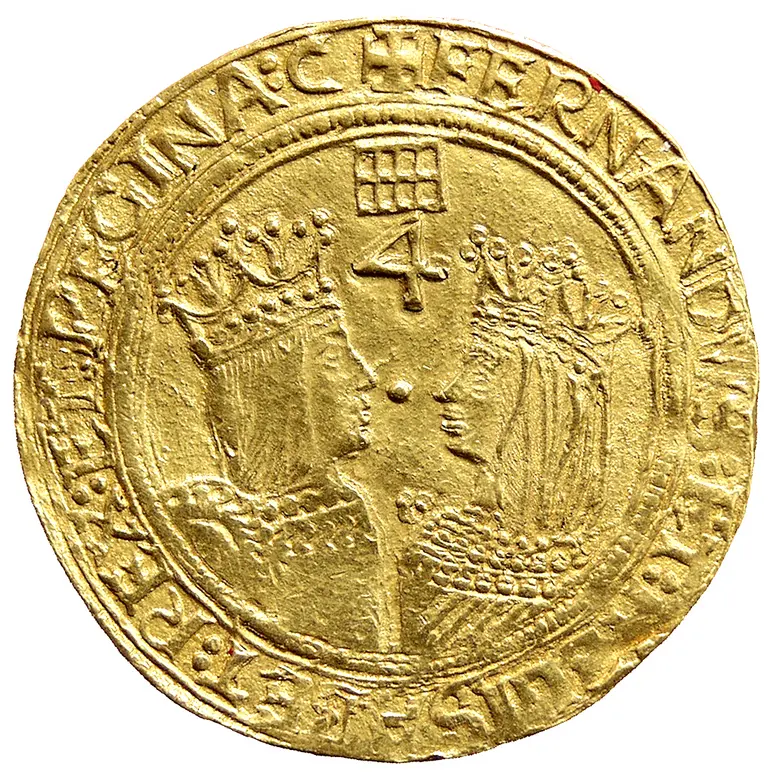
Ferdinand II. (1474-1516), ab 1479 König von Aragon, 1474-1504, ab 1506 als Ferdinand V. König von 1490/1500
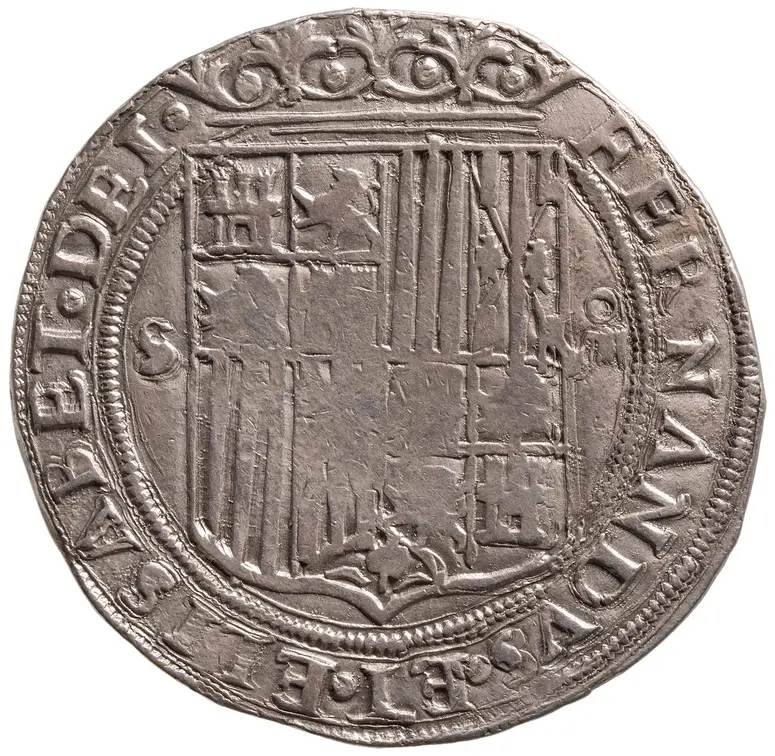
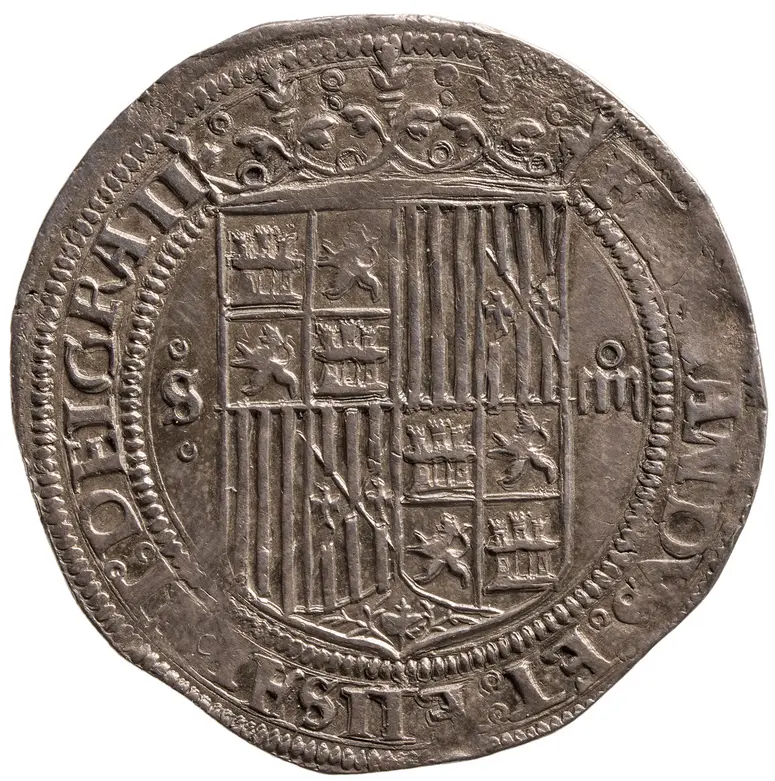
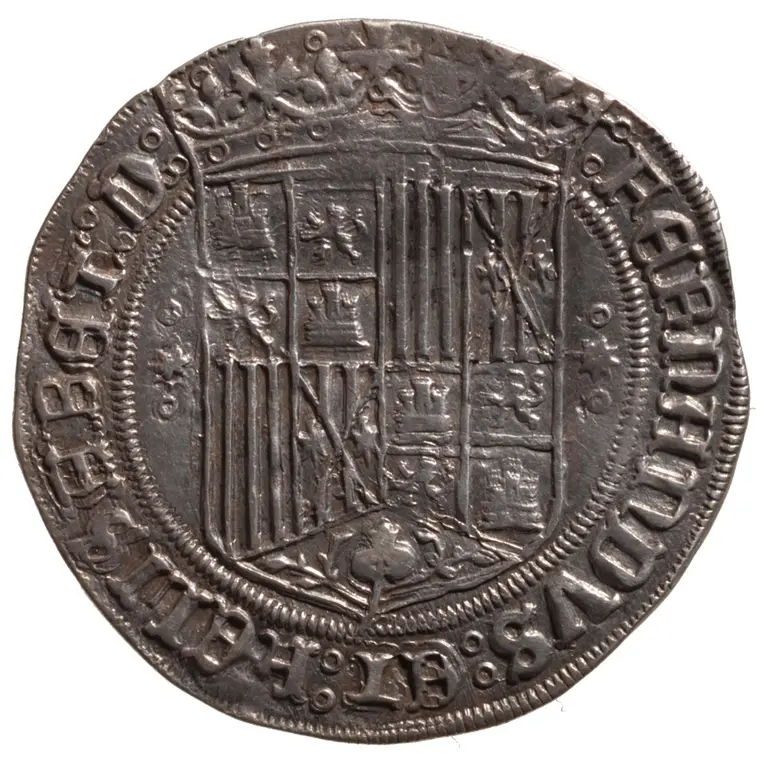
Isabella d'Este, Markgräfin von Mantua (1474-1539) J. Löwy, K. und K. Hof-Photograph, Kunst- und Verlagsanstalt (Wien) 1888 bis 1891
Maximilian II. (1564-1576), Kaiser datiert 1557
Philipp IV. (1621-1665), König von Spanien, als Philipp III. 1621-1640 König von Portugal 1621
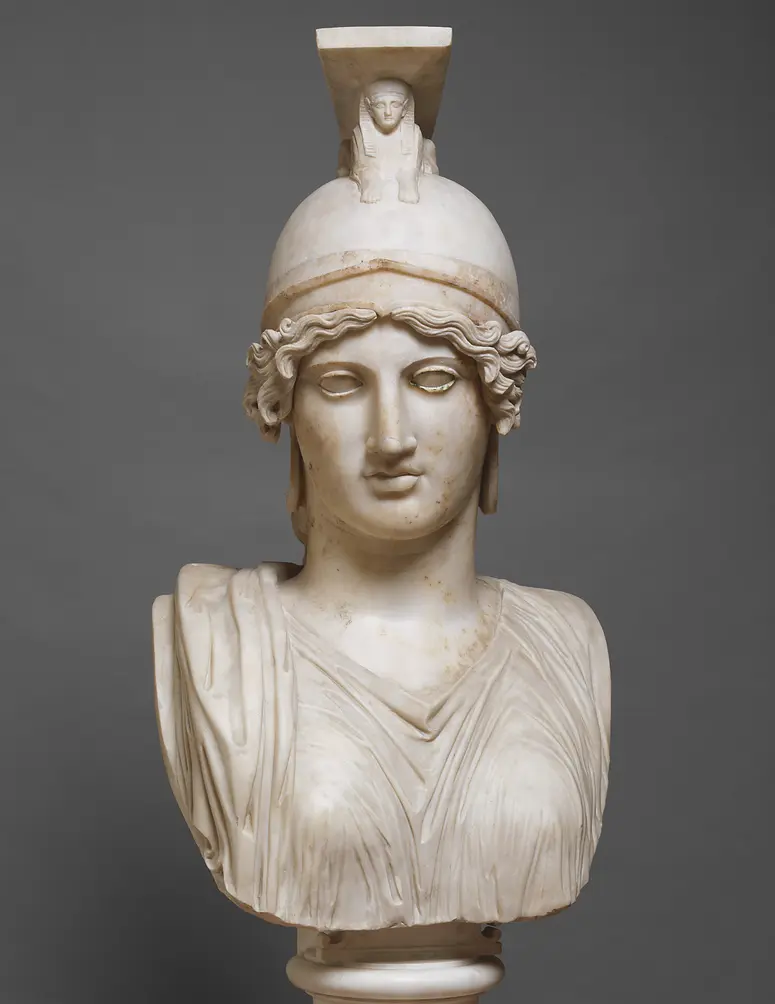
Büste: Athena Römisch, Kaiserzeit 2. Jh. n. Chr., nach griechischem Original um 440 v. Chr.
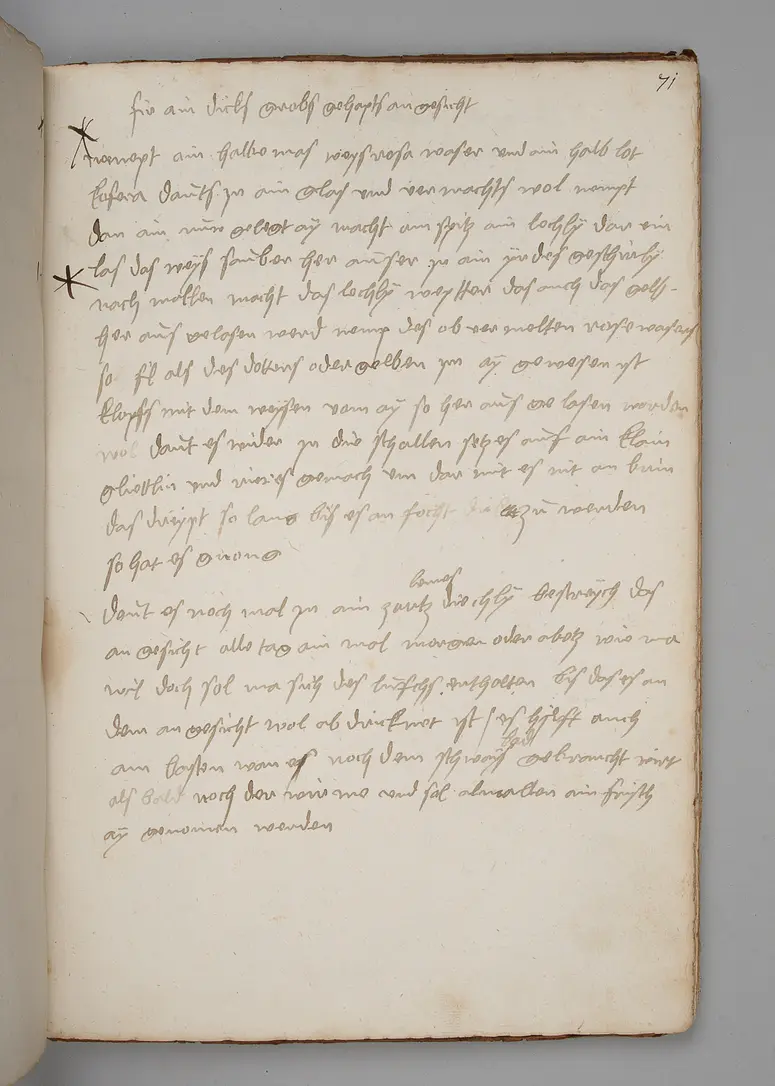
Arzneimittelbuch der Philippine Welser, Arzneimittelbuch Anna Welser 1560-1570
Heinrich (Henri) III. (1574-1589), König von Frankreich um 1570
König Heinrich III. von Frankreich (1551-1589), in ganzer Figur Französisch um 1585

Maximilian I. (1477-1519), seit 1493 deutscher König, 1508 Kaiser 1496
Versuch über das Kostüm der vorzüglichsten Völker des Alterthums, des Mittelalters und der neuern Zeiten Robert von Spalart 1796 - 1837