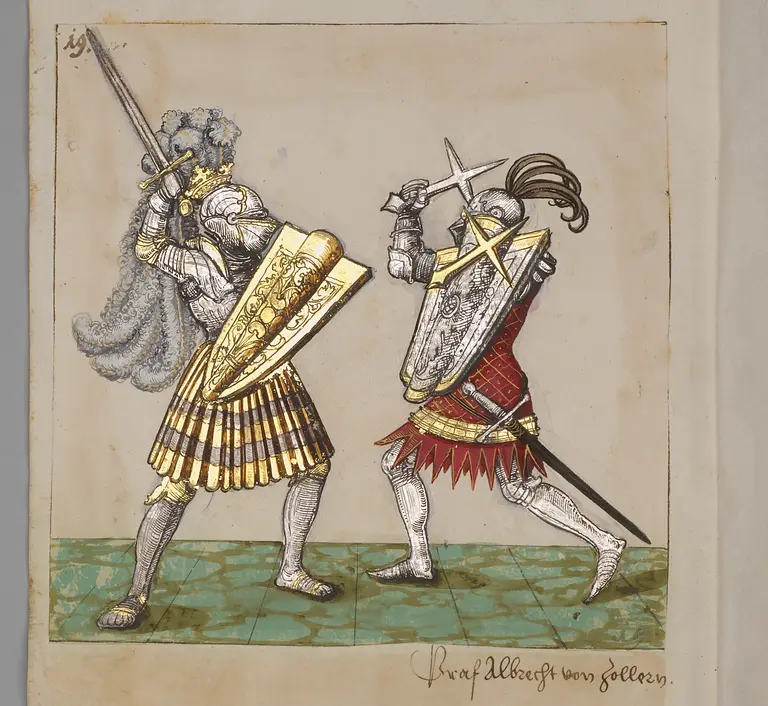
The project focuses on the role of armour in tournaments and battles, as well as in courtly self-fashioning and diplomacy. For the first time, it brings together a wide range of sources in a systematic analysis: previously known archival documents alongside newly discovered ones, visual representations of armour from Maximilian I’s commemorative works (such as the Freydal), and extant armour pieces. Covering the entire spectrum of armour commissions – from mass-produced military items to luxurious custom-made pieces – the project also situates Maximilian’s patronage within a broader socio-cultural and geopolitical context, revealing its full complexity.
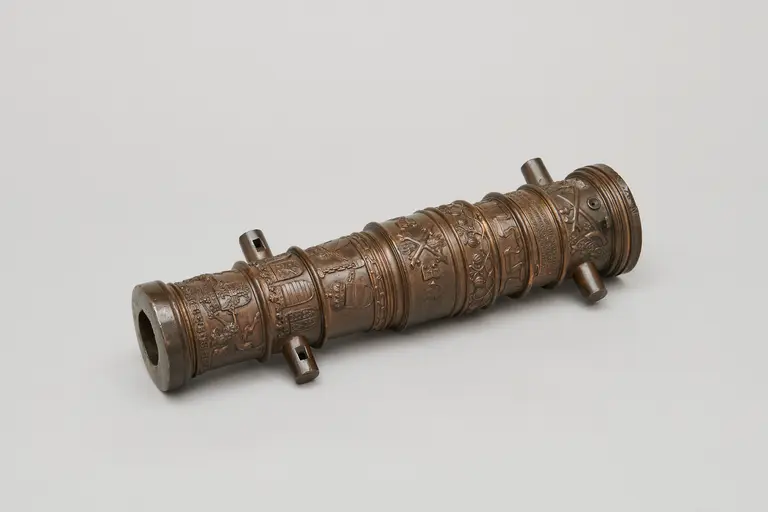
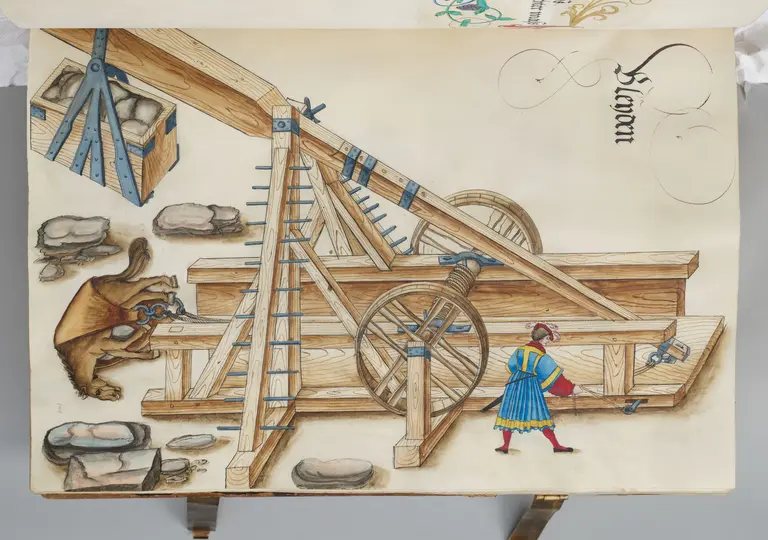
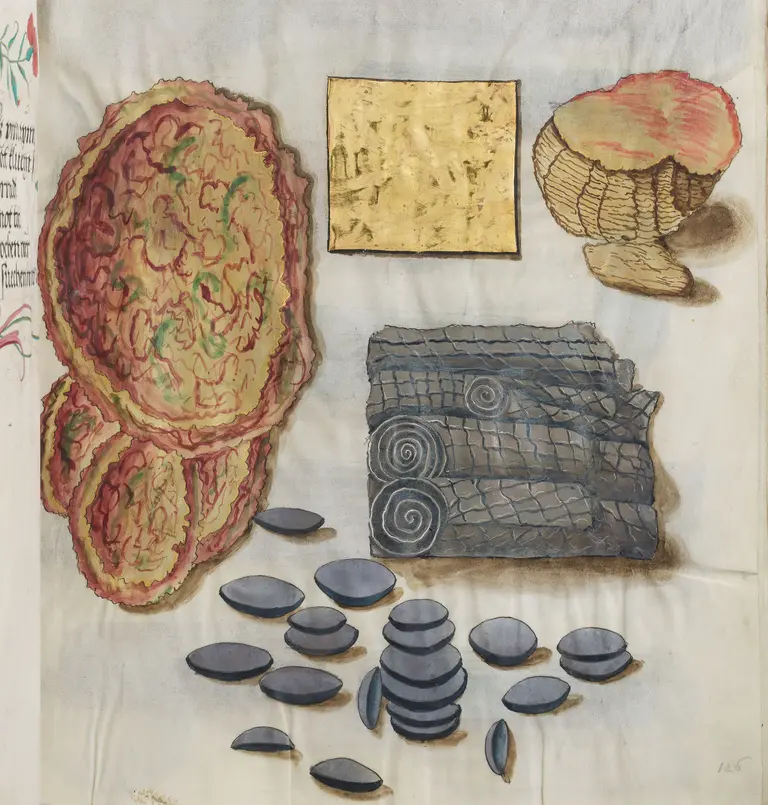
Another focus of research is the production and administration of weapons under Maximilian I. The richly illuminated inventories of his arsenals – the Zeugbuch der Grafschaft Tirol, Zeugbuch der österreichischen Länder, and Zeugbuch der Vorlande – offer unique insights into the field of armoury at his time. The art-historical analysis of these delicately illustrated parchment manuscripts and the weapons they depicted to aims to shed light on Maximilian’s self-promotional strategies as a warlord and sovereign.
Taken together, the project thus also maps the personal networks that shaped the culture of arms and armour around Maximilian tracing interactions between the emperor and a diverse cast of actors, including recipients of armour gifts, tournament participants, artists, armourers, and court officials.
Title:
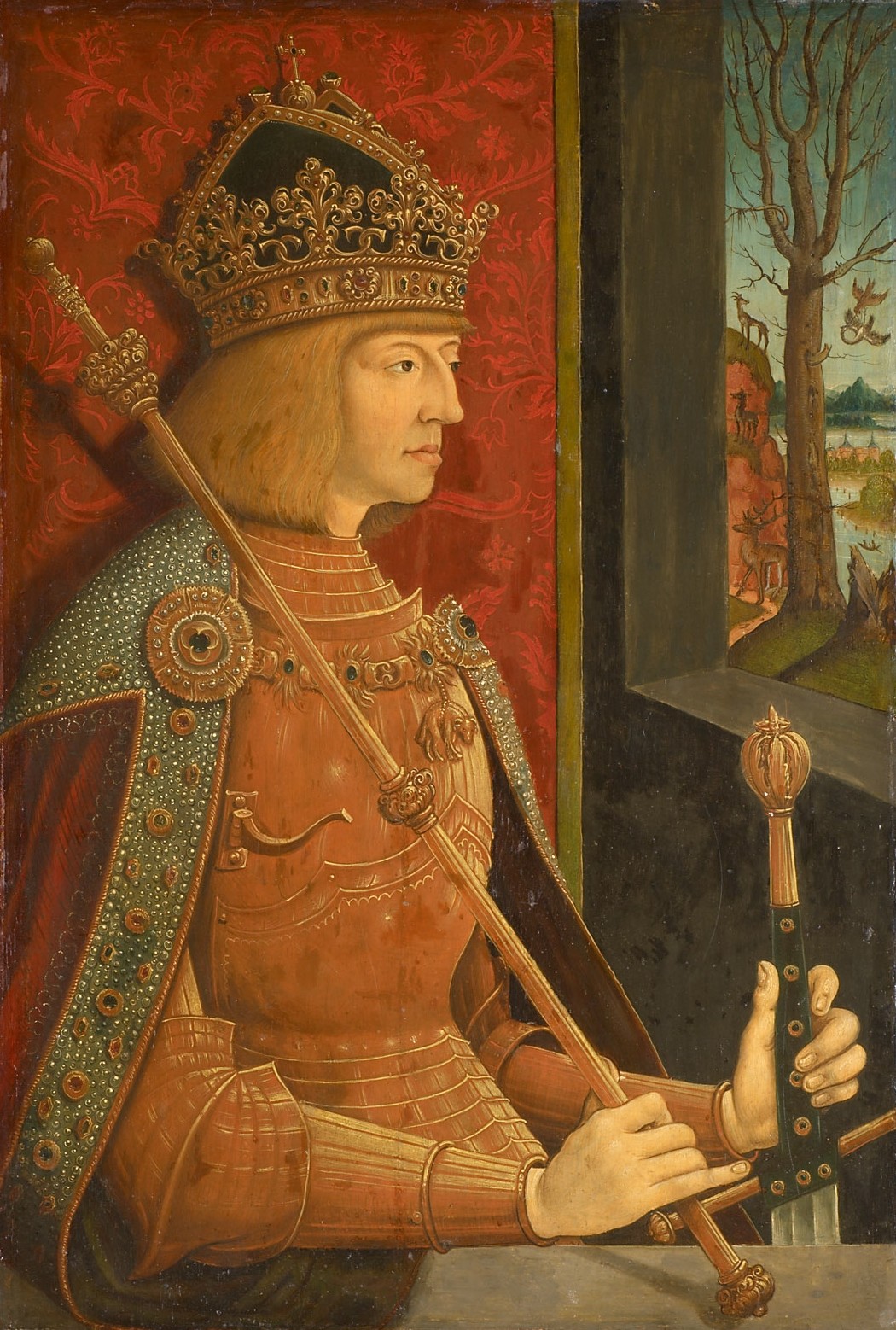
Maximilian I. (1459-1519), Bildnis in halber Figur im goldenen Harnisch
Artist:
Bernhard Strigel (1460 - 1528 Memmingen)
Time:
um 1500

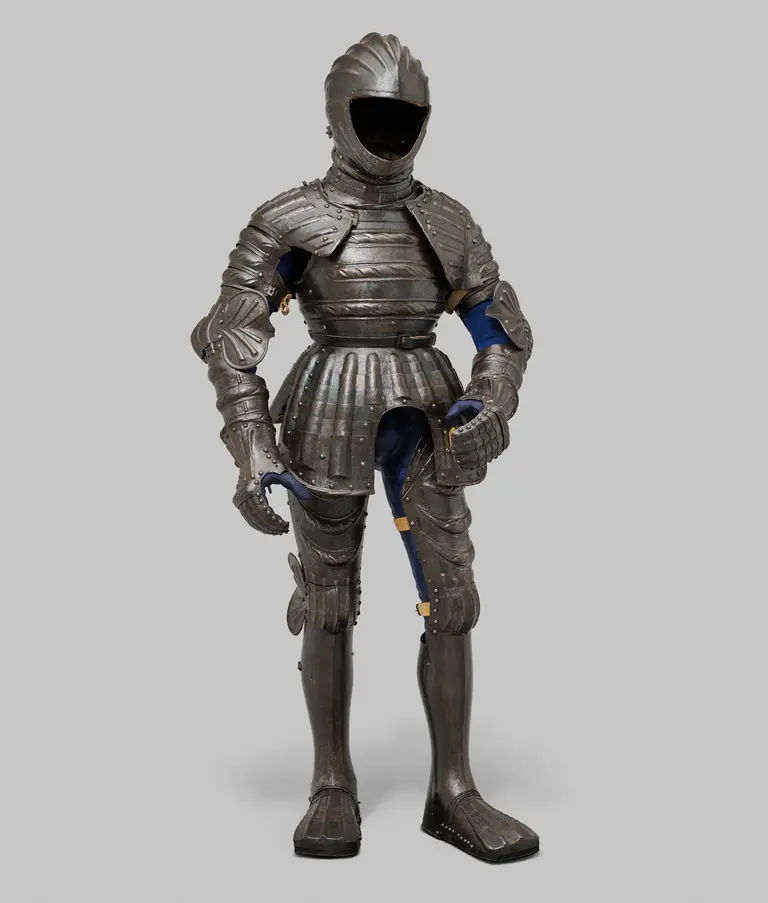
Emperor Maximilian I ordered this spectacular ceremonial armour in 1512 for his twelve-year-old grandson Archduke Charles (later Emperor Charles V). Konrad Seusenhofer, the emperor’s court armourer at Innsbruck, began work on the armour in March 1512, completing it in the spring or summer of 1513.
The armour was probably commissioned in connection with the planned marriage of Charles to Mary Tudor, a sister of King Henry VIII of England. In the summer of 1513, Henry and Maximilian went to war against France. The treaties cementing this alliance were signed during the elaborate victory celebrations held at Tournai and Lille in October 1513. The wedding was scheduled for the spring of 1514 at Calais (then held by the English); ultimately, however, intrigues and shifting political alliances put paid to the betrothal.
In a highly sophisticated way, the armour plays with the contrasts in materials between steel and fabric. It comprises a field harness with fashionably puffed and slashed arm and leg pieces and creates the illusion that the young archduke is wearing a surcoat, a pleated overcoat and a close-fitting jerkin with short, voluminous sleeves. The surcoat is also made of steel and is embellished with gilt steel ‘braids’ featuring the emblems of the Order of the Golden Fleece.
In the early seventeenth century, this armour was owned by Archduke Charles, Grand Master of the Teutonic Order. Between 1618 and 1621 it was moved to Ambras Castle, together with a bard made for Emperor Frederick III in 1477 (inv. A 69) and a papal sword (inv. A 453).
Owner:
Karl I. (V.) (1516-1556), als Karl I. König von Spanien, ab 1519 deutscher König, ab 1520 Kaiser (1500 - 1558)
Time:
c. 1512-1514
Armouring Maximilian is a sub-project of the SFB project Managing Maximilian (acronym: ManMAX), which is funded by the FWF for an initial period of four years with over €4 million. ManMAX combines eight sub-projects at the Austrian Academy of Sciences, the University of Vienna, the University of Graz, the Albertina, and the Kunsthistorisches Museum. All subprojects will contribute to a new prosopographic database dedicated to the people at and around the court of Emperor Maximilian I.
Project leader
Dr. Thomas Kuster
Project team
Alexandra Burger MA
Sarah Deichstetter BA BA MA
Andrea Singh Bottanova MA
Dr. Stella Wisgrill
Reinhard Dobrezberger BA MA
Dr. Rahul Kulka (extended project team)
Project duration
2023–2027
Subproject 02 of
Managing Maximilian (1493-1519) – Persona, Politics, and Personnel through the Lens of Digital Prosopography (Acronym: ManMAX), SFB F9200, project coordinator: PD Dr. Andreas Zajic, MAS.