Rococo Berlin carriage, so-called “prince” or “ladies’” carriage
around 1740
The "Princes' Dress Carriages" were fashionable Berlins with the coach body suspended by two longitudinal leather strips, called thoroughbraces, which were used in the 18th century by members of the imperial family and high-ranking guests at official occasions. They were also considered to be high-ranking gala carriages in the 19th and early 20th century and were used at great events such as the Milan coronation in 1838. The last such event was the Budapest coronation in 1916. They were drawn by six white horses from the Kladrub imperial stud farm. (MKR)
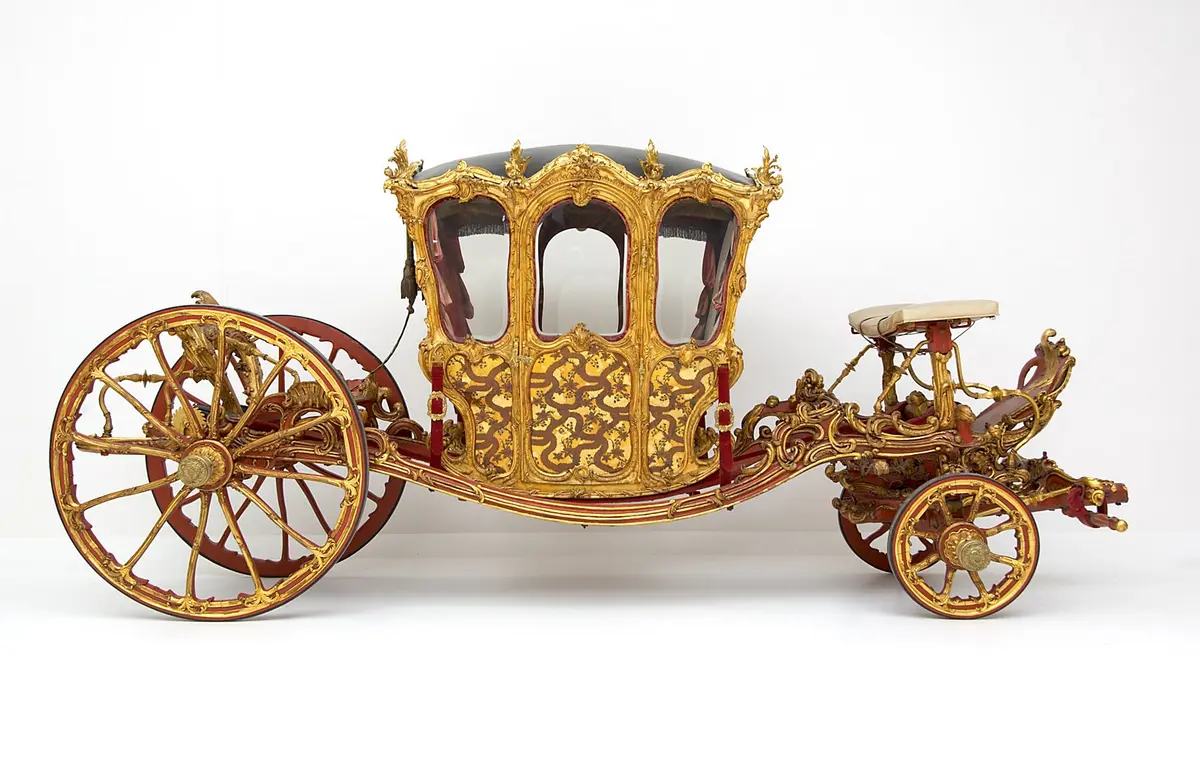
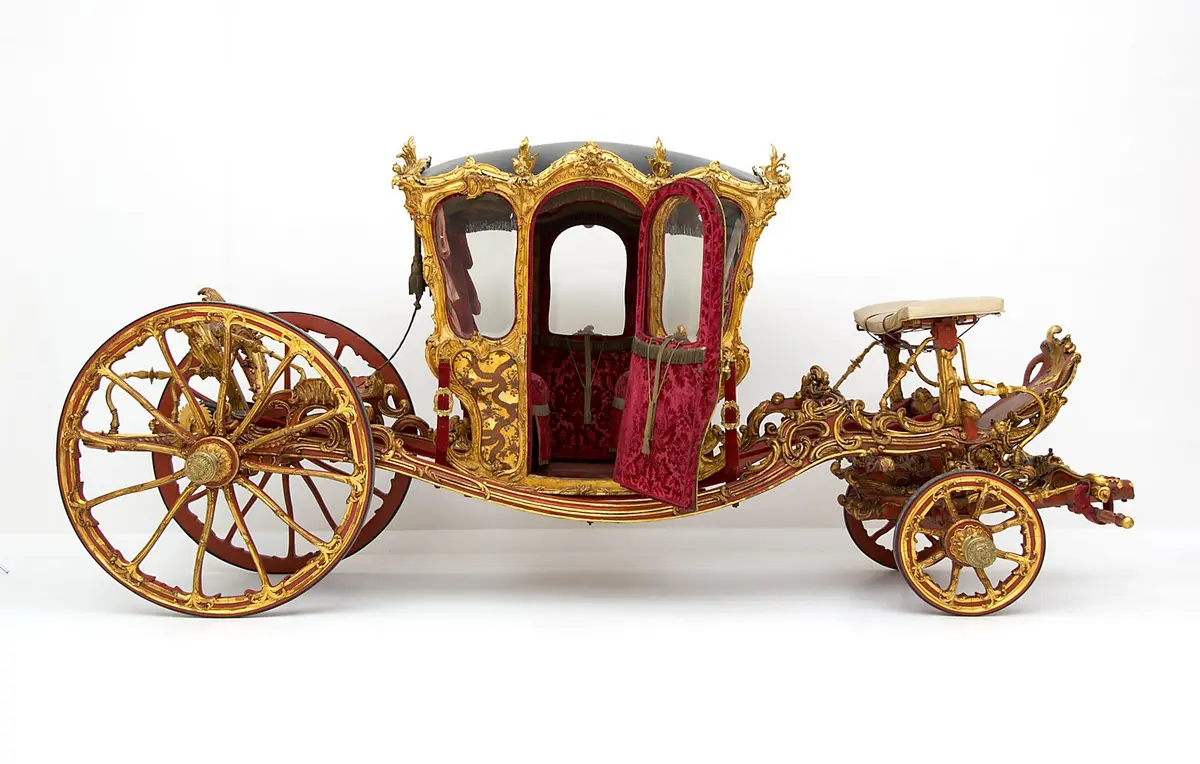
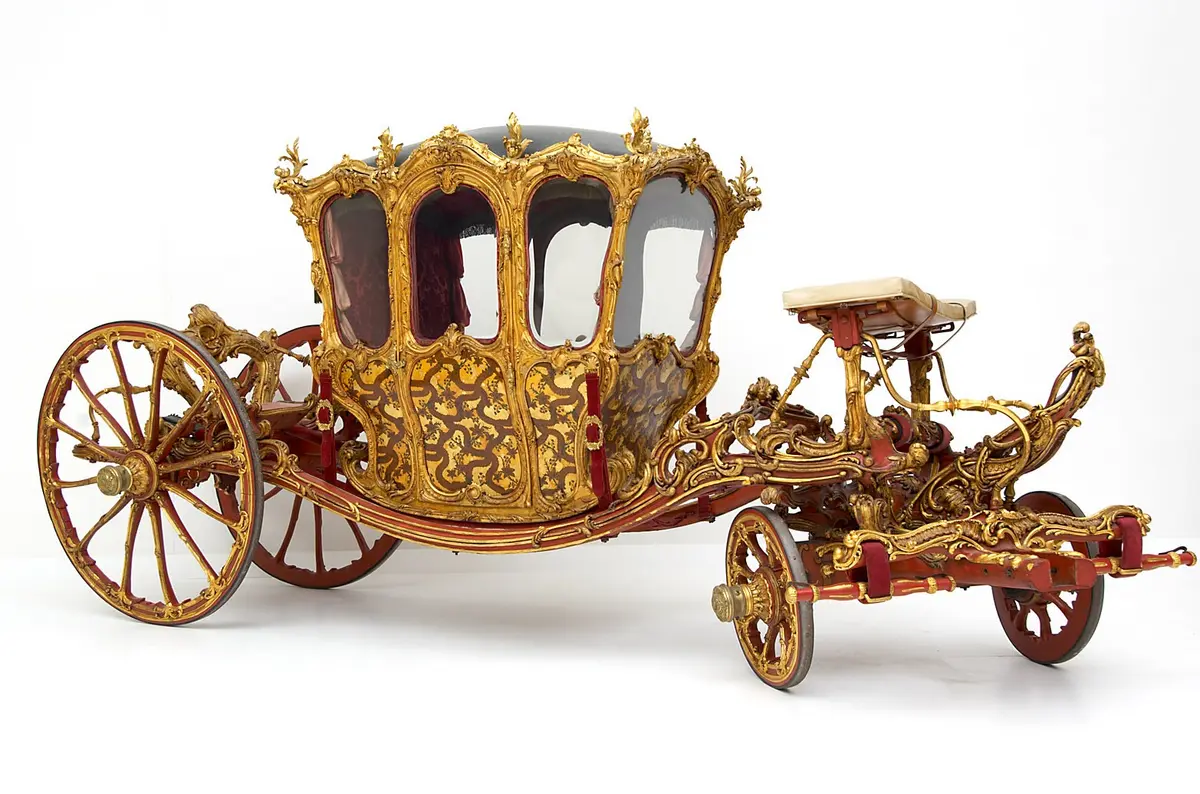
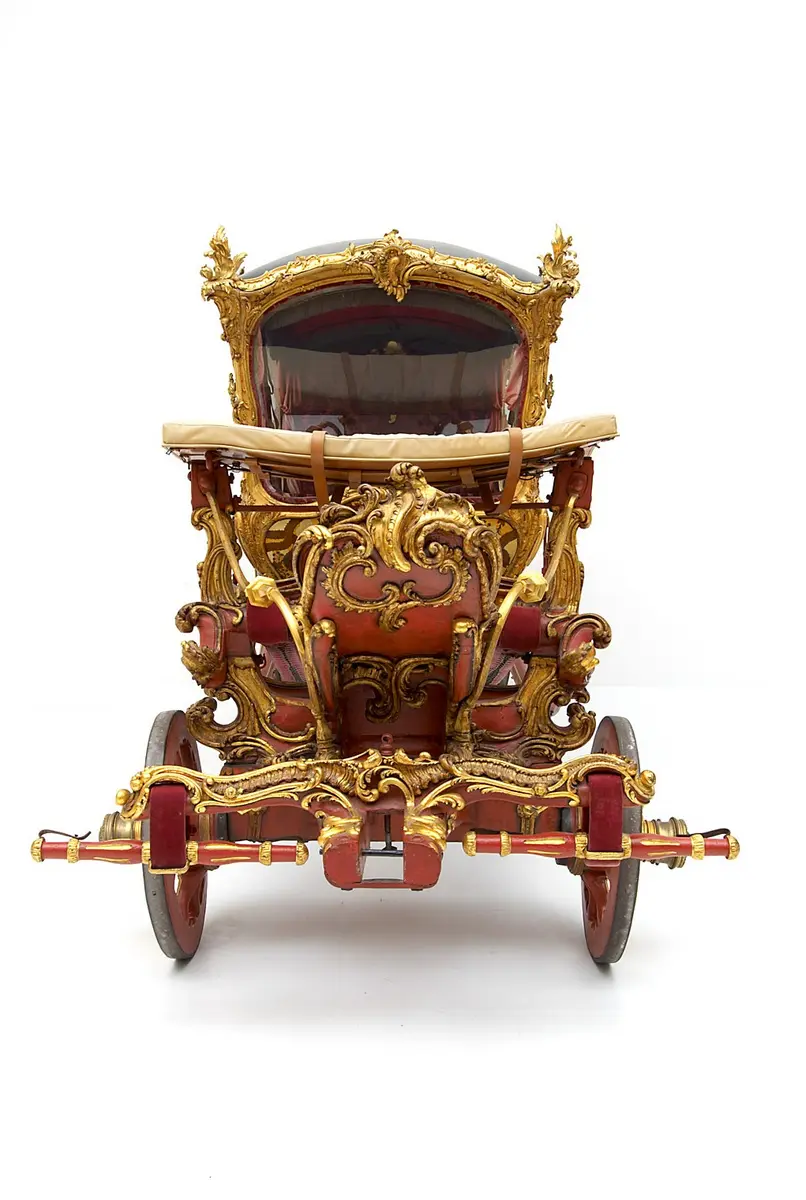
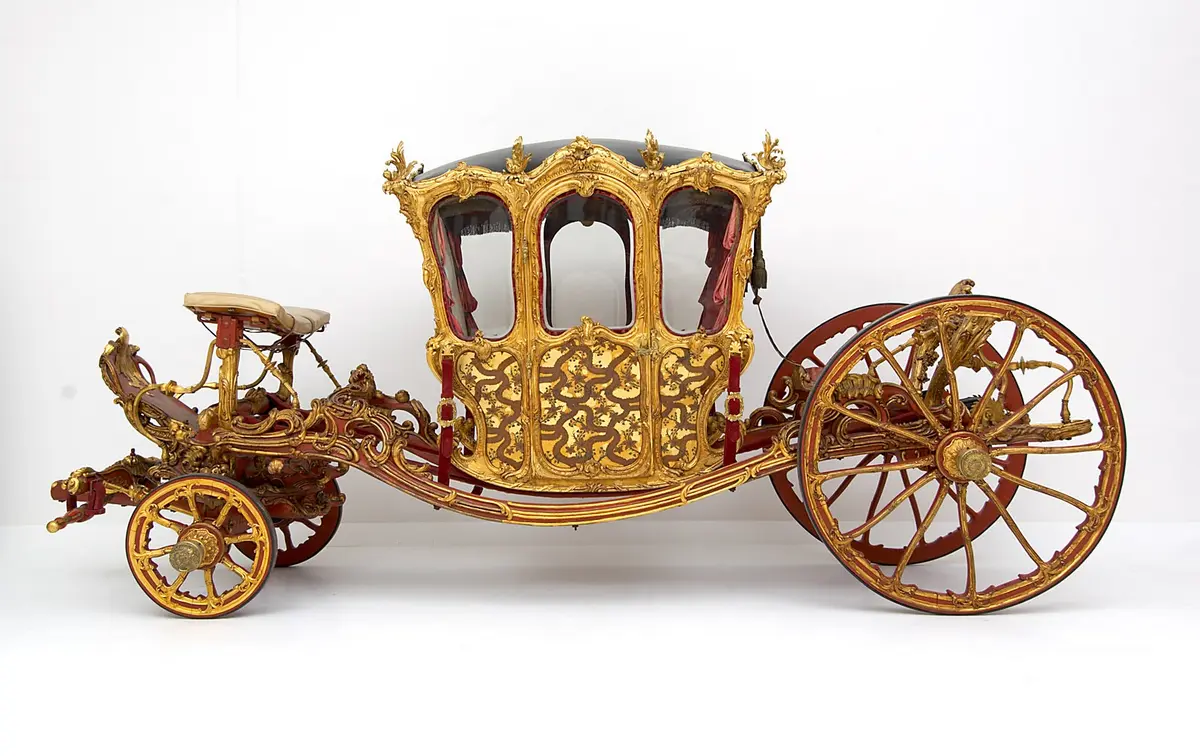
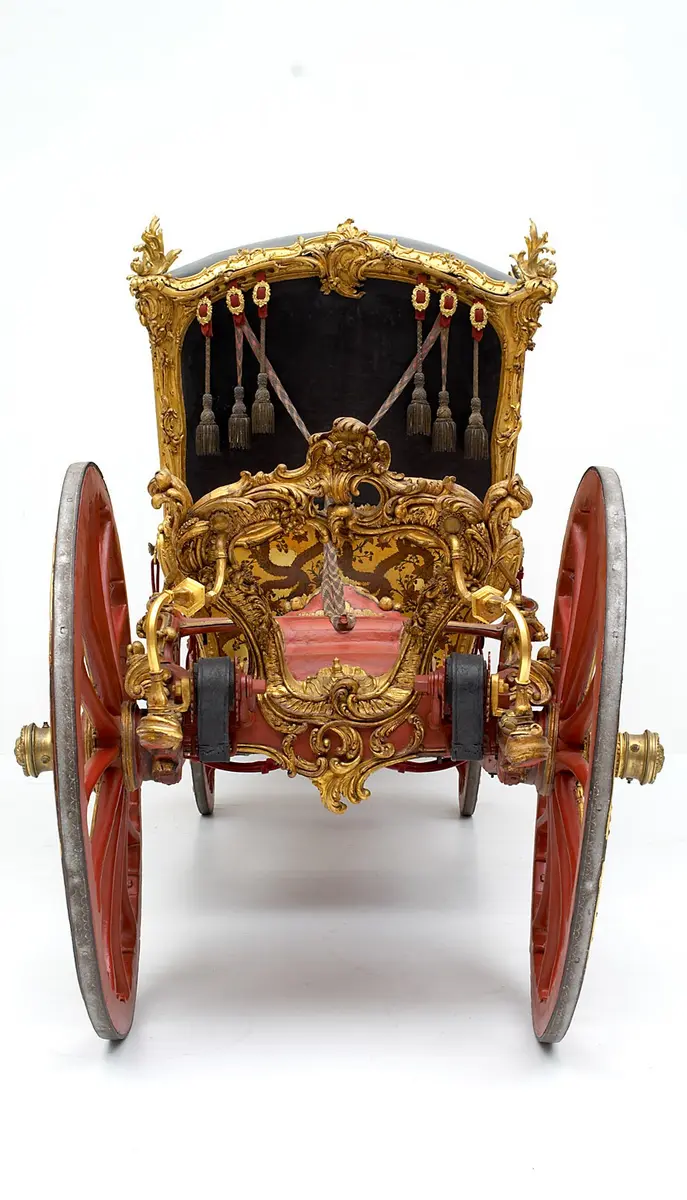
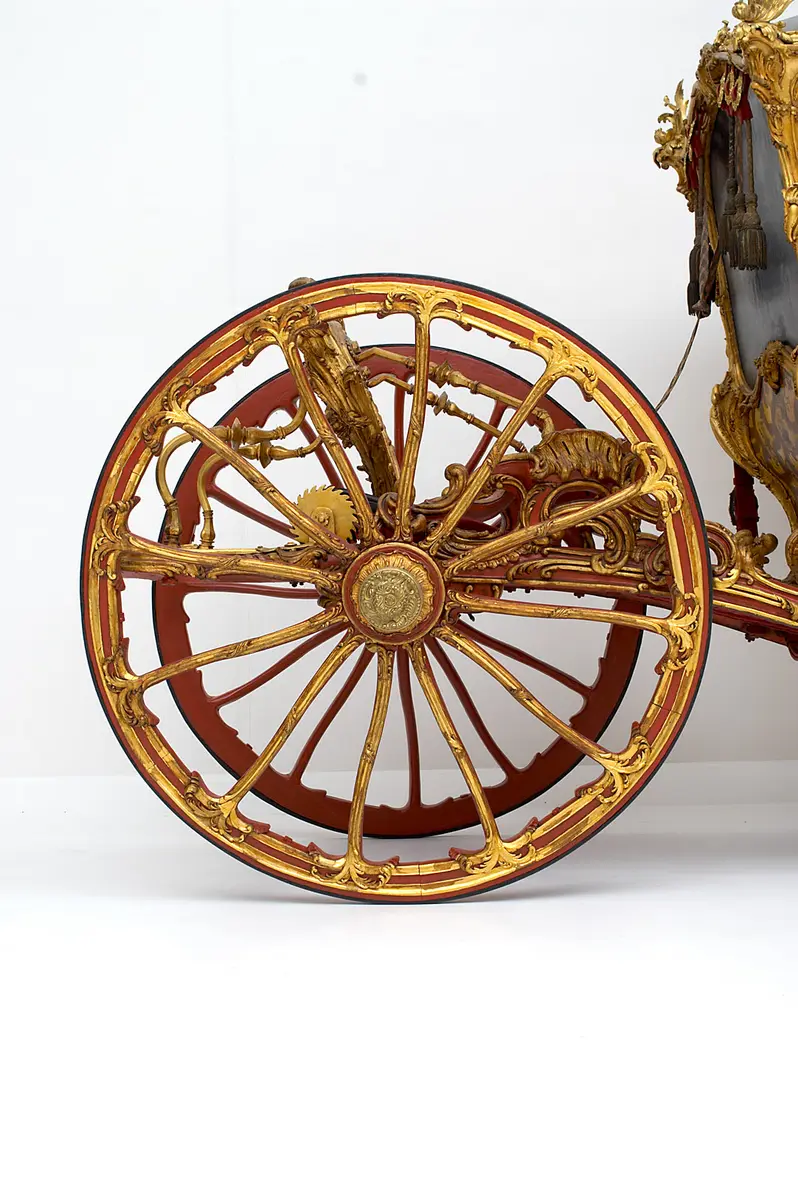
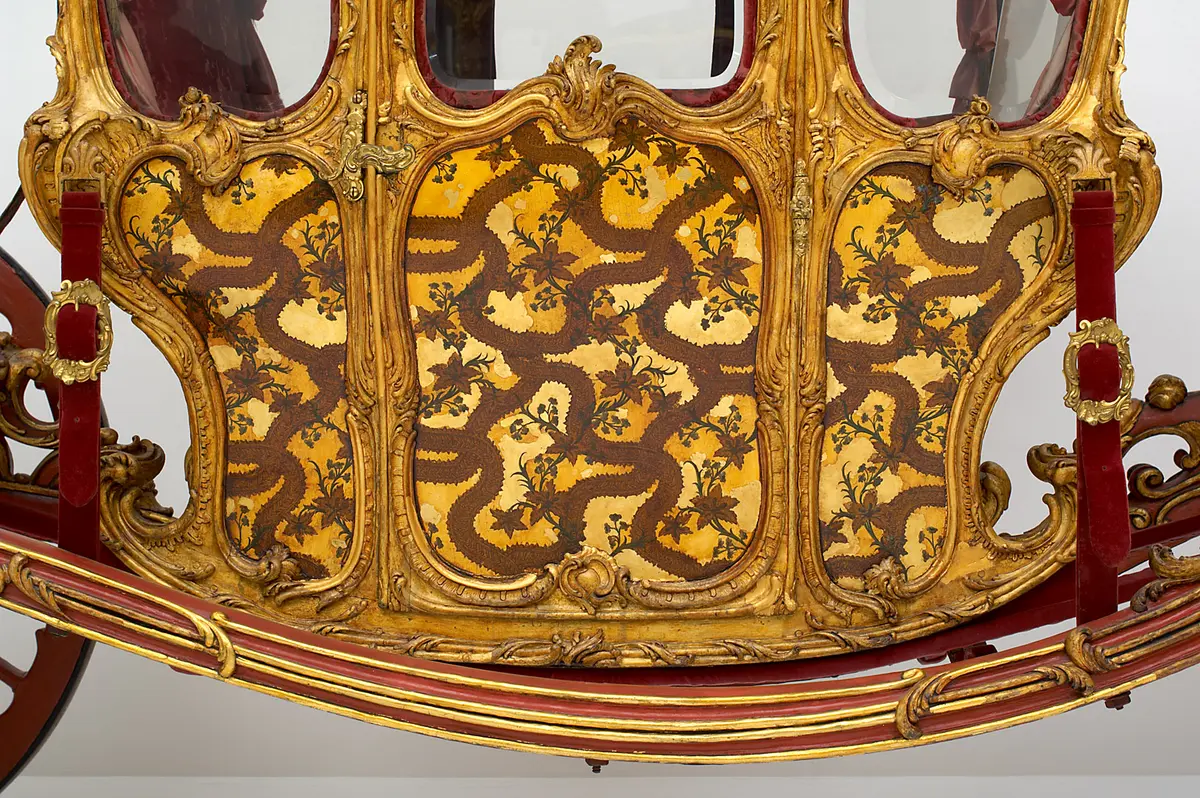
The "Princes' Dress Carriages" were fashionable Berlins with the coach body suspended by two longitudinal leather strips, called thoroughbraces, which were used in the 18th century by members of the imperial family and high-ranking guests at official occasions. They were also considered to be high-ranking gala carriages in the 19th and early 20th century and were used at great events such as the Milan coronation in 1838. The last such event was the Budapest coronation in 1916. They were drawn by six white horses from the Kladrub imperial stud farm. (MKR)
Time:
around 1740
Object Name
Rococo Berlin carriage, so-called “prince” or “ladies’” carriage
Dimensions:
L. 600 cm, H. 270 cm, B. 198 cm
Copyright
Kunsthistorisches Museum, Wagenburg
Invs.
Wagenburg, W 7
Browse more
Similar items you might be interested in

Two-Seater personal travelling carriage of the Emperor Franz I Hofsattlerei around 1833

Child’s Carriage of Crown Prince Rudolf Manufacturer: Cesare Sala around 1860
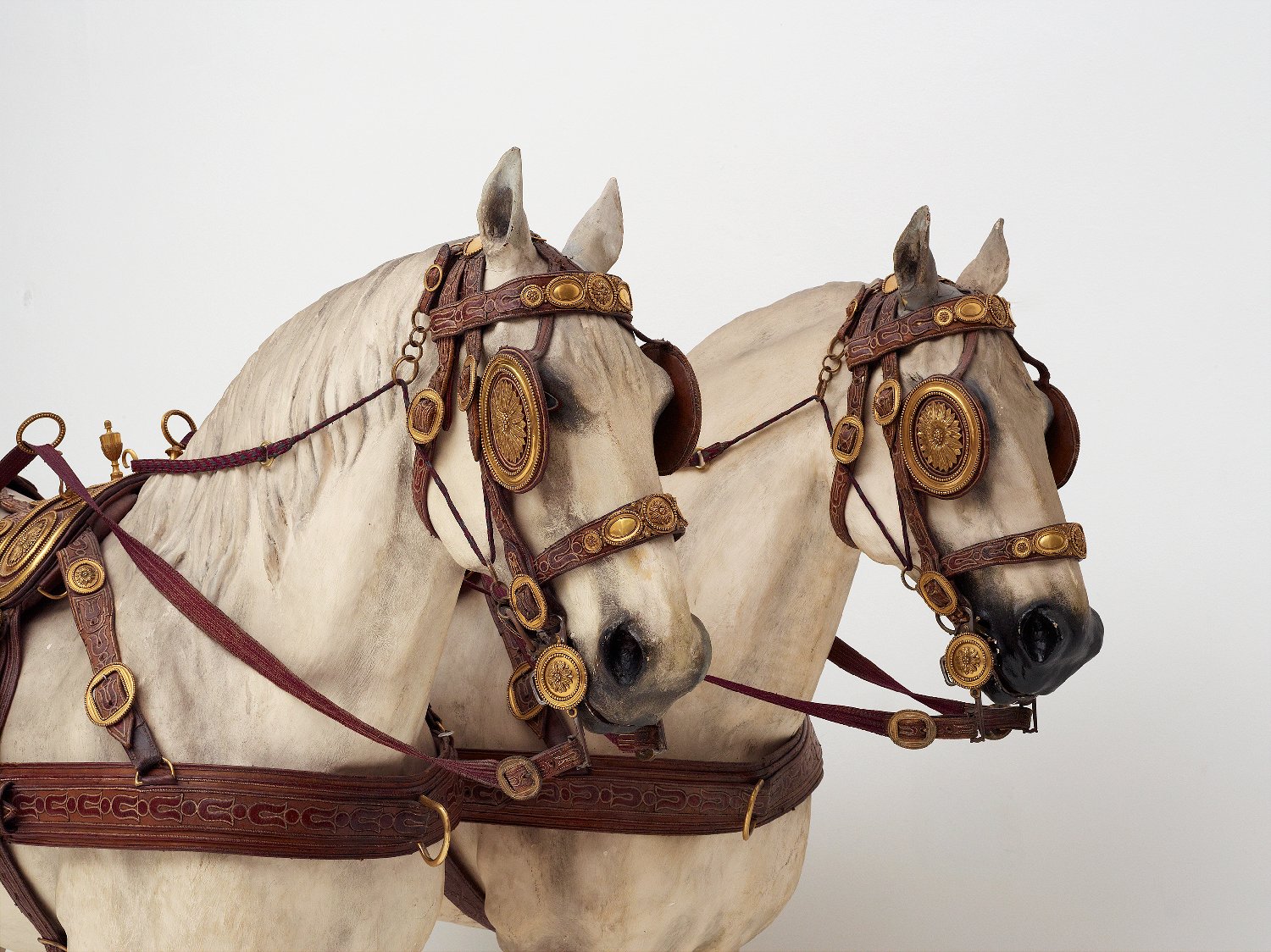
Double Harness for the Ceremonial State Carriage of the Grand Equerry early 19th century

Utility Saddle of Empress Elisabeth Manufacturer: Casimir Foltz around 1855

Personal Landaulet of Empress Elisabeth Manufacturer: Carl Marius 1885
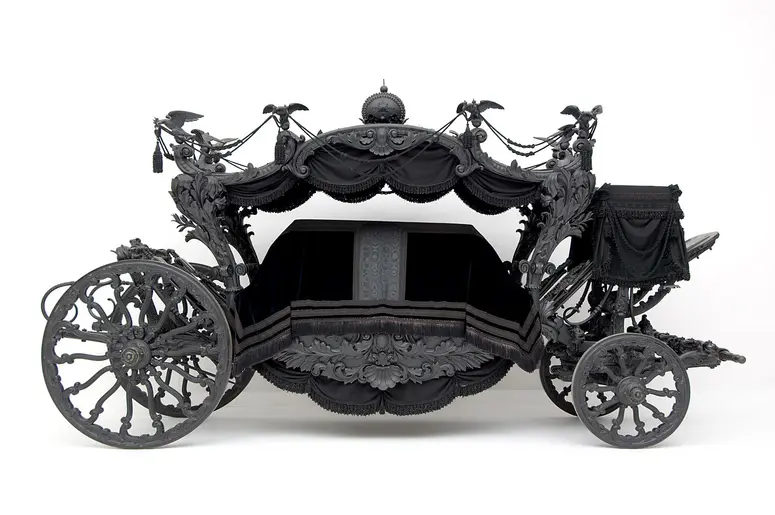

Personal driving carriage of the Emperor Franz I around 1815

Lavish Personal State Chariot Manufacturer: Cesare Sala 1857

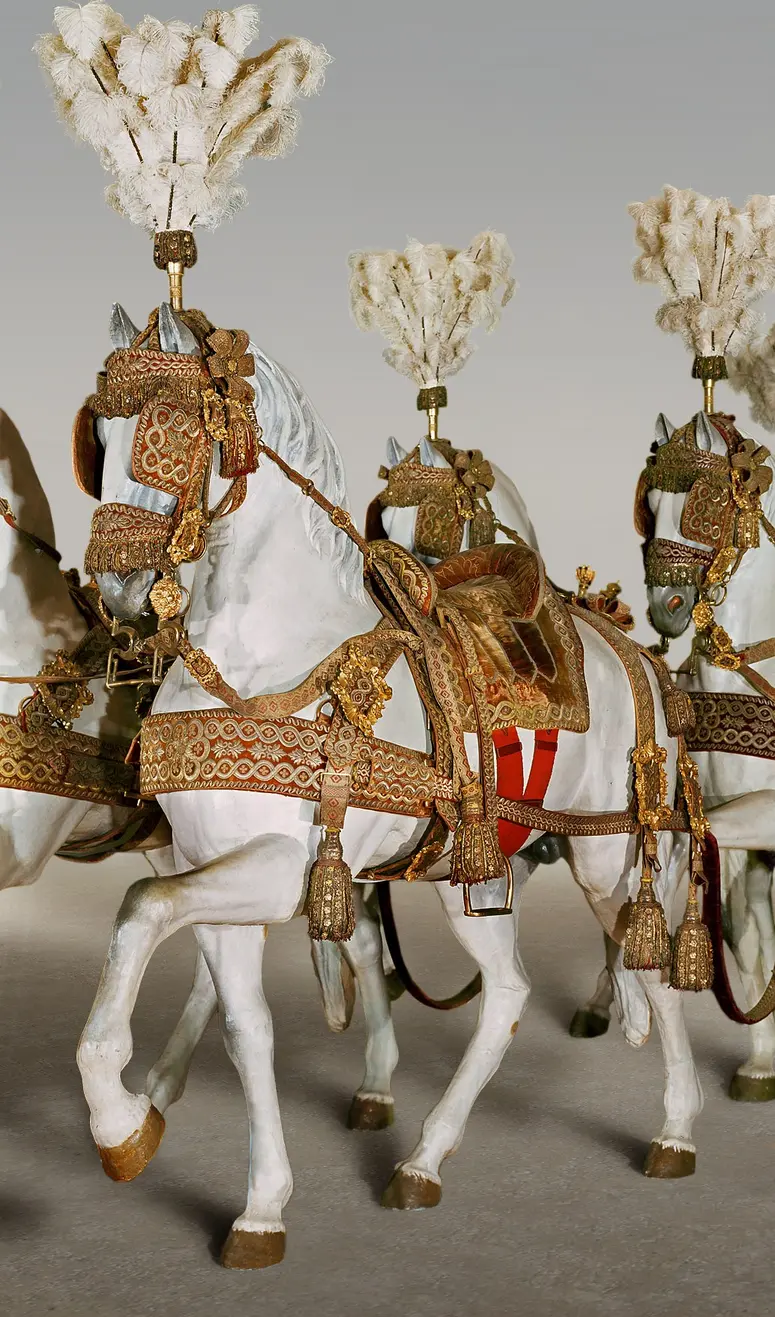
Harness for the eight horses who draw the Imperial Carriage 18th century, expanded in the 19th century
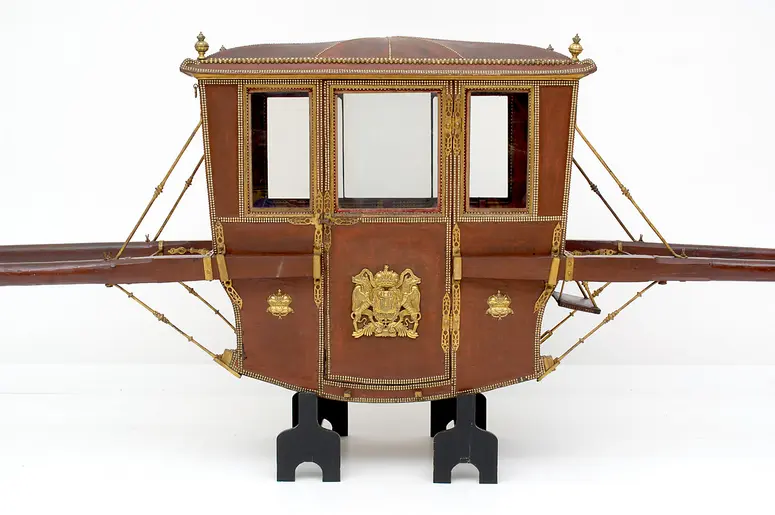

Golden Carousel Carriage of Maria Theresa Balthasar Ferdinand Moll around 1740/42

Imperial gala coach for court mourning undercarriage around 1690, body around 1730/35, adapted in the 19th century
Stirrup of Crown Prince Rudolf Manufacturer: Braun's Söhne last third of the 19th century


Imperial Carriage in front of St.Stephen's Cathedral drawn by eight horses Johann Erdmann Gottlieb Prestel around/after 1851

Imperial Carousel Sleigh Balthasar Ferdinand Moll around 1740/50