Zeus and Callisto
shortly after 1603 | Joseph Heintz d. Ä.
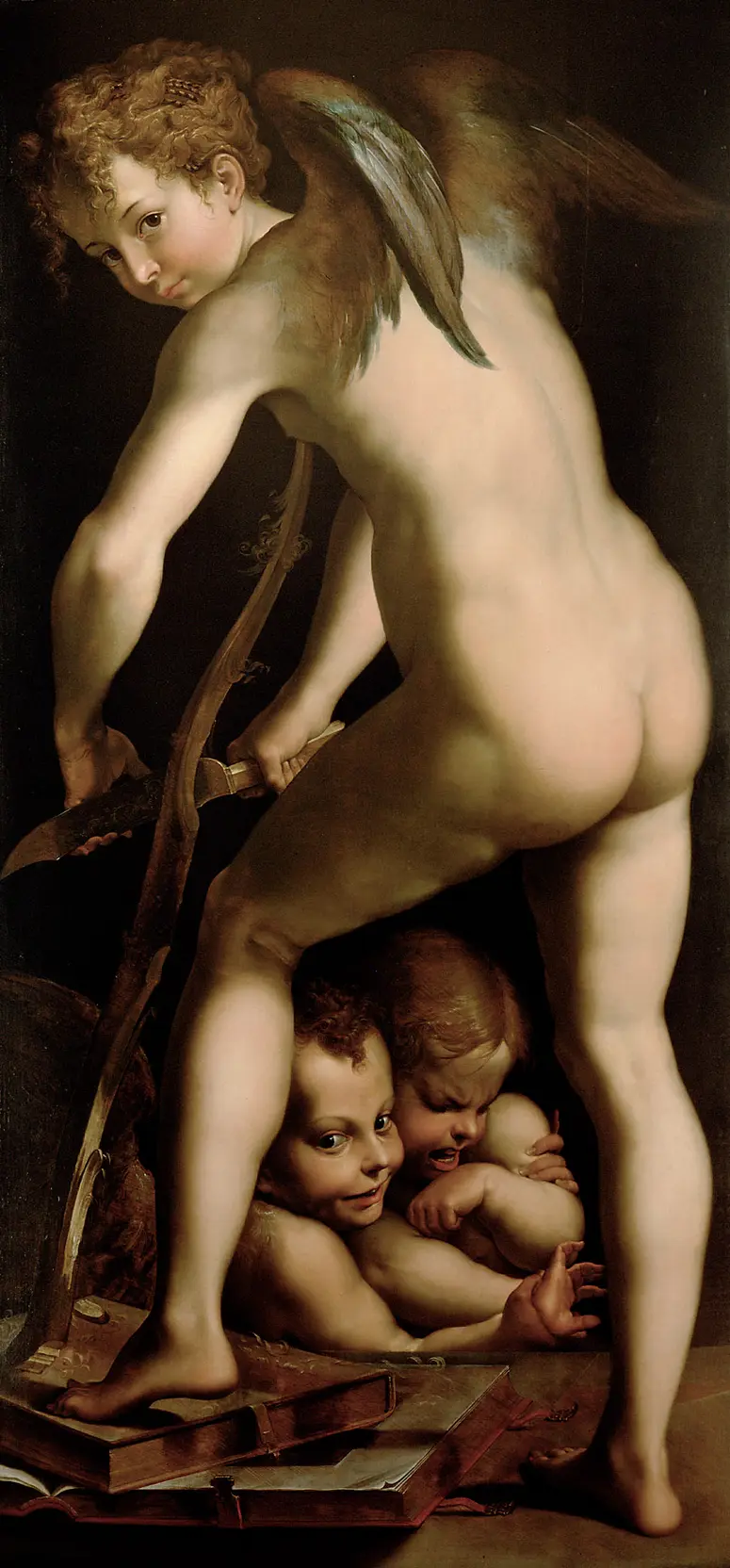
We may assume that in this small painting, produced more or less at the same time as Leda, Heintz depicts another of the loves of Zeus, the father of the gods, here identified by his traditional attributes, eagle and thunderbolt. The hounds and the bow and arrow suggest it is the story of Callisto, a chaste nymph whom Zeus lured into his embrace disguised as Artemis, the goddess of the hunt. The putti in the foreground are clearly informed by Parmigianino’s Cupid (GG 275).
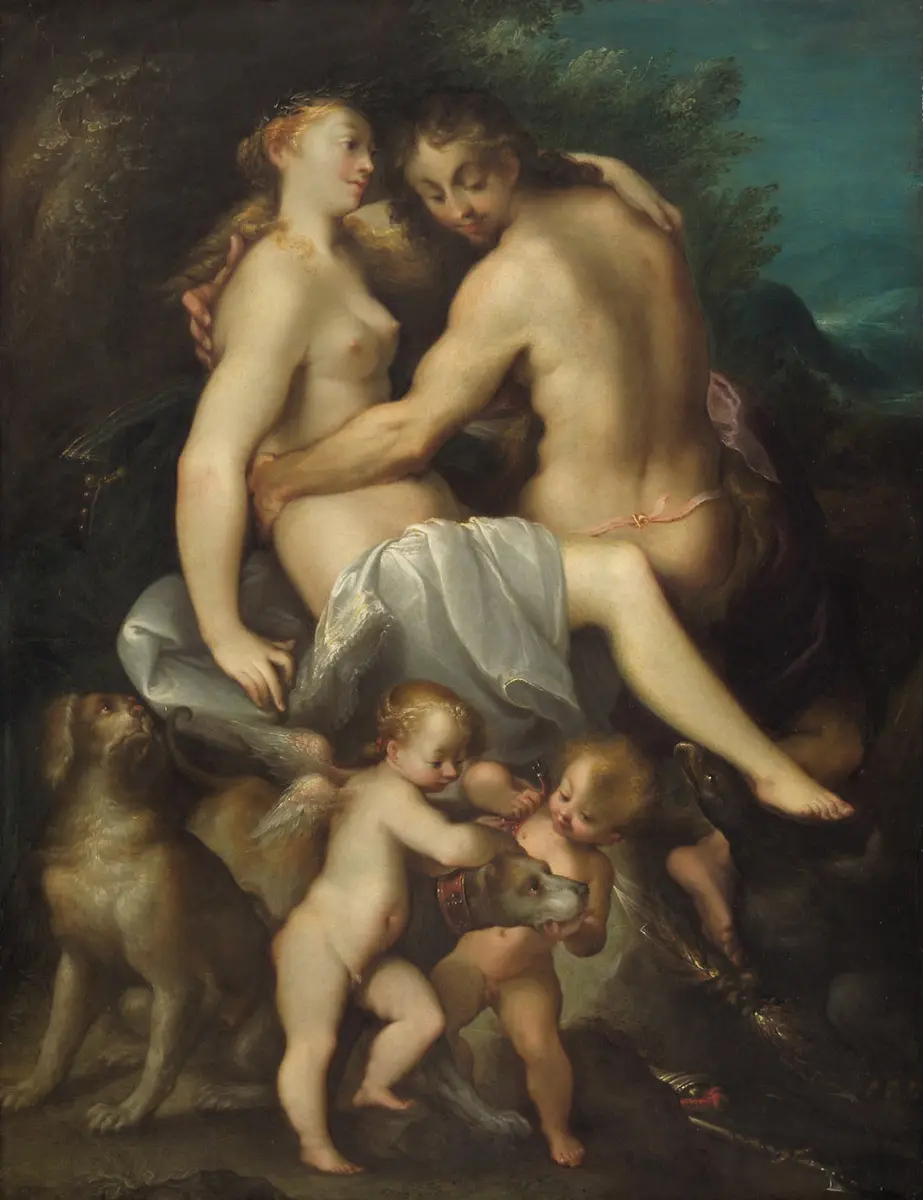
We may assume that in this small painting, produced more or less at the same time as Leda, Heintz depicts another of the loves of Zeus, the father of the gods, here identified by his traditional attributes, eagle and thunderbolt. The hounds and the bow and arrow suggest it is the story of Callisto, a chaste nymph whom Zeus lured into his embrace disguised as Artemis, the goddess of the hunt. The putti in the foreground are clearly informed by Parmigianino’s Cupid (GG 275).
Artist:
Joseph Heintz d. Ä. (1564 Basel - 1609 Prag) DNB
Time:
shortly after 1603
Object Name
Painting
Culture
German
Material/technology:
copper
Dimensions:
Overall: 40 cm × 31,7 cm × 0,1 cm
Framed: 51 cm × 41,7 cm × 4 cm
Copyright
Kunsthistorisches Museum, Gemäldegalerie
Invs.
Gemäldegalerie, 1105
Provenance
Probably from the treasury of Rudolf II.
Browse more
Similar items you might be interested in

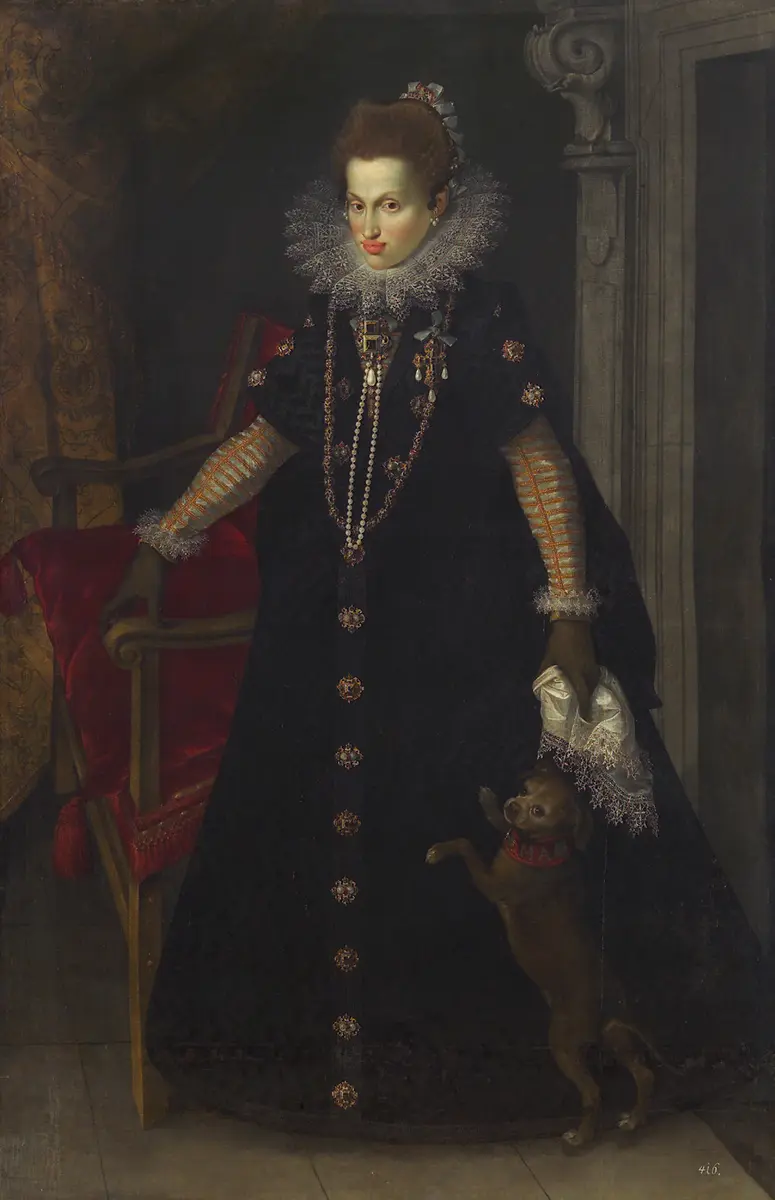
Erzherzogin Maria Anna (1574-1616), Herzogin in Bayern, mit einem Hund Joseph Heintz d. Ä. 1604
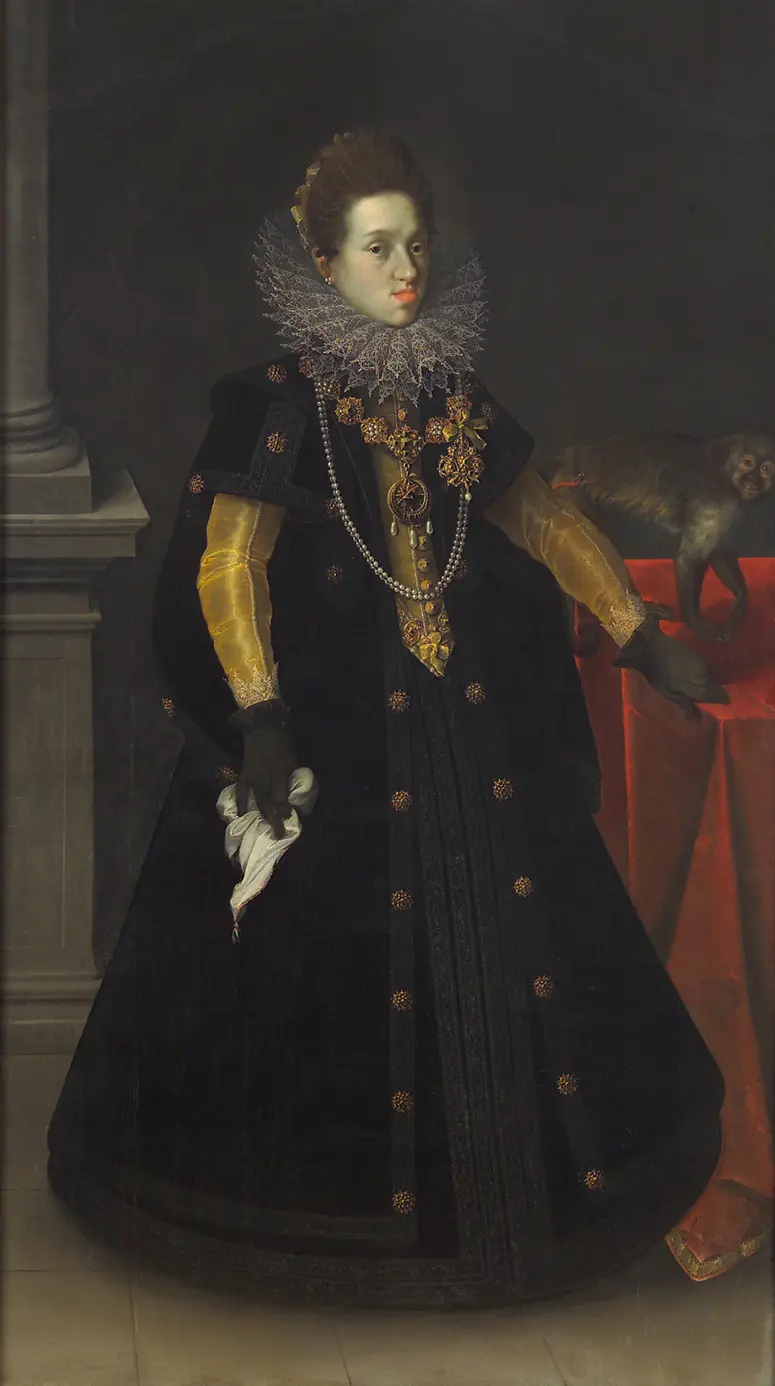
Erzherzogin Konstanze (1588-1631), Königin von Polen, mit einer Meerkatze Joseph Heintz d. Ä. 1604
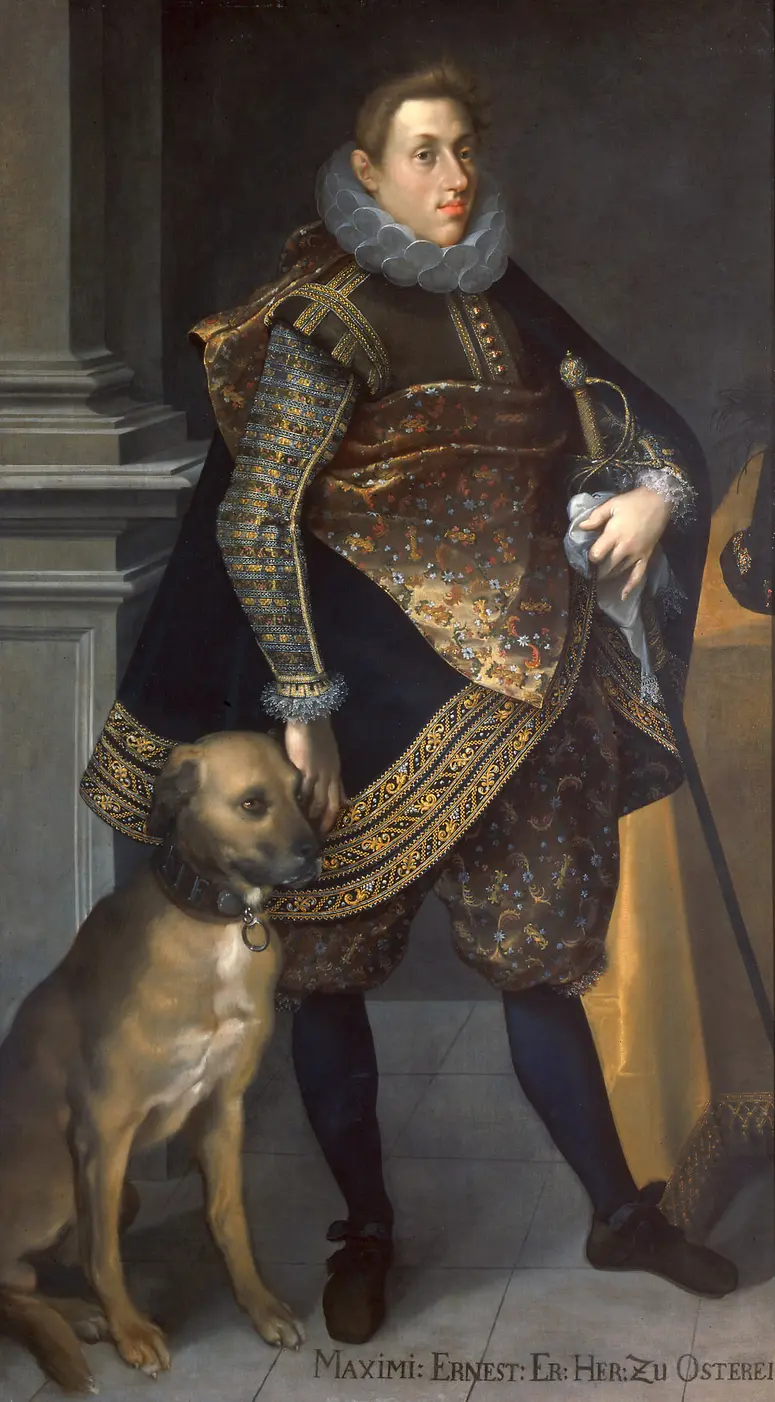
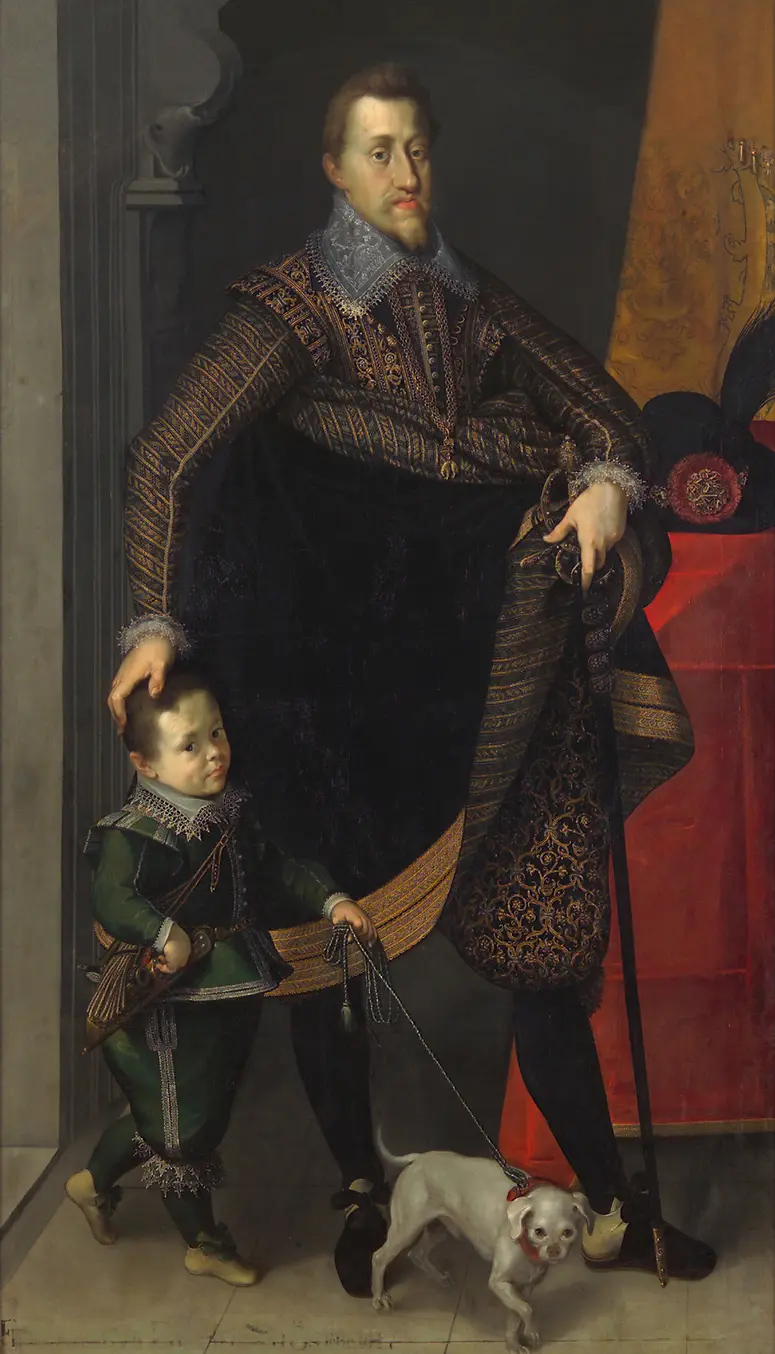
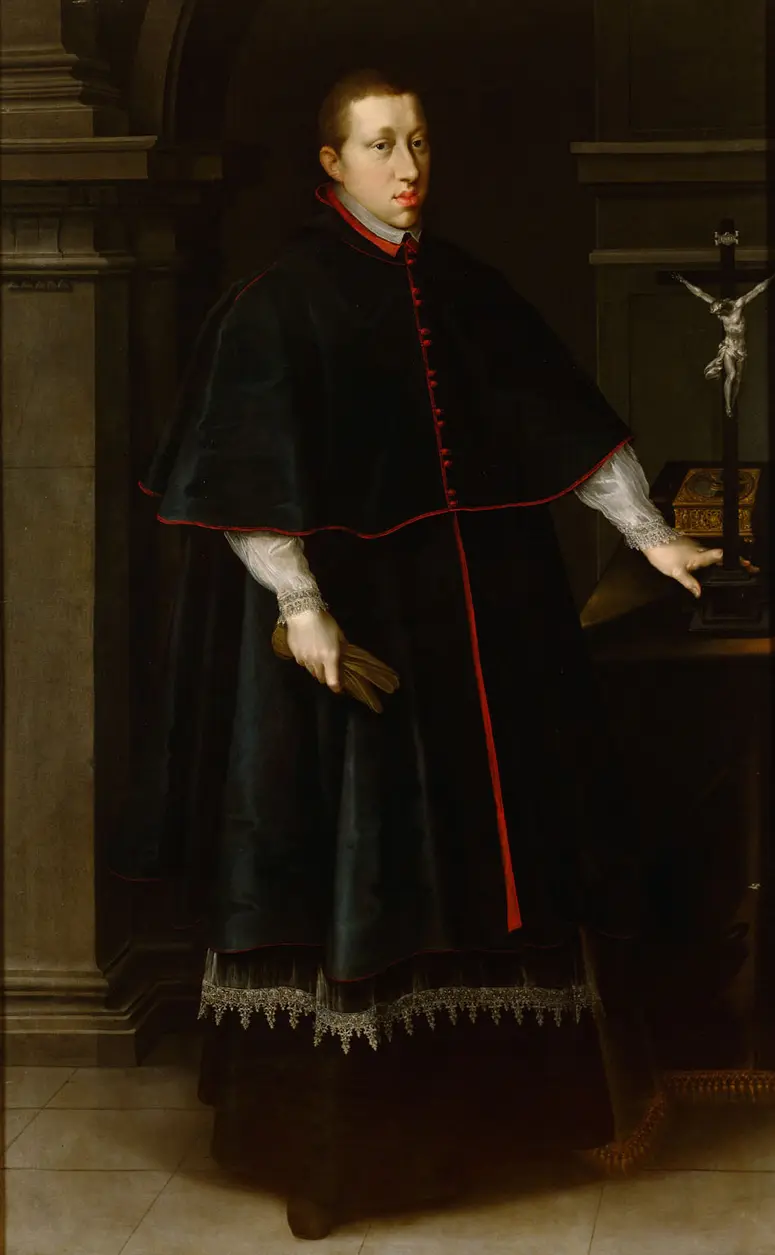
Kaiser Ferdinand II. (1578-1637) in ganzer Figur mit einem Mann mit Kleinwuchs (ehemals "Hofzwerg") Joseph Heintz d. Ä. 1604
Emperor Francis I (Francis Stephen, Duke of Lorraine) (1708−1765) Johann Zoffani 1776/1777
The Vision of saint Hermann Joseph with Mary Anthonis van Dyck 1630
Darstellung der Barockkopie des österreichischen Erzherzoghutes um 1765