Vorderlader-Wender-Gewehr
1810 | Franz (1792-1835), von 1792-1806 als Franz II. Kaiser, seit 1806 als Franz I. Kaiser von Österreich
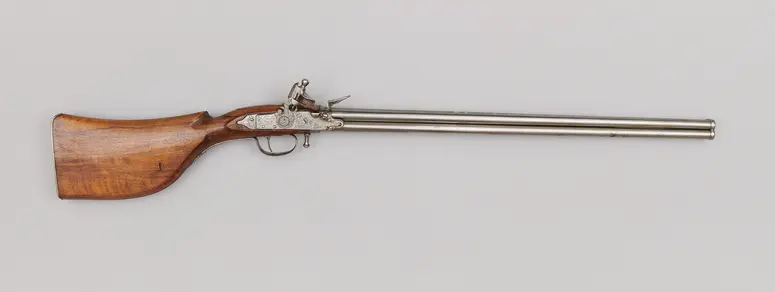
Firearms were first introduced into Europe in the late Middle Ages and fully established themselves during the Renaissance; ever since, innovative gunsmiths have striven to improve them. One of the main focal points of their endeavours was trying to make loading the guns easier, as front-loading a gun was cumbersome and time-consuming. As early as the seventeenth century, the so-called Wender was invented, which introduced several barrels that turned laterally, slightly increasing the number of shots that could be fired.
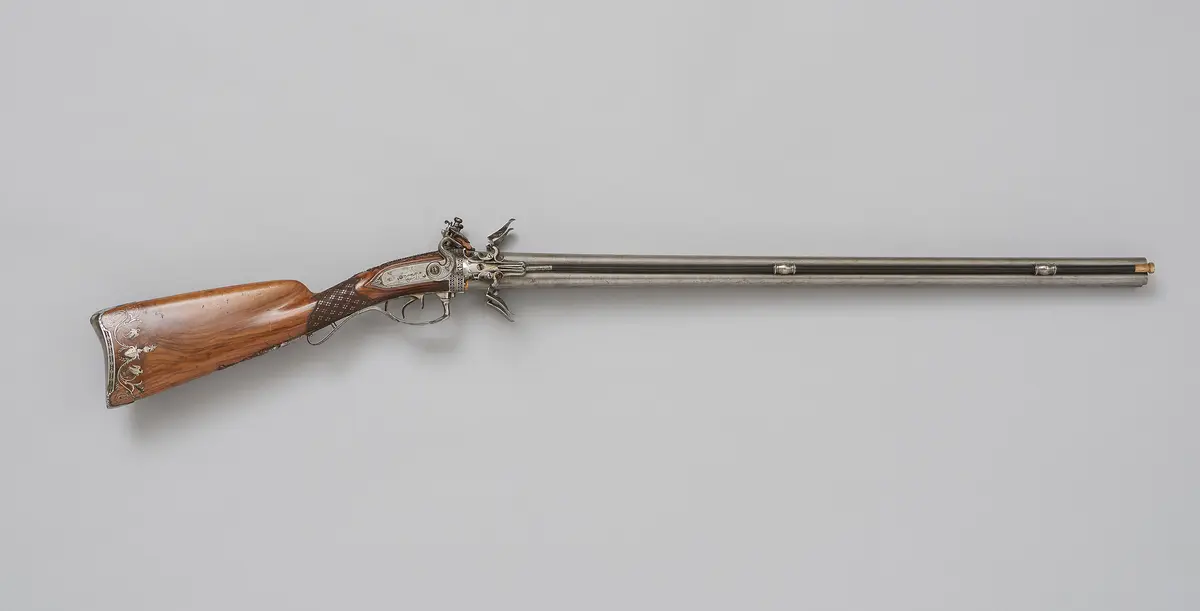
This flintlock Wender rifle was produced by Joseph Devillers, a gunsmith active in Liège at the turn of the nineteenth century. He signed his work on one of the barrels next to the lock: I DEVILLERS.
The gun comprises four barrels with batteries and double flintlocks, which allowed the shooter to fire from two adjacent barrels in relatively quick succession. The metal parts are delicately engraved, for instance on the breech plug and the trigger. The decoration includes mythological figures, foliage, birds, and butterflies. One of the double-barrels is inscribed in gold (above a double-headed eagle) SUB UMBRA ALARUM PROTEGE NOS (‘Protect us under the shadow of the wings’, based on Psalm 16:8) and, on the reverse, FIDELIS QUONDAM SERVI HOMAGIUM (‘A gift from a former loyal servant’).
The inventories of the imperial gun room (Kaiserliche Hofgewehrkammer) contain contradictory information regarding the provenance of this weapon. The 1819 inventory states: ‘1808 a gift received at a sitting of the Hungarian state parliament’ (1808 zum Präsent beym hungarischen Landtag), but in 1826 it is listed as a ‘Gift from Emperor Napoleon to Emperor Francis’ (Geschenk von Kaiser Napoleon an Kaiser Franz). And in the inventory begun in 1868 we read: ‘Was presented in 1810 by His Majesty Emperor Napoleon I on the occasion of his marriage to Archduchess Marie Louise to His Majesty Emperor Francis I’ (Wurde im Jahre 1810 von Ser.M. Kaiser Napoleon I bei Gelegenheit seier Vermählung mit der Erzherzogin Marie Louise, Ser.M. Kaiser Franz I als Geschenk übergeben).
Firearms were first introduced into Europe in the late Middle Ages and fully established themselves during the Renaissance; ever since, innovative gunsmiths have striven to improve them. One of the main focal points of their endeavours was trying to make loading the guns easier, as front-loading a gun was cumbersome and time-consuming. As early as the seventeenth century, the so-called Wender was invented, which introduced several barrels that turned laterally, slightly increasing the number of shots that could be fired.
This flintlock Wender rifle was produced by Joseph Devillers, a gunsmith active in Liège at the turn of the nineteenth century. He signed his work on one of the barrels next to the lock: I DEVILLERS.
The gun comprises four barrels with batteries and double flintlocks, which allowed the shooter to fire from two adjacent barrels in relatively quick succession. The metal parts are delicately engraved, for instance on the breech plug and the trigger. The decoration includes mythological figures, foliage, birds, and butterflies. One of the double-barrels is inscribed in gold (above a double-headed eagle) SUB UMBRA ALARUM PROTEGE NOS (‘Protect us under the shadow of the wings’, based on Psalm 16:8) and, on the reverse, FIDELIS QUONDAM SERVI HOMAGIUM (‘A gift from a former loyal servant’).
The inventories of the imperial gun room (Kaiserliche Hofgewehrkammer) contain contradictory information regarding the provenance of this weapon. The 1819 inventory states: ‘1808 a gift received at a sitting of the Hungarian state parliament’ (1808 zum Präsent beym hungarischen Landtag), but in 1826 it is listed as a ‘Gift from Emperor Napoleon to Emperor Francis’ (Geschenk von Kaiser Napoleon an Kaiser Franz). And in the inventory begun in 1868 we read: ‘Was presented in 1810 by His Majesty Emperor Napoleon I on the occasion of his marriage to Archduchess Marie Louise to His Majesty Emperor Francis I’ (Wurde im Jahre 1810 von Ser.M. Kaiser Napoleon I bei Gelegenheit seier Vermählung mit der Erzherzogin Marie Louise, Ser.M. Kaiser Franz I als Geschenk übergeben).
Owner:
Franz (1792-1835), von 1792-1806 als Franz II. Kaiser, seit 1806 als Franz I. Kaiser von Österreich (1768 Florenz - 1835 Wien) DNB
Manufacturer:
Joseph Devillers , (Büchsenmacher) (erw. 1797 - 1829, tätig in Lüttich)
Time:
1810
Object Name
Vorderlader-Wender-Gewehr
Culture
Liège
Material/technology:
Läufe: Stahl, geschmiedet, teils goldtauschiert. Körner: Silber. Schlossplatten, Hähne, Batterien, Abzugsbügel, sonstige Schloss- und Beschlagsteile: Stahl, gegossen, teils geschnitten, teils graviert, poliert. Schaft: Obstholz, teils geschnitzt, Einlegearbeit, Nagelwerk. Einlagen, Nägel: Silber, teils graviert. Kolbenplatte: Stahl, geschmiedet, teils geschnitten, teils graviert. Ladestock: Horn, Bein, Stahl
Dimensions:
L 120,1 cm, B 22,5 cm, H 8,6 cm
Länge Lauf: 79,3 cm
Gewicht: 3,88 kg
Signed
I. DEVILLERS und Ex
Copyright
Kunsthistorisches Museum, Hofjagd- und Rüstkammer
Invs.
Hofjagd- und Rüstkammer, G 501
Browse more
Similar items you might be interested in

Franz Joseph I. (1848-1916), Kaiser von Österreich, König von Böhmen und Ungarn um 1850
Franz Joseph I. (1848-1916), Kaiser von Österreich, König von Böhmen und Ungarn um 1863
Ferdinand I. (1835-1848), Kaiser von Österreich, König von Ungarn datiert 1841

Gustav Fückert 2. Hälfte 19. Jahrhundert (1884)
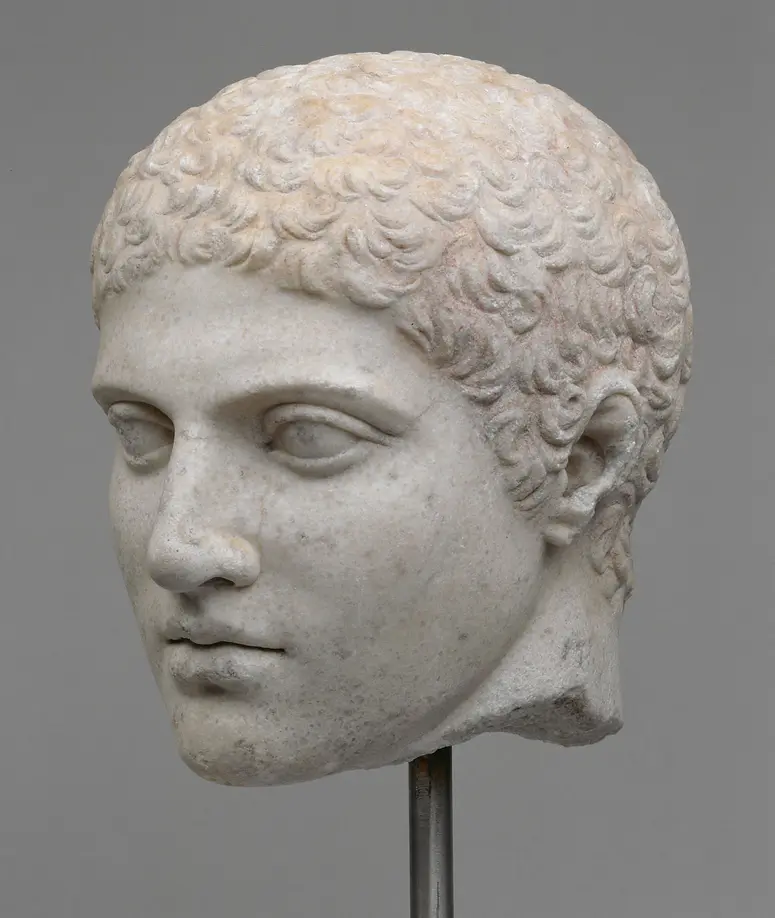
Kopf: Diskuswerfer Römisch, Mittlere Kaiserzeit 2. Jh. n. Chr., nach griechischem Original des Myron um 450 v. Chr.

Karl VI. (1711-1740), Kaiser datiert 1733

Georg Castriota gen. Skanderbeg wohl 2. Hälfte 15. Jahrhundert