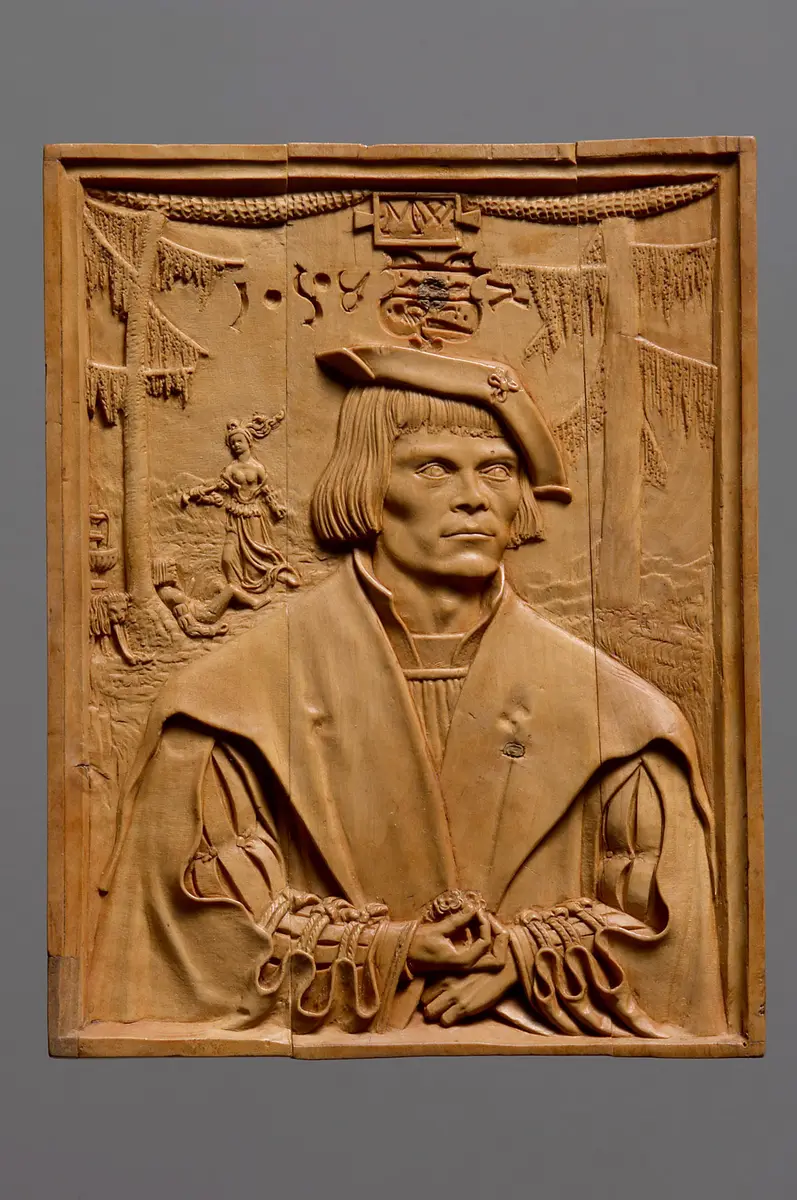
Portrait of Marx Welser
ca. 1525 (date 1542 added later) | I. P. Meister
Art historians have assigned the geographically imprecise term “Danube School” to a number of highly individual artists active in southern Germany, Austria and Bohemia, whose works exhibit a completely new sensitivity to nature. Late-Gothic elements blend with a radically new depiction of bodies and space. For the first time the landscape becomes an integral part of the composition or is even made a subject of its own.
Art historians have assigned the geographically imprecise term “Danube School” to a number of highly individual artists active in southern Germany, Austria and Bohemia, whose works exhibit a completely new sensitivity to nature. Late-Gothic elements blend with a radically new depiction of bodies and space. For the first time the landscape becomes an integral part of the composition or is even made a subject of its own.
Workshop:
I. P. Meister (1. Drittel16. Jahrhundert)
Time:
ca. 1525 (date 1542 added later)
Object Name
Relief; wood carving
Culture
Passau
Material/technology:
Boxwood
Dimensions:
H. 12,5 cm, B. 10 cm, T. 1 cm
Inscribed
"MW 1542" mit dem Wappen der Welser (VS); "Den XI. january A[nno] 97 / hat mir die Frau Polix:[ena] / Pilgramin Von Puchaim / d[a]z pilt geschenkht zu / Waidhofen / Hanß V. Fernberg / LVS + Ankerzeichen" (RS)
Copyright
Kunsthistorisches Museum, Kunstkammer
Invs.
Kunstkammer, 4246
Browse more
Similar items you might be interested in
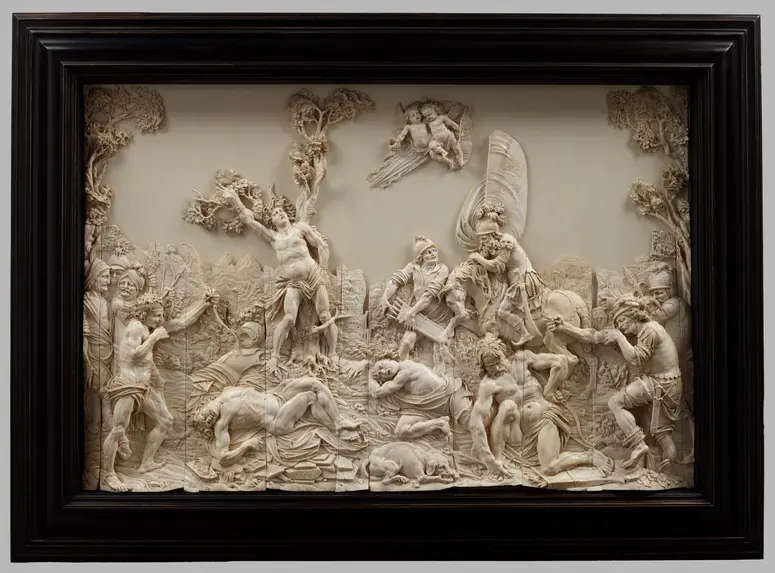
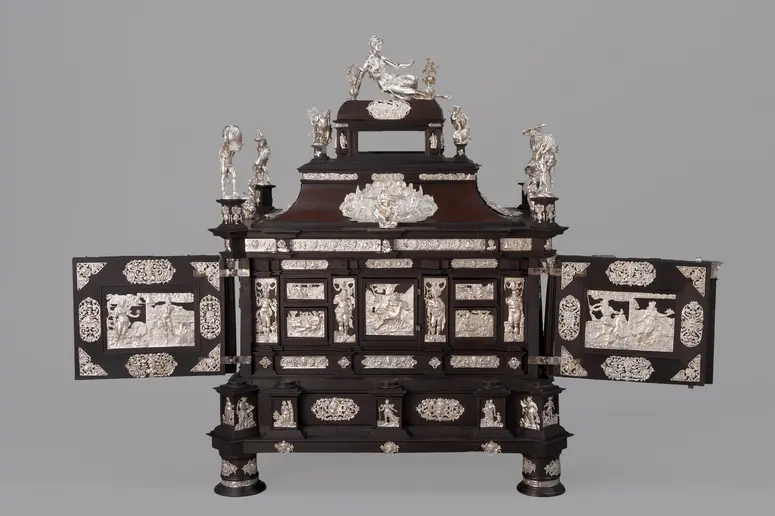
Table Cabinet of Archduke Ferdinand II Ferdinand II. (1564-1595), Erzherzog von Österreich und Landesherr von Tirol ca. 1582
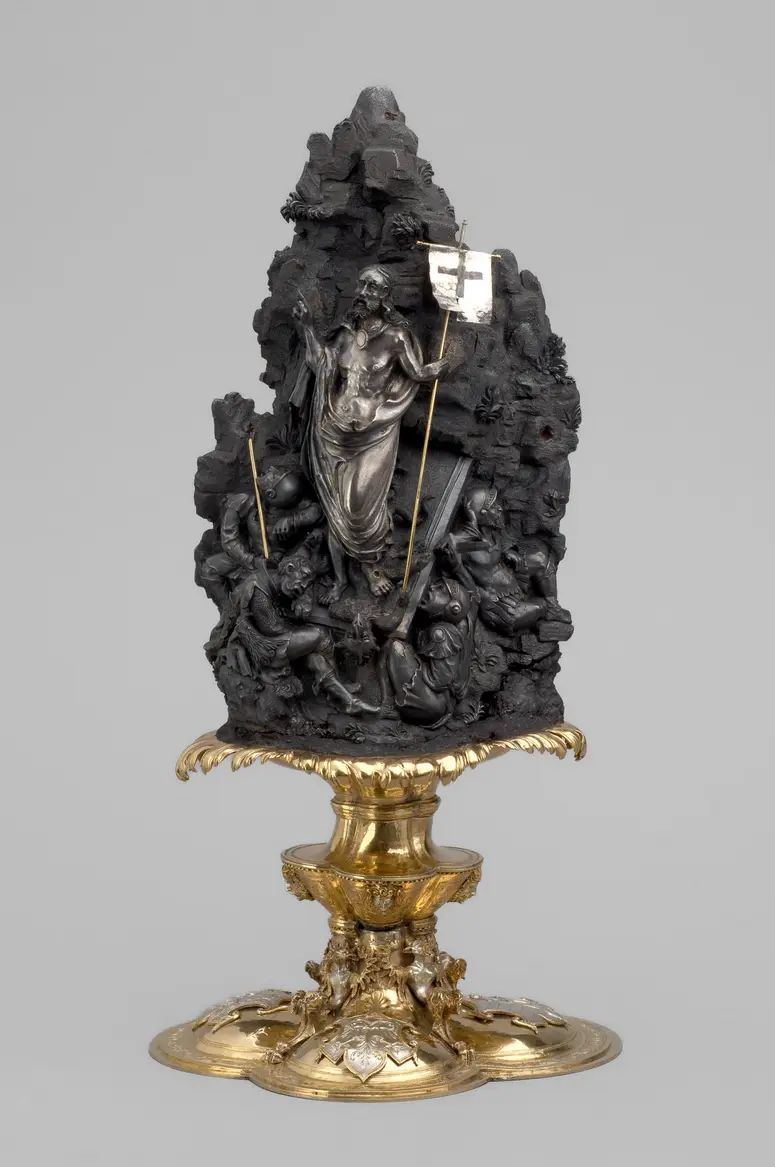
Handstone with the Resurrection and Emperor Charles V after the Battle of Pavia Caspar Ulich ca. 1560