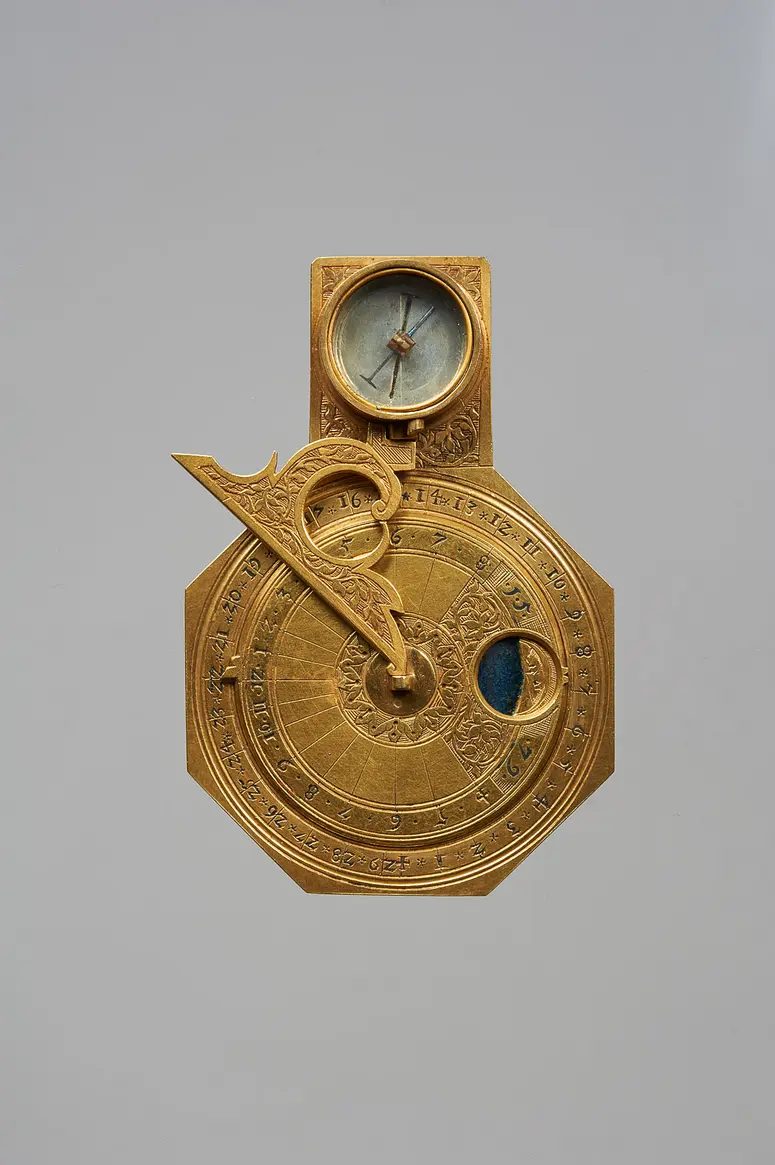
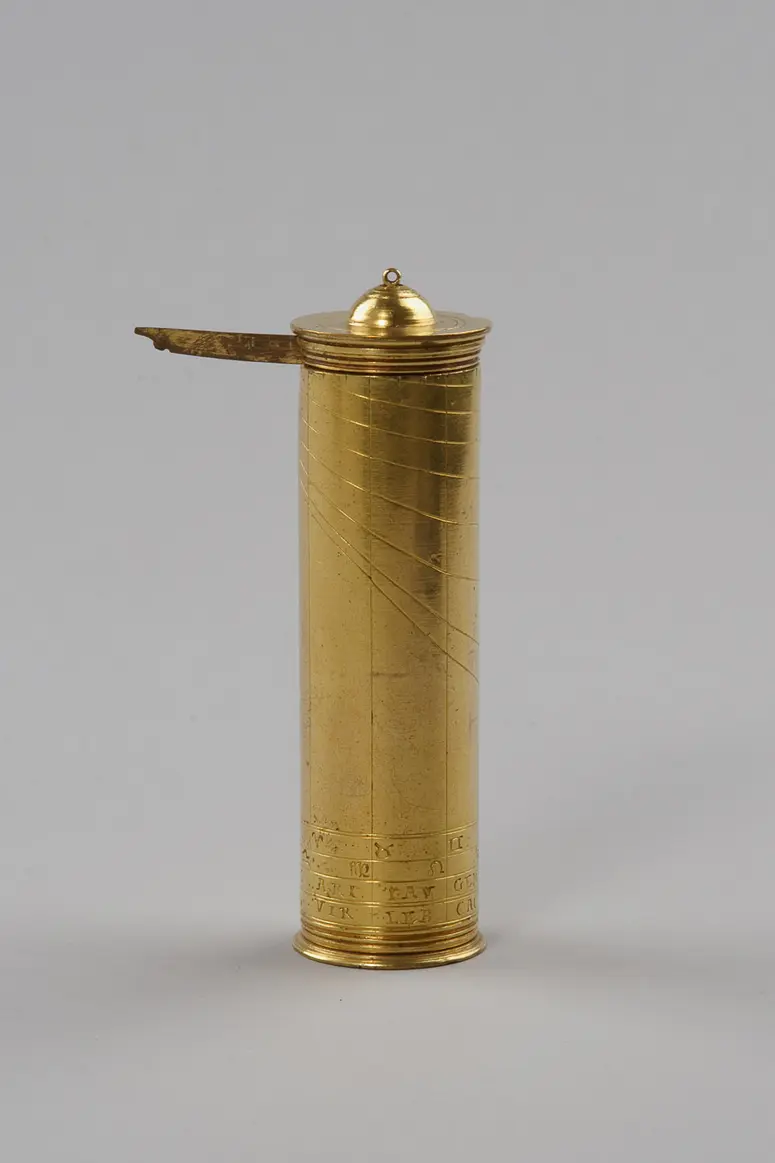
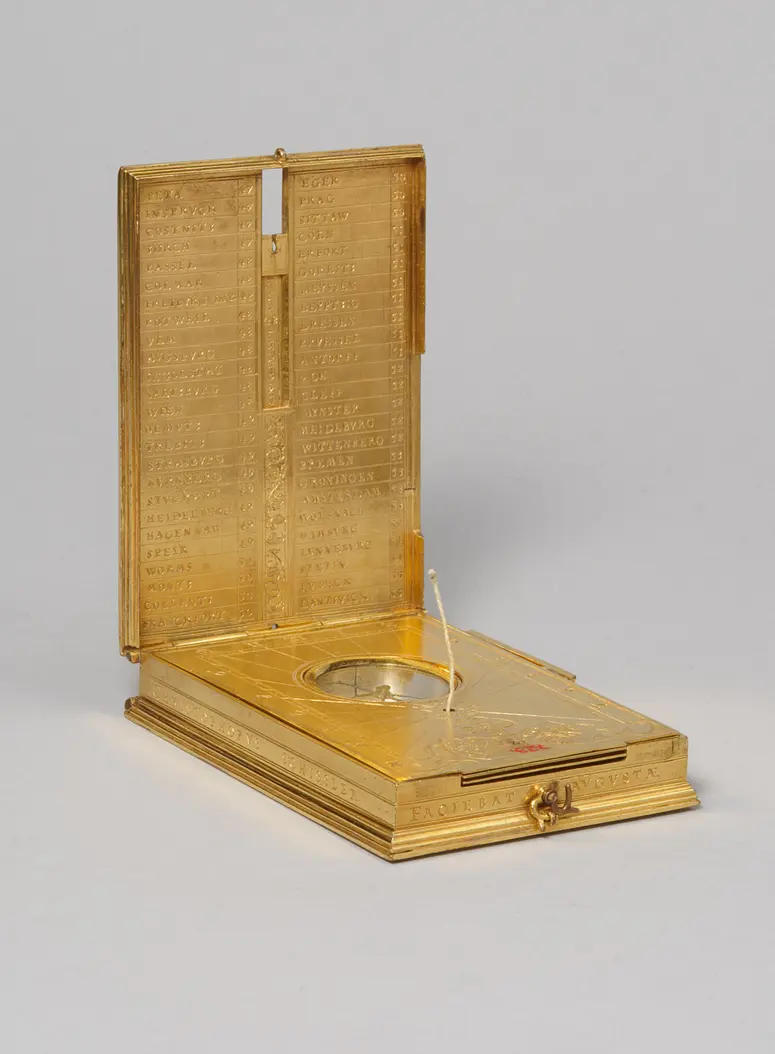
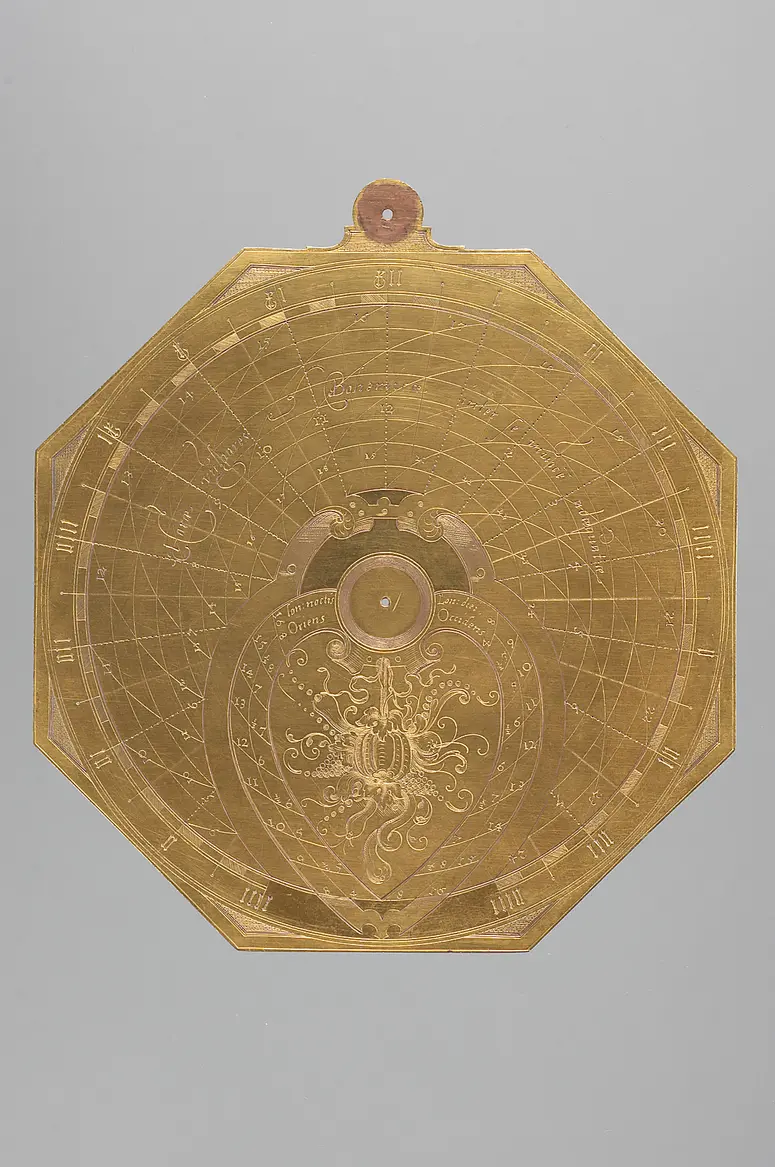
Polyhedral Equatorial Sundial
dated 1604 | Wolfgang Mayr
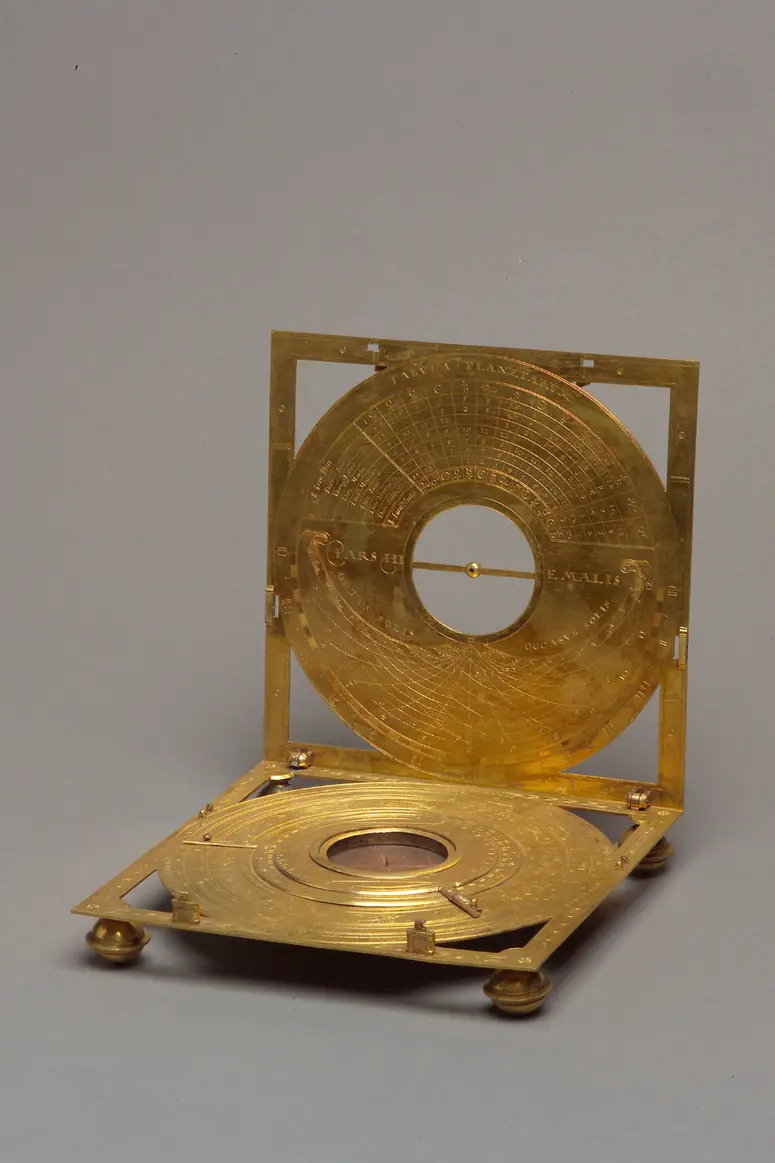
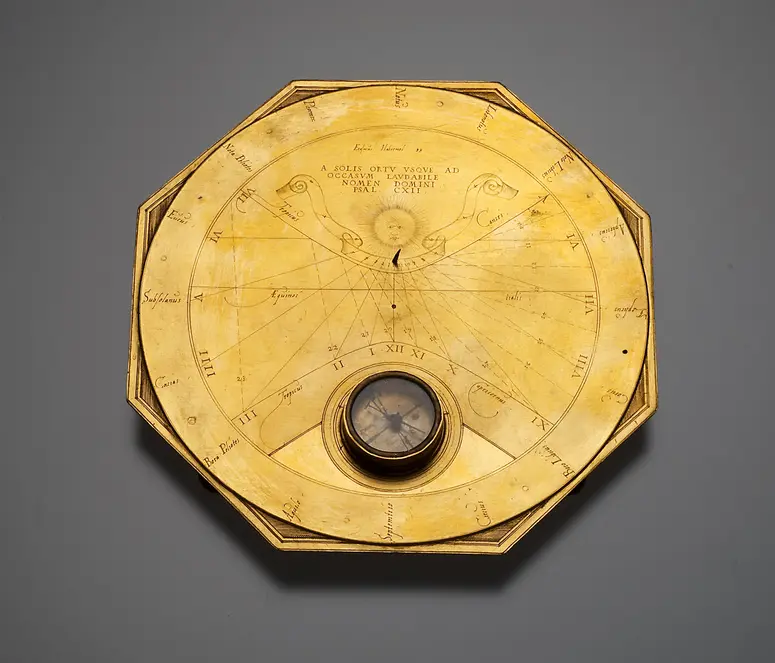
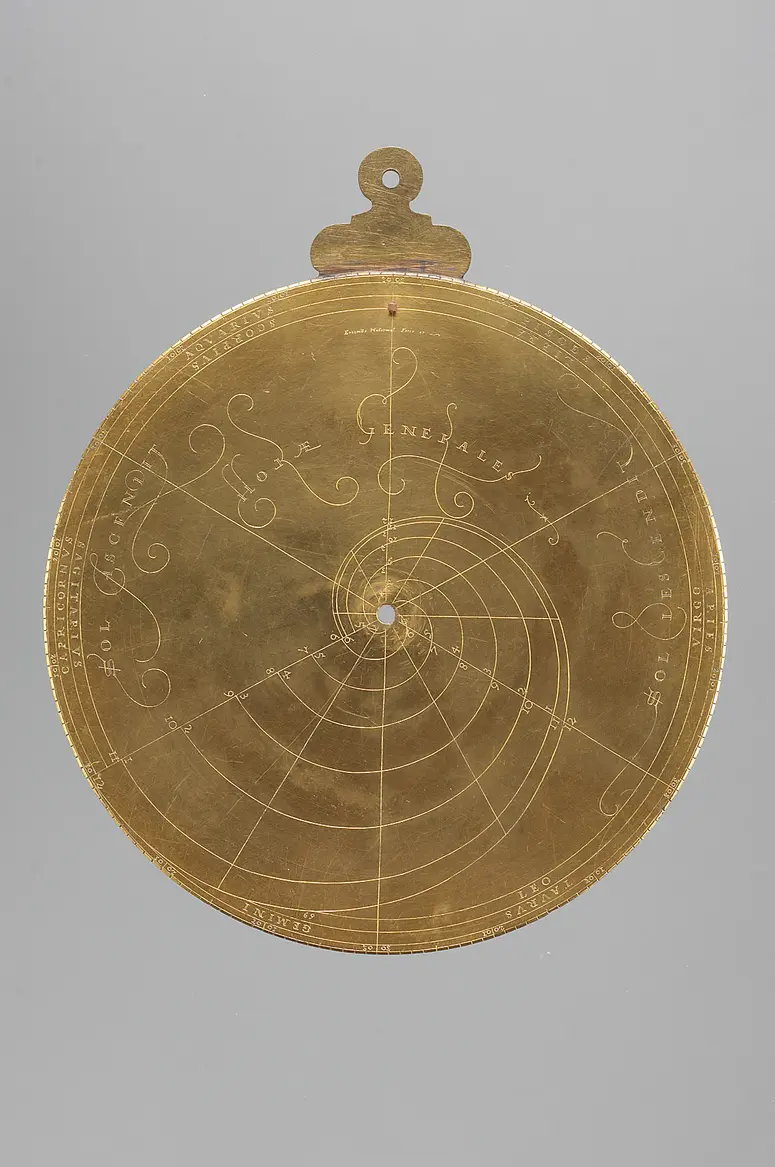
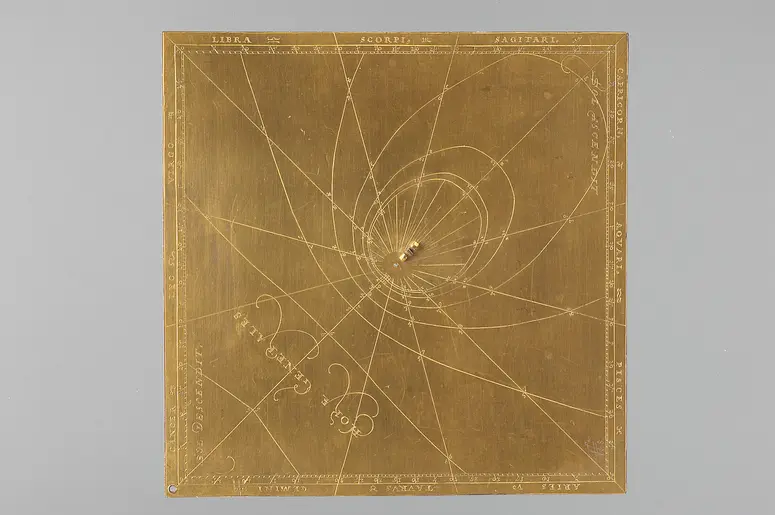
Measuring Time with the Help of the Sun Despite important new developments in the field of mechanical clockworks, sundials in a wide variety of models remained indispensable in the sixteenth and seventeenth centuries. Most of the sundials on display here bear the signature of Erasmus Habermel, instrument-maker to Emperor Rudolf II. His works combine an artistic design with the most precise craftsmanship, thus making a perfect whole.
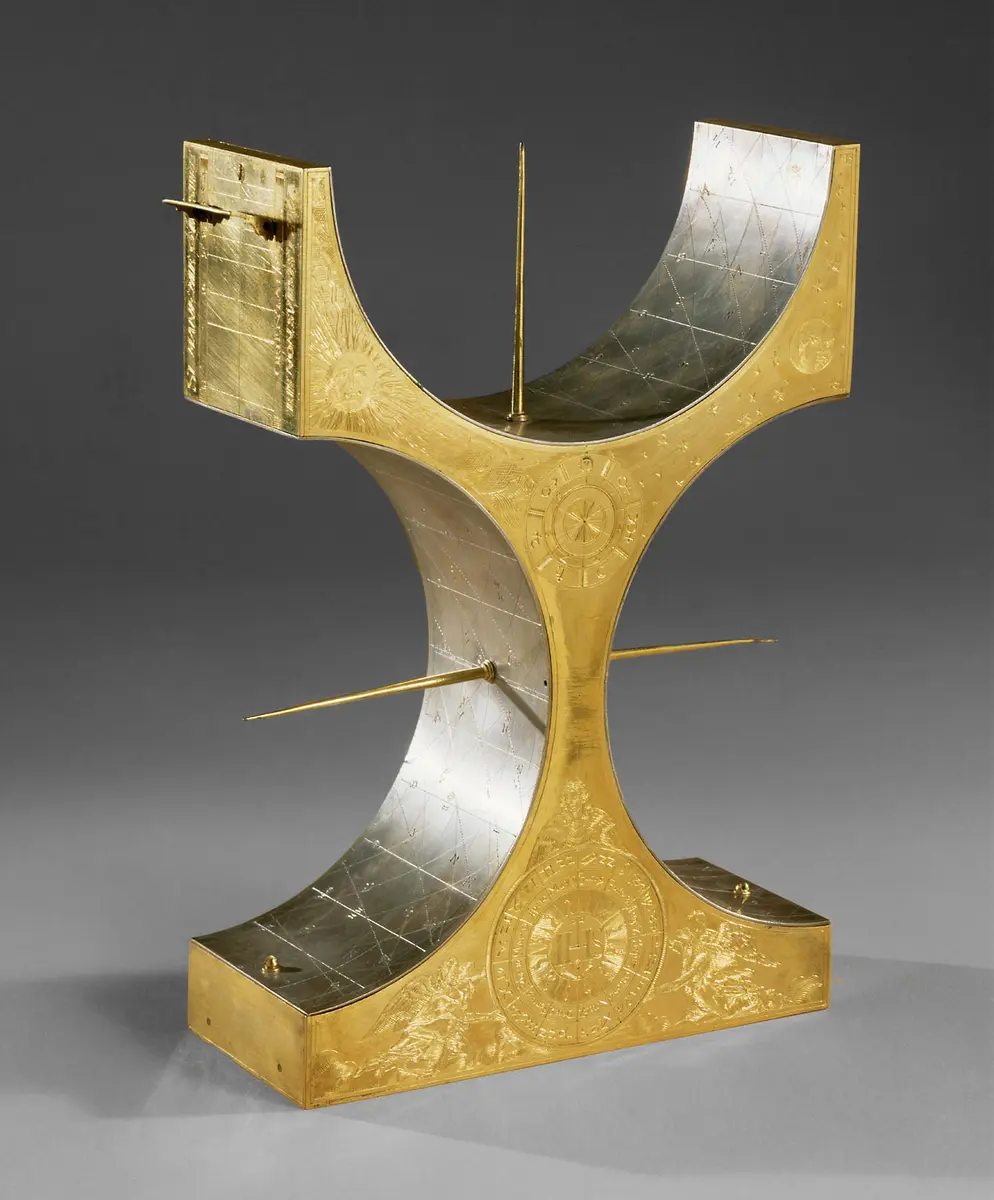
Measuring Time with the Help of the Sun Despite important new developments in the field of mechanical clockworks, sundials in a wide variety of models remained indispensable in the sixteenth and seventeenth centuries. Most of the sundials on display here bear the signature of Erasmus Habermel, instrument-maker to Emperor Rudolf II. His works combine an artistic design with the most precise craftsmanship, thus making a perfect whole.
Artist:
Wolfgang Mayr (tätig in München um 1600)
Time:
dated 1604
Object Name
Clock; sundial
Culture
Munich
Material/technology:
copper alloy, plated with silver and gold
Dimensions:
H. 25 cm, W. 17 cm. D. 7 cm
Signed
"16. Wollffgang Mayr Faciebat Monachij. 04."
Inscribed
"IHS"; „MORS VLTIMA / LINEA RERUM.“; „SI MANE ME QVAESIE=/ RIS NON SVBSISTAM.“
Copyright
Kunsthistorisches Museum, Kunstkammer
Invs.
Kunstkammer, 699
Browse more
Similar items you might be interested in
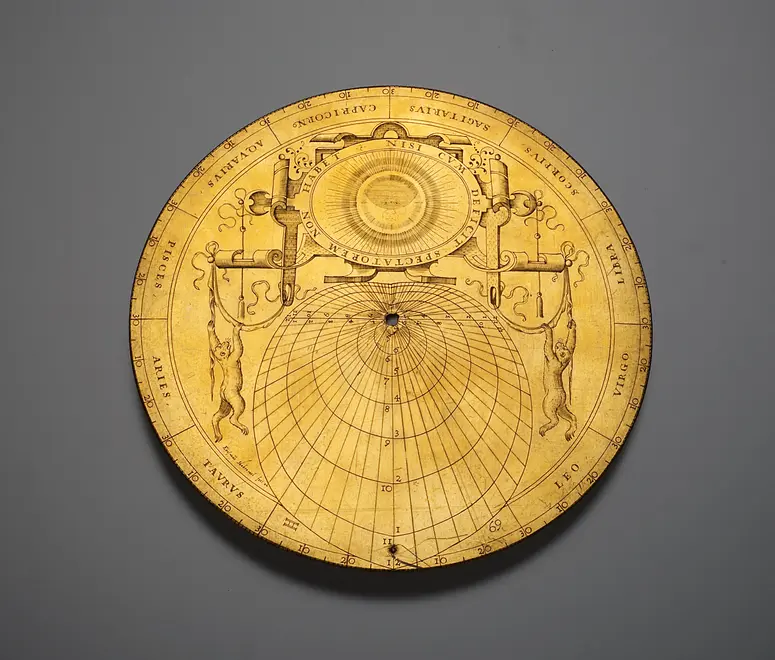
Kompaß aus Gipsspat, Sonnenuhr, Uhr, wissenschaftliches Instrument, Meßgerät datiert 1587
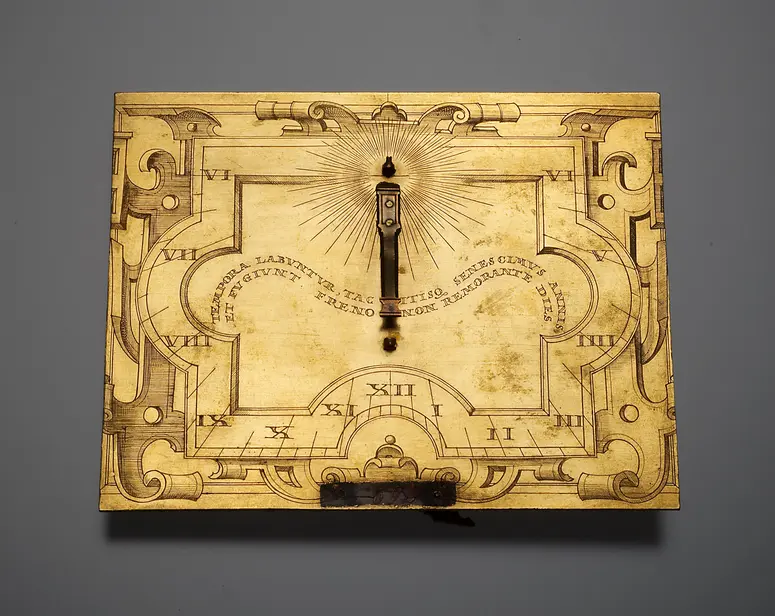
Polyhedral Equatorial Sundial, so-called Block Sundial Johann Melchior Volckmair ca. 1650
Reisesonnenuhr, wissenschatliches Instrument, Meßinstrument
Reisesonnenuhr, Meßinstrument, wissenschaftliches Instrument Erasmus Habermel Ende 16. Jahrhundert