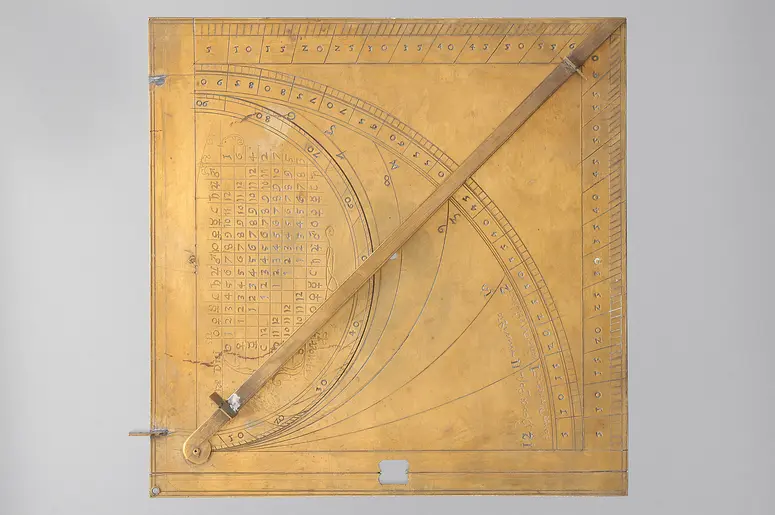
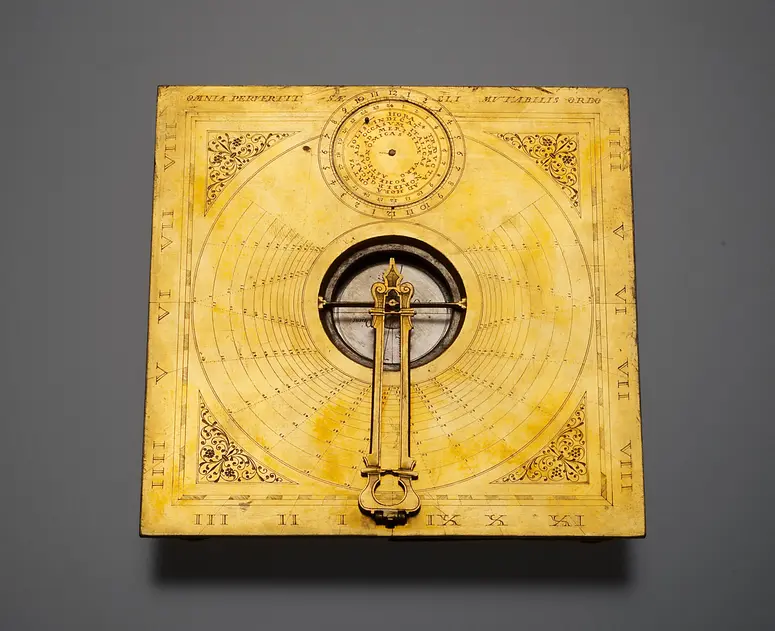
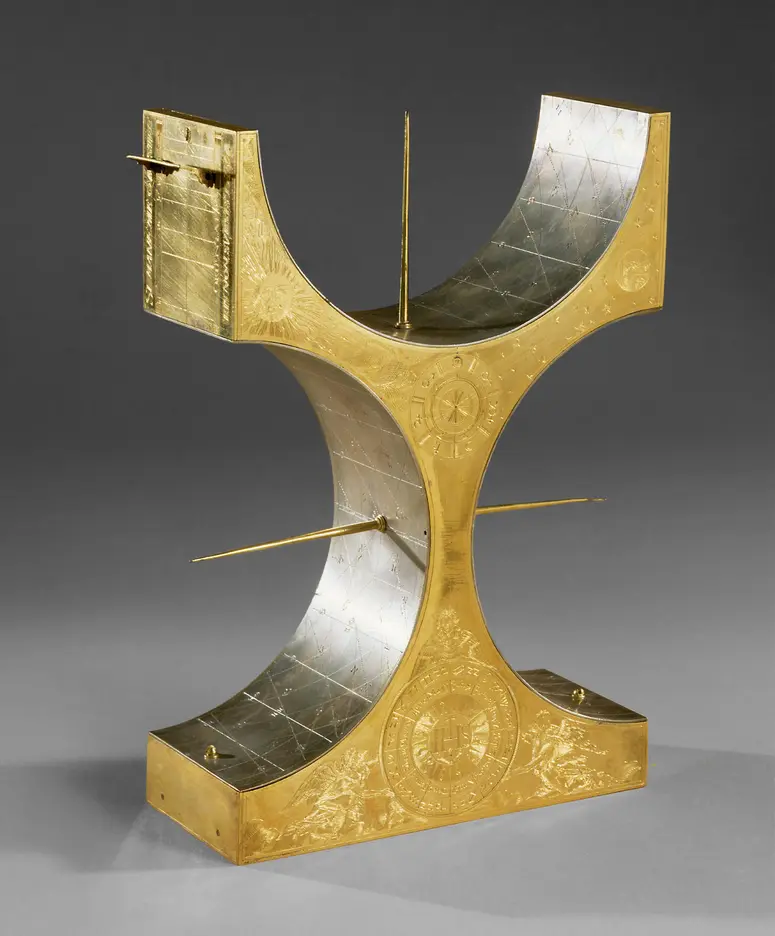
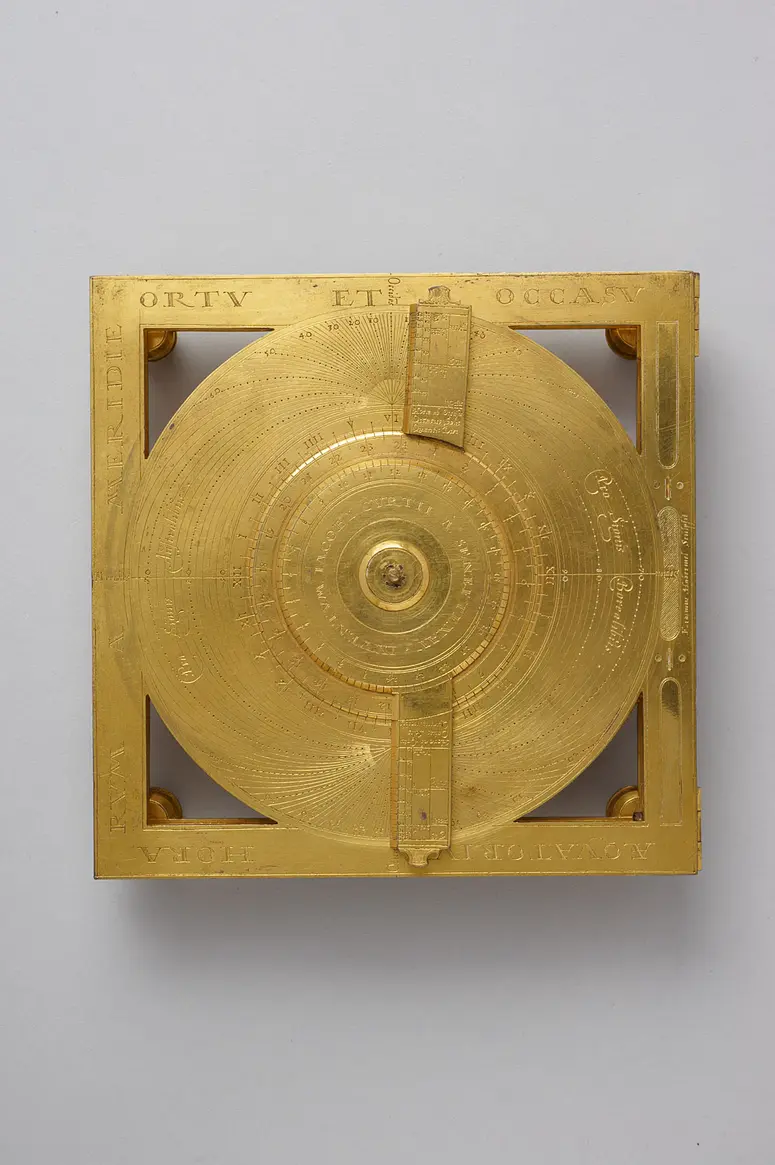
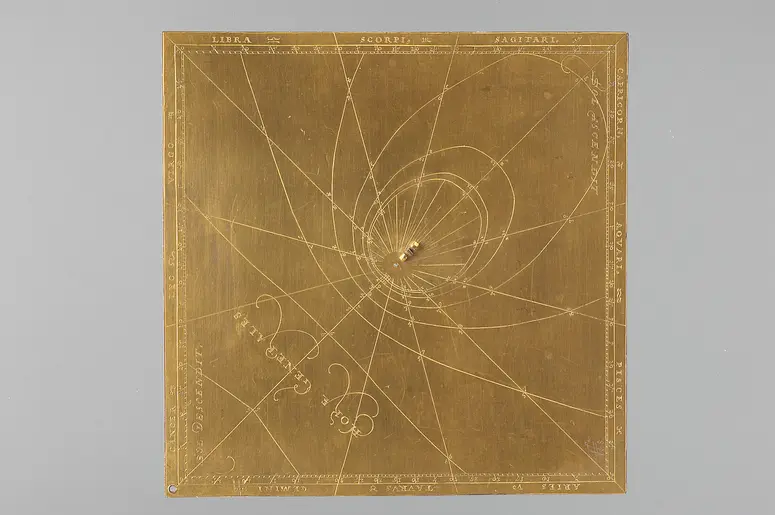
Equatorial Table Sundial
ca. 1593/95 | Erasmus Habermel
Measuring Time with the Help of the Sun Despite important new developments in the field of mechanical clockworks, sundials in a wide variety of models remained indispensable in the sixteenth and seventeenth centuries. Most of the sundials on display here bear the signature of Erasmus Habermel, instrument-maker to Emperor Rudolf II. His works combine an artistic design with the most precise craftsmanship, thus making a perfect whole.
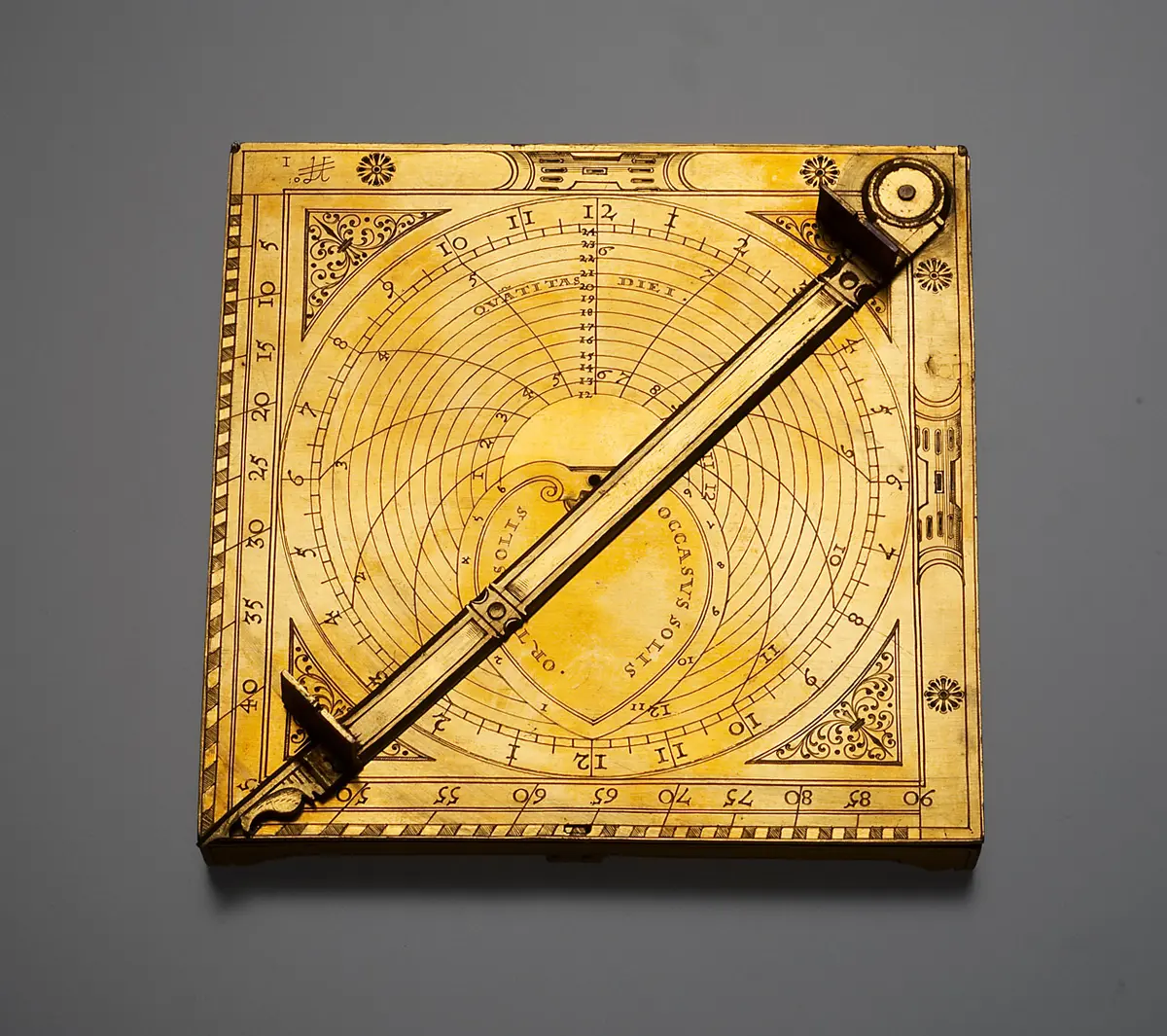
Measuring Time with the Help of the Sun Despite important new developments in the field of mechanical clockworks, sundials in a wide variety of models remained indispensable in the sixteenth and seventeenth centuries. Most of the sundials on display here bear the signature of Erasmus Habermel, instrument-maker to Emperor Rudolf II. His works combine an artistic design with the most precise craftsmanship, thus making a perfect whole.
Artist:
Erasmus Habermel (gest. 1606 Prag) DNB
Time:
ca. 1593/95
Object Name
clock; sundial
Culture
Prague
Material/technology:
Gilded copper alloy
Dimensions:
12,7 cm × 12,7 cm × 18,2 cm
Signed
Erasmus Habermel fec:
Copyright
Kunsthistorisches Museum, Kunstkammer
Invs.
Kunstkammer, 771
Browse more
Similar items you might be interested in
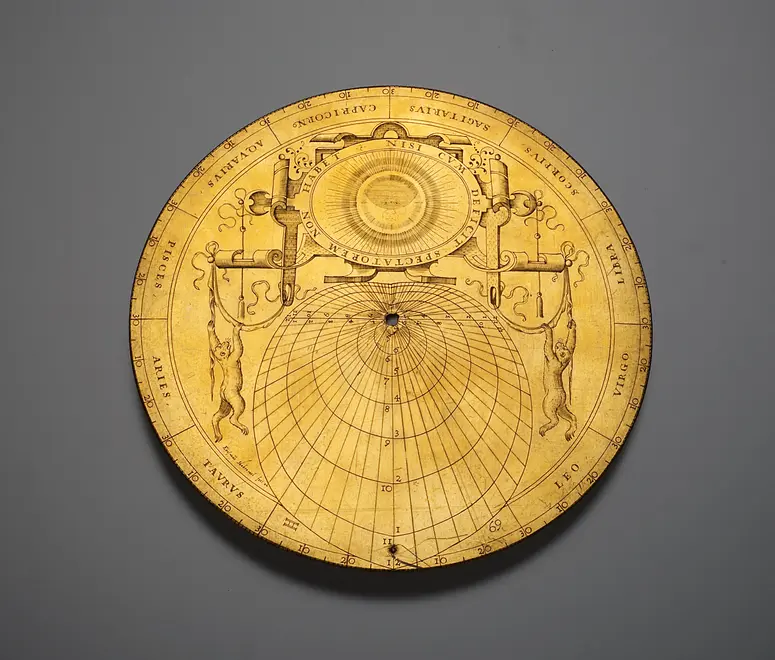
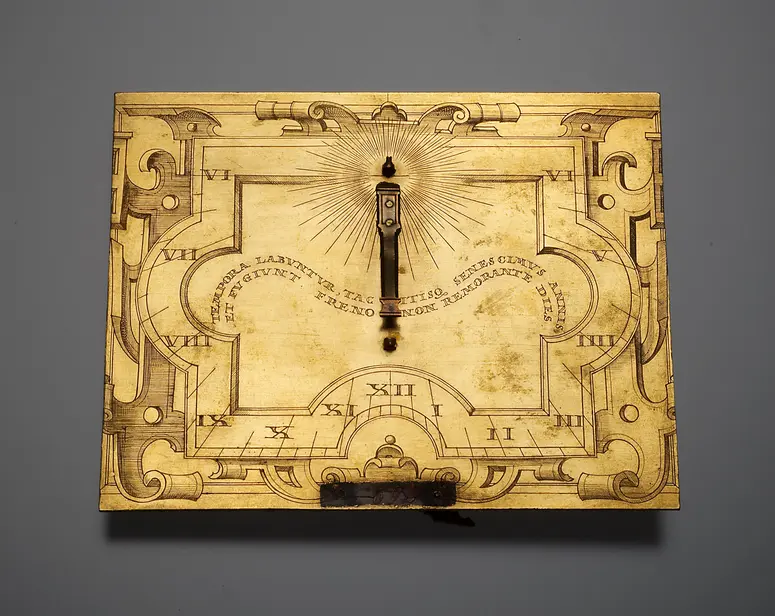
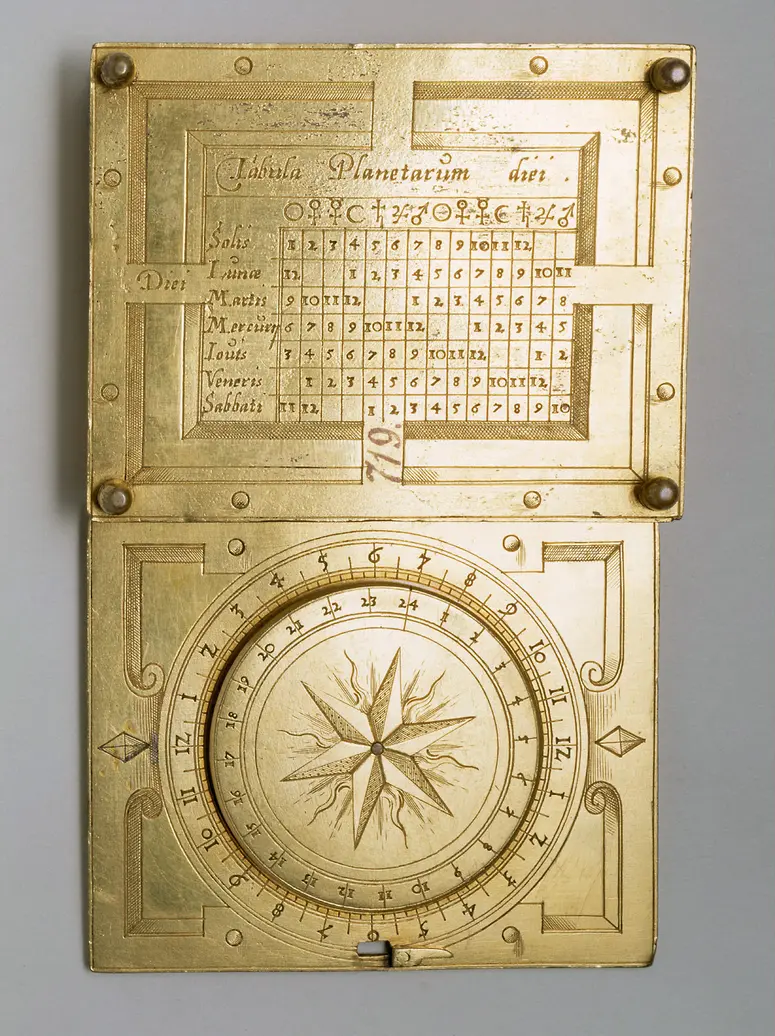
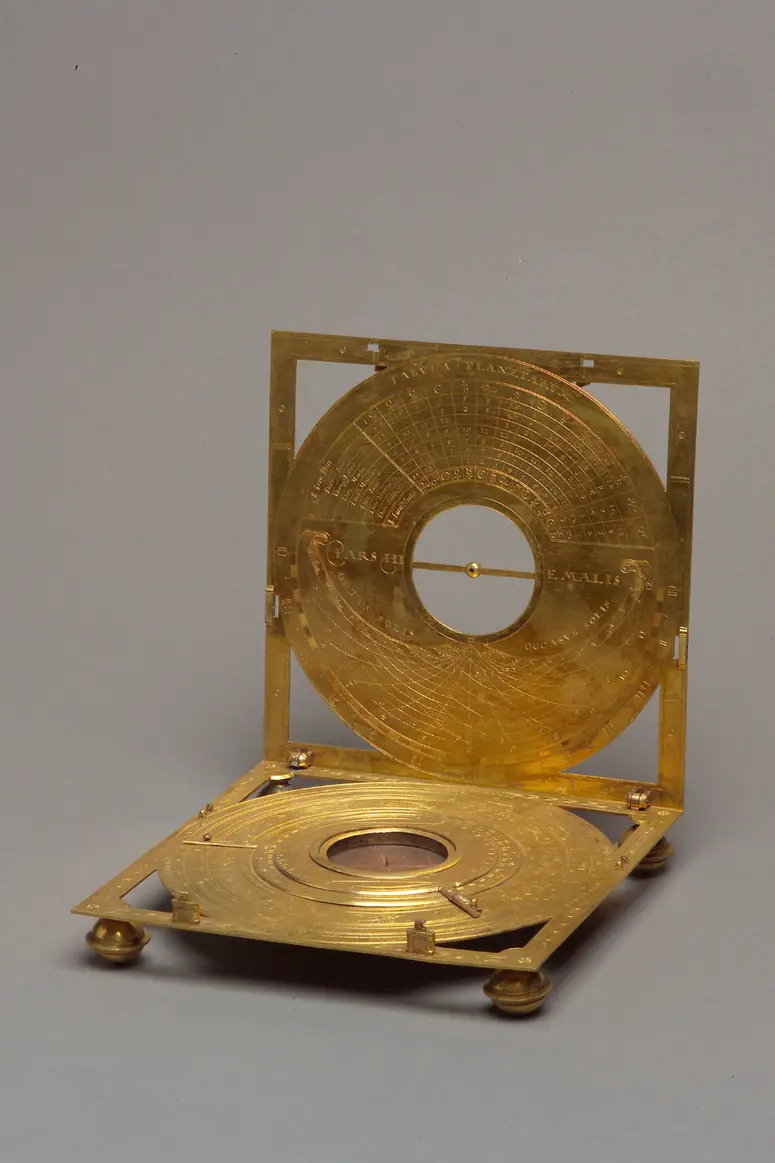
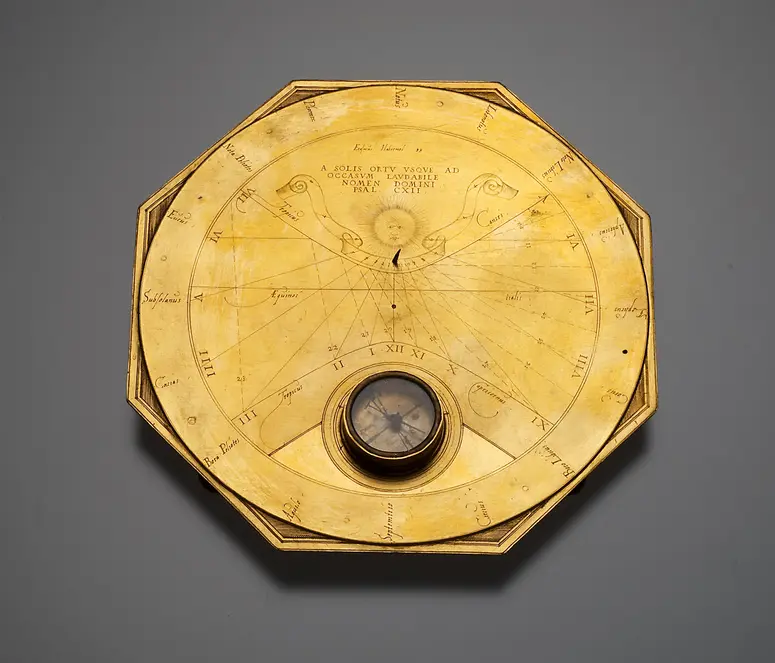
Reisesonnenuhr, Meßinstrument, wissenschaftliches Instrument Erasmus Habermel Ende 16. Jahrhundert
Reisesonnenuhr, wissenschatliches Instrument, Meßinstrument